Belated reflections on the Academy Awards

By now, everyone who cares has read accounts of the event – the winners and losers, the fashions, and the host.  It’s tempting to add my own $0.02, but that’s not my purpose in writing this.  It would be easy to get sidetracked if I tried.

With the glaring exception of failing to nominate Ben Affleck for Best Director, I thought the Academy had a number of worthy candidates to chose from and did a credible job in selecting winners.

This year, like most others, the major awards didn’t interest me as much as the “small” ones.  Music, makeup, costumes.  Screenplays, cinematography, film editing.  The last three were tasks I learned while working on a student production in college – they are critical, difficult, and we hardly ever notice the names when the credits roll.  These awards always remind me that movies are collective efforts.  You see it especially in the memorials to those in the industry who died in the previous year – when they did their work well, it was seamless and we barely noticed.

In contrast to the production of movies, the myth of the solitary genius still lurks in our psyches.  As far as I can tell, it’s an artifact of the 18th and 19th western romantic imagination.  It has never appeared in the east at all, and the works of the Renaissance masters were mostly collective efforts.  Leonardo, Michelangelo, and all the others had workshops where apprentices stretched the canvas or mixed the pigments, and journeymen painted the drapery.  Then the master stepped in to finish the hands and the face of the virgin and child.  Michelangelo painting the Sistine Chapel was an exception.  I bet he would have advertised on TV it he’d had it available, like James Patterson, whose sometimes excellent novels are now collaborative efforts.

Old myths linger.  In the early part of the 20th century, when movies were young, writers dreamed of the Great American Novel.  Hollywood was a place where ill-starred authors like F. Scott Fitzgerald went to complete their fall from grace and die.  Nowadays the fantasy is to write the next Twilight or Hunger Games and get the novel optioned.

Let me be explicit.  Sometime during the last 50 or 60 years, movies became our most important artistic medium.  Never mind that there’s lots of chaff in the wheat – across the globe, movies are where most of us go, most of the time, to find inspiration and learn about ourselves and the world we live in.

With this in mind, watching the Academy Awards made me sad when I thought of the future of the medium.  During the past month, the local Board of Education announced 11 school closings.  Parents and students showed up at several meetings to protest, and with its usual flair for drama, the paper published a photo of a girl with a sign saying, “Please don’t take our music department away.”

I thought about her on Oscar night.  She probably won’t grow up to work on movie scores.  How many other potential writers, musicians, artists, technicians, and designers who will do something else because our bureaucrats limit their options in the name of pragmatism?

Pragmatism is necessary but it doesn’t nourish the soul.  I hope the next generation of dreamers continues to dream, against ever worsening odds.  I hope we never look back on this year’s Oscars and think, “Ah, those were the days…”

Pandora’s box, repression, and gun violence

From my perspective, the big news this week was the start of senate hearings on gun violence, which evoked a wide range of passions across the spectrum of public opinion.  More poignant than any testimony in Washington was the death of Hadiya Pendleton, a 15 year old honor student who performed at President Obama’s inauguration on the 21st.  The day before the speechifying began, Hadiya was shot and killed in public park in a “nice” section of Chicago, about a mile from the president’s house.  Police think it was a case of mistaken identity.

I thought of Hadiya Pendleton as I was out walking the dogs in a “nice” local park.  I remembered a lecture one of my psych professors gave 20 years ago.  We were studying defense mechanisms, and of these, repression gets a lot of bad press.  Nobody wants to be repressed or live in a repressive society.

My professor expressed an alternate view in his lecture:  repression kept a lid on many antisocial behaviors.  He quoted James Hillman who said, “What used to be the darkest dreams of Freud’s neurotic patients are now played out on our streets.”

The human psyche has not changed in 100 years, but our world has altered dramatically.  Men no longer need to wear boiled shirts, and women are free to bare their ankles.  We’ve learned to embrace the individual conscience and the search for an “authentic me,” but we don’t know what to do if someone’s “authentic me” turns out to be a sociopath.

We’ve found out the hard way that you  can’t just unrepress the good stuff.  When we let our angels out of the box, the demons get a pass too.  Which brings to mind the story of Pandora.

In order to punish humans for Prometheus’ theft of fire, Zeus sent Pandora to earth with a sealed jar (later mistranslated as “box”) and instructions not to open it.  We all know what happens in folklore with orders like that.

Pandora by John Waterhouse, 1896

By the time Pandora got the lid back on, all the evils of the world had been released.  Only hope remained in the jar.  Pandora’s dilemma is ours.

When it comes to our violent behaviors, inhibition was not such a bad thing.  Now that it’s out of the box, the question becomes, what do we do with our hope?

Tales of the Dummling

Many of Grimm’s fairytales begin with three sisters or three brothers who have a critical task to perform.  Invariably, the youngest succeeds.    In her introduction to a story called “The Golden Bird,” Maria Tatar, editor of the recently published bicentennial collection says: “If the female protagonists of fairy tales are often as good as they are beautiful, their male counterparts often appear to be as young and naive as they are stupid.”

“The Golden Bird” illustrates the point.  The youngest son is so hopeless that even his animal guide, a fox, grows frustrated, yet in the end, the boy wins “complete happiness.”

Not all youngest sons are so dense, and sometimes the stories have great depth, like “The Water of Life,” which I discussed here last March (http://wp.me/pYql4-1OC and http://wp.me/pYql4-1Pm).

According to Marie-Louise von Franz, Carl Jung’s closest colleague and author of five books on fairytales, the Brothers Grimm published  50-60 stories of dumb youngest sons.  Von Franz thought these stories were so important, individually and culturally, that she started her first book on folklore, The Interpretation of Fairytales 1970, with a detailed study of one Dummling tale, “The Three Feathers.”  The story is one of the better known Grimm stories, present in the new annotated edition as well.  What follows is a brief synopsis.  The tale isn’t long and those who wish can read it on Project Gutenberg: http://www.reelreality.com/fairy_tales/grimms_fairy_stories/index.html#dummling

“The Three Feathers” from the Project Gutenberg ebook edition of Grimm’s fairytales.

*** Synopsis of The Three Feathers ***

Once an aging king had three sons. Two were clever, but the third didn’t say much and was considered dim-witted.  People called him Dummling [or “Dummy” depending on the translation].  The king decided to test the boys to determine who should rule his kingdom when he was gone.   He told them whoever returned with the most beautiful carpet would inherit the kingdom.  Then he took them outside, blew three feathers into the air and told his sons the feathers would determine which way they should go.

One son’s feather flew east and another’s west, but Dummling’s feather flew straight ahead a few paces and fell to the ground.  The other brothers laughed and set out, but Dummling just sat down by the feather and waited.  Eventually he noticed a trapdoor nearby.  It opened onto a staircase descending into the earth.  The boy followed the stairs down to another door on which he knocked.  From inside a voice called:

“Maiden, fairest, come to me,
Make haste to ope the door,
A mortal surely you will see,
From the world above is he,
We’ll help him from our store.”

Inside was a fat toad, surrounded by many smaller toads.  The boy said he needed the world’s most beautiful carpet.  The toad called out to the younger ones to “bring the box for the boy at the door.”  Inside was a beautiful carpet.  Dummling carried it home, his father was astonished, and declared that he should be the next king.

“The Three Feathers” from the Project Gutenberg ebook edition of Grimm’s fairytales.

The two other brothers, who had simply bought pieces of linen from the first peasant women they met on the road, protested so loudly that the king decreed another test.  He sent his sons out to find the most beautiful ring.  Again one feather blew east, another west, and Dummling’s by the trapdoor.  The fat frog called for a box in which the boy found a beautiful gold ring.  The brothers brought rings they had made from  nails they had taken from cart wheels.

Again the king declared Dummling the winner, and again the older brothers protested.  The king’s third test was to bring home the most beautiful wife.  Dummling won a toad bride who became a beautiful human woman after he took her home.  The brothers, who had married the first peasant women they met, complained again so the king ordered a fourth test.  The brides were ordered to jump through a hoop suspended in air.  Naturally, Dummling’s wife, who had been a toad, easily won.  Dummling received the crown and he ruled “with great wisdom” for many years.

Jumping through the hoop by Arthur Rackham

Jumping through the hoop by Arthur Rackham

***

In The Interpretation of Fairytales, Marie-Louise von Franz devoted three chapters to an in depth analysis of this tale.  She believed Dummling stories reflect the situation of individuals, cultures, and institutions that get stuck when certain rigid patterns and ideas cut them off from sources of renewal.

The first thing she notes is that all the Dummling tales begin with a father and three sons but no wife or sisters.  The feminine element is missing and regardless of what he sets out to do, the most important achievement of the younger son will be to bring home a bride.  In abstract terms, that is bringing Eros into a situation overweighted with Logos.  Von Franz cites cultural examples like the importance of the cult of the Virgin Mary in the medieval Catholic church.  She also says that third-son stories:

“compensate the conscious attitude of a society in which patriarchal schemes and oughts and shoulds dominate.  It is ruled by rigid principles because of which the irrational, spontaneous adaptation to events is lost.  It is typical that Dummling stories are statistically more frequent in the white man’s society than in others, and it is obvious why that is so.”

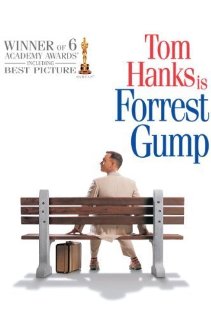
Once you start thinking along these lines, many characters spring to mind from history as well as the arts.  Saint Francis, who called himself “God’s Fool,” brought flexibility and Eros to the medieval church.  A classic movie example from recent times is  Forest Gump 1994.  Tom Hanks’ Dummling character succeeded where the smart people failed.  Gump, who lived in the moment and was close to his emotions, reacted to things as they happened rather than to his own fixed ideas.  Remember the movie’s opening shot of a feather?  If nothing else, that convinces me that Forest Gump’s creators knew the Dummling stories in detail.

Tom Hanks as a modern Dummling

Tom Hanks as a modern Dummling

Von Franz amplifies the detail of the feather, saying it was a common medieval practice in many countries.  “If someone did not know where to go, if they were lost at a crossroads or had no special plan, he would take a feather, blow on it and walk in which ever direction the wind took it.  That was a very common kind of oracle by which you could be guided.”

It isn’t as apparent in this Dummling tale as it is many others that the older brothers are modern A-types.  They don’t have time to fuss with insignificant creatures like frogs, or dwarves, or old ladies, or any of those helpful beings who guide the youngest brothers on their way.  Youngest brothers have time to listen because their calendars are clear.  They sit by their feathers or walk through the forest, paying attention and waiting for new ideas to arrive.

Von Franz used the feather analogy in discussing her method of therapy.  She said when her patients were stuck, she would listen to their dreams to see which way the winds of the psyche were blowing.  When I studied psychology, one of my teachers spoke in the same vein, of the importance of listening to the little impulse, the small thoughts that are easy to ignore, like “Oh, that looks interesting,” or “Wouldn’t it be nice to take a few hours off for a walk beside the river?”  Smart older brothers, working on their MBA’s, don’t have time for things like that, which is how they get into therapy in the first place.

I’ve heard that when he was president, Harry Truman once said, “We’re going to try X, and if that doesn’t work, we’ll try something else.”  Our government might not be so stuck if politicians dared to admit that sometimes they don’t know the answers and need to see which way their feathers blow.

Sometimes being “smart” is a greater hindrance than being “dumb,” for the key thing is to be teachable.

I came upon the Dummling stories years ago, and they often come to mind when things are stuck in my own life or in what I observe around me.  “When you don’t know what to do, do nothing,” is a common and useful bit of advice.  I sometimes restate it and say, “When you don’t know what to do, sit by your feather and pay attention.”

Something is happening here…

Readers of a certain age will recognize the title of this post as part of the chorus of one of Bob Dylan’s iconic songs of the ’60’s, “Ballad of a Thin Man.”

And something is happening here
But you don’t know what it is
Do you, Mister Jones ?

What brought the song to mind was another simple phrase which seemed to sum up our own time in a similar pithy way.  Strangely enough, it came from a piece on CNN.com called “Why the best thing you can do is fail,” by Eddie Obeng, founder of a virtual business school  http://www.cnn.com/2012/12/30/opinion/obeng-business-disruption-ted/index.html.  Here is the passage that caught my attention:

“What’s happened in business is that the rules of the real 21st century aren’t clear to us, so instead we spend our time responding rationally to a world which we understand and recognize, but which no longer exists.”

We can substitute many other words for “business” and find the phrase rings equally true.  Try it.  “What’s happened in [publishing, school safety, government, warfare, economics, international relations] is that the rules of the real 21st century aren’t clear to us, so instead we spend our time responding to a world which we understand and recognize, but which no longer exists.”

Both the Dylan lyrics and Obeng’s observation put into simple words what we’ve known for some time but could not express so clearly.

One of my favorite words, liminal, stands for times like these, times of uncertainty and change in the life of an individual or a culture.  Webster’s Dictionary defines liminal as: “1 of or at the limen or threshold 2 at a boundary or transitional point between two conditions, stages in a process, ways of life, etc.”

I started a post in December concerning what fairytales have to say about living in liminal times.  Fairytales always happen in times of transition or crisis times.  Your father will die if you don’t find the water of life.  Your stepmother wants to kill you, or you find your new husband is a serial killer.  The king will cut off your head if you fail to capture  the firebird.

Can this be relevant to the 21st century?  I’m convinced that it can.

Right now I’m reveling in one of my Christmas presents, The Annotated Brothers Grimm, a fine new collection published to celebrate the bicentennial of Grimm’s fairytales.

Reading so many stories at the same time raises a number of questions.  What does it take for a character to survive their otherworld challenges?  Sometimes you have to obey a witch, and at other times you need to push her into the oven.  Sometimes not knowing is an asset and sometimes a fatal flaw.  You should listen to animals by the side of the road unless they are wolves and you’re wearing red.

I don’t expect to come up with definite answers, but I do expect to turn up some interesting questions.  This is my immediate plan; after that, I’ll do as I’ve always done on this blog, make things up as I go along.

I very much hope you’ll stay tuned.  And now, I’ll leave you with my wish for a joyous and prosperous 2013, and with a very old clip of Bob Dylan doing “Ballad of a Thin Man” in 1966 in Copenhagen…

Are we there yet: apocalyptic yearnings

The Last Days of Pompeii by Karl Briullov, 1827-1833. Public Domain

The Oakland Hills Fire which broke out in October, 1991, was a major disaster by any estimate: 25 people died, 150 suffered injuries, and 3300 homes were destroyed. What I remember about the event, however, was an account by an independent journalist (whose name I have forgotten) who covered people arriving at evacuation shelters.

He said that a few were upbeat, almost giddy, as they talked of starting over.  The journalist said they were the first to be taken to counselors.  On-scene mental health triage workers assumed they were hysterical, most in need of hearing how terrible it was that they had lost everything.  How sad you must feel.  Have a kleenex.

I’ve always wondered about that.

The first historical accounts I know of that detail people waiting for the apocalypse date from December, 999, when groups across Europe trekked to high ground to wait for the millennial rapture.  The name, “rapture,” says it all.  It’s not the kind of disaster you read about in the papers.  It’s a chance to start over for true believers.  This is the hope picked up by new age proponents of the Mayan apocalypse, since the Mayans themselves left no hints of when the world will end.

The apocalyptic dream is the hope for a new heaven and earth that are better than this one.  Who wouldn’t like one of those, especially this year?

All the worlds religions tell us this world is not our home, but the mature voices in those religions do not hold out the hope of a cosmic get-out-of-jail-free card reserved for some chosen group.  They tell us that heaven and earth are transformed when an individual turns transformation.  Like Dante at 33, understanding he’d lost his way in a dark wood.  Like Rainer Maria Rilke who was viewing an ancient statue of Apollo when he heard an inner voice say, “here there is no place that does not see you. You must change your life.”

So tomorrow when we wake and the world looks the same, we can remember that it is not.  The sun will have turned from it’s southern trajectory, beginning its road back to summer.  And as we savor the morning coffee and the good things in our lives, we can take a moment to contemplate that turn toward a new heaven and earth.  The first steps lie with each and every one of us.

Change is the only constant

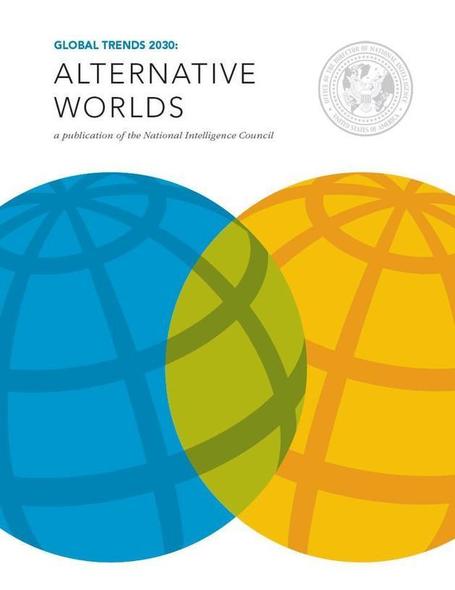
That’s what they say in the tech industry.  That’s what Buddha said 2600 years ago.  And that’s what the National Intelligence Council says in a 140 page report, “Global Trends 2030: Alternative Worlds.”

Click for the text of the whole report

Since 1997, the NIC, formed of all 16 US intelligence agencies, has issued five Global Trends reports, one after each presidential election.  For this one they engaged think tanks, government, and business leaders in 14 nations and concluded that the world will be radically different in 18 years.  The pace of change will be faster than at any period in modern history.

NIC Chairman, Christopher Kojm, says:
“We are at a critical juncture in human history, which could lead to widely contrasting futures. It is our contention that the future is not set in stone, but is malleable, the result of an interplay among megatrends, game-changers and, above all, human agency. Our effort is to encourage decision makers—whether in government or outside—to think and plan for the long term so that negative futures do not occur and positive ones have a better chance of unfolding.”

Here is a link to a summary of the report. ww.bloomberg.com/news/2012-12-10/u-s-intelligence-agencies-see-a-different-world-in-2030.html

The NIC defines “megatrends” as scenarios likely to happen under all circumstances.  “Game-changers” are “critical variables whose trajectories are far less certain.”  Additional possibilities are listed as “black swans,” discrete events that would cause large scale changes, either for good (a democratized China or a reformed Iran) or ill (global pandemic, WMD attack).

The report identifies four megatrends, changes regarded as inevitable over the next two decades:

  • Diffusion of power:  The US will lose it’s international dominance, but no other nation will take its place.  “Power will shift to networks and coalitions in a multi-polar world.”  Though the report didn’t say it, as a student of World War I history, I have to observe that the last time the world was structured this way, things did not turn out very well.  The report identifies one best case scenario as a new era of US/Chinese cooperation.
  • Individual Empowerment: A rising middle class in emerging nations, increased access to education, widespread use of technology, and health care advances can improve the lot of large numbers of people. The report notes that technology is two edged sword: it can benefit and disrupt.  Advances sometimes create and at other times eliminate jobs.  Technology fosters communication but also  leaves infrastructure vulnerable to cyber-attack.
  • Demographic Change: World population will grow from 7.1 to 8.3 billion, and 60% world will live in cities (it’s 50% now).  This will strain resources and increase pollution. Aging populations may slow economic growth in developed nations. Immigration will increase.
  • Food, Water, and Energy Shortages: In 18 years, the world will need 35% more food and 40% more water.  Our intelligence agencies don’t waste time pretending climate change isn’t real.  They note that conditions like widespread drought have grown more severe in just the 18 months they’ve been working on the report.

National Geographic issue on extreme weather, published one month before Superstorm Sandy

Rather than summarize more of the report, I invite readers to check it out for themselves.  Let’s step back and reflect on what this means.

My dogs do not like change.  They find comfort in their routines, and if I am honest, so do I.  This month a 72 year old hardware store, where you could find anything, closed it’s doors.  So did a 76 year old nursery, where master gardeners could always diagnose the ugly brown spots on your roses.  That’s enough to put me in a funk, imagining our big box future, and yet this is nothing compared to what Global Trends 2030 suggests is coming – change at a faster rate than anyone living has seen.

Change that rapid generates fear.  Looking at the last decade, we see resistance to change spawning violence.  Religious fundamentalists are more vocal in nearly all denominations.  Reactionary politicians grasps at some idealized past that is gone if it ever existed.  The urge to get what is mine at all costs further disrupt economic life and generates even more fear.  People bemoan the loss of civility.

Do we have any guides for living through times like these?

As I asked myself the question, I remembered Joseph Campbell’s assertion that world mythology holds wisdom for all the turns that life can take.  And Marie Louise Von Franz, Jung’s closest colleague, said that fairy tales offer the “purest and simplest” expression of “the basic patterns of the human psyche.”  Do stories created by people who traveled by foot and ox cart really have something to teach us in the 21st century?

I believe they do.  Next time we will consider what the old stories may say about living through difficult times.

Remembering Max Headroom, a visionary TV show

max headroom newsweek

In 1984 I joined Intel as their graphic workstations  were shrinking from video arcade sized units to large desktop computers. In my spare time, I sometimes played with a Commodore64 and saved quarters for Space Invaders. The first IBM personal computer did not roll out until the following year.

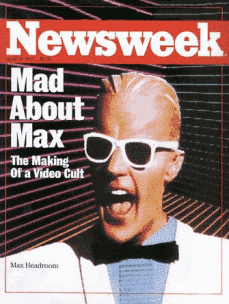
That was the state of technology when Max Headroom was born.  The creation of a British trio, George Stone, Annabel Jankel, and Rocky Morton, Max was an artificially intelligent, disembodied personality who lived in cyberspace before the term was coined.  Computer animation wasn’t advanced enough to portray the computerized look the group was after, so filming Max required a four hour makeup session that actor Matt Frewer described as “a very painful, torturous and disgusting enterprise.”

Rocky Morton described Max as a “very sterile, arrogant, Western personification of the middle-class, male TV host,” but he was also “media-wise and gleefully disrespectful,” which endeared him to younger viewers.

Max appeared on American TV in 1987, as a talking head – literally – in a TV newsroom in a dystopian near-future dominated by large corporations and television.  Although he became a spokesman for “The New Coke,” and appeared on Sesame Street, only 13 shows aired.

Part of the problem was that Max was down right irritating, with his visual and vocal stutter and an op-art background that was the best computer animation could do at the time.  Here is a 3o second sample from his Coke commercial:

The fact remains that Max Headroom was decades ahead of his time. In one episode, for instance, terrorists blow up all TV towers in the city, pushing the population to riot when they find they have nothing to watch. In the nick of time, city officials pacify everyone by distributing hand-held video viewers loaded with old reruns.

Remember, this was 1987, when the best technology Hollywood had to offer wasn’t enough to capture the vision of Max’s creators.

So what brought Max Headroom to mind right now?  Beyond Max’s “dystopian future dominated by large corporation and television” that is.  Why today, December 3, 2012?

Yesterday, after  a series of storms, I ventured out to the supermarket and walked in just as they played the Christmas carol holiday song I hate most, “Little Saint Nick,” by the Beach Boys.  I had to compliment the store, however – the sound was just barely audible.  Not loud enough to cause real annoyance, I thought, but enough to keep silence at bay, which might cause people to riot.

That brought Max to mind.  “Ha-ha-ha-happy Ho-ho-holidays, everyone.”

All quiet on the holiday front

The chief of security at one of the largest area malls reported that this year’s Black Friday was the smoothest in 13 years.  He didn’t speculate on why that was true, so here’s a poll.  Pick whichever explanation(s) seem most plausible:

  1. The population has grown more civil.
  2. More people are shopping online.
  3. After all that’s happened this year, including the election, we’re too numb to respond to the usual holiday trappings.

Yesterday, I thanked the waitress at a local waffle place for the lack of “holiday” music.  “I know,” she said.  “Isn’t it great?  I’m hoping management keeps it up.”

I distinguish between Christmas music, which I enjoy at this time of year, and Holiday music.

People reading this blog in other countries may not be clear on the distinction.  Because of our nation’s diversity, in the public sphere, both at work and in stores, we say “Happy Holiday’s” instead of “Merry Christmas.”  The intent is not to offend people of other faiths.  The result is largely to trivialize the whole thing.  If you’ve ever gotten a song like “Little Saint Nick,” or “Rockin’ Around the Christmas Tree,” stuck in your mind, you know what I mean.

For helping spark the trend toward silence or simply generic music in stores, I present my 2012 Corporate Hero award to Shoppers Drug Mart, a popular Canadian pharmacy chain.  They started playing Holiday music the day after Halloween, but received so many complaints that they pulled the plug “until further notice.”

One comment on their Facebook page read, “Starting this music so early takes the sacredness and meaning out of what should be such a beautiful season.”  That sums up “the Holidays” in their entirety.

Luke’s gospel tells us that after the shepherds saw the baby Jesus, they ran off to Bethlehem to tell everyone, “But Mary treasured up all these things and pondered them in her heart”  Lk 2:19.

Pondering things in our heart is how an event becomes an experience.  It’s how we come to appreciate things, even simple acts like buying a gift or having waffles with a friend.

I never begrudge our merchants the chance to make a living at this time of year, and I appreciate them even more for pulling the plug on noxious music so I can treasure more of these things in my heart.