A Cautionary Tale

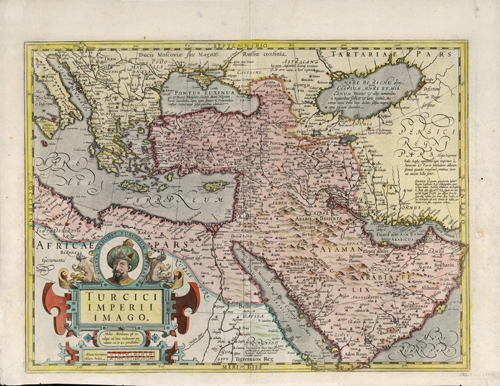
Ottoman Empire, early 17th century. Library of Congress

At its height, the Ottoman Empire (1299-1922), controlled North Africa, much of the Mediterranean, and portions of the Balkans, Italy, Austria, Hungary, and Russia. Innovations in medicine, mathematics, astronomy, architecture, philosophy, chemistry, physics, calligraphy, weaving, music, and literature are part of their cultural legacy. They gave us scalpels, alarm clocks, and coffee.

The following notes on the decline of the Empire come from A World Undone, 2007, by G.J. Meyer, an excellent history of World War I that I have quoted before.

The high point of the Empire occurred during the reign of Sultan Suleiman the Magnificent, from 1520-1566. The Sultans did not have wives, but large numbers of concubines, who gave them large numbers of sons. Suleiman had 300 women in his harem, but became enamored of a red-haired Russian woman, who later became known as “the witch,” She convinced Suleiman that his favorite son was plotting against him. Suleiman had this son killed and the witch’s son, Selim, installed as his heir. Meyer says:

“Selim the Sot was short and fat and a drunk. He never saw a battlefield and died after eight years on the throne by falling down and fracturing his skull in his marble bath.” Meyer describes the Sultans that followed him as “craven.” This started the Empire’s decline.

*****

Let me put this in bold type:

It only took eight years for a craven leader to begin the ruin of what, for 300 years, had been the most powerful and innovative Empire in the known western world.

Saying goodbye to Missy

Missy, June 21, 2008 to July 11, 2024. RIP

On July 11, three weeks after her 16th birthday, we took Missy to the vet. Although she had other issues, our biggest concern was her back legs and hips. Walking and balance had grown harder for her since the new year. Joint and pain medications had given her some relief and we hoped the vet could do more. This time Missy stumbled and fell in the vet’s office. I’d brought a video showing how hard it could be for her to cross a room. Our vet watched it and said the problem was neurological, probably a spinal cord issue. She said it would not get better and she couldn’t do anything more. We made the compassionate choice. The hard one.

Missy’s passing was peaceful. We knew we had done the right thing, but there still are no words to describe what it was like to come home to a silent house, to the food bowl, the water dish, the bed, and the blankets that she would never use again. Those who have been through it know what it’s like. This wasn’t our first time, but in some ways it was the hardest.

*****

Missy was seven months old when we adopted her on Valentine’s Day, 2009. Her first owners were going through a divorce. There was shouting, and Missy was left by herself in a crate for long hours each day. During her formative months as a puppy, she never had a chance to bond with other dogs or humans. This deficit would be a problem all her life.

Her owners took her back to the breeder who gave her to nearby church that trained dogs to be companion animals for veterans with PTSD. Mary saw Missy and cuddled her in the church office and told me about the beautiful puppy she’d met who couldn’t stop trembling. On Valentine’s Day, the director of the program told Mary that Missy’s PTSD was worse than that of the veterans and asked if we wanted to adopt her?

Mary called me and I leashed up our other two dogs and brought them over. Missy instantly bonded with them. After watching them play and get to know each other, I picked Missy up. She fit in one hand and wasn’t trembling. I carried her out for a private chat. I asked if she wanted to come home with us and instantly knew the answer. By day’s end, she knew she had a home and a family. During those first few weeks, I felt I had known her in a previous life, something I never experienced with any other animal.

“It’s love, they say. You touch
the right one and a whole half of the universe
wakes up, a new half.” – from “On Choosing a Dog,” by William Stafford

Holly, our older dog, was slowing down. Missy and Kit, our other rescue, became inseparable – our dynamic duo. Most of the time, Kit was the ringleader and Missy the sidekick.

The happy memories of more than a decade of good health and good times with those two blend together, but many moments stand out, like the day Missy and I got caught in a rain shower during a walk in the park.

Missy and Kit always brought joy to our days, but never more so than during the pandemic shutdown. As often as possible, we’d start each morning with a walk in the park. We came to know other dog walkers and strollers, and sometimes those conversations were the only outside social contacts that day.

Kit had been diagnosed with a heart murmur in 2016. We’d been treating her with an increasing number of meds since then, but it caught up with her in 2021. The day after Christmas, she had a heart attack and died in her sleep the next night. Missy was never the same.

Though we moved her bed down to our room, at night she’d sometimes pace the kitchen where she and Kit had slept. We took her to doggie day care hoping she’d find new canine companionship, but without Kit, she was fearful and bared her teeth when other dogs approached. Sometimes we’d have to hand feed her to get her to eat.

More than any other picture, this image reminds me of that time. Missy appears to be gazing out at a world she does not understand.

In time, Missy settled into her role as top dog, enjoying the extra attention and morning walks and even getting the zoomies now and then, running six or seven laps around the house, something she’d never done in younger days.

She was never big on “traditional” canine pastimes. When she was younger, Kit would fetch a tennis ball until your arm was too tired to throw it, while Missy would wander off, uninterested. She was never a big fan of squeaky toys either, but she would invent her own little games. One such game led to one of my favorite photographs of her.

Last summer, before the trouble with her legs began, she went through a phase of hooking her front legs over the sides of her bed and using her hind legs to drag it out of whichever room it was in and into the hall. We never could figure out why.

Her bed was usually next to ours or in the meditation room where I sit at the end of the day. Missy usually joined me, but that summer she sometimes wouldn’t settle until she’d moved the bed into the hall. One evening she dragged it the wrong way – into a corner. It was hilarious and I made a video and this photograph of her efforts. Then I moved the bed into the clear so she could drag it the rest of the way out of the room.

July 24, 2023

I love this picture. This was not the last time she was playful, but it’s the last photo I have of one of her quirky styles of play. During her last six months, her physical and cognitive problems grew worse. She was less active, but up until the end, I think she felt loved.

Her vet sent a nice note that said, “You gave her a great life.” We always did the best that we could for her.

*****

“I wondered if God might have an easier time using animals to communicate who God is, since they do not seem as devious and willful as we are.” – Fr. Richard Rohr

Ash Wednesday

“Remember you are dust and to dust you will return.”

As a kid, I was always glad I came from a Protestant household so I didn’t have to give up candy bars or something like that during Lent. I don’t believe I ever took Ash Wednesday seriously until February, 2021, when Mary and I attended a drive-through imposition of ashes at an Episcopal church just 10 days after we’d gotten our first covid shots at a drive through vaccination clinic. With 350,000 Americans dead over the previous 12 months, the line about dust from the liturgy took on new meaning. Still largely in the isolation mode, I “borrowed” the practice of using the next 40 days for reflection and have done so at this time of year ever since.

The Lenten liturgy includes this passage from Matthew 6:19-20, “Do not store up for yourselves treasures on earth, where moth and rust destroy, and where thieves break in and steal. But store up for yourselves treasures in heaven.” The word “treasure,” threw me for a long time. I didn’t think I had many treasures, except perhaps, my iPhone and a few related gadgets. But during Lent in 2021, in a moment of insight, I thought I saw a connection between the Gospel word “treasure” and the core Buddhist concept of “refuge.”

Buddha summed up the “dust to dust” problem in the concluding lines of the Diamond Sutra:

“Like a tiny drop of dew, or a bubble floating in a stream;
Like a flash of lightning in a summer cloud,
Or a flickering lamp, an illusion, a phantom, or a dream.”

“So is all conditioned existence to be seen.”

We take refuge in any number of things, people, and aspects of our ordinary lives: family, pets, friends, work, nature, hobbies, organizations, churches, creative endeavors. We take refuge in watching the Super Bowl in February, even though the 49ers sometimes lose. But no matter how we distract ourselves, we know that our houses, and family, and friends, and pets are fleeting, like a drop of dew on a leaf.

These are our “treasures on earth.” While they bring comfort and happiness, they don’t bring true security, because however much we avoid it, we know, there are no guarantees. A Tibetan meditation manual by Mipham Jampal Gyepa says: “What appears as happiness is deceptive and will change. All ordinary perceptions are the cause of distress.”

Buddhism explicitly posits ordinary and extraordinary perceptions. A conditioned and an unconditioned existence. A relative and an ultimate reality. There are also three “kayas,” or “bodies.” The physical body perishes at the end of each incarnation, but there is also a Body of Enjoyment (corresponding, I believe, to the Western idea of an “astral body”), and a Body of Ultimate Truth.

As I understand it, Christianity implicitly posits parallel concepts of relative and ultimate realities. A Kingdom of Earth where our treasures are not safe, and a Kingdom of Heaven where they are. A physical body that comes from dust and returns to dust, as a well as a Soul which doesn’t perish. James Hillman pointed out that in early Christianity, Paul speaks of a triune human nature: “May your whole spirit, soul, and body be preserved blameless at the coming of our Lord Jesus.” I Thessalonians 5:23.

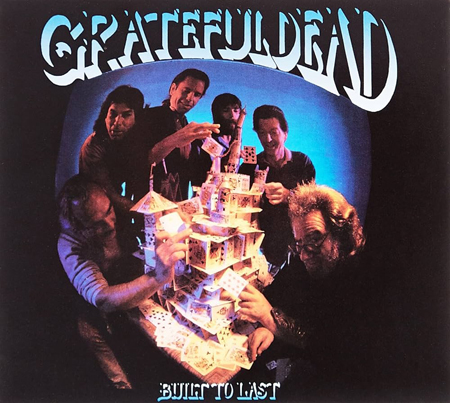
The message of Ash Wednesday always reminds of the constant longing that I find poignantly expressed in this line from the title song of the last Grateful Dead studio album: “Show me something built to last.”

Both Christianity and Buddhism talk of a condition beyond concepts that is “built to last,” which exists as a “Kingdom” or a state of realization within us. This, I believe, is a source of our tales of heroic quests from around the world, as well as all of our contemplative traditions.

This is a perfect time of year to reflect upon and even explore them.

In Celebration of Banned Books

Happy New Year, friends! During a lunchtime conversation with Mary, the name of Ray Bradbury came up, which reminded me of the first book I was told not to read and the pleasure I had in reading it.

My parents loved books and passed their love of reading on to me. One night when I was in the sixth grade, we went to the Burger Pit in Los Gatos, California. Someone had left a Sci-Fi paperback in the booth where they seated us. The cover featured a fetching space maiden in skimpy garb, in the clutches of an ugly alien with tentacles.

“You don’t want to read that trash,” my mother said. Of course I did! I left the restaurant with the book tucked in my waistband. I found a flashlight in a kitchen drawer to read it when I was supposed to be sleeping. It probably was trash, since I can’t remember the plot, if it had one, and I soon was back to reading my favorite author at the time, Jack London. His best known book, Call of the Wild, was burned in Nazi Germany, but has not yet been banned in Florida. Be sure not to tell DeSantis that London was a socialist!

A list of 300 books banned in Florida contains some striking omissions. Nineteenth century books like Walden and Uncle Tom’s Cabin did not make the list, nor did Tess of the D’Ubervilles, which comes to mind because in high school, after I saw the movie version of Far From the Madding Crowd, with Julie Christie and Alan Bates, I went on a Thomas Hardy reading binge.

Here are some of the authors I read in high school, to whom I am deeply grateful for helping to shape my outlook on life:

Henry Miller. Sherwood Anderson. Theodore Dreiser. Sinclair Lewis (I devoured work by authors of the so-called “Chicago Renaissance”). Nathaniel West (see Day of the Locust if you don’t know where the name, Homer Simpson, came from). Edwin Arlington Robinson, after I learned that his poem, Richard Cory, inspired the Simon & Garfunkel song. Shunryu Suzuki – I purchased Zen Mind, Beginner’s Mind because I wanted to learn to meditate. Now, after decades of living and meditation practice, I have a decent grasp of what he was saying, but I suspect there are places that would burn this classic the way a church group in Alamogordo, New Mexico burned books by Tolkien in 2001 after determining they were the work of Satan. I’m sure there were more, but these are the authors that first came to mind.

The only thing I can think to pass along to students who are sickened by the notion of politicians dictating what they can read and think are these words posted on Twitter by Stephen King, who has 16 books banned in Douglas County, Florida:

“Hey, kids! It’s your old buddy Steve King telling you that if they ban a book in your school, haul your ass to the nearest bookstore or library ASAP and find out what they don’t want you to read.”

What is your quest?

Monty Python fans will recognize my title as a reference to Monty Python and the Holy Grail, a hilarious movie which is available on Netflix. Hero tales sometimes include riddles that must be solved or questions that must be answered in order to proceed. In Monty Python’s take on the Arthurian legend, the questions are: “What is your name? What is your quest? What is the airspeed velocity of an unladen swallow?”

On a more serious note…

The idea I want to discuss is that each soul comes into this world with with a purpose which is forgotten at birth and must be remembered for that life to be successful. This is an ancient notion that has appeared in written and oral form for millennia. We find the theme, with variations, in such places as “The Myth of Er” in Plato’s Republic, in The Silver Chair, one of C.S. Lewis’s Narnia Tales, and in James Hillman’s The Soul’s Code, the only one of his many books that became a bestseller.

The idea of such personal destinies came to mind recently as I watched a video by Michael Meade, a storyteller, mythologist, and former colleague of Hillman. He retold an African tale about souls in the Otherworld watching events on earth. When they are drawn to a particular place, situation, or family, they travel with a personal spirit guide to the place of birth. The guide is born with them, as an inner guardian, who will help that soul remember why it chose to be born, as it always forgets when it enters a womb.

In The Soul’s Code, Hillman proposes an “acorn theory” of human development, which he explains is more like a myth than a psychological axiom. As an acorn contains the pattern for the oak tree it will become if circumstances permit, so a child comes into this world with a destiny or “sense of fate.”

It’s important to note that in the first chapter of The Soul’s Code, Hillman explicitly says the book is not addressing questions of “the meaning of life…or a philosophy of religious faith…But it does speak to the feelings that there is a reason my unique person is here and that there are things I must attend to beyond the daily round.”

In an interview first published in 1998 and republished after his death in 2011, Hillman said of his acorn theory, “The same myth can be found in the kabbalah. The Mormons have it. The West Africans have it. The Hindus and the Buddhists have it in different ways — they tie it more to reincarnation and karma, but you still come into the world with a particular destiny. Native Americans have it very strongly. So all these cultures all over the world have this basic understanding of human existence. Only American psychology doesn’t have it.”

Hillman gives several examples of the difference between his “acorn theory” and the psychological theory of “compensation.” He mentions Manolete (1917-1947), a famous Spanish bullfighter who, as a child, was frail, shy, and “clung so tightly to his mothers apron strings” that even his sisters teased him. Traditional psychological theory would posit that he chose a macho profession to compensate for being a mama’s boy. Hillman turns that argument around. What if a dim awareness of his destiny was present during Manolete’s childhood (his acorn years)? No little boy could handle the intimation of facing charging, thousand pound bulls, so of course he stayed close to his mother!

Hillman never pretends to have a complete set of answers, especially to troubling questions like the origin of “bad seeds,” like Hitler, Manson, or serial killers. Hillman is also cautious of any formulation that would single out kids who are “troublemakers,” noting that Truman Capote was viewed as an “impossible child.”

Meade and Hillman are both concerned with how “ordinary” people find their inner calling, those of us who don’t begin to play the piano or chess at the age of four. Hillman said the “first step is to realize that each of us has such a thing [as a calling]. He then suggests we review our lives, looking especially at “coincidences” or “some of the accidents and curiosities and oddities and troubles and sicknesses and begin to see more in those things than we saw before. It raises questions, so that when peculiar little accidents happen, you ask whether there is something else at work in your life.”

One lifelong thread for me began in childhood, though I would only begin to understand its import years later.

I spent my first nine years in a semi-rural area, with trees to climb, woods to explore, and apples to snitch from the orchard of a farmer who lived over the hill. When my family moved to a quarter acre lot in a suburban California, it often felt claustrophobic. One late afternoon, after everyone had gone home, some impulse led me back to the schoolyard. I lay on my back in the grass of a baseball field and gazed into the clear sky. I don’t know how long I was there, but I didn’t want to get up. When I did, I experienced a refreshing sense of spaciousness and peace.

Several times over the years, at critical moments, I found that same peace and renewal in gazing into the sky, but it was only during the last decade that I learned from a Tibetan lama that sky gazing is a classic meditation practice, often used to teach students “the nature of mind” (clear, like the sky, and unaffected by passing “mental events,” just as the sky is not affected by clouds, rain, or smoke). Such practices became central during the second half of my life.

For both Hillman and Meade, the royal road to understanding and finding our deeper purpose is imagination, and with it, the willingness to listen to the “small” thoughts or impulses we often ignore. Like Joseph Campbell and the first generation Jungians before them, they both look to traditional stories, legends, and myths as means to unlock clues that are hidden within.

Finding our authentic selves, for our own good and the good of a world in transition is a key theme on Michael Meade’s website, Mosaic Voices, where he regularly presents writings, online workshops and podcasts that discuss this and related topics. (He’s presenting a free talk tomorrow, July 13, with a video available afterward – I have no personal stake in this, other than interest).

The consequences of ignoring inner promptings to discover our own authenticity can be devastating. In 1998 Hillman said:

“I think our entire civilization exemplifies that danger. People are itchy and lost and bored and quick to jump at any fix…They have been deprived of the sense that there is something else in life, some purpose that has come with them into the world.”

If this observation, made 25 years ago was relevant then, how much more it is now!!
The first American to die in the “Great War.”

On July 1, 2016, I published a post about the Battle of the Somme, one of the greatest military disasters of all time. The battle lasted four and a half months, claimed more than a million casualties on both sides. The British and French forces gained a total of six miles of mud.

I’m reposting the section which outlined the story of Alan Seeger, Pete Seeger’s uncle, who was a young poet and expat in Paris in 1914. He loved France so much that he joined the Foreign Legion to defend his adopted land. His unit went into battle at 4:00 pm on July first and Alan did not survive.

From the original post:

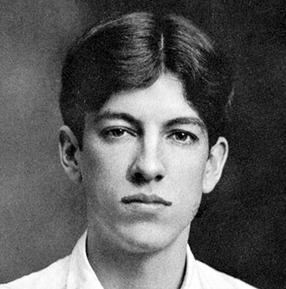
The first American casualty of the first world war was Alan Seeger, a 28 year old poet. Seeger graduated Harvard in 1910, spent two years in Greenwich Village, and then moved to Paris, where he thrived in the bohemian atmosphere of the Left Bank. When war broke out, he joined the French Foreign Legion to defend the land he loved so much.

In his last letter, dated June 28, 1916 Seeger said:

“We go up to the attack tomorrow. This will probably be the biggest thing yet. We are to have the honor of marching in the first wave.  I will write you soon if I get through all right. If not, my only earthly care is for my poems.”

Seeger did not advance with the first wave; his regiment was held in reserve until 4:00 pm on July 1, then ordered to advance on the village of Belloy-en-Santerre.  His friend, John Keegan, wrote in his diary:  “How pale he was! His tall silhouette stood out on the green of the cornfield. He was the tallest man in his section. His head erect, and pride in his eye, I saw him running forward, with bayonet fixed. Soon he disappeared and that was the last time I saw my friend.”

These prophetic lines are from one of Seeger’s last poems, “I Have a Rendezvous with Death.”

Alan Seeger
Alan Seeger

God knows ’twere better to be deep
Pillowed in silk and scented down,
Where love throbs out in blissful sleep,
Pulse nigh to pulse, and breath to breath,
Where hushed awakenings are dear…
But I’ve a rendezvous with Death
At midnight in some flaming town,
When Spring trips north again this year,
And I to my pledged word am true,
I shall not fail that rendezvous.

From “I Have A Rendezvous with Death” by Alan Seeger

Between July 1 and November 18, 1916, there were 420,000 British, 200,000 French, and 500,000 German casualties along the Somme. Though we only know and can tell a few of those stories, it is good to do so at the time of this centennial.  Lest we forget their sacrifice. And lest we again entertain the delusion that a war can end all wars…

Reflections on Soul and Soul Loss

Down the Rabbit Hole by Kbetart, CC BY NC-ND 2.0

One morning in the fall of 2021, as Mary and I walked the dogs in a nearby park, we turned a corner, and at the other end of a parking lot, saw several police cruisers pulled up next to a pickup truck with a camper shell. The area was cordoned off with caution tape. The pickup was there almost every morning, so although we had never seen or spoken to the owner, we assumed it was one of the homeless men who spend their nights in the park. We chose another path to continue our walk, and I remember thinking that it seemed like a lot of police to bust a guy for sleeping in his car.

The next day we learned the man had hanged himself from the tree next to his truck.

It’s impossible to grasp the full extent of suffering and the death toll of the pandemic years, and just as the world did after the 1918-19 pandemic, we seem hell bent on trying to act like things are back to normal, but out of all the statistical and personal losses, this man’s death continues to haunt me. Potentially, there was help nearby if he had been able to reach out. There’s a megachurch, with various outreach programs, visible from the place where he died. A twelve-step group met several days a week that year in the park near the spot where he parked. Other homeless people sometimes gathered in the evenings for company or to share a pizza, but this man he never seemed to have joined them.

Most of us know what it’s like to get stuck in a dark place, where there doesn’t seem to be any way out. Most of us might also agree that the culture, the nation, the world are in a parallel state. In earlier times, in shamanic cultures, “soul loss” was the diagnosis for conditions we now call Anxiety Disorders, Dissociative Disorders, PTSD, and in general, the feeling of being “outside oneself,” “beside oneself,” or “not all there.”

But what kind of soul is it that can be lost and found? This has been a world-wide concern of shamans, spiritual seekers, and poets for millennia and has resurfaced for modern psychotherapists like Carl Jung and James Hillman.

Soul eludes precise definition, though I suspect everyone has a sense of it. Somehow it relates to depth, to intensity, to vibrant experience. Contact with soul, for an individual or a group, involves a sense of connection to an inner wisdom, an inner compass, like touching “the still point in the turning world,” to borrow Eliot’s phrase. To be out of contact with soul was reflected in a line from Yeats, “Things fall apart; the centre cannot hold.”

At the end of 2016, a lot of people in the Bay Area were upset by the election of Donald Trump. I was invited to a two day soul-retrieval ceremony in the Bon Tradition of Tibet, which dates back thousands of years and has shamanic roots. Tenzin Wangyal Rinpoche, a contemporary Bon meditation master, wrote that “In the context of the Bon soul-retrieval practice, the soul…is understood as the balance of the subtle energies and related qualities of the five elements: earth, water, fire, air, and space.”

At the end of the second day, the presiding lama performed a traditional test of this ceremony’s success. The result was about 50% effective, and that’s what it felt like subjectively – nothing had really changed. I found the result disappointing though not surprising. The ceremony grew from indigenous roots, among a people who shared the same consensus reality, a condition that no longer exists in America, where it feels like our 20th worldview is gone and the future is not yet in sight. Also, regardless of our conscious beliefs, at deeper levels, we are steeped in the imagery of our native culture, and other iconography, no matter how attractive, remains more distant. As Garrison Keeler once quipped, “In Minnesota, even the atheists are Lutherans because it’s a Lutheran God they don’t believe in.”

Joseph Campbell wrote extensively of the Grail Legends, which became popular in Europe during the liminal time between the dissolution of the medieval world and the emergence of the Renaissance. The mysterious Grail, which could heal individuals, the kingdom, and the land, was something mystical, sometimes imagined as the cup of the last supper, and at other times, as a stone, like the philosopher’s stone of alchemy. A key feature for Campbell was that every seeker of the Grail had to enter the wilderness alone.

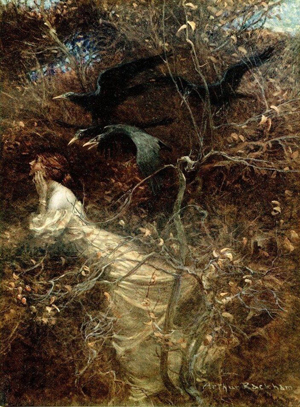
“Haunted Wood” by Arthur Rackham. Public Domain

In the Grail stories, a single hero (in some versions, Galahad, in others, Parsifal) finds the sacred object which redeems the kingdom and the king. No single hero or culture or nation can solve the issues as complex as those which confront the entire planet during our time of cultural dissolution. Solutions that seemed to work in the past are the very source of the problems that face us now.

Like it or not, every individual now living has the choice of clinging to nostalgic fantasies of an imagined idillic past, or of looking within to see what our individual soul and the soul of the world need from us now. The time of the winter solstice and the New Year is conducive to such reflections. “Peace and an hour’s time” are needed for creativity, according to photographer, Edward Weston, though he admitted that neither are easy to attain. How to get there is worth reflection as the new year dawns, and worth considering in the new year at greater length here.

Meanwhile I wish you all Happy New Year, with peace and time to enjoy it.