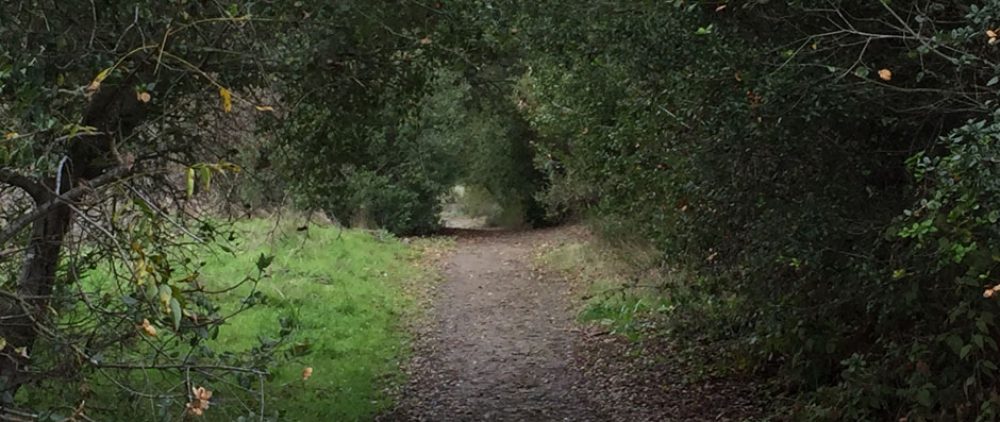
The Water of Life

“Amidst a world increasingly disoriented and at war with itself, each person carries with them the seeds of a unique and valuable story trying to unfold. The youngest part of each psyche still longs to find the holy waters that can ease the pain of living and make life whole and meaningful again.” – Michael Meade

The Water of Life is a German folktale collected by the Brothers Grimm.  It shares a pattern with stories found all over the world:  the youngest brother or youngest sister, the one whom everyone else regards as incompetent, succeeds in a task or quest where the “wise” siblings fail.  In doing so, they bring new life to themselves and to the land.

Carl Jung analyzed The Water of Life in detail because it so neatly aligns with his theory of the four functions – thinking, feeling, intuition, and sensation – which are known to many through the Myer-Briggs Personality Profile.  Jung believed that at critical points in our life, renewal comes through “the inferior function,” the one that is least developed.  This “least competent sibling” lives closest to the unconscious where the healing waters lie.

The story has been a favorite of those who write about folklore from a psychological perspective.  One of these is Michael Meade, who wrote, Men and the Water of Life: Initiation and the Tempering of Men in 1994.  The original version, which analyzed six classic folktales, was based on the work he did hosting large men’s gatherings with James Hillman and Robert Bly.  In 2006, he revised the book and renamed it, The Water of Life:  Initiation and the Tempering of the Soul in an effort to broaden the scope to include both genders.  One more update preceded Meade’s release of an ebook last year.

A new urgency informs the latest version in light of the economic and ecological crises we face.  All along, Meade emphasized that the story speaks to cultures as well as individuals, for both can become rigid and stuck.

So let’s look at the story.  Here is the whole text for those who wish to pursue it: http://www.authorama.com/grimms-fairy-tales-51.html).

A king lies dying.  He calls his three sons and tells them only the Water of Life can save him.  The oldest sets out, looking neither right nor left and soon passes a dwarf by the side of the road.

“Where are you riding so fast, looking neither right nor left?” asks the little man.

“What’s it to you, runt?” asks the prince.

The dwarf is furious.  He speaks a few words, and before long, the oldest son finds the valley walls closing in on him.  He keeps going, looking neither right nor left, until he and his horse are wedged in the rocks unable to move forward or back.

The second son sets out, disrespects the dwarf, and soon he too is stuck.

When neither of his older brothers returns, the youngest begs permission to go on the quest.  Figuring his last son, who has  reputation for being odd, has no chance if the clever brothers are lost, the king is reluctant.  At last the third son wears him down and wins permission to venture forth.

When the dwarf asks where he is going, the youngest son gets off his horse and says, “I seek the Water of Life for my father who is dying.”

“Do you know where to look?” asks the dwarf.

“No,” say the prince.  “I have no idea.”

Because the youngest son is humble and shows him respect, the dwarf points out the road and gives him magical implements he will need to win the Water of Life.

The dwarf helps the youngest son

Others have written long chapters about this part of the story.  I could do the same but I don’t think I need to.  People who live with stories – most readers of this blog, in other words – are going to pick up the gist pretty fast.  Still, a few points that others have made bear repeating.

  • Jung used the dying king to illustrate the changes that come at midlife.  The energy that propels us into the world through our first three of four decades is often exhausted and in need of renewal.  Everyone knows the cliche of the business exec who turns 40 and buys a corvette and a trophy wife.  Most people are wiser than that, but it is the time when renewal comes from the parts of ourselves that we have ignored or suppressed while looking neither right nor left.  As Michael Mead put it, “Only when we are at the end of our wits do we turn to the deeper wit of the youngest brother.”
  • Students of folklore know that success most often hinges on finding a magical ally, and in many stories, the older and “wiser” brothers and sisters blow it as they do here, with arrogance.  It makes little difference whether we understand the dwarf as an archetype of the deep psyche or as our ancestors did, as a creature of the Otherworld which is never far away.  Respect is essential.  The unconscious can bring inspiration or neurosis; magical beings can bless or curse.
  • Meade calls the first two brothers, “the ego brothers.”  These are the “well adapted” parts of ourselves, the inner movers and shakers who get things done.  There are plenty of times in the modern world when you don’t want to look right or left, when you need to charge ahead.  But when our best ideas get us stuck, as they eventually will, we need the humility of the younger brother.  Free of ego, the first step he takes toward healing, both for himself and his father, is to admit, “I do not know the way.”

I read Michael Meade’s first version of this book in the early ’90’s, and it came to mind very powerfully last summer, when our government ground to a halt – as stuck as the brothers pinned between the rocks.  Wouldn’t it have been refreshing to hear even one of our leaders speak the truth and confess, “I don’t know which way to go?”  Unfortunately, no one gets re-elected that way; our leaders are still charging ahead, looking neither right nor left.

Intuitively we know there are times when business as usual no longer works.  As Meade puts it,“Once it has been lost, the Water of Life can only be found by wandering off the beaten path.”

To Be Continued


On Fairy-Stories by J.R.R Tolkien

Once in a while, I worry that I have said everything I have to say, that I have nothing left to blog about.  The mood hit yesterday, after I hit the “Publish” button, and it lasted a good 20 minutes.

Then I remembered that for the last three years or so, my battered and yellowing copy of The Tolkien Reader has been stashed in the software cabinet, along with CD’s for Office, Photo-Shop, and Quicken.  I have no idea why I put it there, but that’s where it stayed because I knew where it is was and it seemed as good a place as any.

When I say yellowing, I mean the pages of this book are really yellow:  it must be at least twenty-five years since I opened it, but I remembered Tolkien’s essay, “On Fairy-Stories” and had a look.

It was downright eerie to see how certain passages I had underlined decades ago are relevant to my present writing interests and concerns.  For instance, those who followed this blog in February will remember a three-part series I wrote on shape-shifters.  “The trouble with the real folk of Faerie is that they do not always look like what they are,” says Tolkien.

Tolkien asks what a fairy story really is and notes that it is not just a story about fairies.  It is also not a story for children, a connection he dismisses as a cultural quirk.  Fairy stories are, he says, “stories about…Faerie, the realm or state in which fairies have their being.”

Faerie lies beyond this world, in an intermediate realm, between the extremes of heaven and hell.  Tolkien quotes the ballad of “Thomas the Rhymer (Child #37) where the Fairy Queen shows Thomas three paths.  They will take the third, which winds into the unknown hills:

O see ye not yon narrow road,
So thick beset wi’ thorns and briers?
That is the Path of Righteousness,
Though after it but few inquires.

‘And see ye not yon braid, braid road,
That lies across the lily leven?
That is the Path of Wickedness,
Though some call it the Road to Heaven.

‘And see ye not yon bonny road
That winds about the fernie brae?
That is the Road to fair Elfland,
Where thou and I this night maun gae.

Analogies jump to mind:  the imaginal realm of Archetypal Psychology, the place of soul, between the physical world and the formless world of transcendent spirit.  The astral world of Hindu cosmology, described in detail in Paramahansa Yogananda’s Autobiography of a Yogi, which is far more subtle than physical reality, and far more dense than the realm of spirit.  I am not just being scholarly here, but trying to point to a key fact:  Faerie is analogous to the place of dreams and nightmares, of angels and demons, in old and new traditions around the world.  I could cite a lot more examples.

According to Tolkien, some our most primal desires lie in our fascination with tales of Faerie:  the desire for “the realization, independent of the conceiving mind, of imagined wonder.”  Another is “the desire of men to hold communion with other living things.”  And finally, we look to “the land of the ever young” in our longing to escape death.  And though we can’t pull that off in physical reality, Tolkien says that “fully realized” or “complete” fairy tales end with “imaginative satisfaction” of some of our deep desires.  They give us “a fleeting glimpse of Joy, Joy beyond the walls of the world, poignant as grief.”

I’d recommend this essay, written in 1939, especially to writers of fantasy literature, but to writers in general, for Tolkien has much to say about another primal desire, the desire to be a creator of worlds – “sub-creator” is the phrase he uses.

***

And finally I will end with some unexpected good news for Tolkien fans.  Today’s Sacramento Bee reported that filming of The Hobbit has started after numerous delays.  This will be a two year, two film project, directed by Peter Jackson, staring Martin Freeman as Bilbo, and also featuring Elijah Wood, Ian McKellan, Cate Blanchett, and Orlando Bloom.   Release of film number one is expected in late 2012.  Something else to look forward to for those who love to explore the world that Tolkien created.

The Peddler of Swaffham

A comment here on a post about ghost stories put me in mind of certain tales that everyone has seen or heard in one variation or another.  Show of hands – how many heard “The Hook Man,” around the time they started to date?  How many variations of “The Vanishing Hitchhiker” have been made into TV movies or episodes of The Twilight Zone?

A much older tale that is widely distributed tells of a poor man who becomes rich by paying attention to a dream.

I first heard “The Peddler of Swaffham” told by Robert Bela Wilhelm, who, with his wife Kelly, has devoted his life to inspiring people to tell stories and explore the spirituality of stories.  Be sure to check out some of the riches on the Wilhelm’s website: http://www.storyfest.com.

Carving of the Peddler in a Swaffham church

Bob told “The Peddler of Swaffham” on one of his “Storyfest Journeys.”  More about the journeys soon when I dig out some of the pictures.

The gist of the story is, a peddler from a village in Norfolk dreams that he will find gold if he travels to London bridge.  He makes the journey with his dog, spends three days and nights on the street waiting, and is wondering what went wrong when a merchant asks what he is about.  The peddler says he dreamed of the riches he would discover at London Bridge.  The merchant laughs and says dreams are just foolishness:  “Why just last night I dreamed of a bag of gold under the peddlar’s oak in the village of Swaffham, wherever that is, but you don’t see me running all over the countryside, do you?”

According to Wikepedia, (http://en.wikipedia.org/wiki/Pedlar_of_Swaffham) the first version of this story was a poem by Rumi, In Cairo Dreaming of Baghdad; In Baghdad Dreaming of Cairo, that later became a story in The Arabian Nights. I know I have seen a Jewish version of the story where the city is jerusalem. The story more recently was incorporated into the plot of The Alchemist by Paulo Coelho.

Monument to the Peddler in Swaffham

What the Peddler of Swaffham or Cairo or Jerusalem has in common with countless folktales all over the world is it’s lesson that it is voice of the small, the despised, the overlooked, the ignored – the dream, the third son, the dwarf, the old woman, the child, the animal beside the road, that points the way toward the riches of a more awakened existence.

I once heard a psychology professor say that the way to get moving again if we are stuck in our lives is to listen for the small hunch, the little impulse, the passing thought that, “Oh, this might me interesting to try.”

The same teacher, on another occasion said that in his study of folklore, the greatest predictor of success, bar none, was the hero or heroine winning the help of a talking animal – but that is a story for another occasion.