The Devil’s Sooty Brothers

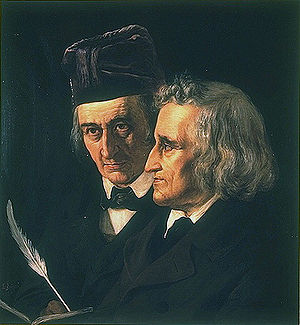
Wilhelm and Jacob Grimm, 1855. Painting by Elisabeth Jerichau-Baumann

Wilhelm and Jacob Grimm, 1855. Painting by Elisabeth Jerichau-Baumann

“People think stories are shaped by people. In fact, it’s the other way round.” – Terry Pratchett

“The Devil’s Sooty Brother” is the catchiest name among a group of tales from the Brothers Grimm about career soldiers who are discharged when they are wounded, or peace breaks out, or for no given reason. They find themselves on the road, with a loaf of bread and a few coins if they’re lucky, and no clear path to making their way in the world.

Most of the best known Grimm tales feature young people – a lad or a maiden, just starting out in the world. In contrast, we imagine these soldiers as middle aged career men, whose services are no longer needed. I thought of these stories when I heard that Oreo, “America’s favorite cookie,” will now be produced in Mexico, where Nabisco expects to save $130 million a year. Six hundred people join the hundreds of thousands before them whose working lives have been disrupted by technical, financial, and social changes that continue to accelerate in speed.

Do the old stories have anything practical to say to 21st century people when the world turns upside down?  Maybe…

These stories have elements in common:

  1. The protagonists are combat veterans. They’ve been around the block.
  2. They take up with shady, trickster-like characters, who take them underground, into the darkness, or other trials.
  3. They either are, or must learn to be, trickier than their tricky benefactors. In modern terms, they need to think outside the box, and there, if anywhere, is the relevance for us now. Circumstances may change, but the value of seeing the world afresh, free from habit and preconception, is probably even more vital now than in the “simpler” times when these tales emerged.

I will consider two of the tales of discharged soldiers that depend on wit. I’ll skip several others that hinge more on religious piety and luck. Piety and luck may pay off in real life, but they aren’t satisfying story elements.
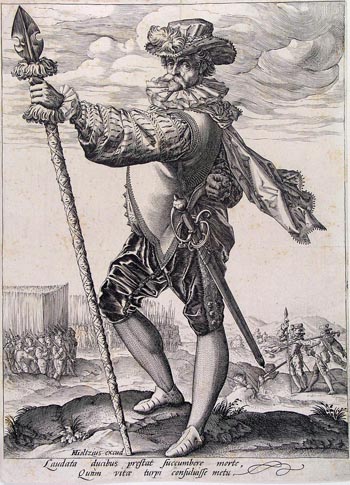
German mercenary pikeman. Wikimedia Commons

German mercenary pikeman. Wikimedia Commons

In our title story, The Devil’s Sooty Brother, (Grimm Tale #100), Hans, a hungry and penniless out of work soldier, meets the Devil in the woods. This Devil is a dark trickster and initiator rather than a personification of evil. If the soldier agrees to the terms of a seven-year contract, he’ll be set for life.  If he violates the terms, he will die, and presumably, be stuck in hell. Continue reading

Hungry Ghosts

Section of Hungry Ghosts Scroll, Kyoto, late 12th c., Public Domain

Section of Hungry Ghosts Scroll, Kyoto, late 12th c., Public Domain

In traditional Buddhist cosmology, there are six major realms of existence. Only two of these, the human and animal realms, are visible. The other four, which include both heavens and hells, are not manifest to our physical senses. Unlike Christian heaven and hell, none of these are forever – the length of one’s sojourn depends on karma.

Many contemporary teachers, while not denying the metaphysical reality of these regions, focus on our inner “location” in the here and now. One who is filled with love and compassion dwells in heaven. The one seething with anger, red in the face, like a devil, at that moment experiences one of the hells.

Hungry ghosts have a region all to themselves; their dominant trait is insatiable craving. Hungry ghosts are depicted with huge bellies but tiny throats and mouths – desperate hunger and thirst that can never find relief.

Never enough, there is never, ever enough,” is the mindset of hungry ghosts, both in the imagined subtle realm and in this world. Addictions and insatiable cravings of all sorts make us hungry ghosts. The pre-repentant Ebenezer Scrooge, the archetypal miser, is the best known western hungry ghost. Now, the Panama Papers reveal how widespread is this disease, and how it drives the leaders and elites in nations throughout the world. Nor do we, at least in “the free world,” get to sit back and righteously condemn “those bad people.” Not in Buddhist thought, at least, where everything is interconnected.

The people of Iceland forced their Prime Minister out of office within 48 hours of the time the story broke. They did the same with the bankers in 2008. We, who have elected officials of both parties who tolerate bailouts and corporate shell games, are are not separate from the hungry ghosts who are fucking this world.

In his public discourse, Buddha never commented one way or another on metaphysical truths. There’s plenty to worry about here and now, he said. If greed locks us into the hell of the hungry ghosts, generosity, the mindset of Scrooge on Christmas morning, opens the gates of heaven.

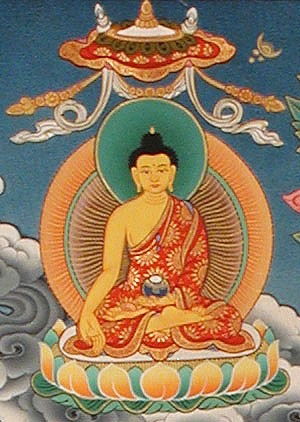
Ratnasambhava, the primordial Buddha of "the wisdom of equality," manifests the virtue of generosity.

Ratnasambhava, the primordial Buddha of “the wisdom of equality,” manifests the virtue of generosity.

Perhaps there are no big or small acts of generosity. Our world, the people in it, and we ourselves, need nothing more urgently at this time.