An ambassador for the power of stories

Author Kate DiCamillo says "Story is what makes us human."

Author Kate DiCamillo says “Story is what makes us human.”

I almost skipped the final segment of the PBS Newshour on Friday.  They announced an interview with the newly chosen National Ambassador for Young People’s Literature, a position I’d never heard of.  I feared it might involve a discussion of post-Twilight, YA romance.  Fortunately, I stuck around, for the interview was profoundly inspiring.

The new National Ambassador, a position created by the Library of Congress in 2008, is Kate DiCamillo, author of Because of Winn-Dixie and The Tale of Despereaux.  The author of these award winning books for children claims to have been the shyest kid ever.  How did she come out of her shell and become an ambassador?  By telling stories, she says.  “And telling stories helped me connect with the world. And it turned me into somebody who can talk to people, I think.”

This Newberry Award winning author calls herself a late bloomer and kept a notebook where she tracked all 450 rejection letters she got before her first story was accepted.  Over the next two years, as ambassador for children’s literature, she hopes to “remind people of the great and profound joy that can be found in stories, and that stories can connect us to each other, and that reading together changes everybody involved.”

I invite everyone to watch Ms. DiCamillo’s interview.  It’s an upbeat testament to the power of stories and the power of persistence by someone whose life embodies these truths.

10 of the Greatest Essays on Writing Ever Written

I was delighted to find this post on WordPress’s “Freshly Pressed” page where it deserves to be. Here’s a collection of essays on writing, more than half by writers whose names are household words (in literary households) – Robert Frost, Henry Miller, Susan Sontag, T.S. Eliot, Kurt Vonnegut, and Joan Didion among them. They all look compelling. I’m looking forward to starting a piece on structure in fairy tales by the editor of “The Fairy Tale Review.” Enjoy!

Chimps in charge

chimp

The day after my post on how to find healthy veggies, Mary and I decided to grab some burgers for lunch.

As we sat down, I noticed “Heart of Stone,” from the Rolling Stones’s first album, playing in the background.  I was contemplating impermanence – how quickly the songs of youth wind up on the oldies station – when the song ended, and “Rudolph the Red Nosed Reindeer” came on.

I looked at Mary.  I muttered an expletive and said, “I thought we were done with all that!”

Our food came, and the music shifted to “Chain of Fools,” a good old Motown classic.  I sighed with relief.  Life was good.  January was good.  January means months and months without “holiday music.”

Or so I thought…

Until “Holly Jolly Christmas” began to play…

More than any other song, “Holly Jolly Christmas” reminds me of pre-transformation Scrooge and the wisdom of his comments concerning boiling certain people in their own Christmas puddings.

“Maybe they just want to hurry us out the door,” Mary said.

I slugged down the rest of my drink.  “It’s working,” I said.

The question I’m left with is, who put together that playlist?  I’m ruling out computer generation, since in my experience, the algorithms, (like iTunes’s “Genius” function) are too sophisticated to create such a mishmash.  I’m left with two theories:

  1. In an effort to save money, satellite radio stations now use institutionalized sociopaths to assemble their playlists.
  2. In an effort to save money, satellite radio stations now use chimps.

I kind of hope it’s the latter, although chimps-in-charge is not a trend that bodes well for things like TV schedules or mid-term election advertising, which will probably start up next week.

If you have any other ideas on who is to blame for Burl Ives in January, please let us know so we can free the poor chimpanzees from blame!

photo by Will Brenner, CC BY-ND 2.0

photo by Will Brenner, CC BY-ND 2.0

Wild Eating

animal house food fight

This post isn’t really about food fights in school cafeterias – some of us have matured (a bit) since those days.  Actually, the photo of John Belushi was a classic bait-and-switch, a ploy to draw you into a post about foods that are good for us.

At the end of November, I caught an interview on NPR’s Science Friday with Jo Robinson, an investigative journalist who specializes in science and health.  She discussed the way humans, since the dawn of agriculture 10,000 years ago, have bred the nutrition out of plants, and what the science of micro-nutrition has recently learned about optimizing our food choices.

eating on the wild side

The interview was a good introduction to Robinson’s bestseller, Eating on the Wild Side, and she led off with a discussion of corn.

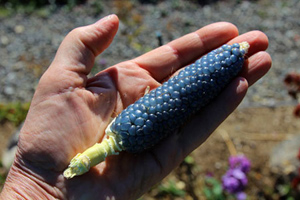
Wild corn came with tough husks and only a few kernels per ear. It didn’t taste very good, but it was healthy, with 20% protein and only 2% sugar.  In contrast, modern corn has 2%-4% protein and sugar as high as 40%.  Still better than Ding Dongs, but headed in that direction.

At the core of this research are phytonutrients, molecular level nutrients that are natural wonder drugs.  Lab work over the last 15-20 years reveals that some phytonutriets increase resistance to heart disease, cancer, diabetes, and Alzheimer’s.  Unfortunately, they tend to make foods bitter, a taste we would rather avoid.

Taste hasn’t been the only factor in denaturing our food.  Carrots were red and purple until 400 years ago, when a group of Dutch growers, paying political homage to the House of Orange, used mutant yellow carrots to create the orange variety we know today.  Unfortunately, orange carrots have 16 times fewer antioxidants than red and purple varieties.

There’s good news on the carrot front; Robinson says we can find the older varieties in seed catalogs, and they actually taste better.  During the rest of the interview, she presented ways to maximize nutrition and the number of beneficial phytonutrients we eat.  Her suggestions included:

  • Eat the skins.  The skin of carrots of any variety contains half the nutritional value, so wash them but don’t peel them and throw the skins away.  Don’t skin potatoes before mashing them.
Blue Jade corn

Blue Jade corn

  • When choosing fruits and vegetables, a rule of thumb is the healthiest colors are red, blue, black, and purple.  There are exceptions, however, like artichokes, which Robinson says are among the best veggie choices.

  • Garlic really is a “wonder drug,” but it’s value depends on two substances combining after the cloves are cut or crushed, and one of these can be damaged if heated too soon.  The solution is to crush garlic then set it aside for 1o minutes before sautéing.

  • In one study three to four servings a week from the cabbage family (cabbage, broccoli, mustard greens, kale, and others) reduced the risk of prostate cancer in men by up to 60%.

  • Daily servings of Welches grape juice, made from Concord grapes, appears to improve the memory of seniors with early signs of Alzheimer’s.

  • The nutritional value of many fruits and veggies increases with cooking.  This includes berries, which makes berry pies and cobblers among the healthiest deserts.

***

Once, when I was younger, I lived as a strict vegetarian for two years.  At the time I was learning to meditate and tried out advice (which proved to be true) that a moderate diet and occasional fasting helps concentration.  My diet is different now, but I’m equally attentive to what I eat; my motive is overall health.

Wherever one stands on the issue of health care, no one can argue that the best way to stay healthy is not to get sick.  Next to quitting smoking and exercise, diet is a major behavioral variable we can tilt in our favor.  The effort is enjoyable to, in a mildly subversive way, like buying nothing on Black Friday.  In an era when the next big corporate move in fruit is patenting GMO apples that don’t turn brown, I find heirloom veggies like blue corn and purple carrots to be especially attractive.

Take a look at Jo Robinson’s website, eatwild.com; you’ll find it informative and inspiration.

***

PS:  Based on several comments, I’m adding links to possible sources of interesting seeds.

burpee.com:  For a long time, the seed catalog of choice.  Now online with info tailored to your climate zone.  I poked around enough to see that they have purple carrot seeds.

Heirloom Seed Companies: I found this link on Facebook. Haven’t checked it out yet, but it looks interesting.

A teller of sacred stories

Robert Béla Wilhelm, storyteller

Robert Béla Wilhelm, storyteller

In 1965, a young New Jersey college student, in need of money for rent and tuition, took a weekend job as a tour guide at $25 a day, for a charter company that specialized in high school class trips to Washington, DC.  The company gave him a binder of facts and statistics to learn, but the student, Robert Béla Wilhelm, quickly realized that only a story makes facts and statistics come alive.

Sixteen years later, Bob was a university professor and had written his PhD dissertation on the craft and philosophy of storytelling.  His wife, Kelly’s, PhD centered on travel and leisure.  Both had grown up in storytelling families, and in 1981, they founded Storyfest Journeys (see their Facebook page too) with an inaugural trip to Ireland.  After more than 50 storytelling oriented, small group tours to Europe, the Pacific, and destinations in the US, they are still at it.  It was thanks to the Wilhelms that Mary and I traveled to Iceland in 2012.

Over time, Bob and Kelly have focused their energy on mentoring storytellers and specializing in sacred stories.  I just received word that Bob has completed a 17 year labor of love that he calls, “Parables Today, A Weekly Lectionary Storybook.”  For every Sunday of the three year lectionary cycle of the Catholic church, he presents stories from around the world along with artwork, and reflections.  The tone is open and ecumenical; many of the tales will appeal to people of any faith or none at all.  They  are now freely available at sacredstorytelling.org.

I was thinking of Robert Wilhelm when I wrote my second post on this blog, which featured a poem called “Story Water” by Rumi.  I think it’s safe to say that Robert has carried on Rumi’s tradition, which centers on the understanding that our spiritual dreams and longings are woven of stories.  Abstract understanding may sometimes move the heart, but more often it is The Prodigal Son, or Arjuna at Kurukshetra, or Coyote coming along that opens our eyes of understanding.

If you love stories, take a look at the stories that Robert Wilhelm loves.

Jung’s Tower: simplicity and the inner life

Jung's Tower House, Bollingen, Switzerland, by Andrew Taylor, 2009.  CC BY-SA-2.0

Jung’s Tower House, Bollingen, Switzerland by Andrew Taylor, 2009. CC BY-SA-2.0

Recent news of technological incursions into consciousness itself (virtual reality and altered memories); almost daily revelations about NSA spying; suggestions that social media “isolates people from reality;” it’s enough to make you want to unplug all the gadgets – at least for a while!

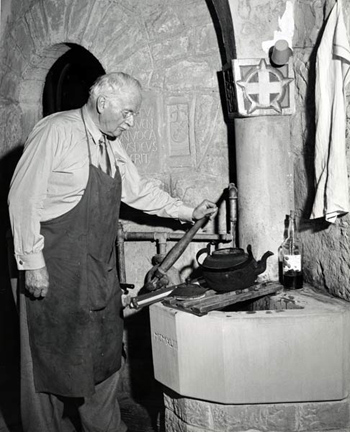
Renowned psychologist, Carl Jung (1875-1961) did just that, for months at a time, in a tower-house complex he started building in 1923 and continued to work on for the rest of his life.  He often spent months each year living as simply as possible, without electricity or running water.  It’s easy to think he lived in a simpler time and couldn’t have imagined modern complexity, but consider these words he wrote in his autobiography, Memories, Dreams, Reflections, published in 1961, the year he died:

“We rush impetuously into novelty, driven by a mounting sense of insufficiency, dissatisfaction, and restlessness.  We no longer live on what we have, but on promises, no longer in the light of the present day, but in the darkness of the future, which, we expect, will at last bring the proper sunrise.  We refuse to recognize that everything better is purchased at the price of something worse; that, for example, the hope of greater freedom is canceled out by increased enslavement to the state, not to speak of the terrible perils to which the most brilliant discoveries of science expose us.
………………………
…new methods or gadgets, are of course impressive at first, but in the long run they are dubious and in any case dearly paid for.  They by no means increase the contentment or happiness of people on the whole.  Mostly they are deceptive sweetenings of existence, like speedier communications which unpleasantly accelerate the tempo of life and leave us with less time than ever before.”
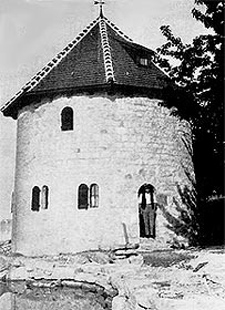
The tower, phase 1, 1923.  Creative Commons

The tower, phase 1, 1923. Creative Commons

Ten years before starting the tower, Jung had a painful break with Freud that precipitated a period of disorientation and a huge uprush of the kind of unconscious contents he had witnessed in schizophrenic patients.  Feeling that his experience was purposeful, he chose to submit to the unconscious with writing, art, and the effort to understand.  Out of this phase of turmoil and uncertainty, his unique psychological insights were born.  Paper and ink, he said, did not seem “real” enough to represent his discoveries, so in 1922 he purchased land on Lake Zurich for a “representation in stone” of his “innermost thoughts.”

Phase II, 1927.  Creative Commons

Phase II, 1927. Creative Commons

Jung wrote at length of the parallel developments of his inner life and the tower, over more than three decades, saying things like:

“At Bollingen I am in the midst of my true life, I am most deeply myself”

“At times I feel as if I am spread out over the landscape and inside things, and am myself living in every tree, in the plashing of the waves, in the clouds and the animals that come and go, in the procession of the seasons.”

“I pump the water from the well.  I chop the wood and cook the food.  These simple acts make man simple; and how difficult it is to be simple!”

Jung pumping water at Bollingen ca. 1960.  Library of Congress

Jung pumping water at Bollingen ca. 1960. Library of Congress

While drawing inspiration from Jung, an obvious question becomes, how do I connect with this kind of depth in the midst of my own too-hectic life?  The good news is, we don’t need a tower to live in for months at a time.  The bad news is we need to unplug every day and tune into activities that nourish the soul; this is often hard arrange.  It takes focus, intention, and experimentation to find those things that center us and we are drawn to.  Any number possibilities come to mind:

  • “Spend an hour a day in a quiet room by yourself reading old stories that you find nourishing.”  That’s what Joseph Campbell said when Bill Moyers asked this question during the “Power of Myth” interviews.
  • Meditation, of almost any kind.  This my own core practice.  Zen teacher, Cheri Huber said, “If you start by watching your breath for as little as five minutes a day, it can change your life.”
  • Sports that allow one to get in “the zone,” especially walking, running, or bicycling.
  • Keeping a dream notebook.
  • Writing, though I suspect most bloggers will have the same difficulty I have in putting words at the service of psyche – how do I turn off the writing sophistication I’ve worked so hard to gain?  Can I ever truly use words in a “purposeless” manner, allowing them to go where the wish, without thinking, “Gee, this would make a good blog post?” For any chance of success, I need a definite strategy, like writing fast with a rollerball pen in cheap notebooks.
  • Visual arts or crafts.  Training or skill is not required for this kind of work, and in fact, can get in the way.  Those with artistic training may find it useful to paint or draw with the non-dominant hand.  Jung had no formal art training, but his private journal, The Red Book, only recently published, gives an idea of what may emerge if one is determined to honor the psyche.
Red Book, p. 131.  Courtesy Ox Aham, Creative Commons

Red Book, p. 131. Courtesy Ox Aham, Creative Commons

When I truly examine my own habits, it’s clear that I fritter away enough time with gadgets each day to find the space for this kind of exploration.  It doesn’t need to be with the kinds of activities I outlined above.  I find it’s ok to schedule “time for inner work” the way I schedule time at the gym, but the most powerful new discoveries seem to emerge from those quiet voices at the edge of consciousness, the tiny impulse it is so easy to overlook in our busy lives.

Such an impulse woke me one night at 1:00am one morning.  Instead of going back to sleep, I got up and wrote down a sentence.  That led to a paragraph, and then a page, and then another.  That was the start of the first (and so far only) novel I’ve finished.

Something similar happened to Jung at his tower.  He gave the stonemason at a quarry precise measurements for blocks he needed to build a new wall, but one of the stones arrived in error; it was square, about 20″ on each side.  When Jung saw it, he said, “That is my stone, I must have it!”  Over time, he carved a testament to his life and work on stone which “stands outside the Tower, and is like an explanation of it.  It is a manifestation of the occupant.”

Bollingen stone, main face, CC-BY-SA-3.0

Bollingen stone, main face, CC-BY-SA-3.0

In a seminar in 1939, Jung said:

“We have no symbolic life, and we are all badly in need of the symbolic life. Only the symbolic life can express the need of the soul – the daily need of the soul, mind you! And because people have no such thing, they can never step out of this mill – this awful, banal, grinding life in which they are “nothing but.”

The Bollingen Tower became a vital way for Jung to live the symbolic life, but he would have been the first to insist that we don’t need to carve stone or build houses to find it for ourselves.  All we need is the hunger.  And the will to begin.

What’s coming to TheFirstGates in 2014?

Courtesy Emma Paperclip, Creative Commons

Courtesy Emma Paperclip, Creative Commons

Thanks to everyone who visited this year, old friends and new.  Here are a few year end musings on where this blog may be going in 2014.   These are not resolutions.  Remembering Yoda’s words to Luke, “Do or do not, there is no try,” I don’t make resolutions.  These are sort-of-predictions, aka guesses, based on a line from a Grateful Dead song, “I can tell your future / just look what’s in your hand.”

In the case of theFirstGates, it should probably read, “look at what books are piled up on the table beside you.”  Looking at the titles in the stack, I predict more of the same, only new and (hopefully) better.

I’m currently reading a book I got for Christmas, Grimm’s Complete Fairy Tales.  The key word is complete – I haven’t read all the tales before.  The other great feature is the Arthur Rackham illustrations.  No one has ever painted Faerie like Rackham, and it’s a place I never tire of visiting.

Another new title is Trickster Makes this World by Lewis Hyde.  Not only is Trickster an ongoing object of fascination, but he pervades blogging just like the rest of life.  I’m reminded of this every time I hit Publish while meaning to click on Save.

And perhaps most important for TheFirstGates, I’m rereading The Dream and the Underworld, one of James Hillman’s important early works.  Here he turns the tables on psychology’s habit of translating the night world of dreams into the language of daylight; serving the ego, in other words.

Dream and the Underworld

Instead of asking what a dream means, Hillman asks what it wants.  This shift is fundamental to all of Hillman’s thought – psychology, the science of the psyche, in service to soul and soul-in-the-world.

Of great interest to me as a blogger is Hillman’s effort to see through literal events to the fantasies, the mythical layers that underly the stories we tell ourselves and the ones we see on the evening news.  The reality in our fantasies and the fantasy in all our realities.

The coming year is unique in one respect: 2014 marks the centennial of the start of that worldwide disaster misnamed “The Great War.”  The first world war has haunted me for years with its end-of-an-age immensity and sadness.  There are millions of stories to tell, and I’ll try to post a few here, from the bumbling youths who sparked the conflict to a young lieutenant named Tolkien who was sent to Mordor in 1916, though the generals called it The Somme.

And finally, as always I will continue to be on the lookout for those stranger-than-fiction events that leave us shaking our heads, wanting to laugh or cry or both at the strangeness of it all.

I wish you all a joyous New Year, and I hope we will all continue to share the emerging wonders of this online experience!

Another great story rediscovered: Bamboo Charlie

Here is another inspiring tale that I bookmarked some time ago and then forgot.  Coincidentally, like the previous post, its subject is a uniquely creative folk artist.  I read about Bamboo Charlie in a memorial published in the L.A. Times in September, 2012.

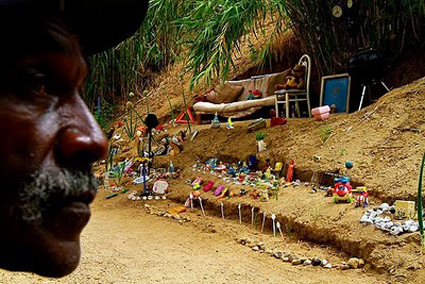
Bamboo Charlie and his whimsical paradise

Bamboo Charlie and his whimsical paradise

Twenty years ago, a homeless Texan named Charles Ray Walker noticed a bamboo grove along a narrow stretch of land by the Los Angeles River in Boyle Heights.  The property owner told Charlie he could stay there if he kept the place clean.

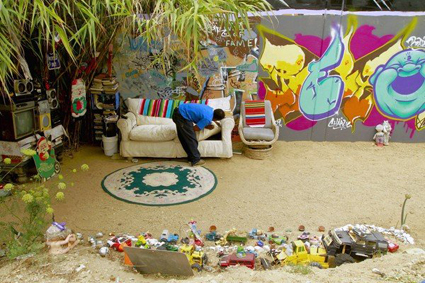
On the strip of land, about 40′ x 200′, squeezed between a parking lot and a warehouse, Walker grew fruits and vegetables.  He carved stairs into the bare slopes and decorated them with hundreds of discarded toys and signs.  He built a shack under a tree, with a TV, bed,and sofa, and then he invited guests to visit: graffiti artists, children and their parents, musicians, police officers, and homeless friends.  He assembled a library out of salvaged books, including best sellers and one called The Semi-Complete Guide to Sort of Being a Gentleman.  Bamboo Charlie was featured on the front page of the L.A. Times in 2010.

"Bamboo Charlie"

During the 20 years he spent on the parcel, he collected cans for money, sometimes working late into the night. Duruing occasional trips back to Texas to visit his family, he operated a crane at a steel company. “I’m not going to ask another grown man for money. I never have, and I never will,” he said. “People expect that from a homeless man.”  

That pride may have contributed to an early death.  He suffered greatly from ulcers during his final years, but insisted he was fine when friends suggested he see a doctor. On Aug. 26, 2012, a young friend named Teyuca found him dead in his shack, of what the coroner determined was heart disease.  He was 61.

“I really think what he did was folk art, built out of scraps and things found, things that people gave him,” Teyuca said.  “He was a mad genius.  He had such a wild imagination.”