Favorite Fictional Detectives

Sherlock Holmes by Sidney Paget.  Public domain.

Sherlock Holmes by Sidney Paget. Public domain.

In literary gatherings, I usually introduce myself as part of the fantasy camp, but I’ve probably read and enjoyed just as many mysteries over the years.  In my previous post, I gave a lukewarm review to James Patterson’s latest Alex Cross thriller.  I think the real reason is that I’ve never bonded to Alex Cross the way I have to other favorite detectives.

Character is key to detective novels just as it is to other types of fiction, and this is separate from an issue that has surfaced over the last decade, the distinction between plot driven and character driven stories.

In character driven tales, some attribute of the protagonist begins and sustains the action, the way Katniss Everdeen’s sacrifice for her sister gets things moving in The Hunger Games.  Mysteries are almost always plot driven – the story begins when the first body is found.

These days, agents and editors say they’re looking for character driven tales.  Dan Brown wasn’t listening when he wrote The DaVinci Code, now one of the five best selling books of all time, a distinction shared with The Bible and Harry Potter.  Like much advice for writers, I think it misses the point.  Regardless of what moves the action, we love novels with characters we love, in worlds we’d love to visit.  Have you ever imagined yourself in Baker Street when Holmes jumps up and cries, “The game is afoot?”

If so, read on!  I’ve listed a few of my favorite detectives, not necessarily in order, for that, like everything else, is subject to change.

Sherlock Holmes:  This is obvious.  How many popular books of today will still be read and loved 100 years from now, spawning a lively stream of new presentations in all the popular media of the future?  I seldom reread mysteries – often there is no point when you know the criminal’s identity, but I still dive into Holmes for recreation.  Has there ever been a more dastardly villain than Dr. Grimesby Roylott in “The Adventure of the Speckled Band?”  And for chills up the spine, one sentence has never been beaten:  “Mr. Holmes, they were the footprints of a gigantic hound!” 

I enjoy all the presentations of Holmes in film, but my favorite movie Holmes is still Jeremy Brett for his perfect blend of genius and madness, without the slightest trace of modesty:

Cadfael:  The Brother Cadfael mysteries were the creation of Edith Pargeter, under the pseudonym, Ellis Peters.  In early 12th century England, during a period of contention for the crown known as The Anarchy, Cadfael, a middle aged and disillusioned veteran of the crusades, becomes a Benedictine monk.  With keen powers of observation, a scientific turn of mind, and an in depth knowledge of herbalism, he solves the many murders that just happen to happen whenever he is near.

I enjoy the film versions more than the books, thanks to renowned Shakespearean actor, Derek Jacobi, who plays Cadfael.

Hercule Poirot and Miss Marple:  Most writers are lucky if they can create a single unforgettable character.  Agatha Christie gave us two.  Sometime in the early 90’s, I went on an Agatha Christie binge, and over the next few years, read all the stories of both characters I could find, some 80 novels in all.  Poirot and Miss Marple turn up often in films and on TV.  I’ve enjoyed several versions of Murder on the Orient Express and Death on the Nile.

The bad news is that Miss Marple stories are usually classed as “cozy mysteries,” a sub-genre with a distinctly unmanly name.  The good news is that  I’m too old to care.  There is no definitive movie Miss Marple, but British actor, David Suchet takes the honors for his portrayals of Hercule Poirot:
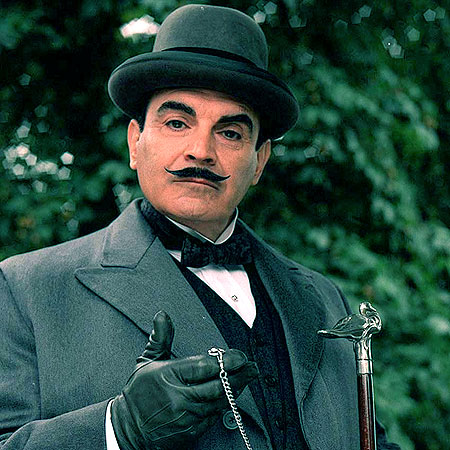
David Suchet as Hercule Poirot

David Suchet as Hercule Poirot

Wallender: To re-establish my manly credentials, I add Kurt Wallender to the list.  Wallender is sort of a Swedish, existentialist, high plains drifter, and the most angst-ridden detective in the history of the world.  The creation of Swedish novelist, Henning Mankell, Wallendar was adapted for British TV, beginning in 2008.  Episodes are show up here on PBS.

The series stars Kenneth Branagh, another great Shakespearean actor.  Branagh says Wallender is “an existentialist who is questioning what life is about and why he does what he does every day, and for whom acts of violence never become normal. There is a level of empathy with the victims of crime that is almost impossible to contain, and one of the prices he pays for that sort of empathy is a personal life that is a kind of wasteland.”  

Don’t watch this guy when you’re feeling blue!

Kenneth Branagh as Wallender

Kenneth Branagh as Wallender

Jim Chee and Joe Leaphorn:  These officers in the Navajo Tribal Police star in 18 mysteries Tony Hillerman wrote between 1970 and 2006.  The grandeur of the American southwest and Navajo tribal beliefs are the background against which these unique detective stories unfold.  Chee, the younger officer, struggles to hold on to tribal traditions in 20th century America.  Leaphorn is more world weary and cynical, but he knows that where there is talk of witches and taboos, trouble erupts.

Hillerman, who died in 2008 loved the four corners and wrote about it so vividly that it’s really another character in the stories.  His books won many awards, but he always said what pleased him most was being named a Special Friend of the Navajo Nation in 1987.  Adam Beach and Wes Studi starred in three movie versions of Hillerman’s novels, including Skinwalkers, (the Navajo name for malevolent sorcerers), that is regarded as Hillerman’s breakout novel.

Amelia Peabody:  Elizabeth Peters’ 19 book series centers on the adventures and detective skills of independently wealthy and independently minded Egyptologist, Amelia Peabody and her family, which at first includes her husband Radcliff Emerson (who hates his first name and refuses to use it), and their son Ramses, who was born as stubborn as his parents.  Later Amelia and Emerson take in two wards, David, the son of a Muslim and a Christian whom they rescue from semi-slavery, and Nefret, a red headed former priestess of Isis who will eventually marry Ramses.

Set in the years between 1884 and 1923, there are rascals, rogues, adventurers, tomb robbers, mummy’s curses, and Sethos, aka, The Master Criminal.  Historical Egyptologists and archeological events are woven into the series which ends with the 1922 discovery of the tomb of King Tut.  The author has said that Amelia herself is based in part on Amelia Edwards, a Victorian novelist and Egyptologist, whose 1873 travel book, A Thousand Miles up the Nile was a best seller.

The middle east has changed since Peters began writing her novels, but they remain among my favorite beach reads of all time.  For anyone who enjoys a good mummy movie or has ever fantasized lost tombs, pith helmets, and midnight at the oasis, these are great adventure stories, ever complicated by the corpses that turn up wherever Amelia goes.

I’ve only listed detective series here because I cannot remember every good singular mystery novel I’ve read.  Please add any favorites of yours to the list.  There’s always room for more, since the game is always afoot somewhere!

Fans of movies and fairytales will love this 1922 Cinderella (Aschenputtel), a 12 minute animated silhouette feature by Lotte Reiniger (1899-1981). Reiniger went on to create the first animated feature film in 1926. Those who appreciate the art of fantasy will want to know about Lily Wight’s blog, where so many finds like this appear.

Lily Wight's avatarLily Wight

     German animator Lotte Reiniger created the first surviving full-length animated feature, The Adventures Of Prince Achmed, back in 1926.

     An enchanting collection of Reiniger’s paper silhouette Fairy Tale adaptations is now available on DVD.

     You can watch Cinderella (1922) right here…

     Recommended…

     The Wonderful World Of Froud

     From Aliens To Vampires And Angels To Zombies

     Fantastic Fashion Fairy Tales

     Little Red Riding Hood With Christina Ricci

View original post

The Vikings

The Vikings - a new, 9 part series on the History Channel

The Vikings – a new, 9 part series on the History Channel

On Sunday night, I watched episode one of The Vikings, a new dramatic series on the History Channel that begins with the ambitions of an 8th century Scandinavian warrior and farmer, Ragnar Lothbrok, who has heard rumors of wealthy places to the west called England and Ireland.

I was especially interested in the series after visiting Iceland last fall and delving into Icelandic sagas which chronicle the same culture 200 years later, after they’ve mastered the art of navigation on the open sea.  (search on “Iceland” on this blog to see the writings and photos that followed that trip).  All the details on episode one fit what I learned in terms of historical accuracy.   I’m looking forward to watching the next eight episodes in the series.

Episode one depicted a violent culture, but one with its own detailed code of honor.  In that respect, it mirrored the Old Testament world presented in episode one of “The Bible,” which came on next on the History Channel.  Plenty of smiting in both cultures.

I recommend the series.  Anyone who is interested can check out episode one on Hulu:  The Vikings on Hulu.

Belated reflections on the Academy Awards

By now, everyone who cares has read accounts of the event – the winners and losers, the fashions, and the host.  It’s tempting to add my own $0.02, but that’s not my purpose in writing this.  It would be easy to get sidetracked if I tried.

With the glaring exception of failing to nominate Ben Affleck for Best Director, I thought the Academy had a number of worthy candidates to chose from and did a credible job in selecting winners.

This year, like most others, the major awards didn’t interest me as much as the “small” ones.  Music, makeup, costumes.  Screenplays, cinematography, film editing.  The last three were tasks I learned while working on a student production in college – they are critical, difficult, and we hardly ever notice the names when the credits roll.  These awards always remind me that movies are collective efforts.  You see it especially in the memorials to those in the industry who died in the previous year – when they did their work well, it was seamless and we barely noticed.

In contrast to the production of movies, the myth of the solitary genius still lurks in our psyches.  As far as I can tell, it’s an artifact of the 18th and 19th western romantic imagination.  It has never appeared in the east at all, and the works of the Renaissance masters were mostly collective efforts.  Leonardo, Michelangelo, and all the others had workshops where apprentices stretched the canvas or mixed the pigments, and journeymen painted the drapery.  Then the master stepped in to finish the hands and the face of the virgin and child.  Michelangelo painting the Sistine Chapel was an exception.  I bet he would have advertised on TV it he’d had it available, like James Patterson, whose sometimes excellent novels are now collaborative efforts.

Old myths linger.  In the early part of the 20th century, when movies were young, writers dreamed of the Great American Novel.  Hollywood was a place where ill-starred authors like F. Scott Fitzgerald went to complete their fall from grace and die.  Nowadays the fantasy is to write the next Twilight or Hunger Games and get the novel optioned.

Let me be explicit.  Sometime during the last 50 or 60 years, movies became our most important artistic medium.  Never mind that there’s lots of chaff in the wheat – across the globe, movies are where most of us go, most of the time, to find inspiration and learn about ourselves and the world we live in.

With this in mind, watching the Academy Awards made me sad when I thought of the future of the medium.  During the past month, the local Board of Education announced 11 school closings.  Parents and students showed up at several meetings to protest, and with its usual flair for drama, the paper published a photo of a girl with a sign saying, “Please don’t take our music department away.”

I thought about her on Oscar night.  She probably won’t grow up to work on movie scores.  How many other potential writers, musicians, artists, technicians, and designers who will do something else because our bureaucrats limit their options in the name of pragmatism?

Pragmatism is necessary but it doesn’t nourish the soul.  I hope the next generation of dreamers continues to dream, against ever worsening odds.  I hope we never look back on this year’s Oscars and think, “Ah, those were the days…”

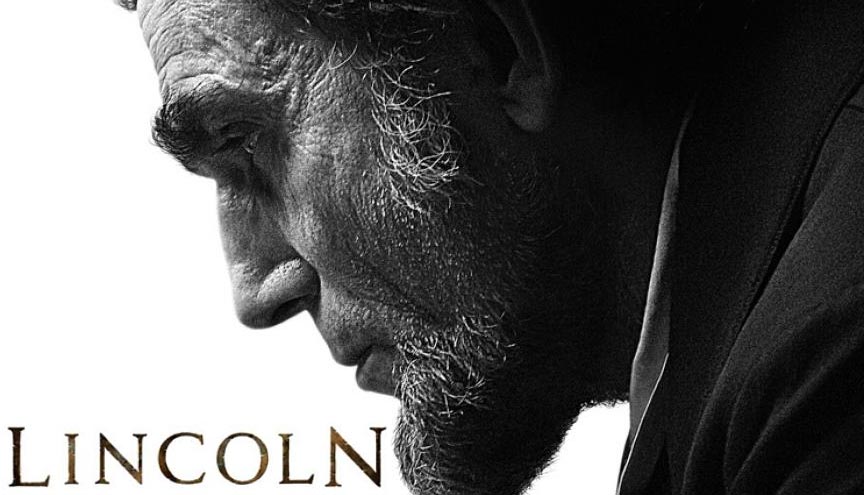
Lincoln: A movie review

Biographies and history books seldom convey how messy our lives really are as we live them or how messy our politics are in the morning papers.  We learn in grade school that Abraham Lincoln freed the slaves.  Now Spielberg’s Lincoln brings us a movie portrait of just how uncertain, costly, and chaotic that effort was.

Lincoln spans the months between January and April 1865, as the president cajoled, sweet-talked, threatened, and offered political appointments to members of congress in order to pass the 13th amendment to the constitution which banned slavery forever.  As a lawyer, Lincoln knew the Emancipation Proclamation, based on wartime powers he wasn’t even certain he possessed, could easily be struck down by the courts.

In tone, this is a post-heroic political movie that makes earlier visions, like Mr. Smith Goes to Washington, seem like hopeful adolescent illusions.  Yet maybe there is even more to admire in someone portrayed as flesh and blood, who holds onto an ideal in the midst of political and personal chaos.  We know the historical Lincoln agonized at the carnage of the last two years of the war and yet at the end, he allowed it to continue longer than necessary for the sake of an ideal that others considered madness.

Daniel Day Lewis is an actor of definitive roles.  For me, he became the definitive Hawkeye in The Last of the Mohicans 1992, and the archetypal 19th century criminal in his role as Bill the Butcher in Gangs of New York 2002.  Now he will be the Abraham Lincoln for this movie going generation.  With a fine supporting cast that includes Sally Field, Hal Holbrook, and Tommy Lee Jones, this movie will appeal to anyone with an interest in American History and fine drama.

Beasts of the Southern Wild: A movie review

0125-beasts-of-the-southern-wild-2jpg-a41fc72827b8ef87

“Sometimes miraculous films come into being, made by people you’ve never heard of, starring unknown faces, blindsiding you with creative genius.” – Roger Ebert

I missed Beasts of the Southern Wild during its all too brief theatrical run last summer.  If you did too, I suggest you rent it.  Made on a low budget with a cast of first-time actors, notably the amazing Quvenzhané Wallis, who was only five when filming started, this movie is not like any other you’ve recently seen.  It is laced with joy while portraying  a group of have-nots on the cultural fringe as they struggle to hang on to their way of life.

Hushpuppy (Wallis) lives with her daddy, Wink (Dwight Henry), in The Bathtub, an island at sea level off New Orleans, barely protected by levees.  The Bathtub folk have nothing by the standards of “dry side” people.  They live by fishing and raising pigs and chickens.  They build homes in trees out of cast off materials and make boats out of pickup beds and empty metal drums.  They have moonshine, music, community, and the gift of celebration.

Hushpuppy talks to the animals and her mother, who is gone, and sometimes they reply.  She knows a storm is coming  Her schoolteacher tells the class about aurochs, huge prehistoric beasts.  “You got to learn to survive,” warns the teacher.  There’s a picture of ice caps in the classroom, and Hushpuppy is close enough to the world that she seems to hear them melting, seems to see the frozen aurochs stir.

southern-wild

The winds rise and the sky turns black.  The storm is never named, but we know it’s Katrina.  Salt water fills the bathtub and everything starts to die.

“I’m gonna make it right,” says Wink, but Hushpuppy sees that he’s sick.”  The aurochs are very close.  “No crying,” says Wink.  “You got to survive.”

Bathtub people look to Hushpuppy’s father as a natural leader, a role he tries to pass on to his daughter in his bluff and sometimes whisky-soaked way.  “Who da man?” he often demands.  “I’m the man,” Hushpuppy replies, but she’s also six years old.  What can she do against all the disasters taking shape in her mind as a herd of fearsome beasts?  If you can’t outrun an auroch, how do you stare it down?

Roger Ebert says, “Hushpuppy lives in desolation, and her inner resources are miraculous. She is so focused, so sure, so defiant and brave, that she is like a new generation put forward in desperate times by the human race.”

Everyone’s saying Quvenzhané Wallis is on the shortlist for a best actress nomination.  This year I can’t think of anyone more deserving.  Watch the movie and see what you think.

The Life of Pi: A movie review

What you’ve heard about this movie is true: it’s the tale of a boy who winds up in a lifeboat in the Pacific with a Bengal tiger. It’s also true that most critics have praised The Life of Pi. I’m with them; this is a magical film.

Pi Patel livess an idyllic childhood in Pondicherry, India.  His father owns a zoo, and Pi develops a love for the animals as well as a spirituality that embraces the Hindu gods, Jesus, and Allah.

As he tries to practice all three faiths, his father, convinced of the supremacy of reason, warns that “If you believe in everything, you will end up not believing in anything at all.”  Pi’s father also demonstrates graphically that tigers are not your friend, a lesson that shakes Pi’s trust in nature.  The real blow falls after economic hardship forces Pi’s family to relinquish the zoo.  They sail for Canada with all the animals on a freighter, but a storm sinks the vessel, and Pi is the only human to survive.

What god do you pray to and what do say when your way of life and your family are suddenly gone, and you’re alone in a lifeboat with a zebra, an orangutan, a hyena, and a tiger named Richard Parker?  Initially, there is little time for prayer in the struggle to survive.  Soon it’s just Richard Parker and Pi.  There are cans of water and boxes of biscuits for 30 aboard the lifeboat, as well as a book on survival and a pencil that Pi uses to journal in the margins.

An optimist, Pi’s spirituality returns with expressions of gratitude and surrender as the ocean moves through her various phases, with deadly storms, cornucopias of fish and rain, and scenes of unearthly beauty.

Einstein once said the only important question is whether or not the universe is a friendly place. The adult Pi, who narrates the tale, believes it is. Was his ocean a friendly place or not? Both and neither, his story seems to say; it’s far more vast than that.

The western fantasy of objective truth leads us to believe there are true stories and false ones. The eastern view, shared at least in part by novelists and movie makers, is that our stories create our realities.

What does your heart say?  What does it lead you to believe?  That’s the question the grown-up Pi seems to asks us with his story and a half smile on his face.  It’s the same enigma the ocean and Robert Parker put to him.

The One Thing

In my previous post, I talked about “Rosebud,” the sled that represented the unrequited desires of Charles Foster Kane in Orson Welles’ classic film, Citizen Kane.  I’ve been thinking a lot about metaphors for the deep yearnings that push and pull us through life, for good or ill, depending on whether they’re wise or foolish and if we know what they are.

Another of my favorite movie metaphors comes from the 1991 comedy, City Slickers. Three middle aged men, looking to reignite the passion in their lives, sign up for an old west style vacation that includes a cattle drive.  Things go wrong of course, and the dude ranch experience becomes a fight for survival, with nasty villains, a stampede, and raging rivers.

One night, after chasing stray cows into a canyon, timid Mitch (Billy Crystal) opens up to Curly (Jack Palance), the hardened trail boss.  Curly turns out to be wise as well as tough, and tells Mitch he needs to discover and follow “the one thing” that matters most in his life.

The one thing

Another phrase I love for our one thing, is “throughline,” a screenwriting term that was coined by Constantin Stanislavski, the great proponent of character acting.  A throughline propels the protagonist through a story.  It’s the core motivation that carries the hero from scene to scene and through all the gains and setbacks.

“Throughline” is great as a metaphor because it’s expected to change, just as our “one things” do in life.  Frodo initial goal is to carry the ring to Rivendell and place it in more capable hands, but just as in our lives, inner and outer events alter his goal.

Because of the election season, I recall the same dynamic in the life of Jimmie Carter.  In 1980, his goal was a second term as president.  After a resounding defeat, his life’s “through line” changed and deepened.  He threw himself into humanitarian work and extensive diplomatic travel and won the Nobel Peace Prize in 2002.  I read two books of his theological reflections and realized that Carter’s “one thing” is a dedication to Christian values that transcends what you usually hear from politicians still trying to get elected.

“Thread” is another common image for the one thing we use to chart our course in life.  In the Greek myth, Ariadne gives Theseus a ball of thread to find his way out of the labyrinth after slaying the monster within.

Ariadne and Theseus by Niccolo Bambini, Italian. Date unknown. Public domain.

I’ve already quoted my favorite thread image on this blog, but will do it again.  It’s William Stafford’s poem, “The Way it Is,” 1993:

The Way It Is

There’s a thread you follow.  It goes among
things that change. But it doesn’t change.
People wonder what you are pursuing.
You have to explain about the thread.
But it is hard for others to see.
While you hold it you can’t get lost.
Tragedies happen; people get hurt
or die; and you suffer and get old.
Nothing you do can stop time’s unfolding.
You don’t ever let go of the thread.

There may be people who know from the start what matters in their lives, but for the rest of us, there’s a lot of trial and error.  Awareness of “time’s unfolding” is what gives such reflections their force.  What is the one thing or few things I truly care about?  Is there any question more important than this?  Next time I will write about a man whose entire life is an exemplary answer.