A spring break medley

medley (med-lē) n., 1 a mixture of things not usually placed together; heterogeneous collection; hodgepodge.

A quiet week, with many ideas wandering through my mind without quite attaining blog post velocity. Sitting here, with a cup of coffee and the windows open to a fine spring morning, I decided to scoop up some of these notions, not necessarily in order of importance, and present them to you as a medley, or hodgepodge as the case may be.

On Mickey Rooney: I wish I had known that last Sunday, all day, Turner Classic Movies was  hosting a day of Mickey Rooney movies. I tuned in late, but did get to see Boy’s Town (1938) and The Human Comedy (1943), both notable for their idealistic and almost too sentimental presentation of American life. Boys Town tells the story of Father Edward Flanagan (Spencer Tracy), who founded a home for abused and delinquent boys in Nebraska. Rooney plays Henry Hull, the tough kid who tests Flanagan’s belief that there is “no such thing as a bad boy.”

Tracy and Rooney in "Boys Town," 1938

Tracy and Rooney in “Boys Town,” 1938

In addition to the real life humanity of Flanagan, whose Boys Town still exists in the Midwest, the film reflects 1930s progressive ideals, as well as an older, deeper, American romanticism, the belief that by nature, we are noble beings, corrupted only by cultural dysfunction. Watching Boys Town, I thought of the next great eruption of that ideal in the ’60s and remembered a line from Crosby, Stills & Nash that almost stands as an epitaph for that era: “It’s been a long time coming / it’s gonna be a long time gone.” The album came out in 1969, the year Charles Manson called optimism like Father Flanagan’s into serious question.   

Mother Nature on the run: Now that I’m thinking of Crosby, Stills & Nash, that phrase popped to mind as title for this subsection, though it’s really about animals on the run. An editorial in yesterday morning’s paper, The case for banning wildlife-killing contests by Camillia H. Fox, outlines the common practice of for profit, recreational predator hunting contests.
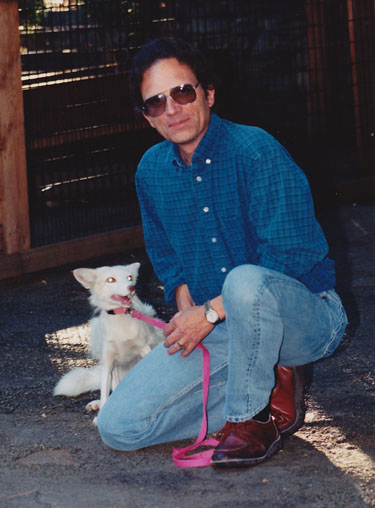
Exercising Vixen the fox while a volunteer at the Folsom City Zoo, ca. 1996. She was a sweetheart, though a bit of a drama queen. Is this the enemy?

Exercising Vixen the fox while a volunteer at the Folsom City Zoo, ca. 1996. She was a sweetheart, though a bit of a drama queen. Is this the enemy?

“The greatness of a nation and its moral progress can be judged by the way its animals are treated,” said Mahatma Gandhi. It is heartening to learn that pushback is growing, both from citizens and state Fish and Game Commissions. In California, commission president, Michael Sutton said:

“I’ve been concerned about these killing contests for some time. They seem inconsistent both with ethical standards of hunting and our current understanding of the important role predators play in ecosystems.”

The way we treat the animals seems increasingly to be like the way we treat each other. Witness the case cited in the article, of the organizer of one of these killing contests, who (allegedly) pushed a 73 year old man to the ground for trying to photograph the event. We have to say, “allegedly” because, although the older man’s spine was fractured, the perpetrator has yet to be charged. This is not what our founding fathers meant when they spoke of a “well ordered militia.”

Of Jungians and Tibetans: I’ve recently started, with keen interest, The Psychology of Buddhist Tantra (2012) by Rob Preece, an in depth practitioner of both Jungian psychology and Tibetan Buddhism. Tibetan iconography is striking and vivid, almost begging for Jungian analysis, but most western commentators, including Jung himself, have written about it as outsiders looking in.

Not Preece, who studied with Lama Thubten Yeshe, one of the greatest 20th century Tibetan teachers to come to America. Lama Yeshe understood Jung and understood that Buddhist practice has always undergone change when crossing geographic and cultural boundaries.

Preece writes of Col. Francis Younghusband, who visited Tibet in 1904. Seeing pictures of wrathful deities, Younghusband concluded that this was a culture that worshiped demons. Jungians may pounce on the concept of shadow, but that too, will often be wide of the mark. Although Tibetans and Jungians both understand such imagery as depicting internal qualities, in this case, it is wrathful energy in the service of compassion. It’s the energy of, “This shit’s gotta stop!” The energy that led Camilla Fox to start a foundation to stop the slaughter of animals.

Two large gatherings: Over the last two weekends, I took part in two separate events which drew hundreds of people. Both were immensely satisfying days of harmonious groups, drawn together by shared interest, working cooperatively and having a lot of fun doing so. It’s almost enough to make you believe in no such thing as a bad boy or girl, in Mickey Rooney’s America.

That fundamental goodness is precisely what the Tibetans and Buddhists in general believe, even with their finely honed awareness of both relative truth, here in the trenches, and ultimate truth. Our ultimate nature, they say, the ground of our being is pure, unstained by any event, the way the sky is unstained by pollution. The bad news is, it can take eons for us to figure this out; a weekend at Woodstock is clearly not enough.

Still, I always feel energized after such gatherings, even as that wrathful energy rises at the thought of all the artificial barriers that divide us in our day to day lives. That’s something everyone has to work out for themselves. Meanwhile, I felt like listening again to Crosby, Stills & Nash. I hope they’re right in this song: that it’s always darkest before the dawn.

The wishing tree revisited

I spent a lot of time this week staring at a blank screen while trying to sum up two recent posts (No discouraging words 1 and 2). The ways in which thought/stories create reality is a massive topic. Not only has it been central to eastern thought for thousands of years, but I wrote several chapters along those lines in a master’s thesis in psych. So that particular screen is going to stay blank.

I did, however re-read one of my early posts where I discussed an Indian story that centers on the creative power of mind. The story itself provides a nice summary. “The Wish Fulfilling Tree” is recorded in Hindu scripture as a story Shiva told Parvati. I quoted a version written by Paramahansa Yogananda which I like for its clarity:

Embed from Getty Images

In their kindness toward spiritual seekers, the gods placed certain “wish fulfilling trees” in remote Himalayan regions so pilgrims could refresh themselves. Once a young man with mixed aspirations climbed to the heights in search of one of these trees. At last, out of food and seemingly out of luck, he spied a solitary tree at the center of a small valley, and hurried toward it.

Under it’s branches he wished for a meal, and instantly, servants appeared and set out a feast before him. After his hunger was satisfied, he wished for wine and music, and then dancing girls, and all of his thoughts materialized. Enjoying himself immensely, he wished for a castle, with fruit trees, fountains, and soldiers to defend it.

By then he was tired and sought out the lush master bedroom for a rest. As he closed his eyes, he noticed a jungle not far away and felt a prickling of danger. “There are no bars on the window to keep jungle beasts out. A tiger could easily leap into this room.” Sadly, that was the last thought he ever had.

In his commentary, Yogananda said everyone spends their life beneath a wish fulfilling tree. Fortunately, ours don’t work as fast as the one in the story, but in the end, inexorably, they manifest what we hold steady in our minds. The name of this tree is imagination, and it is important to realize its power and be mindful of how we use it. it.

by all means by Edward Espe Brown

by all means A ZEN CAUTIONARY TALE

by all means A ZEN CAUTIONARY TALE

“Growing up meant you were competent and stayed out of trouble…When you hit the wall, who or what would see you through?”

Traditional Zen practice is both very simple and very formal.  Think of classic Japanese brush painting.  In Zen, there are prescribed ways of bowing, walking, holding the hands in meditation, and so on.

At the end of by all means A ZEN CAUTIONARY TALE, Zen abbot, Edward Espe Brown, includes a photograph of himself, in full Zen regalia, with a stern expression on his face, and a pig puppet on a cushion beside him.  Traditional Zen masters don’t give dharma talks with pig puppets any more than traditional authors use upper and lower case in their titles like Brown does here.  by all means lies outside traditional book categories, which ironically, makes it very Zen.

When Edward, as an adult, rescues Ponce (two syllables) the Pig puppet from a cat named Turtle (not a puppet), his affection for Ponce allows him to explore many issues, especially those of abandonment:  how others abandon us, how we abandon them and ourselves, and all the things we do to try to compensate:

“A lot of things that Edward did were very important because it was important to him to be doing important things and not just wasting his time.  Otherwise how could he have any respect for himself? And wasn’t it important to be self-respecting? Because if you left it to the others, there didn’t seem to be a lot of respect going around, and you weren’t likely to get much.”

We learn how Edward lived in an orphanage after his mother died when he was three.  We learn how he turned his anger on the stuffed animals he had as a kid after he got out.  We see how childhood issues live on inside the adult and how Ponce the Pig reacts at a critical moment, when Edward abandons him.  At first Ponce weeps, but then he closes his eyes to meditate (the pig is a dedicated Dharma practitioner):

“He found his heart swelling even though nothing changed outwardly. The space within was like that: vast and expansive, warm and tender without dimensions.  All of his friends were gathering just as fast as he could think of them. A burst of astonishment flashed through Ponce.  Left without any capacity for thinking about what was happening, he was one with everything, and everything was a part of him.  No separation could be found.  Dazzling!  What was there to think about?  Nothing needed figuring out…”  Edward learns his lesson and reconciles with Ponce in the end because it’s that kind of a book.

I enjoyed by all means, but it’s not for every reader. It is not an instruction manual in Zen or a book of eastern philosophy.  If you have no interest in Zen or have not spent time talking to puppets as I have, the book might not appeal.

If you are in doubt, I suggest you check out some of the Dharma talks Edward has made available on his website.  If you like them, you’ll probably like the book.  The talks, like this book, are simply another way that Edward, with abundant humor and compassion, tells his truths, using all means. 

A retreat with Edward Espe Brown

Edward Espe Brown

Edward Espe Brown

Saturday was the fourth time in as many years that I’ve attended a daylong retreat with Edward Espe Brown,  Zen abbot, author, cook, and altogether a charming and extremely funny man.  In 1965, Edward became a student of Shunryu Suzuki Roshi, author of Zen Mind, Beginner’s Mind.  When his teacher founded the Tassajara Zen Center near Big Sur, Ed became the head cook (as an author, he is best know for the Tassajara Cookbook and the Tassajara Bread Book).

Much of his learning took place in the kitchen, which gave him several unforgettable teaching stories. He relates his frustration in trying, without success, to produce a “perfect” muffin.  He tried numerous recipes and variations.  Everyone else thought they were great, but he was never satisfied.

One day he managed to taste a muffin without his usual preconceptions and found it delicious.  In that moment, he realized the source of his earlier discomfort – he’d been comparing his muffins to the “perfectly” shaped Pillsbury muffins he’d eaten as a kid.  This discovery led to one of the core ideas he tries to communicate as a teacher: we have the choice of living our lives according to someone else’s recipe or trying to discover our own.  “There is no by-the-book way for you to be you,” he says.

Given this background, it’s no surprise that he started the day by saying, “I’m not going to give you any meditation instructions, because then you might try to follow them – and be looking over your shoulder to ask, ‘How am I doing?”  The simplest instruction in Zen, “Just sit,” is the hardest to practice.  Similar things can be said for writing or painting (“Just write/paint what’s in your heart”) – and many other areas of life as well.

Such instructions (or lack thereof) assume the student knows the basics and some has experience.   This was true for the group that gathered on saturday.  It allows a generous teacher like Edward Brown to invite the student to seek what lies beyond a lifetime of learning how they are supposed to be.

Ed once said, “What is precious in us doesn’t come and it doesn’t go.  It is not dependent on performance.”  That’s a nice sounding aphorism, the kind of thing I jot down in notebooks.  Saturday’s retreat was a chance to test the waters, and as I hope I’ve made clear, at its best, Zen is about everything in our lives. I’d heard that Ed had written a new book, and it proved to be a fine example of finding our own way.

He has several traditional books in print on Zen and cooking, and he also edited a collection of Suzuki Roshi’s teachings.  When I’d read the title of his new book, By all Means A Zen Cautionary Tale, I assumed I’d be in for traditional reading.  Instead, I was surprised and delighted to find he’d written a semi-fictional, semi-autobiographical story of his adventures a little pig hand puppet.

When I asked him to sign a copy, I said, “This is great.  For my first 10 years, I had hand puppets.  They were my closest friends and confidents.”

“Ah, then you know,” he said.  “They’re powerful, aren’t they?”

In my next post, I’ll review By all Means, and after that, maybe the topic of conversing with inanimate things.  Please stay tuned!

——————————————————————————————–

PS:  When I posted this, I forgot to add a link to Edward’s home page, Peaceful Sea Sangha. In particular, I recommend the recordings of his talks, which give the flavor of his teaching style, his concerns, and his humor.

Where seldom is heard a discouraging word

See no evil, hear no evil, speak no evil, by John Snape, CC-BY-SA-3.0

See no evil, hear no evil, speak no evil, by John Snape, CC-BY-SA-3.0

This morning I showed my wife a newspaper photo depicting a politician who closely resembles a recent movie villain.  “No one will vote for him,” I said.

She laughed and agreed, but a little while later said, “Wow, that made it hard.  I’m trying to give up criticism for Lent.”

I apologized, for I know how hard real spiritual discipline can be.  Then I reflected that her resolution echoes a thought I’ve had on and off for some time – cutting, or at least reducing, the negative topics and posts in this blog.  The period of Lent, about seven more weeks, seems like a good trial period, so I’m going to try this experiment and figure it out as I go along.

When considering this move in the past, I’ve had fears along the lines of becoming Pollyanna or having nothing to write about if I close my eyes to the world’s crap.  I am confident, however, that tens of thousands of writers can take up the slack if I take a break.

There are many reasons to do so.  First and foremost for me is this simple truth from Zen teacher, Cheri Huber, so simple and yet so easy to forget:  “The quality of your life is determined by the focus of your attention.”  

The same truth is expressed in completely different terms in Scott Adams’s new book, How to Fail at Almost Everything and Still Win Big.  This cartoon genius who gave us Dilbert says:  “Reality is overrated and impossible to understand with any degree of certainty. What you do know for sure is that some ways of looking at the world work better than others.”  (I plan to review this book here soon).

A final, obvious example, given his recent visit to this country, is the Dalai Lama.  Beyond doubt, he’s the most joyous person who lives in the public spotlight.  I’ve never been in his physical presence, but I have met a few spiritual masters, men and women of several traditions, and for me, they all had one thing in common: when you get near them, you pick up their joy.  And I mean a profound joy, the kind that sometimes has left my jaw aching from smiling so much more than I am used to.  I’m sure the Dalai Lama is like that.

Dalai Lama with Christ University Choir, Bangalore, India

Dalai Lama with Christ University Choir, Bangalore, India

One of the many things he has said that always struck me concerns a difficulty he had when he first came to the west: he could not at first believe the degree of shame and self-hatred that are native to our culture.  It was completely new and shocking to him to hear such a thing, for there was nothing like it at all in Tibet.  I believe it’s no coincidence that you never hear the Dalai Lama say critical things about anyone else.  He doesn’t even criticize the Chinese, saying only, “They helped me cultivate patience.”

As I end this post, I realize some readers outside the U.S. might not be familiar with its title, which comes from an old western song, “Home on the Range:”

Home, home on the range,
Where the deer and the antelope play,
Where seldom is heard a discouraging word,
And the skies are not cloudy all day.

“Home on the Range” is the state song of Kansas, and like “Somewhere Over the Rainbow,” that other great song that reminds us of Kansas, it seems to ask the question, “Why not I?” Or, “Why not us?”

Asking “why not” is itself a classic spiritual discipline.  What factors hold me back from the kind of life I want to live.  In my own case, criticism of self and others is part of that mix.  Let’s see what happens here over the next seven weeks…

Dr Seuss to the rescue

A few days after his birthday 110 years ago, here’s a wonderful list of wise aphorisms by Dr. Seuss, courtesy of Rachael at Street of Dreams

beautiful loser's avatarStreet of Dreams

In honor of Dr. Seuss’s birthday, I’ve come across a fun little collection of life sayings (from his books) to live by.

I know I’ve posted similar things in the past, but everytime, I come across one of his books or a collection of his work, I am amazed at how insightful he was. And I am amazed at how complicated adults must make things.

Note: sorry this is a few days late. I thought I published this piece but apparently word press had other plans.

Dr Seuss to the rescue

View original post

More notes from the Wasteland

Joseph Campbell considered the Wasteland and the quest for the Grail that heals it to be a core myth for our time.  During “The Power of Myth” series at the end of his life,  Campbell said the Wasteland results from a worldview that divides matter and spirit.  Referring to the Fisher King’s wound he said:

“the Christian separation of matter and spirit…has really castrated nature. And the European mind, the European life, has been, as it were, emasculated by this separation. The true spirituality, which would have come from the union of matter and spirit, has been killed.” (1)

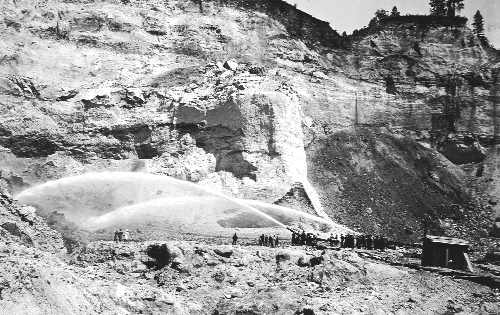
Generations of western thinkers, culminating in Descartes, built upon the split Campbell cites to elaborate a mechanistic view of nature that made the world ripe for human exploitation.  Results of this world view are visible everywhere, both in the headlines and in the landscape around us.  This part of California, for instance, still bears the scars of hydraulic mining 150 years after the gold rush.

Hydraulic mining along the Yuba river.  Malakofdigginsstatepark.org

Hydraulic mining along the Yuba river. Malakofdigginsstatepark.org

Deliberate exploitation isn’t always the culprit.  We think of Native Americans as attuned with nature, but even they made mistakes.  From AD 900-1150, such a large concentration of Pueblo people lived in Chaco Canyon, NM that they cut an estimated million trees from the surrounding Colorado Plateau.  The resulting erosion, loss of game habitat, and flooding is thought to be one reason why they abandoned the site.  The surrounding landscape, once forest, has been desert ever since.

Pueblo Bonito ruins, Chaco Canyon.  Photo courtesy of Scott Haefner, scotthaefner.com

Pueblo Bonito ruins, Chaco Canyon. Photo courtesy of Scott Haefner, scotthaefner.com

Now that humans have the power to disrupt the environment on a global scale, the question of whether the harm is deliberate or inadvertent may be moot, but serious differences still lie at the heart of competing world views.  Campbell touched on this issue in Creative Mythology, the last book of The Masks of God, a four volume study of world mythology that he wrote between 1962 and 1968.  In this series, he ascribed four functions to myth (2)

  1. The Metaphysical Function: Awakening a sense of awe before the mystery of being
  2. The Cosmological Function: Explaining the shape of the universe
  3. The Sociological Function: Validate and support the existing social order
  4. The Pedagogical Function: Guide the individual through the stages of life

The Grail story resonates on all of these levels, but since I want to consider the Wasteland myth in light of our current environmental crisis, the third and fourth functions have the greatest relevance here.

Campbell points out that humans are born too soon, “absolutely helpless,” and unlike most other animals, learn how to survive from a social group.  Our earliest myths derive from the hunter/gatherer era, “hardly greater than large families, of which every adult member was in possession of the entire cultural heritage.”  

These earliest myths “served a fostering, educative function, bearing the unfinished nature product to full, harmonious unfoldment as an adult specifically adapted for survival in a certain specific environment, as a fully participating member of a specific social group; and apart from that group he would neither have come to maturity nor have been able to survive.”  There was room for diversity, but no one who threatened the group was tolerated.

The next strata of myth emerged when humans settled into agricultural communities, beginning around 7500 B.C..  Villages grew into towns and then into cities and “it was precisely at this point of space and time, in the Near East, and specifically Sumer, c. 3500-3000 B.C., that the evidence first appears among the ruins…first, of a disciplined social order imposed from above by force, and next, of deliberate expeditions of military conquest against neighbors…campaigns of systematic conquest and subjugation.”  The principle here, said Campbell, was “greed for more than one’s share.”

Imposed social orders are not inherently bad, says Campbell.  Despite romantic fantasies of the noble savage, few people really want to live in caves or give up such boons as advanced medicine, arts, spirituality, and transportation, to say nothing of indoor plumbing.  Like conventions in writing, music, or painting, cultural conventions may spark creativity when they are new and later stifle it as they atrophy.

“The Waste Land, let us say then, is any world in which…force and not love, indoctrination not education, authority not experience, prevail in the ordering of lives, and where the myths and rites enforced and received are consequently unrelated to the actual inward realizations, needs, and potentialities of those upon whom they are impressed.”

This was the situation when the European Grail myth emerged; the first written version was composed in the 12th century by Cretien de Troyes at the very time the inquisition began.  The Grail legend served as a counterpoint to the institutional church; the tale can be read as the map of a quest for personal realization, safely couched in a story of ladies and knights.  In the earliest versions, the Grail was not the cup of the last supper but a stone or a large stone dish, which like the philosopher’s stone of alchemy, granted the heart’s deepest desire.

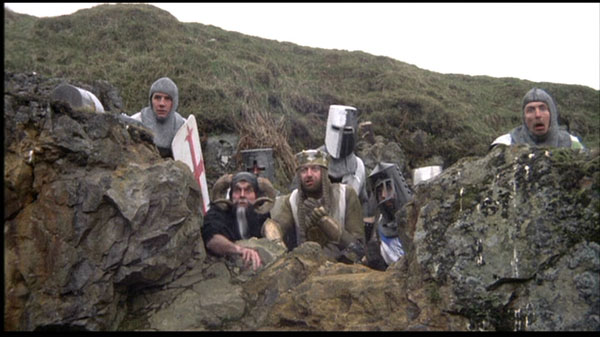
Even at our remove from the middle ages when the stories emerged, the Grail remains one of our living myths, at least if you pay attention to popular fiction and movies.  Think of The Da Vinci Code, Indiana Jones and the Last Crusade, and even Monty Python and the Holy Grail.

Pythons on the quest: at the lair of the Killer Bunny

Pythons on the quest: at the lair of the Killer Bunny

As much as the population of the middle ages, we are, in the words of 19th century poet, Matthew Arnold, “Wandering between two worlds, one dead, the other powerless to be born.”  The Grail continues to speak to such eras, especially one in which the Wasteland is not just the metaphor of an inner desert, but a world in which that desert is visible around us.

The Grail remains a shining image, never quite clear, but unforgettable, of the kind of life and world we seek among the confusion of possible futures.  At the end of “The Power of Myth” series, Bill Moyers asked Joseph Campbell what the myth of the future might be.

“You can’t predict a myth anymore than you can predict what you’re going to dream tonight,” Campbell replied (3).  “Dreams and myths come from the same place.”  Then he went on to say, “The only myth that’s going to be worth thinking about in the immediate future is going to be one that is talking about the entire planet.”

Earth from space

“You don’t see any divisions there of nations or states. This may be the symbol of the mythology to come. That’s going to be the country we are celebrating.” – Joseph Campbell, 1987″

Next:  Some people who are already question for the Grail.