Stories that make the world

Photo by Manel, 2011, CC BY-ND 2.0

Photo by Manel, 2011, CC BY-ND 2.0

 On saturday, an acquaintance and I met at a local park to discuss some things of mutual interest.  It was a stunning fall day, with temperature in the low 80’s, so we sat for several hours at a picnic bench surrounded by tall oaks.

I met this man just a few months ago, and during the conversation, it became clear that his political views and mine are polar opposites.  We mentioned them but didn’t argue, for we had other things to discuss.  Besides, by then some people nearby had a birthday barbecue going, and we were both distracted from politics by the smells.  When someone said, “Anyone else want a burger?” I was sorely tempted to raise my hand.

Later though, I reflected on how the two of us could hold such different narratives of the same recent events.  The poet, Muriel Rukeyser’s phrase, “The universe is made of stories” came to mind, as it often does, for it summarizes a key observation of two disciplines that have deeply shaped my world view, eastern philosophy and depth psychology:

  • “The Buddhist does not inquire into the essence of matter, but only into the essence of the sense perceptions and experiences which create in us the idea of matter.” – Lama Angarika Govinda, 1969.
  • “Every notion in our minds, each perception of the world and sensation in ourselves must go through a psychic organization in order to “happen” at all.” – James Hillman, 1975. 

Such statements may seem too lofty for a number of common experiences, especially things like physical pain, even the sliver I have in a finger from hauling firewood onto the back porch.  Not long ago, however, I came upon a concrete example of how the mind creates reality.

A contemporary Tibetan lama spoke of an experience we all went through in learning to read.  One day when we were young, a teacher drew three marks on the board (or our parents did, or we saw it on Sesame Street).  That teacher then said something that changed our world forever:  “This is the letter A.”

a-elmo-alphabet 200

From that moment on, the letter “A” existed for us, and it always appears to exist “out there,” in the world, when in fact, all that’s “out there” are three lines in a specific pattern.  “A” exists only in the minds of those who have learned certain alphabets – a person who doesn’t read or only reads Chinese would not be able to find it.

This small story about the letter “A” parallels the complex stories we create, borrow, and use to make the sense of the world.  Sometimes, like this past saturday, when it seems like the person you’re talking to comes from an alternate universe, it’s because they do – not a universe we could travel to with  warp drive, but one that is simply constructed of very different stories.

Things you may not know about Winnie- the- Pooh

When I was young, I loved Winne-the-Pooh. There was a time when I carried my little volume – illustrated by Shephard, of course – everywhere. This fine article was posted on “The View from Sari’s World” on August 21, Christopher Robin Milne’s birthday. It’s filled with interesting facts about the historical Pooh and Christopher Robin, as well as the real Hundred Acre Wood and Poohsticks bridge. Enjoy!

sarij's avatarThe View From Sari's World

Christopher Robin Milne was born on August 21, 1920, so what better day to celebrate the world’s favorite bear!

Winnie-the-Pooh is unarguably one of the most recognizable characters in children’s literature, as are his friends: Christopher Robin, Piglet, Eeyore, Tigger, Rabbit, Kanga, Roo, and Owl. Generations of children (including my own) have loved Winnie-the-Pooh, the Best Bear in All the World.  To celebrate the birthday of the little boy Christopher Robin Miline and his favorite toy I give you:

Things you may not know about Winnie- the- Pooh

Winnie -the- Pooh was the name of the “Bear of little brain” in the stories created by A.A. Milne. A.A Milne’s son Christopher had a teddy bear who Winnie the Pooh was created after. He named his teddy Winnie after a Canadian black bear he saw at the Zoo in London. The real life bear was actually from the town of Winnipeg…

View original post 602 more words

The churchyard horror

Tis the season for chills up the spine, and this is great tale for a windy October night – another wonderful story from Freaky Folktales.

Freaky Folk Tales's avatarfreaky folk tales

vampire

I have studied all manner of ghost and demon in my quest to better understand this realm betwixt Heaven and Hell but there is little in this study that has proved more intriguing — and downright flesh-creeping — than that of the Croglin vampire. On a dark autumnal day such as this, having struggled against sheets of rain and the swirl of stray leaves in the lonely path across the cemetery, my mind creeps towards that of a real churchyard horror, set upon the Lancashire moorlands.

It happened in the last century. Croglin Low Hall was a low, one-storeyed house on a slope looking down its gardens and cross a small park to the churchyard two hundred yards away. Along the front of the house ran a wooden verandah, like an African stoep. Two brothers and a sister took the house for the summer. I will not give their names…

View original post 739 more words

Your Own Damn Life: an interview with Michael Meade in The Sun

Michael Meade is an author, storyteller, and a passionate advocate of soul values in a world that increasingly ignores them; I’ve written about Meade or mentioned him in half a dozen posts.

In The Water of Life (revised, 2006) he shares his discovery that stories can be a matter of life and death.  As a teen in New York, when confronted by gang members from a rival neighborhood, Meade didn’t just lie his way out of serious injury or worse – he storied his way out, with an elaborate made-up tale that won over the assailants long enough for him to make his escape.  Readers of my recent posts will recognize a thriving trickster in Meade when he was just a kid!

I recently found an interview between Michael Meade and John Malkin in the The Sun that is as timely today, or more so, than in November, 2011, when it was published.  In the interview, “Your Own Damn Life,” Meade quotes an African proverb, “When death finds you, may it find you alive.”  Alive, he goes on to say, “means living your own damn life, not the life that your parents wanted, or the life some cultural group or political party wanted, but the life that your own soul wants to live.”

In the past, meaningful stories could guide soul evolution, but now, with the culture and the natural world both in crisis, Meade points to our lack of coherent, guiding tales.  A culture falls apart, he says, when youthful imagination and energy are stunted and when the traditional wisdom of elders is forgotten.  At one extreme, “You’re not supposed to be worrying about the end of the world as a teenager; you’re supposed to be bringing your dream to it. The world seems old and troubled now, and the young are no longer allowed to be as young as they should be.”  At the other extreme, we have a lot of “olders” but not many wise “elders.”

When traditional stories collapse, Meade says, the guiding and healing stories must come from within.  “That means going to the core of your own life and finding the story seeded within.”  Meade has tried to facilitate such explorations through his writings and talks, which first became known in the 80’s when he, James Hillman, and Robert Bly hosted a series of men’s conferences.

Meade continues to teach, write, and offer a variety of community services through the non-profit Mosaic Foundation he founded in Seattle where he lives.  If you’ve read this far, you will find Meade’s interview in The Sun and the Mosaic page hightly rewarding and likely sources for new ideas.


The North Wind’s Gift: a trickster tale from Italy

If you haven’t already done so, I suggest you read the preceding post, Notes on Trickster stories, which provides a background and context for this article.  Both posts were inspired by “The North Wind’s Gift,” a tale from Italo Calvino’s Italian Folktales, 1956.  The story came to my attention in Allan Chinen’s discussion of tricksters and appealed because of its relative simplicity and relevance to our own times.
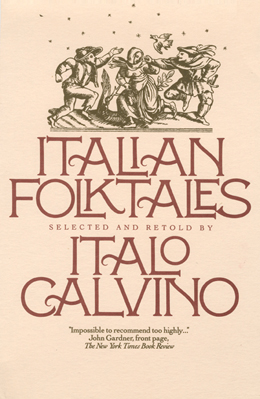
Italian Folktales

Here’s a synopsis of the story:

Once there was a farmer named Geppone who toiled in his fields every day of the year but could barely feed his wife and three children.  The North Wind blew at harvest time and ruined his crops.  Finally Geppone had enough and set out to find the North Wind and demand justice.  He reached the North Wind’s castle.  “Every year you ruin my crops,” he said.  “Because of you, my family is starving to death.”

“What can I do?” the North Wind asked.

“I leave that up to you,” Geppone replied.

The North Wind’s heart went out to the little farmer.  He brought out a box.  “This is a magical box which will give you food when you open it, but tell no one else about the magic or you’ll lose it.”

Geppone thanked the Wind and set out for home.  On the way, he opened the box.  Instantly a table appeared, piled with food.  When he got home, Geppone opened the box again and treated his family to a feast.  He told his wife not to tell anyone, and especially to say nothing to the priest, who was their landlord and a greedy man.

The next day, the priest spoke to Geppone’s wife and wrung the story out of her.  He summoned Geppone and  demanded the box on pain of eviction, offering seeds in return, which proved to be worthless.  As bad off as he was before, the farmer returned to the North Wind’s castle to ask for another boon.

At first, the North Wind refused, saying, “You ignored my warning.  Why should I help you again?”  Geppone pleaded, and reminded the Wind that he was still the cause of the family’s ruin.

“Very well,” said the North Wind at last.  He gave Geppone a magnificent gold box, but said, “Open this only when you are starving.”

On his way home, Geppone stopped and opened the new box.  This time a ruffian with a club jumped out and began to beat the farmer, who struggled to close the lid.  When he did, the ruffian vanished.  Geppone limped home, sore and bruised.  When his wife and children clamored to try the golden box, Geppone left the room.  This time two ruffians jumped out and began to beat the family.  Geppone slipped back into the room, closed the box, and the assailants vanished.

“This is what you must do,” he said to his wife.  “Tell the priest I brought home an even finer box, but say nothing else.”

Geppone’s wife understood and did as her husband instructed.  When the priest called the farmer and demanded the golden box, Geppone feigned reluctance, but at last agreed to trade it for the original box.  The priest rubbed his hands.  The bishop was due to join him for Mass the next day; a feast would be just the thing to win the approval of his superior.

The next day, after Mass, the priest, the bishop, and their retinue gathered for supper.  When the priest opened the box, six ruffians jumped out and beat the clerics.  Geppone, who was waiting at the window, took his time in closing the box to save them.

No one objected when he carried this second box home.  The priest never bothered Geppone again.  The farmer was careful to guard the North Wind’s gifts, and his family lived in ease and comfort for the rest of their days.

You can read the story as it appears in Italian Folktales here:  The North Wind’s Gift

***

It’s clear at the start of the story that we’re in a post-heroic fairytale world.  Geppone is not out to slay a dragon, rescue a princess, or win a kingdom – he just wants to survive.

Allan Chinen speaks of the different life stages that different fairytales address.  While the majority center on young people venturing into the world,  “middle-tales” like this have older protagonists with different kinds of problems.  From a Jungian perspective, Chinen notes that tricksters usually don’t show up in our dreams when we’re 18 and planning to take the world by storm – they visit us when we’re 40, with a mortgage, a couple of kids, and a car that needs an engine overhaul.

Geppone works from dawn until dark but can barely make ends meet.  His wife doesn’t listen to him, and the landlord threatens eviction.  This setup makes his story seem contemporary – if we’re not in this situation ourselves, one of our neighbors probably is.

We get the feeling Geppone has been down on his luck and taking it on the chin for a while.  Something finally awakens within him and spurs him to action.  As a result, he meets the North Wind, a wild spirit who will become his guardian and mentor and teach him the wiles of the trickster.

The North Wind is invoked in the Song of Solomon, in Aesop, and in Greek and Norwegian folklore.  He shows up in George McDonald’s novel, On the Back of the North Wind, in the stories of Hans Christian Anderson, and in Pokemon.  The North Wind is also associated with thunder gods like Zeus and Odin.  It’s not surprising that he is a shadowy trickster in Italy, where invaders and winter both arrive from the north.

Almost every successful fairytale character wins the help of a guiding spirit, and the North Wind’s help is just what Geppone needs.  It prompts him first to stand up for himself and ask for what he needs and then to learn enough strategy to overcome his oppressive priest and landlord.  To Jungians, fairytale allies like helpful animals, fairy godmothers, and nature spirits represent parts of the unconscious mind that are older and wiser than ego, which gets us into trouble in the first place.

What this means in practical terms is a vast subject, beyond the scope of a few blog posts.  Jung would suggest to patients who were comfortable in a religious tradition to return to it for guidance.  Much of Jung’s work aimed at helping people estranged from existing traditions who still needed to tap inner sources of wisdom.

In the “Power of Myth,” Bill Moyers asked Joseph Campbell where ordinary (i.e., busy) people might look to experience the wisdom of myth.  Campbell suggested we take 30 minutes or an hour a day in a quiet place where we can read what inspires us and perhaps keep a journal.

Just like this story, the psyche is home to ruffians and riches, and the old stories are not to be taken literally.  James Hillman, a prominent Jungian thinker, always insisted that literalism is the greatest enemy of inner wisdom.  So how does trickster wisdom manifest  in our world right now?  I don’t think we have to look very far.

A world that’s increasingly dysfunctional serves as a magnet for trickster energy, for good as well as for ill.  A Facebook friend mentioned that he once loaned out a book on trickster mythology and never got it back.  That fits the myths of trickster gods like Hermes who are also patrons of thieves.  Hermes may be the supreme image of the trickster.  As fluid as the metal which bears his Roman name, Mercury, he was the messenger between gods and humans who also conducted souls to the afterlife.  Patron of travelers, herdsmen, poets, orators, athletes, and inventors, his herald’s staff, the caduceus, is the symbol of healing to this day.

I find myself watching for positive manifestations of trickster energy, which usually turn up under the radar of corporate and government organizations which carry a vested interest in the status quo.  When you look, quite a few individuals and groups are trying out new solutions.  I’ll post at least one example in the near future.

In the meantime I would love to hear where you find trickster energy in yourself and in those around you.
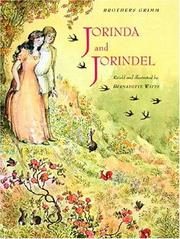
Jorinda and Joringel: a fairytale from The Brothers Grimm

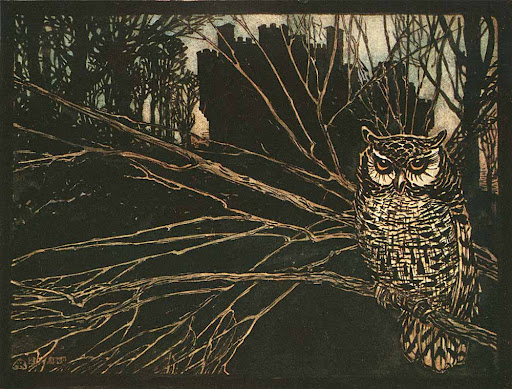
The witch as an owl by Arthur Rackham

The witch as an owl by Arthur Rackham

I have seen Jorinda and Joringel (sometimes spelled Jorindel) in many folklore collections, but I always passed it by.  A cursory glance led me to think it was much like Hansel and Gretel, not one of my favorite tales.  I’m not alone in skipping it:  I’ve never seen it discussed or analyzed by any of the writers on folklore I read.

I picked it up recently, intending to read myself to sleep, but stayed awake instead.  Jorinda and Joringel is a scary story with unexpected depths as well as features found in other celebrated stories.  One key image strikingly parallels a central symbol from India, which raises other questions.  Here is a summary of the tale:

***

Synopsis of “Jorinda and Joringel” in The Annotated Brothers Grimm

Once there was a witch who lived in a castle in the depths of a thick forest.  By day she took the shape of a cat or and owl, but at night she appeared as an old woman whose nose curved down to touch her chin.  She would kill and eat any bird or animal that ventured near.  If any human came within 100 feet of the castle, she would freeze them on the spot; they’d be unable to move until she released them.  She turned innocent girls into songbirds and keep them in cages inside the castle; she had 7000 birds and counting.

A beautiful maiden named Jorinda was betrothed to a youth named Joringel.  They enjoyed nothing more than spending time together, and one day they decided to walk in the woods.  “We just have to stay away from the castle,” Joringel said.

As the sun began to set, they heard the plaintive song of a turtledove. Jorinda began to weep while Jorindel sighed and felt oppressed with sadness. He noticed the wall of a nearby castle, but before he could utter a warning, Jorinda was turned into a nightingale. An owl with flashing eyes flew around them thrice and Joringel was frozen in place, a living statue unable to move.

The owl flew into a bush and a moment later an old woman emerged to carry Jorinda into the castle.  When she returned, she freed Joringel from the spell.  He fell to his knees and begged the witch to return his beloved, but she only said, “You will never see her again,” and departed.

Joringel wandered aimlessly in great despair.  He came to an unknown village where he worked for a long time tending sheep.  Sometimes he would circle the castle there but never too closely.

One night he dreamed of a blood-red flower with a beautiful pearl inside.  In the dream, he was back at the witch’s castle, and everything he touched with the flower was disenchanted.  When he woke in the morning, he started to search for the flower.  For nine days he roamed wilderness and village, and at last he found a blood-red flower with a large drop of dew inside that was as bright as any pearl.

He returned to the witch’s castle, boldly strode up, and touched the gate with the flower.  It flew open.  He found the room where the sorceress was feeding her birds.  When she saw Joringel, she was filled with rage, but she couldn’t come within two feet of him.  There were several hundred nightingales – how would Joringel find the right one?  Then he noticed the witch sneaking toward the door with a single cage.

Joringel ran to touch both her and the cage with the flower.  In an instant, Jorinda stood beside him and the witch lost her magical powers forever.  After freeing the other birds, Jorinda and Joringel departed.  They were married and lived with great happiness for a very long time.

*** 

After reading the story several times, I jotted down a few of the questions that came to mind:

  1. Why are Jorinda and Jorigel depicted as being so young?  In several translations, they are called “girl” and “boy” rather than “maiden” and “youth.”  Of the three illustrations I found, one depicts them as children.  Why?
  2. People are frozen or turned to stone in stories all over the world.  I thought of The Water of Life which I discussed here, as well as the ice queen in The Lion, the Witch, and The Wardrobe by C.S. Lewis.  What does it mean to be frozen like that?
  3. Why were the girls turned into songbirds?  Enchanted fairytale people usually wind up in far less appealing shapes.
  4. Another widespread motif is doing menial work for a very long time.   Here it is tending sheep.  More often it’s kitchen work.  Cinderella worked in the ashes for as long as it took a hazel twig, watered with her tears, to grow into a large tree.  Fairytale heroes and heroines wind up doing menial work when they are stuck or stalled in their quest.  If they do it well and for long enough, they find solutions.  Can this tell us anything useful?
  5. My final question concerned the pearl in the blood-red flower.  In western stories, such flowers are always roses; in the east, it would be a lotus.  Om Mani Padme Hum, is probably the world’s best known mantra and is usually (though incorrectly) translated as, “The jewel is in the lotus.”  Are the parallel images merely coincidence?  Or diffusion of stories?  Or the collective unconscious, or what?

These are the kind of things I always wonder about in stories like this.  I hunted and found a reference that doesn’t discuss this particular tale but casts light on these issues.  I’ll discuss them next time.  Meanwhile, if the story raised other questions for you, please post them.  Maybe someone here or a songbird in the tree outside will have an answer for you.

To Be Continued

Secondhand Lions: a movie review

“If you want to believe in something, believe in it. Doesn’t matter if it isn’t true.  You believe in it anyway.” Hub McCann (Robert Duvall) in Secondhand Lions

The recent death of country music star George Jones, reminded me of Robert Duvall’s Oscar winning performance in Tender Mercies (1983), the story of an alcoholic country singer who finds redemption with the help of a woman, as Jones did toward the end of his life.

The truth is, I never much cared for Jone’s music, but Robert Duvall is one of my favorite actors.  I started thinking of Secondhand Lions (2003) which also stars Duvall and is one of funniest and most satisfying movies I’ve ever seen.  I have the DVD and watched it again yesterday.  Now I’m wondering why it took me so long to write a review.

*** Spoiler Alert ***

It’s the summer of 1962 when Walter Caldwell, on the cusp of adolescence, is dumped by his irresponsible mother, Mae, at the remote Texas ranch of his two great uncles, Hub (Robert Duvall) and Garth McCann (Michael Caine).

secondhandlions - mom

“The last thing we need is some little sissy boy hanging around all summer,” Garth tells Mae.  Hearing this, Walter’s misery is palpable.  The first part of the movie shows how the trio eventually bonds.

The McCann brothers are rumored to have a hidden fortune, which brings a stream of salesmen and conniving relatives to their door. Hub and Garth spend their days shooting at salesmen, until Walter suggests they listen to one to see what he’s selling.

SecondhandLions_20

After listening to a seed salesmen, the trio plants a garden, only to learn they’ve been duped and sold nothing but corn seed.  The result is a huge cornfield they never really wanted.  The uncles also order a lion from a circus supply dealer.  They plan to hunt and kill it to hang its head over the fireplace, though Walter reminds them they don’t have a fireplace.  The lion turns out to be an aged female who is too sick to crawl out of her crate.  It wouldn’t be sporting to shoot her, Garth observes.

Secondhand lions - lion

Walter names the lion Jasmine, after a mysterious woman whose fading photo he finds in an attic trunk.  He nurses Jasmine back to health, and she takes up residence in the cornfield, the closest thing to a jungle in west Texas.  The lioness proves her worth by scaring away a family of greedy relatives, who campaign to have Walter shipped to an orphanage.

The movie would be pleasant enough – and forgettable enough – if it simply dealt with two lonely old men and a fatherless boy filling a void in each other’s lives, but deeper themes comes into play, notably the tension between ideals and what’s real, between story and truth and memory.

At the time Walter found the photo of Jasmine, he spied Hub sleepwalking down to the pond each night, where he brandished a toilet plunger like a sword, challenging invisible enemies.  Garth begins a long story of Hub and Jasmine, that’s like something from the Arabian Nights or a Douglas Fairbanks movie.  Hub rescued Jasmine, a desert princess, from a rich sheik in the Sahara after the two brothers were shanghaied into the French Foreign Legion at the start of World War I.

Garth continues the story in several segments, and Walter finally persuades his uncle Hub to finish it.  He tells Walter how he ran off with Jasmine.  How her jilted suitor, the sheik, sent assassins after the pair until Hub tricked him out of a hundred pounds of gold and defeated him in a duel.  Jasmine died in childbirth a few years later , and Hub never loved another woman.

Just then Walter’s mother returns in the dead of night with her latest boyfriend who claims to be a detective on the trail of the McCann brothers, a pair of infamous bank robbers who left an accomplice named Jasmine to die by the side of the road after she was wounded during a robbery.  When Walter challenges the story, the “detective” hits him.  His time with the uncles has changed Walter, who fights back, and with the last of her strength, Jasmine the lion, rushes to defend her “cub.”

Jasmine’s heart gives out in the struggle – “She died with her boots on,” says Garth.  Mae still wants Walter to come with her, but he’s learning to stand up for himself.  “I want to stay here,” he says.  “For once in your life, do something for me.”

Seventeen years later, Walter is a successful cartoonist, who draws a strip called “Walter and Jasmine,” the adventures of a boy and his lion.  The sheriff calls with bad news – his uncles, both 90 years old, have died in a hair-brained accident – with their boots on.  Walter both weeps and laughs when he learns the details.  The sheriff hands Walter the brothers will, which reads, “The kid gets it all.  Just plant us in the damn garden, next to the stupid lion.”

In the final scene, an oil company helicopter lands, and the son of the sheik from Jasmine’s story steps out.  “I was in Houston on business when I read the news,” he says.  “My father always talked about your uncles.  He called them his most worthy opponents, but I thought they were only stories.  So they really lived?”

“Yeah,” says Walter.  “They really lived.

There are many levels to this seemingly simple movie.  On one hand, some of the antics are hilarious.  It’s also a sensitive coming of age tale.  With the notable exception of Harry Potter, most such stories and movies over the last decade have centered on girls’ awakening.  Unlike Potter, however, Secondhand Lions reflects some of the features we know belonged to classic men’s initiation rites, such as “leaving the house of the mothers to join the fathers.”

But finally, what makes this movie great, and of universal interest to me, is its take on what is real and valuable in the stories we tell.  As Hub says to Walter:

“Sometimes, the things that may or may not be true are the things that a man needs to believe in the most: that people are basically good; that honor, courage, and virtue mean everything; that power and money, money and power, mean nothing; that good always triumphs over evil; and I want you to remember this, that love, true love, never dies.  You remember that, boy.  Doesn’t matter if they are true or not.  A man should believe in those things because those are the things worth believing in.”

A solid five stars for this movie.  I haven’t counted lately, but I’m sure it’s still up in my ten best for all time.

http://www.youtube.com/watch?v=-COMJckISVY

Authenticity and folklore

In his comment on my review of Once Upon a Time, Calmgrove zeroed in on one of author Max Luthi’s key concepts, that fairytales show us “man’s deliverance from an inauthentic existence and his commencement of a true one.” Luthi gives us story examples: “a penniless wretch becomes wealthy, a maid becomes queen…or a toad, bear, ape, or dog is transformed into a beautiful maiden or handsome youth.”

What can we make of such a statement in terms of our own lives? Is there anything we can learn from stories of toads and bears transformed?

Rumpelstiltskin by Henry Justice Ford, 1889. Public domain.

In trying to answer the question, our first hurdle is trying to figure out what an “authentic existence” might look like, a philosophical exercise right up there with defining “the true,” “the good,” or “the beautiful.” When I try to imagine “authentic” in our world, one of the first things that comes to mind is Crazy People, 1990, a movie in which Dudley Moore, as an advertising executive, is checked into an insane asylum after he suffers a nervous breakdown and begins writing truthful adds.

Truth in advertising wins Dudley Moore a straight-jacket in “Crazy People,” 1990

Fairytales mirror philosophy and religion in their concern with lives well lived, but they are much less precise in prescribing what to aim for and how to proceed. When someone achieves their happy destiny, we see outer events representing that highest good, like a royal wedding or the discovery of buried treasure, but what works for one hero or heroine may not work for others.

This observation offers a segue into the first of several attribute that fairytale heroes and heroines seem to share – they chart their own course. In Luthi’s terms, they are “wanderers” who “set forth into the unknown in search of the highest, the most beautiful, or the most valuable thing.” Most often, but not always, it is male characters who cover the greatest outer distance, but in Faerie, the unknown waits outside your door. Cinderella’s journey begins with a solitary trip every day to weep at her mother’s grave. The smallest step into the forest is fraught with danger for one who goes their own way, whether the goal is the end of the world or the prince’s ballroom.

Arthur Rackham illustration from “The White Snake”

A second attribute of successful folklore characters is kindness, at least for those creatures who turn up with guidance for the quest. It is not the kind of universal compassion espoused by religion, but is more practical and down to earth. Cinderella is kind to birds, and they always assist her, but she makes no objection when they later peck out the stepsisters’ eyes. The hero of “The White Snake,” who learns the speech of animals, goes out of his way to help ants, fish, and ravens, who will later save his life, but he doesn’t hesitate to sacrifice his horse when events demand it.

According to Max Luthi, the fairy tale character’s estrangement from conventional social relations allows him or her to connect with help from unexpected quarters, with toads or foxes, crones or dwarves. Luthi often distances himself from Jungian interpretation, but not in the case of fairytale helpers. They can be viewed,not only as outer creatures, but “as forces within the soul of the individual which are at first in need of assistance but finally unfold and develop.”

A third attribute of folktale heroes and heroines is patience. Things take a long time to unfold. In the Grimm brothers version, Cinderella has no fairy godmother. Instead she plants a hazel twig on her mother’s grave and waters it with her tears every day until it is grown. Only then do the tree and the dove that lives in its branches grant her wishes. In “The Devil’s Sooty Brother,” a former soldier works in the devil’s kitchen for seven years, forbidden to bathe, cut his hair, his beard, or his fingernails, or wipe the tears from his eyes.

“Kitchen work,” as Robert Bly calls it, applies to both men and women in fairytales. In Iron John, he wrote, “The way down and out doesn’t require poverty, homelessness, physical deprivation, dishwasher work, necessarily, but it does seem to require a fall from status, from a human being to a spider, from a middle-class person to a derelict. The emphasis is on the consciousness of the fall.”

Fairy tale time, as both Luthi and Bly point out, is not literal time. Seven years in the kitchen might equate to several decades for the writer who has to make a living by some other means. Yet in all the stories, this tempering process is essential. Shortcuts don’t work. After seven years, even the devil is forced to keep his bargain.

Arthur Rackham, “The Goose Girl”

When I was young, I assumed the signs of an “authentic life” were visible – at a minimum, bohemian trappings were required. Now I know that such plumage is far too easy.

The courage to go one’s own way, to keep one’s own council. To be kind to the odd and despised parts of oneself and to give them a hearing. The poise and patience to allow events to unfold at their own pace rather than try to push the river. Fairy tale heroes and heroines champion themselves and their deepest desires. Their stories lead us to wonder what would happen if we follow their example. What do their footsteps look like in the 21st century?