Shapeshifting in Faerie: The Ballad of Tam Lin

One fall day, when I was a college sophomore, I was boiling water for coffee in my off-campus apartment, getting ready to leave for a 9:00am class.  A clock radio on the counter was tuned to the local progressive rock station, but I wasn’t really listening, until a driving tempo opened a song with a strong, urgent, woman’s voice singing what was clearly a piece of folklore:

I forbid you maidens all,
that wear gold in your hair,
to travel to Carterhaugh,
for young Tam Lin is there.

I turned up the volume…

Them that go to Carterhaugh,
but they leave him a pledge,
either their mantles of green,
or else their maidenhead.

I was hooked by then, all my attention on this music.

Janet tied her kirtle green,
a bit above her knee,
and she’s gone to Carterhaugh,
as fast as go can she.

The group was Fairport Convention, the vocalist, an amazing singer named Sandy Denny who died in a tragic accident a few years later.  The song was, Tam Lin.
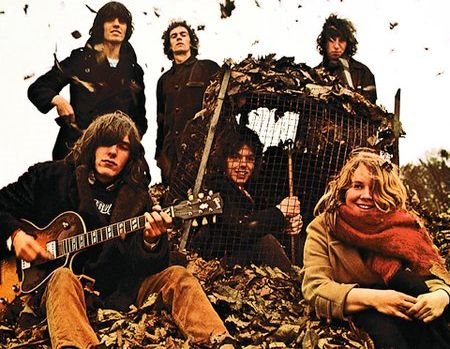
Fairport Convention

At the end of the day, I came home with the album, Liege and Lief tucked under my arm, and a backpack full of books like Folklore in the English and Scottish Ballads. You could say the passion that music ignited is with me to the present day:  it launched me into fantasy literature, shaped twenty years of storytelling, and this particular ballad is an important source for the fictional world I am building now for a heroine who wrestles with her fairy/mortal ancestry.

The ballad

Tam Lin comes from the Scottish border country and was first transcribed in 1549.  Francis James Child published 14 variants in his collection of English and Scottish ballads.  A mortal woman falls in love and conceives a child by a man who had been a mortal knight, until he was captured and somehow enchanted by the fairy queen.  In the Fairport lyrics:

Tell to me, Tam Lin, she said,
why came you here to dwell,
The queen of fairies caught me,
when from my horse I fell.

At the end of seven years,
she pays a tithe to hell,
I so fair and full of flesh,
am feared it be myself.

To disenchant her lover, Janet must hide at midnight on Halloween, at Miles Crossing, pull Tam from his horse, and hold on for dear life as the queen transforms him into a series of hideous and frightening shapes (I said this involved shapeshifting).  The queen turns Tam Lin into a snake, a newt, a bear, a lion, red-hot iron, and finally burning lead, at which point Janet does as instructed and throws him into a well, from which he emerges in his human form.  The queen is furious, and says if she had known of Janet’s loyalty, she’d have plucked out her eyes.  The real fairies of folklore are not nice people and are known to blind mortals who can see them.

Carterhaugh in 2005. You can still visit Tam Lin's well

Such renowned fantasy authors as Susan Cooper, Pamela Dean, Diana Wynn Jones, and Patricia McKillip have written novels based on Tam Lin’s story.  In 1970, Roddy McDowall directed a movie version staring Ava Gardner.  Countless individuals and groups have covered the ballad and there is at least one website devoted to nothing but exploration and creative elaboration of this song.  (see all these links here:  http://en.wikipedia.org/wiki/Tam_Lin)

What about the Shapeshifting?

Though Tam Lin is local to Scotland, the motif of disenchanting someone by holding on through countless frightening transformations is common to folklore throughout Europe.  This tale of shapeshifting is really quite different from Barth’s Menelaiad, discussed in the previous post.

There is a youthful, hopeful quality in this story of a heroic young woman who knows what she wants with such a fierce determination that nothing can thwart her, not even all the illusions and false paths that waylay most people’s dreams.

There is a quality of angst in Barth’s story question:  how can we ever sort out what is true from what is illusion?  I recall that after his campus visit, several sophomores proclaimed the death of literature as we know it.  Janet and Tam have no time for that – if this be illusion, play on, they would say (to badly misquote the bard).

Tam Lin explores the illusions of young lovers, while the Menelaiad does the same for a middle-aged and war-weary king.

Our final story of shapeshifting comes from India, and is several millenia old.  It sits somehwhere between the optimism and pessimism of the first two tales.  Yes, it affirms, life is a series of dreams, where dreams of joy transform into nightmares and back again endlessly – but imagine the joy of waking up.  That awakening, according to this tale, is nearer than we think.

Meanwhile here – as timeless as any fairy artifact – is Fairport Convention’s version of the Ballad of Tam Lin:

http://www.youtube.com/watch?v=jy3ihk205ew

Happy Imbolc, St. Brigid’s Day, Candlemas, Groundhog Day.

Our Celtic ancestors marked the changing seasons not by solstice and equinox days, which divide the year into quarters, but with the “cross-quarter days” which fall between the astronomical events.  Seasons figured in this way more closely match our experience in the northern temperate zones.  Winter begins at Samhaim (Halloween) and ends on Imbolc, the first day of spring, February 2.  Imbolc or Oimelc are Gaelic words that refer to the lactation of ewes.  Through most of the British Isles, February was bitterly cold, yet it was also the time when lambs were born and shoots of green grass appeared, events that were heralds of new life and a new year.   http://www.chalicecentre.net/imbolc.htm

This time of year was celebrated in the British isles for at least 3,000 years, the age of several megalithic stone circles in Ireland oriented toward the positions of the sun on Samhain and Imbolc http://en.wikipedia.org/wiki/Imbolc.  The people who raised the standing stones were as remote from the Celts as the Celts are from us:  we can only speculate on their motives and the meaning the day had for them.  And even though the word, Imbolc was used in the middle ages in Ireland and Scotland, who and what the Celts celebrated isn’t certain.  The earliest written records of Celtic cosmology come from Julius Ceasar’s commentary on the Gallic War, 51-52 BCE, in which Celtic beliefs are filtered through the Roman perspective.

Even so – even if our stock of “Celtic lore” dates from the 19th century on, when a revival of interest began (think of pre-Raphealite painting and William Morris’ craft movement), that does not mean it is not “authentic.”  When Yeats tramped around Ireland at the turn of the century gathering fairy lore, some of his informants lived such remote lives that they only spoke Gaelic.  How far back can such an oral tradition go?  Pretty far according to most folklorists.

At Imbolc, the maiden goddess, Brigid or Bride supplants the Cailleach, the hag of winter.  Brigid is the goddess of healing, poetry, and smithcraft.  And fire and divination and wisdom and childbirth.  As patron of healing she presides over numerous sacred wells in Ireland and in Britain (where they were renamed for Minerva by the Romans).  To this day, people extinguish old fires and light new ones for the coming year in her honor.

Brigid the goddess was supplanted by Brigid the saint in the Christain era, where she was revered as, “the Mary of the Gaels.”  Numerous miracle stories surround her life.  When just an infant, neighbors saw a fire burning at her house that rose to the heavens.  http://www.brighid.org.uk/saint.html.   Though a beautiful woman, Brigid renounced marriage to found dual monastic communities at Cill Dara, now Kildaire, in Ireland.  The nuns tended a sacred flame that burned continuously until the reformation, except for a brief 13th century inteval where a bishop had it extinguished for being too pagan.

Brigid and children, Kildaire, Ireland, copyright, brigid.org.uk

February 2 has long been celebrated by Christians as Candlemas.  The early church was not the least bit shy about superimposing new festivals over earlier pagan rites.  This day celebrates the Presentation of Jesus at the temple and the purification of the Virgin Mary.  The association of the day with candles comes from the passage where Simeon, an aged seer, recognizes Jesus and proclaims him as “a light for revelation.”  (Luke 2:21).  One website that explores correspondences between Christian and pagan festivals notes that the association of fire or light with this date is widespread through Europe.  In ancient Armenia, Feb. 2 was sacred to Mihr, the god of fire.  http://www.schooloftheseasons.com/candlemas.html

Of course no discussion of February 2 would be complete without a reference to Groundhog day, although locally, the staff at the Folsom City Zoo Sanctuary points out that groundhogs are not native to the American west.  Here we celebrate Prairie Dog Day.

"Don't drive angry!"

There is also an old Celtic tale involving the Cailleach that explains the importance of weather on Feb. 2.

Legend has it that if she intends to make the winter last a good while longer, she will make sure the weather on Imbolc is bright and sunny, so she can gather plenty of firewood. Therefore, people are generally relieved if Imbolc is a day of foul weather, as it means the Cailleach is asleep and winter is almost over. (see the Wikipedia link above.)

***

I don’t keep sheep, but the signs of spring are everywhere. It’s light out at 5:00pm. The sap from the liquid amber tree takes a nightly dump on my car and I swear every year at this time to dig out our car-cover. The buds on the apple tree are a bit late but I expect them any day now. Strangely, pruning the apple tree is one of those rituals of super-bowl sunday I always enjoy.  The super-bowl itself is like the closing rite of winter – after this I won’t want to spend an entire sunday afternoon indoors. In two weeks the almond and walnut trees will be covered with blooms that look like snow when they fall.  Our brown hills will turn emerald green for a month or so.

May everyone have a happy Imbolc and bask in the promise of the return of light and warmth to the earth.

The Peddler of Swaffham

A comment here on a post about ghost stories put me in mind of certain tales that everyone has seen or heard in one variation or another.  Show of hands – how many heard “The Hook Man,” around the time they started to date?  How many variations of “The Vanishing Hitchhiker” have been made into TV movies or episodes of The Twilight Zone?

A much older tale that is widely distributed tells of a poor man who becomes rich by paying attention to a dream.

I first heard “The Peddler of Swaffham” told by Robert Bela Wilhelm, who, with his wife Kelly, has devoted his life to inspiring people to tell stories and explore the spirituality of stories.  Be sure to check out some of the riches on the Wilhelm’s website: http://www.storyfest.com.

Carving of the Peddler in a Swaffham church

Bob told “The Peddler of Swaffham” on one of his “Storyfest Journeys.”  More about the journeys soon when I dig out some of the pictures.

The gist of the story is, a peddler from a village in Norfolk dreams that he will find gold if he travels to London bridge.  He makes the journey with his dog, spends three days and nights on the street waiting, and is wondering what went wrong when a merchant asks what he is about.  The peddler says he dreamed of the riches he would discover at London Bridge.  The merchant laughs and says dreams are just foolishness:  “Why just last night I dreamed of a bag of gold under the peddlar’s oak in the village of Swaffham, wherever that is, but you don’t see me running all over the countryside, do you?”

According to Wikepedia, (http://en.wikipedia.org/wiki/Pedlar_of_Swaffham) the first version of this story was a poem by Rumi, In Cairo Dreaming of Baghdad; In Baghdad Dreaming of Cairo, that later became a story in The Arabian Nights. I know I have seen a Jewish version of the story where the city is jerusalem. The story more recently was incorporated into the plot of The Alchemist by Paulo Coelho.

Monument to the Peddler in Swaffham

What the Peddler of Swaffham or Cairo or Jerusalem has in common with countless folktales all over the world is it’s lesson that it is voice of the small, the despised, the overlooked, the ignored – the dream, the third son, the dwarf, the old woman, the child, the animal beside the road, that points the way toward the riches of a more awakened existence.

I once heard a psychology professor say that the way to get moving again if we are stuck in our lives is to listen for the small hunch, the little impulse, the passing thought that, “Oh, this might me interesting to try.”

The same teacher, on another occasion said that in his study of folklore, the greatest predictor of success, bar none, was the hero or heroine winning the help of a talking animal – but that is a story for another occasion.