The Ballad of Jesse James

It’s easy to see why I was drawn to the Ballad of Jesse James as a kid; the song paints Jesse as an American Robin Hood:

Jesse James was a lad, he killed many a man,
He robbed the Glendale train.
He stole from the rich and he gave to the poor,
He’d a hand, and a heart, and a brain.

Jesse James

Not surprisingly, singers who have covered this ballad include Woodie Guthrie, Pete Seeger, and Bruce Springsteen.  The song also has those elements of mystery I believe are central to stories that take up permanent residence in imagination:

Oh, Jesse had a wife who mourned for his life,
Three children they were brave,
But that dirty little coward, that shot Mr. Howard,
Has laid Jesse James in his grave.

The notes in the book of ballads I found as a kid explained that “Howard” was the alias Jesse James used when he married, settled down, and tried to leave his life of crime behind.  The dirty little coward was Robert Ford a friend of Jesse, who shot him as he straightened a picture on the wall of his home.  Something in us recoils at that and wants to know how Ford could do it.  We know in our bones why Dante assigned traitors to the lowest circle of Hell.  I am not the only one who wonders, for the story has been dramatized several times, most recently in 2007, when Brad Pitt played Jesse in The Assassination of Jesse James by the Coward Robert Ford.

With Jesse James we get to witness a legend in formation, for unlike the Child ballads, this story is just over a hundred years old.  We can see how imagination shapes facts the way the ocean smooths pebbles, and something in us prefers the legend – we want to know who the heroes and villains are and we want them larger than life.  If you are like me, you’ll be disappointed to learn that no historical record shows the James gang ever using its loot to benefit anyone but themselves.

Jesse James, (1847-1882), and his older brother Frank, came of age during an especially bloody phase of the Civil War – the guerilla conflicts that raged across the border state of Missouri.  The James brothers rode with William Quantrill, one of the most notorious guerillas; we would call him a terrorist now.  Sixteen year old Jesse joined Quantrill in 1864, and supposedly took part in the Centralia massacre, where the band killed 22 unarmed Union troops then scalped and dismembered them.

After the war, Missouri freed its slaves, but forbade ex-Confederate soldiers from voting, serving on juries or even preaching from pulpits; it was a fertile ground for outlaws.  The James brothers joined with Cole, John, Jim, and Bob Younger, and went on decade long spree of robberies that spread from Iowa to Texas, and from Kansas to West Virginia.  John Newman Edwards, an editor of the Kansas City Times, published Jesse’s letters and presented him as a symbol of Confederate resistance to Reconstruction.  The James-Younger gang was adept at publicity, often hamming it up before crowds during escapes from stagecoach and bank robberies.  Because they took safes and strongboxes and did not rob passengers, Edwards’s editorials painted Jesse as Robin Hood.
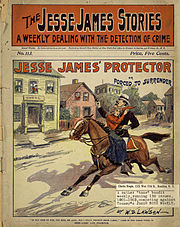
Jesse James dime novel cover

The Pinkerton Detective Agency was hired in 1874 to stop the James-Younger gang, and after numerous setbacks, Allan Pinkerton took on the case as a personal vendetta.  In 1875 he staged a raid on the James homestead and threw an incendiary device into the home.  It exploded, killing Jesse’s half-brother, and blowing off one of his mother’s arms.  This, more than any editorial, won public sympathy for Jesse James.  A bill granting the James and Younger brothers complete amnesty was narrowly defeated in the Missouri legislature.

Jesse married his cousin Zee in 1874, and two of their children survived to adulthood.  The downfall of the gang came in 1876, when they raided the First National Bank in Northfield, Minnesota.  All of the Younger brothers were killed or captured.  Only Frank and Jesse escaped.

Jesse tried to live quietly with his wife after that, in a home near St. Joseph, but he invited Charley Ford, a former gang member, to move in with the family for protection, and Charley brought in his younger brother Bob.  Both Ford brothers had been in contact with the governor of Missouri about his reward for Jesse, dead or alive.    One day, in 1882, as the three men were getting ready to leave for a robbery, as Jesse stopped to clean dust from a picture on the wall, Bob Ford shot him twice in the back of the head.

***

Memory, both individual and collective, is always mixed with imagination, increasingly so with the passage of time.  And if ours is not an era that treats the reputation of heroes well, at least we grasp human complexity.  Could Jesse James have been a loving father and a cold blooded killer and sympathetic to the poor?  Of course.  What was he really like?  We are never going to know, and besides, if there was a simple answer, I would not still be researching the legend and listening to the song.  Here is Pete Seeger’s version:

http://www.youtube.com/watch?v=DDo1sd9hZ5E

Barbara Allen – Mysteries in a Ballad

When I was six years old, my mother’s cousin, Junie, got married.  The two had been lifelong friends, and for the service, I was chosen to be the ring-bearer, and my sister, the flower girl.  That summer we drove from our home in upstate New York, to Kalamazoo, where Junie lived.  I’m happy to say that recently, Mary and I travelled to Oregon to celebrate Junie’s 50th anniversary.

Junie’s father, the uncle who later taught me to play poker, was a renowned surgeon and they had a beautiful house with a separate guest cottage on a bluff above Lake Michigan.  There were lots of adventures along the shore of the lake, like capturing a snapping turtle I recognized as such from my Pocket Guide to Reptiles and Amphibians, but one that stayed with me to the present day involved discovering a treasure trove of ballads.

The guest cottage had a box of old 78 recordings, and a book of lyrics and sheet music for a collection of American ballads.  There were two I listened to again and again because they haunted me with questions I didn’t understand then, and still can’t answer now.  The two were, “The Ballad of Barbara Allen,” and “The Ballad of Jessie James.”

Barbara Allen, which exists in as many as 92 versions, was first mentioned as “a little Scottish song” in 1666.  It came to our shores with the first settlers and was almost certainly popular well before the first printed versions appeared in England in 1750 and in America in 1836.  Barbara Allen is classified as Child Ballad 84.

In most versions, Sweet William lies on his death bed and sends his servant to fetch Barbara Allen, who reluctantly comes and says, “Young man, I think you’re dying.”  He says he is dying of love for her, but she will not have him, often because he bought a round of drinks for all the girls at the tavern a week before but not for her.  Sweet William dies of love for Barbara, and she dies the next day of sorrow.  Out of William’s heart there grows a rose and out of Barbara’s, a briar.  They grow and grow and finally form a lover’s knot above the graves.

The first thing you notice about this ballad is the lovely melody.  Then the haunting and tragic lyrics.  And then you realize it makes no sense.

Why is Barbara so cruel, I wondered as a kid and I wonder now.  Over a drink in the tavern?  Really?  I mean, really?  Even if, in that day and age, these kids were 14 or 15, and Barbara was a high school prima-donna, I’m not fully satisfied, and I bet you aren’t either.

And then you wonder, if William liked her so much, why did he buy drinks for all the girls except Barbara?  As in, “Dude, isn’t that playing a little too hard-to-get?”

There is also the mystery of Barbara’s change of heart and her subsequent death of sorrow.  I also wonder what real event or pair of star-crossed lovers might have inspired the song.

The supreme question, of course – and I chewed on this when I first heard the song at age six, is whether people really die of love?  Could it happen in the past, in simpler times, before eHarmony?   Especially for those like the Celts, who possess a genius for melancholy?

As a kid, I thought no.  Later, as a morose teenager, (I used to read Thomas Hardy for “fun”), I would have said yes, pining away is not that hard to believe.  As an adult, my response would have been, “Come on, William, get a grip.”  Now, from the Buddhist perspective of the ultimate power of mind, I would say, if you really believe you can’t live without a particular person, sooner or later it will come to pass.

This or that answer is not the point – the point is the questions.  I’ve recently been mulling over stories I have loved all my life, and so far I think they possess one of two qualities (or both) – one is characters I love so much they seem like a part of me, like Ratty and Mole.  The other is mysteries or questions I cannot solve.

Not surprisingly, I have collected quite a few versions of “Barbara Allen,” and this, by Emmy Lou Harris, I think is the best:

Soulman, Warren Haynes, Releases a Solo Album

Cover of Warren Haynes solo album, "Man in Motion"

I only knew Warren Haynes, one of Rolling Stone’s “Twenty-five best guitarists of all time,” as a member of the Allman Brothers, so I was very pleased to catch this NPR interview on Sunday morning.

http://www.npr.org/2011/05/08/136063696/warren-haynes-a-rocker-gets-some-me-time

In addition to the Allman Brothers and The Dead (that’s the Grateful Dead, minus Jerry Garcia), Haynes plays with his own band, Gov’t Mule, but over the last twenty years, certain songs haven’t fit with any group, and this prompted him to record a solo album, “Man In Motion,” which was just released today (May 10, 2011).

In the interview, Haynes discusses the music that has influenced him, from the time of his boyhood in Asheville, NC, when African-American gospel music on the radio “made the hair on his arms stand up.”  Man In Motion was recorded in just six days; Haynes wanted to keep the emotions fresh and not belabor the music.

The interview featured clips of three songs, which I very much enjoyed.  Right on schedule, “Man in Motion” is available on iTunes this morning.  I sampled a couple of cuts but have not yet had time to listen to all the clips.  The song I most wanted to post here is not up on youTube yet, but here’s something to entice readers to check out the new album:  a wonderful clip of Warren Haynes with Gov’t Mule last summer, performing, “Soulshine.”  Enjoy!

Footnote, Saturday, May 14.  I downloaded the whole album and have been listening for the last few days.  I can’t really find any false notes.  It’s great music and the dogs like it too (dogs and music will be a separate post).  If the description and the clip interest you, check out the cuts from Man in Motion on iTunes or youTube.  Bet you can’t keep your toes from tapping!

Shapeshifting in Faerie: The Ballad of Tam Lin

One fall day, when I was a college sophomore, I was boiling water for coffee in my off-campus apartment, getting ready to leave for a 9:00am class.  A clock radio on the counter was tuned to the local progressive rock station, but I wasn’t really listening, until a driving tempo opened a song with a strong, urgent, woman’s voice singing what was clearly a piece of folklore:

I forbid you maidens all,
that wear gold in your hair,
to travel to Carterhaugh,
for young Tam Lin is there.

I turned up the volume…

Them that go to Carterhaugh,
but they leave him a pledge,
either their mantles of green,
or else their maidenhead.

I was hooked by then, all my attention on this music.

Janet tied her kirtle green,
a bit above her knee,
and she’s gone to Carterhaugh,
as fast as go can she.

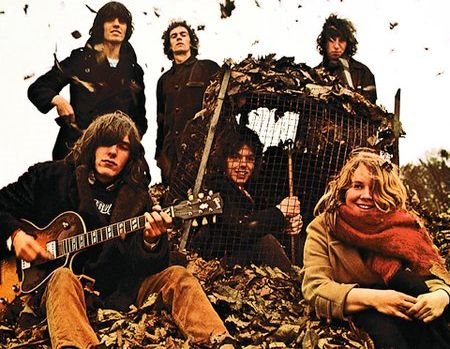
The group was Fairport Convention, the vocalist, an amazing singer named Sandy Denny who died in a tragic accident a few years later.  The song was, Tam Lin.

Fairport Convention

At the end of the day, I came home with the album, Liege and Lief tucked under my arm, and a backpack full of books like Folklore in the English and Scottish Ballads. You could say the passion that music ignited is with me to the present day:  it launched me into fantasy literature, shaped twenty years of storytelling, and this particular ballad is an important source for the fictional world I am building now for a heroine who wrestles with her fairy/mortal ancestry.

The ballad

Tam Lin comes from the Scottish border country and was first transcribed in 1549.  Francis James Child published 14 variants in his collection of English and Scottish ballads.  A mortal woman falls in love and conceives a child by a man who had been a mortal knight, until he was captured and somehow enchanted by the fairy queen.  In the Fairport lyrics:

Tell to me, Tam Lin, she said,
why came you here to dwell,
The queen of fairies caught me,
when from my horse I fell.

At the end of seven years,
she pays a tithe to hell,
I so fair and full of flesh,
am feared it be myself.

To disenchant her lover, Janet must hide at midnight on Halloween, at Miles Crossing, pull Tam from his horse, and hold on for dear life as the queen transforms him into a series of hideous and frightening shapes (I said this involved shapeshifting).  The queen turns Tam Lin into a snake, a newt, a bear, a lion, red-hot iron, and finally burning lead, at which point Janet does as instructed and throws him into a well, from which he emerges in his human form.  The queen is furious, and says if she had known of Janet’s loyalty, she’d have plucked out her eyes.  The real fairies of folklore are not nice people and are known to blind mortals who can see them.

Carterhaugh in 2005. You can still visit Tam Lin's well

Such renowned fantasy authors as Susan Cooper, Pamela Dean, Diana Wynn Jones, and Patricia McKillip have written novels based on Tam Lin’s story.  In 1970, Roddy McDowall directed a movie version staring Ava Gardner.  Countless individuals and groups have covered the ballad and there is at least one website devoted to nothing but exploration and creative elaboration of this song.  (see all these links here:  http://en.wikipedia.org/wiki/Tam_Lin)

What about the Shapeshifting?

Though Tam Lin is local to Scotland, the motif of disenchanting someone by holding on through countless frightening transformations is common to folklore throughout Europe.  This tale of shapeshifting is really quite different from Barth’s Menelaiad, discussed in the previous post.

There is a youthful, hopeful quality in this story of a heroic young woman who knows what she wants with such a fierce determination that nothing can thwart her, not even all the illusions and false paths that waylay most people’s dreams.

There is a quality of angst in Barth’s story question:  how can we ever sort out what is true from what is illusion?  I recall that after his campus visit, several sophomores proclaimed the death of literature as we know it.  Janet and Tam have no time for that – if this be illusion, play on, they would say (to badly misquote the bard).

Tam Lin explores the illusions of young lovers, while the Menelaiad does the same for a middle-aged and war-weary king.

Our final story of shapeshifting comes from India, and is several millenia old.  It sits somehwhere between the optimism and pessimism of the first two tales.  Yes, it affirms, life is a series of dreams, where dreams of joy transform into nightmares and back again endlessly – but imagine the joy of waking up.  That awakening, according to this tale, is nearer than we think.

Meanwhile here – as timeless as any fairy artifact – is Fairport Convention’s version of the Ballad of Tam Lin:

http://www.youtube.com/watch?v=jy3ihk205ew

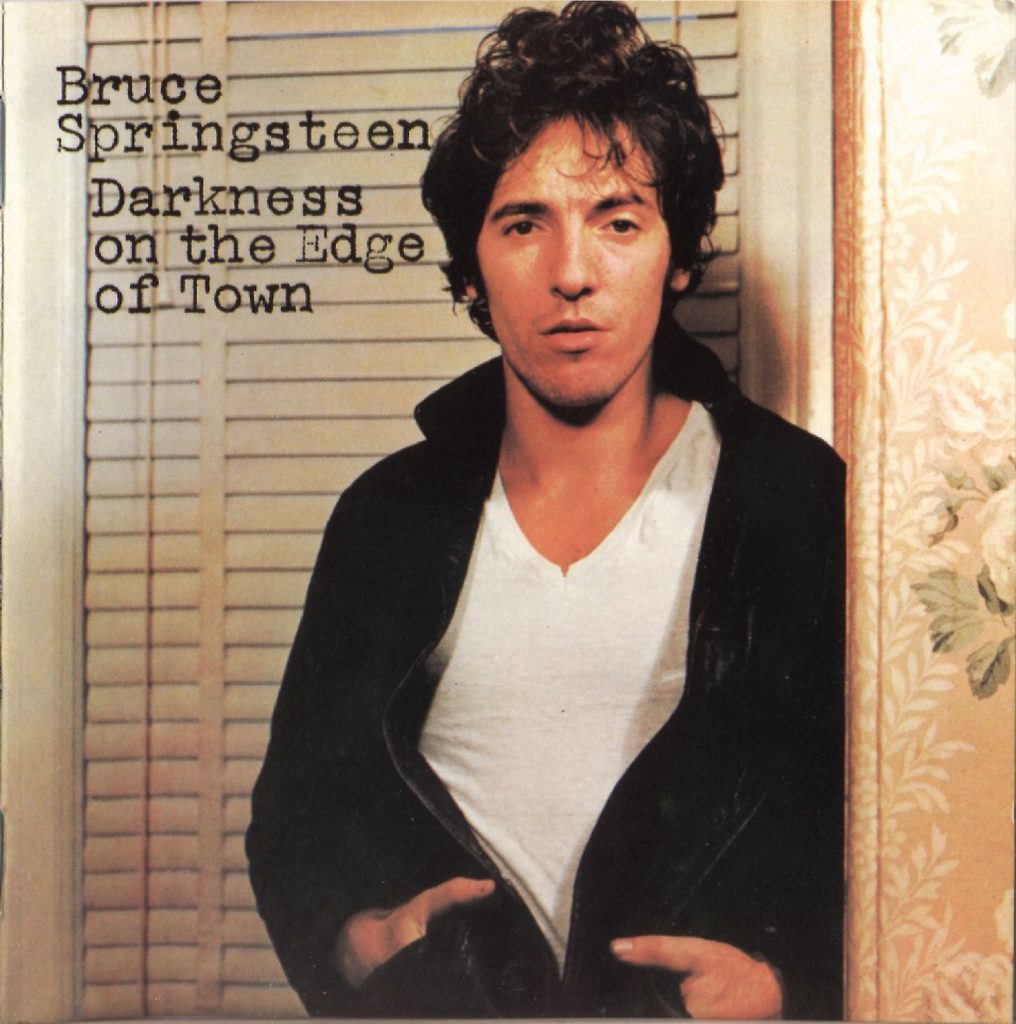
Darkness on the Edge of Town: Homage to The Boss


This post started as something completely different, but it swung like a compass needle toward something I truly love – the music of Bruce Springsteen.

I blog about all sorts of things that interest me, that I enjoy, that make me laugh. I sometimes write about ambitions and guiding philosophies, which are very important, but strangely, I have neglected how much music means to me.

I’ve been a huge Springsteen fan since I first picked up Greetings From Asbury Park in 1973. The man should be Poet Laureate of America, for as someone observed, who else can make you feel nostalgia for New Jersey?

***

I started the morning intending to post on two very significant articles I read in the last two days on structural, rather than cyclical, unemployment in this country.  This is something I think about often because my career in technology spanned the revolution that made it so easy to “offshore” and eliminate so many vocations.  Show of hands, how many are reading this on a computer that was assembled in the US?  As I thought, not a one.

The following are very good articles, that point out that we have a real problem that cannot even be addressed until it is acknowledged, which politicians have yet to do:

“Where the Jobs Aren’t:  Grappling With Structural Unemployment,” by Zachary Karabell, Time, January 17, 1011.
http://www.time.com/time/business/article/0,8599,2040966,00.html/

“Many Jobs Gone Forever Despite Onset of Recovery,” by Darry Sragow, The Sacramento Bee, Jan. 8, 2011,
http://www.sacbee.com/2011/01/08/3308378/many-jobs-gone-forever-despite.html/

As usual, however, poets see things before others, and Springsteen has been telling us since 1978 that we have a darkness at the edge of town.

***

What follows is a blatant excuse to upload some really good music – kind of like a Blues Brothers movie, where anything resembling a plot is secondary.

Here is an anthem everyone loves, perhaps because so few of us live in the place where we grew up.  Yet “My Hometown,” 1984, explicitly laid out the issue of “structural unemployment” a quarter of a century ago:

Now Main Street’s whitewashed windows and vacant stores
Seems like there ain’t nobody wants to come down here no more
They’re closing down the textile mill across the railroad tracks
Foreman says these jobs are going boys and they ain’t coming back


A poet will also recognize how work is much more than balance sheets and GDP; it touches every aspect of individual and family life.  From “The River,” 1980, live at Glastonbury:

I remember us riding in my brother’s car
Her body tan and wet down at the reservoir
At night on them banks I’d lie awake
And pull her close just to feel each breath she’d take
Now those memories come back to haunt me
they haunt me like a curse
Is a dream a lie if it don’t come true
Or is it something worse…


And finally, two more recent favorites, from the 1995 album, “The Ghost of Tom Joad.  They are self-explanatory.

Hot soup on a campfire under the bridge
Shelter line stretchin’ round the corner
Welcome to the new world order
Families sleepin’ in their cars in the southwest
No home no job no peace no rest

The highway is alive tonight
But nobody’s kiddin’ nobody about where it goes
I’m sittin’ down here in the campfire light
Searchin’ for the ghost of Tom Joad


And from the same album, “Youngstown,” performed in Youngstown, Ohio:

From the Monongaleh valley
To the Mesabi iron range
To the coal mines of Appalacchia
The story’s always the same
Seven-hundred tons of metal a day
Now sir you tell me the world’s changed
Once I made you rich enough
Rich enough to forget my name

And finally, to end on an upbeat note, a favorite recent Springsteen cut, performed live in London, 2007 I believe.  This is “The Sessions Band,” assembled for “The Seeger Sessions,” a CD tribute to the music of Pete Seeger on the occasion of his 90th birthday.  That recording, and “Live in Dublin,” are a can’t-sit-still mix of folk, rock, gospel, and jazz music.

God gave Noah the rainbow sign
“No more water but fire next time”
Pharaoh’s army got drownded
O Mary don’t you weep


If this appeals, be sure to check out The Boss’s web page: http://www.brucespringsteen.net/news/index.html
http://www.brucespringsteen.net/news/index.html