Samhain ~ The Beginner’s Guide To The Wheel Of The Year

Here is another of Lily Wight’s fine articles on the Celtic Wheel of the Year. This one discusses Samhain, a time of ending and beginning, when the veil between the worlds was especially thin. This is key information for those who love Celtic mythology as well as providing fun background for those who love Halloween.

Lily Wight's avatarLily Wight

     Updated 23/10/2014

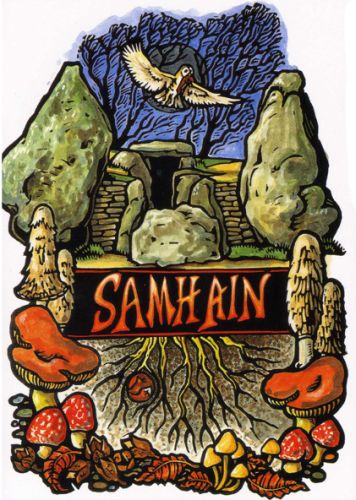
     Samhain – pronounced “sow – inn” and known presently as Halloween – is celebrated from sunset to sunset on 31st October to 1st November.  It is the most important Fire Festival or Sabbat on the ancient Wheel of The Year calendar.

     “Samhain” has been variously translated as “first frost” or “Summer’s end”:  opposing suggestions with the same meaning.  It is the name for November in ancient and modern Gaelic.

     Samhain lies between The Autumn Equinox and The Winter Solstice.  It marks the death of the year and the end of the annual agricultural cycle.  Many ancient cultures throughout The Western Hemisphere regarded Samhain as their New Year’s Eve.

     Samhain is the third and final harvest on The Wheel of The Year calendar.  After Lughnasadh (grain and cereals) and Modron (fruit and vegetables) herding…

View original post 428 more words

The Four functions of a living myth and the evening news

In The Masks of God: Creative Mythology, 1968, Joseph Campbell identified four major functions of a “living myth:”

1) ” To awaken and maintain in the individual an experience of awe, humility, and respect in recognition of that ultimate mystery, transcending names and forms.”

CC By-NC-ND-2.0

CC By-NC-ND-2.0

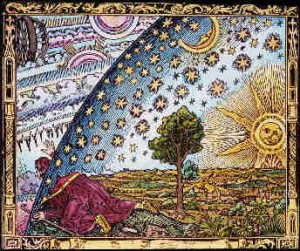
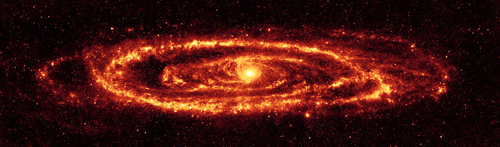
2) “To render a cosmology, an image of the universe.”  Today, Campbell notes, we turn to science for this.

Andromeda galaxy.  Nasa photo, public domain

Andromeda galaxy. Nasa photo, public domain

3) To shape “the individual to the requirements of his geographical and historically conditioned social group “

January from Les Très Riches Heures du duc de Berry, 15th c., public domain.

January from Les Très Riches Heures du duc de Berry, 15th c., public domain.

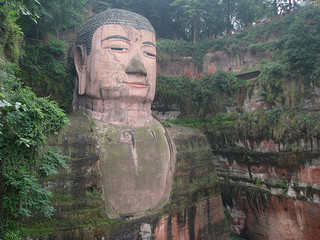
4)  “to foster the centering and unfolding of the individual…in accord with himself, his culture, the universe, and that awesome ultimate mystery.”

Leshan Giant Buddha, 2010, by Wilson Loo.  CC BY-NC-ND 2.0

Leshan Giant Buddha, 2010, by Wilson Loo. CC BY-NC-ND 2.0

Forty-five years ago, when conflict during the sixties was rending the social cohesion Americans had forged during WWII, Campbell wrote:  “The rise and fall of civilizations in the long, broad course of history can be seen to have been largely a function of the integrity and cogency of their supporting canons of myth.”

A mythological canon, said Campbell, is a group of symbols that “organize and focus the energies of aspiration.”  When the symbols no longer work for an individual, there is “dissociation from the local social nexus,” and, “if any considerable number of the members of a civilization are in this predicament, a point of no return will have been passed.”

In Creative Mythology, Campbell wrote at length of an earlier period of time when a different mythical canon broke down.  In 12th century Europe, Christianity ceased functioning as a socially cohesive world view.  Enough people stopped believing (even though belief was strictly enforced) that Europe went beyond the point of no return.

Many stories emerged during that era concerning the quest for the grail, which in the earliest written versions, had nothing to do with cup of the last supper, but everything to do with a quest to heal individuals and the land.  In Wolfram Von Eschenback’s Parzival, the grail was called lapis exiles, another name for the philosopher’s stone of alchemy.  The philosopher’s stone turns base metal into gold; the grail heals the wasteland, for that is what a country and culture become where there is a drought of aspiration and meaning.

Scenes from Perceval's quest of the grail, 1385-1390.  Public domain

Scenes from Perceval’s quest of the grail, 1385-1390. Public domain

That is where we are in America today.  In the absence of a shared core of attitudes and beliefs to unify us as a people, we are a nation of warring factions at all levels of culture and government.  For now, the party is over in the land of opportunity.  Even if our politicos won’t admit it, a “considerable number of members of our civilization” know this is true.

Campbell ended Creative Mythology by asking what might feature in a new and vital mythology.  In my opinion, he dithered with his answer, as he sometimes did in his writing.  Twenty years later, he answered the same question when it was posed by Bill Moyers at the end of the Power of Myth series.  This time Campbell suggested that any world view adequate to our times and our future would have, as a mandala, a view of the earth from space.

Earth from space

Neither Campbell nor one else back then knew the full extent of the danger climate change would pose.  Now we know it’s worse than anyone thought, (see the Intergovernmental Panel on Climate Change report, released Sept. 27).  Our governments are as impotent as the wounded Fisher King of the grail legend when it comes to enacting meaningful change.

Yet as Campbell said, the quest for the grail of healing begins with individual searchers venturing into the forest alone, at the place that seems best to them.  Like Nelson Kanuk, a University of Alaska freshman, whose home in a remote Eskimo village was swallowed by the sea as a result of melting permafrost.  Kanuk sued the state of Alaska for not curbing carbon emissions and his case is now being heard by the Alaska Supreme Court.  Similar suits are pending in 12 other states.  Such headlines echo words I recently quoted by Wendell Berry, who puts his trust in “ordinary people” and said:

We don’t have a right to ask whether we’re going to succeed or not.  The only question we have a right to ask is what’s the right thing to do? What does this earth require of us if we want to continue to live on it?”

We don’t even have to rush out and sue our state governments, for as Campbell suggested, stories and world views spark action and change when a critical mass is reached.  Hopefully, we are at or beyond that point. All we, as individuals, have to do is be still enough to hear what the world is asking of us, and then enter the forest at the place that seems best.

Two views of the hero myth

In a recent post, I discussed heroes and anti-heroes in spy movies and westerns.  This is the followup post I promised, but I’m going to leave the realm of popular heroes – those of fiction, entertainment, sports, and all who wear masks and tights.  I’m going to discuss the heroes of myth, especially the “monomyth” as Joseph Campbell summarized it in The Hero With a Thousand Faces:

“A hero ventures forth from the world of common day into a region of supernatural wonder: fabulous forces are there encountered and a decisive victory is won: the hero comes back from this mysterious adventure with the power to bestow boons on his fellow man.”

Here is a graphic that makes the elements of this type of story clearer:

Heroesjourney

I can’t think of heroes without remembering James Hillman, (1926-2011), the father of archetypal psychology and one of the most creative thinkers of our time.  The two differing views of the mythic hero announced in the title of this post are Hillman’s own.  He never shied away from ambiguity; “I don’t have answers, I have questions,” he said.

James Hillman

James Hillman

Hillman often railed at the negative effects he saw flowing from the hero archetype, which he saw as ego enshrined as narrow self-interest, both individually and collectively.  For Hillman, the “heroic ego” was often a source of evil and mischief.  Noting that heroes slay dragons, and earlier generations of Jungians wrote of dragons as “the mother,” Hillman claimed that heroes like Hercules in Greek mythology were emblematic of the modern world’s subjugation of women, “the feminine,” and “mother nature.”  On another occasion he said, “Killing the dragon in the hero myth is nothing less than killing the imagination.”

Yet a recently published collection of Hillman’s work (Mythic Figures, 2012) includes a chapter on Joseph Campbell, compiled from talks he gave in 2004 in which he spoke at length of the positive hero.  He put his earlier negative comments in context:

“A mistake in my attacks on the hero has been to locate this archetypal figure within our secular history after the gods had all been banished.  When the gods have fled or were declared dead, the hero serves only the secular ego.  The force that prompts action, kills dragons, and leads progress becomes the Western ‘strong ego’ – capitalist entrepreneur, colonial ruler, property developer, a tough guy with heroic ambitions on the road to success.”

When Hillman used terms like “soul” and “the gods,” his concern was religious, but not in the way of the literal truths of most organized religions.  For Hillman, such literalism was the enemy of soul.  He spoke only and always of the truth of the psyche because it precedes every other kind of truth:  “Every notion in our minds, each perception of the world and sensation in ourselves must go through a psychic organization in order to ‘happen’ at all.” (Revisioning Psychology, 1977).

This understanding of the true hero in service to a Power greater ego prompted Hillman to revise his understanding of the “Father/Dragon/Ogre/King” the hero slays:

“A civilization requires the Ogre to be slain.  Who is the Ogre?  The reactionary aspect of the senex who promotes fear, poverty, and imprisonment; who tempts the young and devours them to increase his own importance.  The Ogre is the paranoid King who must have an enemy.  He is the deceitful, suspicious, illegitimate King whose Nobles of the Court [have] committed themselves to the enclosed asylum of security where they nourish their world-devouring megalomania.”

St. George and the Dragon by Paolo Uccello, ca. 1458

St. George and the Dragon by Paolo Uccello, ca. 1458

I think we know what he meant in 2004 by speaking of “paranoid kings” whose nobles live in “the enclosed asylum of security.”  It has only gotten worse. How desperate the Ogre is to quash any budding heroes was revealed in a piece on August 19 on Time.com, “School Has Become too Hostile to Boys,” by Christina Hoff Summers.  Three seven year old boys, in Virginia, Maryland, and Colorado, were recently suspended from school for the following acts:

  1. Using a pencil to “shoot” a “bad guy.”
  2. Nibbling a pop-tart into the shape of a gun.
  3. Throwing an imaginary hand grenade at “bad guys” in order to “save the world.”

The rationale for these suspensions were “zero tolerance for firearms” policies.  Punishing pop-tart weapons in a culture that went on a gun buying binge in the wake of the Sandy Hook shootings seems too ludicrous to believe unless you see it from Hillman’s perspective – another step in the dragon’s war on imagination, in this case, the male imagination, the perspective from which most of our current hero myths derive.  Along with banning snack food guns, such schools have renamed “tug of war” games as “tug of peace,” and halted dodge ball as too violent.

Fortunately, as Christina Hoff notes, such efforts to “re-engineer imagination” are doomed to fail – all they will do is “send a clear and unmistakable message to millions of schoolboys: You are not welcome in school.”

In We’ve Had a Hundred Years of Psychotherapy and the World is Getting Worse, 1993, Hillman made clear his belief that pathology lies in cultures as well as individuals, and we deprive the world of something when we take our rage and our grief exclusively to the therapist.  Hillman never shied away from critiques of the world at large.  Depression is “an appropriate response” to the world we live in, he said.

Yet stronger than the Ogre, said Hillman, is the myth of the Hero – not this or that particular hero, but the heroic pattern itself that Joseph Campbell restored for our times, which renews culture “by revivifying the archetypal imagination displayed by peoples the world over…The panoply of materials that Campbell catalogued shows that the hero wears a thousand faces and cannot be reduced to the modern ego.  Especially important in recognizing him is recognizing the heroic liberating function of myth – that it speaks truth to power, even the Ogre’s power.”

We know from history and the nightly news how much suffering the decay of empires involve as paranoid kings strive desperately to hold on to power.  We also have the examples of James Hillman and Joseph Campbell, who spent their lives pointing toward soul, psyche, and the language of myth and imagination.  That is where we must look to find the larger truth – the hero brings the gift of renewal as surely as spring returns after the darkest time of the year.

The North Wind’s Gift: a trickster tale from Italy

If you haven’t already done so, I suggest you read the preceding post, Notes on Trickster stories, which provides a background and context for this article.  Both posts were inspired by “The North Wind’s Gift,” a tale from Italo Calvino’s Italian Folktales, 1956.  The story came to my attention in Allan Chinen’s discussion of tricksters and appealed because of its relative simplicity and relevance to our own times.
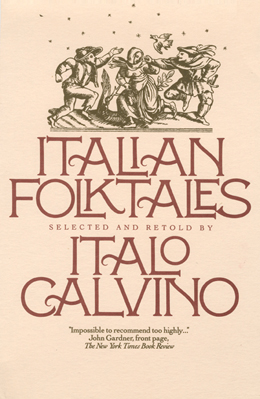
Italian Folktales

Here’s a synopsis of the story:

Once there was a farmer named Geppone who toiled in his fields every day of the year but could barely feed his wife and three children.  The North Wind blew at harvest time and ruined his crops.  Finally Geppone had enough and set out to find the North Wind and demand justice.  He reached the North Wind’s castle.  “Every year you ruin my crops,” he said.  “Because of you, my family is starving to death.”

“What can I do?” the North Wind asked.

“I leave that up to you,” Geppone replied.

The North Wind’s heart went out to the little farmer.  He brought out a box.  “This is a magical box which will give you food when you open it, but tell no one else about the magic or you’ll lose it.”

Geppone thanked the Wind and set out for home.  On the way, he opened the box.  Instantly a table appeared, piled with food.  When he got home, Geppone opened the box again and treated his family to a feast.  He told his wife not to tell anyone, and especially to say nothing to the priest, who was their landlord and a greedy man.

The next day, the priest spoke to Geppone’s wife and wrung the story out of her.  He summoned Geppone and  demanded the box on pain of eviction, offering seeds in return, which proved to be worthless.  As bad off as he was before, the farmer returned to the North Wind’s castle to ask for another boon.

At first, the North Wind refused, saying, “You ignored my warning.  Why should I help you again?”  Geppone pleaded, and reminded the Wind that he was still the cause of the family’s ruin.

“Very well,” said the North Wind at last.  He gave Geppone a magnificent gold box, but said, “Open this only when you are starving.”

On his way home, Geppone stopped and opened the new box.  This time a ruffian with a club jumped out and began to beat the farmer, who struggled to close the lid.  When he did, the ruffian vanished.  Geppone limped home, sore and bruised.  When his wife and children clamored to try the golden box, Geppone left the room.  This time two ruffians jumped out and began to beat the family.  Geppone slipped back into the room, closed the box, and the assailants vanished.

“This is what you must do,” he said to his wife.  “Tell the priest I brought home an even finer box, but say nothing else.”

Geppone’s wife understood and did as her husband instructed.  When the priest called the farmer and demanded the golden box, Geppone feigned reluctance, but at last agreed to trade it for the original box.  The priest rubbed his hands.  The bishop was due to join him for Mass the next day; a feast would be just the thing to win the approval of his superior.

The next day, after Mass, the priest, the bishop, and their retinue gathered for supper.  When the priest opened the box, six ruffians jumped out and beat the clerics.  Geppone, who was waiting at the window, took his time in closing the box to save them.

No one objected when he carried this second box home.  The priest never bothered Geppone again.  The farmer was careful to guard the North Wind’s gifts, and his family lived in ease and comfort for the rest of their days.

You can read the story as it appears in Italian Folktales here:  The North Wind’s Gift

***

It’s clear at the start of the story that we’re in a post-heroic fairytale world.  Geppone is not out to slay a dragon, rescue a princess, or win a kingdom – he just wants to survive.

Allan Chinen speaks of the different life stages that different fairytales address.  While the majority center on young people venturing into the world,  “middle-tales” like this have older protagonists with different kinds of problems.  From a Jungian perspective, Chinen notes that tricksters usually don’t show up in our dreams when we’re 18 and planning to take the world by storm – they visit us when we’re 40, with a mortgage, a couple of kids, and a car that needs an engine overhaul.

Geppone works from dawn until dark but can barely make ends meet.  His wife doesn’t listen to him, and the landlord threatens eviction.  This setup makes his story seem contemporary – if we’re not in this situation ourselves, one of our neighbors probably is.

We get the feeling Geppone has been down on his luck and taking it on the chin for a while.  Something finally awakens within him and spurs him to action.  As a result, he meets the North Wind, a wild spirit who will become his guardian and mentor and teach him the wiles of the trickster.

The North Wind is invoked in the Song of Solomon, in Aesop, and in Greek and Norwegian folklore.  He shows up in George McDonald’s novel, On the Back of the North Wind, in the stories of Hans Christian Anderson, and in Pokemon.  The North Wind is also associated with thunder gods like Zeus and Odin.  It’s not surprising that he is a shadowy trickster in Italy, where invaders and winter both arrive from the north.

Almost every successful fairytale character wins the help of a guiding spirit, and the North Wind’s help is just what Geppone needs.  It prompts him first to stand up for himself and ask for what he needs and then to learn enough strategy to overcome his oppressive priest and landlord.  To Jungians, fairytale allies like helpful animals, fairy godmothers, and nature spirits represent parts of the unconscious mind that are older and wiser than ego, which gets us into trouble in the first place.

What this means in practical terms is a vast subject, beyond the scope of a few blog posts.  Jung would suggest to patients who were comfortable in a religious tradition to return to it for guidance.  Much of Jung’s work aimed at helping people estranged from existing traditions who still needed to tap inner sources of wisdom.

In the “Power of Myth,” Bill Moyers asked Joseph Campbell where ordinary (i.e., busy) people might look to experience the wisdom of myth.  Campbell suggested we take 30 minutes or an hour a day in a quiet place where we can read what inspires us and perhaps keep a journal.

Just like this story, the psyche is home to ruffians and riches, and the old stories are not to be taken literally.  James Hillman, a prominent Jungian thinker, always insisted that literalism is the greatest enemy of inner wisdom.  So how does trickster wisdom manifest  in our world right now?  I don’t think we have to look very far.

A world that’s increasingly dysfunctional serves as a magnet for trickster energy, for good as well as for ill.  A Facebook friend mentioned that he once loaned out a book on trickster mythology and never got it back.  That fits the myths of trickster gods like Hermes who are also patrons of thieves.  Hermes may be the supreme image of the trickster.  As fluid as the metal which bears his Roman name, Mercury, he was the messenger between gods and humans who also conducted souls to the afterlife.  Patron of travelers, herdsmen, poets, orators, athletes, and inventors, his herald’s staff, the caduceus, is the symbol of healing to this day.

I find myself watching for positive manifestations of trickster energy, which usually turn up under the radar of corporate and government organizations which carry a vested interest in the status quo.  When you look, quite a few individuals and groups are trying out new solutions.  I’ll post at least one example in the near future.

In the meantime I would love to hear where you find trickster energy in yourself and in those around you.

Skinwalkers by Tony Hillerman: A book review

Skinwalkers

As I worked on a recent post, Favorite Fictional Detectives, I realized I didn’t remember the details of Skinwalkers, a key Tony Hillerman novel that I read soon after it was published in 1986.  I read it again and found it to be a thoroughly satisfying mystery.  I offer this brief review to encourage others who may not know Hillerman’s work to give it a look.

***

Officer Jim Chee, of the Navajo Tribal Police, tosses and turns one night in the airstream where he lives in the desert.  When his closest neighbor, a feral cat, shoots through the pet door, Chee gets up to peer out the window at what might have scared it so badly.  Probably a coyote, he thinks.  For a moment, thinks he sees a shape in the darkness.  Then the night explodes.  Three shotgun blasts tear holes in the trailer just above the bed where Chee was sleeping moments before.

In the morning, as he cleans up his trailer, Chee makes a frightening discovery.  Among the shotgun pellets that litter the floor is a small bone pellet.  Navajo witches, or skinwalkers, inject bone into the bodies of people they want to kill.  The bone produces the fatal “corpse sickness.”  This bone fragment links three apparently separate killings that Lt. Joe Leaphorn, a senior tribal detective, has been trying to solve without success.  When Leaphorn and Chee join forces, their first problem is persuading anyone to talk, when tradition holds that speaking a skinwalker’s name will attract his harmful attention.

Chee is learning to be a traditional Navajo healer.  With a background in college psychology classes, he understands his role to be restoring people to the core Navajo values of beauty and harmony.  Skinwalkers have fallen away and try to take others with them.

Leaphorn is not a believer, but he learned by hard experience that other people are.  Early in his career, when he ignored talk of witches, three murders and a suicide were the result.  As he and Chee grope through the dark, a very real menace is watching from a direction they do not expect.

This book represents fine storytelling, with characters and a setting that are outside our normal experience.  It’s one of the best mysteries I’ve read, and I suspect it will make you want to read more of Tony Hillerman’s work.

Scott Fenstermaker’s blog, “People-Triggers,” aims to “Understand what makes us do what we do.” In a fine article called, “The Personal Myth,” Scott explores some recent research on the importance of the stories we tell ourselves in shaping and creating our experience of self and world. “People who come out of psychotherapy testing higher on well-being indicators tend to tell similar personal stories with themes of conquered demons and redemption.The newer story may be no more factually true than the old, because all personal stories are fables, but the newer version is healthier.” In 1983, James Hillman wrote Healing Fictions, a book with a similar argument. This article quotes and links to some up-to-date research emphasizes the importance of the “screenplays” we’re always composing in our heads.

peopletriggers's avatarPeople-triggers

“It ain’t so much the things we don’t know that get us into trouble, it’s the things we do know that just ain’t so.” —Mark Twain

MythsSome (very reputable) psychologists are absolutely convinced that DNA is destiny. Other (very reputable) psychologists are convinced that your personality is shaped by what happens to you as an infant – or perhaps even in the first few minutes of life. This is what I love about psychology: the theories are all over the map and yet somehow everyone is still credible.

One very interesting dimension to personality has to do with the stories that we tell ourselves. Research has increasingly revealed that our personal life stories – our mental self-narratives – contribute substantially to our personalities and behaviors. An excellent New York Times article from 2007 summarizes much of this current research.

As the interpreter of our world, the mind is very…

View original post 707 more words

Pandora’s box, repression, and gun violence

From my perspective, the big news this week was the start of senate hearings on gun violence, which evoked a wide range of passions across the spectrum of public opinion.  More poignant than any testimony in Washington was the death of Hadiya Pendleton, a 15 year old honor student who performed at President Obama’s inauguration on the 21st.  The day before the speechifying began, Hadiya was shot and killed in public park in a “nice” section of Chicago, about a mile from the president’s house.  Police think it was a case of mistaken identity.

I thought of Hadiya Pendleton as I was out walking the dogs in a “nice” local park.  I remembered a lecture one of my psych professors gave 20 years ago.  We were studying defense mechanisms, and of these, repression gets a lot of bad press.  Nobody wants to be repressed or live in a repressive society.

My professor expressed an alternate view in his lecture:  repression kept a lid on many antisocial behaviors.  He quoted James Hillman who said, “What used to be the darkest dreams of Freud’s neurotic patients are now played out on our streets.”

The human psyche has not changed in 100 years, but our world has altered dramatically.  Men no longer need to wear boiled shirts, and women are free to bare their ankles.  We’ve learned to embrace the individual conscience and the search for an “authentic me,” but we don’t know what to do if someone’s “authentic me” turns out to be a sociopath.

We’ve found out the hard way that you  can’t just unrepress the good stuff.  When we let our angels out of the box, the demons get a pass too.  Which brings to mind the story of Pandora.

In order to punish humans for Prometheus’ theft of fire, Zeus sent Pandora to earth with a sealed jar (later mistranslated as “box”) and instructions not to open it.  We all know what happens in folklore with orders like that.

Pandora by John Waterhouse, 1896

By the time Pandora got the lid back on, all the evils of the world had been released.  Only hope remained in the jar.  Pandora’s dilemma is ours.

When it comes to our violent behaviors, inhibition was not such a bad thing.  Now that it’s out of the box, the question becomes, what do we do with our hope?

Are we there yet: apocalyptic yearnings

The Last Days of Pompeii by Karl Briullov, 1827-1833. Public Domain

The Oakland Hills Fire which broke out in October, 1991, was a major disaster by any estimate: 25 people died, 150 suffered injuries, and 3300 homes were destroyed. What I remember about the event, however, was an account by an independent journalist (whose name I have forgotten) who covered people arriving at evacuation shelters.

He said that a few were upbeat, almost giddy, as they talked of starting over.  The journalist said they were the first to be taken to counselors.  On-scene mental health triage workers assumed they were hysterical, most in need of hearing how terrible it was that they had lost everything.  How sad you must feel.  Have a kleenex.

I’ve always wondered about that.

The first historical accounts I know of that detail people waiting for the apocalypse date from December, 999, when groups across Europe trekked to high ground to wait for the millennial rapture.  The name, “rapture,” says it all.  It’s not the kind of disaster you read about in the papers.  It’s a chance to start over for true believers.  This is the hope picked up by new age proponents of the Mayan apocalypse, since the Mayans themselves left no hints of when the world will end.

The apocalyptic dream is the hope for a new heaven and earth that are better than this one.  Who wouldn’t like one of those, especially this year?

All the worlds religions tell us this world is not our home, but the mature voices in those religions do not hold out the hope of a cosmic get-out-of-jail-free card reserved for some chosen group.  They tell us that heaven and earth are transformed when an individual turns transformation.  Like Dante at 33, understanding he’d lost his way in a dark wood.  Like Rainer Maria Rilke who was viewing an ancient statue of Apollo when he heard an inner voice say, “here there is no place that does not see you. You must change your life.”

So tomorrow when we wake and the world looks the same, we can remember that it is not.  The sun will have turned from it’s southern trajectory, beginning its road back to summer.  And as we savor the morning coffee and the good things in our lives, we can take a moment to contemplate that turn toward a new heaven and earth.  The first steps lie with each and every one of us.