The medium is…

Republican debate

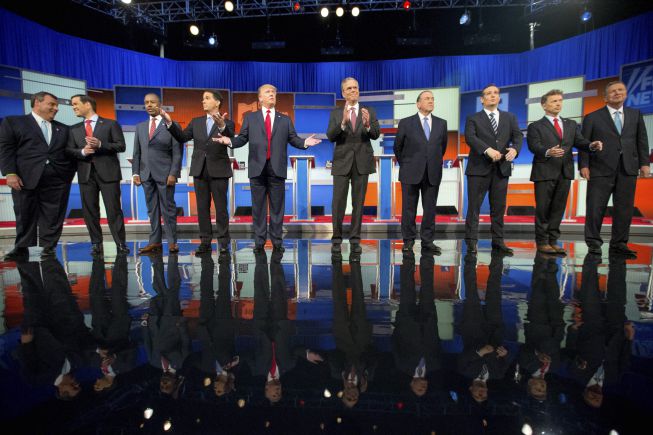
“The medium is the message”, said Marshall McLuhan in Understanding Media, 1964. Fifty-one years later, I’m still not certain we understand media, but a light bulb went on for me Thursday night regarding McLuhan’s iconic phrase. While watching the Republican presidential debate, I had a minor epiphany; that television cannot help transforming politics into entertainment.  

I am not suggesting that either party has a monopoly on show business.  Yes, the Republicans are likely to be funnier this year, with their Jerry Springer moments, and The Donald, who’s public persona is a weird combination of Rodney Dangerfield and Don Rickles.  I expect the Democrats to be far less interesting, more like infomercials on the home shopping channel.

There’s nothing new about politics as entertainment. If we believe television and movie depictions of pre-television and movie campaigns, there was plenty of bunting, and bluster, and brass bands in “the good old days.” But every now and then, wouldn’t it be refreshing to see something real happen on political TV?

The last time I saw reality break through was during the 2004 Democratic convention in Boston.  The Democrats had barred one of my heroes, the late Senator Robert Byrd, from the podium. Byrd could not be trusted to stay on script. Massachusetts Senator Kennedy invited Byrd to speak at the Old North Church, where Paul Revere worshipped, and his address was broadcast on Democracy Now. Byrd held up his well-worn pocket copy of the US Constitution and warned us that it was under attack…

Politics, of course, is not the only thing that TV flattens out. I recall several surreal moments with TV news. One early evening in college days, when I was living in an off-campus house, my roomies and I were watching a shoot out on Mod Squad on an old black and white TV. I went to the kitchen to fix a sandwich, and when I returned, the shootout had grown more intense; the house where the bad guys were hiding was on fire. But it looked different.  “Did somebody change the channel?” I asked.

“Nah, man,” said a house mate. “The news cut in. The cops are having a shootout with those guys who kidnapped Patty Hearst.” The visceral difference between watching a fictional versus a non-fiction firefight on TV was nonexistent without the dialog or voice over!

In a very real sense, that’s simply the nature of things according to both western depth psychology and Buddhist psychology. Every experience we have, noted James Hillman, begins as an event in the psyche. And Buddhist thinkers will tell you that our so-called realities are far more like the dreams we have at night than most of us dare to believe. Yet, as a practical matter, in order to make the right decisions, we have to be able to tell them apart, and that means turning a critical eye on the stuff we see on television.

I have recommended it before, but as we begin another presidential election mini-series, I can think of no better guidebook than Neal Gabler’s Life the Movie: How Entertainment Conquered Reality, 2000.  In it, he says:

“the deliberate application of the techniques of theater to politics, religion, education, literature, commerce, warfare, crime, everything, has converted them into branches of show business, where the overriding objective is getting and satisfying an audience.”

Unless we choose to live with the wolves, we’re going to be part of that audience, but at least we can remember that wonderful Buddhist bumper sticker:  “You don’t have to believe everything you think.”

Lest we forget

Armenian-Genocide-

Last week, as I drove home on Hwy. 99, on the outskirts of a small central valley town, I saw a billboard similar to this one, marking the centennial of the 20th century’s first genocide. It is one of two dark centennials we will mark next week. Ones that no one wants to think of, but which we ignore at our own peril.

The Ottoman Empire had been in decline well before the start of the first world war. Their initial military efforts were disastrous. Six months after the start of fighting , they had lost the Balkans, and ruin threatened.

Well before the start of fighting, nationalist Turks and some religious extremists declared that to be saved, the Empire must purge itself of non-Muslim elements. By early 1915, as the government feared that Armenian Christians might seek a separate peace with Russia, it became policy.

On April 24, 1915, notable Armenians in Istanbul were rounded up, a move that historians agree was the first step in a wider plan of annihilation. One and a half million Armenians would die in 1915 and 1916, and the killing would not stop completely until 1922. Though headlines around the world reported the atrocities at the time, Turkey denies responsibility to this day.

No one would ever be punished, a fact not lost on a young German corporal named Adolf Hitler, who paid attention to world events. After the war, victorious nations, including the United States, found it more advantageous to seek trade agreements with oil producing nations than to seek redress for a scattered and decimated populace. The U.S. House of Representatives came close to a resolution condemning the killings as genocide in both 2007 and 2009, but Presidents Bush and Obama respectively, fended off passage of the bill, which they feared would upset our alliance with Turkey.

Denial is still the order of the day for nation states with strategic interests, but as individuals, we fortunately still have the option of recognizing the truth.
A poison gas attack in World War 1

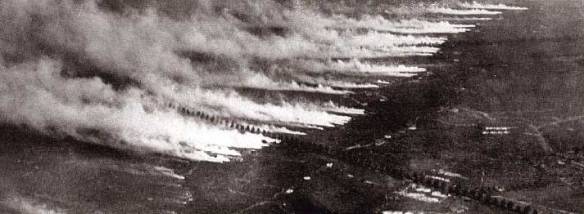
A poison gas attack in World War 1

The other sad centennial we will mark next week is the first use of poison gas on the western front, on the evening of April 22, 1915, a day we now celebrate as Earth Day.

Seeking a tactical advantage at the second battle of Ypres, the Germans launched a two day artillery barrage. When the guns fell silent, instead of the infantry charge that usually followed such a volley, the British soldiers saw a white cloud moving toward their trenches.

One hundred and sixty-eight tons of chlorine gas wafted on the western breeze. Only when it struck did the soldiers experience the horror that hid in the cloud. Chlorine renders the lungs incapable of absorbing oxygen; the victim drowns in his own bodily fluids. Those who could ran for their lives.

The gas opened up a four mile hole in the British lines, the kind of breakthrough the warring armies always sought, but as usually happened, confusion and inept command kept the German army from exploiting their advantage, which was soon neutralized.

A British soldier with a background in chemistry, saw that the gas had turned brass buttons green. Realizing it was chlorine, he supplied the troops with an instant antidote – breathing through a urine-soaked cloth would neutralize the effects. Both sides rushed gas masks to the front, and any strategic advantage was lost.

Most casualties in “The Great War” came from artillery, but poison gas somehow haunts our imagination as we think of the conflict that opened the 20th century. Nations entered the war with 19th century illusions of bravery and heroism. Such conceits were swept away in the first few months of mechanized carnage.

For me, Earth Day, 2015 is a time to consider the warring impulses which live within the human heart. Every thought and every action of each individual matters. What can I do, now, on Earth Day, and every day, to aim in the direction of the world I would like to live in, rather then one where mass horrors on the evening news no longer cause us to raise an eyebrow?

Sources:

Armenian Genocide of 1915: An Overview, New York Times.

A Century After Genocide, Turkey’s Denial Only Deepens,” by Tim Arango, The New York Times.

A World Undone: The Story of the Great War, 1914 to 1918 by G.J. Meyer
Does daylight savings time save energy?

Public Domain

Public Domain

Ok, now that daylight time is here for us in the new world, and coming in a few weeks for the EU, it’s time for a pop quiz: who invented daylight savings time?

Yes, fellow Googlers, it was Benjamin Franklin who reasoned it would save candles in the colonies. It was not mandated in the US until we entered WWI, when the intent was to preserve resources.

According to Scientific American, the first study of the effectiveness of daylight savings time was conducted in the 70’s, during our first “oil crisis.” The same article notes that a study in Indiana in 2006, the year that state mandated daylight time in all rather than just some of its counties, showed an increase in energy usage.

Similar results were seen in California in 2007, when daylight time was lengthened by four weeks. California Energy Commission researchers found an energy savings of only 0.2% with a margin of error of 1.5%. Changes in air conditioning patterns as well as the pervasiveness of electronic controllers in homes and businesses are possible causes of the flat or negative results.

I, for one, enjoy the light in summer evenings. Farmers dislike daylight savings time, for it disrupts their schedules. Sports enthusiasts favor it. In the late ’90’s, for instance, representatives of the golf industry said daylight time earned them and extra $400 million in fees each year.

For it or against it, the odds of it’s changing are practically non-existent. Unless you live in Arizona, you’ve lived with it all your life. Besides, there are more pressing issues for Congress to fail to act on than this.

Daylight time is one of those things, like the Superbowl and plum blossoms, like St. Patrick’s day, and the start of baseball season, that signal the coming of another spring and summer. I’m not inclined to complain too much if that costs me an hour of sleep.

Andrew Bacevich on “An Extraordinary Opportunity for Congress”

Andrew Bacevich

Those who follow this blog will know the high regard in which I hold historian Andrew Bacevich. In a 2012 review of his book, The Limits of Power: The End of American Exceptionalism, I mentioned a few of Bacevich’s credentials:

Bacevich, a Viet Nam veteran, retired as a colonel after 23 years in the army. He holds a PhD in American Diplomatic History from Princeton and taught at West Point and Johns Hopkins before joining the faculty at Boston University in 1998. In March, 2007, he described the US doctrine of “preventative warfare” as “immoral, illicit, and imprudent.” Two months later, his son died in Iraq.

On February 14, Bacevich posted a brief article on Moyers & Company that I’d love to see more widely read. He likens the current administration’s middle-eastern initiative to Nixon’s 1970 “incursion” into Cambodia and says:

“How did we arrive at this predicament? Where exactly are we headed? What is the overall aim? How will we know when we have succeeded? What further costs will the perpetuation of the enterprise entail?

Back in 1970, when the predicament was the Vietnam War, those questions demanded urgent attention. Today, the enterprise once known as the Global War on Terrorism, now informally referred to as the Long War or the Forever War or (my personal preference) America’s War for the Greater Middle East, defines our predicament. But the questions remain the same as they were when Cambodia rather than the Islamic State represented the issue of the moment.

So President Obama’s requested Authorization for the Use of Military Force (AUMF) could not have come at a more propitious moment. The proposed AUMF presents the Congress with an extraordinary opportunity — not to rubber stamp actions already taken, but to take stock of an undertaking that already exceeds the Vietnam War in length while showing not the slightest sign of ending in success.”

Read it, and instead of weeping, pass it on.

Lend a hand—49 things you can do to make a difference

Russel so often brings us magnificent photos, but here he gives something else – suggestions that are in reach, things we can do in the face of the glut negativity that greets us each morning in the papers and the news.

Russel Ray Photos's avatarRussel Ray Photos

Inspiration

For those who continue to rant about things over which you have no control, I would suggest getting out in your community and volunteering.

Scott #2039 VoluntarismMy life has been full of volunteerism, so much so that too often I let the unpaid volunteer job interfere with the paid professional job. I started with Key Club in high school, then Alpha Phi Omega National Co-ed Service Fraternity at Texas A&M University, and then to Red Cross, American Heart Association, Special Olympics, Muscular Dystrophy Association, and many, many others.

Following are 50 things you can do to help the world. I have done them all at some point in my life. Don’t let your ego get in the way of contributing to your neighborhood and city. Keep in mind that businesses have liability concerns, so the type of services that you’re allowed to volunteer for might be limited in some circumstances.

  1. Scott #1788 Special OlympicsPick a…

View original post 900 more words

The Bell Tolls

Sometime during the first semester of graduate work in psychology, our clinical practice professor made an interesting observation. “The funniest people I know,” she said, “have all deeply experienced sorrow.” Her words came back when I heard we had lost Robin Williams.

They say he suffered from alcoholism and depression, both progressive, fatal diseases that  can be arrested. Interestingly, the media has done much to remove the stigma from both conditions. Ted Danson, as bartender, Sam Malone on Cheers, helped normalize an alcoholic abstaining and going to meetings. And the constant din of TV antidepressant commercials has probably primed millions to “Ask their doctor” about this oh so modern affliction.

Untreated depression, like untreated alcoholism, puts a person at risk for suicide, accidents, and poor health choices that end too many lives far too early. It’s futile to speculate on why some people reach out for help and others do not, but no individual, not you nor I, is a statistic. We are not bound by any kind of odds.

In this world where information is so easy to come by, it is my hope than anyone who sees in themselves the conditions that took Robin Williams from us may hit google and check out the mountains of information on what they may have and what can be done about it.

Break out the tinfoil helmets!

From "Signs," 2002

From “Signs,” 2002

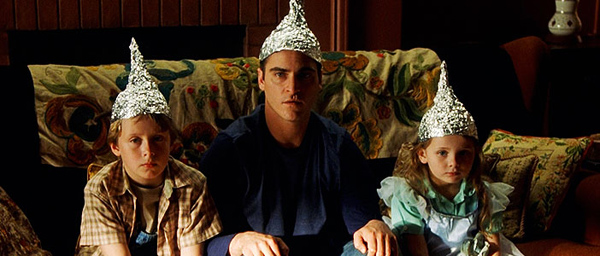
I find the tinfoil helmet image is always good for a laugh – don’t want those pesky aliens messing with our thought patterns! At the same time, we all know aliens aren’t the problem. I recently read a statistic that in the US, we see as many advertisements in a year as people 50 years ago did in their lifetimes. Advertisers explicitly set out to mess with our thought patterns. Now an NPR post reveals that “Facebook scientists” have messed with our thoughts as well.

The Bride of Frankenstein, 1935

The Bride of Frankenstein, 1935

Here’s the gist of their experiment:

“For one week back in 2012, Facebook scientists altered what appeared on the News Feed of more than 600,000 users. One group got mostly positive items; the other got mostly negative items.

Scientists then monitored the posts of those people and found that they were more negative if they received the negative News Feed and more positive if they received positive items.”

Experimental methods rapidly followed the birth of psychology in the last century as social scientists sought acceptance into the real community of science. Freud, after all, won his Nobel Prize in literature, not science.

Back in the day, psych experiments were conducted on helpless animals and hapless college students who needed to make a buck. Now, Facebook Scientists (don’t you wish you could see their credentials?) can run such tests on all of us for free, because no human being now living has ever read the Terms of Service for anything online that they wish to join.

I actually find it interesting that this particular test confirmed a hunch I’ve been working out on this blog over the last few months:  Reading negative news makes me crabby, while reading positive news improves my disposition. Only took me four years of blogging to work that out, a truth that could also be summarized by these wise words of British author, Kingsley Amis:  “Nice things are nicer than nasty ones.”

Oh yes, and I was being precise when I said four years – I launched this blog four years ago on June 28. They say most blogs don’t last that long, and I know I’m posting less often lately – it seems like I always get lazy in summer, especially in June. But all of you readers keep me hunting for interesting things, or weird things (like Facebook scientists) to share.  So thanks, I appreciate it, and please stay tuned!

No discouraging words revisited

Embed from Getty Images

In an earlier post, Where seldom is heard a discouraging word, I announced an experiment. Following my wife’s efforts to suspend negative thinking and speech during Lent, I decided to refrain from critical posts through Easter. Here is the first of several observations I will share.

Avoiding negative and pessimistic topics leaves me a lot fewer subjects to blog about! Many of my posts begin with news stories, but often it seems, to paraphrase the old Hee-Haw song, “If it weren’t for bad news, I’d have no news at all.” More nights than not, when I’ve checked my usual source websites (CNN, NPR, USA Today, etc.), I haven’t found a single upbeat or funny or quirky post that I wanted to write about. Sure, there was the girl scout who sold 12,000 boxes of cookies, but even if it’s a good thing for a kid to become a marketing wizard, that isn’t my kind of story.

The real question for me, however, is not the content of this weeks’ or that weeks’ news, but the systemic nature of our news media, which makes trials and tribulations endemic. These are news stories, after all, and a good story demands tension, upping the stakes, and all that. The question is not whether these are gripping stories, but the degree to which they mirror “reality.”

I’m thinking of a book I have often cited here, Neal Gabler’s, Life the Movie: How Entertainment Conquered Reality (2000), in which the author says we are not just a post-modern culture but a “post reality culture.” Gabler locates the beginning of news-as-entertainment in America as “the penny press.” Prior to 1830, newspapers were single page “broadsheets” which appealed to the upper classes. Most of them cost six cents and the average daily circulation in New York City was 1200. Beginning with the Sun, which cost a penny, newspaper sales exploded. Gabler cites various reasons for the success of the penny press, but says that above all, it meshed with other sensational forms of entertainment:

“…for a constituency being conditioned by trashy crime pamphlets, gory novels and overwrought melodramas, news was simply the most exciting, most entertaining content a paper could offer, especially when it was skewed, as it invariably was in the penny press, to the most sensational stories. In fact, one might even say that the masters of the penny press invented the concept of news because it was the best way to sell their papers…”

In it’s first two weeks of publication, in 1835, the New York Herald ran stories that centered on “three suicides, three murders, the death of five persons in a fire, a man accidentally blowing off his head, an execution in France by guillotine and a riot in Philadelphia.” Needless to say, the Herald became wildly successful.

If it’s true that what we think of as “news” is an “invented concept,” we have to ask to what degree it mirrors reality and to what degree it creates it? Think about that the next time you open the paper or check your Tweets.

What I have discovered is how deep the contagion goes, even though I normally limit my sources, never watching the local news on TV, for instance. I confess that while I have cut negative posts from theFirstGates since March 7, I’ve probably doubled the number of depressing subjects I’ve posted on Twitter. In a way, I feel like I did a month after I quit smoking, and found that a nasty cough was still there. This is more serious than I thought at first. I’ll have more to say about it, but meanwhile, let’s change the tone as we end with a classic that came to mind at the start of this post.