Reflections on Story Water

My second post on this blog, on July 1, 2010, featured a poem called “Story Water” by the 13th century Persian mystic, Rumi.  It came to mind in the light of recent events.

Friday morning, as I worked on post #420, I got up for coffee and flipped on the radio.  The post concerned what folklore can teach us about living in difficult times.  After I heard of the murdered children, I put it aside.  Some events seem too much for stories.  Yet reflection later reminded me that stories are always with us, one way or another.  Rumi knew this.  He knew how the stories we hear feed our inner tales and the importance of choosing wisely where to place our attention.

On friday night, hundreds of people in Newtown, Connecticut went to church.  As I heard how they turned to a story of hope in a dark time, I thought of one of the first such stories I told myself.

One day in first grade, a classmate went home sick.  The following monday, the teacher told us she died.  I had seen dead birds in the woods behind our house, but that was the first time I realized death could visit at any time.  It could steal our friends and loved ones away in a heartbeat.

The dead girl’s name was Cindy Erwin, and she was the minister’s daughter.  I figured her father’s vocation gave her an in with Jesus, and she would be fine.  I never worried about Cindy, although I’ve never forgotten her name.  I knew it was the rest of us who were in trouble.

Stories like this, the ones we tell ourselves, shape our lives in ways we can barely imagine.  Everyone young or old who lived through events at Sandy Hook School or watched them unfold on TV will remember the day as long as they live and tell themselves stories about what happened and why and what it means.

According to Rumi, few of us know the answers with certainty.  That’s why we have stories.  That’s why they matter so much.  I think he would have agreed that in the end, the world is made of stories, so it matters very much which ones we tell each other and ourselves.  In ways we don’t understand, they shape the world as it unfolds.

STORY WATER by Rumi

A story is like water
that you heat for your bath.

It takes messages between the fire
and your skin. It lets them meet,
and it cleans you!

Very few can sit down
in the middle of the fire itself
like a salamander or Abraham.
We need intermediaries.

A feeling of fullness comes,
but usually it takes some bread
to bring it.

Beauty surrounds us,
but usually we need to be walking
in a garden to know it.

The body itself is a screen
to shield and partially reveal
the light that’s blazing
inside your presence.

Water, stories, the body,
all the things we do, are mediums
that hide and show what’s hidden.

Study them,
and enjoy this being washed
with a secret we sometimes know,

and then not.

Tempest – Bob Dylan’s latest recording

Bob Dylan in concert in Spain, 2010, CC-by-2.0

Fifty years after his first album, Bob Dylan, 71, has released Tempest, his 35th studio album, to critical acclaim.  Over half a century, Dylan has never repeated himself.

Randal Roberts of The LA Times says,  “Dylan lives in every molecule of our being, has taught us about lyrical possibility, has reveled in the joy of words and the power and glory of making things up from scratch. To learn that a new Dylan project is in the works is to know that there’s a good chance your brain will be forever changed by at least one new rhyming couplet, snarling oath or graceful guitar line. On “Tempest,”…there are many such moments.”

The songs range from light to dark, from blues to ballad, from topical references to phrases borrowed from Child ballads, all resonating to Dylan’s unique and raspy voice.

“Scarlet Town,” echoes the “Barbara Allen,” where Sweet William on his deathbed lies, but veers away from easy interpretation, much like the inviting but ultimately opaque American folklore references in Dylan’s much earlier, John Wesley Harding, 1967.  Then and now, the poetry is Dylan’s own:

Scarlet Town, in the hot noon hours,
There’s palm-leaf shadows and scattered flowers
Beggars crouching at the gate
Help comes, but it comes too late
By marble slabs and in fields of stone
You make your humble wishes known
I touched the garment, but the hem was torn
In Scarlet Town, where I was born

http://www.youtube.com/watch?v=GUWlFGEfRAU&feature=related

The title song, “Tempest,” is a 14 minute ballad about Titanic, phrased as a waltz that echoes the rolling of waves as it borrows The Carter Family’s “Titanic.”

The night was black with starlight
The seas were sharp and clear
Moving through the shadows
The promised hour was near

Lights were holding steady
Gliding over the foam
All the lords and ladies
Heading for their eternal home

Tempest opens with a blues number, “Duquesne Whistle,” written with Robert Hunter, The Grateful Dead lyricist.  It’s followed by the angry and topical “Early Roman Kings.”  There is “Roll on John,” a tribute to John Lennon, “Tin Angel,” a song of murder and suicide, and it ends with “Soon After Midnight,” which sounds like a slow song at the end of a high school dance.

http://www.youtube.com/watch?v=KaWcVxPTgYU

If you’ve ever enjoyed Dylan’s music; if like Randal Roberts it has “forever changed your brain,” I urge you to check out the songs online. I bet you’ll download some or all of cuts, and marvel at the phenomenon of an artist who has continued to grow over fifty years.

Marina, a poem by T.S. Eliot

One of best educational experiences I ever had was a class called “Yeats and Eliot” that I took as a college sophomore. I’ve been reading and rereading his work ever since. The name of this blog, “The first gate(s)” comes from the opening of Eliot’s long poem, “The Four Quartets,” which matches the scope and depth of the work of any poet who ventures into ineffable realms.

T.S. Eliot by Lady Ottoline Morrell, 1934. Public Domain

Eliot must have been quite a character.  He scandalized the early 20th century literary establishment with images like this, from the opening of “The Love Song of J. Alfred Prufrock:”

“Let us go then, you and I,
When the evening is spread out against the sky
Like a patient etherised upon a table;”

At the same time he offended the avant garde because he worked in a bank and joined the Anglican church.  Aware of such contradictions, he was never afraid to parody himself:

“How unpleasant to meet Mr. Eliot!
With his features of clerical cut,
And his brow so grim
And his mouth so prim
And his conversation, so nicely
Restricted to What Precisely
And If and Perhaps and But.”

By all accounts, he was also a joker, who served whoopee cushions and exploding cigars to dinner guests.  He and Groucho Marx were mutual fans.

***

“Marina” was one of the first Eliot poems I came to love, but I hadn’t read it for quite a while.  Ironically, it was the political conventions that brought these lines from the poem to mind:

Those who sharpen the tooth of the dog, meaning
Death
Those who glitter with the glory of the hummingbird, meaning
Death

Marina was #29 in Eliot’s series of  “Ariel Poems,” first published in September, 1930.  It was based on the Jacobean play, Pericles, Prince of Tyre.  Shakespeare is credited with the last acts of the play, the story of Pericles’ separation from, and reunion with, his daughter, Marina (most scholars believe the opening was composed by an inferior collaborator).

The play however, was simply a catalyst for poem that lives a life of its own, with haunting imagery that I think can speak to any of us, wherever we are.

Marina

By T.S. Eliot

Quis hic locus, quae regio, quae mundi plaga? 

What seas what shores what grey rocks and what islands
What water lapping the bow
And scent of pine and the woodthrush singing through the fog
What images return
O my daughter.

Those who sharpen the tooth of the dog, meaning
Death
Those who glitter with the glory of the hummingbird, meaning
Death
Those who sit in the sty of contentment, meaning
Death
Those who suffer the ecstasy of the animals, meaning
Death

Are become insubstantial, reduced by a wind,
A breath of pine, and the woodsong fog
By this grace dissolved in place

What is this face, less clear and clearer
The pulse in the arm, less strong and stronger—
Given or lent? more distant than stars and nearer than the eye
Whispers and small laughter between leaves and hurrying feet
Under sleep, where all the waters meet.

Bowsprit cracked with ice and paint cracked with heat.
I made this, I have forgotten
And remember.
The rigging weak and the canvas rotten
Between one June and another September.
Made this unknowing, half conscious, unknown, my own.
The garboard strake leaks, the seams need caulking.
This form, this face, this life
Living to live in a world of time beyond me; let me
Resign my life for this life, my speech for that unspoken,
The awakened, lips parted, the hope, the new ships.

What seas what shores what granite islands towards my timbers
And woodthrush calling through the fog
My daughter.

Lost, a poem by David Wagoner

David Wagoner, a prolific poet and novelist, was born in the midwest in 1926.  In 1954, he moved to the Pacific northwest and said that crossing the Cascades and coming down into a Pacific rainforest “was a big event for me, it was a real crossing of a threshold, a real change of consciousness. Nothing was ever the same again.”  He has taught at the University of Washington since that time.

He based his marvelous poem, “Lost” on teachings the northwest coast Indians gave their children on what to do if they ever got lost in the forest.

Lost

Stand still.  The trees ahead and bushes beside you
Are not lost.  Wherever you are is called Here,
And you must treat it as a powerful stranger,
Must ask permission to know it and be known.
The forest breathes.  Listen.  It answers,
I have made this place around you,
If you leave it you may come back again, saying Here.
No two trees are the same to Raven,
No two branches are the same to Wren.
If what a tree or a bush does is lost on you,
You are surely lost.  Stand still.  The forest knows
Where you are.  You must let it find you.

From, Travelling Light, Collected and New Poems, 1999

The hour of the wolf

Welcome Library, London, CC by NC

On monday morning, I woke around 3:00am with a sense of dread far out of proportion to the rather mundane dream I’d been having.  A thunderstorm rolling by increased the sense of menace at this darkest hour of the night.

The hour of the wolf is the phrase I’ve always used for such moments.  “It’s always darkest right before dawn,” we tell ourselves by daylight.  “It’s always darkest just before it goes pitch black,” says a demotivational poster you can find on despair.com.  That is the hour of the wolf (though despair.com is a funny website).

When I was an undergrad, we used to say, “Wherever two or more are gathered, they’ll start a film society.”  College film societies of the time loved Ingmar Bergman, and I did too, so I knew his 1968, The Hour of the Wolf, but it wasn’t one of my favorites from his surrealistic period.  The best definition I know came from dialog in the “Hour of the Wolf” episode of Babylon 5, in 1996:

“Have you ever heard of the hour of the wolf? … It’s the time between 3:00 and 4:00 in the morning. You can’t sleep, and all you can see is the troubles and the problems and the ways that your life should’ve gone but didn’t. All you can hear is the sound of your own heart.”  – Michael J. Straczynski, writer, Babylonian Productions.

Since I couldn’t sleep, I tried to remember what I knew of the phrase.  A long time ago, I read that it was coined in medieval Paris.  The gates of the city were shut at night, but during the winter, wolves sometimes slipped through at dusk.  At the darkest hour of the night, they would glide through the streets like shadows to prey on the poor unfortunates who were sleeping alone on the streets.  “Hour of the wolf” was the phrase coined by those who encountered the grisly remains in the morning.

Hint:  thinking of wolves chewing corpses doesn’t help you get back to sleep.

I knew by then what was keeping me up.  Some of it had to do with the Colorado shootings.  It’s hard to sleep easy after such an event, but that was not the heart of it.  On sunday, I’d listened to Chris Hedges, a guest on Moyers & Company, in a segment called, “Capitalism’s ‘Sacrifice Zones.'”

Hedges is a journalist who worked for the New York Times until he was “pushed out” for outspoken opposition to the war in Iraq.  The interview is important and very depressing, like much honest reporting these days (when you can find it).  

http://billmoyers.com/episode/full-show-capitalism’s-‘sacrifice-zones’/

It’s hard to know what to do with this kind of unpleasant truth.  One good thing that came out of this post is that I learned the source of the phrase, “live with the questions.”  Therapists, especially Jungians, like to quote it, but it was Rainer Maria Rilke who first penned it.  In 1903, in Letters to a Young Poet, he said:

“…I would like to beg you dear Sir, as well as I can, to have patience with everything unresolved in your heart and to try to love the questions themselves as if they were locked rooms or books written in a very foreign language. Don’t search for the answers, which could not be given to you now, because you would not be able to live them. And the point is to live everything. Live the questions now. Perhaps then, someday far in the future, you will gradually, without even noticing it, live your way into the answer.”

Remembering Phil Ochs

Phil Ochs, 1940-1976

Music has always influenced me, especially while I was growing up.  One of the poet/songwriters I really loved was Phil Ochs, who died in April, 1976.  Ochs corrected the people who labelled him a protest singer – “topical singer” was his phrase.  Though his music extended beyond topical songs, his anti-war songs, and music that demanded social justice remain his best known pieces.

Ochs was born in El Paso in 1940.  His father, a doctor, had been drafted during WWII and suffered from depression after his discharge.  The moved a lot as he had trouble establishing a medical practice.  Phil dropped out of college, but after an arrest for vagrancy in Florida, decided to become a writer and journalist.  He enrolled at Ohio state where he discussed politics and learned the guitar from a fellow student who turned him on to Woody Guthrie, Pete Seeger, and the Weavers.

Ochs learned quickly and was invited to the 1963 Newport Folk Festival, where Bob Dylan, Joan Baez, and Peter, Paul, and Mary also appeared.  During the ’60’s, he wrote hundreds of songs.  One of his best known was “I ain’t a marchin’ anymore.”  Ochs quoted the lyrics when called to testify at the Chicago Seven trial after the 1968 police riot during the Democratic Convention.

It’s always the old to lead us to the wars,
always the young to fall.
Now look at all we’ve won with the saber and the gun,
Tell me is it worth it all?

Several of Ochs’ most haunting ballads center on Christian themes.  I haven’t read either of the two biographies, so I don’t know the role of faith in his life, but these songs are filled with poetry, sadness, and a vision of Jesus that lies on the opposite end of the spectrum from those who  invoke Christian themes to support their political views nowadays.  Here’s a clip of the first two minutes of a live version of, “The Crucifiction,” performed in Stockholm in 1969. The recorded version runs to almost nine minutes and is available on iTunes for anyone interested.

http://www.youtube.com/watch?v=c-bL3YbG_Lg
In the green fields a turnin’, a baby is born
His cries crease the wind and mingle with the morn
An assault upon the order, the changing of the guard
Chosen for a challenge that is hopelessly hard
And the only single sound is the sighing of the stars
But to the silence of distance they are sworn

Images of innocence charge him go on
But the decadence of destiny is looking for a pawn
To a nightmare of knowledge he opens up the gate
And a blinding revelation is laid upon his plate
That beneath the greatest love is a hurricane of hate
And God help the critic of the dawn.

So he stands on the sea and shouts to the shore,
But the louder that he screams the longer he’s ignored
For the wine of oblivion is drunk to the dregs
And the merchants of the masses almost have to be begged
‘Till the giant is aware, someone’s pulling at his leg,
And someone is tapping at the door.

So dance dance dance
Teach us to be true
Come dance dance dance
‘Cause we love you

Another one of my favorites has always been the “Ballad of a Carpenter.”

Two thousand years have come and gone
many a hero too.
But the dream of this poor carpenter
remains in the hands of you
remains in the hands of you.

The events during and after the 1968 election convinced Ochs that no one was listening to “topical songs.”  He tried to return to his musical roots – Buddy Holly, Elvis, and Merle Haggard – hoping that would open better avenues of communication, but he began to rely more heavily on valium and alcohol to keep him going while touring.

He travelled to Chile in support of Salvatore Allende, a democratically elected Marxist.  He and another Chilean folksinger barely escaped with their lives after visiting other South American countries.  In 1973, he was attacked by robbers during a trip to Africa and his vocal cords were damaged as the attackers tried to strangle him.  Ochs believed the CIA might have arranged the attack.  Paranoid?  Perhaps, although after his death, the freedom of information act revealed that his dossier was 500 pages long.

The final recording on Ochs’ final album was the haunting, “No More Songs.” Plagued by bipolar disorder and alcoholism, Phil Ochs took his own life on April 9, 1976.

A star is in the sky, it’s time to say goodbye,
A whale is on the beach, he’s dying.
A white flag in my hand, and a white bone in the sand,
And it seems that there are no more songs.

Hello, hello, hello, is there anybody home?
I’ve only called to say I’m sorry
The drums are in the dawn and all the voices gone
And it seems that there are no more songs.

To paraphrase what he sang in “The Carpenter,” the dreams Phil Ochs tried to embody, remain in our hands.  May he rest in peace.

A Great Site With Free Books, Courses, Movies, and More

http://www.openculture.com/

How about a website with four hundred free online classes from well known universities like:

  • “Introduction to Visual Thinking,” from Berkeley
  • “Virgil’s Aeneid,” taught by a Stanford professor
  • “Game Theory,” from Yale
  • “Science, Magic, and Religion,” from a class at UCLA

What if the same website had classical audio books:

  • Poets like Eliot and Ginsberg reading their own work.
  • MP3’s of numerous authors:  Jane Austen, Charles Dickens, Fitzgerald.  Mary Shelley, Frank L. Baum.  Wanna hear Beowolf, The Iliad, or Moby Dick on the morning commute?
  • Or perhaps as you sit there in traffic you’d like to while away the time with Gibbon’s complete Decline and Fall of the Roman Empire.

On open culture you will also find free ebooks by a similar set of authors.

And 450 free movies, much like you see on TCM, but with some hard to find gems, like Luis Bunel’s 1930’s surrealist classic, L’age d’Or, or the 1902 French science fiction clip, A Voyage to the Moon.

On Openculture, you can also find free language lessons, free textbooks and other goodies.

But wait, there’s more!

I found the Openculture link on a wonderful WordPress Dailypost by Sylvia V., who lists a total of six sites where she goes for inspiration.  Now, thanks to her info, we can do the same.  http://dailypost.wordpress.com/2012/02/07/inspiration-that-clicks/

For All, by Gary Snyder

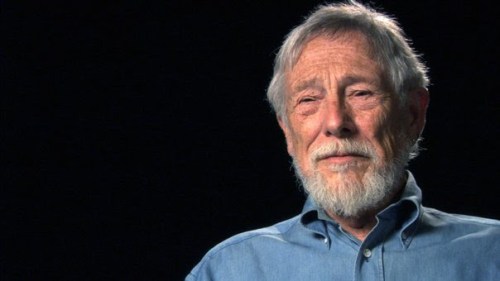
Gary Snyder

Fascinating as it can be, focusing on politics, as I have been doing lately, can overwhelm the thoughts with all that is wrong.  Take a step back, and the question becomes what is right?  And also, what isn’t touched by any of that?

Watching something that’s always right – the dogs running around the yard – I thought of this poem by Gary Snyder.  For All has long been one of my favorites, and it seems especially important now:  “I pledge allegiance to the soil of Turtle Island…”

For All

Ah to be alive
on a mid-September morn
fording a stream
barefoot, pants rolled up,
holding boots, pack on,
sunshine, ice in the shallows,
northern rockies.

Rustle and shimmer of icy creek waters
stones turn underfoot, small and hard as toes
cold nose dripping
singing inside
creek music, heart music,
smell of sun on gravel.

I pledge allegiance

I pledge allegiance to the soil
of Turtle Island,
and to the beings who thereon dwell
one ecosystem
in diversity
under the sun
With joyful interpenetration for all.

(from Axe Handles, 1983)