The Tassajara Bread Book

Three decades ago, I stumbled into a three year period in my working life where I had time to pursue all the extra-cirricular activities I desired.  Through a spectacular right place/right time moment, I landed a part time teaching job.  We lived in a small but cozy and affordable house in Chico, California where we could walk to the market and downtown.  We got by with one car, a Beetle that I maintained with the help of the Idiot’s Volkswagen book.  We grew veggies, and somewhere along the line, I started making bread, not just to save a few pennies, but because I found it satisfying and delicious.  That was one of several things that went by the wayside when I joined the high-tech workforce – until two days ago.

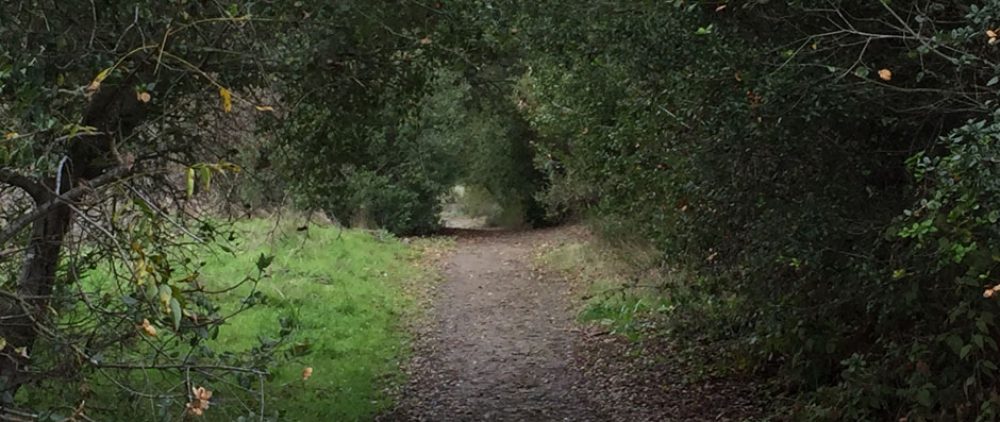
In a recent post I wrote of attending a retreat with Edward Brown, a long-time Zen student, teacher, chef, and the author of The Tassajara Cookbook and The Tassajara Bread Book.  I purchased both books.  This was not an impulse buy – I attended a workshop with Edward a year ago and almost bought the books then, but worried that I didn’t have enough time.  This year I decided to make time, with the results you can see above.  The loaves taste as good as they look.

I’d show you the Orange Whole Wheat Pancakes, but unlike the bread, they did not have to cool before eating, so they didn’t last long enough for snapshots.

The directions in the Breadbook are clear and lively.  Brown takes the time to explain why you do things this way and not that, a feature lacking in many cookbooks.  There is something elementally satisfying in baking one’s “daily bread,” and I cannot think of a better book on how to do it.

A Day With Edward Espe Brown: Zen, Cooking (and Writing Too)

When Edward Espe Brown was head cook and baker at the Tassajara Zen Center in the mountains above Big Sur, he had a serious problem with biscuits.  As described in the recently updated, Complete Tassajara Cookbook, no matter what he tried, he couldn’t get them “right” – right to himself that is.  Other people raved about the biscuits.

Then one day he realized he was comparing them to the Pillsbury biscuits that he had enjoyed as a kid. He actually tasted his own biscuits and was amazed at how delicious they were. Brown writes:

Those moments – when you realize your life as it is is just fine, thank you – can be so stunning and liberating. Only the insidious comparison to a beautifully prepared, beautifully packaged product makes it seem insufficient. The effort to produce a life with no dirty bowls, no messy feelings, no depression, no anger is bound to fail – and be endlessly frustrating.

The Sacramento Buddhist Meditation Group, http://www.sbmg.org/,  hosted Brown for a one day retreat last Saturday.  First you need to know that Brown is an ordained Zen priest and Dharma heir of the late Shunryu Suzuki Roshi, the teacher who, more than any other, first put Zen on the American cultural map.

Then you need to understand that Edward Brown is one of the funniest men I’ve ever met.  A lot of Zen teachers and students come off as stern and unsmiling, but Brown reminds me of Steve Martin and the late Leslie Nielsen, in his ability to crack up a room of 50 people with the lift of an eyebrow or the subtlest “Who, me?” expression.  As in his cooking, so in his teaching, Brown has gone his own way.  Learning to trust your own heart and find your own way was the core of the message he gave on Saturday.

Brown relates that one time he was the meditation leader during a three month retreat with 20 students at Tassajara.  One day, as he debated which technique to practice, an unexpected thought bubbled to the surface:  “Why don’t you just touch what’s inside with warmth and kindness?”  He spent the rest of the session in tears and left the organization not long after.

No cookie-cutter biscuits, no cookie-cutter Zen, no cookie-cutter life.  “Are you going to be a rule follower or are you just going to be you?” he asked on Saturday.  That particular quote is highlighted in my notebook for its importance to anyone trying to write.

“Are you going to be a rule follower or are you just going to be you?”

***

Edward Brown leads The Peaceful Sea Sangha.  The website has a calendar of his activities, a recent article about his cooking, and a large number of Dharma talks available for free download.  http://www.peacefulseasangha.com/default.html

Read an eBook Week and Amazon in the News

Read an Ebook Week

This is Read an Ebook Week according to Catana, whose blog, “Tracking the Words,” is dedicated to exploring and entering the world of ebook publishing.  Check out the article here:  http://writingcycle.wordpress.com/2011/03/06/read-an-e-book-week/

Among other things, you can find special freebees and offers on Smashwords this week (a permanent link is now on my Blogroll).

And in case anyone hasn’t checked, you do not need special hardware to read an ebook.  All the major sellers have free apps for pc’s, macs, smart phones and tablets, so this might be a good time to take a look.

Amazon the Tax Evader?

A scathing editorial in the Sacramento Bee this morning condemned Amazon for refusing to pay state sales tax, and threatening California based affiliates if the legislature forces their hand.  http://www.sacbee.com/2011/03/07/3454226/amazon-refuses-to-pay-its-share.html

Weren’t all online sales initially tax free?  After that I thought it had to do with whether or not a company has a brick and mortar presence in the state in question.  Now with so many states in dire financial circumstances, I’m sure it’s only a matter of time until every online purchase is taxed.

There seems a bit much hand-wringing in this editorial though.  Noting that the state deficit is $26.5 billion, and uncollected taxes from Amazon total $300 million, it’s a bit disingenuous to suggest we blame Amazon if there’s not a cop when we need one, or if a disabled family member can no longer get in-home care.

Still, there’s the issue of fairness, and the local paper quotes the Seattle Times:  Amazon is a giant. It has helped drive hundreds, and maybe thousands, of bookstores out of business. The Internet retail industry already has a cost-of-real-estate advantage over free-standing stores. It should not have a tax advantage as well.

Given that eventual taxation is inevitable, the statement that really interested me is that Amazon “helped drive hundreds, maybe thousands of bookstores out of business.”

I’m skeptical of this one, for several reasons.

1)  I can think of several towns, like San Luis Obispo, where it was big box brick and mortar stores, rather than Amazon, that drove the appealing Indies away.

2)  Businesses big and small that ignored the web, including Tower, which I loved, are going or gone, but lavish web sites do not seem necessary to survive and thrive.  I’ve bought several rare editions from mom and pop used bookstores, with simple small-business type web sites.  You could argue that Amazon is one of the two major venues (eBay being the other) that give such enterprises a place in the virtual mall to display their wares.

These certainly are rapidly changing times.  How do you feel about it?  Is Amazon an enemy of the little guy?  A champion of the little guy?  Both?  Neither?  Email if you want more space to voice an opinion than a comment allows.

The Golden Raspberry Awards

I enjoyed the Academy Awards on Sunday night. The nominations and the winners made sense.  On Monday morning, however, I read the rather sad story of a once-celebrated director’s fall from grace.

The night before the Oscars, the Golden Raspberry Foundation announced its Razzie awards for the “worst of” filmmaking in 2010.  Making a pretty complete sweep was M. Night Shyamalan, who was singled out as worst director of the worst movie, The Last Airbender, based on the worst screenplay, which he wrote.

Shyamalan wowed audiences and received six Oscar nominations, including Best Picture and Best Director in 1999,  for The Sixth Sense, starring Bruce Willis as a psychiatrist who, in the course of the movie, discovers he was murdered.  Willis plays opposite Haley Joel Osment, the boy who famously says, “I see dead people.”  The following year, Shyamalan worked with Willis again, and with Samuel L. Jackson, to make Unbreakable, which also received positive reviews.

The director’s career has gone downhill from there, both in terms of critical reviews, and in my own reaction to the two other movies of his I have seen.  What went wrong?

The next Shyamalan movie I saw, The Village, 2004, begins with an engaging premise:  the people in an isolated 19th century village live in fear of a race of beasts that roam the surrounding forest.  After a child dies, Lucius Hunt (Joaquin Phoenix) asks the village elders for permission to pass through the forest to “the towns” for medical supplies, but his request is denied.  The beasts paint the doors of village cabins with blood as a threat and warning after Lucius makes a short foray into the forest.

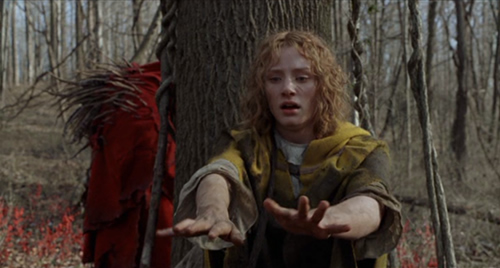
The beautiful Ivy Walker (Bryce Dallas Howard), blind daughter of the chief elder, becomes engaged to Lucius.  When he is stabbed by a rival, the prognosis is dire:  Lucius will die without medicine.  Ivy begs her father, Edward Walker (John Hurt), to allow her to go to the towns.  He agrees, against the wishes of the other elders.  Before she leaves, he reveals a secret:  the monsters do not exist.  They are a fabrication created by the elders to frighten children so they will not enter the forest.  Yet when Ivy ventures into the woods alone, a beast attacks her.

Ivy Walker and monster in The Village

So far so good. We are well into the movie and gripping our seats, but then, Shyamalan’s penchant for twists runs amok. Ivy manages to escape the beast, who turns out to be the boy who had stabbed Lucas, wearing a monster suit.  Ivy comes to a concrete wall, finds a handy ladder nearby, climbs up and over and winds up at the edge of a highway where a ranger in an SUV picks her up, looks at the list of needed medicine her father had written out, gets it for her (they have a bit of trouble), then helps her back over the wall with a warning to be careful.

We learn that the village elders are actually refugees from the culture of violence in America, who bet their lives and livelihoods on the grand experiment of trying to raise a peaceful generation in a peaceful agrarian culture.

You can check out the theme and logic behind the events at http://en.wikipedia.org/wiki/The_Village_(2004_film), but from my perspective, these elements were buried in a flawed story, one that would never ever, ever, ever, ever – as in, no way – have gotten past the the two writing critique groups I sit with.  In other words, not even the least experienced among us would get away with the plot flaws that pepper Shyamalan’s screenplay.

That, I believe, is the key to the disappointing trend of this director’s movies.  He tries to do it all – write the screenplay and direct the movie, and his early success must have isolated him from, or deafened him to, the collaborative voices that could have asked questions that should have been posed before the first scene was shot.

Questions like why Ivy’s father, a seemingly decent and caring man, would let his blind daughter brave the woods and the modern world alone?  And if simple antibiotics could save his future son-in-law, the town golden boy, why wouldn’t he just go out and get some.  And no matter how large his personal fortunre, (see the wikipedia page), who on earth is going to believe he could have bought secrecy for an entire village?  We’re supposed to believe that Homeland Security hasn’t studied the satellite photos in a post 9/11 world?

Contemplating this set of Razzies, I was struck with a deep appreciation for the members of my critique groups and all of their comments – those that seem pertinent and those that don’t.  They help keep me honest.  These are not the “discouraging words” I mentioned in my previous post.

Discouraging words sound like this:  You can’t.

Good criticism from people who value each other’s efforts sounds very different:  You can, and here are some ideas on how to proceed.

The Stories We Tell Ourselves

Today I took the plunge. Not as in Polar Bear Club or anything that hearty or insane. I took the plunge into Freedom, the novel by Jonathan Franzen that earned its author a Time Magazine cover last year.

Freedom is not the subject of this post however; it was the catalyst that spun me off on a series of reflections that have fascinated for a very long time – the stories we tell ourselves, how they drive our actions, and how they may or may not be adequate.

Freedom begins by telling us that the lives of Walter and Patty Berglund are going to implode.  It then presents as brilliant a character portrait (of Patty) as I recall in any book. Patty is the Volvo driving, cloth diaper using, natural food choosing, urban renewing, athletic young mom who is “already fully the thing that was just starting to happen to the rest of the street.” She is “a sunny carrier of sociocultural pollen, an affable bee,” and the implication is, none of that is enough.

Last year, David R. Loy published,The World is Made of Stories, a short book of quotations and reflections that underline the simultaneous truth and falsehood of the stories we tell, from a Buddhist perspective.

In his preface, Loy says, “The foundational story we tell and retell is the self, supposedly separate and substantial yet composed of the stories “I” identify with and attempt to live. Different stories have different consequences.”

Do they ever!  What stories did your parents and peers and teachers tell about you when you were young?  “He’s the smart one.”  “She’s the pretty one.”  “He’s always getting into trouble.”  How many of these stories are we still telling ourselves, and how many thousands of stories have we heard since then, from TV, from bosses, coworkers, family, churches, strangers, and unknown parts of ourselves?

We need our stories.  One of the more poignant things my father said during the course of a long degenerative illness was, “I don’t know what I’m supposed to be doing now.”

We need stories to tell us who we are and what we’re “supposed” to do, and at the same time we need to take them with a grain of salt.  Ideally, we need a way to step out of our stories, they way we step out of work clothes at the end of the day to put on a pair of cutoffs or comfy sweats.  The moments when we are outside our stories are the ones we remember the longest.

Whatever events occasion it – a sunset, meditation, playing with a puppy or a child, making love, sports, creative work, music, a good book or movie – the moments when we leave the stories of ourselves behind, are the ones when we are most alive and most truly ourselves.

The King’s Speech

I confess that despite the academy award nominations and four-star reviews, I wasn’t really looking forward to The King’s Speech.  In the back of my mind was the thought – “Come on – a full length movie about stuttering?”  The first two minutes of the film changed all that as the genius of Colin Firth and Helena Bonham-Carter pulled me into the pain this affliction brings to sufferers.  There are certain expressions you never forget in the movies, but I cannot recall such expressiveness, such anguish conveyed with so much restraint.  For an actor of the calibre of Firth, a glance or a momentary twist of the mouth can speak volumes.

Firth plays Prince Albert, the Duke of York, second son of King George V, and father of the current Queen Elizabeth.  As the film unfolds we glimpse the life-long pain “Bertie” has experienced – the badgering of his father and brother, and the failure he experiences at every “minor” address he cannot avoid.

Out of sheer desperation, Bertie seeks the help of Australian speech therapist, Lionel Logue (Geoffrey Rush) – and none too soon, for history is about to raise the stakes to a higher level than most of us ever have to experience.  His father’s death and his brother’s abdication leave Albert no choice but to ascend to the throne as King George IV.

“I am not a king, I am not a king,” Bertie cries again and again in the most moving scene of the film.  “I’m just a naval officer!”  But a king he must become in a hurry.  In the climactic scene of the film, he has to address his subjects all over the world when war breaks out with Germany.

Bertie and Logue on their long walk to the radio room made me think of Frodo and Sam on their final ascent to Mt. Doom, and why not?  Both are stories of people who feel completely inadequate to the demands of their fate, but who find the strength to act for their own salvation and that of their nation.  The difference, of course, is that these events really happened.

Missy’s Homecoming Day, aka, Valentine’s Day

I’ve always been something of a Valentine’s Day Scrooge – “Humbug!”  Always, even in fifth grade, while trying to decipher the nuances of the text on candy kisses enclosed in the envelopes during the school Valentine swap.

I’m not doctrinaire about it.  I always bring Mary a card and some little treat.  And it is marvelous to stop to be mindful of the love and friendships we enjoy.  I’m just not a fan of Hallmark holidays.  It’s hard not to be a bit cynical when the hearts come out the last week of December, during the Christmas closeout sales.

Much of that cynicism ended two years ago, on Saturday, February 14, 2009, at noon.  Mary had spent the morning at Saint Francis Episcopal church.  Like their namesake, the good people there have a serious ministry with animals.  They rescue dogs and train them as companion and service animals for vets coming home from our wars.

Mary called to tell me an eight month old papillon had washed out of the program.  The little thing been mistreated or neglected, for she was much too hyper and skittish to make any kind of service training feasible.  “She is really sweet,” Mary said.  My wife later confessed that she was counting on me to be the voice of reason, and tell her to get real.  Didn’t happen!

Instead, I leashed up our other two dogs and took them over to meet Missy.  It was instant bonding, all around.  Humans and canines instantly warmed up to the little one, and she to us.  Thankfully, neither Mary nor I had any clue how much harder three dogs are to care for than two!  Missy was part of the family and we took her home within the hour.

Now Valentine’s day will forever have a face, one far more appealing than any stupid, rosy-cheeked cupid.  The hearts of people and animals do not seem to have any limits for how much love they can hold.  At this very moment I’m gazing at Missy curled up at my feet – one of the biggest hearts in one of the smallest beings I have ever had the joy of including in my life.

Missy

Shapeshifting in Faerie: The Ballad of Tam Lin

One fall day, when I was a college sophomore, I was boiling water for coffee in my off-campus apartment, getting ready to leave for a 9:00am class.  A clock radio on the counter was tuned to the local progressive rock station, but I wasn’t really listening, until a driving tempo opened a song with a strong, urgent, woman’s voice singing what was clearly a piece of folklore:

I forbid you maidens all,
that wear gold in your hair,
to travel to Carterhaugh,
for young Tam Lin is there.

I turned up the volume…

Them that go to Carterhaugh,
but they leave him a pledge,
either their mantles of green,
or else their maidenhead.

I was hooked by then, all my attention on this music.

Janet tied her kirtle green,
a bit above her knee,
and she’s gone to Carterhaugh,
as fast as go can she.

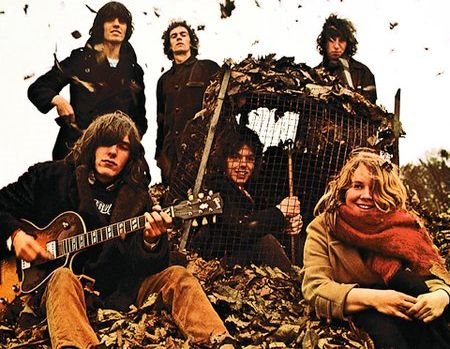
The group was Fairport Convention, the vocalist, an amazing singer named Sandy Denny who died in a tragic accident a few years later.  The song was, Tam Lin.
Fairport Convention

At the end of the day, I came home with the album, Liege and Lief tucked under my arm, and a backpack full of books like Folklore in the English and Scottish Ballads. You could say the passion that music ignited is with me to the present day:  it launched me into fantasy literature, shaped twenty years of storytelling, and this particular ballad is an important source for the fictional world I am building now for a heroine who wrestles with her fairy/mortal ancestry.

The ballad

Tam Lin comes from the Scottish border country and was first transcribed in 1549.  Francis James Child published 14 variants in his collection of English and Scottish ballads.  A mortal woman falls in love and conceives a child by a man who had been a mortal knight, until he was captured and somehow enchanted by the fairy queen.  In the Fairport lyrics:

Tell to me, Tam Lin, she said,
why came you here to dwell,
The queen of fairies caught me,
when from my horse I fell.

At the end of seven years,
she pays a tithe to hell,
I so fair and full of flesh,
am feared it be myself.

To disenchant her lover, Janet must hide at midnight on Halloween, at Miles Crossing, pull Tam from his horse, and hold on for dear life as the queen transforms him into a series of hideous and frightening shapes (I said this involved shapeshifting).  The queen turns Tam Lin into a snake, a newt, a bear, a lion, red-hot iron, and finally burning lead, at which point Janet does as instructed and throws him into a well, from which he emerges in his human form.  The queen is furious, and says if she had known of Janet’s loyalty, she’d have plucked out her eyes.  The real fairies of folklore are not nice people and are known to blind mortals who can see them.

Carterhaugh in 2005. You can still visit Tam Lin's well

Such renowned fantasy authors as Susan Cooper, Pamela Dean, Diana Wynn Jones, and Patricia McKillip have written novels based on Tam Lin’s story.  In 1970, Roddy McDowall directed a movie version staring Ava Gardner.  Countless individuals and groups have covered the ballad and there is at least one website devoted to nothing but exploration and creative elaboration of this song.  (see all these links here:  http://en.wikipedia.org/wiki/Tam_Lin)

What about the Shapeshifting?

Though Tam Lin is local to Scotland, the motif of disenchanting someone by holding on through countless frightening transformations is common to folklore throughout Europe.  This tale of shapeshifting is really quite different from Barth’s Menelaiad, discussed in the previous post.

There is a youthful, hopeful quality in this story of a heroic young woman who knows what she wants with such a fierce determination that nothing can thwart her, not even all the illusions and false paths that waylay most people’s dreams.

There is a quality of angst in Barth’s story question:  how can we ever sort out what is true from what is illusion?  I recall that after his campus visit, several sophomores proclaimed the death of literature as we know it.  Janet and Tam have no time for that – if this be illusion, play on, they would say (to badly misquote the bard).

Tam Lin explores the illusions of young lovers, while the Menelaiad does the same for a middle-aged and war-weary king.

Our final story of shapeshifting comes from India, and is several millenia old.  It sits somehwhere between the optimism and pessimism of the first two tales.  Yes, it affirms, life is a series of dreams, where dreams of joy transform into nightmares and back again endlessly – but imagine the joy of waking up.  That awakening, according to this tale, is nearer than we think.

Meanwhile here – as timeless as any fairy artifact – is Fairport Convention’s version of the Ballad of Tam Lin:

http://www.youtube.com/watch?v=jy3ihk205ew