The Walk to Paradise Garden

Recent events brought to mind a photograph by W. Eugene Smith (1918-1978), one of the greatest photojournalists of all time.  Forgetful of personal risk, Smith wedded “news” photographs to a powerful aesthetic sensibility, creating a body of unforgettable work.

Smith was an idealist.  During WWII, he aimed for nothing less than showing the horrors of war so vividly that people would recoil from the prospect in the future.  As a Life Magazine photographer, he landed with marines during 13 Pacific island invasions, including the battles of Saipan, Guam, Iwo Jima, and Okinawa.

His almost legendary luck deserted him on Okinawa, when he was hit in the face and hand by mortar fragments.  “I forgot to duck but I got a wonderful shot of those who did,” he said.  “My policy of standing up when the others are down finally caught up with me.”  

Two years and 30 operations later he was still not sure he’d be able to use a camera again.  “The day I again tried for the first time to make a photograph I could barely load the roll of film into the camera. Yet I was determined that the first photograph would be a contrast to the war photographs and that it would speak an affirmation of life.”  

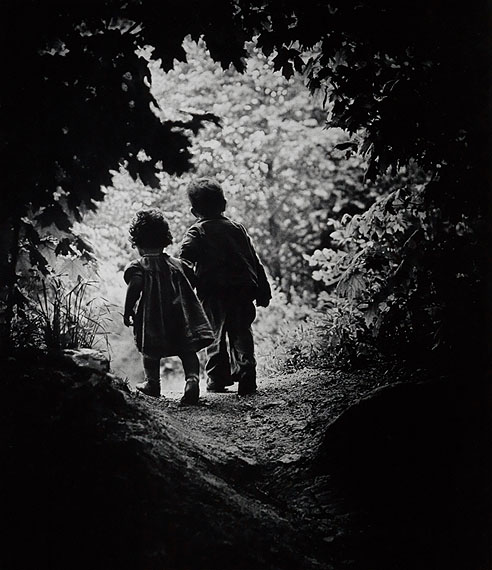
He followed his children as they went for a walk.  Fighting pain in his spine and hand, he took a single picture he called, “The Walk to Paradise Garden.”

The Walk to Paradise Garden by W. Eugene Smith

“The Walk to Paradise Garden” by W. Eugene Smith

The photo achieved world-wide fame when Edward Steichen chose it as the final image in his “Family of Man” exhibit in 1955.  Smith later wrote, “While I followed my children into the undergrowth and the group of taller trees…I suddenly realized that at this moment, in spite of everything, in spite of all the wars and all I had gone through…I wanted to sing a sonnet to life and to the courage to go on living it.”

I think as 2012 draws to a close, we all are in need of “sonnets to life and to the courage to go on living it.”  Smith’s photograph is the one that I am thinking of at this time.

Dylan Thomas reading, “A Child’s Christmas in Wales”

Here is the poet himself, reading one of my all time favorite pieces of Christmas writing.  Enjoy!

“One Christmas was so much like another, in those years around the sea-town corner now and out of all sound except the distant speaking of the voices I sometimes hear a moment before sleep, that I can never remember whether it snowed for six days and six nights when I was twelve or whether it snowed for twelve days and twelve nights when I was six…”

“…Looking through my bedroom window, out into the moonlight and the unending smoke-colored snow, I could see the lights in the windows of all the other houses on our hill and hear the music rising from them up the long, steady falling night. I turned the gas down, I got into bed. I said some words to the close and holy darkness, and then I slept.” 

The Princess Mary box and the Christmas Truce

When I was between the ages of 15 and 17, my family lived in France. One day in the flea markets outside Paris, I found a little brass box that bore my initials, MM, as well as a woman’s head in profile.  The inscription above the head read, “Imperium Britannicum” and below that, “Christmas 1914.”  The names of Britain’s WWI allies were printed around the perimeter:  France, Russia, Belgium, Serbia, Monte Negro, and Japan.

princess mary box

I bought the box – I don’t remember how much it cost – and have always kept little treasures inside.  Thanks to the internet, I discovered what it really is:  a Princess Mary Box, one of 400,000 gift boxes sent to British troops on the western front in time for Christmas 98 years ago [108 years ago in 2022].  The campaign to distribute the presents was led by Mary, the seventeen year old daughter of King George V.

***

In December, 1914, the first world war was four months old.  The German invasion of France had been stopped at the Marne that fall.  Both sides dug in for the winter, confident of a breakthrough in the spring that would end the war.  The first trenches were hastily dug, with no provision for drainage.  The winter was wet and cold, and the men spent their days knee deep in freezing water, with no way to get warm.

As Christmas neared, gifts began to arrive, which lifted the spirits of the troops.  According to firstworldwar.com, the men of the British Expeditionary Force got plum puddings and:

“Princess Mary boxes”; a metal case engraved with an outline of George V’s daughter and filled with chocolates and butterscotch, cigarettes and tobacco, a picture card of Princess Mary and a facsimile of George V’s greeting to the troops, “May God protect you and bring you safe home.” 

Princess Mary was 17 when she arranged for gift boxes for the troops.

The Germans got presents too, like meerschaum pipes, food, and small Christmas trees which they attached to the top of the trenches. A British Daily Telegraph correspondent reported that somehow the Germans slipped a chocolate cake into one section of the British lines, along with a request for a cease-fire that evening for a concert. The British agreed and sent gifts of tobacco in return.

That night, at 7:30, the German’s lit candles.  They raised their heads above the trenches and began to sing.  Later they called to the British to join in.  One Tommy yelled, “I’d rather die than sing in German.”  “It would kill us if you tried,” came the reply.

The British line stretched south from Ypres for 27 miles.  In some places, the trenches were only 30 yards apart.  Towns and fields and other reminders of civilian life had not yet been completely destroyed.  Every soldier stuck in the freezing mud longed for home and knew their foes did too.  The rain stopped on Christmas Eve.  The day was clear, and that night as they joined in Christmas carols, soldiers in ones and twos, then in groups, climbed out of the ground to greet each other in no man’s land.

British and German soldiers together, Dec. 25, 1914

In some places, the shooting never stopped, but in others the truce extended through Christmas day and beyond.  The men played soccer, traded uniform buttons and other souvenirs.  Barbers offered haircuts and shaves for free.  When the British high command, a safe 27 miles behind the lines, heard of the truce, they were outraged and issued stern orders forbidding fraternization.  Most field commanders on both sides ignored such orders.

Though in a few spots, things stayed quiet through New Year’s, in most places the truce ended when Christmas was over.  Captain J.C. Dunn, medical officer of the Royal Welch Fusiliers, recorded how the war started up again:

“At 8.30 [on Christmas night] I fired three shots in the air and put up a flag with ‘Merry Christmas’ on it, and I climbed on the parapet. He [the Germans] put up a sheet with ‘Thank you’ on it, and the German Captain appeared on the parapet. We both bowed and saluted and got down into our respective trenches, and he fired two shots in the air, and the War was on again.”

The story was squelched in the British papers until an account ran in the New York Times on December 31.  Word then spread around the world.  Nothing like it on that scale happened again.  Bombardments were ordered on future Christmas Eve’s to prevent it, and after the slaughter of 1916 and the introduction of poison gas, opposing troops grew more bitter toward each other.

I look at the Princess Mary Box and wonder about the soldier who opened it almost a century ago.  If the box turned up in a French flea market, I doubt that he made it home – many sent to the front in 1914 did not.  The brass of the box still shines.  It must have reflected lantern light in trenches and the flare of matches as the men lit up cigarettes sent from home.

princess mary detail

It’s nice to know how closely connected the box is with the Christmas truce, a moment in history that has always held a haunting fascination for me. Cynics claim the lull in fighting was used by both sides to spy out each other’s defenses.  I am not convinced.  People do not remember spying operations 100 years later, and the truce has never been forgotten.  As the men sang “Silent Night” in both languages, many in no man’s land must have truly experienced the peace of the holy day.

Firstworldwar.com concludes it’s account of the truce by saying:  “Perhaps this is the most important legacy of the Christmas Truce today.  In our age of uncertainty, it comforting to believe, regardless of the real reasoning and motives, that soldiers and officers told to hate, loathe and kill, could still lower their guns and extend the hand of goodwill, peace, love and Christmas cheer.” 

The text on this cross left near Ypres in 1999 reads, “1914 – The Khaki Chum’s Christmas Truce – 1999 – 85 Years – Lest We Forget.”
Lincoln: A movie review

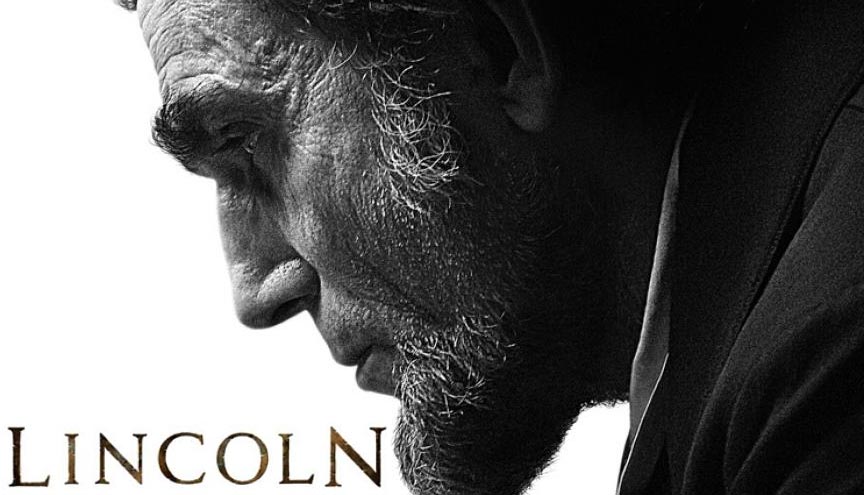
Biographies and history books seldom convey how messy our lives really are as we live them or how messy our politics are in the morning papers.  We learn in grade school that Abraham Lincoln freed the slaves.  Now Spielberg’s Lincoln brings us a movie portrait of just how uncertain, costly, and chaotic that effort was.

Lincoln spans the months between January and April 1865, as the president cajoled, sweet-talked, threatened, and offered political appointments to members of congress in order to pass the 13th amendment to the constitution which banned slavery forever.  As a lawyer, Lincoln knew the Emancipation Proclamation, based on wartime powers he wasn’t even certain he possessed, could easily be struck down by the courts.

In tone, this is a post-heroic political movie that makes earlier visions, like Mr. Smith Goes to Washington, seem like hopeful adolescent illusions.  Yet maybe there is even more to admire in someone portrayed as flesh and blood, who holds onto an ideal in the midst of political and personal chaos.  We know the historical Lincoln agonized at the carnage of the last two years of the war and yet at the end, he allowed it to continue longer than necessary for the sake of an ideal that others considered madness.

Daniel Day Lewis is an actor of definitive roles.  For me, he became the definitive Hawkeye in The Last of the Mohicans 1992, and the archetypal 19th century criminal in his role as Bill the Butcher in Gangs of New York 2002.  Now he will be the Abraham Lincoln for this movie going generation.  With a fine supporting cast that includes Sally Field, Hal Holbrook, and Tommy Lee Jones, this movie will appeal to anyone with an interest in American History and fine drama.

Are we there yet: apocalyptic yearnings

The Last Days of Pompeii by Karl Briullov, 1827-1833. Public Domain

The Oakland Hills Fire which broke out in October, 1991, was a major disaster by any estimate: 25 people died, 150 suffered injuries, and 3300 homes were destroyed. What I remember about the event, however, was an account by an independent journalist (whose name I have forgotten) who covered people arriving at evacuation shelters.

He said that a few were upbeat, almost giddy, as they talked of starting over.  The journalist said they were the first to be taken to counselors.  On-scene mental health triage workers assumed they were hysterical, most in need of hearing how terrible it was that they had lost everything.  How sad you must feel.  Have a kleenex.

I’ve always wondered about that.

The first historical accounts I know of that detail people waiting for the apocalypse date from December, 999, when groups across Europe trekked to high ground to wait for the millennial rapture.  The name, “rapture,” says it all.  It’s not the kind of disaster you read about in the papers.  It’s a chance to start over for true believers.  This is the hope picked up by new age proponents of the Mayan apocalypse, since the Mayans themselves left no hints of when the world will end.

The apocalyptic dream is the hope for a new heaven and earth that are better than this one.  Who wouldn’t like one of those, especially this year?

All the worlds religions tell us this world is not our home, but the mature voices in those religions do not hold out the hope of a cosmic get-out-of-jail-free card reserved for some chosen group.  They tell us that heaven and earth are transformed when an individual turns transformation.  Like Dante at 33, understanding he’d lost his way in a dark wood.  Like Rainer Maria Rilke who was viewing an ancient statue of Apollo when he heard an inner voice say, “here there is no place that does not see you. You must change your life.”

So tomorrow when we wake and the world looks the same, we can remember that it is not.  The sun will have turned from it’s southern trajectory, beginning its road back to summer.  And as we savor the morning coffee and the good things in our lives, we can take a moment to contemplate that turn toward a new heaven and earth.  The first steps lie with each and every one of us.

Beasts of the Southern Wild: A movie review

0125-beasts-of-the-southern-wild-2jpg-a41fc72827b8ef87

“Sometimes miraculous films come into being, made by people you’ve never heard of, starring unknown faces, blindsiding you with creative genius.” – Roger Ebert

I missed Beasts of the Southern Wild during its all too brief theatrical run last summer.  If you did too, I suggest you rent it.  Made on a low budget with a cast of first-time actors, notably the amazing Quvenzhané Wallis, who was only five when filming started, this movie is not like any other you’ve recently seen.  It is laced with joy while portraying  a group of have-nots on the cultural fringe as they struggle to hang on to their way of life.

Hushpuppy (Wallis) lives with her daddy, Wink (Dwight Henry), in The Bathtub, an island at sea level off New Orleans, barely protected by levees.  The Bathtub folk have nothing by the standards of “dry side” people.  They live by fishing and raising pigs and chickens.  They build homes in trees out of cast off materials and make boats out of pickup beds and empty metal drums.  They have moonshine, music, community, and the gift of celebration.

Hushpuppy talks to the animals and her mother, who is gone, and sometimes they reply.  She knows a storm is coming  Her schoolteacher tells the class about aurochs, huge prehistoric beasts.  “You got to learn to survive,” warns the teacher.  There’s a picture of ice caps in the classroom, and Hushpuppy is close enough to the world that she seems to hear them melting, seems to see the frozen aurochs stir.

southern-wild

The winds rise and the sky turns black.  The storm is never named, but we know it’s Katrina.  Salt water fills the bathtub and everything starts to die.

“I’m gonna make it right,” says Wink, but Hushpuppy sees that he’s sick.”  The aurochs are very close.  “No crying,” says Wink.  “You got to survive.”

Bathtub people look to Hushpuppy’s father as a natural leader, a role he tries to pass on to his daughter in his bluff and sometimes whisky-soaked way.  “Who da man?” he often demands.  “I’m the man,” Hushpuppy replies, but she’s also six years old.  What can she do against all the disasters taking shape in her mind as a herd of fearsome beasts?  If you can’t outrun an auroch, how do you stare it down?

Roger Ebert says, “Hushpuppy lives in desolation, and her inner resources are miraculous. She is so focused, so sure, so defiant and brave, that she is like a new generation put forward in desperate times by the human race.”

Everyone’s saying Quvenzhané Wallis is on the shortlist for a best actress nomination.  This year I can’t think of anyone more deserving.  Watch the movie and see what you think.

Midge, who blogs at “The Wild Woman Within,” has done us all a great service with her re-evaluation of Ebenezer Scrooge, citing numerous overlooked features of a man who did his best in difficult circumstances. Consider:

  • He was environmentally conscious, limiting his use of coal.
  • As a small business owner he was a job creator and not one of the 1%.
  • And any arm-chair shrink should be able to explain how all his losses combined to create the armor around his heart, which appears as meanness to the casual glance.

We owe Midge our thanks for setting the record straight!

Reflections on Story Water

My second post on this blog, on July 1, 2010, featured a poem called “Story Water” by the 13th century Persian mystic, Rumi.  It came to mind in the light of recent events.

Friday morning, as I worked on post #420, I got up for coffee and flipped on the radio.  The post concerned what folklore can teach us about living in difficult times.  After I heard of the murdered children, I put it aside.  Some events seem too much for stories.  Yet reflection later reminded me that stories are always with us, one way or another.  Rumi knew this.  He knew how the stories we hear feed our inner tales and the importance of choosing wisely where to place our attention.

On friday night, hundreds of people in Newtown, Connecticut went to church.  As I heard how they turned to a story of hope in a dark time, I thought of one of the first such stories I told myself.

One day in first grade, a classmate went home sick.  The following monday, the teacher told us she died.  I had seen dead birds in the woods behind our house, but that was the first time I realized death could visit at any time.  It could steal our friends and loved ones away in a heartbeat.

The dead girl’s name was Cindy Erwin, and she was the minister’s daughter.  I figured her father’s vocation gave her an in with Jesus, and she would be fine.  I never worried about Cindy, although I’ve never forgotten her name.  I knew it was the rest of us who were in trouble.

Stories like this, the ones we tell ourselves, shape our lives in ways we can barely imagine.  Everyone young or old who lived through events at Sandy Hook School or watched them unfold on TV will remember the day as long as they live and tell themselves stories about what happened and why and what it means.

According to Rumi, few of us know the answers with certainty.  That’s why we have stories.  That’s why they matter so much.  I think he would have agreed that in the end, the world is made of stories, so it matters very much which ones we tell each other and ourselves.  In ways we don’t understand, they shape the world as it unfolds.

STORY WATER by Rumi

A story is like water
that you heat for your bath.

It takes messages between the fire
and your skin. It lets them meet,
and it cleans you!

Very few can sit down
in the middle of the fire itself
like a salamander or Abraham.
We need intermediaries.

A feeling of fullness comes,
but usually it takes some bread
to bring it.

Beauty surrounds us,
but usually we need to be walking
in a garden to know it.

The body itself is a screen
to shield and partially reveal
the light that’s blazing
inside your presence.

Water, stories, the body,
all the things we do, are mediums
that hide and show what’s hidden.

Study them,
and enjoy this being washed
with a secret we sometimes know,

and then not.