Bill Moyers is Back!!!!

On Sunday evening, I was delighted to catch the first episode of the new PBS series, Moyers & Company.  You can view it, and a lot more, on the new website, http://billmoyers.com/.

Moyers interviewed political scientists, Jacob Hacker and Paul Pierson, authors of, Winner-Take-All Politics:  How Washington Made the Rich Richer–and Turned Its Back on the Middle Class.

The conversation startled me, as Hacker and Pierson said they were startled during their research.  They found that the current income gap in this country – greater than in some third world countries like Egypt – was not an inevitable consequence of free market dynamics or trends like globalization.  It was politically engineered over the last 30 years.  Hacker and Pierson argue that the current American leadership more closely resembles a third world oligarchy than the democracy our parents knew.

“Who’s the culprit? “American politics did it– far more than we would have believed when we started this research,” Hacker explains. “What government has done and not done, and the politics that produced it, is really at the heart of the rise of an economy that has showered huge riches on the very, very, very well off.”

Bill considers their book the best he’s seen detailing “how politicians rewrote the rules to create a winner-take-all economy that favors the 1% over everyone else, putting our once and future middle class in peril.” – (from billmoyers.com)

Jacob Hacker and Paul Pierson on Moyers & Company

Winner Take All Politics is going into my already overcrowded book-queue, since it appears to be of critical importance.  The first step in correcting a problem is gaining an accurate understanding of its nature.  The fact that the assault on the middle class was created and not fated is good news, according to Hacker and Pierson.  Something done can be undone.  Along with Moyers, they agree that our current national sense of outrage is a positive sign.

Moyers’ work and website are important to bring up today.  On the website you can find an April, 2010 interview with two African American lawyers, discussing what Dr. King would have made of America today. Lawyer Bryan Stevenson said:

“I think in America, the opposite of poverty is justice. I think there are structures and systems that have created poverty, and have made that poverty so permanent, that until we think in a more just way about how to deal with poverty in this country, we’re never gonna make the progress that Dr. King envisioned.”  http://billmoyers.com/content/bryan-stevenson-and-michelle-alexander/

These are important things to consider, especially today.

Are You Now, or Have You Ever Been Normal?

When I was a kid, I believed that my family was the standard by which all families should be judged.  In the ’80’s, however, when family psychology met popular culture and some of us went questing for our inner child, the news was not so good.  We learned that 96% of families were dysfunctional; that crazy had become the new normal; that 24 out of 25 of us had grown up with the Griswalds and not the Cleavers!

Who's your daddy?

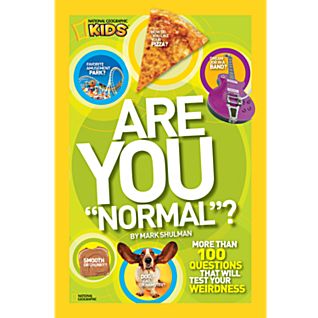
Just when we thought we had that settled, when I thought my cred as a free thinker and iconoclast was safe, a new book threatens all that: Are You Normal?, by Mark Shulman.  According to a Washington Post article, Shulman’s book has 176 pages of questions for kids, scored against other answers, which allows you rank yourself on a “weird-o-meter.”

With some trepidation, I answered the sample questions in the article, going for the perspective I would have had in grade school.  Feel free to ride along – if you dare:

1) Do you have a brother or sister:  

Yep – one sister, making me one of the 87.5% who have a sibling.  So right of the bat, it’s not looking good for the bohemian persona.

2) Have you ever faked being sick to get out of school?

Well duh, of course I did!  Can we say, “World Series?”  That boosted my weirdness quotient, since only 25% answer yes to this one.

3)  Where do you bite the chocolate bunny first?

The ears of course, along with “more than half”  of those polled.  Interestingly, 1 in 25 go for the bum…now that is strange!

4)  Smooth or Chunky peanut butter?

I started to say “chunky,” but that’s revisionist history.  As a kid, it had to be smooth, lest it tear my Wonder Bread.  “Slightly more than half,” share that predilection.

5) TV in your bedroom?

Not then, not now, though it wasn’t nearly as common when I was a kid as it is now (56% answer “yes”).  My parents had a portable with rabbit-ears, but those were the days when, if the TV “went on the fritz,” you pulled the tubes and carried them down to the tube tester at the local grocery store.

6)  Did you ever bite your fingernails?

Rarely but on certain stressful occasions, yes.  The answer to that was a 50/50 split.

7)  Did you ever bite your toenails?

Ewww!  And that reaction is not unique.  A full 90% say they “could not or would not” do such a thing, so most of us are plain vanilla on that score.

The Washington Post review concludes by saying “the real point of the book is to show that nobody is perfectly normal or perfectly weird.  We’re all unique, and that’s part of what makes us special.”  Not such a bad conclusion to reach.

However, if “special” is now normal,  but normal normal is weird…I guess I better not go down that road, just quit while I’m ahead.

Save the Cat by Blake Snyder: A Book Review

I love (good) books on screenwriting, because of all the available guides to writing fiction, these focus most squarely on the primacy of story; first the forest, then the trees.  Last week a fortunate weblink led me to Save the Cat, 2005, a brief but idea packed gem of a book by Blake Synder (1957 – 2009).

Snyder was a successful screenwriter and a respected teacher who began his career in movies doing voice-overs for his father at the age of eight.  By his own admission, when he started writing for movies, he had only a vague idea of structure.  Discovering Syd Field’s Screenplay was a revelation:  “truly career-saving,” Snyder says, but there were still gaps in his sense of movie architecture.  Snyder developed the methods he presents in this book in response.  Because he spun things in an unusual way, and uses his own terms for concepts that may have become overly familiar, his methods move the imagination in fresh ways.

Blake Snyder 1957-2009

The title of his book, for instance, is a code for his belief in the primacy of creating characters we want to follow.  In the opening scenes of older movies, the protagonist often did something nice – like saving a cat – to bond with the audience, a step contemporary movies often skip in favor of showing a lead who is hip, slick, and cool.  Snyder cites this as the cause of failures of several recent films.

His approach is top down.  He begins with the log line and the title, and demands that the writer polish them before moving on, because they are a touchstone for writing the script itself as well as a key selling point.  This single sentence and title, when well crafted, reveal what the movie’s about, its genre, the lead characters, and (ideally) pique curiosity.  Snyder gives examples like:  “A cop comes to L.A. to to visit his estranged wife and her office building is taken over by terrorists – Die Hard.”

Snyder then suggests we do something that few writers ever dream of – pitch the concept to strangers.  He would literally pick people out in a Starbucks line, and say, “Excuse me, I’m working on a movie concept, and I wonder if I could get your feedback.”  Since he lived in L.A., the answer was often yes, but he challenges us to do the same wherever we are.

He moves through ever increasing levels of detail as he takes the reader through the development of the script, and one thing I really appreciated was his in-depth knowledge of stories:

“Jaws is just a retelling of the ancient Greek myth of the Minatour or even the dragon-slayer tales of the Middle Ages.  Superman is just a modern Hercules.  Road Trip is just an update of Chaucer’s Canterbury Tales – isn’t it?  To not know the roots of the story you’re trying to create, either from the last 100 years of movie storytelling or the last thousand, is to not honor the traditions and fundamental goals of your job.”

Though Blake Snyder died suddenly in 2009, a website serves as a blog on his methods, and offers a bulletin board as well as classes geared to both screenplays and novels.  http://www.blakesnyder.com/

I’m sure this is old news to the screenwriters who read this blog.  If so, pass it along to your novelist friends; it seems we don’t get out often enough.

Sabre Rattling Over Oil: Better Get Used to It

The juxtaposition of headlines this morning was strange but telling.  On page one of the Sacramento Bee, under the heading of “Tourism,” was the story of Virgin Galactic, a travel company that expects to offer 2.5 hour rides into space, starting as soon as next Christmas, for a mere $200,000.

You might want try to lock in your price now, before it goes up.  Buried back on page seven was this headline:  “Risk of showdown with Iran escalates as oil prices climb.”  According to Andrew Bacevich, in a 2008 interview with Bill Moyers, we can expect a constant string of oil crises; the choices we make as a nation make them inevitable.  There’s a price to pay for cheap space travel, among other things.

Andrew Bacevich

Bill Moyers 2008 interview with Bacevich is published in, Bill Moyers Journal: The Conversation Continues, (2011).  In the preface, Moyers says, “Our finest warriors are often our most reluctant warmongers.”  Bacevich is a West Point graduate and Vietnam veteran who retired as a colonel after 23 years in the military, to teach history and international relations at Boston University.  Bacevich’s son, Andrew, died in Iraq in 2007.  Bacevich is the author of several books, including the best selling, The Limits of Power:  The End of American Exceptionalism (2008).

In his interview with Moyers, Andrew Bacevich doesn’t pull any punches.  He says our foreign policy, including our wars:

“reflect the perceptions of our political elite about what we the people want.  And what we want, by and large, is to sustain the flow of very cheap consumer goods.  We want to be able to pump gas into our cars regardless of how big they happen to be…and we want to be able to do these things without having to think about whether or not the books balance at the end of the month…”

To our list of wants we can now add, “affordable” space travel, with its guaranteed 5.5 minutes of weightlessness.   As an ex-miltary officer, Bacevich points to the dark side of this, something you never hear in presidential debates, and don’t often see anymore on the front page of the paper.

One of the ways we avoid confronting our refusal to balance the books is to rely increasingly on the projection of American military power around the world to maintain this dysfunctional system.”

The biggest elephant in the living room is our dependance on foreign oil.  Without oil, Bacevich notes, the middle east has “zero strategic significance.”  Every president since Richard Nixon has promised to address our dependance on foreign energy, and Jimmy Carter staked his political career on finding a solution.  Bacevich paraphrases Carter’s speech in 1979:

“If we don’t act now, we’re headed down a path along which not only will we become increasingly dependent upon foreign oil, but we will have opted for a false model of freedom.  A freedom of materialism, a freedom of self-indulgence, a freedom of collective recklessness.  The president was urging us to think about what we mean by freedom…Carter had a profound understanding of the dilemma facing the country in the post-Vietnam period.  And of course, he was completely derided and disregarded.” 

When Moyers asked him about the realities of al-Qaeda and radical Islam, Bacevich replied that yes, they are violent and dangerous, but are “akin to a criminal conspiracy…Rooting out and destroying the conspiracy is primarily the responsibility of organizations like the FBI, and of our intelligence community, backed up at times by Special Operations Forces.  That doesn’t require invading and occupying countries.”

At the end of the interview, Bacevich, who defines himself as a conservative, says he hopes we will come to understand the war in Iraq as a great mistake.  And rather repeat the mistake in Iran or anywhere else, hopes we will “look at ourselves in the mirror.  And…see what we have become.  And perhaps undertake an effort to make those changes that will enable us to preserve for future generations that which we value most about the American way of life.”

You can read the full text of the interview with Andrew Bacevich in Bill Moyers Journal, along with many other provocative talks with thinkers and artists across the spectrum of contemporary life.