The Hamish MacBeth Mysteries, by M.C. Beaton

“I was at a fishing school in Sutherland in the very north of Scotland, and I thought, what a wonderful setting for a classical detective story, 11 people isolated in this Highland wilderness. So Hamish Macbeth was born.” – M.C. Beaton

M.C Beaton is the pen name that Marion Chesney, a prolific Scottish author, uses for her mysteries, which include 28 titles featuring Highland constable, Hamish MacBeth, and 22 staring Agatha Raisin, a retired, middle-aged public relations agent who solves murders in the Cotswolds.

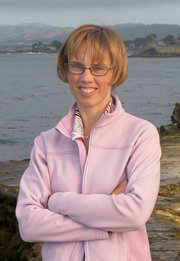
Beaton at her 75th birthday party this year

The first MacBeth mystery appeared in 1985.  Agatha made her debut in 1992.  Beaton, 75, has not slackened her pace; she released new titles in both series this year.

Hamish MacBeth is likable constable in the village of Lochdubh (which means, “black lake,” in Gaelic and is pronounced Lokh-DOO).  Hamish loves the town, raises sheep and chickens, and occasionally poaches salmon.  He has a well earned reputation for laziness, and several times works to avoid promotion which would force him to move to the dreary industrial town of Strathbane.  For this and other reasons, his superior, Chief Inspector Blair, despises him and threatens to close the Lochdubh station.  MacBeth must often work around “proper” channels.  Sometimes he plies Blair’s subordinate, Jimmy Anderson, with whiskey to gain information and help.

In the early books, MacBeth had an on-off relationship with Priscilla Halburton-Smyth, but their engagement ended, and Priscilla, who is more ambitious than Hamish, moved away to become a newscaster.  MacBeth’s love life foundered, and now his closest companions are Lugs the dog (the word means, “ears” in Gaelic), and Sonsie, a “domesticated” wildcat whose name means, “cheeky.”

Robert Carlyle played MacBeth in a BBC Scotland adaptation that ran from 1995-1997

MacBeth solves crimes through intuition, curiosity, and an ability to charm various locals.  There is Angus MacDonald, and old man with a reputation as a seer.  Hamish thinks he’s a fraud, but a useful source of gossip.  Nessie and Jessie Currie, twin sisters and village spinsters are also a sources of gossip, though MacBeth must sit through their strange habit of repeating each other’s phrases – repeating each other’s phrases.

The MacBeth novels are proverbial beach reads, engaging escapism, starring a likable rascal who may poach salmon now and again, but restores the balance of justice to his little world of wild beauty and engaging eccentrics.  These books are perfect for rainy weekends, or any other time when you want to leave the modern world behind and root for a man who knows how to game the system, or at least the pointy-haired bosses within it.

Literary Indigestion

This won’t be the first time I’ve said I love fantasy and have since I was a kid.  During the ’80’s, I read scores of fantasy novels, but the day finally came when I couldn’t anymore.  One too many recycled plots, wise wizards, crusty dwarves, plucky youths, heroic thieves, feisty tavern wenches, and so on.  I developed acute genre indigestion and have only recently started reading adult fantasy again.

History repeats itself.

A dozen years ago, I discovered young adult fantasy and delighted in some of the characters and stories.  Inspired by these, I even wrote my own first novel in just six months, in 2005.  Recently, however, YA fantasy has been “discovered.”  Now I find I can’t read this genre either; bandwagons and the perception of money and names to be made don’t lead to books with much imagination or heart.

A glut of vampire romance was followed by a glut of stories of Faerie and zombies.  After the success of The Hunger Games, “dystopian” tales became the theme du jour.  Now stories of were-beasts are all the rage.  I sometimes wonder if I am a snob or too harsh in my judgements, so I yesterday I took a look at the YA fantasy titles featured on Amazon.  Here are some descriptions I found in the blurbs:

“A lyrical tale of werewolves and first love.”  – I gotta say it, “Awwww!”

“explodes onto the YA scene with a brilliant nail-biter of a dystopian adventure.”  –  Think about the phrase, “YA scene.”

“A kidnapped wolf pup with a rare strain of canine parvovirus tuns regular kids into a crime solving pack.”  –  I’m a sucker for dog stories, and I like wacky superheroes, so this one sounds like the best of the bunch.

“Can a prim young Victorian lady find true love in the arms of a dashing zombie?”  –  I would have said “dashing zombie” is an oxymoron.

“A timeless love story with a unique mythology that captivates the imagination.” – The blurb didn’t say what this unique mythology might be, so you have to take the publicist’s word.

This book is “generating a Twilight-level buzz.”   I’ve never heard of it.

OK, I guess I’m being a little snarky.  It seems that today’s YA represents a successful move by writers and publishers to attract a new demographic of younger readers to what is essentially, romance.  On one hand, this largely excludes me as a reader and writer, because while I think romance is fine, it’s not my thing.   I also find it sad to think that over the near term, we’re going to have zombie love instead of books like A Wrinkle in Time, The Earthsea Trilogy, and The Golden Compass.

So what am I doing about it?  Kicking back with literary comfort food, otherwise known as light detective stories, stories with fun characters you just want to trail along with as they bring justice into the world.  In the past, I’ve devoured stories by Conan Doyle, Agatha Christie, Tony Hillerman, and Elizabeth Peters.  Now, thanks to my wife, I have a new main-man – Hamish MacBeth, the constable of the village of Lochdubh, Scotland, who, with his dog, Lugs, and his cat, Sonsie – and wee dram now and again – excels at solving murders.  Hamish is the creation of M.C. Beaton, the pseudonym used by author, Marion Chesney, for her mystery stories.  Born in Glasgow in 1936, she has also written 100 historical romances under a different names.

M.C. Beaton

My wife has collected a bookshelf full of MacBeth stories, and I’ve only started.  My current read is, Death of a Chimney Sweep.  In one passage, Hamish is driving an author to meet her publisher. He says to her,  “Angela, you’re taking this all to seriously.”

“What would you know?  You haven’t a single ambitious bone in your body.”

“Aye, and I like it that way.”  Hamish suddenly wished the evening was over.

I love these stories!   I will have more to say about Hamish MacBeth in my next post.

Your Brain on Google

According to Alva Noe, Professor of Philosophy at UC Berkeley, Google is not making us stupid.  Good news, even though I wasn’t worried until I saw his article. http://www.npr.org/blogs/13.7/2011/09/20/140625802/google-is-not-making-you-stupid.

Noe is the author of, Out of Our Heads: Why You Are Not Your Brain and Other Lessons from the Biology of Consciousness.

He refers to results of a Columbia University study that found we are more likely to remember things we cannot find online than things we can.  The study caused some concern, but Noe says this is unwarranted and links to a blog with this quote from Einstein:  “Never memorize something that you can look up.”

Researchers are not picking on Google in particular but cite it because the phrase, “Google effect” has come to stand for the way many new technologies influence us.  Noe suggests that they are not qualitatively different from other tools we use to navigate the world and make sense of it:  “We use landmarks and street signs to find our way around; arithmetical notation makes it possible for us to calculate with big numbers; we wear wrist watches so that we can know the time without needing to know the time; and we build libraries so that we have access to what we need to know, when we need to know it.”

My predisposition to agree with Noe is based on Sherlock Holmes.  Conan Doyle’s famous detective told Watson he could not afford to fill his mind with information not relevant to his profession.  As a result, he could identify 37 varieties of cigarette ash but knew almost nothing about the solar system.

Beyond my lifelong fascination with Holmes, several things leap to mind.  I really don’t use the internet to remember things – I use it to find things.  Also, memory and intelligence are not the same.  If they were, I’m sure post-it-notes would have shaved several points off my IQ.

Though I don’t worry about Google and memory, Noe adds a link for further reading that raises more serious concerns.  In August, 2008, Nicholas Carr published an article in The Atlantic, called, “Is Google Making Us Stupid:  What the Internet is Doing to our Brains.”  http://www.theatlantic.com/magazine/archive/2008/07/is-google-making-us-stupid/6868/).

Carr is the author of, The Big Switch: Rewiring the World, From Edison to Google.

If nothing else, the internet is changing our brains, says Carr:  “I’m not thinking the way I used to think. I can feel it most strongly when I’m reading. Immersing myself in a book or a lengthy article used to be easy. My mind would get caught up in the narrative or the turns of the argument, and I’d spend hours strolling through long stretches of prose. That’s rarely the case anymore. Now my concentration often starts to drift after two or three pages.

Carr cites the work of Marshall McLuhan, who in the ’60’s observed that media not only supply the content of thought, but shape the process of thought.  Carr says, “what the Net seems to be doing is chipping away my capacity for concentration and contemplation. My mind now expects to take in information the way the Net distributes it: in a swiftly moving stream of particles.”

Before anyone panics, we should note that Carr is primarily talking about the fight “to stay focused on long pieces of writing.”  An acquaintance of his says he can’t read War and Peace anymore.  I couldn’t get through it even once.  Carr emphasizes intelligence as a series of very cerebral pursuits.  I suspect he and I have different ideas of “meditation and contemplation:”  I don’t think he’s talking of sitting meditation, something I’ve always used to counterbalance intellectual activity, and one I do not find impacted by time spent online.  Watching a violent movie may impact my ability to meditate, but so far, Google does not.  Maybe I’m in denial, but these concerns are fairly low on my hierarchy of worries.

Carr cites another concern that comes from the mouths of the founders of Google:  Sergey Brin and Larry Page, the gifted young men who founded Google while pursuing doctoral degrees in computer science at Stanford, speak frequently of their desire to turn their search engine into an artificial intelligence, a HAL-like machine that might be connected directly to our brains.  More than once, I’ve chatted with friends about how “they” will jack into our brains when the day comes:  USB?  Firewire?  The Matrix ruined my ability to take such a fantasies literally.

***

Serious research is underway, studying what is good and bad about our reliance on the internet.  Parallel hopes and concerns met Gutenberg’s invention of the printing press.  From the distance of centuries, we can see how it affected our brains.  No one in a literate culture has the memory of the tribal Griot in Alex Haley’s, Roots, or the ancient Homeric poets, but we have to ask, along with Einstein, how much should we care?  Is that kind of memory central to intelligence?  Does it’s loss have a negative human destiny?

The internet seems every bit as profound a change as the invention of printing, and it’s likely to take a long time for the dust to settle so that objective evaluations can occur.  Hopefully, as with printing, the good will outweigh the bad.

***

Everyone who has made it through this post should feel good about their ability to concentrate.  Having come to the end, I’m going to go for a walk – one of those those vitamin C for the brain type strategies that can hopefully inoculate me even against the dangers of Google!.

Celebrate Banned Books Week

Banned Books Week, Sept. 24 – Oct. 1 is our only national celebration of the freedom to read.  The event was founded by the American Library Association in 1982, in the face of a surge in “challenges” to books in libraries, bookstores, and schools.  The ALA reports more than 11,000 challenges since then, and estimates that 70% are never reported.  At least 348 books were challenged in 2010.  http://www.bannedbooksweek.org/.  In whatever ways we find suitable, this is a wonderful occasion to celebrate books that somebody, somewhere, did not want us to read.

Huckleberry Finn was banned by the Concord Public Library in 1885 as “trash suitable only for the slums.”

In addition to “sexually offensive” passages in Anne Frank’s diary, some readers complained that the book was “a real downer.”

The Arabian Nights, was banned both by Arab governments and the US, under the Comstock law of 1873.  (Hint – get hold of an unexpurgated edition of Burton’s translation).

Brave New World by Aldous Huxley.  It “centers on negative activity.”

When I found Catcher in the Rye at sixteen, I was no longer alone.  More than one generation had this experience.  The most widely banned American book between 1966 and 1975, people complained it had “an excess of vulgar language, sexual scenes, and things concerning moral issues.”

Fahrenheit 451 by Ray Bradbury.

The Grapes of Wrath by John Steinbeck.

Gulliver’s Travels by Jonathan Swift.

I Know Why the Caged Bird Sings by Maya Angelou. Parents in Kansas objected to “vulgar language, sexual explicitness, and violent imagery,” in this autobiography.  The author mentions being raped as a girl.

A Light in the Attic supposedly,”glorified Satan, suicide and cannibalism, and also encouraged children to be disobedient.”

Of Mice and Men A second winner for Steinbeck.

The Scarlett Letter by Nathaniel Hawthorne.

Song of Solomon by Toni Morrison, a Nobel Laureate.

Uncle Tom’s Cabin by Harriet Beecher Stowe.

A Wrinkle in Time by Madeline L’Engle. This award winning favorite was on the ALA most challenged list from 1990-2000 for, “offensive language and religiously objectionable content (for references to crystal balls, demons and witches).”

Lord of the Flies by William Golding.

The Sun Also Rises by Ernest Hemingway.

Catch-22 by Joseph Heller.

As I Lay Dying by William Faulkner.

Lady Chatterly’s Lover by D.H. Lawrence.

Madame Bovary by Gustave Flaubert.

Ulysses by James Joyce. The US Post office burned 500 copies in 1922.

This book has frequently been banned for the abuse James suffers. “Others have claimed that the book promotes alcohol and drug use, that it contains inappropriate language, and that it encourages disobedience to parents.”

***

I find it easy to roll my eyes and assume that the bad old days of suppressing Mark Twain are behind us.

Unlike the good people in the American Library Association, I’m not on the front lines, seeing the constant attempts to limit what we can read and think.  Banned Books Week is a perfect time to reflect on our freedoms and pass the word of this celebration to others.  And read or reread a book that someone, somewhere, tried to keep out of our hands!

Petroplague by Amy Rogers: A Book Review

Dr. Amy Rogers

Dr. Amy Rogers

Neil, a disaffected eco-activist, meets an explosives expert at 2:00am.  They drive to a deserted gas station in south-central LA.

Christina Gonzales, a PHD student at UCLA, volunteers at the La Brea tar pits.  After monstrous gas bubbles burst over the tar, Christina and her co-worker smell vinegar, which doesn’t make any sense.

An elderly woman spots a huge puddle of “drain cleaner” in the alley behind her house.  She blames the neighbors and calls the police because this could injure her cats.  A moment later, explosions rock the entire block.

Christina learns that an apparent methane explosion at a deserted gas station has ruined her PHD project, an attempt to use genetically altered bacteria to break down heavy crude oil into easy-to-harvest natural gas.

If you think these events are coincidence, you have probably never watched a disaster film.  Like the best movies in the genre, or the novels of Stephen King, Amy Rogers takes a mixed group of people, with their individual hopes, plans, secrets, and strengths, and puts them in an impossible situation.  By the time I had read this far, I was hooked.  From here, Petroplague just gets better and better – meaning the tribulations of Rogers’s characters get worse and worse.

Imagine Los Angeles, or the largest car-dependant megalopolis you know.  Imagine a mutant bacteria in the underground oil supply and the local refineries that breaks down hydrocarbons, reducing petroleum  into acetic acid and highly flammable hydrogen, among other things.  Cars stall on the freeway.  Airplanes fall from the sky.  The acid corrodes gas tanks and lines, releasing hydrogen that the smallest spark can ignite.  Nothing that runs on gasoline moves:  no firetrucks or ambulances or police cruisers.  No food deliveries or garbage pickups.  The looting begins.  Instability under the Santa Monica fault leads to bigger and bigger earthquakes.  The La Brea Tar Pits “erupt.”   When Christina and her PHD supervisor discover an antidote for the plague, both an eco-terrorist network and ruthless corporate interests are willing to go to any lengths to suppress it.

Are you scared yet?  If not, as Yoda told Luke, You will be!  Because this is just the beginning.  Now that we care about Christina, the real chills and thrills begin.  Eco-terrorists smuggle the petroplague out of the LA quarantine area and plot to release it worldwide in a matter of days.  Christina and her allies face virtually every danger you can think of as LA spins into chaos – and some you can’t.  Think of all the seat gripping you do watching James Cameron movies like,  The Terminator and Titanic.  This is what Amy Rogers does; she throws the good guys into a tight situation and keeps cranking up the pressure.

I read lots of thriller/action adventure stories.  When you become familiar with a genre, you begin to recognize conventions and trends.  As anyone who has glanced at this week’s movie listings can attest, epidemics are a standard disaster scenario, but as far as I know, Rogers’s story question is unique – what would happen in our oil-dependant world if a petroleum-destroying plague got loose?

A lot of books in this genre suffer from forgettable heroes and two-dimensional villains.  Psychopaths are a dime a dozen these days, but not in Petroplague.  Several of the bad guys are idealists-gone-wrong, sometimes-conflicted fanatics of conscience, who you cannot hate even as you cringe at their actions.  One of the evil-doers is a corporate higher-up, willing to screw anyone or everyone in the name of profit.  Even if that is a stereotype, it is not hard to imagine in our post-economic meltdown world.

We bond with the heroes of the story because they are very human, even as events evoke courage they didn’t know they had.  When Christina first learns of the plague, all she can think of is her ruined dissertation, but her circle of concern and her actions rapidly grow beyond self-interest.  Her cousin, River, and River’s boyfriend, Mickey, are ready to run when things get tough – but they don’t.  A politician who survived a helicopter crash in Iraq, finds the courage to pilot another chopper filled with fuel that might have been compromised by the plague.

It’s always a pleasure to post here about a book I really enjoyed.  I couldn’t put this one down.  I urge you to stop by Amy Rogers’s web site to learn more about the author and the various formats in which you can read Petroplague.  http://www.amyrogers.com/

A Science Thriller by Amy Rogers

I met Dr. Amy Rogers at the Sacramento branch of the California Writer’s Club where she is Web Site Coordinator, and an author of science thrillers. What is a science thriller? Think of Frankenstein, Jurassic Park, and Contagion, coming soon to a theater near you. You can learn a lot more about the genre and read a number of reviews at Roger’s blog, http://www.sciencethrillers.com.

Dr. Amy Rogers

Dr. Rogers just published her debut thriller, Petroplague, in ebook format, with a paperback release due in November. She sent this synopsis:

UCLA graduate student, Christina Gonzalez, wanted to use biotechnology to free America from its dependence on Middle Eastern oil. Instead, an act of eco-terrorism unleashes her genetically-modified bacteria into the fuel supply of Los Angeles, turning gasoline into vinegar.

With the city paralyzed and slipping toward anarchy, Christina must find a way to rein in the microscopic monster she created. But not everyone wants to cure the petroplague – and some will do whatever it takes to spread it.

From the La Brea Tar Pits to university laboratories to the wilds of the Angeles National Forest, Christina and her cousin, River, struggle against enemies seen and unseen to stop the infection before it’s too late.

A former professor of microbiology, with a PHD from Washington University, Dr. Rogers has the background to make such a story plausible. In addition, Petroplague is one of two of her novels picked up by New York agents who were then unable to sell them. At this point, Rogers mentioned self-publishing, and her agent directed her to Diversion Books, which she says, “lies somewhere between self-publishing and a traditional Big Six contract. Diversion Books is loosely associated with a traditional literary agency – the first such publisher, though others have sprung up since.”

I plan to review Petroplague here, but you don’t have to wait for me. Click on the book cover photo above to go to the authors website, http://www.amyrogers.com, to view a trailer and read the first two chapters for free.

In addition, Amy has said she’ll be happy to write a guest post or answer interview questions here. So stop back soon, and visit Amy Rogers’ website and blog, for information on publishing, on scary microbes, and to check out what promises to be an exciting read!

The Story of Charlotte’s Web by Michael Sims

In a recent interview on NPR, author Michael Sims discussed a project “that got really out of hand.”  He set out to do a natural history of children’s talking animal stories but became so fascinated by Charlotte’s Web that he never got beyond it.

Sim’s study, The Story of Charlotte’s Web: E.B. White’s Eccentric Life in Nature and the Birth of an American Classic, was published in June.  It’s interesting see what eccentricities and other facts Sims discovered about E.B. White.

White was quite a naturalist; on a farm in Maine, he studied spiders and raised pigs.  There really was a “Wilbur,” a pig that White was raising to slaughter in the fall, but it grew sick and died, despite all attempts to save it.  In his essay, “Death of a Pig,”  White recognized the irony of his sadness at the loss of an animal he had planned to kill, and his “sense of loss when the pig died, not as if he’d just lost some future bacon but as if he had lost…a fellow creature who was suffering in a suffering world.” 

Another time, while feeding the replacement Wilbur, White noticed a spider web with an egg sac.  The spider that wove the web disappeared, and White cut the egg sac down and carried it with him back to his apartment in New York.  He dropped it in a bureau drawer and forgot about it until the little spiders began to hatch.  According to Sims, White was delighted to watch them start to weave their webs in his room – that is, until the maid refused to work “in a spider refugee camp” and they had to go.

Sims explains that “eccentric” is a Greek word that originally meant, “off center.”  He goes on to say:

if ever there was a human being born off-center, it was E.B. White. He simply could not…follow in an established path if his life depended on it. And so he had his own quirky way. He was very fierce and funny hypochondriac. He liked to spend a lot of time alone. He loved working with animals, as much as possible. Even in New York City, even in writing for The New Yorker to begin with, he was off, you know, exploring what rats were doing in some alley.

Fans of E.B. White should enjoy listening to the interview or reading the transcript:  http://www.npr.org/2011/08/19/139790016/weaving-charlottes-web.  Of interest too, will be Michael Sims’s current project.  In keeping with his theme of “writing about how our imagination responds to nature in one way or another,” he is researching between the lines of Thoreau’s sojourn at Walden Pond to see how that great naturalist and philosopher filled up his days in ways we don’t yet know about.

The Magicians by Lev Grossman: A Book Review

Lev Grossman’s, The Magicians, 2009, was highlighted in a recent NPR feature on “Books for the Hogwart’s Grad.” It is an adult fantasy that begins with a 17 year old boy and does something no YA novel I’ve recently come upon has done – it nails what being 17 is really like.

On his way to a preliminary interview for admission to Princeton, Quentin Coldwater reflects on his life:  I should be happy, Quentin thought.  I’m young and alive and healthy.  I have good friends.  I have two reasonably intact parents…I am a solid member of the middle-middle class.  My GPA is a number higher than most people even realize it is possible for a GPA to be.  But walking along Fifth Avenue in Brooklyn…Quentin knew he wasn’t happy.  Why not?  He had painstakingly assembled all the ingredients of happiness…But happiness, like a disobedient spirit, refused to come.  He couldn’t think what else to do.

In a passage that reminds me of my own adolescence, Quentin believes that “his real life, the life he should be living, had been mislaid through some clerical error by the cosmic bureaucracy.  This couldn’t be it.  It had been diverted somewhere else, to somebody else, and he had been issued this shitty substitute faux life instead.”

When he finds the interviewer dead of a cerebral hemorrhage, events catapult Quentin into “the life he should be living,” with dizzying speed.  Walking by himself in the rain after finding the dead man, Quentin is transported to the upstate New York campus of the Brakebills College for Magical Pedagogy.

Grossman clearly has chutzpah to write of a school of magic in a decade dominated by Harry Potter, but Brakebills has little to do with Hogwarts.  After a grueling entrance exam, Quentin begins his even more grueling, five year course of study with a small group of nerdy prodigies like himself.  He’s as slammed by as much work as any freshman at Harvard or MIT.  Magic becomes truly serious for Quentin when he casts a minor spell as a joke that sets off a chain reaction resulting in another student’s death.  Like people in the real world who make such mistakes in youth, he learns to live with the guilt and “move beyond,” but it never entirely goes away.

Quentin and a few other students begin to bond, most notably, Alice who becomes his lover.  Quentin, Alice, and most of their friends at Brakebills have been entranced since childhood by the magical world of Fillory, the creation of a 1930’s reclusive English author.

Stories of Fillory are woven throughout The Magicians, but grow in importance after Quentin and his friends graduate.  They move to Manhattan, and though Alice buries herself in serious magical research, Quentin and the others settle into serious dissipation:  “They had all the power in the world, and no work to do, and nobody to stop them.  They ran riot through the city.”  Happiness still eludes Quentin until he and the others discover Fillory is real and they find the means to go there.

The Magicians belongs to the adult “urban fantasy” sub-genre, and one of the characteristics of such books is a very realistic portrait of the gritty, day-to-day world we share, which makes the magic seem real when it appears.  The Brakebills graduates pass the bottle while discussing what supplies they should pack for their expedition:  how about parkas in case it’s cold?  Food of course, and trade goods – what would they be?  And weapons – handguns, and body armor, and battle magic, which they have to create for themselves, since it is forbidden

By this point in the narrative, every reader who knows Narnia, which Fillory consciously echoes, must be cringing at the thought of a bunch of armed and boozy, world-weary twenty-somethings storming the gates.  It turns out the explorers were wise to arm themselves, for Fillory is a gritty realm where strange creatures kill each other for no clear rhyme or reason.  When a human size praying mantis fires an arrow at Quentin, they realize this magic is not magical in the way the stories we loved as children are magical.

“This isn’t a story,” Alice says.  “This isn’t a story!  It’s just one fucking thing after another!”

Aside from a page-turning narrative, there is much to ponder in Grossman’s tale, and I find myself thinking of Woody Allen’s movies about movies, especially, The Purple Rose of Cairo, where a movie hero get loose in our world and is hopelessly unable to cope.  In The Magicians, characters from our world are equally out of their depths in a fictional story world.

Clinically speaking, our lives (apparently) are just one thing after another, but making stories is an instinct we all are born with.  From a two year old with stick figures, to the water cooler at work, to Jesus and Buddha, to writers of fiction, making stories is how we make sense of things.  Lev Grossman offers a fascinating reflection on making stories in the shape of a story that keeps us turning pages.

***

Lev Grossman, whose day job involves reviewing books for Time, published the second book of his trilogy The Magician King, this summer, which has moved to the head of my book queue.   Grossman is a lover, connoisseur, and advocate for the fantasy genre.  He strongly resists the notion that fantasy is “less than” other types of literature in any way.

Lev Grossman