The Devil’s Sooty Brothers

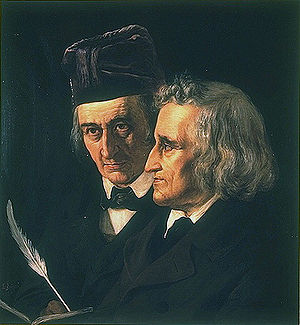
Wilhelm and Jacob Grimm, 1855. Painting by Elisabeth Jerichau-Baumann

Wilhelm and Jacob Grimm, 1855. Painting by Elisabeth Jerichau-Baumann

“People think stories are shaped by people. In fact, it’s the other way round.” – Terry Pratchett

“The Devil’s Sooty Brother” is the catchiest name among a group of tales from the Brothers Grimm about career soldiers who are discharged when they are wounded, or peace breaks out, or for no given reason. They find themselves on the road, with a loaf of bread and a few coins if they’re lucky, and no clear path to making their way in the world.

Most of the best known Grimm tales feature young people – a lad or a maiden, just starting out in the world. In contrast, we imagine these soldiers as middle aged career men, whose services are no longer needed. I thought of these stories when I heard that Oreo, “America’s favorite cookie,” will now be produced in Mexico, where Nabisco expects to save $130 million a year. Six hundred people join the hundreds of thousands before them whose working lives have been disrupted by technical, financial, and social changes that continue to accelerate in speed.

Do the old stories have anything practical to say to 21st century people when the world turns upside down?  Maybe…

These stories have elements in common:

  1. The protagonists are combat veterans. They’ve been around the block.
  2. They take up with shady, trickster-like characters, who take them underground, into the darkness, or other trials.
  3. They either are, or must learn to be, trickier than their tricky benefactors. In modern terms, they need to think outside the box, and there, if anywhere, is the relevance for us now. Circumstances may change, but the value of seeing the world afresh, free from habit and preconception, is probably even more vital now than in the “simpler” times when these tales emerged.

I will consider two of the tales of discharged soldiers that depend on wit. I’ll skip several others that hinge more on religious piety and luck. Piety and luck may pay off in real life, but they aren’t satisfying story elements.

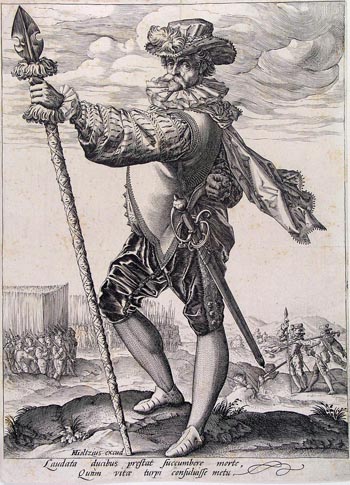
German mercenary pikeman. Wikimedia Commons

German mercenary pikeman. Wikimedia Commons

In our title story, The Devil’s Sooty Brother, (Grimm Tale #100), Hans, a hungry and penniless out of work soldier, meets the Devil in the woods. This Devil is a dark trickster and initiator rather than a personification of evil. If the soldier agrees to the terms of a seven-year contract, he’ll be set for life.  If he violates the terms, he will die, and presumably, be stuck in hell. Continue reading

Where did this come from?

notebook

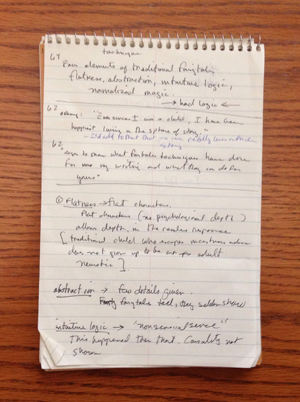
A few days ago, looking for a piece of scratch paper, I picked up a 5″ x 8″ spiral notebook from a desk in the back room. I flipped it open to some curious notes on fairytales – and I cannot remember where they came from. Not from any book I possess, nor from any lecture I remember. Did they come from a blog post? And if so, why did I take the time to jot down two pages of notes without bookmarking the post?

The words were those of a writer who said, “I am eager to show what fairytale techniques have done for my writing and what they can do for yours.”  This is curious, because most of what followed – the “four elements of traditional fairytales” that he or she discussed violate the usual advice given in writing books and seminars.  Here the four elements as I recorded them.

1) Flatness – flat characters (no psychological depth), which allows depth in the reader’s response. Eg., the child who escapes monsters does not grow up to be a neurotic adult. Also, few fairytale characters are named.

2) Abstract –  Few details given. Fairytales tell, they seldom show.

3) Intuitive logic –  “nonsensical sense”  This happened then that. Causality not shown. Events may not be connected except by narrative proximity. But inside that disconnect resides a story that enters and haunts you deeply. Details of fairytales exist apart from “plot” and are a “violation of the rule that things must make sense.” Dreamlike.

4) Normalized magic:  breaks the notion that the more realistic a story element, the more valuable.

All four of these points are accurate statements of fairytale characteristics. The idea that they hook the listener’s imagination to “fill in the blanks” may help explain why fairytales make far better oral narratives than literary fiction.

At the same time, I can’t think of any published fiction that follows such a structure, least of all modern fairytale retellings. For one thing, since the 19th century, psychologizing has been a favorite pastime for almost all lovers of folklore.

The unknown author of these notes made a few more statements I wrote down:

“Every since I was a child, I have been happiest living in the sphere of story.”  ( me too!!!)

“Trickery is the instinct to know when something is wrong.”

“I will end by saying that story is what makes us human.”

Whoever the unknown author is, you have my thanks (a second time) for your most stimulating thoughts on a genre I love!

Notes on an archaeology of our selves

Lego Indiana Jones by Tim Norris, 2009, Creative Commons

Lego Indiana Jones by Tim Norris, 2009, Creative Commons

Clear out your living space and you clear out your mind. And vice versa. I don’t remember where or when I picked up that bit of wisdom, but over the years, it has proven to be true. I’m back in the de-cluttering mode, a task I started in the spring, and continued in fits and starts since then.

Most of the stuff I’ve collected over the years is made of paper: countless boxes of books, piles of notebooks and journals, file boxes of essays composed during various academic forays, and a few portfolios of drawings. Layers of artifacts. One trunk is even filled with genealogical lore. My mother was into that. I am not, and yet I don’t quite know what to do with these small black and white prints carefully pasted into albums nearly 100 years ago. I recognize very few of these aunts, uncles, and distant cousins. I’ve lost track of anyone who might value the prints, and yet, there they are, my ancestors. It doesn’t feel right to just pitch them into the trash. So they’ll sit a while longer in the garage, taking up space.

I believe this is a good analogy to some of what clutters the mind – there is much we are attached to that no longer serves any purpose. It just takes up space. What we need is the wisdom and will to make a clean cut, an energy shown in traditional images of Manjushri, the Buddha of Wisdom, whose right hand holds a flaming sword which can cut through our knots of confusion.

manjushri

While sorting through old books, journals, and papers, I find that most have lost their meaning. A few mark important phases of life, and I hang onto them like graduation or wedding photos, or a favorite old coffee cup. Only a very small minority of items seem current. A rare find was this personal statement I included in a brochure for a local storytelling festival in 2001. It would fit this blog today.

“I believe we all tell ourselves stories almost all of the time, largely unnoticed interior narratives of what we are like and what the world is like. Telling or listening to stories in a “formal” setting, besides being pure fun, can invite us to re-imagine our own lives. Our lives may not be so different from the lives of the characters of Story. Anywhere can be the crossroads, and any voice can be the helpful creature by the side of the path, and the Water of Life may be nearer than we think.”

Archaeologists uncover pot shards and skulls and try to figure out what vanished people were like. I periodically sift through these relics and find myself wondering what my vanished selves were really like. There are threads of continuity, of course, but I think they’re a lot more subtle than I ordinarily imagine, like a fluttering movement, glimpsed at the corner of the eyes.

In the end, I really believe that these day-to-day selves come down to a matter of just which stories we favor and tell ourselves over and over. Which papers, books, and pot shards we keep nearby.

I think it’s a lot like the movie, Secondhand Lions, which is all about stories, when Hub (Robert Duvall) says, “If you want to believe in something, believe in it. Doesn’t matter if it isn’t true. You believe in it anyway.”

The Dark Crystal: a movie review

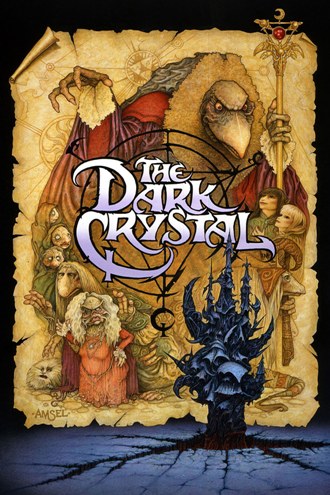
Dark_Crystal_Film_Poster

“Another world, another time. In the age of wonder.”

So begins The Dark Crystal (1982), a movie that pushed the limits of what was possible in animation when it was released 32 years ago. That was the year the Commodore 64 hit the market, becoming the best selling personal computer. Ms Pac-man was the hot new item in digital animation. Pixar, as we know it, was more than a decade away. Jim Henson, who wrote, produced, and co-directed the movie with Frank Oz, used models, puppets, and costumes for human actors to make this extraordinary film, which has largely been forgotten now that we’ve come to take sophisticated animation for granted.

Dark Crystal is a hero’s quest. A thousand earlier, when the three suns of the planet, Thra, came into alignment, the Dark Crystal shattered. At that moment two new races appeared, the evil skeksis and gentle mystics. Jen is the last of the gelflings (or so he thinks), a race wiped out by the skeksis for fear of a prophesy that one of them would be their undoing. As the thousand year alignment nears, Jen’s master, a dying mystic gives him a quest – find the missing shard and heal the crystal before the suns line up, or the skeksis will rule forever.

Dark Crystal: Jen's master gives him a quest

Dark Crystal: Jen’s master gives him a quest

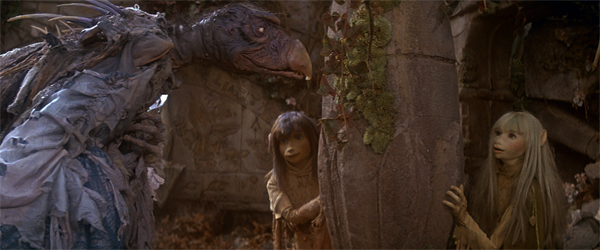
Jen reacts like any fledgling hero at the start of a quest – “But master, I am only a gelfling “ he says. “I am not ready to go alone.” But go alone he does, aided by the ancient seeress, Aughra, who helps him find the shard, and Kira, last of the female gelflings, who joins his quest. In a moment of despair, Jen flings the crystal shard away. Unable to sleep, he mutters, “Master, nothing is simple anymore.” Kira helps him find the shard at “The House of the Old Ones,” where they are confronted by a treacherous skeksis.

The Dark Crystal: Jen and Kira confront a Skeksis at The House of the Old Ones

The Dark Crystal: Jen and Kira confront a Skeksis at The House of the Old Ones

They flee, but the treacherous one surprises them at the Dark Castle where the crystal is housed. He captures Kira and the skeksis begin to drain her life essence, which will prolong their own lives and leave Kira in the state of their other slaves, a mindless automaton. Jen and Aughra help Kira to save herself, the mystics arrive at the castle, the three suns’ come into alignment, and the final confrontation begins.

Prior to Dark Crystal, animation involved full length cartoons, claymation shorts, and The Muppet Show, which ran on TV from 1976-1981. I’m not aware of another full length feature involving such detailed world-building animation before this movie. It feels a little dated now, but then so do movies like Casablanca which stand as classics in their genre. That’s how I think of Dark Crystal. I think it’s required viewing for lovers of animation and fantasy in the movies.

Notes from the Wasteland

Photo by David Mark, public domain.

Photo by David Mark, public domain.

Talk of drought in California isn’t uncommon.  Normally it means lower levels in reservoirs and thinner snowpacks in the Sierras.  Bad news for skiers, and boaters, and farmers, perhaps, and an earlier start to the fire season, but’s it’s January, and for those who don’t ski, or boat, or farm, it’s easy to ignore until summer. But this time it’s different. This year it simply will not rain.

Even in “dry” winters, you see warnings that river currents are cold and swift.  This year the river’s so low there is no visible current.  Half of the local lawns are brown, and those that are green invite visits from the “water patrols” the districts threaten to form.  They say the reservoir from which we get our drinking water is at 17%; that image isn’t easy to forget.

A year ago, I posted a report from the National Intelligence Council.  Every four years, the NIC, representing every US intelligence agency, collaborates on a summary of the world situation to give the incoming president.  They post the report online for anyone to read.  After the last presidential election, the NIC gave the administration a report called Global Trends 2030: Alternative Worlds:

Click for the text of the whole report

I discussed the report in detail in a post in December, 2012, but it’s worth reviewing one of the four “Megatrends” the report identified.  The CIA, the NSA, the FBI, and the 13 other agencies that compiled the report do not waste time debating climate change; they accept it as a given and factor it into predictions, saying that by 2030:

Demand for food, water, and energy will grow by approximately 35, 40, and 50 percent respectively owing to an increase in the global population and the consumption patterns of an expanding middle-class. Climate change will worsen the outlook for the availability of these critical resources. Climate change analysis suggests that the severity of existing weather patterns will intensify, with wet areas getting wetter and dry and arid areas becoming more so.

What gives you pause is their conclusion:

We are not necessarily headed into a world of scarcities, but policymakers and their private sector partners will need to be proactive to avoid such a future.

At this time, if we have to depend on our “policymakers and their private sector partners” to be proactive, we’re screwed, but there are different ways to look at our situation.  As usual, I try to relate literal “truth” to archetypal patterns, and in this case, the obvious mythic story is that of the Wasteland.

The story relates how Camelot fell apart.  How the rift between Arthur and his queen threw the land into ruin.  How the ailing king sent his knights in search of the Holy Grail, the one thing that could restore the barren world.  Those who reached the Grail Castle found another mysterious king inside, wounded through the testicles, in constant pain but unable to die.  His only relief by day was to float in a boat on a lake near the castle.  For this reason, he was known as “The Fisher King.”  He could only be healed by the right knight arriving at the castle to ask the right question.

Antecedents to the story are ancient and predate the Arthurian tales, perhaps by thousands of years.  In writing his poem, The Waste Land (1922), T.S. Eliot relied on an anthropological study, From Ritual to Romance by Jessie Weston, who in turn, drew on The Golden Bough, Sir James Frazier’s study of sacred kingship.

In the mythic cycle Frazier explored, the earthly king was “married” to the Goddess of the Land.  His potency and the earth’s fertility were one.  When he became old and infirm or impotent, the health of the land suffered.  He was ritually killed and a new king selected.  We find echoes of this in Arthur’s estrangement from Guinevere, though of course by then, the era when monarchs submitted to sacrifice was past.

We aren’t ruled by kings anymore, but if we consider “governments” alongside the word, “impotent,” and if we ignore what Viagra can fix, we find these meanings: “weak; ineffective, powerless or helpless; having no self-control.”

Yet the news isn’t all bad, and that is a theme I plan to explore in a series of posts exploring the Wasteland.  For one thing, the Grail hides there and nowhere else.  For another, the old stories never suggest that rulers can save us.  Renewal comes from the outsider, the dummling, the fool, Parsifal the rustic youth, or a carpenter from Nazareth.  

There are literally thousands of people today, already in or ready to enter the metaphorical forest on a quest for better ways to live.  I plan to discuss a few of their stories here.

“Arming the Grail Knights” by Edward Burne-Jones, tapestry, 1890’s, public domain

Help wanted, heroes and heroines: must be civil and adroit

This unusual job description comes from the opening lines of a Grimm’s fairy tale I recently read for the first time.  Fairy tale characters never get more than a word or two of description, and most of the time, tags like “clever fox” and “evil stepmother” are so familiar they don’t make us stop and think.  The opening of “The Glass Coffin,” was different enough to catch my attention:

“A civil, adroit tailor’s apprentice once went out traveling, and came into a great forest, and as he did not know the way, he lost himself.”

Civil and adroit are good terms for key attributes of successful folklore protagonists.  Though the words may sound quaint to us now, the traits they describe are as relevant to our own world as they are to travelers in Faerie.
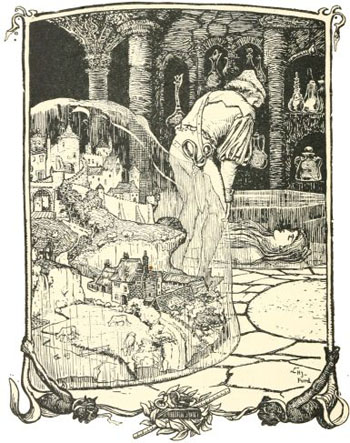
The Glass Coffin

The Glass Coffin

The virtue of civility:

Some of the Grimm Brothers’ stories seem to locate these attributes along gender lines, implying a world of civil females and adroit males.  But if we review a number of tales, much of the time we find both characteristic needed by men and women alike.

Girls who are rude or mean may wind up dead or have their eyes pecked out like Cinderella’s step sisters.  Toads may jump from their mouths when they try to speak.  Feminists point to such story features as efforts to domesticate young women and make them docile.  Yet for many youngest sons, success also hinges on civility, often to seemingly insignificant creatures.  It’s a dwarf who offers council in  The Water of Life.  When the worldly-wise older brothers mouth off to the little man, they end up imprisoned in stone.  The youngest brother, who is respectful and heeds (most of) the dwarf’s advice, wins his heart’s desire and more.

In many of these stories, motives are greater than simple expediency.  The hero of The White Snake shows genuine compassion.
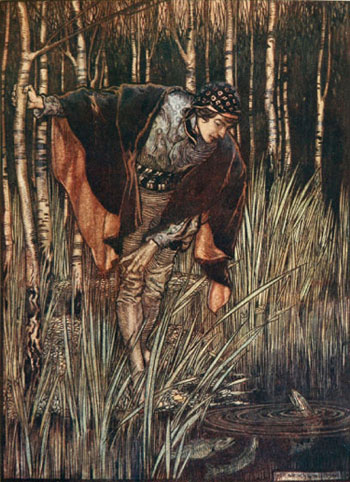
The White Snake by Arthur Rackham

The White Snake by Arthur Rackham

Through a bit of (adroit) trickery, a king’s servant gains the power to understand the speech of animals. He goes traveling and saves three different kinds of “lowly” creatures – fish, ants, and baby ravens.  Kind heartedness rather than self-interest drives him, for though the creatures promise to help him, they only do so after he sets them free.  There were no strings attached to his generosity.

The story is not just a simple call to spare the lives of all creatures, for the servant kills his horse to feed the ravens.  It would take another post to explore this detail, but to the extent that these stories dwell on  compassion, their theme is both ancient and timely.  The Dalai Lama put it in simple terms:  “If you want others to be happy, practice compassion.  If you want to be happy, practice compassion.”

The virtue of being adroit:  

The dictionary defines adroit as “skillful in a physical or mental way; clever; expert.”  In fairy tales, this sometimes means knowing when to kill your horse to feed the ravens.  At other times, it means cunning, trickery, and lies.  In stories, we often imagine these as men’s attributes, perhaps because traditional full time tricksters, from Hermes to Coyote, are usually male.  Yet in Grimm’s stories, young women need to understand and master deceit as often as men.  In Bluebeard-type tales, and notably a frightening story called “Fitcher’s Bird,” it’s a matter of life and death.

Part of being adroit is the intuitive sense of when someone or something feels wrong; when civility is not in order.  In fairy tales, women often do this better than men.  Typically, in three-brother stories, the youngest prince will trust his older brothers, even after the dwarf has warned him not to.  Cinderella and girls like her know better than to be fooled by older siblings.

Instinctively knowing when something is off has new relevance in the 21st century.  Interviews with 9/11 survivors adds to research suggesting our brains are not very good at processing radical changes or threats.  People on the upper floors of the South Tower had just over 16 minutes before the second airplane hit; those who left survived and those who waited did not.  On average, people took 1o minutes to choose.  In times of radical change, we need that cunning, adroit part of our ourselves to cut through the illusion that things will right themselves and return to “normal.”  It can be a matter of life or death.

***

Few things in fairy tales are certain, and the first story in the Grimm’s collection, The Frog King, is an exception that proves the rule proposed by this post.  The princess is neither civil nor adroit.  She’s a petulant brat, who gets what she wants by hurling the frog against a wall (the kiss only comes in later versions).  To our sensibilities, she doesn’t deserve the prince who appears when her act of violence breaks the spell.

There’s an irony in the original “Frog King,” however.  When the transformed prince reunites with his faithful servant, Heinrich, he almost seems more delighted than he is with his new bride.  At least one illustrator, Walter Crane (1845-1915) implies that the princess won’t have everything to her liking.  Who does the prince have eyes for in the closing scene, and how does the princess appear to react?  Does this story end with a twist that the Brother’s Grimm shied away from?
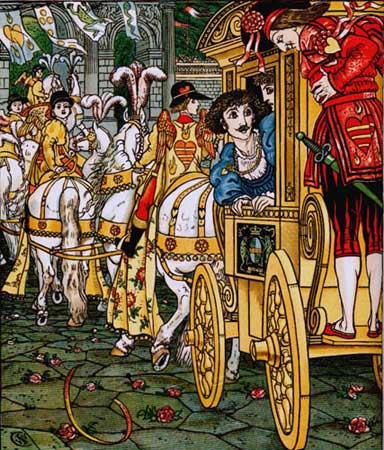
The princess, the prince, and Heinrich in Walter Crane's 1874 illustration.

The princess, the prince, and Heinrich in Walter Crane’s 1874 illustration.

Experienced explorers warn us that the way through Faerie is perilous.  Trails may shift beneath our feet, and hard-and-fast rules don’t apply.  As Joseph Campbell observed, everyone must find their own way through the forest.

My latest exploration leads me to wonder if “adroit” is another word for “street smarts,” something we need in our own world as well as in dark imaginal forests and castles frozen in time.  And isn’t “civil” an attitude that understands that our own wellbeing, even in the most practical terms, must include the welfare of others?

The old stories may offer no certain answers, but with careful reading, they can always lead us to ask interesting questions.

10 of the Greatest Essays on Writing Ever Written

I was delighted to find this post on WordPress’s “Freshly Pressed” page where it deserves to be. Here’s a collection of essays on writing, more than half by writers whose names are household words (in literary households) – Robert Frost, Henry Miller, Susan Sontag, T.S. Eliot, Kurt Vonnegut, and Joan Didion among them. They all look compelling. I’m looking forward to starting a piece on structure in fairy tales by the editor of “The Fairy Tale Review.” Enjoy!

A teller of sacred stories

Robert Béla Wilhelm, storyteller

Robert Béla Wilhelm, storyteller

In 1965, a young New Jersey college student, in need of money for rent and tuition, took a weekend job as a tour guide at $25 a day, for a charter company that specialized in high school class trips to Washington, DC.  The company gave him a binder of facts and statistics to learn, but the student, Robert Béla Wilhelm, quickly realized that only a story makes facts and statistics come alive.

Sixteen years later, Bob was a university professor and had written his PhD dissertation on the craft and philosophy of storytelling.  His wife, Kelly’s, PhD centered on travel and leisure.  Both had grown up in storytelling families, and in 1981, they founded Storyfest Journeys (see their Facebook page too) with an inaugural trip to Ireland.  After more than 50 storytelling oriented, small group tours to Europe, the Pacific, and destinations in the US, they are still at it.  It was thanks to the Wilhelms that Mary and I traveled to Iceland in 2012.

Over time, Bob and Kelly have focused their energy on mentoring storytellers and specializing in sacred stories.  I just received word that Bob has completed a 17 year labor of love that he calls, “Parables Today, A Weekly Lectionary Storybook.”  For every Sunday of the three year lectionary cycle of the Catholic church, he presents stories from around the world along with artwork, and reflections.  The tone is open and ecumenical; many of the tales will appeal to people of any faith or none at all.  They  are now freely available at sacredstorytelling.org.

I was thinking of Robert Wilhelm when I wrote my second post on this blog, which featured a poem called “Story Water” by Rumi.  I think it’s safe to say that Robert has carried on Rumi’s tradition, which centers on the understanding that our spiritual dreams and longings are woven of stories.  Abstract understanding may sometimes move the heart, but more often it is The Prodigal Son, or Arjuna at Kurukshetra, or Coyote coming along that opens our eyes of understanding.

If you love stories, take a look at the stories that Robert Wilhelm loves.