Silence

A busy couple of days:  not only a bit of  furious blogging, but finishing up three separate writing projects and reviewing manuscripts for two critique groups.

This morning I attended the California Writer’s Club monthly breakfast and talked with a retired psychiatrist about what’s broken in our mental health care system (hint:  a drug for all that ails you).

After breakfast I came home, and finding this week’s Time in the mailbox, read one of the lead articles, “Are America’s Best Days Behind Us?”

After that it was time for final proofing and submission of entries to two of the writing contests I’ve mentioned here.  The submissions are on their way, one electronically, one by snail mail.  I’ll have results (or lack thereof) in June and November respectively.

Finally – finally, it was time to brew a cup of coffee in my new French Press (which I am just starting to master), kick back, and enjoy one of life’s greatest luxuries – SILENCE.

Strangely enough, I realize I can’t really say what silence is. It isn’t just lack of noise; the yard guys came with their leaf-blowers, and though I do not enjoy the sound, it didn’t throw me out of inner stillness today (though it sometimes does).

Silence is not just about lack of thoughts, though it does seem to be about experiencing them as impersonal events, like the weather.

Inner silence is not just about meditation, though paradoxically, I would not have found a way to get there if I had not been looking for it in meditative disciplines for years and years and years.

I didn’t learn to find silence on a meditation cushion, but at work, among the cubicles.  I didn’t find it through some technique, but because I quit smoking and really missed the hourly time-out-from-everything I used to enjoy when I’d step outside every hour for a cigarette.

I missed those time-outs long after the nicotine was out of my system.  I took to going outside every hour for ten minutes, thought at first I just did a lot of inner whining as I watched other people light up.

Then, at some point, it simply happened:  I found my time-out mojo, my inner stillness.  For me, it has to do with listening.

I think anyone can find it, it’s really easy.  What happens when someone says, “Hey, listen, what’s that?”

Silence is what happens!   Thoughts and distractions return soon enough, so you listen again.  Distractions come, listen again.

Maybe sounds work best for me because they are not my dominant sense and I really have to pay attention.  Thinking of attention I remember a Zen story that goes something like this:

A student goes to the master and says, “Sir, what is the key to enlightenment?”

The master says, “Pay attention.”

A few moments later the student says, “I am paying attention.  What is the secret?”

“Pay attention.”

The student begins to get flustered.  “I am paying attention.  Are you going to tell me or not.”

“Yes.  Pay attention.”

You get it, and presumably the student got it eventually too – the doorway into one of life’s greatest luxuries.

Some Words About Smashwords.com

My thanks to Brandon Halsey for pointing out a great oversight in my last post.  I completely neglected to mention smashwords.com, an increasingly popular site dedicated to publishing and distributing ebooks in all the popular formats:  Kindle, Nook, iBook, Sony, Stanza, as well as plain .html.

I don’t know a lot about Smashwords yet, but a place to start looking is this Q&A page by Mark Coker, the founder http://www.smashwords.com/about.

Another resource is Tracking the Words, the blog of Catana, a writer who posts almost daily about preparing for publication on Smashwords, and is now including reviews of titles they have published.  http://writingcycle.wordpress.com

Publication on Smashwords is free, but it’s worth looking at the “How to Publish” page to get clear that it isn’t easy.  Assuming your text is really ready, after numerous drafts and third-party checks for typos, the first requirements are outlined in the site formatting guide, which is checked electronically before a submission is accepted.  Apple iBooks have additional rules.  Then there’s a checklist for inclusion in the Smashwords Premium Catalog, which gets your book distributed to Sony, Barnes&Noble, Apple, Kobo, and (soon, they say) Amazon.

How about a catchy cover?  How about a one sentence tag line?  How about a compelling book-jacket blurb in case the title and cover are so compelling that someone stops to click on your title?  How about uploading a free short-story or novella, as some of the authors do, to encourage readers to search through their other titles?

Clearly, there is a lot of effort behind even the most stunning success stories, but I’ll end with an upbeat set of predictions for Indie publishing in 2011, made by Mark Coker in an interview on December 28, 2010.
http://www.mediabistro.com/galleycat/publishing-predictions-for-2011-from-smashwords_b18421

We are already seeing some of these predictions come true.  Here, for example, is one of them:

4. Self Publishing goes from option of last resort to option of first resort among unpublished authors – Most unpublished authors today still aspire to achieve the perceived credibility and blessing that comes with a professional book deal. Yet the cachet of traditional publishing is fading fast. Authors with finished manuscripts will grow impatient and resentful as they wait to be discovered by big publishers otherwise preoccupied with publishing celebrity drivel from Snooki, Justin Bieber and the Kardashians. Meanwhile, the break-out success of multiple indie author stars will grab headlines in 2011, forcing many unpublished authors off the sidelines. As unpublished authors bypass the slush pile, publishers lose first dibs on tomorrow’s future stars.

Writers Going Their Own Way in the eBook World

Over the last month I’ve seen a flurry of articles on hugely successful ebook authors, and indications that their success is part of a wider trend.  In January, the month when Amazon announced that ebook sales had overtaken all forms of print volumes, 12 of their 20 ebook best-sellers in the horror genre were by self-published authors, in a field that included Stephen King.  http://jakonrath.blogspot.com/2011/01/guest-post-by-terri-reid.html

Twenty-six year old Amanda Hocking is the best selling ebook author on Amazon’s kindle store.  Since April, 2010, she has self-published nine ebooks and sells 100,000 a month, at prices ranging from $0.99 – $2.99.  Amazon’s pricing allows her to keep 70% of the profits, where traditional publishing would give her 30%.  http://www.pcmag.com/article2/0,2817,2381193,00.asp

One of many articles on Amanda’s success quotes an anonymous publisher as saying there is no traditional publisher in the world right now that can offer Amanda Hocking terms that are better than what she’s currently getting, right now on the Kindle store, all on her own.  http://www.novelr.com/2011/02/27/rich-indie-writer

Terri Reid’s self-published ebooks are in Amazon’s top 20 lists for 10 different genres.  Her previous day-job included advertising and market research, and she references she some interesting discussions on the meaning of “ownership” and “value” in the digital age.  Everyone instinctively feels that an ebook is not worth as much as a paper copy and shops accordingly.  (One mathematician calculated the optimum price for ebooks as $2.99-$3.99).  Reid suggests that the traditional “agency model,” where the publisher sets the price is not going to work in this arena, and says, “Apparently Ken Follet’s publisher raised the price of his ebook from $7.99 to $9.99 and sales dropped 48%.

Reid further claims that:  “Publishers were, and still are, trying to slow the growth of ebooks in order to protect their business model, which is built around selling paper.  How has that been working out for them?  Not very well.”  (I referenced Reid’s article in the first paragrah, but here it is again:  http://jakonrath.blogspot.com/2011/01/guest-post-by-terri-reid.html Note:  last night I downloaded Reid’s The Ghosts of New Orleans for $2.99 from Amazon and will review it here when I finish).

***

Not long ago – like maybe last year – traditional publishing offered writers a huge carrot – the certification of legitimacy.  USA Today reported that Hocking sold 450,000 ebooks in January, 2011, so I doubt that she worries too much about that.  http://www.usatoday.com/life/books/news/2011-02-09-ebooks09_ST_N.htm

For a traditional game with winners and losers to endure, winning has to be possible.  At the 2007 San Diego Writer’s Conference, I heard an editor of adult Sci-Fi/Fantasy explain that traditional publishers, with their “stable” of known authors who are guaranteed to sell, have no financial motivation to risk an unpublished writer.  “If you want to break into this market, your best bet is to get some short stories in print,” he said.

I heard the same thing at the CWC February lunch, from a prolific local author of romance and romantic suspense, Kimberley Van Meter – that increasingly, not just editors but agents too, are not willing to risk unpublished authors, no matter how good the work seems, and that was always the sustaining idea:  if I write something really really good, I will make it into print.

Let’s assume that is still true, and I hustle and get some short stories or articles in print, and then write something really really good and, dream come true, in a couple of years it’s on the shelf at Barnes and Noble. Then what happens?  I suspect that despite all the hype about “building your online platform,” Donald Maass is still correct – bestsellers happen by word of mouth.  How did you hear about Harry Potter or The DaVinci Code? Somebody I knew raved about the books in both cases.

That seems to be what happens with ebooks as well.  After writing her whole life, Amanda Hocking had tried the agent submission route with no success.  The self-described muppet enthusiast was broke, but wanted to attend a Jim Henson exhibit in Chicago in October 2010, so at this time last year, she told her roommate: “I’m going to sell books on Amazon through Kindle, and I bet I can make at least a couple hundred bucks by the end of the summer to go to Chicago.” http://amandahocking.blogspot.com/2010/08/epic-tale-of-how-it-all-happened.html.  She uploaded two books, sold 45 copies in two weeks, and thought that “wasn’t too shabby.”   In her case, the breakthrough came when she discovered book review blogs and asked the authors to consider her work.  Those digital voices launched her path to success.

Hocking writes young adult fantasy, and as word of her success spreads like wildfire online, you can almost hear the keystrokes of 10,000 writers hurrying to finish their vampire ebooks.  Everyone knows about gluts and bubbles from recent economics.  There’s not enough time to read all the good stories now (or separate the wheat from the chaff), and there will be even less as the ebook revolution kicks into gear.

Still, there is a democracy-loving part of me that loves this kind of populist development.  Different, but similar to they way I felt watching how cell phones and Twitter helped spark the revolution in Egypt, and how it made me feel to realize my own career in technology had, in however small a way, helped it happen.

These are exciting times to be a writer.  I’ll close with a quote from Joe Konrath (link in the first paragraph).  Konrath, a traditionally published author, was an early adaptor and advocate of epublishing, who writes:

The future isn’t Big 6 publishing houses vetting manuscripts, rejecting the majority, taking 18 months to publish, and then insisting upon ebooks with high prices and DRM, all the while paying authors one third of what the house makes. The future is smart, talented writers doing it on their own.


The Golden Raspberry Awards

I enjoyed the Academy Awards on Sunday night. The nominations and the winners made sense.  On Monday morning, however, I read the rather sad story of a once-celebrated director’s fall from grace.

The night before the Oscars, the Golden Raspberry Foundation announced its Razzie awards for the “worst of” filmmaking in 2010.  Making a pretty complete sweep was M. Night Shyamalan, who was singled out as worst director of the worst movie, The Last Airbender, based on the worst screenplay, which he wrote.

Shyamalan wowed audiences and received six Oscar nominations, including Best Picture and Best Director in 1999,  for The Sixth Sense, starring Bruce Willis as a psychiatrist who, in the course of the movie, discovers he was murdered.  Willis plays opposite Haley Joel Osment, the boy who famously says, “I see dead people.”  The following year, Shyamalan worked with Willis again, and with Samuel L. Jackson, to make Unbreakable, which also received positive reviews.

The director’s career has gone downhill from there, both in terms of critical reviews, and in my own reaction to the two other movies of his I have seen.  What went wrong?

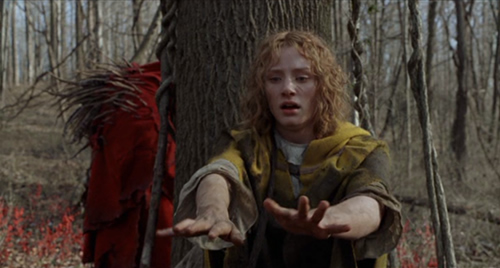
The next Shyamalan movie I saw, The Village, 2004, begins with an engaging premise:  the people in an isolated 19th century village live in fear of a race of beasts that roam the surrounding forest.  After a child dies, Lucius Hunt (Joaquin Phoenix) asks the village elders for permission to pass through the forest to “the towns” for medical supplies, but his request is denied.  The beasts paint the doors of village cabins with blood as a threat and warning after Lucius makes a short foray into the forest.

The beautiful Ivy Walker (Bryce Dallas Howard), blind daughter of the chief elder, becomes engaged to Lucius.  When he is stabbed by a rival, the prognosis is dire:  Lucius will die without medicine.  Ivy begs her father, Edward Walker (John Hurt), to allow her to go to the towns.  He agrees, against the wishes of the other elders.  Before she leaves, he reveals a secret:  the monsters do not exist.  They are a fabrication created by the elders to frighten children so they will not enter the forest.  Yet when Ivy ventures into the woods alone, a beast attacks her.

Ivy Walker and monster in The Village

So far so good. We are well into the movie and gripping our seats, but then, Shyamalan’s penchant for twists runs amok. Ivy manages to escape the beast, who turns out to be the boy who had stabbed Lucas, wearing a monster suit.  Ivy comes to a concrete wall, finds a handy ladder nearby, climbs up and over and winds up at the edge of a highway where a ranger in an SUV picks her up, looks at the list of needed medicine her father had written out, gets it for her (they have a bit of trouble), then helps her back over the wall with a warning to be careful.

We learn that the village elders are actually refugees from the culture of violence in America, who bet their lives and livelihoods on the grand experiment of trying to raise a peaceful generation in a peaceful agrarian culture.

You can check out the theme and logic behind the events at http://en.wikipedia.org/wiki/The_Village_(2004_film), but from my perspective, these elements were buried in a flawed story, one that would never ever, ever, ever, ever – as in, no way – have gotten past the the two writing critique groups I sit with.  In other words, not even the least experienced among us would get away with the plot flaws that pepper Shyamalan’s screenplay.

That, I believe, is the key to the disappointing trend of this director’s movies.  He tries to do it all – write the screenplay and direct the movie, and his early success must have isolated him from, or deafened him to, the collaborative voices that could have asked questions that should have been posed before the first scene was shot.

Questions like why Ivy’s father, a seemingly decent and caring man, would let his blind daughter brave the woods and the modern world alone?  And if simple antibiotics could save his future son-in-law, the town golden boy, why wouldn’t he just go out and get some.  And no matter how large his personal fortunre, (see the wikipedia page), who on earth is going to believe he could have bought secrecy for an entire village?  We’re supposed to believe that Homeland Security hasn’t studied the satellite photos in a post 9/11 world?

Contemplating this set of Razzies, I was struck with a deep appreciation for the members of my critique groups and all of their comments – those that seem pertinent and those that don’t.  They help keep me honest.  These are not the “discouraging words” I mentioned in my previous post.

Discouraging words sound like this:  You can’t.

Good criticism from people who value each other’s efforts sounds very different:  You can, and here are some ideas on how to proceed.

What Do I Really Know?

I’ve been very busy with writing lately, but in a one step forward, two steps back kind of way.  It has also been a time of discouraging words, to paraphrase “Home on the Range.”  Discouraging words about the never-so-crowded playing field for those trying to get into print.  Discouraging result (or lack thereof) from yet another writing contest I entered in the fall to no avail.  This is stuff I ordinarily blow off, but right now I’m in a doldrum phase in my novel.

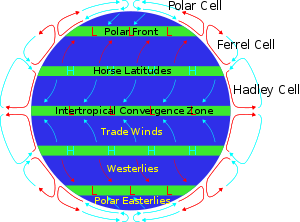
**Doldrums** –  Popular name for the “intertropical convergence zone,” just north of the equator, where winds of the northern and southern latitudes combine, causing extended periods of light or non-existant breezes.  (When my writing hits the doldrums, I Google way too much!)

I picked up a hand full of early chapters of the book to review, but found I was still too close to do any kind of evaluation.  A mass of questions arose:  This seems okay but is that all is – just okay?  Is this still the story I want or need to tell?  Should I take an extended break to write some short stories?  Should I take a non-fiction break.  Would it help to just walk away for a while?

When questions like this bounce around my head, I think of a section of Jack Kornfield’s marvelous book, A Path With Heart.

After a traumatic event, a former student came to Kornfield in a state of great confusion.  Lot’s of well meaning people, each with some claim to spiritual expertise, had been giving her contradictory advice, and she didn’t know who to believe or which way to turn.

Kornfield told her the 2500 year old story of a group of well-meaning spiritual seekers who faced similar confusion.  The sought out the Buddha to ask his advice.  He told them to take no one’s word for the truth, not even his, but to test what they heard for themselves and see which teachings led to “welfare and happiness…virtue, honesty, loving-kindness, clarity, and freedom.”  Kornfield reminds us that “in his last words, the Buddha said we must be a lamp unto ourselves, we must find our own true way.” Based on this teaching, Kornfield posed a question to the woman:

I asked her to consider carefully what she actually knew herself.  If she put aside the Tibetan teachings, the Sufi teachings, the Christian mystical teachings, and looked in her own being and heart, what did she know that was so certain that even if Jesus and the Buddha were to sit in the same room and say, “No, it’s not,” she could look them straight in the eye and say, “Yes, it is.”

Through great good fortune, I know what that truth is for me in the spiritual realm – I’ve written about it, or around it, or hinted at it in the “No-Self” series I posted in November and early December.  What startled me and led to this post was the realization I do not know what the equivalent truth is for me in writing.  What do I know beyond what any expert may say?  What have I hammered out of my own experience?  What is “my own true way?” I’ve been mulling it over, and if I don’t know the truth, I’m pretty darn sure of a few things:

  • In writing as in living, my own true way seems most likely to manifest when the me gets out of the way, and that implies that the first thing necessary, the main thing to take a break from, is attention to results.
  • Whatever kind of writing it is, when it comes alive, it is surprising.  If I am writing honestly, I learn things about myself and about the world.  “Oh, I didn’t quite realize I felt that way, but I guess I do.”
  • On a spectacular day like this, in between winter storms, it’s time to get outside and breathe some fresh air.

Keeping an eye on truths like these, even if they are not quite eternal verities, may be enough to spark a breeze in the doldrums and get the ship moving again.

And The Winner Is: Some Excellent Oscar-Related Resources

Here are some very neat Academy Award links for writers, thanks to the folks at the Gotham Writer’s Workshop, http://www.writingclasses.com/mailing.php?id=2008.  There are hoopla links to articles in Variety and the New York Times, links on books compiling the history (and “secret history”) of the Academy Awards, as well as info on Gotham’s online courses in screenwriting and writing for TV.  (Note:  I have not taken any of their courses so I cannot comment on them one way or another).

What I appreciated most is the list of Academy Award winning screenplays from 1928 to the present.  Quite a few have links to PDF files you can click on and study:  http://www.simplyscripts.com/oscar_winners.html.  Those who have followed this blog know I am a huge fan of screen-writing, and though I do not (yet) aspire to do it, I can think of few better places to study plot structure.

Speaking of which, I happened on a great quote on the difference between story and plot from E.M. Forster’s, Aspects of the Novel:

A story is a narrative of events arranged in their time sequence.  A plot is also a narrative of events, the emphasis falling on causality.  “The king died, and then the queen died” is a story.  “The king died and the queen died of grief” is a plot.

I’ll be out of town for much of Sunday, but I hope to make it back in time for the awards.  This year in particular, I’m interested in some of the movies, writers and actors.

A Few Good Online Meditation Resources

In my previous post, I talked of the need to step away from our stories, drop the persona from time to time.  One of methods I use on a daily basis – and have for three decades – is meditation.

I was in high school when the Beatles went to India, and something about their trip to the east instantly resonated with me.  I wanted to learn how to meditate, but there weren’t very many resources – no centers where I lived, and just a handful of books.  The one I chose didn’t help very much – I now realize it must have been written by an academic, someone who was commenting on commentaries, probably without any personal experience.

Now the situation is just the opposite – an embarrassment of riches.  There is plenty of chaff in the wheat – how to sort it out?  I thought I would outline three classic styles of meditation, and provide some web links from reputable and expert sources.  One is the Buddhist practice of Vipassana, or Insight Meditation.  Two are ancient Christian practices, revived and restated for our times by such pioneers as Thomas Merton.  It is always an advantage to find a group of like-minded practitioners, and the links given below should lead to some of the centers that have sprung up, for those who are interested.

Vipassana or Insight Meditation

This is a Theravada Buddhist practice that consists of two steps, (1) learning to concentrate the mind by watching the breath, and (2) using the concentrated mind to observe the mind itself, attending to the sensations, thoughts, and feelings that pass through awareness.  It is non-sectarian.  It requires no profession of faith, or any belief whatsoever, aside from an acceptance that “Know Thyself” is possible and a good idea.

The most influential American teachers of insight meditation are Jack Kornfield, Sharon Salzberg, and Joseph Goldstein, who founded the Insight Meditation Society in 1975, and are still teaching.  An article by Kornfield and a recently published book by Salzberg are good starting places to explore.

Doing the Buddha’s Practice” by Jack Kornfield.  Published as an article in the July 2007 issue of Shambala Sun, available as a free PDF download at the Spirit Rock website:   http://www.spiritrock.org/display.asp?pageid=484&catid=3 The site itself has a wealth of information, a list of classes, and hundreds of audio teachings.

Real Happiness:  The Power of Meditation by Sharon Salzberg

This book was featured in a 28 day online meditation “challenge” in February, 2011 on Tricycle.com.  People who register as supporting members ($30/year) can access month-long Q&A and discussions with the author.   In addition to the the text, which presents theory and practice over 28 days, there is a CD which includes nine guided meditations.

Christian Meditation.

The World Society for Christian Meditation, formed by John Main, teaches a simple practice of mantra meditation, similar to “the Jesus Prayer,” which was first documented by John Cassian in the 4th century.  The simple technique, local groups, a newsletter and a listing of classes are all available at this website:   http://www.wccm-usa.org/

Centering Prayer

In the ’60’s, Thomas Merton was dismayed to see scores of young people looking to eastern traditions for contemplative practice.  After years of meeting with Buddhist teachers, he realized a very similar tradition of contemplation for Christians was hiding in The Cloud of Unknowing, a 13th century anonymous tract.  There other monks in Merton’s order, Thomas Keating, Basil Pennington, and William Menninger organized Contemplative Outreach to spread the discipline they called, Centering Prayer.   http://www.contemplativeoutreach.org/site/PageServer

This is just a starting point for anyone interested.  Any number of contemplative groups from all denominations have discovered the power of the web to make their teachings available.  Anyone who wants to learn to meditate can use this medium to learn how to do so.

The Stories We Tell Ourselves

Today I took the plunge. Not as in Polar Bear Club or anything that hearty or insane. I took the plunge into Freedom, the novel by Jonathan Franzen that earned its author a Time Magazine cover last year.

Freedom is not the subject of this post however; it was the catalyst that spun me off on a series of reflections that have fascinated for a very long time – the stories we tell ourselves, how they drive our actions, and how they may or may not be adequate.

Freedom begins by telling us that the lives of Walter and Patty Berglund are going to implode.  It then presents as brilliant a character portrait (of Patty) as I recall in any book. Patty is the Volvo driving, cloth diaper using, natural food choosing, urban renewing, athletic young mom who is “already fully the thing that was just starting to happen to the rest of the street.” She is “a sunny carrier of sociocultural pollen, an affable bee,” and the implication is, none of that is enough.

Last year, David R. Loy published,The World is Made of Stories, a short book of quotations and reflections that underline the simultaneous truth and falsehood of the stories we tell, from a Buddhist perspective.

In his preface, Loy says, “The foundational story we tell and retell is the self, supposedly separate and substantial yet composed of the stories “I” identify with and attempt to live. Different stories have different consequences.”

Do they ever!  What stories did your parents and peers and teachers tell about you when you were young?  “He’s the smart one.”  “She’s the pretty one.”  “He’s always getting into trouble.”  How many of these stories are we still telling ourselves, and how many thousands of stories have we heard since then, from TV, from bosses, coworkers, family, churches, strangers, and unknown parts of ourselves?

We need our stories.  One of the more poignant things my father said during the course of a long degenerative illness was, “I don’t know what I’m supposed to be doing now.”

We need stories to tell us who we are and what we’re “supposed” to do, and at the same time we need to take them with a grain of salt.  Ideally, we need a way to step out of our stories, they way we step out of work clothes at the end of the day to put on a pair of cutoffs or comfy sweats.  The moments when we are outside our stories are the ones we remember the longest.

Whatever events occasion it – a sunset, meditation, playing with a puppy or a child, making love, sports, creative work, music, a good book or movie – the moments when we leave the stories of ourselves behind, are the ones when we are most alive and most truly ourselves.