Mark Coker ebook workshop, Sept. 29

Mark Coker

The Sacramento branch of the California Writer’s Club hosted Mark Coker, founder of Smashwords, for a presentation in January that I wrote about here: http://wp.me/pYql4-1DD

Now we’re having him back to present a nuts and bolds workshop on ebook publishing and marketing. The date is September 29, time is 9:30-3:00, and the location is convenient, just off a major freeway.  Price is $45 for CWC members and $55 for non-members.

Here is the description:

“How To Produce, Distribute & Sell Your Work In The Evolving Eworld” is a September 29thworkshop being offered by the California Writers Club, Sacramento branch.  Presenter Mark Coker, Founder and CEO of “Smashwords, ” is a leading expert in the field of creating and marketing ebooks in the evolving digital age.

Here is the brochure:

http://www.cwcsacramentowriters.org/wp-content/uploads/Mark-Coker-Ebook-LIVE-Workshop-9-29-20121.pdf

Unfortunately, I have another commitment that day.  Isn’t that always the way?  I’m sorry to miss the event, for I have a lot of respect for Coker and the clarity of his explanations and suggestions.  If you aren’t too far away and have every considered indie publishing, I’m sure this will be worthwhile.  The brochure says space is limited and suggests early registration.  I’d take that advice.

This summer I met a hero

It’s so easy to get caught up in negativity.  Sometimes all it takes is a quick scan of the paper or a click on a topical websites to make the world seem full of scallawags and scoundrels.  This summer, however, I was privileged to meet a towering figure of moral courage.

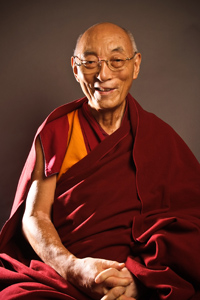
His Eminence Choden Rinpoche was born in eastern Tibet in 1933.  At the age of three, he was recognized as the reincarnation of a previous master, and he took novice ordination vows at seven.  He chose not to flee Tibet after the Chinese takeover, and beginning in 1965, during the cultural revolution, Rinpoche spent 19 years in seclusion, living in a windowless basement room at a cousin’s house in Lhasa.

During the cultural revolution, thousands of monasteries were destroyed and more than a million people, especially lamas, monks, and nuns were imprisoned.  When the Chinese burst into his room unannounced at various times of the day or night, they never found any incriminating evidence of religious activity – no texts or even prayer beads.  He was able to hide in plain sight because they thought him an invalid.

Like other spiritual giants – Gandhi, Nelson Mandela, and Martin Luther King – Choden Rinpoche used his time in what amounted to a cell to deepen his practice.  From memory and imagination, he recited texts and performed rituals he had learned, internalizing Buddhist philosophy.

“From the point of view of spiritual practice, there was great accomplishment in living as I did…If I had gone with the Chinese, I would have received a house, a car and high rank, but I would have had to harm people and cause much suffering…I didn’t have to experience any of this.  These were the advantages of living as I did.”  – from a pamphlet published by Ananda Dharma Center, San Jose, CA, 2012. 

In 1985, Rinpoche was able to leave for India, and he has been teaching around the world since then.  I was a beneficiary this summer and attended a very special series of teachings he gave at his US home, the Ananda Dharma Center in San Jose.  http://anandadharma.org

On July 28, I went to the final event of the summer, a long-life puja for Rinpoche.  It’s a beautiful ceremony in which students, friends, and other lamas essentially ask him to stick around in his present incarnation as long as possible.  Choden Rinpoche is a Tulku, a word for those believed to be able to chose the time and place of their next birth.  For the rest of us, the puja is a way of saying, “Hang on – don’t leave yet!”

Rinpoche has had trouble with his knee.  On Thursday, he flew to Taiwan where some of his students are doctors.  Today he undergoes knee replacement surgery.  Friends and students around the world are sending prayers and good wishes in his direction.  With that in mind, I decided to write that post, knowing even as I did so, that I am really the one it benefits.

Like his friend, the Dalai Lama, Choden Rinpoche’s mind is always fixed on what’s beneficial.  Some of the rest of us (meaning me) have to rely on the inspiration of people like this to bring unruly thoughts back to what really matters.

More lists, bigger lists (of books).

Last time I posted a small list of my favorite English novels.  Now, thanks to Adam, who blogs at Reviews and Ramblings http://blizzerd03.wordpress.com, I can send you to look at lists of 400 of NPR listeners’ favorite books.

Adam spotted this summer’s NPR poll, devoted to teen novels. Sadly I didn’t look at the date the voting closed, so it’s too late to put in your choices. Still, you can look at the 100 finalist titles (selected by a panel from 235 listener nominations). You can check back next week to see the rankings assigned by people who paid attention to the deadlines.  And you can also check out the winners in the categories featured over the past three years:

  • 2011 – Science fiction & fantasy
  • 2010 – “Killer thrillers”
  • 2009 – Beach reads

http://www.npr.org/2012/07/24/157072526/best-ever-teen-novels-vote-for-your-favorites?sc=tw&cc=share

The panel of three who whittled the list down from 235 to 100 for voting said their main criterion was selecting books “that teens themselves have claimed — whether they do, in fact, voluntarily read it.”

Umm – I’m not convinced in every instance, anymore than I think Anna Karenina belongs on the 2009 list of beach reads.  Still, the good folks at NPR have pointed me toward several great novels.  Look through the results of their polls.  You may well find something great to read.

Copyrights and the Olympic Opening Ceremony

Since my July 24 post on copyrights http://wp.me/pYql4-2fA generated significant interest, I want to direct you to another blog post discussing the probable copyright violations of Danny Boyle in his fanciful opening ceremony at the Olympics.

In her article “Reclaiming Mary Poppins and the Characters We Love,” Maggie O’Toole discusses way in which corporate interests have successfully lengthened and strengthened the rules in their own interest.  Maggie says:

“In this bit of public theater, director Danny Boyle reclaimed the British people’s ownership of their children’s literature, the rights to which have long since been sold off to various corporate interests…In doing so, he challenged the idea that these characters, or any characters, can belong to someone.”

Despite my recent musings on copyright, the idea never occurred to me.  Please read the full article.  If you love these characters, you will enjoy it!

http://maggienotmargaret.com/2012/07/28/reclaiming-mary-poppins-and-the-characters-we-love/

The hour of the wolf

Welcome Library, London, CC by NC

On monday morning, I woke around 3:00am with a sense of dread far out of proportion to the rather mundane dream I’d been having.  A thunderstorm rolling by increased the sense of menace at this darkest hour of the night.

The hour of the wolf is the phrase I’ve always used for such moments.  “It’s always darkest right before dawn,” we tell ourselves by daylight.  “It’s always darkest just before it goes pitch black,” says a demotivational poster you can find on despair.com.  That is the hour of the wolf (though despair.com is a funny website).

When I was an undergrad, we used to say, “Wherever two or more are gathered, they’ll start a film society.”  College film societies of the time loved Ingmar Bergman, and I did too, so I knew his 1968, The Hour of the Wolf, but it wasn’t one of my favorites from his surrealistic period.  The best definition I know came from dialog in the “Hour of the Wolf” episode of Babylon 5, in 1996:

“Have you ever heard of the hour of the wolf? … It’s the time between 3:00 and 4:00 in the morning. You can’t sleep, and all you can see is the troubles and the problems and the ways that your life should’ve gone but didn’t. All you can hear is the sound of your own heart.”  – Michael J. Straczynski, writer, Babylonian Productions.

Since I couldn’t sleep, I tried to remember what I knew of the phrase.  A long time ago, I read that it was coined in medieval Paris.  The gates of the city were shut at night, but during the winter, wolves sometimes slipped through at dusk.  At the darkest hour of the night, they would glide through the streets like shadows to prey on the poor unfortunates who were sleeping alone on the streets.  “Hour of the wolf” was the phrase coined by those who encountered the grisly remains in the morning.

Hint:  thinking of wolves chewing corpses doesn’t help you get back to sleep.

I knew by then what was keeping me up.  Some of it had to do with the Colorado shootings.  It’s hard to sleep easy after such an event, but that was not the heart of it.  On sunday, I’d listened to Chris Hedges, a guest on Moyers & Company, in a segment called, “Capitalism’s ‘Sacrifice Zones.'”

Hedges is a journalist who worked for the New York Times until he was “pushed out” for outspoken opposition to the war in Iraq.  The interview is important and very depressing, like much honest reporting these days (when you can find it).  

http://billmoyers.com/episode/full-show-capitalism’s-‘sacrifice-zones’/

It’s hard to know what to do with this kind of unpleasant truth.  One good thing that came out of this post is that I learned the source of the phrase, “live with the questions.”  Therapists, especially Jungians, like to quote it, but it was Rainer Maria Rilke who first penned it.  In 1903, in Letters to a Young Poet, he said:

“…I would like to beg you dear Sir, as well as I can, to have patience with everything unresolved in your heart and to try to love the questions themselves as if they were locked rooms or books written in a very foreign language. Don’t search for the answers, which could not be given to you now, because you would not be able to live them. And the point is to live everything. Live the questions now. Perhaps then, someday far in the future, you will gradually, without even noticing it, live your way into the answer.”

We have met the enemy…

The Colorado shootings will forever cast a pall over the opening day of the latest Batman movie, the kind of action-adventure fantasy many of us were looking forward to as an escape from all the other bad news that fills the papers these days.

I cannot add anything to the expressions of grief and outrage that the people of Colorado have and will make, but I heard one thing this morning that gave me pause.

The governor of Colorado said, “This is the act of a very deranged mind.”  It’s a natural thing to say, and we hear the same words after every similar tragedy.  The Texas Tower.  Oklahoma City.  Columbine.  The first thing we try to do is assure ourself that the crime was the work of a nut or monster.  The last thing we want to hear are comments now emerging from people who knew the suspect and say he seemed “really smart,” and “a nice guy.”  It’s terrifying to think that an “ordinary person” or a neighbor could do something like this.

Thich Nhat Hahn, the Vietnamese Buddhist monk who Martin Luther King nominated for a Nobel Peace Prize, was versed both in Buddhist and western psychology.  His teachings gave me the concept of “store consciousness.”

Thich Nhat Hahn

This is the part of our unconscious psyche where all possible tendencies reside, like seeds, waiting to germinate.  The ones we water with our attention, thought, and action are the ones that grow.  Like all Buddhists, Thich Nhat Hahn believes that we cannot know for sure which seeds we have watered in previous lives, but our proclivities in this life, for good or ill, give a strong hint.

Metaphysics aside, we can recognize the truth of the core concept – the seed tendencies we water are the ones that grow.  The only memorial we can make to the people who died in that theater is to stand beside those like Thich Nhat Hahn, Martin Luther King, and all men and women of goodwill of the present and past.  We can join with them in trying to give the water of attention to qualities like compassion, patience, and non-violence – the seeds we want to grow.

Those who follow this blog know how often I quote Walt Kelley’s comic strip character, Pogo, who said, “We has met the enemy and he is us.”  It doesn’t have to be that way.

Holy Pathology, Batman!

Batman, originally Bat-man or The Batman, first appeared in Detective Comics #27, in May, 1939, the creation of artist Bob Kane and writer Bill Finger. Popular from the start, Batman had his own comic by 1940.

The Caped Crusader joined the screen actor’s guild in the 60’s, with a campy TV show that altered some of my speech patterns forever (Observe the title of this post, Robin).

When the show ended, so did much of Batman’s popularity. In 1969,writer Dennis O’Neil and artist Neal Adams tried to return Batman to his roots as  “grim avenger of the night.”  Beginning with Tim Burton’s 1989 Batman, several big budget movie series have portrayed Bruce Wayne’s alter-ego in a dark and dangerous world – it’s always night in Gotham City.

Batman Begins, 2005

As if this intrepid crime fighter didn’t have enough on his plate, some are raising questions about his mental health.  And when you think about it – what’s with the addiction to danger, the cape, the muscle suit, and probably lifts in the shoes? His car says size matters, but he can’t hang onto a girlfriend. His deepest relationship is with his butler.  He’s certainly stuck in black and white thinking – people are good or bad, nowhere a shade of gray.  Maybe he hasn’t worked through all of his childhood issues. Maybe he should ask his doctor about anti-depressants.  Or viagra.  Join an online dating service and settle down as a hedge-fund manager, like a respectable member of the 1%.

But no, says psychologist, Robin Rosenberg, author of What’s the Matter with Batman?  The boy’s all right.

In a recent NPR interview, Rosenberg, who blogs about superheroes for Psychology Today, said: “Bruce Wayne is a really clever man who has both high intelligence and high EQ, emotional quotient.” http://tinyurl.com/6npy226.

Rosenberg turns the spotlight on us, asking why we assume there is something wrong with Batman.  “People who are truly selfless, who have given so much of themselves, are confusing to most of us. And I think some of us, in cynical moments, say, ‘There must be something the matter with someone who would do that.'”

I’d modify her words to say that nowadays, we think a selfless billionaire is weird.  Nothing new about this sentiment.  In 1939, the year Batman emerged, Woody Guthrie wrote “The Ballad of Pretty Boy Floyd.”

Yes, as through this world I’ve wandered
I’ve seen lots of funny men;
Some will rob you with a six-gun,
And some with a fountain pen.

Change “fountain pen” to “computer” and the statement rings as true as it did 73 years ago.  The biggest difference now, as the new Batman movie, The Dark Knight Rises, comes out this Friday, is that most of us probably find it even harder to believe a super-rich man could be our friend.

In a post on the Psychology Today superhero blog, Robin Rosenberg wrote:  “The stories of superheroes and heroes resonate with us because they tap into some essential truths about human nature, about our yearnings and aspirations, our demons and dilemmas, our fears and our frustrations.”  http://www.psychologytoday.com/blog/the-superheroes.

Superheroes are archetypes.  They’ve been present in our stories for millennia – only the outfits and details change.  Heracles didn’t need to change clothes in a phone booth, because he didn’t work at The Daily Planet.

Heroes and superheroes are a secular expression of something everyone knows when they wake at the hour of the wolf – without a Higher Power, or higher powers, we’re screwed.  There’s nothing accidental about the number of superhero movies so far this year.  And some of them are a lot of fun!

Enjoy this new incarnation of The Caped Crusader!

Bill Moyers on “The Cowardly Lions of Free Speech”

Here is Bill Moyers’ response to the recent Supreme Court decision not to revisit Citizen’s United.  Check out the full clip, which only runs 6 1/2 minutes.

Three things don’t go together: Money. Secrecy. Democracy. And that’s the nub of the matter. This is all a sham for invalidating democracy in the name of democracy. It’s the trick authoritarians always use to hide their real intention — in this case absolute power over our public life and institutions: the privatization of everything. The Supreme Court is pointing the way. Instead of mitigating the worst excesses of both the state and the private sector, the Court has taken sides. Saying to the massed wealth of the one percent: America is yours for the taking, for the buying.
http://billmoyers.com/

There really is nothing to add to something so shameful and tragic.