Of Inflection Points and eBooks

“Inflection point” is an interesting concept.  Originally a term from calculus, it signifies the mathematical point where a curve changes from convex to concave or vice-versa.

When I was at Intel, Andy Grove, the CEO, spoke of inflection points as key moments of transition in the life of a business or industry.  Here is a good definition of that usage from Investopedia:

“An event that results in a significant change in the progress of a company, industry, sector, economy or geopolitical situation. An inflection point can be considered a turning point after which a dramatic change, with either positive or negative results, is expected to result.”   http://www.investopedia.com/terms/i/inflectionpoint.asp#ixzz1kdT0EAcg

I don’t think we can clearly see inflection points until after the fact.  We can sense the importance of an event, but not be sure until we see the results.  Apple’s introduction of the iPod was such an inflection point, but even if Steve Jobs sensed it, the rest of us didn’t how thoroughly the way we listen to music would change.

A sadder inflection point became clear last week when Kodak filed for bankruptcy.  That was the moment, in 1975, when Kodak invented digital photography, but then chose not to purse it.

I spotted something last night that made me even more certain that Amazon’s introduction of the kindle will be seen as such an inflection point.

Last week I wrote about hearing a talk by Mark Coker, founder of Smashwords.  http://wp.me/pYql4-1DD.  Last night I saw that Coker is one of two keynote speakers, and is presenting three workshops, at one of the better writing conferences, the 28th annual San Diego State conference, taking place this weekend.

I attended the SDSU conference in 2007 because I’d met someone who sold her book there.  In 2007, one speaker talked about Print on Demand.  Ebooks were not even mentioned.  This year there are the same number of seminars on traditional publishing as there are on ebook publishing, and this in a conference that draws a lot of agents and editors. http://writersconferences.com/index.htm

I did a rough count of seminar topics, judging their their emphasis as well as I could by the titles:

39 seminars on craft of writing
8 seminars on how become traditionally published
8 seminars on how to e-publish
8 seminars on marketing or other topics
1 seminar on social media

To me, these numbers do not signify an inflection point; they signify an inflection point that has already passed.  Last week I heard an established writer say “the jury on ebooks is still out.”  I don’t think so.  I think the battle is already over.  When new technologies affect traditional media, be it music, photography, or writing, they always carry it toward greater democracy, toward putting ever more powerful tools in everyone’s hands.  This does not appear to be a reversible trend.

We all miss certain artifacts after they’re gone.  Some music lovers swear by the sound of vinyl, and while I don’t miss the darkroom, silver prints could be beautiful, and I love old kodachromes.

I hope we don’t see a day when paper books become collectors items, but nostalgia will not hold back the tide, especially when it’s grounded in both a sense of personal freedom and economic reality.  To paraphrase what a Zen teacher said about change:  we can be okay with it.  Or not be okay with it.  The one thing we cannot do is stop it.
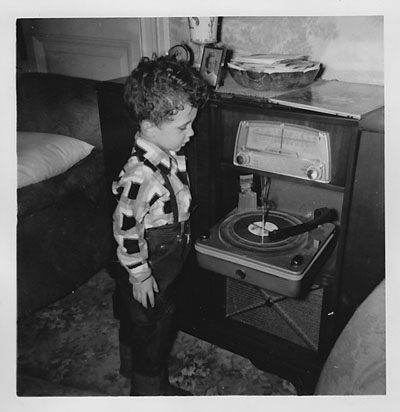
Yep, thats me. How many artifacts of the past can you count?

What Do 20% of Us Have in Common?

Not long ago, I read a Los Angeles Times article saying 20% of Americans suffered from mental illness in 2010.  The article ended with a warning:  “…we need to continue efforts to monitor levels of mental illness in the United States in order to effectively prevent this important public health problem and its negative impact on total health.”  The story did define what was meant by “mental illness.”  Do I have to keep an eye on every fifth guy in the Post Office line?

Not necessarily.

The Times’ source was a January 19 report by SAMSHA, the Substance Abuse and Mental Services Administration, which said 45.9 million Americans suffered from mental illness in 2010.  Their definition of mental illness is, “a diagnosable mental, behavioral, or emotional disorder (excluding developmental and substance use disorders)” in the DSM-IV, the 4th edition of The Diagnostic and Statistical Manual of Mental Disorders (1994).

Here’s how the DSM works: there are numerous schools of psychotherapy that differ in their approach to treating different disorders, but all have agreed to agree on the definitions of those disorders.  One of my psych professors insisted that the DSM says more about our cultural “norms” than about the health of the population.  For instance, in 1987, homosexuality was dropped from the list of disorders.  Prior to 1987, gays and lesbians were “mentally ill.”  After that, they were not.

Anyone who visits a psychotherapist and wants to submit an insurance claim will receive one of these diagnoses, most commonly, “Anxiety,” or “Adjustment Disorder.”  This fits the vast numbers of clients who are able to cope with life, but seek help with problems at work or problems at home or issues of self-actualization.  The SAMSHA report gave no mention of efforts to factor in the seriousness of the diagnosis.  There is no way to know how many of the 45.9 million Americans who are “mentally ill” suffer from anxiety vs. schizophrenia.

To the best of my knowledge, the rise of “insanity” coincided with the Industrial Revolution.  The US Census first noted the incidence of “idiocy/insanity” in 1840.  By 1880, there were seven types of insanity:  mania, melancholia, monomania, paresis, dementia, dipsomania, and epilepsy.

According to my psych professor, the DSM grew out of a research collaboration between the American Psychiatric Association (APA) and the US military between the world wars.  Soldiers in WWI suffered high rates of shell shock.  The military sought screening methods for those who would hold up in combat.  Although the screens later proved not to have the predictive power hoped for, the DSM came from this research.  In other words, our current definition of sanity is based the attributes of a good combat soldier.

Voices were raised in protest, almost from the start, notably by Thomas Szasz in The Myth of Mental Illness (1961) and a 1973 article by David Rosenham, “On Being Sane in Insane Places.”

I am not trying to minimize the suffering of those with mental afflictions that cause them to harm themselves or others.  First, I am questioning a report that excludes all forms of substance abuse from its definition of “mental illness.”  I also question defining “anxiety” as “mental illness,” when anyone who was paying attention in 2010 felt anxious.

I have often been struck, since I studied psychology, that our concept of sanity, modeled on the good soldier, also defines the “productive” member of our consumer culture.  It brings to mind a favorite line from a poem by Theodore Roethke:  What’s madness but nobility of soul at odds with circumstance?:

In a Dark Time

In a dark time, the eye begins to see,
I meet my shadow in the deepening shade;
I hear my echo in the echoing wood–
A lord of nature weeping to a tree,
I live between the heron and the wren,
Beasts of the hill and serpents of the den.

What’s madness but nobility of soul
At odds with circumstance? The day’s on fire!
I know the purity of pure despair,
My shadow pinned against a sweating wall,
That place among the rocks–is it a cave,
Or winding path? The edge is what I have.

A steady storm of correspondences!
A night flowing with birds, a ragged moon,
And in broad day the midnight come again!
A man goes far to find out what he is–
Death of the self in a long, tearless night,
All natural shapes blazing unnatural light.

Dark,dark my light, and darker my desire.
My soul, like some heat-maddened summer fly,
Keeps buzzing at the sill. Which I is I?
A fallen man, I climb out of my fear. 
The mind enters itself, and God the mind,
And one is One, free in the tearing wind.
– Theodore Roethke

Shortwave Memories

When I was twelve, my mother, who claimed she had no luck in contests, won a transistor radio in a raffle and gave it to me. This was a fancy model. With AM, FM, and shortwave bands, a folding antenna, an earphone jack, and a lighted dial, it was perfect for tuning in to exotic locations at night when I was supposed to be sleeping.  Voice of America, BBC, Radio Free Europe, were all within reach.  So was Fresno.  For some reason, I took a shine to a radio evangelist who came on the air every Sunday night at 10:00 from a station in Fresno.

I don’t remember exactly why I liked him.  Perhaps because he was livelier than the minister at the family church – “Can I get a Halleluljah?”  At the same time, he delivered comforting messages.  One night he explained why scripture promised there would not be a nuclear holocaust.  This was a timely message during the Cuban missile crisis.  The guy up the street was digging a fallout shelter in his front yard.  At school we had hydrogen bomb drills (get under your desk and cover your head), but I took it all with calm indulgence.  The worst was not going to happen.  I had it on good authority – the man of God in Fresno guaranteed it.

I spent the next six years deeply engaged with radio.  I got my ham license and was active until I went off to college.  Half a century ago it shrank time and space like the internet does for us now.  I thought of that radio recently when I noticed myself scrolling through international news on my smart phone.  I’ve always loved my gadgets, but I realized the phone lacks the magic of distant stations coming in through the static at night on the glowing radio dial.  It also lacks the assurance I found on that Fresno station on Sunday nights.  Nowadays, most of the people quoting scripture are scary, and for all we can find online, it’s hard to find a convincing voice saying everything will be all right.

Bill Moyers is Back!!!!

On Sunday evening, I was delighted to catch the first episode of the new PBS series, Moyers & Company.  You can view it, and a lot more, on the new website, http://billmoyers.com/.

Moyers interviewed political scientists, Jacob Hacker and Paul Pierson, authors of, Winner-Take-All Politics:  How Washington Made the Rich Richer–and Turned Its Back on the Middle Class.

The conversation startled me, as Hacker and Pierson said they were startled during their research.  They found that the current income gap in this country – greater than in some third world countries like Egypt – was not an inevitable consequence of free market dynamics or trends like globalization.  It was politically engineered over the last 30 years.  Hacker and Pierson argue that the current American leadership more closely resembles a third world oligarchy than the democracy our parents knew.

“Who’s the culprit? “American politics did it– far more than we would have believed when we started this research,” Hacker explains. “What government has done and not done, and the politics that produced it, is really at the heart of the rise of an economy that has showered huge riches on the very, very, very well off.”

Bill considers their book the best he’s seen detailing “how politicians rewrote the rules to create a winner-take-all economy that favors the 1% over everyone else, putting our once and future middle class in peril.” – (from billmoyers.com)

Jacob Hacker and Paul Pierson on Moyers & Company

Winner Take All Politics is going into my already overcrowded book-queue, since it appears to be of critical importance.  The first step in correcting a problem is gaining an accurate understanding of its nature.  The fact that the assault on the middle class was created and not fated is good news, according to Hacker and Pierson.  Something done can be undone.  Along with Moyers, they agree that our current national sense of outrage is a positive sign.

Moyers’ work and website are important to bring up today.  On the website you can find an April, 2010 interview with two African American lawyers, discussing what Dr. King would have made of America today. Lawyer Bryan Stevenson said:

“I think in America, the opposite of poverty is justice. I think there are structures and systems that have created poverty, and have made that poverty so permanent, that until we think in a more just way about how to deal with poverty in this country, we’re never gonna make the progress that Dr. King envisioned.”  http://billmoyers.com/content/bryan-stevenson-and-michelle-alexander/

These are important things to consider, especially today.

Of Football and Family

I’m anything but a diehard sports fan, but I’ve noticed over the years that certain sporting events become unforgettable when they mark key moments in my life or our collective life.  Do you remember how moving the Super Bowl was in Feb., 2002?  Our nation was still hurting after the 9/11 attacks, but here was proof that we were not going to let anyone stop us from celebrating life.

I thought of my father yesterday.  Football was one of the ways he and I connected.  Thirty years ago, he and I talked on the phone with growing excitement as the season progressed, and this new quarterback, with the unusual name of Joe Montana, led the formerly hapless 49ers to their first ever Super Bowl victory.  The best game of the season, however, was the Division Championship game. Montana won it with an 89 yard drive after the two minute warning, and a justifiably famous touchdown pass to Dwight Clark with less than a minute to play.  This wasn’t just a persona moment; it set the entire region on fire after a difficult decade.

Montana to Clark, with 59 seconds in the game, Jan, 1982

My father moved up here to be with us in 1999, after he was diagnosed with a wasting illness. Mary and I spent most of our Sunday afternoons with him during football seasons. First lunch and then the afternoon game. My father died in 2007, and we haven’t watched much football since. Until this season. Until our “formerly hapless” 49ers took off so dramatically you couldn’t help but notice and want to follow along.

Yesterday it happened again, 30 years later, almost to the day. The niners won the Division Championship game with another spectacular drive and touchdown pass, this one with only seconds left. Another on-your-feet, unforgettable moment. Hopefully, something to rouse all of northern California after a difficult decade. My father would have loved this game.

Smith to Davis, with 9 seconds in the game, Jan, 2012

I don’t go in for sentiments like, “Maybe he was looking down from heaven.” Hopefully those in the afterlife have better things to do than peer over our poor shoulders. But I do believe – and I’ve heard various spiritual teachers hint at this – that the ancestors and those who are gone can pick up our prayers and love and kind thoughts. That’s a pretty good deal. And if football is the occasion, there is nothing wrong with that.

As the poet Lu Yu put it (quoted in The Tao of Pooh):

The clouds above us join and separate,
The breeze in the courtyard leaves and returns.
Life is like that, so why not relax?
Who can stop us from celebrating?

The News on Page 13

Just some quick notes on a story I have been following, in large part because it is so important and yet so downplayed in the US media. By coincidence (I assume), the latest saber-rattling news was back on page 13 of the Friday the 13th edition of the Sacramento Bee.  The front page headline story involved the closing of a local shopping center.

US carrier in the straits

Thanks to the internet, and especially British news sources, we learn that yesterday, Iranians accused the US of sending one of its ships into the 10 mile “maneuver zone” where the Iranian navy is conducting war games.  In response, Iran threatened to close the straits.  The Obama administration said this would be a “red line act,” that would provoke a military response.

On Wednesday, a top Iranian nuclear scientist died in a bomb blast after a passing motorcyclist attached a bomb to his vehicle.  He was the fourth top scientist to be targeted in the past two years according to a Jan. 12, editorial in the Los Angeles Times, which said, “That’s the kind of clean, covert assassination method favored by Western intelligence agencies.”  Although Secretary of State Clinton denied US involvement, the Iranians don’t believe her, and the Times was skeptical:

“[Clinton] went on to deliver a lecture about the need for Iran to shut down its nuclear program, which we agree with. But we also think the bombing merited something more – a strong statement that the United States decries political assassinations. The U.S. is already on shaky legal and ethical grounds with its own program of targeted drone assassinations of suspected terrorists. But at least we’re at war with al-Qaida. State-sponsored extrajudicial killing is a serious violation of international law, and car-bomb assassination is a tactic little different from the methods used by terrorists. It would be nice to hear Clinton, or President Obama, emphasize such principles.”

The Times editorial went on to say economic sanctions do not appear to be working, but that may depend on who you ask.    I caught an NPR interview with a correspondent in Iran who said, yes, they are working, just not perhaps as we want them to.  He said he went to the store to buy an Oral B toothbrush and there wasn’t even toothpaste available.  The citizenry doesn’t really understand the nuclear issue, but it does blame the US for mounting hardships.  Meanwhile, I’m guessing Iranian leaders are not suffering a lack of toothpaste.

Iranian warship test fires a missile in the Straits, Jan 1

The LA Times noted, you can’t assassinate collective knowledge.  Sooner or later, Iran will have nukes.  Another middle-east war will not close Pandora’s Box.  Yet I still find it hard to believe that this is all about nukes.  I’m thinking of Col. Andrew Bacevich’s 2008 predictions.  http://wp.me/pYql4-1AT.  Until we take the quest for energy independence seriously, armed conflict over oil will be our future.

In 2011, Wikipedia estimated that the price of Tomahawk cruise missile was $830,000.  How many scholarships would that buy for future energy scientists?  How many studies of alternative fuels would that fund?  How many lives and dollars are we prepared to spend trying to push back the river?

Are You Now, or Have You Ever Been Normal?

When I was a kid, I believed that my family was the standard by which all families should be judged.  In the ’80’s, however, when family psychology met popular culture and some of us went questing for our inner child, the news was not so good.  We learned that 96% of families were dysfunctional; that crazy had become the new normal; that 24 out of 25 of us had grown up with the Griswalds and not the Cleavers!

Who's your daddy?

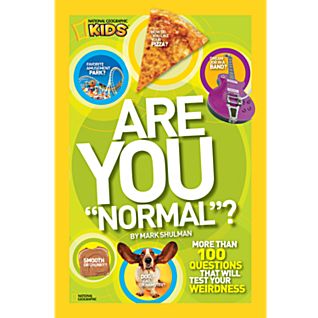
Just when we thought we had that settled, when I thought my cred as a free thinker and iconoclast was safe, a new book threatens all that: Are You Normal?, by Mark Shulman.  According to a Washington Post article, Shulman’s book has 176 pages of questions for kids, scored against other answers, which allows you rank yourself on a “weird-o-meter.”

With some trepidation, I answered the sample questions in the article, going for the perspective I would have had in grade school.  Feel free to ride along – if you dare:

1) Do you have a brother or sister:  

Yep – one sister, making me one of the 87.5% who have a sibling.  So right of the bat, it’s not looking good for the bohemian persona.

2) Have you ever faked being sick to get out of school?

Well duh, of course I did!  Can we say, “World Series?”  That boosted my weirdness quotient, since only 25% answer yes to this one.

3)  Where do you bite the chocolate bunny first?

The ears of course, along with “more than half”  of those polled.  Interestingly, 1 in 25 go for the bum…now that is strange!

4)  Smooth or Chunky peanut butter?

I started to say “chunky,” but that’s revisionist history.  As a kid, it had to be smooth, lest it tear my Wonder Bread.  “Slightly more than half,” share that predilection.

5) TV in your bedroom?

Not then, not now, though it wasn’t nearly as common when I was a kid as it is now (56% answer “yes”).  My parents had a portable with rabbit-ears, but those were the days when, if the TV “went on the fritz,” you pulled the tubes and carried them down to the tube tester at the local grocery store.

6)  Did you ever bite your fingernails?

Rarely but on certain stressful occasions, yes.  The answer to that was a 50/50 split.

7)  Did you ever bite your toenails?

Ewww!  And that reaction is not unique.  A full 90% say they “could not or would not” do such a thing, so most of us are plain vanilla on that score.

The Washington Post review concludes by saying “the real point of the book is to show that nobody is perfectly normal or perfectly weird.  We’re all unique, and that’s part of what makes us special.”  Not such a bad conclusion to reach.

However, if “special” is now normal,  but normal normal is weird…I guess I better not go down that road, just quit while I’m ahead.