Happy Fourth of July

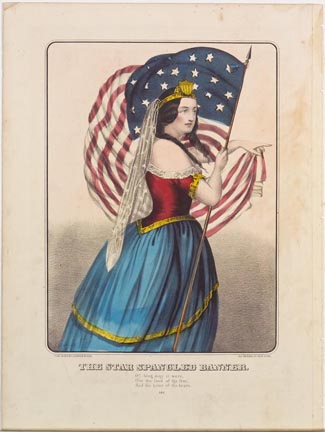
The Star Spangled Banner, Currier and Ives, undated.

In a recent NPR/PBS/Marist poll, only 77% of Americans correctly identified Great Britain as the country we declared independence from on July 4. Fewer (70%) knew that we did so in 1776.

Aside from what that says about our “informed electorate,” it’s a shame because history, in all it’s messy complexity, becomes more fascinating to me as time goes on.

I was not that interested in colonial American history until I came upon Benson Bobrick’s superb history of the revolution, Angel In the Whirlwind, 2011. In contrast to the present, Bobrick notes that colonial citizenry was generally well informed on matters of politics.

Lest we grow nostalgic for such “good old days,” when (white) men were men, and nobody else had any rights, we can look at another fascinating history, Drinking in America: Our Secret History, by Susan Cheever. We learn that the “shot heard round the world” in 1775 may have been fired by a farmer who was three sheets to the wind. The “minute men” had gathered at 5:30 that morning, at the tavern on Concord green, and by the time the British arrived more than four hours later, they had downed a fair amount of ale.

In a related tidbit, Bobrick says the original duty of congressional pages was to keep the beer steins of our legislators filled. Since reading that, I’ve wondered how many brewskis John Hancock had downed when he famously said, “I’ll sign my name so large that King George will be able to read it without his spectacles.”

This Fourth of July finds most us, I suspect, without the stomach for the usual flag waving piety. Piety is a siren song that traps us into believing our own PR and turning away from difficult questions, and nothing else will serve in times like these. For individuals, tribes, political parties, and nations, there are times when things fall apart. Such crossroad periods end with movement, either toward renewal or destruction, and a key determining factor seems to be a willingness to search for and accept the truth.

This is a time to ponder the words of truth-tellers. I’ve been thinking about this week’s buzzword, “civility,” and realizing that it’s much more than being “nice” or “polite” or “politically correct.” It’s nothing less than a pre-requisite for hearing the truth.

Buried in the paper on September 12, 2001, was a statement by Zen master, Thich Nhat Hahn, a champion of peace and the truth in the world for more than five decades. In the wake of the terrorist attacks, he said, “We will not have peace with the people who did this until we are willing to sit down and ask them why they hate us so much.” After nearly 16 years of constant warfare, with no victory or exit strategy in sight, it is worth remembering his words. As none of our leaders show an inclination to do so, guess what the future holds in store?

Seeds for the divisions that are tearing our nation apart were planted even before our current middle eastern wars, though I think they’re related. Another truth teller, Jimmy Carter told us in 1979 where American Greatness lies and what can destroy it:

“In a nation that was proud of hard work, strong families, close-knit communities and our faith in God…too many of us now tend to worship self-indulgence and consumption.  Human identity is no longer defined by what one does, but by what one owns.  But we’ve…learned that piling up material goods cannot fill the emptiness of lives which have no confidence or purpose.”

Unless we as individuals and as a nation, including our elected leaders and their moneyed overlords, are willing to sit down and really listen to each other, things will get more and more dysfunctional. It feels like a worldwide transition is underway, and an unsustainable way of life is ending. Historically, such endings and new beginnings occur at times of disaster, war, pestilence. Are such hard landings inevitable?

I like to think not. I like to think that if enough of our leaders had the wisdom and genuine faith of Jimmy Carter and Thich Nhat Hahn, we as people of America and earth, could steer toward a new course, healthier for the the planet and all its creatures.

I’m not optimistic. With our opportunistic leaders, in a nation where a quarter of us don’t know who we fought in our revolution, I’m afraid it will take more disasters to chasten us enough for any kind of concerted, positive action.

So Happy Fourth of July!  Enjoy the day and your family. Have another hotdog or slice of apple pie. I fear that before long we may look back on these as the “good old days,” and remember how good we had it on July 4, 2017…

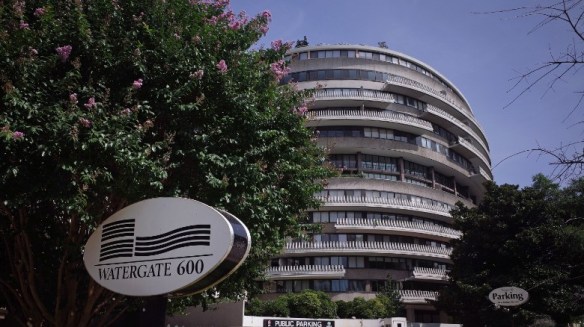
JUNE 17, 1972- 5IVE MEN ARRESTED FOR BREAKING AND ENTERING DEMOCRATIC NATIONAL COMMITTEE HEADQUARTERS AT WATERGATE COMPLEX

As they say, those who forget the past…

hanspostcard's avatarslicethelife

150501114442-watergate-complex-exlarge-169

On this day in 1972 what turned into a two year and two month long ‘national nightmare’ began when five men were arrested for breaking and entering the Democratic National Headquarters at the Watergate Complex in Washington, D.C.

Shortly after midnight on June 17th a security guard at the Watergate, Frank Willis noticed there was tape covering the latches on some of the doors in the complex leading from the underground parking garage to some several offices. Willis removed the tape and gave it no more thought until an hour later when he returned and noticed someone had re-taped those locks again. He then called the police. Five men – Virgilio Gonzalez, Bernard Baker, James McCord, Frank Sturgis and Eugenio Martinez were found inside the DNC office and arrested and charged with attempted burglary and attempted interception of telephone and other communications.

At the time it was not a big…

View original post 51 more words

Truth will out, murder will out – The Two Sisters

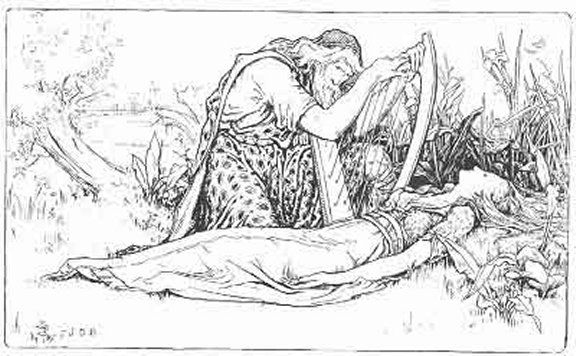
“Binnoire,” by John D. Batten, for “English Fairy Tales,” 1898

Our theme, over the next few posts, is folklore and ballads that feature the theme of, “truth will out,”  We begin with a popular Childe Ballad, “The Two Sisters,” that has been covered, under various names, by Bob Dylan, Jerry Garcia, Pentangle, Tom Waits, Loreena McKinnett, Clannad, Steeleye Span, Gillian Welch, and others.

“The Twa Sisters,” Childe ballad #10, was published as a broadside in Northumbria in 1656. A girl is drowned by her sister over love of the same man. Finding her body, a minstrel makes a harp of her breastbone and golden hair that will only play the tale of the murder. The theme is echoed in Swedish, Norwegian, and Icelandic ballads. There are 21 variants in the British isles, with names that include, “The Miller and the King’s Daughter,” “Binnoire,” “The Cruel Sister,” “The Wind and Rain,” “The Dreadful Wind and Rain,” and “The Bonny Swans.” (1)

Here’s my favorite version, from Jerry Garcia and Dave Grisman at the Warfield Theater in 1992:

From: The Twa Sisters,” Childe Ballads #10C

10C.22 He made a harp of her breast-bone,
Whose sounds would melt a heart of stone.
10C.23 The strings he framed of her yellow hair,
Whose notes made sad the listening ear.
10C.24 He brought it to her father’s hall,
And there was the court assembled all.
10C.25 He laid this harp upon a stone,
And straight it began to play alone.
10C.26 ‘O yonder sits my father, the king,
And yonder sits my mother, the queen.
10C.27 ‘And yonder stands my brother Hugh,
And by him my William, sweet and true.’
10C.28 But the last tune that the harp playd then,
Was ‘Woe to my sister, false Helen!

*****

In the east, we have the concept of karma. In the west we have a comforting theme in folklore, that behind even the most dire events and appearances, there’s a harmony, a natural order that tries to assert itself, the way our bodies, if conditions are right, will push out infection.

Now that our body politic is infected by an American president who would destroy the basic concept of Truth and Fact for his own ends, I find it refreshing to dwell on such tales. Weeds break through concrete. In the end, truth will break through lies and corruption.

Notes on Truth, June edition

The Washington Post reports that Special Counsel, Robert Mueller, has assembled a team with expertise in fields ranging from constitutional law to money laundering. This suggests that the just-announced criminal probe of the president for obstruction of justice may be only the beginning.

This is clearly bad news for the president, a congenital liar, and the GOP, which has risen to power by enabling him. Too bad their mothers never told them what mine did – that lies eventually get found out. My mother was not into philosophical subtleties with the truth. When she asked if I’d pulled the head off my sisters doll, I couldn’t duck the question by citing “alternate facts.”

It’s still a tossup whether our Liar in Chief and his minions will manage their corporatist takeover of the government, or whether our constitutional protections will bring them down first.

This effort means much more than simply removing a malignant leader from the helm of our once-great nation. It will be even harder to restore a respect for Truth in the public sphere. Politicians have always lied and voters have always know it it, but in a culture which values truth more than greed, liars are punished when discovered.

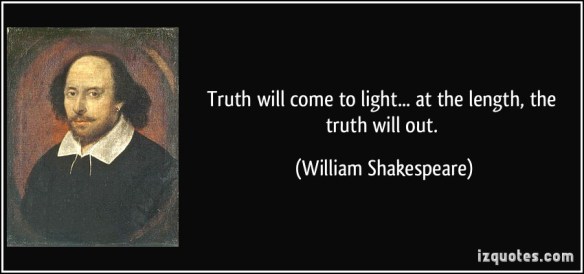
The natural world doesn’t care about our opinions. “Truth will out,” as Shakespeare said. Melting glaciers, rising seas, extreme storms, fires, and droughts don’t listen to climate change deniers.

This idea – that natural law wins in the end – brought to mind songs and stories from many traditions that echo that theme. I have only a vague recollection of most of them, but I am motivated to go on a search for two key reasons:

First, the old stories and songs reflect our collective experience, shaped by the wisdom of generations. They are comforting, like stones worn smooth, and it’s good to remind ourselves of what our ancestors knew for generations – lying doesn’t work in the end.

My second reason for digging into these stories is that it is likely a healthier pastime than checking social media morning and night to see what fresh outrage the Republican party has done.

I already have in mind a first example, one of my favorite old ballads that Garrison Keeler once called, one of the gloomiest songs ever written. That makes it just right for one of the darkest times our nation has ever endured.

Notes from 2017 – A Funeral in India

Friends, family, and Indian government ministers at funeral rites for Srinivas Kuchibhotla in Hyderabad, India

Friends, family, and Indian government ministers at funeral rites for Srinivas Kuchibhotla in Hyderabad, India

Yesterday, hundreds of mourners held funeral rites for Srinivas Kuchibhotla, a 32 year old Indian software engineer who had called the United States home for ten years. A week ago, a man with with a history of alchohol problems yelled, “Get out of my country,” then shot Kuchibhotla as he watched a basketball game in a crowded bar in Kansas City. The shooter then wounded Kuchibhotla’s friend and a bystander who tried to disarm him. He reportedly told the bartender, “I killed two Arabs.”

In our recent presidential election, we didn’t just vote for candidates, we voted for their stories – both the stories they told and the stories told about them. The winning story played on our fears: the world is a dangerous place. Murderers, rapists, and terrorists are coming to get us. Other countries are “stealing our jobs.” We must close our borders, expel foreigners, hunker down, look after number one, and trust “a strong man.”

Stories can kill. People kill each other and go to war over stories. The narrative of hate that infected this country during last years election continues to grow and appears to have been a factor the Kansas City shooting.

The shooter didn’t just rob a family of their son. He didn’t just arouse the wrath of one of our key allies against us. He helped sink our nation’s prospects in the new century. He hammered a big nail into America’s rapidly fading greatness, both humanitarian and economic.

More than thirty years ago, in the right place at the right time, I joined Intel just before the tech boom really took off. The company, and its peers were oceans of diversity. The “best and brightest” from all over the world came to study at our universities and then go to work for the companies that sparked the revolution that changed our world. Indian engineers were probably the largest contingent at Intel and the other tech companies.

No longer. Srinivas’ brother also lives in American, but his mother said, “I will not allow him to go back. I don’t want to lose another son,” His father told the nation not to let their children come to this country. I wouldn’t if I was an Indian parent – would you? The president’s smooth sentence, read from a teleprompter last night, after a week of silence, will not convince a nation in morning that all is well in America. Indian politicians at the funeral held signs reading “Down with Trump,” and “Down with Racism.” The real message has been received.

Creativity is fueled by divergent viewpoints – it’s a heterogeneous soup from which marvelous things appear when the circumstances are right. The right circumstances are rapidly disappearing from an America that disavows science and cowers in fear of strangers.

The next big thing – clean energy, bio-technology, revolutions in food production, cures for epidemic diseases won’t happen here behind our walls, both visible and invisible. History tells us the fall of empires isn’t pretty, and they do not rise again.

Notes from 2017 – Time to save Big Bird again!

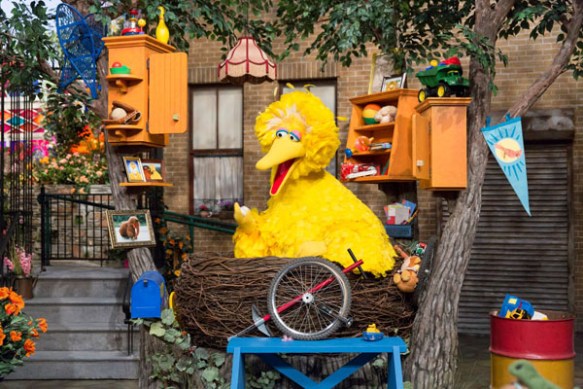
46-bb-nest

Last week, the New York Times reported on administration plans to cut popular domestic programs, including funding for the Corporation for Public Broadcasting. The move would save $500 million a year, about 0.016% of the federal budget.

Said Heritage Foundation economist and presidential advisor, Stephen Moore, “I think it’s an important endeavor to try to get rid of things that are unnecessary.” 

Here are some of the things Mr. Moore considers unnecessary:

Sesame Street
Downton Abbey
Ken Burns “Civil War”
Ken Burns “Jazz”
Sherlock Holmes (several versions)
Poirot
Cadfael
The Midsomer Murders
Ken Burns “Baseball”
Shakespeare plays (many)
Victoria
The PBS Newshour
Nova
Masterpiece Theater
The Antiques Roadshow

These are just a few of my favorite programs, past and present. Add yours to the list

Politicos periodically try to defund PBS. Remember the rumor that one of the Teletubbies was gay?  But I think the real reason is apparent in this dialog from The Power of Myth series, one of the most popular television programs of all time. The conversations between mythologist, Joseph Campbell and Bill Moyer’s, which first aired in 1988, are as relevant as ever today:

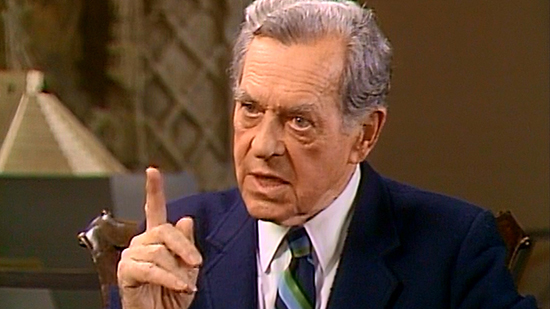
Joseph Campbell on "The Power of Myth" series

Joseph Campbell on “The Power of Myth” series

BILL MOYERS: Would the hero with a thousand faces help us to answer that question, about how to change the system so that we are not serving it?

JOSEPH CAMPBELL: I don’t think it would help you to change the system, but it would help you to live in the system as a human being.

BILL MOYERS: By doing what?

JOSEPH CAMPBELL: Well, like Luke Skywalker, not going over, but resisting its impersonal claims.

BILL MOYERS: But I can hear someone out there in the audience saying, “Well, that’s all well and good for the imagination of a George Lucas or for the scholarship of a Joseph Campbell, but that isn’t what happens in my life.”

JOSEPH CAMPBELL: You bet it does. If the person doesn’t listen to the demands of his own spiritual and heart life, and insists on a certain program, you’re going to have a schizophrenic crack-up. The person has put himself off-center; he has aligned himself with a programmatic life, and it’s not the one the body’s interested in at all. And the world’s full of people who have stopped listening to themselves. In my own life, I’ve had many opportunities to commit myself to a system and to go with it, and to obey its requirements. My life has been that of a maverick; I would not submit.

BILL MOYERS: You really believe that the creative spirit ranges on its own out there, beyond the boundaries?

JOSEPH CAMPBELL: Yes, I do.

By now it should be obvious – this year’s crop of would-be overlords, like all of their kind, want “a world…full of people who have stopped listening to themselves.” It’s up to ALL of us to deny them the pleasure!

We know the drill by now…when this budget item comes up, call and write elected representatives. Make #SaveBigBird go viral on twitter. It worked last time an administration tried to evict Big Bird, and it will work again!

Ken Burns, Downton Abbey, Sesame Street, and Joseph Campbell cut across party lines. They invite all of us to listen deeply to ourselves. They remind us not to let others drown out the still small voice of our souls.

Notes from 2017 – The Day of the Dove

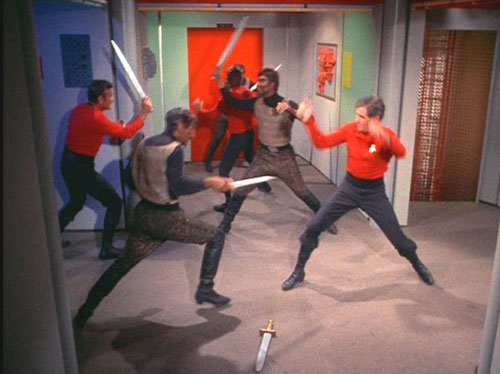
The Day of the Dove, Star Trek, season 3, episode 7

The Day of the Dove, Star Trek, season 3, episode 7

A 1968 Star Trek episode, “The Day of the Dove,” is an apt metaphor for one of the perils confronting our nation 22 days into the new administration. The episode aired in November, 1968.

An alien entity traps Klingons and the Federation crew aboard the Enterprise, and incites them to anger and violence. It isolates individuals in different parts of the ship. It implants false memories of past harms to feed the anger. It materializes weapons as tempers build.

After recognizing the danger, Kirk and Spock convince the Klingon commander and their respective crews to lay down their weapons. They laugh, joke, and generally act like they’re having fun. The entity fades and disappears.

As David Brooks observed Friday night on The PBS Newshour, the new administration had ample opportunity to move toward “bringing the nation together,” the stated goal of every other victorious president I can remember. Instead they go out of their way to foment discord

Why? Continue reading

Notes from 2017 – The dreams of our ancestors

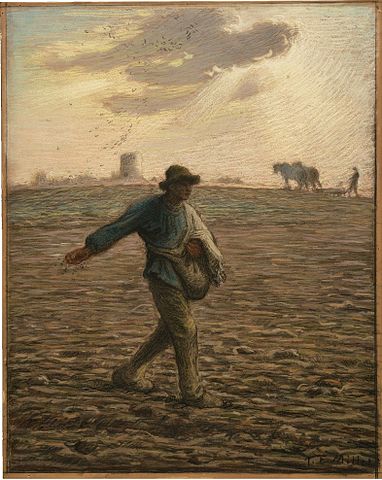
"The Sower" by Jean-Francois Millet, 1866-67, Public Domain

“The Sower” by Jean-Francois Millet, 1866-67, Public Domain

My paternal great great grandfather Gustav, a farmer, was born in the Alsace-Lorraine, a region on the French/German border that had been fought over since the time of Louis XIV. As a young man, grandfather Gustav, his two brothers, and their families emigrated to America in 1870 to avoid conscription into the armies of Napolean III during the Franco-Prussian war.

As one historian noted, the ancestors of most Americans of European descent came here as paupers, petty criminals, war refugees, draft dodgers, or religious fanatics. I certainly come from such stock. I’m alive today, in part because 150 years ago, the US was not afraid to admit refugees from conflict zones. As Bill Murray put it in Stripes, “We’re Americans! That means we’re mutts – the most lovable kind of dog there is!” Mixed breeds are often the healthiest too.

A century later, our open borders policy helped spark the technology-driven economic boom of the late 20th century. Andy Grove, one of the founders of Intel, was a Hungarian Jewish refugee who survived the Nazis and then the Russian takeover before before coming to America in 1960. Steve Jobs was the son of a Syrian refugee. If you’re reading this post on a laptop or smart phone, you can thank these two pioneers, as well as the space race in the 60’s, which thrived upon a universal respect for science and affordable education which drew the world’s best and brightest to our shores. Microelectronics and the connected world were among the results.
Continue reading