Disruptive Technologies and the End of Borders.

In the electronics industry, one of our truisms was that change is the only constant.  We also talked and thought a lot about “disruptive technologies.”  The term was coined by Clayton Christensen in a 1995 article and elaborated in his 1997 book, The Innovator’s Dilemma.  Even well managed firms (and Borders does not seem to have been one of these), can be blindsided by failing to recognize “the next big thing.”  This is because its first manifestations tend to be clunky and crude.

The makers of fine coaches were probably not too worried when the first loud, dirty, and expensive horseless carriages appeared.  The empty factories and smokestacks in Rochester, NY are mute witnesses to Kodak’s failure to recognize the threat that digital photography posed to their chemical business.  Tower Books, which I loved, failed to develop an online presence, and Borders, among other things, was late to the eReader party.

There is no good news in this for anyone, least of all the 11,000 employees who are out of a job.  Or everyone who found wonderful things while browsing the stacks.  Even the idea that disappearing big-box bookstores will give indies a second chance seems unlikely.  One writer interviewed on NPR, whose books are carried by Borders, suggested that future bookstores may resemble what you find in airports:  “cookbooks, vampire novels, and celebrity tell-alls.”  http://www.npr.org/2011/07/19/138499967/mich-book-chain-borders-closing-after-40-years

I remember a college town where a wonderful independent bookstore closed soon after a Borders opened. Now it has come full circle and both are gone.  All I can think of are these words of the late George Harrison: All things must pass.

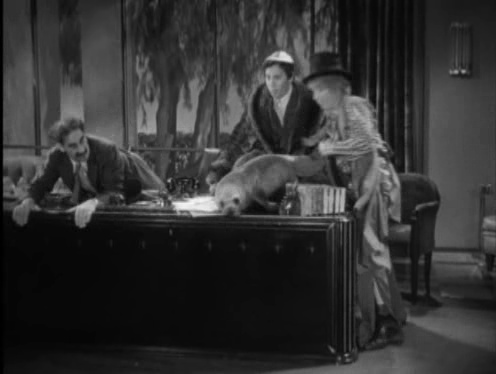
The Government and the Marx Brothers

Where's the Seal?

Back in college, one of my professors gave me an idea I’ve never forgotten.  He spoke of myths that shape and inspire our national consciousness, and how they always relate to a past that is not only gone but may not even have happened.  It must have been back in the 70’s, because he referenced the gun-in-the-rack, survivalist twist on the rugged individualism that Bonanza brought into our living rooms once a week.

The Cartwright boys get the job done

I’ve been thinking of myths of politics lately for one simple reason.  In following the current debate in Washington on the debt ceiling, I’ve come to a conclusion I have never reached before, through good times or bad – until now.  Quite simply, I think we are fucked.

Perhaps not over this particular crisis, for I don’t think any politician who wants to get re-elected – all of them, in other words – wants to get stuck with the blame for a national default.  But I think this “debate” reveals how utterly disfunctional our system has become.  Handwringing over the gummint has probably always been a national pastime – I finally believe it is justified.  Still, I prefer laughter and even creative thinking to handwringing, so I have been mulling over what myths I believed about about our leaders in the past, and what might be a better fit now.

Back in the days when my favorite TV show was “Leave it to Beaver,” I watched  Mr. Smith Goes to Washington with my parents: a rugged individualist from Montana takes on the system, and proves that right and integrity still can prevail.

Jimmie Stewart fights the good fight

Soon after I saw Mr. Smith, for a few brief years, we had Kennedy’s Camelot:  “Ask not what your country can do for you; ask what you can do for your country.”   Fast forward six years and there was Kent State and with Crosby, Stills, and Nash singing, “Soldiers are gunning us down.”  It’s been a roller coaster ride since then with ups and downs, times of malaise and times of letting the good times roll, but all along, at least for me, there was the faith that we can make things better.  Our system may be flawed but it works.  There was always someone to believe in, someone like Senator Robert Byrd, a real-life Jimmie Stewart who carried a copy of the Constitution in his pocket.

Sen. Robert Byrd, one of my heroes

Senator Byrd is gone now, and so is my faith that we can right ourselves in time to avoid driving off a cliff.  What kind of myth fits that?  I’ve been mulling it over for several weeks, and it came to me yesterday, thanks to Turner Classic Movies.  They aired my favorite Marx Brothers film, Horse Feathers, and there it was:  my latest take on the current state of our government:

Do you think there’s a kinder way to depict our current crop of elected “servants?”  If so, please let me know!

Kalachakra For World Peace: In Washington, DC and in Sacramento

Did you know that the Dalai Lama is currently engaged in an 11 day ceremony in Washington DC, called  “The Kalachakra for World Peace?” Did you know that a Sacramento organization, the Lion’s Roar Dharma Center is giving a parallel ceremony from July 23, to July 30?  Please read on for the details.

Kalachakra Sand Mandala

Kalachakra, meaning Wheel of Time, is philosophy and set of practices that “revolve around the concept of cycles and time from the cycles of the planets, to the cycles of human breathing.  It teaches the practice of working with the most subtle energies within one’s body on the path to enlightenment.”  Kalachakra also refers to a Tibetan Yidam or meditational deity, who represents a Buddha.  http://en.wikipedia.org/wiki/Kalachakra

Yidam practice is complex and widely misunderstood, but here is a quick analogy: a kid who pretends to be Luke or Leah or Yoda is doing something similar – invoking a figure who represents and inspires bravery and wisdom.  Perhaps the child experiences an inflow of those qualities – except it is not really an inflow because it is already there, in seed form, inside all of us.  Imagination can awaken these latent potentials in a child and in a practitioner of Tibetan Buddhism.

I used to pretend to be Davy Crockett for the same reason.  There was never any real confusion, although my mother looked at me strangely the day I asked her to pick up some bear meat the next time she went shopping – but I digress.

Kalachakra is one of the most advanced Tibetan practices, but because of his perception of the urgent need for non-violence in the world, the Dalai Lama opened this series of teachings to anyone who was interested.  A Tibetan Sangha in Sacramento, the Lion’s Roar Dharma Center, is offering a similar series of classes, beginning with an introductory lecture, July 23, from 7:00-9:00pm, followed by classes and empowerments from July 24-July 30. http://events.r20.constantcontact.com/register/event?llr=rnxs8gcab&oeidk=a07e3puot1u6e5e5f26

Finally, here is a description of the ceremony by , a Tibetan nun who has been working in Washington since May, 2010 to prepare for the Dalai Lama’s performance of this ritual, which is now in progress.

http://www.npr.org/2011/07/14/137848121/in-washington-a-ritual-for-world-peace?ft=1&f=1003

Harry Potter Fan Fiction

Harry, Ron, and Hermione in The Sorcerer's Stone, 2001

Fan fiction did not begin with Harry Potter or the internet.  According to Lev Grossman’s article, “The Boy Who Lived Forever,” in the July 18, issue of Time, xeroxed fanzines appeared after the premier of “The Man from U.N.C.L.E.” in 1964, and really took off with “Star Trek.”

In the broader sense, telling original stories with borrowed settings and characters is nothing new at all.  Homer did not create the Trojan War, Achilles, or Odysseus.  Shakespeare did not make up either King Lear or Henry V.  But with the internet and Harry Potter, fan fiction has exploded.  There are more than 2 million pieces on fanfiction.net and more than a quarter of these are based on Potter – everything from short stories to full length novels.

The final movie will not be the end of original Potter creations

Grossman explodes most of the stereotypes of those who write and read these tales.  One 38 year old writer and actress says it’s like character improvisation.  A best selling fantasy writer whose novels have been optioned by Peter Jackson says, “Fanfic writing isn’t work, it’s joyful play.”  This raises the key question of why writer’s of fiction write.  Joyful play, a platform, and an appreciative audience are there – and it’s not like many creators of “original” stories get to leave their day-jobs.

Well known authors fall on both sides of the unanswered copyright issue.  J.K. Rowling and Stephanie Meyer encourage new fiction based on their characters and worlds.  Orson Scott Card, Anne Rice, and George R.R. Marin, author of A Game of Thrones do not, and threaten lawsuits.  It may or may not be coincidence that the authors Lev Grossman names as supporting fanfic are more recent and write for a younger audience than those who are in opposition and write for adults.  So far, all cease and desist requests have been honored, so there are no legal precedents in the world of fiction, though court cases involving music have been liberal in their interpretation of what constitutes “fair use.”

This begs the interesting question of who a character or world belongs to.  Groosman says that until recently:

Writers weren’t the originators of the stories they told; they were just the temporary curators of them.  Real creation was something the gods did…Today the way we think of creativity is dominated by Romantic notions of individual genius and originality and late-capitalist concepts of intellectual property, under which artists are businesspeople whose creations are commodities they have for sale.

Personally, I have always loved the poet’s invocation at the start of The Odyssey:  Sing in me, muse, and through me tell the story… 

In my experience, the “I” does not invent worlds or characters.  Whether you call it the muse, the gods, or the collective unconscious, fictional worlds and imaginal people come from somewhere else.  With a bit of luck and humility, the “I” may get to witness what happens, and may even get adept at finding new rabbit holes.  To me, the idea of “owning” a “product” of imagination smacks of hubris.

There is no real data on whether fanfic hurts an author economically.  Intuitively, I can only imagine it benefits Rowling and Meyer.  I hope so.  Creativity is creativity, regardless of what spark ignites it.  I’m thinking of dropping by some of the sites to see what these authors are up to.  For those who write for the joy of it, I wish them a lot more.

So Long to the Space Shuttle

Yesterday afternoon, I stopped at a Starbucks and used an app on my smartphone to pay for a drink.  Then I glanced at my email while waiting for the barista to finish my frappacino.  I would not be doing any of that without the the US space program, which has reached the end of an era with the last space shuttle flight.

For it was during the ten year “space race” to put a man on the moon, that miniturization of electronices found the means, motive, and opportunity to thrive.  Intel opened its doors in July, 1968, a year before the moon landing, with 100 employees and a plan to make SRAM’s.  Three years later, when they introduced the first microprocessor, the game was afoot.

In hindsight, we can see that during the tech boom, the law of unintended consequences was operating full tilt, carrying many seeds of our current bust:  the sophistication of the internet which enables the “offshoring” of hundreds of thousands of jobs even as ever increasing “efficiencies” allow employers to do more with fewer people.

Where will the “next new thing” come from?  From dreamers like  Jobs and Wozniak, who built the first Apple computer in their garage.  Or from childhood friends, like Bill Gates and Paul Allen, who were inspired by the January 1975 issue of Popular Electronics to build and sell an early BASIC Interpreter and form a company that Allen named, “Micro-Soft.”

***

In 1972, when Adam Frank was ten years old, a collection of books on space exploration  in the local library changed his life.  He decided to become a scientist.  Now an astrophysicist, teaching at the University of Rochester, he asked a number of scientists across disciplines what set them on their path.  He found that fully three generations of dreamers claim they were inspired by NASA.  What is going to ispire the next generation of scientists, he asks, for:

The loss of that dream would feel terrible for the 10-year-old I was all those years ago. More importantly, it would be a terrible loss for all the 10-year-olds dreaming now of exploration and science. And for a nation that needs science and scientists to survive, it would the most terrible loss of all.  http://www.npr.org/blogs/13.7/2011/07/08/137678718/the-inspiration-gap-and-the-shuttles-last-launch

***

Beyond all practical considerations, the space program gave moments that those who lived through them will never forget.  If you’re old enough, you probably remember exactly where you were and what you were doing when Neil Armstrong stepped onto the moon.

You probably also remember that beautiful day in January day when Challenger exploded.  Who had any idea that the loss of that crew could cut so deep?

We all know there are rhythms of expansion and contraction, of dreaming and the end of dreams.  The stars aren’t going anywhere.  Let’s hope we are able to stretch ourselves toward them again soon.

Marginal People, People of the Margins

Given the doings and structure of the psyche, there is no such thing as being alone.  If you are the only one in the room, it is still a crowded room. – Michael Ventura

While reading and enjoying the interviews in Bill Moyers Journal (which I discussed here, https://thefirstgates.com/2011/05/24/bill-moyers-journal-the-conversation-continues/), I came upon a phrase that evoked a cluster of other ideas.

Moyers interviewed author, Louise Erdrich, concerning her novel, Shadow Tag, which he considers exceptional.  During the interview, Erdrich, who is the daughter an Ojibwe mother and a German American father, said “I live on the margin of just about everything, Bill.  I’m a marginal person, and I think that is where I’ve become comfortable.”   I recommend the interview as a whole, as I do the others in Moyers’ book, but right now I want to focus on the phrase Erdrich used – “marginal person.”

Louise Erdrich

In context, she was talking about the split between people’s waking selves and their dream selves, which is one of the subjects of Shadow Tag.  She was also talking about the tensions between her Catholic upbringing and the Ojibwe culture, as well as the tensions between her various roles, such as mother and writer, which don’t always fit well together.

In short, I take the phrase, “living on the margin,” and being a “marginal person,” to mean”outsider,” one who stands at the edges watching, related but not quite part of.  I am going to take this notion a step further, because it accords with recent thought in depth psychology as well as conditions in our culture.

James Hillman, a prominent post-Jungian thinker, has written eloquently of our “polytheistic” psyches, formed of a number of archetypal forces that often compete with each other.  This is in distinction to Jung’s “monotheistic” psychology, which posits a central “Self” which is alpha and omega of the psyche.

James Hillman

Here is what Michael Ventura, a journalist, screenwriter, and friend of Hillman’s has to say:  There may be no more important project in our time than displacing the…notion that each person has a central and unified “I” which determines his or her acts.  “I” have been writing this to say that I don’t think people experience life that way.  I do think they experience language that way, and hence are doomed to speak about life in structures contrary to their experience.  Ventura adds, The central “I” is not a fact, it’s a longing – the longing of all the selves within the psyche that are starving because they are not recognized” (Michael Ventura.  From “A Dance For Your Life in the Marriage Zone,” in Shadow Dancing in the USA, 1985, out of print).

Ventura’s essay on marriage names a few of these “selves:”  My tough street kid is romancing your honky-tonk angel.  I am your homeless waif and you are my loving mother.  I am your lost father and you are my doting daughter.  I am your worshipper and you are my goddess.  I am your god and you are my priestess.  I am you client and you are my analyst.  I am your intensity and you are my ground.  These are some of the more garish of the patterns. 

You get the idea, and though you may find it mildly interesting, perhaps you wonder, what is the point, and what does it have to do with margins?

Plenty, I think, and it’s all wrapped up in a word in a word related to margins.  The word is liminality, from the Latin word, limen, which means, “threshold.”  People and cultures in liminal states are “betwixt and between.”  The definition given in Wikepedia is:  a psychological, neurological, or metaphysical subjective state, conscious or unconscious, of being on the “threshold” of or between two different existential planes.  Though the word was initially used by anthropologists to anaylze the middle stage of ritual practice, it has passed into broader usage, with this important meaning: [liminality is] now considered by some to be a master concept in the social and political sciences writ large…very useful when studying events or situations that involve the dissolution of order, but which are also formative of institutions and structures.

Hermes, the Greek messenger god, is the archetypal figure of liminal states, for he can easily pass between the worlds and speak to gods and mortals.  His Roman name, Mercury, is synonymous with quicksilver, that flashing liquid metal that is not quite one thing or another and cannot be contained.  My suggestion is that marginal people, people who are at home in the margins, people whose psyches welcome Hermes, are fortunate in this liminal state of our culture and world, as it becomes increasingly hard to bury our heads in the sand and fail to note “the dissolution of order…which [is] also formative of institutions and structures.”

Hermes, Messenger of the Gods

My previous post on nonfiction writing spoke of the “dissolution of order” in publishing and the nimbleness that is likely to characterize and benefit those writers who can adapt and even help create the new structures that are going to emerge.

The landscape of work is another example that touches everyone.  My father worked forty years for the same company, doing the same sort of job, before retiring with a pension.  Showing up as the same person every day served him well.  I had three distinct careers in six different organizations; that is the current statistical norm, and I bet it will seem tame to the generation now coming of age.  Access to a variety of “selves” was an asset in sailing those waters.

Rigid and hierarchical structures are not faring well this year, be they Arab governments, the government of California, the management of Borders, or people in almost any endeavor who cling to business as usual.

If you recognize yourself as a marginal person, a child of Hermes, one who has never been quite “this” or “that,” but both and neither, relax.  These may be the very times when you shine, when your gifts are needed, and when the ways will open as you come into your own.

Father’s Day Musings

About ten years ago, a woman from the U.K. told me that in a British poll, Homer Simpson had been voted “the most influential living American.”  One thing hasn’t changed much over the last decade:  men don’t get a lot of respect in the popular media.  Best case, they come off as lovable though horny goofballs like Joey and Chandler on Friends.  Worst case they are portrayed as liars and nincompoops who couldn’t survive a day without the steadying hand of a woman.  Without Carl’s Jr. bacon cheeseburgers, some guys would starve.

If you believe the marketing experts who layout the Father’s Day advertising supplements, the male imagination is limited to Docker’s shorts, socket-wrench sets, wide-screen TV’s, and golf balls.

When I was in the first grade, my bus used to stop to drop off a boy at a corner then turn uphill toward my house a mile away.  One day that boy’s father shot himself; it was clearly accidental.  He was a WWII veteran who brought home a German luger, and as he was cleaning the gun, he forgot the round in the chamber.  The details were discussed all over the schoolyard and the kitchen table at home; how the man had tried to reach the telephone before he died.  I lay awake quite a few nights with this reminder of my father’s mortality.  I think of that boy every Father’s Day and wonder what thoughts he has.  It may be that no one appreciates a father as much as those who have lost or never had one.

Father’s Day is a nice time to celebrate the expressions of men’s generosity as they have appeared in our lives.  It’s a time to celebrate every man who ever told us, “You can do it,” and made us believe we could.

High School Confidential

The day after our local graduation made me pause and consider high school for the first time in a long while, an interesting article arrived in the June 20 issue of Time.  In “Life After High School,” Annie Murphy Paul says, “We’re obsessed with those four years.  But new research shows we’re not defined by them.”

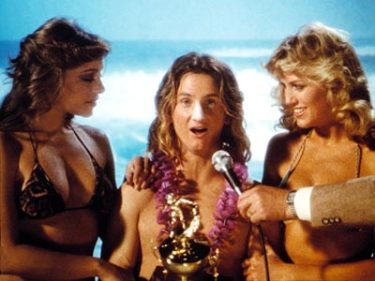
“Obsessed” will seem an appropriate word if you follow and enjoy popular media as I do.  Think of Rebel Without a Cause, Grease, Fast Times at Ridgemont High, The Breakfast Club, and any number of recent TV shows, some of which I really enjoyed, like Buffy and Joan of Arcadia.  Think of all the new authors piling into young adult fiction.  Think of Springsteen’s “Glory Days,” or “Married With Children’s” Al Bundy, whose life has been downhill since the day when he caught three touchdown passes (or was it four?).

At the core of Annie Paul’s article are a number of studies, now yielding results, on high school experience as a predictor of futures.  The longest running study, sponsored by the National Institute of Aging, followed 10,000 members of the class of 1957 in Wisconsin for 50 years.  There seem to be correlations, but they are not all that clear cut.  “Coveted as they are in high school, brains and popularity get you only so far in the real world,” says Paul.

Author Alexandra Robbins coined the term, “quirk theory,” to explain the fact that, “Many of the differences that cause a student to be excluded in school are the identical traits or real-world skills that others will value, love and respect…in adulthood and outside the school setting.”   In her recent book, The Geeks Shall Inherit the Earth, Robbins says, “I’m still a dork,” but believes that helps her connect with those she was interviewing and her readers.

Nothing is fixed, the various researchers seem to be saying, except the ideas we may hold of ourselves.  Such considerations may have motivated a University of Virginia psychologies to say, “Our work shows that popularity isn’t all that important.  The key is finding a group of people with whom you can feel at ease being yourself.”

In that respect, nothing much has changed.