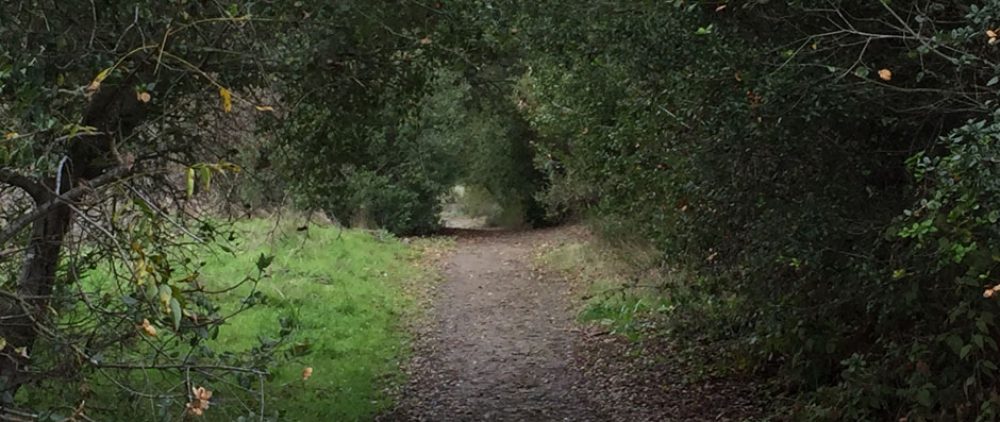
Pondering, mulling, musing, and ruminating on the year so far

I was looking for just the right word for “think over” and pulled out Webster’s Dictionary to check  precise meanings.  Here are some of the definitions I found:

  • ponder, from the Latin pondare – to weigh, mentally; think deeply about; consider carefully; deliberate; meditate.
  • The definition of mull points back to ponder:  “to cogitate, to ponder.”
  • ruminate, from Latin ruminatus, means  1 to chew (the cud) as a cow does and 2 to turn something over in the mind; meditate.
  • The word I wanted was  muse.  It’s usage as a verb comes from the old French, muser, and carries these definitions:   “to ponder, to loiter, (originally) to stand with muzzle in the air, to think deeply and at length; meditate.

So here I stand, with muzzle in the air, loitering and pondering 2012 as it turns into the home stretch.

Even without a calendar, the signs are everywhere. It’s almost dark at 8:00pm, and the mornings are chilly. Halloween decorations are on display at the supermarket, and the volume of Christmas catalogs has notched up from a drip to a steady trickle.  Before you know it, they’ll be playing “Little Saint Nick” in the stores (kill me now!).

Things have been good in 2012 on the personal front – much to be grateful for.  Good health, food, shelter, and the resources to do our thing(s).  No catastrophic events like fires or floods in this area.  Even our little dog, Holly, who seemed to be at the end of her life in June http://wp.me/pYql4-1TW is stable, hanging on for while, thanks to a good vet and our daily medical interventions on our behalf of her failing kidney.

Holly, about eight years ago

It’s a blessing to have this extra time with her, to give her special attention even as we learn to let go.

I also posted about my good fortune this summer to be able to attend teachings by a senior Tibetan lama http://wp.me/pYql4-2jk, about his knee surgery and its successful outcome in August.

Long life puja for His Eminence Choden Rinpoche, July 28, 2012

We also have an exciting trip planned for the fall, which will be the subject of more than one post later on.

***

If things are positive in the personal sphere, I know I’m not the only one who finds the public arena disturbing this election year.  There’s something schizophrenic about the media messages we receive on one hand, and our day to day experience on the other.

As the election nears, we constantly hear how polarized we are as a nation, yet in my experience, in parks and public places, restaurants, and stores, people mostly treat each other with courtesy and respect.  I haven’t seen kamikaze parking lot behavior since last year’s Christmas season.

Last week, as I glanced around our local waffle place, it struck me that at places like this across the country, you see “ordinary” people who, if given a chance, could do a better job of getting things done for the good of the nation than our elected representatives.  Did anyone in that breakfast place, or ones like it across the nation, decide to vote for the candidates most likely to freeze up government like an engine without any oil?

And yet it happened, which means (a) it benefits some group of influential people or (b) our politicians are morons or (c) somehow our dysfunction has become systemic.

I lean toward the third choice. In it’s Labor Day editorial, The Sacramento Bee underscored a point I made several days ago http://wp.me/pYql4-2lV – that the fortunes of the middle class mirror the fortunes of labor unions:

“Draw one line on a graph charting the decline in union membership, then superimpose a second line charting the decline in middle-class income share and you will find that the two lines are nearly identical.” The middle class has shrunk significantly, from 61 percent of the adult population in 1971 to 51 percent in 2011, according to data from the U.S. Census Bureau and the Federal Reserve. http://www.sacbee.com/2012/09/03/4781267/editorial-to-rebound-labor-needs.html

A forty year decline indicates that the trend is truly systemic.  It’s not the exclusive fault of Bush and/or Obama – rather it’s something built into our current political/economic system.

I know I’m thinking that way now because of Bill Moyer’s guest on Sunday, Mike Lofgren, author of The Party is Over: How Republicans Went Crazy, Democrats Became Useless, and the Middle Class Got Shafted.

In his interview with Moyers, Lofgren is not sanguine about our chances to reform the status quo.  He advocates something like folding our hand and asking for a new deck:

BILL MOYERS: But what do we do about it? Nothing seems to tame the power of money in politics.

MIKE LOFGREN: The only thing that will achieve it is fundamental political reform. And the only way you’re going to get that is mass defection from the parties. Because the parties simply do not serve our interests anymore…there is a point where if there is mass public outrage at this, just as there was in the prairies in the 1880’s and 1890’s, eventually they’ll get the message.

http://billmoyers.com/segment/mike-lofgren-on-dysfunction-in-our-political-parties/

When Moyers asks him to state greatest fear and hope, Lofgren says:

“My greatest fear is that this whole impasse simply carries on. And this country becomes more and more polarized and ungovernable. And we could be faced with a very bad situation, internationally and domestically….My greatest hope is that we can govern ourselves again in a spirit of bipartisanship.”

When Moyers asks if he thinks that’s realistic, Lofgren replies, “We must let our hopes be greater than our fears.”

If his answer doesn’t ring with confidence, it’s still good to remember that more than anything else, it is fear that drives us to act in mean spirited ways.  Generosity follows finding the threads of faith and confidence within, and generosity of spirit is what we desperately need.  Sometimes I imagine this through one of William Stafford’s last poems.  It’s a simple but powerful answer to give to our fears.

The Way It Is

There’s a thread you follow.  It goes among
things that change. But it doesn’t change.
People wonder what you are pursuing.
You have to explain about the thread.
But it is hard for others to see.
While you hold it you can’t get lost.
Tragedies happen; people get hurt
or die; and you suffer and get old.
Nothing you do can stop time’s unfolding.
You don’t ever let go of the thread.

Bad Science

Besides Congressman Akin, who clearly ditched high school biology, my favorite member of the Congressional Science Committee is Dana Rohrabacher (R-CA) who is on record as saying:

“Is there some thought being given to subsidizing the clearing of rainforests in order for some countries to eliminate that production of greenhouse gases? … Or would people be supportive of cutting down older trees in order to plant younger trees as a means to prevent this disaster from happening?”

http://motherboard.vice.com/2012/8/21/congress-s-science-committee-doesn-t-get-science

According to Motherboard, the Congressional Science Committee is responsible for “the entire spectrum of national science interests, from energy, the environment and the atmosphere, civil aviation and nuclear R&D, and space.”

I wish I could say these are actors in a Mel Brooks movie, especially since Congressman Brooks (R-AL) said, in an interview with Science Magazine  that high levels of carbon dioxide means that “plant life grows better, because it is an essential gas for all forms of plant life.”

I’ll let the opportunity for an “essential gas” joke pass.  There’s enough to laugh and weep over in these words from our members of Congress.

Mark Coker ebook workshop, Sept. 29

Mark Coker

The Sacramento branch of the California Writer’s Club hosted Mark Coker, founder of Smashwords, for a presentation in January that I wrote about here: http://wp.me/pYql4-1DD

Now we’re having him back to present a nuts and bolds workshop on ebook publishing and marketing. The date is September 29, time is 9:30-3:00, and the location is convenient, just off a major freeway.  Price is $45 for CWC members and $55 for non-members.

Here is the description:

“How To Produce, Distribute & Sell Your Work In The Evolving Eworld” is a September 29thworkshop being offered by the California Writers Club, Sacramento branch.  Presenter Mark Coker, Founder and CEO of “Smashwords, ” is a leading expert in the field of creating and marketing ebooks in the evolving digital age.

Here is the brochure:

http://www.cwcsacramentowriters.org/wp-content/uploads/Mark-Coker-Ebook-LIVE-Workshop-9-29-20121.pdf

Unfortunately, I have another commitment that day.  Isn’t that always the way?  I’m sorry to miss the event, for I have a lot of respect for Coker and the clarity of his explanations and suggestions.  If you aren’t too far away and have every considered indie publishing, I’m sure this will be worthwhile.  The brochure says space is limited and suggests early registration.  I’d take that advice.

The hour of the wolf

Welcome Library, London, CC by NC

On monday morning, I woke around 3:00am with a sense of dread far out of proportion to the rather mundane dream I’d been having.  A thunderstorm rolling by increased the sense of menace at this darkest hour of the night.

The hour of the wolf is the phrase I’ve always used for such moments.  “It’s always darkest right before dawn,” we tell ourselves by daylight.  “It’s always darkest just before it goes pitch black,” says a demotivational poster you can find on despair.com.  That is the hour of the wolf (though despair.com is a funny website).

When I was an undergrad, we used to say, “Wherever two or more are gathered, they’ll start a film society.”  College film societies of the time loved Ingmar Bergman, and I did too, so I knew his 1968, The Hour of the Wolf, but it wasn’t one of my favorites from his surrealistic period.  The best definition I know came from dialog in the “Hour of the Wolf” episode of Babylon 5, in 1996:

“Have you ever heard of the hour of the wolf? … It’s the time between 3:00 and 4:00 in the morning. You can’t sleep, and all you can see is the troubles and the problems and the ways that your life should’ve gone but didn’t. All you can hear is the sound of your own heart.”  – Michael J. Straczynski, writer, Babylonian Productions.

Since I couldn’t sleep, I tried to remember what I knew of the phrase.  A long time ago, I read that it was coined in medieval Paris.  The gates of the city were shut at night, but during the winter, wolves sometimes slipped through at dusk.  At the darkest hour of the night, they would glide through the streets like shadows to prey on the poor unfortunates who were sleeping alone on the streets.  “Hour of the wolf” was the phrase coined by those who encountered the grisly remains in the morning.

Hint:  thinking of wolves chewing corpses doesn’t help you get back to sleep.

I knew by then what was keeping me up.  Some of it had to do with the Colorado shootings.  It’s hard to sleep easy after such an event, but that was not the heart of it.  On sunday, I’d listened to Chris Hedges, a guest on Moyers & Company, in a segment called, “Capitalism’s ‘Sacrifice Zones.'”

Hedges is a journalist who worked for the New York Times until he was “pushed out” for outspoken opposition to the war in Iraq.  The interview is important and very depressing, like much honest reporting these days (when you can find it).  

http://billmoyers.com/episode/full-show-capitalism’s-‘sacrifice-zones’/

It’s hard to know what to do with this kind of unpleasant truth.  One good thing that came out of this post is that I learned the source of the phrase, “live with the questions.”  Therapists, especially Jungians, like to quote it, but it was Rainer Maria Rilke who first penned it.  In 1903, in Letters to a Young Poet, he said:

“…I would like to beg you dear Sir, as well as I can, to have patience with everything unresolved in your heart and to try to love the questions themselves as if they were locked rooms or books written in a very foreign language. Don’t search for the answers, which could not be given to you now, because you would not be able to live them. And the point is to live everything. Live the questions now. Perhaps then, someday far in the future, you will gradually, without even noticing it, live your way into the answer.”

We have met the enemy…

The Colorado shootings will forever cast a pall over the opening day of the latest Batman movie, the kind of action-adventure fantasy many of us were looking forward to as an escape from all the other bad news that fills the papers these days.

I cannot add anything to the expressions of grief and outrage that the people of Colorado have and will make, but I heard one thing this morning that gave me pause.

The governor of Colorado said, “This is the act of a very deranged mind.”  It’s a natural thing to say, and we hear the same words after every similar tragedy.  The Texas Tower.  Oklahoma City.  Columbine.  The first thing we try to do is assure ourself that the crime was the work of a nut or monster.  The last thing we want to hear are comments now emerging from people who knew the suspect and say he seemed “really smart,” and “a nice guy.”  It’s terrifying to think that an “ordinary person” or a neighbor could do something like this.

Thich Nhat Hahn, the Vietnamese Buddhist monk who Martin Luther King nominated for a Nobel Peace Prize, was versed both in Buddhist and western psychology.  His teachings gave me the concept of “store consciousness.”

Thich Nhat Hahn

This is the part of our unconscious psyche where all possible tendencies reside, like seeds, waiting to germinate.  The ones we water with our attention, thought, and action are the ones that grow.  Like all Buddhists, Thich Nhat Hahn believes that we cannot know for sure which seeds we have watered in previous lives, but our proclivities in this life, for good or ill, give a strong hint.

Metaphysics aside, we can recognize the truth of the core concept – the seed tendencies we water are the ones that grow.  The only memorial we can make to the people who died in that theater is to stand beside those like Thich Nhat Hahn, Martin Luther King, and all men and women of goodwill of the present and past.  We can join with them in trying to give the water of attention to qualities like compassion, patience, and non-violence – the seeds we want to grow.

Those who follow this blog know how often I quote Walt Kelley’s comic strip character, Pogo, who said, “We has met the enemy and he is us.”  It doesn’t have to be that way.

Bill Moyers on “The Cowardly Lions of Free Speech”

Here is Bill Moyers’ response to the recent Supreme Court decision not to revisit Citizen’s United.  Check out the full clip, which only runs 6 1/2 minutes.

Three things don’t go together: Money. Secrecy. Democracy. And that’s the nub of the matter. This is all a sham for invalidating democracy in the name of democracy. It’s the trick authoritarians always use to hide their real intention — in this case absolute power over our public life and institutions: the privatization of everything. The Supreme Court is pointing the way. Instead of mitigating the worst excesses of both the state and the private sector, the Court has taken sides. Saying to the massed wealth of the one percent: America is yours for the taking, for the buying.
http://billmoyers.com/

There really is nothing to add to something so shameful and tragic.

Andy Grove on How to Create American Jobs

In the wake of this week’s jobs report, here is a Businessweek article from the July 1, 2010 in which Andy Grove, lays out a path to American economic renewal. If anyone has the chops for this, it’s Grove.  One of the three founders of Intel, he helped light the fire that gave us Silicon Valley and changed the world.

(l-r), Andy Grove, Robert Noyce, and Gordon Moore in 1978, on the 10th anniversary of Intel. Photo courtesy of Intel

The bad news is that Grove’s formula depends on intelligent and focused government action. In 2010, that didn’t seem as hopeless as it does now.  Yet perhaps ideas are like seeds; the good ones grow, even though they may take a while to germinate.

One key problem, according to Grove, is our loss of hi-tech manufacturing jobs, not only because of the human cost, but because of our loss of the expertise that production brings.  He says the US has already fallen too far behind to ever catch up in technologies like solar panels and batteries for fuel efficient cars.  “Not only [do] we lose an untold number of jobs, we [break] the chain of experience that is so important in technological evolution. As happened with batteries, abandoning today’s “commodity” manufacturing can lock you out of tomorrow’s emerging industry.”

Grove suggests we need an employment-centered economy and political leadership.  He cites the performance of several Asian economies, including China, the source of so much hand-wringing in the face of perceived U.S. decline.

Andy Grove, 2010

Grove recommends government incentives to aid the growth of key industries and keep the manufacturing base at home. He ends the article with a chilling bit of history:

Most Americans probably aren’t aware that there was a time in this country when tanks and cavalry were massed on Pennsylvania Avenue to chase away the unemployed. It was 1932; thousands of jobless veterans were demonstrating outside the White House. Soldiers with fixed bayonets and live ammunition moved in on them, and herded them away from the White House. In America! Unemployment is corrosive. If what I’m suggesting sounds protectionist, so be it.

I suggest everyone concerned with employment and US technical expertise take a moment to read what Grove has to say:  http://www.businessweek.com/magazine/content/10_28/b4186048358596.htm