Notes from the Wasteland

Photo by David Mark, public domain.

Photo by David Mark, public domain.

Talk of drought in California isn’t uncommon.  Normally it means lower levels in reservoirs and thinner snowpacks in the Sierras.  Bad news for skiers, and boaters, and farmers, perhaps, and an earlier start to the fire season, but’s it’s January, and for those who don’t ski, or boat, or farm, it’s easy to ignore until summer. But this time it’s different. This year it simply will not rain.

Even in “dry” winters, you see warnings that river currents are cold and swift.  This year the river’s so low there is no visible current.  Half of the local lawns are brown, and those that are green invite visits from the “water patrols” the districts threaten to form.  They say the reservoir from which we get our drinking water is at 17%; that image isn’t easy to forget.

A year ago, I posted a report from the National Intelligence Council.  Every four years, the NIC, representing every US intelligence agency, collaborates on a summary of the world situation to give the incoming president.  They post the report online for anyone to read.  After the last presidential election, the NIC gave the administration a report called Global Trends 2030: Alternative Worlds:
Click for the text of the whole report

I discussed the report in detail in a post in December, 2012, but it’s worth reviewing one of the four “Megatrends” the report identified.  The CIA, the NSA, the FBI, and the 13 other agencies that compiled the report do not waste time debating climate change; they accept it as a given and factor it into predictions, saying that by 2030:

Demand for food, water, and energy will grow by approximately 35, 40, and 50 percent respectively owing to an increase in the global population and the consumption patterns of an expanding middle-class. Climate change will worsen the outlook for the availability of these critical resources. Climate change analysis suggests that the severity of existing weather patterns will intensify, with wet areas getting wetter and dry and arid areas becoming more so.

What gives you pause is their conclusion:

We are not necessarily headed into a world of scarcities, but policymakers and their private sector partners will need to be proactive to avoid such a future.

At this time, if we have to depend on our “policymakers and their private sector partners” to be proactive, we’re screwed, but there are different ways to look at our situation.  As usual, I try to relate literal “truth” to archetypal patterns, and in this case, the obvious mythic story is that of the Wasteland.

The story relates how Camelot fell apart.  How the rift between Arthur and his queen threw the land into ruin.  How the ailing king sent his knights in search of the Holy Grail, the one thing that could restore the barren world.  Those who reached the Grail Castle found another mysterious king inside, wounded through the testicles, in constant pain but unable to die.  His only relief by day was to float in a boat on a lake near the castle.  For this reason, he was known as “The Fisher King.”  He could only be healed by the right knight arriving at the castle to ask the right question.

Antecedents to the story are ancient and predate the Arthurian tales, perhaps by thousands of years.  In writing his poem, The Waste Land (1922), T.S. Eliot relied on an anthropological study, From Ritual to Romance by Jessie Weston, who in turn, drew on The Golden Bough, Sir James Frazier’s study of sacred kingship.

In the mythic cycle Frazier explored, the earthly king was “married” to the Goddess of the Land.  His potency and the earth’s fertility were one.  When he became old and infirm or impotent, the health of the land suffered.  He was ritually killed and a new king selected.  We find echoes of this in Arthur’s estrangement from Guinevere, though of course by then, the era when monarchs submitted to sacrifice was past.

We aren’t ruled by kings anymore, but if we consider “governments” alongside the word, “impotent,” and if we ignore what Viagra can fix, we find these meanings: “weak; ineffective, powerless or helpless; having no self-control.”

Yet the news isn’t all bad, and that is a theme I plan to explore in a series of posts exploring the Wasteland.  For one thing, the Grail hides there and nowhere else.  For another, the old stories never suggest that rulers can save us.  Renewal comes from the outsider, the dummling, the fool, Parsifal the rustic youth, or a carpenter from Nazareth.  

There are literally thousands of people today, already in or ready to enter the metaphorical forest on a quest for better ways to live.  I plan to discuss a few of their stories here.

“Arming the Grail Knights” by Edward Burne-Jones, tapestry, 1890’s, public domain
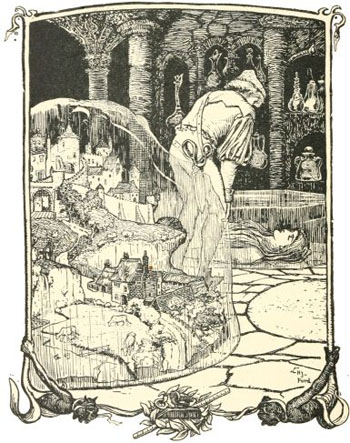
Help wanted, heroes and heroines: must be civil and adroit

This unusual job description comes from the opening lines of a Grimm’s fairy tale I recently read for the first time.  Fairy tale characters never get more than a word or two of description, and most of the time, tags like “clever fox” and “evil stepmother” are so familiar they don’t make us stop and think.  The opening of “The Glass Coffin,” was different enough to catch my attention:

“A civil, adroit tailor’s apprentice once went out traveling, and came into a great forest, and as he did not know the way, he lost himself.”

Civil and adroit are good terms for key attributes of successful folklore protagonists.  Though the words may sound quaint to us now, the traits they describe are as relevant to our own world as they are to travelers in Faerie.

The Glass Coffin

The Glass Coffin

The virtue of civility:

Some of the Grimm Brothers’ stories seem to locate these attributes along gender lines, implying a world of civil females and adroit males.  But if we review a number of tales, much of the time we find both characteristic needed by men and women alike.

Girls who are rude or mean may wind up dead or have their eyes pecked out like Cinderella’s step sisters.  Toads may jump from their mouths when they try to speak.  Feminists point to such story features as efforts to domesticate young women and make them docile.  Yet for many youngest sons, success also hinges on civility, often to seemingly insignificant creatures.  It’s a dwarf who offers council in  The Water of Life.  When the worldly-wise older brothers mouth off to the little man, they end up imprisoned in stone.  The youngest brother, who is respectful and heeds (most of) the dwarf’s advice, wins his heart’s desire and more.

In many of these stories, motives are greater than simple expediency.  The hero of The White Snake shows genuine compassion.

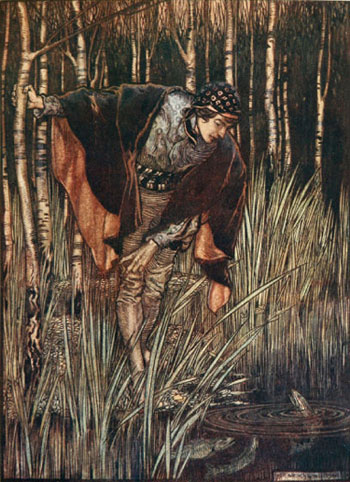
The White Snake by Arthur Rackham

The White Snake by Arthur Rackham

Through a bit of (adroit) trickery, a king’s servant gains the power to understand the speech of animals. He goes traveling and saves three different kinds of “lowly” creatures – fish, ants, and baby ravens.  Kind heartedness rather than self-interest drives him, for though the creatures promise to help him, they only do so after he sets them free.  There were no strings attached to his generosity.

The story is not just a simple call to spare the lives of all creatures, for the servant kills his horse to feed the ravens.  It would take another post to explore this detail, but to the extent that these stories dwell on  compassion, their theme is both ancient and timely.  The Dalai Lama put it in simple terms:  “If you want others to be happy, practice compassion.  If you want to be happy, practice compassion.”

The virtue of being adroit:  

The dictionary defines adroit as “skillful in a physical or mental way; clever; expert.”  In fairy tales, this sometimes means knowing when to kill your horse to feed the ravens.  At other times, it means cunning, trickery, and lies.  In stories, we often imagine these as men’s attributes, perhaps because traditional full time tricksters, from Hermes to Coyote, are usually male.  Yet in Grimm’s stories, young women need to understand and master deceit as often as men.  In Bluebeard-type tales, and notably a frightening story called “Fitcher’s Bird,” it’s a matter of life and death.

Part of being adroit is the intuitive sense of when someone or something feels wrong; when civility is not in order.  In fairy tales, women often do this better than men.  Typically, in three-brother stories, the youngest prince will trust his older brothers, even after the dwarf has warned him not to.  Cinderella and girls like her know better than to be fooled by older siblings.

Instinctively knowing when something is off has new relevance in the 21st century.  Interviews with 9/11 survivors adds to research suggesting our brains are not very good at processing radical changes or threats.  People on the upper floors of the South Tower had just over 16 minutes before the second airplane hit; those who left survived and those who waited did not.  On average, people took 1o minutes to choose.  In times of radical change, we need that cunning, adroit part of our ourselves to cut through the illusion that things will right themselves and return to “normal.”  It can be a matter of life or death.

***

Few things in fairy tales are certain, and the first story in the Grimm’s collection, The Frog King, is an exception that proves the rule proposed by this post.  The princess is neither civil nor adroit.  She’s a petulant brat, who gets what she wants by hurling the frog against a wall (the kiss only comes in later versions).  To our sensibilities, she doesn’t deserve the prince who appears when her act of violence breaks the spell.

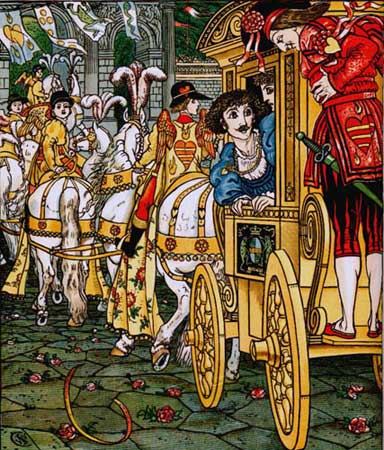
There’s an irony in the original “Frog King,” however.  When the transformed prince reunites with his faithful servant, Heinrich, he almost seems more delighted than he is with his new bride.  At least one illustrator, Walter Crane (1845-1915) implies that the princess won’t have everything to her liking.  Who does the prince have eyes for in the closing scene, and how does the princess appear to react?  Does this story end with a twist that the Brother’s Grimm shied away from?

The princess, the prince, and Heinrich in Walter Crane's 1874 illustration.

The princess, the prince, and Heinrich in Walter Crane’s 1874 illustration.

Experienced explorers warn us that the way through Faerie is perilous.  Trails may shift beneath our feet, and hard-and-fast rules don’t apply.  As Joseph Campbell observed, everyone must find their own way through the forest.

My latest exploration leads me to wonder if “adroit” is another word for “street smarts,” something we need in our own world as well as in dark imaginal forests and castles frozen in time.  And isn’t “civil” an attitude that understands that our own wellbeing, even in the most practical terms, must include the welfare of others?

The old stories may offer no certain answers, but with careful reading, they can always lead us to ask interesting questions.

A teller of sacred stories

Robert Béla Wilhelm, storyteller

Robert Béla Wilhelm, storyteller

In 1965, a young New Jersey college student, in need of money for rent and tuition, took a weekend job as a tour guide at $25 a day, for a charter company that specialized in high school class trips to Washington, DC.  The company gave him a binder of facts and statistics to learn, but the student, Robert Béla Wilhelm, quickly realized that only a story makes facts and statistics come alive.

Sixteen years later, Bob was a university professor and had written his PhD dissertation on the craft and philosophy of storytelling.  His wife, Kelly’s, PhD centered on travel and leisure.  Both had grown up in storytelling families, and in 1981, they founded Storyfest Journeys (see their Facebook page too) with an inaugural trip to Ireland.  After more than 50 storytelling oriented, small group tours to Europe, the Pacific, and destinations in the US, they are still at it.  It was thanks to the Wilhelms that Mary and I traveled to Iceland in 2012.

Over time, Bob and Kelly have focused their energy on mentoring storytellers and specializing in sacred stories.  I just received word that Bob has completed a 17 year labor of love that he calls, “Parables Today, A Weekly Lectionary Storybook.”  For every Sunday of the three year lectionary cycle of the Catholic church, he presents stories from around the world along with artwork, and reflections.  The tone is open and ecumenical; many of the tales will appeal to people of any faith or none at all.  They  are now freely available at sacredstorytelling.org.

I was thinking of Robert Wilhelm when I wrote my second post on this blog, which featured a poem called “Story Water” by Rumi.  I think it’s safe to say that Robert has carried on Rumi’s tradition, which centers on the understanding that our spiritual dreams and longings are woven of stories.  Abstract understanding may sometimes move the heart, but more often it is The Prodigal Son, or Arjuna at Kurukshetra, or Coyote coming along that opens our eyes of understanding.

If you love stories, take a look at the stories that Robert Wilhelm loves.

What’s coming to TheFirstGates in 2014?

Courtesy Emma Paperclip, Creative Commons

Courtesy Emma Paperclip, Creative Commons

Thanks to everyone who visited this year, old friends and new.  Here are a few year end musings on where this blog may be going in 2014.   These are not resolutions.  Remembering Yoda’s words to Luke, “Do or do not, there is no try,” I don’t make resolutions.  These are sort-of-predictions, aka guesses, based on a line from a Grateful Dead song, “I can tell your future / just look what’s in your hand.”

In the case of theFirstGates, it should probably read, “look at what books are piled up on the table beside you.”  Looking at the titles in the stack, I predict more of the same, only new and (hopefully) better.

I’m currently reading a book I got for Christmas, Grimm’s Complete Fairy Tales.  The key word is complete – I haven’t read all the tales before.  The other great feature is the Arthur Rackham illustrations.  No one has ever painted Faerie like Rackham, and it’s a place I never tire of visiting.

Another new title is Trickster Makes this World by Lewis Hyde.  Not only is Trickster an ongoing object of fascination, but he pervades blogging just like the rest of life.  I’m reminded of this every time I hit Publish while meaning to click on Save.

And perhaps most important for TheFirstGates, I’m rereading The Dream and the Underworld, one of James Hillman’s important early works.  Here he turns the tables on psychology’s habit of translating the night world of dreams into the language of daylight; serving the ego, in other words.

Dream and the Underworld

Instead of asking what a dream means, Hillman asks what it wants.  This shift is fundamental to all of Hillman’s thought – psychology, the science of the psyche, in service to soul and soul-in-the-world.

Of great interest to me as a blogger is Hillman’s effort to see through literal events to the fantasies, the mythical layers that underly the stories we tell ourselves and the ones we see on the evening news.  The reality in our fantasies and the fantasy in all our realities.

The coming year is unique in one respect: 2014 marks the centennial of the start of that worldwide disaster misnamed “The Great War.”  The first world war has haunted me for years with its end-of-an-age immensity and sadness.  There are millions of stories to tell, and I’ll try to post a few here, from the bumbling youths who sparked the conflict to a young lieutenant named Tolkien who was sent to Mordor in 1916, though the generals called it The Somme.

And finally, as always I will continue to be on the lookout for those stranger-than-fiction events that leave us shaking our heads, wanting to laugh or cry or both at the strangeness of it all.

I wish you all a joyous New Year, and I hope we will all continue to share the emerging wonders of this online experience!

Yule ~ The Beginner’s Guide To The Wheel Of The Year

Just in time for the solstice, here is another of Lily Wight’s wonderful “Wheel of the Year” posts, with beautiful illustrations and commentary on the Celtic and Nordic stories surrounding this ancient holiday. Enjoy her post and enjoy the return of light!

Lily Wight's avatarLily Wight

Updated 18/12/2014

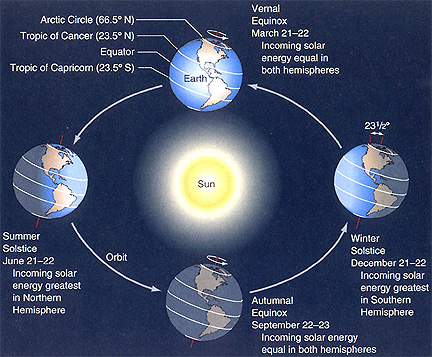
     There are four Solar Quarter Days (two equinoxes and two solstices) on The Wheel of The Year calendar.  Yule or The Winter Solstice is celebrated during a twelve day period from December into January.

     Yule commemorates the demise and rebirth of the sun’s powers because The Wheel continues to turn and daylight hours begin to lengthen again beyond The Shortest Day.

     The name “Yule” is thought to derive from the Old Norse ” jólnar”  – a collective term for the gods or “Yule Ones”.   Jólfaðr (Yule Father – interchangeable with All-Father) is one of many names attributed to Odin.  In Old Norse poetry names and terms for Odin are frequently synonymous with celebration and feasting.  Odin The Gift-Giver is undoubtedly the origin of our Santa Claus.

     The Midwinter period between the last harvest (Samhain)…

View original post 390 more words

Queen Bothildur: an Icelandic Christmas folktale

I found this story in a beautifully illustrated book of Icelandic folktales for children, Tales of the Elves, that I brought back from that country after a visit in 2012.

Tales of the Elves 400

One Christmas Eve, a richly dressed woman knocked at the door of a farm house in Hrutafjord and asked for shelter. The sheriff lived there and said she could stay.  When people asked her name, she said it was Bothildur, but she would not say anything else about herself.

She stayed home while everyone else went to midnight mass, and when they returned, they had never seen the house so clean and beautifully arranged.  The sheriff invited her to stay on as housekeeper, and she excelled at her work.  The following Christmas Eve, she stayed home again, but this time, when the household returned, they found Bothildur’s eyes red from weeping.

On the third Christmas Eve, Gudmundur, the sheriff’s shepherd boy, vowed to discover her secret.  As everyone walked to church, he feigned illness and turned back.  Gudmundur possessed a magic stone that made him invisible.  Holding it in his hand, he slipped into the farmhouse, where he saw Bothildur dressed in the finest clothing he’d ever seen.  She took a green cloth from a chest and set off into the night, with Gudmundur following closely behind.  They came to a lake where Bothildur spread the cloth on the water and stepped onto it.  The shepherd boy just had time to step onto a corner before the cloth began to sink.

Bothildur

It seemed like they were passing through smoke as they sank deeper, but at last they came to a grassy plain in front of a fair city.  Bothildur entered the city where everyone cheered.  A man who wore a crown embraced her and then everyone entered the church for Christmas mass.  Bothildur’s three children ran around the pews playing with three golden rings, until the youngest dropped his and couldn’t find it because the invisible Gudmundur had slipped it into his pocket.

When the service was over and it was time for Bothildur to leave, everyone was sad.  She walked alone with her husband onto the plain before the city.  Both were in tears and Gudmundur heard them say this was the last time they would ever meet.  They parted with great sorrow as Bothildur stepped onto the green cloth with Gudmundur behind her.

Bothildur returned home and was cleaning when the sheriff and the rest of the household returned.  Gudmundur came home later.  When asked where he had been, he told the entire tale of his trip to the land below the waters.  When Bothildur asked if he had proof, Gudmundur withdrew her son’s golden ring.  At that she was joyous.  She explained that she’d been a queen in Elf Land until a witch cursed her.  She could only return home on Christmas eve, and only a human brave enough to follow her to the world below could break the spell.  “Now you have released me and you shall be richly rewarded,” she said.

After saying goodbye to the household, Bothildur vanished.  That night, Gudmundur dreamed she came to him and gave him coins and jewels which he found beside his pillow when he awoke.  Later, he used that money to buy a farm of his own and get married.  In time, he became known far and wide as the luckiest man alive.

***

In Iceland, winter solstice celebrations were huge events – understandably, for by mid-December, the southern part of the country gets only four hours of light each day, and the northern regions, above the arctic circle, get only three.  Icelanders embraced Christianity in 1000 AD, but to this day, Christmas is a dual holiday, celebrating both the birth of Christ and the return of the sun.

Charming as it is that the doorway to the Other World should open on Christmas Eve, it’s a safe guess that Christmas is peripheral to the tale.  Stories of release from enchantment are found in every culture and predate Christianity.  Sometimes love and compassion break the spell, as in “Beauty and the Beast.”  Sometimes it’s bravery and cleverness, and sometimes even violence – in the first version of “The Frog King” published by the Brothers Grimm, the frog is disenchanted not by a kiss, but when the princess becomes so annoyed with him that she hurls him against a wall.

Aside from its simple charm, what fascinates me about Queen Bothildur’s tale is that Gudmundur, the young disenchanter, brings his own magical implement for the task.  Where do shepherd boys pick up magical stones of invisibility?  Jung believed that stones are frequently symbols of the Self, his term for the fully integrated personality.

Babylonian stone seal, ca 1595-1155 BC.  Creative Commons

Babylonian stone seal, ca 1595-1155 BC. Creative Commons

 Normally, such psycho-spiritual integration is the task of a lifetime, but in stories, legend, and scripture, young heroes as diverse as King David, St. Patrick, and Krishna worked as shepherds or cow herders when they were young.  However simple this folktale may be, it reflects what can be done by a person with a noble cause who is not at war with himself.

Belief in the Huldufólk, or Hidden People, the Elves, is common to this day in Iceland; in a 2007 survey, 57% of the population said they “do not disbelieve” in Elves.  In 2004, Alcoa had to pay a government expert to survey their proposed site for an aluminum smelter to make sure it was Huldufólk free.  Last year, we travelled a highway that had been diverted around an Elven dwelling.  We saw many small houses built on remote hillsides as homes for the Hidden People, and some Icelanders build them churches, in hopes they will convert to Christianity.

That may be an iffy proposition.  “The Icelandic word for Christmas, Jól, contains no reference to Christ or to the church. It is a Norse word that also existed in Old English as Yule.” (1)

Even so, as we read and tell their stories, I suspect the Elves are wishing us a Gleðileg jól go farsælt komandi ár – a Merry Christmas and a Happy New Year.

.

Samhain ~ The Beginner’s Guide To The Wheel Of The Year

Here is another of Lily Wight’s fine articles on the Celtic Wheel of the Year. This one discusses Samhain, a time of ending and beginning, when the veil between the worlds was especially thin. This is key information for those who love Celtic mythology as well as providing fun background for those who love Halloween.

Lily Wight's avatarLily Wight

     Updated 23/10/2014

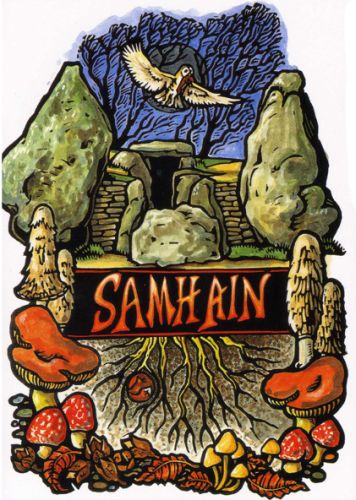
     Samhain – pronounced “sow – inn” and known presently as Halloween – is celebrated from sunset to sunset on 31st October to 1st November.  It is the most important Fire Festival or Sabbat on the ancient Wheel of The Year calendar.

     “Samhain” has been variously translated as “first frost” or “Summer’s end”:  opposing suggestions with the same meaning.  It is the name for November in ancient and modern Gaelic.

     Samhain lies between The Autumn Equinox and The Winter Solstice.  It marks the death of the year and the end of the annual agricultural cycle.  Many ancient cultures throughout The Western Hemisphere regarded Samhain as their New Year’s Eve.

     Samhain is the third and final harvest on The Wheel of The Year calendar.  After Lughnasadh (grain and cereals) and Modron (fruit and vegetables) herding…

View original post 428 more words