Back When Vampires Were Vampires

Bella Lugosi's Dracula

When I was 15, my family lived in Europe.  My room, at the far end of the house, opened onto a patio through French doors that you could unlatch with a butter knife.  I decided it would be fun to read Dracula late at night, after everyone else had gone to bed.  Dumb – really dumb!  I know I’m not the only one to seek the thrill of a scary movie or book and get a whole lot more than they bargained for.  Let’s just say that for weeks after that, I took a clove of garlic to rub the French door frame every night before bed.

When I first went to college, we had a saying:  “Wherever two or more are gathered, they will start a film society.”  Friday nights on campus, I watched, Nosferatu, 1922, which made Bela Lugosi’s count seem tame.

Count Orlock in Nosferatu

Then there was Carl Dryer’s 1932, Vampyr, a movie whose plot I have never been able to decipher, but whose haunting imagery gives a truly creepy feeling of being in a coffin and seeing the face of the vampire who killed you peering through the glass in the lid.

The young protagonist of Vampyr. Is he really dead or only dreaming?

Once upon a time, vampires were not sensitive hunks and hunkettes.  Team Orlock?  I don’t think so!  And trust me, you don’t want a date with Dracula’s brides:

Dracula's better halves? Don't you believe it!

But alas, we are so besotted with undead who love poetry and walks on the beach that not even the current owners of Bran castle in Romania, the one that inspired Bram Stoker, are immune to draw of vampire fandom.

Sign on the way to Bran Castle, Romania

It turns out that the castle that overlooks the town of Bran is not even scary, although the real Dracula, Vlad the Impaler, is supposed to have passed through the valley in the 15th century. And NPR correspondent, Meghan Sullivan, says it’s a little disconcerting to see t-shirts on some of the pilgrims proclaiming that, “All Romanians are Vampires.”  http://www.npr.org/2011/11/13/142256325/in-transylvania-sometimes-a-bat-is-just-a-bat

Castle Bran, which inspired Bram Stoker

I guess it will just have to fall to the next generation to restore a fictional world where, to paraphrase Garrison Keeler, “All the women are strong, all the men are good looking, all the children are above average, and vampires are nobody’s sweetheart!”

Structure in Folktales

I found a great post on story and movie structure on one of the blogs I follow, Albert Berg’s Unsanity Files.  http://unsanityfiles.wordpress.com/2011/10/28/building-on-the-bones-or-why-structure-doesnt-have-to-be-boring/

Despite Mr. Berg’s caution that discussions of structure has been known to cause some Californian’s heads to explode, I suffered no ill effects (well, maybe a facial tic or two, but I’m still perfectly normal…honest!).

Actually, I credit a Californian, Syd Field, a hugely influential teacher of screenwriting, with formalizing the three act structure as we know it in movies and novels.  You hear Field’s book, Screenplay, recommended at writer’s workshops and conferences.  It is one of the best references I know on plot and structure. For anyone interested in writing, the “Three Act Structure” is required learning.  Even to rebel against it, you need to know what it is. Here is a simple diagram:

This, of course, is a variation on Aristotle’s observation that every story has a beginning, middle, and end.  In modern usage, it has become more formal than that.  The length of the acts in movies and in books is not arbitrary:  it’s 25%, 50%, 25% by default.  These numbers are sometimes even spelled out in screenplay contracts, and they are quoted in numerous other books on writing.

In a similar way, the plot points are not just ordinary troubles:   they are sometimes called, “doorways of no return.”  Examples of Plot Point 1, the first doorway, are when Luke leaves with Obiwan, when Frodo agrees to carry the ring, and when Louise pulls the trigger.  After a character steps through the first doorway, plot point #1, their old lives are gone, no longer an option.  Plot point two is when the last battle is joined.  When Frodo and Sam gaze down into Mordor, they still have an option to cut and run.  That choice disappears once they continue.   Once they reach the valley, their only options are victory or death.

If you know the running time and have a watch, you can spot these plot points occurring right on time in recent movies.  One thing I like to do, because I love old films, is try to see when and if they occur in the classics on TCM.  I watched for this recently as I viewed Lost Horizon, and sure enough, this structure was there.  I’ve come to the realization before, that Syd Field was not creating something new, as much as clarifying and codifying something successful screenwriters had already been using because because it works.

Which finally brings me around to the point of this post:

I was paging through some Google search results on “three act structure” and saw one author claim it was “fundamental to storytelling.”  As someone who spent 20 years in the Sacramento Storyteller’s Guild, I thought, “Wait a minute.  If you want to get ‘fundamental’ you aren’t going to do it with written fiction.  Fundamental storytelling means our worldwide oral tradition.

You find it in collections of folklore, the older the better:  in epics and fireside tales and sacred stories from all cultures:  in recordings of storytellers from library archives or recent storytelling festivals.

It also means stories we can hear at this years Tellabration, a day of storytelling that will happen around the world this year on November, 19.  http://www.tellabration.org/

What I am going to do is informally browse and listen to some of my favorite folktales to see what relationship they may or may not have to the three act structure as it has evolved in our literary and cinematic arenas.

We know that every story has a beginning, middle, and end – if it doesn’t, it may be a vignette or a character portrait, but it is not a story. We also know that the progression of folklore and myth tends to be “simple” rather than “complex.” In other words, you aren’t going to find a lot of twists and reversals.

What else?  That is what I am going to explore for next time.

Shangri-La in Books, Movies, and Legend

I recently wrote a short story about a group of people trying to find Shangri-La. For decades, the name has stood for an earthly paradise, difficult to attain. The name was so popular in the 30’s and 40’s that before it was renamed Camp David, Franklin D. Roosevelt named the presidential retreat ground, Shangri-La. After my story was finished, I began to research this mythical place about which I realized I knew very little.

The name, “Shangri-La” entered public awareness through a novel and a movie, which I will discuss today. In my next post, I will explore the Tibetan legend of Shambhala from which core elements of the story may derive.

In David Hilton’s 1933 novel, Lost Horizon, Hugh Conway, a world-weary British diplomat and WWI veteran, along with three others refuges from an uprising in India, board a plane that is hijacked to the remote mountains of Tibet. They crash land in the snows and find their pilot dead. The group is rescued by a postulant lama named, Chang, who leads them to the hidden lamasery of Shangri-La, high above a fertile and temperate valley. Here Conway finds peace, the stirrings of love, and a sense of purpose when the High Lama tells him he has been chosen to oversee the mission of Shangri-La – to preserve the best of modern civilization during a world war the lama, (who is 300 years old), has seen in vision.

Did Hilton foresee WWII when he wrote his book in the early 30’s? Perhaps, but he also studied a 1931 National Geographic account of an expedition to the borders Tibet. Unexpectedly temperate valleys lie along the Nepalese border, and Hilton may also have read of the legend of Shambhala, with a similar prophesy of a world war. This prophesy is part of the Kalachakra teaching cycle the Dalai Lama presents, most recently in Washington, DC, last summer.

Lost Horizon won public notice only after Hilton published, Goodbye Mr. Chips, the following year. Because it was later published as Pocketbook #1, Lost Horizon has been mistakenly called the first American paperback.

Frank Capra read Hilton’s book and immediately decided to make the movie version. Production began in 1936, with a budget of $1.25 million, the largest for any film at the time. After a $777,000 cost overrun, Lost Horizon, was released in 1937 to critical acclaim. A New York Times reviewer called it, “a grand adventure film, magnificently staged, beautifully photographed, and capitally played.” It won Oscars for Art Direction and Film Editing, and was nominated for Best Picture.

Both the book and the movie seem dated now. The romantic vision of humans-as-noble-savage will not appeal to our modern sensibility. The idea that people will be good if freed from want echoes both the pacifism that flourished after the first world war and the socialism that grew in response to the hard times of the ’30’s. I believe in the “higher vibration” of certain places, yet when Chang tells Conway the healing properties of Shangri-La have even eliminated human jealousy, it breaks my “suspension of disbelief.”

Even with this kind of flaw, I enjoyed the book and the movie. The specifics of the Lost Horizon’s 75 year old vision may be dated, but the archetypal longing for a golden age and heaven on earth is not. The book and movie tap into this, and the tale of paradise found then lost evokes our longing for the Garden of Eden, Atlantis, Avalon, and Shangri-La. “We are stardust / We are golden / and we’ve got to get ourselves back to the Garden,” sang Joni Mitchell in her song about Woodstock, another manifestation of longing for a world of peace and joy.

This longing will not go away because it expresses our true nature, according to the view that gave birth to the legend of Shangri-La. Next time we’ll look at the legend of Shambhala, which carries predictions that will echo some we have seen in Lost Horizon.

Openings

Recently I was chatting with a group of other writers about the rule of thumb that you have to grab your audience in the first few pages or lose them.  The consensus was that nowadays, you have just the first few lines.  One man said, “And you have to start with action.”

I don’t believe this, and said as much here last year (http://wp.me/pYql4-4b).  For me, character is primary, and I also have a penchant for mystery.  Action for action’s sake usually puts me off – I need to bond with Jake and Elwood before I care about the car chase.

Yet the conversation started me thinking about the kind of books that instantly draw me in.  When I got home, I pulled down some novels with openings I admire to look again at what the authors do.

One of my favorite reads of the year was Suzanne Collins, The Hunger Games, a stunningly original story and beautifully written as well.  It includes one of the best openings I have ever read.

“When I wake up, the other side of the bed is cold.  My fingers stretch out, seeking Prim’s warmth but finding only the rough canvas cover of the mattress.  She must have had bad dreams and climbed in with our mother.  Of course, she did.  This is the day of the reaping.”

In four sentences, we learn a lot about who we’re dealing with:  an articulate girl who notices details, loves her sister, does not have a father or very much money, and soon has to face something ominous called “the reaping.”  We meet an appealing character, two mysteries (where is her father and what is a reaping), and an instant sense of dread.  The opening of this best seller proves that you don’t need action to grab a readers attention:  nothing “happens” except the narrator reaches out and finds her sister is not in bed.

Another memorable book I read this year was The Cypress House by Michael Koryta.  The first two sentences drew me in:  “They’d been on the train for five hours before Arlen Wagner saw the first of the dead men.  To that point it had been a hell of a nice ride.”  Nothing “happens” except one man has a very unusual vision.

A favorite literary novel, Ariel’s Crossing, 2002, by Bradford Morrow starts like this:  “Dona Francisca de Pena never believed in ghosts, and even after she became one herself she couldn’t help but have her doubts.

Maybe its just the season, but half the stories I pulled down featured ghosts.  Here is another, a favorite YA novel, Ghosts I have Been, by Richard Peck, which begins:  “I tell you the world is so full of ghosts, a person wonders if there’s a soul to be found on the Other Side.  Or anybody snug in a quiet grave.  I’ve seen several haunts, and been one myself.”

Such a compelling hook does not happen by accident. Once at a reading, someone asked Richard Peck how many times he revised his opening pages. “Sixty or seventy times on average,” he said.  Because of that focus, you can open almost any one of his more than 30 novels to find an enticing beginning.  On the Wings of Heroes, an historical novel published in 2007, even begins with action, but it is not action for it’s own sake.  It is action crafted to draw in an audience of middle-grade boys:

“Home base was a branch box elder tree in front of the Hisers’ house out by the curb.  We could count on the Hisers not to mind when we pounded in from all directions to tag out on their tree.  We plowed their sod when we skidded home, bled all over their front walk when we collided, knocked loose the latticework under their porch.”

This is admittedly a small sample of books that appeal to my taste, but they prove several points.  Book openings are critical.  It takes real art and sometimes sixty or seventy drafts to draw a reader into a story.  At the same time, it is no more correct to say a book must start with action than to say that it can’t.  There are lots of ways to pique curiosity and interest, and that is what it’s really about.

The Hamish MacBeth Mysteries, by M.C. Beaton

“I was at a fishing school in Sutherland in the very north of Scotland, and I thought, what a wonderful setting for a classical detective story, 11 people isolated in this Highland wilderness. So Hamish Macbeth was born.” – M.C. Beaton

M.C Beaton is the pen name that Marion Chesney, a prolific Scottish author, uses for her mysteries, which include 28 titles featuring Highland constable, Hamish MacBeth, and 22 staring Agatha Raisin, a retired, middle-aged public relations agent who solves murders in the Cotswolds.

Beaton at her 75th birthday party this year

The first MacBeth mystery appeared in 1985.  Agatha made her debut in 1992.  Beaton, 75, has not slackened her pace; she released new titles in both series this year.

Hamish MacBeth is likable constable in the village of Lochdubh (which means, “black lake,” in Gaelic and is pronounced Lokh-DOO).  Hamish loves the town, raises sheep and chickens, and occasionally poaches salmon.  He has a well earned reputation for laziness, and several times works to avoid promotion which would force him to move to the dreary industrial town of Strathbane.  For this and other reasons, his superior, Chief Inspector Blair, despises him and threatens to close the Lochdubh station.  MacBeth must often work around “proper” channels.  Sometimes he plies Blair’s subordinate, Jimmy Anderson, with whiskey to gain information and help.

In the early books, MacBeth had an on-off relationship with Priscilla Halburton-Smyth, but their engagement ended, and Priscilla, who is more ambitious than Hamish, moved away to become a newscaster.  MacBeth’s love life foundered, and now his closest companions are Lugs the dog (the word means, “ears” in Gaelic), and Sonsie, a “domesticated” wildcat whose name means, “cheeky.”

Robert Carlyle played MacBeth in a BBC Scotland adaptation that ran from 1995-1997

MacBeth solves crimes through intuition, curiosity, and an ability to charm various locals.  There is Angus MacDonald, and old man with a reputation as a seer.  Hamish thinks he’s a fraud, but a useful source of gossip.  Nessie and Jessie Currie, twin sisters and village spinsters are also a sources of gossip, though MacBeth must sit through their strange habit of repeating each other’s phrases – repeating each other’s phrases.

The MacBeth novels are proverbial beach reads, engaging escapism, starring a likable rascal who may poach salmon now and again, but restores the balance of justice to his little world of wild beauty and engaging eccentrics.  These books are perfect for rainy weekends, or any other time when you want to leave the modern world behind and root for a man who knows how to game the system, or at least the pointy-haired bosses within it.

Literary Indigestion

This won’t be the first time I’ve said I love fantasy and have since I was a kid.  During the ’80’s, I read scores of fantasy novels, but the day finally came when I couldn’t anymore.  One too many recycled plots, wise wizards, crusty dwarves, plucky youths, heroic thieves, feisty tavern wenches, and so on.  I developed acute genre indigestion and have only recently started reading adult fantasy again.

History repeats itself.

A dozen years ago, I discovered young adult fantasy and delighted in some of the characters and stories.  Inspired by these, I even wrote my own first novel in just six months, in 2005.  Recently, however, YA fantasy has been “discovered.”  Now I find I can’t read this genre either; bandwagons and the perception of money and names to be made don’t lead to books with much imagination or heart.

A glut of vampire romance was followed by a glut of stories of Faerie and zombies.  After the success of The Hunger Games, “dystopian” tales became the theme du jour.  Now stories of were-beasts are all the rage.  I sometimes wonder if I am a snob or too harsh in my judgements, so I yesterday I took a look at the YA fantasy titles featured on Amazon.  Here are some descriptions I found in the blurbs:

“A lyrical tale of werewolves and first love.”  – I gotta say it, “Awwww!”

“explodes onto the YA scene with a brilliant nail-biter of a dystopian adventure.”  –  Think about the phrase, “YA scene.”

“A kidnapped wolf pup with a rare strain of canine parvovirus tuns regular kids into a crime solving pack.”  –  I’m a sucker for dog stories, and I like wacky superheroes, so this one sounds like the best of the bunch.

“Can a prim young Victorian lady find true love in the arms of a dashing zombie?”  –  I would have said “dashing zombie” is an oxymoron.

“A timeless love story with a unique mythology that captivates the imagination.” – The blurb didn’t say what this unique mythology might be, so you have to take the publicist’s word.

This book is “generating a Twilight-level buzz.”   I’ve never heard of it.

OK, I guess I’m being a little snarky.  It seems that today’s YA represents a successful move by writers and publishers to attract a new demographic of younger readers to what is essentially, romance.  On one hand, this largely excludes me as a reader and writer, because while I think romance is fine, it’s not my thing.   I also find it sad to think that over the near term, we’re going to have zombie love instead of books like A Wrinkle in Time, The Earthsea Trilogy, and The Golden Compass.

So what am I doing about it?  Kicking back with literary comfort food, otherwise known as light detective stories, stories with fun characters you just want to trail along with as they bring justice into the world.  In the past, I’ve devoured stories by Conan Doyle, Agatha Christie, Tony Hillerman, and Elizabeth Peters.  Now, thanks to my wife, I have a new main-man – Hamish MacBeth, the constable of the village of Lochdubh, Scotland, who, with his dog, Lugs, and his cat, Sonsie – and wee dram now and again – excels at solving murders.  Hamish is the creation of M.C. Beaton, the pseudonym used by author, Marion Chesney, for her mystery stories.  Born in Glasgow in 1936, she has also written 100 historical romances under a different names.

M.C. Beaton

My wife has collected a bookshelf full of MacBeth stories, and I’ve only started.  My current read is, Death of a Chimney Sweep.  In one passage, Hamish is driving an author to meet her publisher. He says to her,  “Angela, you’re taking this all to seriously.”

“What would you know?  You haven’t a single ambitious bone in your body.”

“Aye, and I like it that way.”  Hamish suddenly wished the evening was over.

I love these stories!   I will have more to say about Hamish MacBeth in my next post.

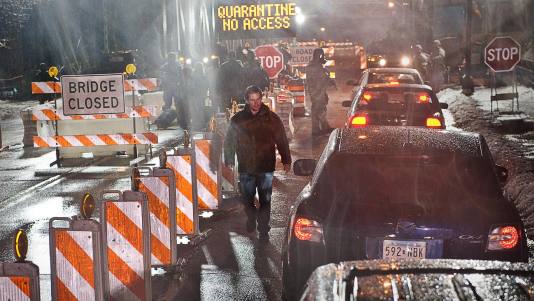
Contagion: A Movie Review

We’ve all seen pandemic movies before.  Andromeda Strain, The Stand, Outbreak, and 12 Monkeys come to mind, but all of these add something extra to the disease:  aliens, demons, time travel, or a government ready to nuke a California town.  Contagion adds something too, but unfortunately, it is all too plausible – visions of cracks in the thin veneer of order that covers our 21st century civilization.

First, let’s establish that such a disease is plausible.  Dr. Fatimah Dawood, an epidemiologist with the CDC confirms that animal viruses could combine to produce a deadly virus against which humans have no prior immunity.  Contagion is a vision of what people most feared during the H1N1 outbreak two years ago.

Can you imagine looting and outbreaks of violence if there was not enough food to go around?  What about people willing to profit from the distress or death of large numbers of their fellow human beings?  Can you imagine local governments delaying the closure of shopping malls at the start of an epidemic because of the Thanksgiving shopping weekend?  If not, please send me the location of a portal to the universe where you live.

Director, Steven Soderbergh, set out to make a scary and realistic disaster movie set in our post 9/11 and post Katrina world.  He builds and maintains suspense with restraint and subtlety.  Contagion opens with a dark screen and the sound of a woman coughing.  Then we see Gwyneth Paltrow reach into a bowl of nuts at a crowded airport bar.  Twenty seconds into the movie and I was gripping my seat.  The tension remained compelling throughout this two hour film.  As with many books and movies of the action/adventure genre, I didn’t deeply connect with the characters.  There were two many stories going on at once, and perhaps I instinctively held something back, not knowing who would live and who would die.  Most critics have given Contagion three stars out of four and I would agree.  Because of my emotional distance from the protagonists, I wouldn’t call it a great movie, but it is very very good.

We learn at the end of the film exactly how the virus mutation occurred.  Strangely enough, I thought of the novels of Thomas Hardy, where seemingly minor coincidence leads to disaster.  Hardy’s vision of the unfathomable relations between events actually mirrors certain concepts of modern science.  I remember hearing a pithy quote about the beating of a butterfly’s wings affecting weather on the other side of the globe.  One early 20th century physicist – I do not remember his name – said, “Bend down to pluck a flower and you affect the most distant star.”  What do the world views of Thomas Hardy, modern science, eastern religion, and Contagion, have in common?  A sense that events are connected and impact each other in ways beyond what the rational mind can ever grasp.

What is conspicuous by its absence, in the movie as in our culture, is a parallel understanding of ways that our fellow humans are interconnected for good or ill.  Some of the medical workers demonstrate selflessness and compassion, just like certain religious orders during the plague years in Europe, who ministered to the sick until they fell ill.  One thing the CDC people have in the movie which no one else does, is information.  We know from Katrina that orders, and curfews, and martial law, combined missing information, can drive people to the breaking point.

We identify with Mitch Emhoff (Matt Damon) and his daughter and hope we could do as well as they struggle to stay alive and keep their humanity while the social order crumbles.  Lawlessness is muted in Contagion, but it is there, and I found myself wondering what I would do, after standing in line for hours at a military food distribution point, only to have the rations run out and a soldier say, “You’ll have to come back tomorrow.”  What would I do?  Walk away like Emhoff or charge the empty truck like some of the others in a futile display of fear and frustration?

Contagion is a movie I will be thinking about for some time.  As an extra dividend, my hand washing habits instantly improved.  I’m sure yours will too if you see this movie.

Your Brain on Google

According to Alva Noe, Professor of Philosophy at UC Berkeley, Google is not making us stupid.  Good news, even though I wasn’t worried until I saw his article. http://www.npr.org/blogs/13.7/2011/09/20/140625802/google-is-not-making-you-stupid.

Noe is the author of, Out of Our Heads: Why You Are Not Your Brain and Other Lessons from the Biology of Consciousness.

He refers to results of a Columbia University study that found we are more likely to remember things we cannot find online than things we can.  The study caused some concern, but Noe says this is unwarranted and links to a blog with this quote from Einstein:  “Never memorize something that you can look up.”

Researchers are not picking on Google in particular but cite it because the phrase, “Google effect” has come to stand for the way many new technologies influence us.  Noe suggests that they are not qualitatively different from other tools we use to navigate the world and make sense of it:  “We use landmarks and street signs to find our way around; arithmetical notation makes it possible for us to calculate with big numbers; we wear wrist watches so that we can know the time without needing to know the time; and we build libraries so that we have access to what we need to know, when we need to know it.”

My predisposition to agree with Noe is based on Sherlock Holmes.  Conan Doyle’s famous detective told Watson he could not afford to fill his mind with information not relevant to his profession.  As a result, he could identify 37 varieties of cigarette ash but knew almost nothing about the solar system.

Beyond my lifelong fascination with Holmes, several things leap to mind.  I really don’t use the internet to remember things – I use it to find things.  Also, memory and intelligence are not the same.  If they were, I’m sure post-it-notes would have shaved several points off my IQ.

Though I don’t worry about Google and memory, Noe adds a link for further reading that raises more serious concerns.  In August, 2008, Nicholas Carr published an article in The Atlantic, called, “Is Google Making Us Stupid:  What the Internet is Doing to our Brains.”  http://www.theatlantic.com/magazine/archive/2008/07/is-google-making-us-stupid/6868/).

Carr is the author of, The Big Switch: Rewiring the World, From Edison to Google.

If nothing else, the internet is changing our brains, says Carr:  “I’m not thinking the way I used to think. I can feel it most strongly when I’m reading. Immersing myself in a book or a lengthy article used to be easy. My mind would get caught up in the narrative or the turns of the argument, and I’d spend hours strolling through long stretches of prose. That’s rarely the case anymore. Now my concentration often starts to drift after two or three pages.

Carr cites the work of Marshall McLuhan, who in the ’60’s observed that media not only supply the content of thought, but shape the process of thought.  Carr says, “what the Net seems to be doing is chipping away my capacity for concentration and contemplation. My mind now expects to take in information the way the Net distributes it: in a swiftly moving stream of particles.”

Before anyone panics, we should note that Carr is primarily talking about the fight “to stay focused on long pieces of writing.”  An acquaintance of his says he can’t read War and Peace anymore.  I couldn’t get through it even once.  Carr emphasizes intelligence as a series of very cerebral pursuits.  I suspect he and I have different ideas of “meditation and contemplation:”  I don’t think he’s talking of sitting meditation, something I’ve always used to counterbalance intellectual activity, and one I do not find impacted by time spent online.  Watching a violent movie may impact my ability to meditate, but so far, Google does not.  Maybe I’m in denial, but these concerns are fairly low on my hierarchy of worries.

Carr cites another concern that comes from the mouths of the founders of Google:  Sergey Brin and Larry Page, the gifted young men who founded Google while pursuing doctoral degrees in computer science at Stanford, speak frequently of their desire to turn their search engine into an artificial intelligence, a HAL-like machine that might be connected directly to our brains.  More than once, I’ve chatted with friends about how “they” will jack into our brains when the day comes:  USB?  Firewire?  The Matrix ruined my ability to take such a fantasies literally.

***

Serious research is underway, studying what is good and bad about our reliance on the internet.  Parallel hopes and concerns met Gutenberg’s invention of the printing press.  From the distance of centuries, we can see how it affected our brains.  No one in a literate culture has the memory of the tribal Griot in Alex Haley’s, Roots, or the ancient Homeric poets, but we have to ask, along with Einstein, how much should we care?  Is that kind of memory central to intelligence?  Does it’s loss have a negative human destiny?

The internet seems every bit as profound a change as the invention of printing, and it’s likely to take a long time for the dust to settle so that objective evaluations can occur.  Hopefully, as with printing, the good will outweigh the bad.

***

Everyone who has made it through this post should feel good about their ability to concentrate.  Having come to the end, I’m going to go for a walk – one of those those vitamin C for the brain type strategies that can hopefully inoculate me even against the dangers of Google!.