Causes for happiness according to Carl Jung

Recently I thought of a chain of events in my life that I first considered unfortunate, though eventually they led to better results than I ever imagined. This got me thinking of “happiness,” and how wrong our ideas about it can be.

A few years ago I saw one of those lists of “10 factors for happiness” that both confirmed popular hunches (good health is factor #1) and contained surprises (children or no children makes no statistical difference in life satisfaction surveys).  Searching Google for “10 factors of happiness” led to 32 million hits.

I didn’t find the one I was after, but many of those I scanned were interesting.  None pretended to guarantee a sense of wellbeing – there are too many intangibles, such as personal outlook.  We’ve probably all known healthy, well to do, miserable people, as well as those who find satisfaction in overcoming adversity.

Public domain

Public domain

I am also attuned to Buddha’s warning, that any sense of wellbeing that depends on outside conditions is subject to change because those conditions are subject to change. I view these lists not as suggestions on where to look for the ultimate good, but as factors that can improve our odds of feeling satisfied much of the time.  The list I found most interesting gave five conditions for happiness according to Carl Jung.

  1. Good physical and mental health.
  2. Good personal and intimate relationships, such as those of marriage, the family, and friendships.
  3. The faculty for perceiving beauty in art and nature.
  4. Reasonable standards of living and satisfactory work.
  5. A philosophic or religious point of view capable of coping successfully with the vicissitudes of life.

I was especially interested to read “satisfactory work” in item #4, as “settling” for “satisfactory” work (rather than following my bliss) was the life choice I referred to at the start of this post. From what I’ve observed, following bliss is a slow, long term process, filled with trial and error, because most of us don’t know our bliss till we stumble over it in the dark – but that is a topic for another day.

In the Psychology Today article I’m quoting from, Jung observed that “No matter how ideal your situation may be, it does not necessarily guarantee happiness.” He also suggested that chasing happiness doesn’t work.  I agree in part. I think happiness is a by product of other actions rather than something we can grasp directly, but I know from personal experience that numerous actions and attitudes can improve or worsen my odds.  For instance, I find it helpful to limit TV news viewing to the PBS Newshour two or three times a week, and sometimes even that is too much. Dwelling on bad news we cannot change doesn’t appear on anyone’s happiness list.

Perhaps the best advice I received on happiness came from a high school English teacher, one the most important mentors I’ve had in this life. His was a one item list: “I think life is satisfying only when we’re committed to something greater than ourselves.” In the decades since then, I’ve found lots of elaborations, but nothing superior to that as a way to orient my inner compass.

What do you think?  What works for you or makes your glass half full and occasionally running over?

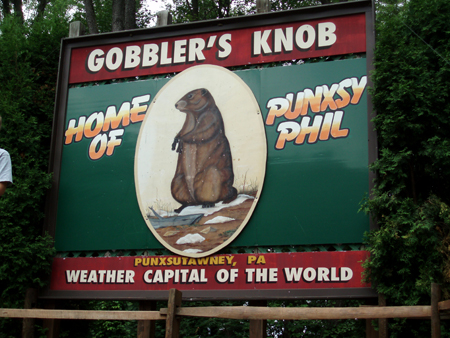
Phil sees his shadow!

Photo by Eddie~S, CC BY 2.0

Photo by Eddie~S, CC BY 2.0

In the key news event of the day, I’m sad to report that it was sunny in Punxsutawney, PA, spooking the groundhog and plunging us into another 6 weeks of winter.

This has not been a winter anyone wants to linger.  A mini-ice age threatens the east, while 11 western states are morphing into Death Valley.  And to add insult to injury, here in northern California, where legions of disgruntled football fans are settling in to watch those other teams play – all the while muttering that at least spring training starts soon – spring may be on hold!

So as the blues settle in like the overcast on this chilly, cloudy, but rainless day, only three suggestions come to mind:  (1)  book a flight to Hawaii, (2) drink some more caffeine, (3) watch a funny movie.

It just so happens that I have an idea for number 3:

"Don't drive angry!"

“Don’t drive angry!”

PostScript: For readers outside our borders, who may not get all my topical references, here is a brief glossary:

  1. February 2 is “Groundhog Day.”  When the groundhog emerges (most famously, Punxsutawney Phil, in Pennsylvania), if he sees his shadow, it will spook him and he’ll return to his burrow for another 6 weeks of winter.
  2. Here in the western US, where we have no groundhogs, it’s sometimes called Prairie Dog Day, but that hasn’t gained much traction in the media yet.
  3. Local sports fans are disgruntled because our beloved 49’ers were knocked out of the playoffs by the devil-spawned Seattle Seahawks.  No real rancor, although we hates them forever, my precious.

Let me know if I can be of any further assistance explaining my rant.

Final notes on the Grail and the Wasteland

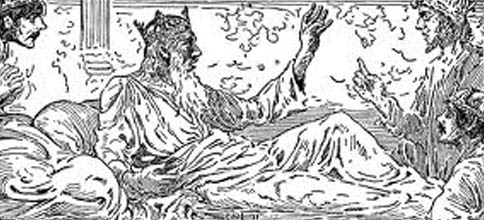
An ailing king lives at the heart of the Wasteland. We often find this figure in fairy tales, such as “The Water of Life,” where efforts to heal him launch the story.  Jungians interpret the king as the “dominant ruling attitude” of a culture or individual, which grows atrophied unless it is periodically renewed.

water of life king

In seeking a simple description of our own collective attitude, I thought of an often misquoted phrase spoken by President Calvin Coolidge in 1925: “The chief business of the American people is business.”  This attitude swept the world in the years since then and sheds much light on our current Wasteland with an ecosystem in crisis.  Sadly, few people know what else Coolidge said in that speech:  

“Of course, the accumulation of wealth cannot be justified as the chief end of existence…So long as wealth is made the means and not the end, we need not greatly fear it…But it calls for additional effort to avoid even the appearance of the evil of selfishness. In every worthy profession, of course, there will always be a minority who will appeal to the baser instinct. There always have been, probably always will be, some who will feel that their own temporary interest may be furthered by betraying the interest of others.” (1)

***

In the earliest versions of the legend, the king is healed when the hero asks this question:  “Who does the Grail serve?”  In these tellings, the Grail is a stone or a large platter that nourishes each person according to their heart’s desire.  This suggests a cornucopia, a potential earthly and spiritual abundance.  There have always been cycles of growth and cycles of famine, cultural florescence and decay.  In the legend, that question, “Who does the Grail serve?” appears to lie near the heart of these cycles.  Somehow we intuit that what Campbell termed “Greed for more  than one’s share” on a large scale is a formula for disaster.

***

In my two previous posts, I mentioned hearing many accounts of people seeking new ways of doing most everything.  I’ve collected so many stories it took several days figure out how to present them.  Simplicity won out in the end; here is one brief account, with more to follow in the future.

I’ve listened to Jill Stein on several occasions, most recently on BillMoyers.com in November, 2013.  Stein, a Harvard Medical School graduate, “became so outraged by how politics adversely affected her patients” that she ran as the Green Party candidate for president in 2012.

Naturally, she was not allowed to participate in the presidential “debates,” which don’t really deserve the name, but in 2012 she and Green vice-presidential candidate, Cheri Honkala, were arrested for simply trying to enter the debate hall.  “We were arrested, taken to a secret detention facility, and handcuffed to metal chairs for eight or nine hours until the debate was long over.”  

Jill Stein, 2012 Green Party candidate for president

Jill Stein, 2012 Green Party candidate for president

You’d expect her to be discouraged after this blatant violation of civil liberties, as well as a host of other abuses she cited during the interview, but she was not, saying instead that,

“America is ready to move. And when we start moving together…all we have to do is realize how numerous, strong and inspired we are. And then we are unstoppable. You know, in the words of Alice Walker, the biggest way people give up power is by not knowing we have it to start with. It’s by flicking that switch and rejecting the disempowerment that’s beaten into us every waking moment by every media source that surrounds us.”

I encourage everyone to watch the interview or read the transcript.  There much that was frightening but even more that was hopeful in this discussion of our current situation.  As time goes on, I’ll feature other optimistic stories I have collected, featuring “ordinary” people searching for those Grails that can transform and renew the world and the lives we are living.

In memory of Pete Seeger

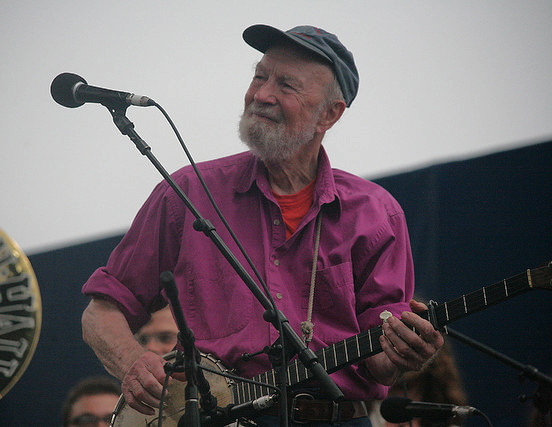
Pete Seeger, 1919-2014.  Photo by wfuv, Creative Commons

Pete Seeger 1919-2014. Photo by wfuv, Creative Commons

“The key to the future of the world is finding the optimistic stories and letting them be known.” – Pete Seeger, 1994

I was fortunate enough to hear Pete when he dropped by to play several informal concerts at the high school I attended during my sophomore and junior years.  Not even really “concerts” – they were too informal and intimate for that.  He sat on a folding chair with his banjo and sang, talked, joked and got us to sing along.  It should be clear to those who read this blog that I am not the sing along type, but it was different with Pete Seeger.

He had a presence, an authenticity, a naturalness that won us over.  He was instantly “one of us,” and this in an era when we said, and really believed, “Never trust anyone over 30.”  We had seen betrayal.  We knew what it looked like and felt like.  But Pete was one of us.  “We’re all in this together,” he seemed to say, “as brothers and sisters.”  You wanted to sing along, be part of a moment like that.

Just “small events” that I’ve never forgotten.  The memory jumped to mind when I heard that Pete has moved on from this world.  Our good fortune is that he gave us so many anthems to remind us that we are still in this together.

More notes from the Wasteland

Joseph Campbell considered the Wasteland and the quest for the Grail that heals it to be a core myth for our time.  During “The Power of Myth” series at the end of his life,  Campbell said the Wasteland results from a worldview that divides matter and spirit.  Referring to the Fisher King’s wound he said:

“the Christian separation of matter and spirit…has really castrated nature. And the European mind, the European life, has been, as it were, emasculated by this separation. The true spirituality, which would have come from the union of matter and spirit, has been killed.” (1)

Generations of western thinkers, culminating in Descartes, built upon the split Campbell cites to elaborate a mechanistic view of nature that made the world ripe for human exploitation.  Results of this world view are visible everywhere, both in the headlines and in the landscape around us.  This part of California, for instance, still bears the scars of hydraulic mining 150 years after the gold rush.
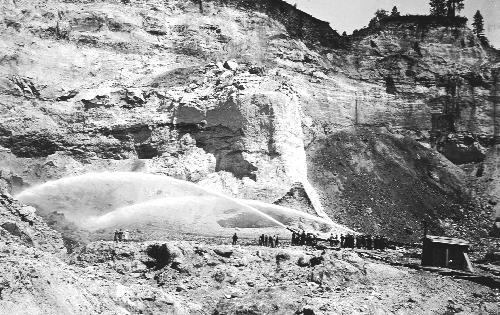
Hydraulic mining along the Yuba river.  Malakofdigginsstatepark.org

Hydraulic mining along the Yuba river. Malakofdigginsstatepark.org

Deliberate exploitation isn’t always the culprit.  We think of Native Americans as attuned with nature, but even they made mistakes.  From AD 900-1150, such a large concentration of Pueblo people lived in Chaco Canyon, NM that they cut an estimated million trees from the surrounding Colorado Plateau.  The resulting erosion, loss of game habitat, and flooding is thought to be one reason why they abandoned the site.  The surrounding landscape, once forest, has been desert ever since.
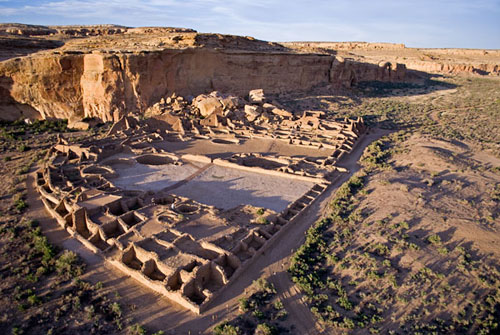
Pueblo Bonito ruins, Chaco Canyon.  Photo courtesy of Scott Haefner, scotthaefner.com

Pueblo Bonito ruins, Chaco Canyon. Photo courtesy of Scott Haefner, scotthaefner.com

Now that humans have the power to disrupt the environment on a global scale, the question of whether the harm is deliberate or inadvertent may be moot, but serious differences still lie at the heart of competing world views.  Campbell touched on this issue in Creative Mythology, the last book of The Masks of God, a four volume study of world mythology that he wrote between 1962 and 1968.  In this series, he ascribed four functions to myth (2)

  1. The Metaphysical Function: Awakening a sense of awe before the mystery of being
  2. The Cosmological Function: Explaining the shape of the universe
  3. The Sociological Function: Validate and support the existing social order
  4. The Pedagogical Function: Guide the individual through the stages of life

The Grail story resonates on all of these levels, but since I want to consider the Wasteland myth in light of our current environmental crisis, the third and fourth functions have the greatest relevance here.

Campbell points out that humans are born too soon, “absolutely helpless,” and unlike most other animals, learn how to survive from a social group.  Our earliest myths derive from the hunter/gatherer era, “hardly greater than large families, of which every adult member was in possession of the entire cultural heritage.”  

These earliest myths “served a fostering, educative function, bearing the unfinished nature product to full, harmonious unfoldment as an adult specifically adapted for survival in a certain specific environment, as a fully participating member of a specific social group; and apart from that group he would neither have come to maturity nor have been able to survive.”  There was room for diversity, but no one who threatened the group was tolerated.

The next strata of myth emerged when humans settled into agricultural communities, beginning around 7500 B.C..  Villages grew into towns and then into cities and “it was precisely at this point of space and time, in the Near East, and specifically Sumer, c. 3500-3000 B.C., that the evidence first appears among the ruins…first, of a disciplined social order imposed from above by force, and next, of deliberate expeditions of military conquest against neighbors…campaigns of systematic conquest and subjugation.”  The principle here, said Campbell, was “greed for more than one’s share.”

Imposed social orders are not inherently bad, says Campbell.  Despite romantic fantasies of the noble savage, few people really want to live in caves or give up such boons as advanced medicine, arts, spirituality, and transportation, to say nothing of indoor plumbing.  Like conventions in writing, music, or painting, cultural conventions may spark creativity when they are new and later stifle it as they atrophy.

“The Waste Land, let us say then, is any world in which…force and not love, indoctrination not education, authority not experience, prevail in the ordering of lives, and where the myths and rites enforced and received are consequently unrelated to the actual inward realizations, needs, and potentialities of those upon whom they are impressed.”

This was the situation when the European Grail myth emerged; the first written version was composed in the 12th century by Cretien de Troyes at the very time the inquisition began.  The Grail legend served as a counterpoint to the institutional church; the tale can be read as the map of a quest for personal realization, safely couched in a story of ladies and knights.  In the earliest versions, the Grail was not the cup of the last supper but a stone or a large stone dish, which like the philosopher’s stone of alchemy, granted the heart’s deepest desire.

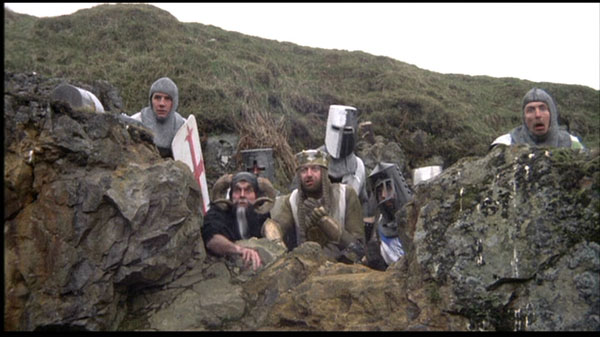
Even at our remove from the middle ages when the stories emerged, the Grail remains one of our living myths, at least if you pay attention to popular fiction and movies.  Think of The Da Vinci Code, Indiana Jones and the Last Crusade, and even Monty Python and the Holy Grail.
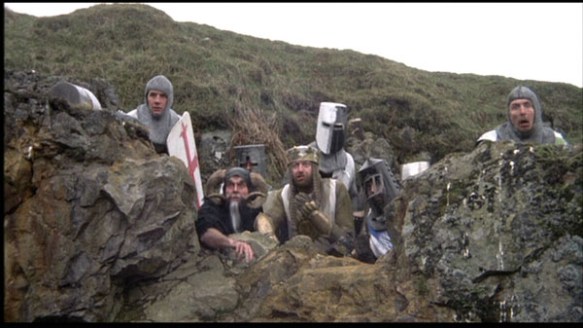
Pythons on the quest: at the lair of the Killer Bunny

Pythons on the quest: at the lair of the Killer Bunny

As much as the population of the middle ages, we are, in the words of 19th century poet, Matthew Arnold, “Wandering between two worlds, one dead, the other powerless to be born.”  The Grail continues to speak to such eras, especially one in which the Wasteland is not just the metaphor of an inner desert, but a world in which that desert is visible around us.

The Grail remains a shining image, never quite clear, but unforgettable, of the kind of life and world we seek among the confusion of possible futures.  At the end of “The Power of Myth” series, Bill Moyers asked Joseph Campbell what the myth of the future might be.

“You can’t predict a myth anymore than you can predict what you’re going to dream tonight,” Campbell replied (3).  “Dreams and myths come from the same place.”  Then he went on to say, “The only myth that’s going to be worth thinking about in the immediate future is going to be one that is talking about the entire planet.”

Earth from space

“You don’t see any divisions there of nations or states. This may be the symbol of the mythology to come. That’s going to be the country we are celebrating.” – Joseph Campbell, 1987″

Next:  Some people who are already question for the Grail.

Notes from the Wasteland

Photo by David Mark, public domain.

Photo by David Mark, public domain.

Talk of drought in California isn’t uncommon.  Normally it means lower levels in reservoirs and thinner snowpacks in the Sierras.  Bad news for skiers, and boaters, and farmers, perhaps, and an earlier start to the fire season, but’s it’s January, and for those who don’t ski, or boat, or farm, it’s easy to ignore until summer. But this time it’s different. This year it simply will not rain.

Even in “dry” winters, you see warnings that river currents are cold and swift.  This year the river’s so low there is no visible current.  Half of the local lawns are brown, and those that are green invite visits from the “water patrols” the districts threaten to form.  They say the reservoir from which we get our drinking water is at 17%; that image isn’t easy to forget.

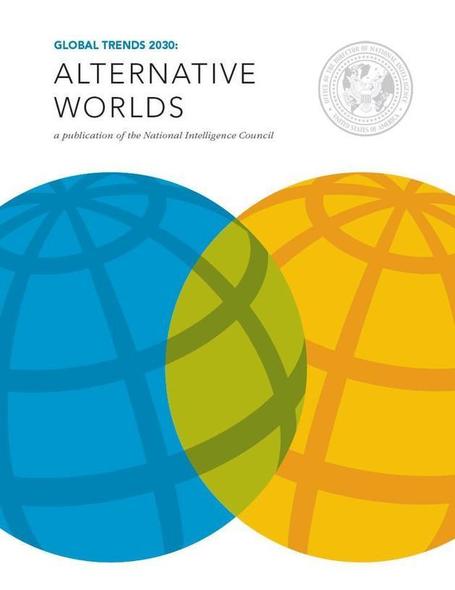
A year ago, I posted a report from the National Intelligence Council.  Every four years, the NIC, representing every US intelligence agency, collaborates on a summary of the world situation to give the incoming president.  They post the report online for anyone to read.  After the last presidential election, the NIC gave the administration a report called Global Trends 2030: Alternative Worlds:

Click for the text of the whole report

I discussed the report in detail in a post in December, 2012, but it’s worth reviewing one of the four “Megatrends” the report identified.  The CIA, the NSA, the FBI, and the 13 other agencies that compiled the report do not waste time debating climate change; they accept it as a given and factor it into predictions, saying that by 2030:

Demand for food, water, and energy will grow by approximately 35, 40, and 50 percent respectively owing to an increase in the global population and the consumption patterns of an expanding middle-class. Climate change will worsen the outlook for the availability of these critical resources. Climate change analysis suggests that the severity of existing weather patterns will intensify, with wet areas getting wetter and dry and arid areas becoming more so.

What gives you pause is their conclusion:

We are not necessarily headed into a world of scarcities, but policymakers and their private sector partners will need to be proactive to avoid such a future.

At this time, if we have to depend on our “policymakers and their private sector partners” to be proactive, we’re screwed, but there are different ways to look at our situation.  As usual, I try to relate literal “truth” to archetypal patterns, and in this case, the obvious mythic story is that of the Wasteland.

The story relates how Camelot fell apart.  How the rift between Arthur and his queen threw the land into ruin.  How the ailing king sent his knights in search of the Holy Grail, the one thing that could restore the barren world.  Those who reached the Grail Castle found another mysterious king inside, wounded through the testicles, in constant pain but unable to die.  His only relief by day was to float in a boat on a lake near the castle.  For this reason, he was known as “The Fisher King.”  He could only be healed by the right knight arriving at the castle to ask the right question.

Antecedents to the story are ancient and predate the Arthurian tales, perhaps by thousands of years.  In writing his poem, The Waste Land (1922), T.S. Eliot relied on an anthropological study, From Ritual to Romance by Jessie Weston, who in turn, drew on The Golden Bough, Sir James Frazier’s study of sacred kingship.

In the mythic cycle Frazier explored, the earthly king was “married” to the Goddess of the Land.  His potency and the earth’s fertility were one.  When he became old and infirm or impotent, the health of the land suffered.  He was ritually killed and a new king selected.  We find echoes of this in Arthur’s estrangement from Guinevere, though of course by then, the era when monarchs submitted to sacrifice was past.

We aren’t ruled by kings anymore, but if we consider “governments” alongside the word, “impotent,” and if we ignore what Viagra can fix, we find these meanings: “weak; ineffective, powerless or helpless; having no self-control.”

Yet the news isn’t all bad, and that is a theme I plan to explore in a series of posts exploring the Wasteland.  For one thing, the Grail hides there and nowhere else.  For another, the old stories never suggest that rulers can save us.  Renewal comes from the outsider, the dummling, the fool, Parsifal the rustic youth, or a carpenter from Nazareth.  

There are literally thousands of people today, already in or ready to enter the metaphorical forest on a quest for better ways to live.  I plan to discuss a few of their stories here.

“Arming the Grail Knights” by Edward Burne-Jones, tapestry, 1890’s, public domain

Cool water

“Cool Water,” a classic western song, was written in 1936 by Bob Nolan (1908-1980), a Canadian transplant to Arizona, who fell in love with the desert.  Nolan, an actor, poet, singer, and songwriter also wrote “Tumblin’ Tumbleweeds,” and is credited with the creation of “western music” as a distinct genre.

Bob Nolan in "The Lights of Old Santa Fe," 1944

Bob Nolan in “The Lights of Old Santa Fe,” 1944

“Cool Water” tells of a man and his mule, lost in the desert and beset with mirages.  The song has been widely covered by artists as diverse as Hank Williams, Marty Robbins, Joni Mitchell, Burl Ives, Johnny Cash, The Muppets, and Fleetwood Mac.

All day I’ve faced a barren waste
Without the taste of water, cool water
Old Dan and I with throats burnt dry
And souls that cry for water, cool, clear, water.

The song came to mind for obvious reasons last week:  Gov. Brown to declare California drought emergency.  Nobody here needs the newspaper to tell us we’re in trouble.  A glance at the brown lawns in January, and the American River, running lower than I’ve ever seen it at this time of year will do that.

My thoughts have been filled with many songs, stories, and images of water that I will be sharing here.  I was planning on writing a longer post today, but I never got past this clip of Marty Robbins’ version of “Cool Water.”

I first heard the song on my absolute favorite album as a kid, Robbins’ Gunfighter Ballads and Trail Songs.  Even though he’s kidding around with his friends (I think it’s a clip from “Hee Haw”), if you listen, it sounds like a prayer.  I think I’ll leave it at that for today.

Help wanted, heroes and heroines: must be civil and adroit

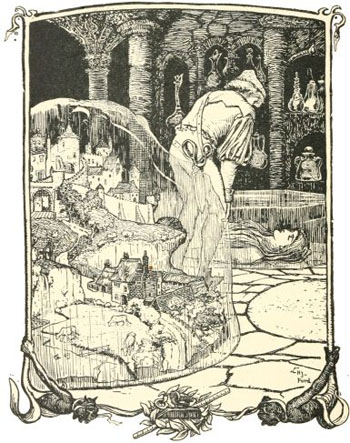
This unusual job description comes from the opening lines of a Grimm’s fairy tale I recently read for the first time.  Fairy tale characters never get more than a word or two of description, and most of the time, tags like “clever fox” and “evil stepmother” are so familiar they don’t make us stop and think.  The opening of “The Glass Coffin,” was different enough to catch my attention:

“A civil, adroit tailor’s apprentice once went out traveling, and came into a great forest, and as he did not know the way, he lost himself.”

Civil and adroit are good terms for key attributes of successful folklore protagonists.  Though the words may sound quaint to us now, the traits they describe are as relevant to our own world as they are to travelers in Faerie.

The Glass Coffin

The Glass Coffin

The virtue of civility:

Some of the Grimm Brothers’ stories seem to locate these attributes along gender lines, implying a world of civil females and adroit males.  But if we review a number of tales, much of the time we find both characteristic needed by men and women alike.

Girls who are rude or mean may wind up dead or have their eyes pecked out like Cinderella’s step sisters.  Toads may jump from their mouths when they try to speak.  Feminists point to such story features as efforts to domesticate young women and make them docile.  Yet for many youngest sons, success also hinges on civility, often to seemingly insignificant creatures.  It’s a dwarf who offers council in  The Water of Life.  When the worldly-wise older brothers mouth off to the little man, they end up imprisoned in stone.  The youngest brother, who is respectful and heeds (most of) the dwarf’s advice, wins his heart’s desire and more.

In many of these stories, motives are greater than simple expediency.  The hero of The White Snake shows genuine compassion.

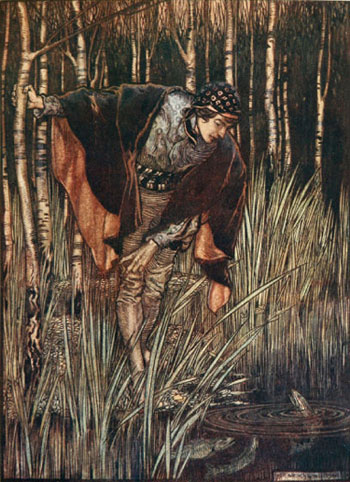
The White Snake by Arthur Rackham

The White Snake by Arthur Rackham

Through a bit of (adroit) trickery, a king’s servant gains the power to understand the speech of animals. He goes traveling and saves three different kinds of “lowly” creatures – fish, ants, and baby ravens.  Kind heartedness rather than self-interest drives him, for though the creatures promise to help him, they only do so after he sets them free.  There were no strings attached to his generosity.

The story is not just a simple call to spare the lives of all creatures, for the servant kills his horse to feed the ravens.  It would take another post to explore this detail, but to the extent that these stories dwell on  compassion, their theme is both ancient and timely.  The Dalai Lama put it in simple terms:  “If you want others to be happy, practice compassion.  If you want to be happy, practice compassion.”

The virtue of being adroit:  

The dictionary defines adroit as “skillful in a physical or mental way; clever; expert.”  In fairy tales, this sometimes means knowing when to kill your horse to feed the ravens.  At other times, it means cunning, trickery, and lies.  In stories, we often imagine these as men’s attributes, perhaps because traditional full time tricksters, from Hermes to Coyote, are usually male.  Yet in Grimm’s stories, young women need to understand and master deceit as often as men.  In Bluebeard-type tales, and notably a frightening story called “Fitcher’s Bird,” it’s a matter of life and death.

Part of being adroit is the intuitive sense of when someone or something feels wrong; when civility is not in order.  In fairy tales, women often do this better than men.  Typically, in three-brother stories, the youngest prince will trust his older brothers, even after the dwarf has warned him not to.  Cinderella and girls like her know better than to be fooled by older siblings.

Instinctively knowing when something is off has new relevance in the 21st century.  Interviews with 9/11 survivors adds to research suggesting our brains are not very good at processing radical changes or threats.  People on the upper floors of the South Tower had just over 16 minutes before the second airplane hit; those who left survived and those who waited did not.  On average, people took 1o minutes to choose.  In times of radical change, we need that cunning, adroit part of our ourselves to cut through the illusion that things will right themselves and return to “normal.”  It can be a matter of life or death.

***

Few things in fairy tales are certain, and the first story in the Grimm’s collection, The Frog King, is an exception that proves the rule proposed by this post.  The princess is neither civil nor adroit.  She’s a petulant brat, who gets what she wants by hurling the frog against a wall (the kiss only comes in later versions).  To our sensibilities, she doesn’t deserve the prince who appears when her act of violence breaks the spell.

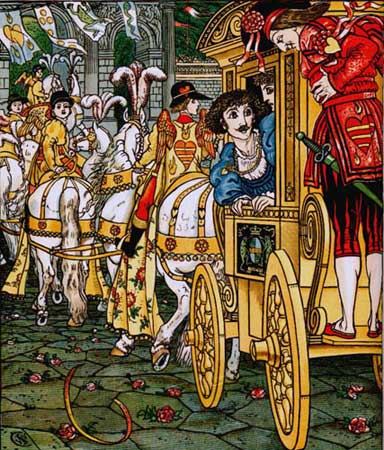
There’s an irony in the original “Frog King,” however.  When the transformed prince reunites with his faithful servant, Heinrich, he almost seems more delighted than he is with his new bride.  At least one illustrator, Walter Crane (1845-1915) implies that the princess won’t have everything to her liking.  Who does the prince have eyes for in the closing scene, and how does the princess appear to react?  Does this story end with a twist that the Brother’s Grimm shied away from?

The princess, the prince, and Heinrich in Walter Crane's 1874 illustration.

The princess, the prince, and Heinrich in Walter Crane’s 1874 illustration.

Experienced explorers warn us that the way through Faerie is perilous.  Trails may shift beneath our feet, and hard-and-fast rules don’t apply.  As Joseph Campbell observed, everyone must find their own way through the forest.

My latest exploration leads me to wonder if “adroit” is another word for “street smarts,” something we need in our own world as well as in dark imaginal forests and castles frozen in time.  And isn’t “civil” an attitude that understands that our own wellbeing, even in the most practical terms, must include the welfare of others?

The old stories may offer no certain answers, but with careful reading, they can always lead us to ask interesting questions.