Tales of the Dummling

Many of Grimm’s fairytales begin with three sisters or three brothers who have a critical task to perform.  Invariably, the youngest succeeds.    In her introduction to a story called “The Golden Bird,” Maria Tatar, editor of the recently published bicentennial collection says: “If the female protagonists of fairy tales are often as good as they are beautiful, their male counterparts often appear to be as young and naive as they are stupid.”

“The Golden Bird” illustrates the point.  The youngest son is so hopeless that even his animal guide, a fox, grows frustrated, yet in the end, the boy wins “complete happiness.”

Not all youngest sons are so dense, and sometimes the stories have great depth, like “The Water of Life,” which I discussed here last March (http://wp.me/pYql4-1OC and http://wp.me/pYql4-1Pm).

According to Marie-Louise von Franz, Carl Jung’s closest colleague and author of five books on fairytales, the Brothers Grimm published  50-60 stories of dumb youngest sons.  Von Franz thought these stories were so important, individually and culturally, that she started her first book on folklore, The Interpretation of Fairytales 1970, with a detailed study of one Dummling tale, “The Three Feathers.”  The story is one of the better known Grimm stories, present in the new annotated edition as well.  What follows is a brief synopsis.  The tale isn’t long and those who wish can read it on Project Gutenberg: http://www.reelreality.com/fairy_tales/grimms_fairy_stories/index.html#dummling

“The Three Feathers” from the Project Gutenberg ebook edition of Grimm’s fairytales.

*** Synopsis of The Three Feathers ***

Once an aging king had three sons. Two were clever, but the third didn’t say much and was considered dim-witted.  People called him Dummling [or “Dummy” depending on the translation].  The king decided to test the boys to determine who should rule his kingdom when he was gone.   He told them whoever returned with the most beautiful carpet would inherit the kingdom.  Then he took them outside, blew three feathers into the air and told his sons the feathers would determine which way they should go.

One son’s feather flew east and another’s west, but Dummling’s feather flew straight ahead a few paces and fell to the ground.  The other brothers laughed and set out, but Dummling just sat down by the feather and waited.  Eventually he noticed a trapdoor nearby.  It opened onto a staircase descending into the earth.  The boy followed the stairs down to another door on which he knocked.  From inside a voice called:

“Maiden, fairest, come to me,
Make haste to ope the door,
A mortal surely you will see,
From the world above is he,
We’ll help him from our store.”

Inside was a fat toad, surrounded by many smaller toads.  The boy said he needed the world’s most beautiful carpet.  The toad called out to the younger ones to “bring the box for the boy at the door.”  Inside was a beautiful carpet.  Dummling carried it home, his father was astonished, and declared that he should be the next king.

“The Three Feathers” from the Project Gutenberg ebook edition of Grimm’s fairytales.

The two other brothers, who had simply bought pieces of linen from the first peasant women they met on the road, protested so loudly that the king decreed another test.  He sent his sons out to find the most beautiful ring.  Again one feather blew east, another west, and Dummling’s by the trapdoor.  The fat frog called for a box in which the boy found a beautiful gold ring.  The brothers brought rings they had made from  nails they had taken from cart wheels.

Again the king declared Dummling the winner, and again the older brothers protested.  The king’s third test was to bring home the most beautiful wife.  Dummling won a toad bride who became a beautiful human woman after he took her home.  The brothers, who had married the first peasant women they met, complained again so the king ordered a fourth test.  The brides were ordered to jump through a hoop suspended in air.  Naturally, Dummling’s wife, who had been a toad, easily won.  Dummling received the crown and he ruled “with great wisdom” for many years.

Jumping through the hoop by Arthur Rackham

Jumping through the hoop by Arthur Rackham

***

In The Interpretation of Fairytales, Marie-Louise von Franz devoted three chapters to an in depth analysis of this tale.  She believed Dummling stories reflect the situation of individuals, cultures, and institutions that get stuck when certain rigid patterns and ideas cut them off from sources of renewal.

The first thing she notes is that all the Dummling tales begin with a father and three sons but no wife or sisters.  The feminine element is missing and regardless of what he sets out to do, the most important achievement of the younger son will be to bring home a bride.  In abstract terms, that is bringing Eros into a situation overweighted with Logos.  Von Franz cites cultural examples like the importance of the cult of the Virgin Mary in the medieval Catholic church.  She also says that third-son stories:

“compensate the conscious attitude of a society in which patriarchal schemes and oughts and shoulds dominate.  It is ruled by rigid principles because of which the irrational, spontaneous adaptation to events is lost.  It is typical that Dummling stories are statistically more frequent in the white man’s society than in others, and it is obvious why that is so.”

Once you start thinking along these lines, many characters spring to mind from history as well as the arts.  Saint Francis, who called himself “God’s Fool,” brought flexibility and Eros to the medieval church.  A classic movie example from recent times is  Forest Gump 1994.  Tom Hanks’ Dummling character succeeded where the smart people failed.  Gump, who lived in the moment and was close to his emotions, reacted to things as they happened rather than to his own fixed ideas.  Remember the movie’s opening shot of a feather?  If nothing else, that convinces me that Forest Gump’s creators knew the Dummling stories in detail.
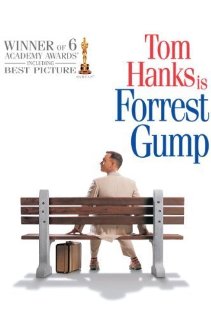
Tom Hanks as a modern Dummling

Tom Hanks as a modern Dummling

Von Franz amplifies the detail of the feather, saying it was a common medieval practice in many countries.  “If someone did not know where to go, if they were lost at a crossroads or had no special plan, he would take a feather, blow on it and walk in which ever direction the wind took it.  That was a very common kind of oracle by which you could be guided.”

It isn’t as apparent in this Dummling tale as it is many others that the older brothers are modern A-types.  They don’t have time to fuss with insignificant creatures like frogs, or dwarves, or old ladies, or any of those helpful beings who guide the youngest brothers on their way.  Youngest brothers have time to listen because their calendars are clear.  They sit by their feathers or walk through the forest, paying attention and waiting for new ideas to arrive.

Von Franz used the feather analogy in discussing her method of therapy.  She said when her patients were stuck, she would listen to their dreams to see which way the winds of the psyche were blowing.  When I studied psychology, one of my teachers spoke in the same vein, of the importance of listening to the little impulse, the small thoughts that are easy to ignore, like “Oh, that looks interesting,” or “Wouldn’t it be nice to take a few hours off for a walk beside the river?”  Smart older brothers, working on their MBA’s, don’t have time for things like that, which is how they get into therapy in the first place.

I’ve heard that when he was president, Harry Truman once said, “We’re going to try X, and if that doesn’t work, we’ll try something else.”  Our government might not be so stuck if politicians dared to admit that sometimes they don’t know the answers and need to see which way their feathers blow.

Sometimes being “smart” is a greater hindrance than being “dumb,” for the key thing is to be teachable.

I came upon the Dummling stories years ago, and they often come to mind when things are stuck in my own life or in what I observe around me.  “When you don’t know what to do, do nothing,” is a common and useful bit of advice.  I sometimes restate it and say, “When you don’t know what to do, sit by your feather and pay attention.”

The White Forest: an audiobook review

The White Forest, Adam McOmber’s debut novel, is a supernatural mystery set in Victorian England. Jane Silverlake lives in isolation with her father in a crumbling mansion on Hampstead Heath. She is grateful for the friendship of Madeline Lee and Nathan Ashe, a handsome young Crimean war veteran.

Since her mother died when she was six, Jane has been able to hear and feel the souls of man-made objects. Nathan, with a mystical bent, is convinced that Jane’s gift offers a key to the Empyrean, a hidden heavenly realm. Nathan joins a cult led by the sinister Ariston Day and disappears after a secret ritual. When Jane touches any of Nathan’s possessions, she has visions of an eerie white forest, as well as a Lady of Flowers who is connected with her mother’s death. With Maddie at her side, Jane sets out to confront Day, rescue Nathan, and unravel the mystery of the Lady of Flowers which is close to the mystery of her own identity.

This is my kind of fictional premise, and it also parallels history: late 19th century Britain saw a huge resurgence of interest in western occult traditions. I’m a huge fan of audiobooks and that’s the edition I chose after The White Forest’s publication in September, 2012.

Unfortunately, in all respects, the story is smaller than life.

The romantic triad of Jane, Maddie, and Nathan never has a strong enough pulse to drive the story. Jane seeks to rescue Nathan out of friendship and guilt for leading him astray, not out of love. At moments Jane feels the desire to be desired but we sense that she and Maddie would be fine in the end if Nathan never returned. Jane’s lack of passion for Nathan paralleled my lack of passion for her and her friends; I liked them – most of the time – but I never loved them.

“World building” is a key element of any magical world, but McOmber doesn’t carry it far enough. Despite plenty of backstory, the White Forest, the Empyrean, and the Lady of Flowers are never coherently integrated. In addition, Jane’s magical power, the ability to feel and let others feel the nature and history of objects, never feels that significant. There’s a wealth of information in print and online about 19th and early 20th century mysticism in Britain, such as the papers of The Golden Dawn. Just a bit more energy devoted to research by the author might have produced a compelling metaphysic for his world.

The lack of energy I sense in the world of The White Forest and its characters contributed to a lack of energy on my part as a listener. I downloaded the audio version last September, and just finished it now, as one of those end-of-the-year housecleaning chores. Though I wanted to like this book, I was disappointed and cannot recommend it.

Something is happening here…

Readers of a certain age will recognize the title of this post as part of the chorus of one of Bob Dylan’s iconic songs of the ’60’s, “Ballad of a Thin Man.”

And something is happening here
But you don’t know what it is
Do you, Mister Jones ?

What brought the song to mind was another simple phrase which seemed to sum up our own time in a similar pithy way.  Strangely enough, it came from a piece on CNN.com called “Why the best thing you can do is fail,” by Eddie Obeng, founder of a virtual business school  http://www.cnn.com/2012/12/30/opinion/obeng-business-disruption-ted/index.html.  Here is the passage that caught my attention:

“What’s happened in business is that the rules of the real 21st century aren’t clear to us, so instead we spend our time responding rationally to a world which we understand and recognize, but which no longer exists.”

We can substitute many other words for “business” and find the phrase rings equally true.  Try it.  “What’s happened in [publishing, school safety, government, warfare, economics, international relations] is that the rules of the real 21st century aren’t clear to us, so instead we spend our time responding to a world which we understand and recognize, but which no longer exists.”

Both the Dylan lyrics and Obeng’s observation put into simple words what we’ve known for some time but could not express so clearly.

One of my favorite words, liminal, stands for times like these, times of uncertainty and change in the life of an individual or a culture.  Webster’s Dictionary defines liminal as: “1 of or at the limen or threshold 2 at a boundary or transitional point between two conditions, stages in a process, ways of life, etc.”

I started a post in December concerning what fairytales have to say about living in liminal times.  Fairytales always happen in times of transition or crisis times.  Your father will die if you don’t find the water of life.  Your stepmother wants to kill you, or you find your new husband is a serial killer.  The king will cut off your head if you fail to capture  the firebird.

Can this be relevant to the 21st century?  I’m convinced that it can.

Right now I’m reveling in one of my Christmas presents, The Annotated Brothers Grimm, a fine new collection published to celebrate the bicentennial of Grimm’s fairytales.

Reading so many stories at the same time raises a number of questions.  What does it take for a character to survive their otherworld challenges?  Sometimes you have to obey a witch, and at other times you need to push her into the oven.  Sometimes not knowing is an asset and sometimes a fatal flaw.  You should listen to animals by the side of the road unless they are wolves and you’re wearing red.

I don’t expect to come up with definite answers, but I do expect to turn up some interesting questions.  This is my immediate plan; after that, I’ll do as I’ve always done on this blog, make things up as I go along.

I very much hope you’ll stay tuned.  And now, I’ll leave you with my wish for a joyous and prosperous 2013, and with a very old clip of Bob Dylan doing “Ballad of a Thin Man” in 1966 in Copenhagen…

The Walk to Paradise Garden

Recent events brought to mind a photograph by W. Eugene Smith (1918-1978), one of the greatest photojournalists of all time.  Forgetful of personal risk, Smith wedded “news” photographs to a powerful aesthetic sensibility, creating a body of unforgettable work.

Smith was an idealist.  During WWII, he aimed for nothing less than showing the horrors of war so vividly that people would recoil from the prospect in the future.  As a Life Magazine photographer, he landed with marines during 13 Pacific island invasions, including the battles of Saipan, Guam, Iwo Jima, and Okinawa.

His almost legendary luck deserted him on Okinawa, when he was hit in the face and hand by mortar fragments.  “I forgot to duck but I got a wonderful shot of those who did,” he said.  “My policy of standing up when the others are down finally caught up with me.”  

Two years and 30 operations later he was still not sure he’d be able to use a camera again.  “The day I again tried for the first time to make a photograph I could barely load the roll of film into the camera. Yet I was determined that the first photograph would be a contrast to the war photographs and that it would speak an affirmation of life.”  

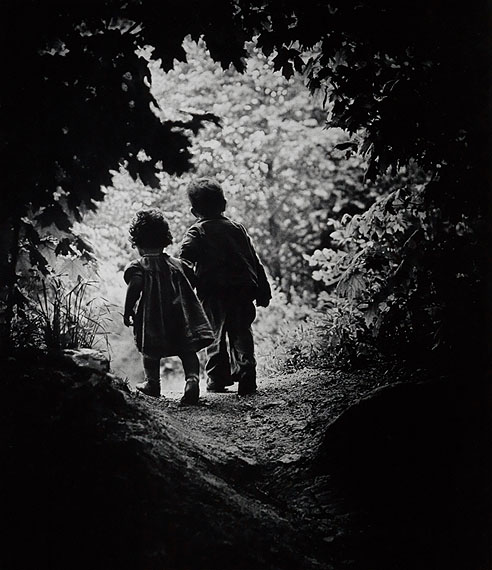
He followed his children as they went for a walk.  Fighting pain in his spine and hand, he took a single picture he called, “The Walk to Paradise Garden.”

The Walk to Paradise Garden by W. Eugene Smith

“The Walk to Paradise Garden” by W. Eugene Smith

The photo achieved world-wide fame when Edward Steichen chose it as the final image in his “Family of Man” exhibit in 1955.  Smith later wrote, “While I followed my children into the undergrowth and the group of taller trees…I suddenly realized that at this moment, in spite of everything, in spite of all the wars and all I had gone through…I wanted to sing a sonnet to life and to the courage to go on living it.”

I think as 2012 draws to a close, we all are in need of “sonnets to life and to the courage to go on living it.”  Smith’s photograph is the one that I am thinking of at this time.

Dylan Thomas reading, “A Child’s Christmas in Wales”

Here is the poet himself, reading one of my all time favorite pieces of Christmas writing.  Enjoy!

“One Christmas was so much like another, in those years around the sea-town corner now and out of all sound except the distant speaking of the voices I sometimes hear a moment before sleep, that I can never remember whether it snowed for six days and six nights when I was twelve or whether it snowed for twelve days and twelve nights when I was six…”

“…Looking through my bedroom window, out into the moonlight and the unending smoke-colored snow, I could see the lights in the windows of all the other houses on our hill and hear the music rising from them up the long, steady falling night. I turned the gas down, I got into bed. I said some words to the close and holy darkness, and then I slept.” 

The Princess Mary box and the Christmas Truce

When I was between the ages of 15 and 17, my family lived in France. One day in the flea markets outside Paris, I found a little brass box that bore my initials, MM, as well as a woman’s head in profile.  The inscription above the head read, “Imperium Britannicum” and below that, “Christmas 1914.”  The names of Britain’s WWI allies were printed around the perimeter:  France, Russia, Belgium, Serbia, Monte Negro, and Japan.

princess mary box

I bought the box – I don’t remember how much it cost – and have always kept little treasures inside.  Thanks to the internet, I discovered what it really is:  a Princess Mary Box, one of 400,000 gift boxes sent to British troops on the western front in time for Christmas 98 years ago [108 years ago in 2022].  The campaign to distribute the presents was led by Mary, the seventeen year old daughter of King George V.

***

In December, 1914, the first world war was four months old.  The German invasion of France had been stopped at the Marne that fall.  Both sides dug in for the winter, confident of a breakthrough in the spring that would end the war.  The first trenches were hastily dug, with no provision for drainage.  The winter was wet and cold, and the men spent their days knee deep in freezing water, with no way to get warm.

As Christmas neared, gifts began to arrive, which lifted the spirits of the troops.  According to firstworldwar.com, the men of the British Expeditionary Force got plum puddings and:

“Princess Mary boxes”; a metal case engraved with an outline of George V’s daughter and filled with chocolates and butterscotch, cigarettes and tobacco, a picture card of Princess Mary and a facsimile of George V’s greeting to the troops, “May God protect you and bring you safe home.” 

Princess Mary was 17 when she arranged for gift boxes for the troops.

The Germans got presents too, like meerschaum pipes, food, and small Christmas trees which they attached to the top of the trenches. A British Daily Telegraph correspondent reported that somehow the Germans slipped a chocolate cake into one section of the British lines, along with a request for a cease-fire that evening for a concert. The British agreed and sent gifts of tobacco in return.

That night, at 7:30, the German’s lit candles.  They raised their heads above the trenches and began to sing.  Later they called to the British to join in.  One Tommy yelled, “I’d rather die than sing in German.”  “It would kill us if you tried,” came the reply.

The British line stretched south from Ypres for 27 miles.  In some places, the trenches were only 30 yards apart.  Towns and fields and other reminders of civilian life had not yet been completely destroyed.  Every soldier stuck in the freezing mud longed for home and knew their foes did too.  The rain stopped on Christmas Eve.  The day was clear, and that night as they joined in Christmas carols, soldiers in ones and twos, then in groups, climbed out of the ground to greet each other in no man’s land.

British and German soldiers together, Dec. 25, 1914

In some places, the shooting never stopped, but in others the truce extended through Christmas day and beyond.  The men played soccer, traded uniform buttons and other souvenirs.  Barbers offered haircuts and shaves for free.  When the British high command, a safe 27 miles behind the lines, heard of the truce, they were outraged and issued stern orders forbidding fraternization.  Most field commanders on both sides ignored such orders.

Though in a few spots, things stayed quiet through New Year’s, in most places the truce ended when Christmas was over.  Captain J.C. Dunn, medical officer of the Royal Welch Fusiliers, recorded how the war started up again:

“At 8.30 [on Christmas night] I fired three shots in the air and put up a flag with ‘Merry Christmas’ on it, and I climbed on the parapet. He [the Germans] put up a sheet with ‘Thank you’ on it, and the German Captain appeared on the parapet. We both bowed and saluted and got down into our respective trenches, and he fired two shots in the air, and the War was on again.”

The story was squelched in the British papers until an account ran in the New York Times on December 31.  Word then spread around the world.  Nothing like it on that scale happened again.  Bombardments were ordered on future Christmas Eve’s to prevent it, and after the slaughter of 1916 and the introduction of poison gas, opposing troops grew more bitter toward each other.

I look at the Princess Mary Box and wonder about the soldier who opened it almost a century ago.  If the box turned up in a French flea market, I doubt that he made it home – many sent to the front in 1914 did not.  The brass of the box still shines.  It must have reflected lantern light in trenches and the flare of matches as the men lit up cigarettes sent from home.

princess mary detail

It’s nice to know how closely connected the box is with the Christmas truce, a moment in history that has always held a haunting fascination for me. Cynics claim the lull in fighting was used by both sides to spy out each other’s defenses.  I am not convinced.  People do not remember spying operations 100 years later, and the truce has never been forgotten.  As the men sang “Silent Night” in both languages, many in no man’s land must have truly experienced the peace of the holy day.

Firstworldwar.com concludes it’s account of the truce by saying:  “Perhaps this is the most important legacy of the Christmas Truce today.  In our age of uncertainty, it comforting to believe, regardless of the real reasoning and motives, that soldiers and officers told to hate, loathe and kill, could still lower their guns and extend the hand of goodwill, peace, love and Christmas cheer.” 

The text on this cross left near Ypres in 1999 reads, “1914 – The Khaki Chum’s Christmas Truce – 1999 – 85 Years – Lest We Forget.”

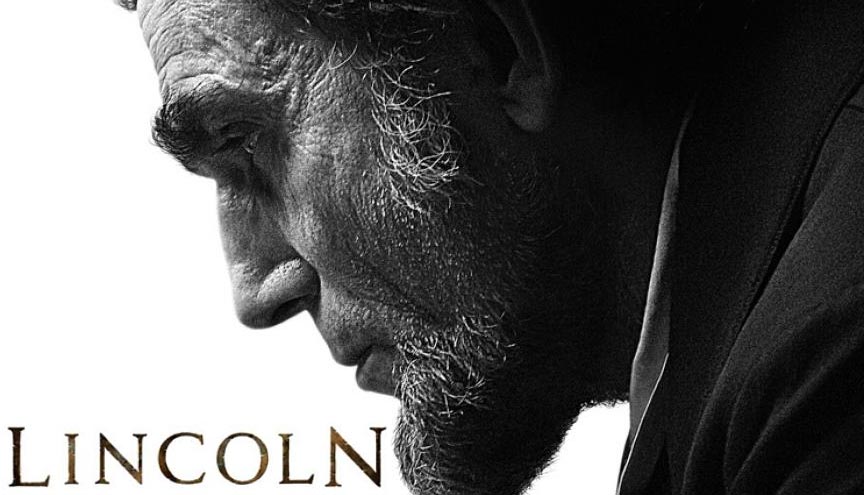
Lincoln: A movie review

Biographies and history books seldom convey how messy our lives really are as we live them or how messy our politics are in the morning papers.  We learn in grade school that Abraham Lincoln freed the slaves.  Now Spielberg’s Lincoln brings us a movie portrait of just how uncertain, costly, and chaotic that effort was.

Lincoln spans the months between January and April 1865, as the president cajoled, sweet-talked, threatened, and offered political appointments to members of congress in order to pass the 13th amendment to the constitution which banned slavery forever.  As a lawyer, Lincoln knew the Emancipation Proclamation, based on wartime powers he wasn’t even certain he possessed, could easily be struck down by the courts.

In tone, this is a post-heroic political movie that makes earlier visions, like Mr. Smith Goes to Washington, seem like hopeful adolescent illusions.  Yet maybe there is even more to admire in someone portrayed as flesh and blood, who holds onto an ideal in the midst of political and personal chaos.  We know the historical Lincoln agonized at the carnage of the last two years of the war and yet at the end, he allowed it to continue longer than necessary for the sake of an ideal that others considered madness.

Daniel Day Lewis is an actor of definitive roles.  For me, he became the definitive Hawkeye in The Last of the Mohicans 1992, and the archetypal 19th century criminal in his role as Bill the Butcher in Gangs of New York 2002.  Now he will be the Abraham Lincoln for this movie going generation.  With a fine supporting cast that includes Sally Field, Hal Holbrook, and Tommy Lee Jones, this movie will appeal to anyone with an interest in American History and fine drama.