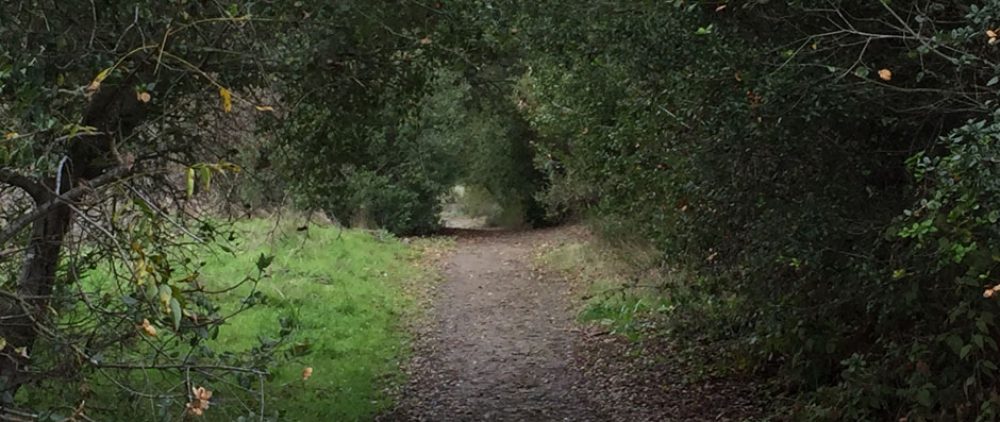
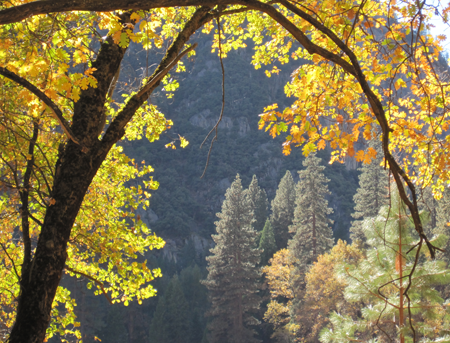
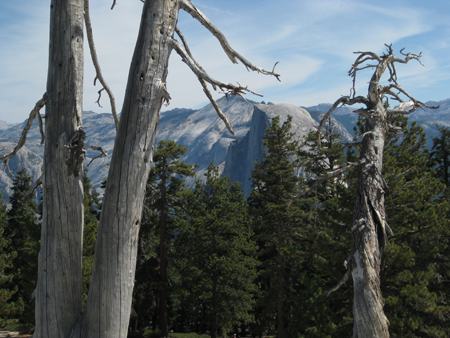
My family first came to Yosemite when I was a kid, and I’ve returned most years since then. Mary and I started traveling to the park soon after we met and were able to get up here again this week. Of all the seasons, late fall is my favorite. Here are some photographs taken in Yosemite in autumn over the last half-dozen years.
Merced River, south fork, Nov. 2009
Yosemite Valley, Nov. 2012. Photo by Mary.
Wawona. Nov, 2012.
Above Merced River, Nov, 2012.
Pool by Merced River, Nov. 2012
Yosemite is full of dramatic features and vistas, many made world famous by Ansel Adams, but often the feel of being in these mountains is best conveyed by what is right at hand or at one’s feet.
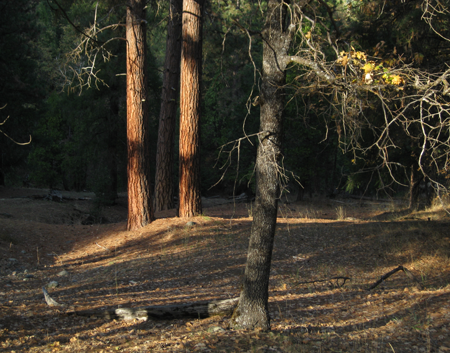
Wawona woods, Nov. 2012
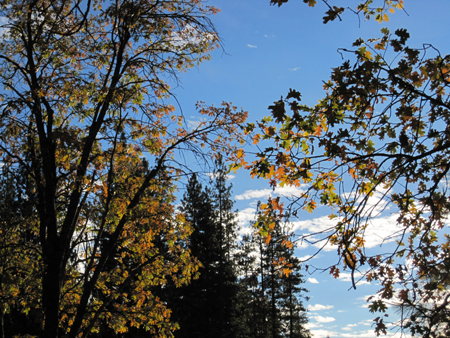
There aren’t enough different types of trees to rival New England fall colors, but I still never tire of those afternoons when the autumn light turns the oak leaves to gold.
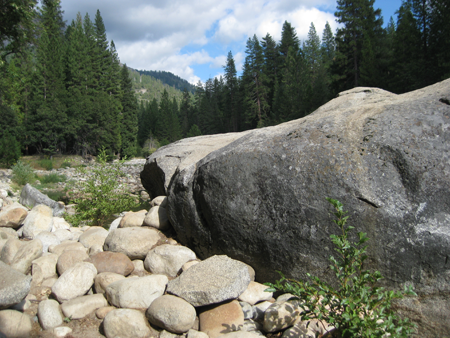
Dry riverbed, Oct. 2010
Wawona woods, Nov. 2012
South Fork, Merced River, Oct. 2010
Half Dome from Sentinel Dome, Oct. 2010
Yosemite Valley, Nov, 2006
Afternoon sky, Wawona, Nov, 2012. Photo by Mary
Photographing, 2012. Photo by Mary
Wawona woods, 2012
Wawona, near the south entrance of the park, is one of the best kept Yosemite secrets. Hiking, swimming, camping, lodging, markets, a restaurant, and access to skiing in winter are all at hand, minus the crowds of the valley. Don’t tell anyone…
This has been a season of losses. A friend recently died of something that should not have been fatal, and after the special treatments stopped working, we had to let go of our dog, Holly, who I wrote about in June. That’s partly what motivated my recent reflections on what matters most in our lives. The question comes up as well in the experience of a great friend and teacher who recovered from a serious illness this year.
Lama Kunga Thartse Rinpoche was born in Tibet in 1935. At the age of eight, he entered Ngor monastery where he was ordained as a monk at 16. In 1972, Rinpoche emigrated to the United States and later founded Ewam Choden Tibetan Buddhist Center in Kensington, CA (see the link on my blogroll).
Early this year, he was diagnosed with lymphoma. He underwent chemotherapy while his nearby friends and students saw to his diet and daily needs. Friends the world over offered prayers and traditional healing ceremonies. His cancer is now in remission and he just returned to a full teaching schedule seeming more vigorus than ever.
Lama Kunga Thartse Rinpoche
A week ago Sunday, I joined some of Lama Kunga’s students and friends in the bay area to celebrate his birthday and his return to health. This is a man who had lots of help in his time of need because he lives his life as everyone’s friend. In Buddhism, compassion for all sentient beings is the most important attribute we can cultivate. The Dalai Lama has said, “We can live without religion and meditation, but we cannot survive without human affection.”
Buddha gave different teachings for different kinds of practitioners. The first was Hinayana, the “lesser vehicle,” which aims at enlightenment to end suffering for the individual. Of far greater importance today is Mahayana, the “greater vehicle,” where the goal is to reach enlightenment for the benefit of all sentient beings. People are naturally drawn to those who fully embody such an ideal.
His Holiness, the Dalai Lama
Though not nearly as well known as the Dalai Lama, Lama Kunga also has the magnetic personality of one who sincerely tries to benefit all other beings. I hadn’t seen him in almost a year, but at his birthday party, we fell into conversation as if it had been just a week. We talked about things like Tibetan ways of cooking potatoes, but I found myself as uplifted as I have been after hearing him speak about subtle points of philosophy.
Some instructors teach with their whole being and not just their words, yet remain very human too. Lama Kunga is an avid golfer. In a 2002 interview in Golf Digest he said, “I would like to be reincarnated as a better golfer someday.” One of his golfing buddies reports that he sometimes uses “colorful sounding phrases in Tibetan” on the course.
When I was a junior in high school, one of my teachers said, “I really think life is only satisfying when we live for something greater than ourselves.” In the decades since then, the people I’ve most admired lived that ideal. “Rinpoche” is an honorific that means “precious one,” a title that friends of Lama Kunga know he richly deserves.
In my previous post, I talked about “Rosebud,” the sled that represented the unrequited desires of Charles Foster Kane in Orson Welles’ classic film, Citizen Kane. I’ve been thinking a lot about metaphors for the deep yearnings that push and pull us through life, for good or ill, depending on whether they’re wise or foolish and if we know what they are.
Another of my favorite movie metaphors comes from the 1991 comedy, City Slickers. Three middle aged men, looking to reignite the passion in their lives, sign up for an old west style vacation that includes a cattle drive. Things go wrong of course, and the dude ranch experience becomes a fight for survival, with nasty villains, a stampede, and raging rivers.
One night, after chasing stray cows into a canyon, timid Mitch (Billy Crystal) opens up to Curly (Jack Palance), the hardened trail boss. Curly turns out to be wise as well as tough, and tells Mitch he needs to discover and follow “the one thing” that matters most in his life.
The one thing
Another phrase I love for our one thing, is “throughline,” a screenwriting term that was coined by Constantin Stanislavski, the great proponent of character acting. A throughline propels the protagonist through a story. It’s the core motivation that carries the hero from scene to scene and through all the gains and setbacks.
“Throughline” is great as a metaphor because it’s expected to change, just as our “one things” do in life. Frodo initial goal is to carry the ring to Rivendell and place it in more capable hands, but just as in our lives, inner and outer events alter his goal.
Because of the election season, I recall the same dynamic in the life of Jimmie Carter. In 1980, his goal was a second term as president. After a resounding defeat, his life’s “through line” changed and deepened. He threw himself into humanitarian work and extensive diplomatic travel and won the Nobel Peace Prize in 2002. I read two books of his theological reflections and realized that Carter’s “one thing” is a dedication to Christian values that transcends what you usually hear from politicians still trying to get elected.
“Thread” is another common image for the one thing we use to chart our course in life. In the Greek myth, Ariadne gives Theseus a ball of thread to find his way out of the labyrinth after slaying the monster within.
Ariadne and Theseus by Niccolo Bambini, Italian. Date unknown. Public domain.
I’ve already quoted my favorite thread image on this blog, but will do it again. It’s William Stafford’s poem, “The Way it Is,” 1993:
The Way It Is
There’s a thread you follow. It goes among things that change. But it doesn’t change. People wonder what you are pursuing. You have to explain about the thread. But it is hard for others to see. While you hold it you can’t get lost. Tragedies happen; people get hurt or die; and you suffer and get old. Nothing you do can stop time’s unfolding. You don’t ever let go of the thread.
There may be people who know from the start what matters in their lives, but for the rest of us, there’s a lot of trial and error. Awareness of “time’s unfolding” is what gives such reflections their force. What is the one thing or few things I truly care about? Is there any question more important than this? Next time I will write about a man whose entire life is an exemplary answer.
It couldn’t be a finer autumn day in north-central California. Going to vote this morning, in the golden-tinged sunlight, it was easy to bask in the hope of new beginnings, in the hope that difficult times will call forth a renewed vision and strength of purpose in those we elect. Perhaps “ordinary” men and women will prove to be extra-ordinary in our times as they have done in the past.
Yet this week I’ve been thinking of Citizen Kane, for I fear that many who run for political office share the motivation of Charles Foster Kane, in what some have called the greatest American movie ever made. Kane had a hole in his heart that no amount of money, or women, or power, or things could fill.
After his death, one of his friends told a reporter, “All he ever wanted in life was love. That’s Charlie’s story, how he lost it. You see, he never had any to give.”
How could he? When he was a boy, his mother essentially sold him into public life for a comfortable yearly stipend. The last word on Kane’s dying lips was “Rosebud,” the name of his boyhood sled, which represented the dream of freedom and warmth he could never force the world to yield up.
I think we have to know something about our own Rosebud, the hole in our own hearts, to keep our lives from careening out of control. If we haven’t gone a few rounds with our private angels and demons, we might even enter politics for all the wrong reasons!
Joseph Campbell phrased it in terms of the Grail Quest. In youth we may gain a vision or intimation of a Great Good, beyond the power of youth to bear. We spend our lives on the trail of this Boon which we have seen and lost. Something like that appears to happen to nations when the youthful vision gets lost, for the old stories make clear that when the Grail is hidden, the land becomes barren.
It’s a good day to pray for our new leaders, whoever they turn out to be, for “us and them” is just a destructive illusion; no matter what we may wish, we are all in this together.
Last Sunday I caught an NPR interview with one of today’s finest country and folk music artists, Iris Dement. Her music is not as well known as it should be, though it has been featured on several notable TV shows and movies.
I first heard Dement’s music in the final scene of the final episode of my favorite TV show of the 90’s, Northern Exposure. The song, “Our Town,” from her first album Infamous Angel 1992, illustrates one constant in her work, an unflinching look at the losses and longings that permeate our lives.
And you know the sun’s settin’ fast, And just like they say, nothing good ever lasts. Well, go on now and kiss it goodbye, But hold on to your lover, ‘Cause your heart’s bound to die. Go on now and say goodbye to our town, to our town. Can’t you see the sun’s settin’ down on our town, on our town, Goodnight.
In the NPR interview, Dement said that for her, singing is prayer, and two other songs on Infamous Angel reflect the range of her spirituality. The album’s title song is about redemption, imagined from the perspective of her evangelical upbringing, while “Let the Mystery Be” opened the soundtrack of Little Buddha 1993.
Everybody’s wonderin’ what and where they all came from. Everybody’s worryin’ ’bout where they’re gonna go when the whole thing’s done. But no one knows for certain and so it’s all the same to me. I think I’ll just let the mystery be.
Dement’s second album, My Life, 1994, won a grammy nomination in the Best Contemporary Folk Album category. The liner notes explain why it’s dedicated to her father who had been a fiddler but stopped playing after he was “saved.” Young Iris was fascinated by the dusty violin case in the back of the closet and one day mustered the courage to ask her father to play a song. He looked at her and at at the violin for a very long long time before picking the instrument up. The few bars he played gave his daughter permission. “No Time to Cry,” is her song about his passing.
Also notable on My Life is “Sweet is the Melody,” a beautiful song and fine expression of the nature of the creative process:
Sweet is the melody, so hard to come by It’s so hard to make every note bend just right You lay down the hours and leave not one trace But a tune for the dancing is there in it’s place
Dement appears in Songcatcher 2000, a movie about an early 20th century musicologist collecting Scots-Irish ballads in the Appalachians. She sings “Pretty Saro,” an expression of American roots music that parallels her own search for musical authenticity. Her most recent film credit is True Grit, 2010, where her version of the classic hymn, “Leaning on the Everlasting Arms” plays at the end of the movie. You can watch a clip in my review of the movie: http://wp.me/pYql4-up
The recent NPR interview follows the release of Dement’s fourth album, Sing the Delta, a reference to the Arkansas Delta where she was born. http://www.npr.org/2012/10/28/163560263/singing-is-praying-for-iris-dement. She discusses the importance of her Pentecostal upbringing. As the youngest of 14 children, she sang in the church choir and took her faith seriously as an adolescent. Losing that faith as an adult is reflected in her new song, “The night I learned how not to pray,” yet Dement emphasizes her gratitude for what she was taught as a child, saying it gave her a message “about what’s going on underneath the waters of life. My parents just gave me a gift I can’t even put a figure on.”
Though she left the beliefs that sustained her youth, Dement relates a lesson she learned from her mother, “My mom, who sang straight up until the day she died, told me one day: ‘You know, Iris, singing is praying and praying is singing. There ain’t no difference.’ So I think, even though I’ve left the church and moved away from a lot of the things that didn’t do me any good, I continued to pray — and that is singing for me.”
You won’t find music more sincere or heartfelt than this.
Synopsis by author David Mitchell: “An exploration of how the actions of individual lives impact one another in the past, present and future, as one soul is shaped from a killer into a hero, and an act of kindness ripples across centuries to inspire a revolution.”
***
One viewing isn’t sufficient for a comprehensive “review” of a movie like this. Like Roger Ebert, who called Cloud Atlas“one of the most ambitious films ever made,” I knew before it was half over that I wanted to watch it again. Different critics have praised and panned the movie. I want to offer a brief synopsis and weigh in with a solid two thumbs up.
It’s harder to move around in time in movies than in books. Inception 2010, notably altered the linear flow of time, with four levels of dreaming that unfolded simultaneously, yet fundamentally it was structured as a frame-tale. Scheherazade did the same thing centuries ago in the The Arabian Nights.
British author, David Mitchell tried something more ambitious in his novel, Cloud Atlas 2004. Six stories take place in different times and places, with implications that past, present, and future interconnect in ways that are too complex for a linear narrative. For one thing, Mitchell says that the main characters in the different tales that bear an unusual birthmark are reincarnations of the same character. Somni~451, the clone-turned-visionary in the dystopian future scene voices what I take to be the core theme of the movie: “Separation is an illusion. All our lives are interconnected.”
Counter to what I expected, the different stories were not hard to follow. Anyone interested in fresh ways of imagining novels and movies should not miss Cloud Atlas. I’m pretty sure you’ll want to see it more than once.
Earlier this month, I posted a piece on the 200th anniversary of first edition of the Brothers Grimm’s collection of German fairytales: http://wp.me/pYql4-2sw.
Of particular interest is the publication of a new collection, The Annotated Brothers Grimm by Harvard professor, Maria Tatar. At $35, it’s not cheap, but since I don’t do Playstation and Christmas is coming up…
In the 45 years after 1812, Jacob and Wilhelm Grimm published six more editions which were eventually translated into more than 160 languages. In the Bee article, Jan Heenan explains that the Grimm brother’s motivation was partly political – Napoleon had conquered the German states and the Grimms sought to preserve something “authentically German.” They also understood the irreversible changes taking place because of industrialization. Farms, towns, and forests, the birthplace of traditional tales for millennia, were emptying out as economic change drove people into cities and factories.
“These stories were the television and pornography of an earlier age,” said author John Updike, and the summaries of earlier versions of the tales makes this clear. Rapunzel got pregnant, the stepmother wanted to eat Snow White’s liver and lungs, and in some versions, Red Riding Hood disrobes for the wolf. Not the stuff of Disney, but according to Maria Tartar, the originals offer something more important for adults:
“These are stories that show you no matter how bad it is…if you use your wit and have courage, you can get back home again. Even if we know in the real world that you don’t always survive, these are the stories that tell you…you do have a chance.”
Tartar’s book is the new number one on my wish list.
It’s taken me a while to write about reaching this milestone, partly because I’ve been busy, and partly because it’s hard to wrap my mind around a number this big. The only wise thought that comes to mind is, “Wow, that’s a lot of posts.”
Writing has always been a mode of discovery for me, a way of digging below the surface noise of the mind and excavating what I am really thinking/feeling/imagining at any particular point in time. I like the image of archeology – writing as inner spade work.
Fiction most often reveals where imagination wants to go, while blogging typically tells me what I really think about the topic at hand. I don’t much care for this western way of categorizing awareness. I prefer the Tibetan conception where “mind” resides at the heart chakra and includes thought, feeling, perception, imagination, and intuition – all the shifting contents of consciousness. That seems closer to our lived experience. When I say, “This is me,” I point to my heart not my head.
But I digress.
I am grateful to every one of my readers – I wouldn’t be doing this without you! The realization that others find something useful in what I write is as thrilling now as it was when I first wrote stories in grade school. I was especially gratified with your interest and encouragement for my exploration of Njal’s Saga. I invested a lot of time and effort, and I’ll remember your response the next time such a major project tugs at my attention.
I don’t have any clear roadmap for the next 100 posts – it wouldn’t be exploration if I knew where I was going. I hope you’ll ride along and continue to post your wonderful reactions!









 The First Gates