Some of my favorite English books

A tweet from Hannah-Elizabeth, who blogs at The Last Classic  http://sonnemann.wordpress.com  inspired this post. She follows my book reviews and recently asked for a recommendation on something to read.

The other inspiration was the Olympics opening ceremony, which got me thinking of English novels and stories.  My greatest literary pleasures, from the first read-alouds I heard as a child until now have come from England.  The riverbank, the Shire, and Baker Street have become the landscapes of my soul.

There’s one key distinction to make:  when I talk about favorite novels, I don’t mean breakout, thrilling, or dramatic novels – necessarily.  I mean stories with  characters and worlds I want to live with and visit again and again.  When I started The DaVinci Code, for instance, I couldn’t put it down, but when I finished, I traded it in for credit at the local used bookstore.  I can’t imagine reading it again.

So here is a list, probably not complete and not in order of preference, of some of the story treasures British authors have given me.  To set the mood, let’s begin with this beautiful hymn that every diehard fan of Masterpiece Theater knows and loves.  “Jerusalem” was inspired by William Blake’s poem, “And did those feet in ancient time,” which was based on the legend that as a youth, Jesus visited England and Glastonbury with his uncle, Joseph of Arimethia.

Favorite English books.

The Wind in the Willows by Kenneth Grahame. I reviewed it here: http://wp.me/pYql4-19a. Try to get the edition illustrated by Arthur Rackham, which really gives a feel for the rural England of rivers, forests, and fields that were so soon to disappear in the new century .

The Lord of the Rings by J.R.R. Tolkien – Here was a man who spent his life giving shape to our spiritual homeland – The Shire and Rivendell.  His son said he suffered from bouts of depression all his life.  Understandable when you reflect that the summer this gentle dreamer graduated from Oxford, he was thrown into the maelstrom of the Somme.  There he saw the Shire, the rural England he loved, along with his college classmates, evaporate in the fires of Mordor, aka, the western front.

The Original Illustrated Sherlock Holmes by Sir Arthur Conan Doyle.  I read these detective stories again and again, even though I know who done it. Who doesn’t sometimes dream of life on Baker Street, sharing a pipe with Holmes before the game is afoot again? I could argue that Holmes was an early superhero, using uncanny intellect and powers of observation to save the world from uber-villain, Moriarity.

The Abhorsen Trilogy by Garth Nix. Nix, a former editor, has written a number of middle grade Arthurian adventures for boys.  In the Abhorsen tales, he gives us two fine female protagonists. In doing so, he inspired my first novel, whose main character, Emily, is a lot like Lirael, the heroine of the second and third books of the trilogy.  Nix lives in Australia, but the map of his Old and New Kingdoms looks a lot like the Scottish border, and everyone acts quite British, sometimes to the vexation of the good guys.

T.S. Eliot:  The Complete Poems and Plays, 1909 – 1950 I’ve been reading this book since I took a class on Eliot as a college sophomore. “The first gate” into the world of imagination and dream is an image at the opening of Eliot’s “The Four Quartets,” my favorite poem of all time.  Eliot was an American who spent his writing life in London.

Agatha Christie Mysteries.  Few authors create two characters as compelling as Hercule Poirot, star of 33 novels,  and Miss Marple, featured in 12.  When Christie killed off Poirot in 1975, a year before her own death, the little Belgian detective became the only fictional character to receive an obituary in The New York Times.   Books like Murder on the Orient Express and Death on the Nile, will stand with any mysteries ever written.  Here is free download, in all ebook formats, from Project Gutenberg, of  The Mysterious Affair at Styles, 1920, the first Poirot mystery. http://www.gutenberg.org/ebooks/863

In the spirit of things. Yours truly at Avebury, 1991

The Narnia Tales by C.S. Lewis. Tolkien told Lewis not to publish the Narnia stories, saying Lewis would “embarrass himself.” Just goes to show the master of middle-earth didn’t know everything.  Mysterious old wardrobes will always be objects of interest to fans of Lewis’ series.

Mythago Wood by Robert Holdstock.  A small patch of primeval forest, one of the last in England that dates from the last ice age, is actually a “mythogenic zone,” a region which manifests the creatures of the deep human psyche and racial memory.  They deteriorate at any great distance from the wood, but near and in it they are very real – sometimes dangerously so.  in 1946, when Stephen Huxley returns from the service, both he and his older brother Christian, strive to enter the wood with the aid of a mysterious journal (don’t you just love those!) left by their father.  Both Stephen and Christian fall in love with Gweneth, who lives deep in the forest.  When his brother begins to assume the attributes of the dreaded “Outsider,” you know Stephen’s journey will not be easy.  Published in the US in 1986, this book had a profound effect on my outlook on fantasy literature.

Harry Potter Series by J.K. Rowling. I don’t think this needs any explanation

The Mabinogian Anonymous. Welsh tales, full of strange and sometimes ominous magic, that were already ancient when they were written down in the middle ages. Joseph Campbell and Heinrich Zimmer discussed some of these stories. They are best approached with poetic imagination as Fleetwood Mac did with the goddess, Rhiannon, who figures in two of the tales.

Rhiannon riding in Arbeth. Illustration from “The Mabinogian” by Lady Charlotte Guest. Public domain in the US

The Amelia Peabody Mysteries by Elizabeth Peters. Here are some great British mysteries written by a yank. Ms. Peters, now 84, was born in Illinois and received her PHd in Egyptology from the University of Chicago. There’s the connection. Her protagonists – Amelia Peabody, Amelia’s husband Emerson, their brilliant but incorrigible son Ramses, and in later stories, Amelia’s daughter in law, Nefret, are unconventional British archeologists who excavate in places like the Valley of the Kings when they’re not solving murders. There are twenty books in the series, spanning the decades from 1895 through the first world war against the background of mystery and intrigue in the turn of the century middle east. These are among the best beach reads I’ve ever found. Check them out at Ameliapeabody.com.  http://ameliapeabody.com/bookshelf.htm

***

I hope this excursion through some of my favorite books leads you to something enjoyable to read.  Lists are fun.  This was a small list, so next time I’ll post some with hundreds of titles to choose from.  Stay tuned!

Sales of “Imagine” halted after author admits inventing quotations

In May, I reviewed Jonah Lehrer’s new book, Imagine:  How Creativity Works  http://wp.me/pYql4-1Rv.  I ended by saying, “This is a wonderful study for anyone interested in imagination, creativity, and the conditions which favor it.”

Today I was saddened to read that Lehrer admitted fabricating Bob Dylan quotes in Imagine and lying about them when questioned by another journalist.  He resigned as a staff writer for The New Yorker, and Houghton Mifflin halted sales of the book, which had sold 200,000 copies since March and spent 16 weeks on The New York Times bestseller list.  http://www.sacbee.com/2012/07/30/4674919/author-acknowledges-fake-dylan.html

In a statement Monday, Lehrer said:  “The lies are over now. I understand the gravity of my position. I want to apologize to everyone I have let down, especially my editors and readers.”

The incident raised a number of questions.  It is striking in part because strict enforcement of ethical standards has become so rare in public life.  We don’t even blink when we read of fresh bank scandals, or athletes on steroids, or the California Parks department with a hidden stash of millions of dollars even as it was moving to shutter some of our finest parks.  We’re running a presidential campaign on attack adds, where truth is merely an option, rather than statements of principle from either candidate.  These days I look to PBS and the Comedy Channel for responsible TV journalism.

With standards so lax in so many areas of public life, how many aspiring writers can be certain they would resist the urge to tweak a sentence or two for a shot at the best seller list?  I am not, by any means, excusing Lehrer’s actions – I am saying I think I understand them.

I also understand failure.  It’s a fire that can consume a person or temper what they are made of.  I hope Mr. Lehrer can rise from his ashes with the kind of deeper and darker wisdom that comes from enduring the dark night of the soul.

Notes on Imagination and James Hillman

Here’s my dilemma:  it’s impossible for me to write about imagination without mentioning James Hillman.  Yet every time I’ve started a post on Hillman, I’ve given it up because the scope of his thought and writing, over almost 50 years, is just too vast.  Hillman died last October at 85 and a two volume work on his life and thought is underway.  Two volumes might not be enough.  So what can a blog post accomplish?  We are about to find out.

James Hillman

Three days after Hillman’s funeral, his friend, Thomas Moore, wrote, “James’s many books and essays, in my view, represent the best and most original thought of our times. I expect that it will take many decades before he is truly discovered and appreciated.  He changed my life by being more than a mentor and a steady, caring friend. If I had to sum up his life, I would say that he lived in the lofty realm of thought and yet also like one of the animals he loved so much. He was always close to his passions and appetites and lived with a fullness of vitality I have never seen elsewhere. To me, he taught more in his lifestyle and in his conversation than in his writing, and yet his books and articles are the most precious objects I have around me.”

Hillman, who served as Director of Studies at the C.G. Jung Institute in Zurich, will be remembered with Freud and Jung as one of the most original psychological thinkers of the 20th century, yet his appeal may be greater outside that discipline than it is with traditionalists in it.  He never pulled his punches.  In 1992 he co-authored, We’ve Had a Hundred Years of Psychotherapy and the World is Getting Worse.  In an interview published a year earlier, he said:

“By removing the soul from the world and not recognizing that the soul is also in the world, psychotherapy can’t do its job anymore. The buildings are sick, the institutions are sick, the banking system’s sick, the schools, the streets – the sickness is out there. … The world has become toxic. … There is a decline in political sense. No sensitivity to the real issues. Why are the intelligent people – at least among the white middle class – so passive now? Why? Because the sensitive, intelligent people are in therapy! …Every time we try to deal with our outrage … by going to therapy with our rage and fear, we’re depriving the political world of something. And therapy, in its crazy way, by emphasizing the inner soul and ignoring the outer soul, supports the decline of the actual world.”

Let me say it again:  those statements were made in 1991.

During the late 80’s, Hillman joined Robert Bly and Michael Meade in presenting a series of conferences exploring the myths and archetypes of the male psyche.  Bly’s, Iron John came out of that work, as did Hillman’s and  Meade’s concern with the genius within, (see my previous post).  This was the subject of Hillman’s, The Soul’s Code, 1997, the first and only one of his books to become a bestseller.  In it, he suggested we come into the world with a calling or destiny, the way an acorn carries the pattern of a mature oak.  Our mission in life is to realize this deeper purpose.

***

An editor once rejected an articles of Hillman’s, saying it would set psychology back three-hundred years.  Hillman said that was exactly what he was trying to do.  Soul and soul-making were his constant concerns, but not as the words are used in modern terms.  He often quoted Keats who said, “Call the world if you please, ‘The vale of Soul-making.’  Then you will find out the use of the world…”  He also repeated a fragment of Heraclitus, “You could not discover the limits of the soul, even if you traveled every road to do so; such is the depth of it’s meaning.”

Hillman did more than offer poetic metaphor; his goal was nothing less than a return to an earlier, three part formulation  of the human person, embraced by the ancients but lost to modernity.  People in earlier times conceived of soul as an intermediate faculty that inhabits an imaginal realm between the physical world of body and the disembodied heights of pure spirit.  Imaginal not imaginary, a disparaging term which suggests that soul, vision, dream, and myth are not real.  In his key work, Revisioning Psychology, 1975, he said:

“First, ‘soul’ refers to the deepening of events into experiences; second, the significance soul makes possible, whether in love or in religious concern, derives from its special relation with death.  And third, by ‘soul’ I mean the imaginative possibility in our natures, the experiencing through reflective speculation, dream, image and fantasy – that mode which recognizes all realities as primarily symbolic or metaphorical.”    

Another key point Hillman makes is the primacy of image in the life of the psyche:  Speaking of Jung he says:

“He considered the fantasy images that run through our daydreams and night dreams, which are present unconsciously in all our consciousness, to be the primary data of the psyche.  Everything we know and feel and every statement we make are all fantasy-based, that is, they derive from psychic images….Every notion in our minds, each perception of the world and sensation in ourselves must go through a psychic organization in order to ‘happen’ at all.  Every single feeling or observation occurs as a psychic event by first forming a fantasy-image.” 

***

At the start of this post, I wondered what I could say in a brief article about a prolific and protean thinker like James Hillman.  Inspire someone to learn more, I hope.  A good place to begin is A Blue Fire, a collection of key writings, edited by his friend, Thomas Moore.

Here are some noteworthy links:

The New York Times obituary:  http://www.nytimes.com/2011/10/28/health/james-hillman-therapist-in-mens-movement-dies-at-85.html?_r=1

“On Soul, Character, and Calling” by Scott Landon, published in The Sun, July, 2012: http://www.scottlondon.com/interviews/hillman.html

A tribute by his friend, Michael Ventura, a journalist, who asks, “What do you say about an intellectual genius who learned to tap dance in his 60s?”   http://www.austinchronicle.com/columns/2012-01-13/letters-at-3am-james-hillman-1926-2011/

A remembrance by Thomas Moore: http://www.huffingtonpost.com/thomas-moore/james-hillman-death_b_1067046.html

I have more to say, but this is enough for now.  I’ll end with a message Hillman sent to his friends during the last few weeks of his life, when he finally became too ill to work:   

“I am dying, yet in fact, I could not be more engaged in living. One thing I’m learning is how impossible it is to lay out a border between so-called ‘living’ and ‘dying’.” 

I think Moore is right – it will take decades to fully appreciate the scope of Hillman’s life and work, but there’s no reason not to begin right now.

The Neverending Story: A Movie Review

Several people had wonderful things to say in response to preceding birthday post, where I restated what has become the mission statement of this blog:  to look for the fantasy in all realities and the reality in all fantasy.  The comments were almost too kind – but not quite – and they prompted me to begin several posts on people and things that have shaped my thinking about imagination.  What jumps to mind first is movie released in 1984.

The Neverending Story, 1979, a fantasy novel by German author, Michael Ende, was translated into English in 1983.  A film was released the following year, which I saw in the early ’90’s, after one of my psych professors said, “It’s a story about our culture’s war on imagination.”

A lonely boy named Bastian loves to read.  One morning on the way to school, he ducks into a bookstore to escape pursuing bullies.  He asks the grumpy store owner about an intriguing book called, The Neverending Story.  “It isn’t safe,” the owner says.  At an opportune moment, Bastian “borrows” the book and carries it into the school attic to read.

The book relates how the kingdom of Fantasia is under attack by the Nothing, a dark void that consumes everything it touches.  The creatures of Fantasia appeal to their ruler, The Childlike Empress, but the Nothing has made her ill.  She summons Atreyu, a warrior of Bastian’s age, to conquer The Nothing, and gives him a magical talisman, the AURYN to guide him on the quest.  The force behind The Nothing summons Gmork, a wolf-like beast who craves power, to kill Atreyu.

The AURYN. Stephen Spielberg keeps the original prop in his office

Nowadays we’d call this a middle-grade book, but 33 years ago, when The Neverending Story was written, that label didn’t exist.  Most books written for young people, then and now, focus on personal issues.  Bastian is lonely and has trouble at school, but this is just the inciting action, not the real subject of the story.  The book and movie are unique in presenting a very adult theme – imagination and the forces arrayed against it – in fiction for this age group.

Atreyu finds no clues concerning the Nothing, so he risks the Swamps of Saddness to find the wisest being in Fantasia. Those who succumb to the sadness sink into the swamp and are lost. This is the fate of Atreyu’s beloved horse, Artax.

The wise being  cannot help, but directs Atreyu to the Southern Oracle, 10,000 miles away.  While trudging through the swamp with Gmork on his trail and little chance of success,Atreyu begins to sink into despair.  A Luckdragon named Falkor rescues him and carries him most of the way to the oracle.

Atreyu and Falkor

The oracle tells Atreyu that the only way to save Fantasia is for a human child, who lives beyond the borders of the realm, to give the Childlike Empress a new name. Then the oracle crumbles, a victim of the Nothing.

Falkor and Atreyu seek the border, and find the Nothing, which has become incredibly strong. Atreyu encounters Gmork who explains that Fantasia is “humanity’s hopes and dreams,” while the Nothing is “human apathy, cynicism, and the denial of childish dreams.”

Atreyu kills Gmork but is wounded and nearly falls victim to the Nothing. He is rescued once again by Falkor, but when he regains consciousness, only fragments of Fantasia remain, floating in the void.  The two make their way to the Ivory Tower, where Atreyu tells the Empress he has failed.

She says no, he has succeeded.  His quest was the only way to draw the attention of the human child, who is listening to them as they speak.  Bastian realizes she is talking of him.  As the Nothing begins to consume the Tower, the Empress begs him to say her name.  Bastian races to the attic window, and cries, “Moonchild!” into the face of an approaching storm.  He finds himself face to face with the Empress, who reveals that the Nothing has consumed all of Fantasia but a single grain of sand.

The Empress gives Bastian the last grain of sand of Fantasia

The Empress tells Bastian that his imagination and wishes have the power to restore the land to its former glory. In the final scene, we see Bastian soaring on Falkor through skies in Fantasia and his own world.  I wasn’t crazy about the ending.  There’s a Disney quality though out, since in the days before digital animation, films like this relied  on animated models and actors in costumes, but that was not necessarily a liability.  Jim Henson pulled it off without missing a beat in Dark Crystal, 1982.

In the last scene of The Neverending Story, I’m aware of watching a children’s movie, which disappoints, since most of the film was greater than any such category.  Even so, in the 20 years that have passed since I saw the movie, I’ve never forgotten the chords it struck concerning imagination.  Please take a look at this clip of Atreyu meeting Gmork to get a sense of the movie’s scope:

In succeeding posts, we’ll look at some views of Depth Psychology and certain spiritual traditions.  For both of them, literalism is the enemy of living with soul and imagination.   The Neverending Story tells us this is a battle we each must fight in our own hearts and minds.  The world of practical affairs and the marketplace have never had much use for the world’s dreamers.  Can we still manage to hear the cries of the Otherworld beings who fade into nothing at our lack of attention?  “Rosebud” in Citizen Kane is the dying cry of someone who lost Fantasia.

The Neverending Story echoes world folklore in showing the need otherworld creatures have for humans.  Irish and Scottish fairies steal mortal children.  The fairy queen sought out Thomas the Rhymer to be his consort for seven years, the same length of time the sea nymph, Calypso, held onto Odysseus in ancient Greece.  Why do such beings need us for redemption?

These are just some of the questions this apparently simple “children’s movie” raises.  They are far to complex to answer here, but I plan to take some additional forays into imaginal realms in the next few posts, so please stay tuned.

Fan Fiction on the Radar

A year ago, I wrote a post on Harry Potter fan fiction,  http://wp.me/pYql4-14b.  My information came from an article in Time on the occasion of the release of the final Potter movie.  I had no idea how popular fan fiction had become, since my only prior experience was with its 20th century incarnation as cheaply printed fanzines on the magazine racks at Tower.  I sometimes skimmed but never bought.

All of that has changed.  The genre was featured last Friday in a Wall Street Journal article, “The Weird World of Fan Fiction.”  No wonder the Journal took notice.  E.L. james, author of the Fifty Shades of Gray erotic trilogy, which sold 15 million copies in three months, got her start writing fan fiction based on the Twilight Series (Edward as a powerful CEO and Bella as his sex slave).

The article mentions other well known writers whose first work was fan fiction. Meg Cabot, author of The Princess Diaries began writing Star Wars stories when she was 11.  Naomi Novik, author  of the Temeraire series, which has been optioned by Peter Jackson, continues to write fan fiction.  For her it is play, and she has more than 400 stories online, set in the worlds of Star Trek, Sherlock  Holmes, and The Avengers.

In addition to fan fiction writers who have broken into the mainstream, some have gathered huge numbers of online readers at sites like fanfiction.net or wattpad.net.  One story based on The Hunger Games has been read two million times.

Fan fiction isn’t new.  Conan Doyle fans in the late 19th century wrote their own Sherlock Holmes stores as authors continue to do.  The theme for an upcoming TV series with a female Watson appeared first on fanfiction.net.  One can argue that both Homer and Shakespeare in his histories, created stories akin to fan fiction; they used pre-existing worlds, situations, and characters.

The Journal gives a sense of the wild playfulness of fan fiction authors.  There is Pride and Prejudice in Space. We have Alice and the Mad Hatter battling zombies, and The Lord of the Whiskers, which populates Middle Earth with cats.  Male-male romance appears to be common, with Kirk and Spock, and Harry and Draco among readers’ favorite couples.  There are character cross-over stories too, like characters from the TV series, Glee, winding up in Middle Earth.

Published authors are mixed in their response.  Some, like J.K Rowling and Stephanie Meyer welcome the spinoff stories.  Others like George R.R. Martin and Anne Rice are dead set against fan fiction, and threaten lawsuits, though suits are seldom launched except when fans try to move borrowed worlds into mainstream publication.  Orson Scott Card was initially opposed to fan fiction but has come to embrace it.  This fall he will host a contest for Ender’s Game fan fiction.  Fans can submit works to his website, and the winning stories will be published in a anthology.  “Every piece of fan fiction is an add for my book,” Card said.  “What kind of idiot would I be to want that to disappear?”

I understand the draw of fan fiction.  My first real literary effort was a sequel to The Wind in the Willows that I wrote in the fifth grade because I didn’t want the story to end.  In college I was seized with great, “What am I going to do now?” angst when I finished Lord of the Rings.  One of the things I did was work with a group of independent filmmakers on a 20 minute epic entitled, Billy the Kid Meets the Wizard of Oz

The word, “amateur” comes from the Latin, amare, to love.  With that in mind, I look forward to checking out some of the web sites where these amateurs post their work.

What I’m Listening to Now – A World Undone by G.J. Meyer

I’m a huge fan of audiobooks and have been since the days of cassettes.  Audiobooks are great for travel, especially over repetitious routes.  I spent last weekend in the bay area to attend some Tibetan teachings, and I’ll be making more trips in the weeks ahead, so I wanted to find something to listen to on the road.

I usually favor action-adventure novels for travel, but this time I chose A World Undone: The Story of the Great War, 1914-1918, by G.J. Meyer.

The opening was so fascinating – history truly can be more fantastic than fiction – that I downloaded the ebook in order to read certain sections in detail.

But why choose such a tragic story for a road trip?

For several reasons.  Mostly because the Great War has held a haunting fascination for me since I read All Quiet on the Western Front when I was sixteen (the author, G.J. Meyer said something similar in his introduction).  Because of my father’s work, we were living in France when I read the book, and older people at that time remembered the war.  Several told us there wasn’t a family in France that didn’t lose a father, or husband, or brother, or son.  I remember sitting in old cafes and parks, thinking that everything must have looked the same to the young men in 1914 who would march into a maelstrom no could have imagined, least of all their leaders.

Like the Titanic two years earlier, the first world war was a tragedy we cannot forget because it marked a loss of innocence for the generation it consumed and for every one that came after.  As the title of Meyer’s book suggests, a world order was swept away in a horror no one wanted.

“Thirty-four long, sweet summer days separated the morning of June 28, when the heir to the Austro-Hungarian Empire was shot to death, from the evening of August 1, when Russia’s foreign minister, and Germany’s ambassador to Russia fell weeping into each other’s arms and what is rightly called the Great War began.”

An assassination should not have sparked a world war.  In that era, assassinations were commonplace.  In the years before 1914, presidents of the United States, France, Mexico, Guatemala, and Uruguay were killed, as were Prime Ministers of Russia, Spain, Greece, Bulgaria, Persia, and Egypt.  Kings and Queens of Austria, Italy, Serbia, Portugal, and Greece were murdered, and no armies were mustered.  This time things spun out of control through a series of errors and misunderstandings that makes one cringe when seen through the lens of history.

“Men with the power to decide the fate of Europe did the things that brought war on and failed to do the things that might have kept the war from happening.  They told lies, made mistakes, and missed opportunities.  With few if any exceptions they were decent, well-intended men…But little of what they did produced the results they intended.”

Those results reverberate down through the present day.  Think of Iraq, a nation of sects and ethnic groups that hate each other, created by European diplomats who understood none of that as they drew the borders.  Think of the lesson the world learned from the Armenian genocide – that most of the time, perpetrators can get away with “ethnic cleansing.”

Meyer describes in detail these “decent, well-intended men,” leaders of backward-looking monarchies and empires that were already out of date.  Kaiser Wilhelm owned 300 military uniforms but failed to understand how little glory there was in facing machine guns and poison gas.  Franz Joseph, Emperor of Austria-Hungary, didn’t even like his nephew, the Archduke who was assassinated, but he let his generals persuade him that punishing Serbia might restore some of his nation’s fading glory.

Such accounts go on and on and perhaps are the point of this post.  A hundred years ago, political leaders failed to grasp that the world had changed and required new methods and understandings.  Today I believe our political leaders have failed to grasp that the world has changed and requires new methods and understandings.  I spotted a fine example last Friday, just before I got in the car, in Time Magazine.  In her article, “Your Global Economic Mess is Now Being Served,” Rana Foroohar says:

“Not only are the fortunes of the world’s major markets and economies still very much tied together, but the root cause of their problems is the same:  dysfunctional politics.  There are economic solutions available that could calm markets and help countries avoid the risk of a double dip; what’s lacking is the political will to implement them.”

This take on the world economic situation is eerily similar to Meyer’s description of the political landscape a hundred years ago.  Nations are linked together even when they would rather not be, while leaders are lost in the mindsets of the previous century.  Nineteenth century poet, Matthew Arnold described the condition like this:

Wandering between two worlds, one dead,
The other powerless to be born

What does one do in such a situation?  There aren’t any clear answers, but a few thoughts came to mind as I mulled this stuff over during my trip.

It helps to think that most of our leaders are clueless instead of the villains I sometimes take them to be.  The thought reminds me that it’s as much a waste of time to indulge in anger as it is to believe they have any real solutions.

Our current politics and economics are mostly driven by fear.  During the run-up to World War I, the Austrian ambassador said, “Fear is a bad counselor.”  His words are as true today as they were a hundred years ago.  Making decisions based on fear is something I try to avoid, though clearly it’s sometimes difficult.  Avoiding most TV news programs is a good place to start.

And finally, there’s something like acting as if this was already the world I want to live in.  What that looks like can change from moment to moment.  Often it’s a matter of small gestures and courtesies.  And yet, if enough people acted in ways that went beyond us and them thinking…

There’s a man named Jean Jaures who did his best to stop the outbreak of World War I.  As a pacifist and a socialist, he was loved by some and hated by others, but Meyer says,

“As a leader, a thinker, and simply as a human being, Jaures stood out like a giant in the summer of 1914…he had dedicated his life to the achievement of democracy and genuine peace not only in France but across the continent…Everyone who knew him and has left a record of the experience tells of a sunny, selfless, brilliant personality, bearded and bearlike and utterly careless of his appearance, indifferent to personal success or failure but passionately dedicated to his vision of a better and saner world.”

Jean Jaures

In Meyer’s opinion, Jaures was the one man in Europe who might have been able to calm the war fever that gripped all of Europe at the end of July.  On the afternoon of July 31, 1914, a confused and unemployed 29 year old named Raoul Villain was walking through Montmartre with a gun in his pocket.  He was planning to travel to Germany to assassinate the Kaiser, when he saw Jaures and some friends enter a nearby cafe.  Ever careless of his own safety, Jaures sat with his back to an open window.  Forgetting the Kaiser, Villain fired two bullets into his head.  War was declared the next day.

Jaures reminds me of Gandhi and Martin Luther King, two other men whose lives and deaths ask us what kind of world we want to live in.  One way or another, our actions answer that question every day.

I know what kind of response I want to give.

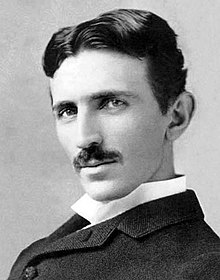
The Nikola Tesla Guide to Writing

Albert Berg’s Unsanity Files is one of the blogs I follow, enjoy, and draw inspiration from. Here is a uniqute take on Nikola Tesla, the famous inventor who held more than 100 patents. Albert discovered more than electro-mechanical genius in Tesla’s book, “My Inventions.” Here are several valuable principles about writing he discovered.  Enjoy

Albert Berg's avatarThe Unsanity Files

Those of you who follow my Twitter feed know that I recently finished reading a book called My Inventions by Nikola Tesla. Before reading this book, I had a nominal knowledge of Tesla. I read a short biography on him back when I was in high school, and I was aware of his hero status on the internet, but reading his life story in his own words gave me a new appreciation for the man.

As a child who grew up idolizing the likes of Thomas Edison, and dreaming of what it might be like to have a career as an inventor, Tesla has always held a special place in my heart. But as a writer, I realized that his approach to life was something I could emulate as a writer as well. What follows is a short list of the things I learned from Tesla’s life that I think could benefit writers…

View original post 1,223 more words

An Author’s Guide to Publishing in 2012, by Amy Rogers.

Those who have followed thefirstgates for a while will be familiar with Dr. Amy Rogers.

Amy Rogers

I reviewed her excellent first novel, Petroplague, in September, 2011 http://wp.me/pYql4-1ep.  In March of this year, she contributed a two part guest post detailing some of the rapid changes in today’s publishing landscape, an issue she follows in depth http://wp.me/pYql4-1MR.  Last Friday, Amy gave an updated presentation on  publishing options to the Sacramento branch of the California Writer’s Club during our monthly breakfast meeting.

Not long ago, there were only two publishing choices:  traditional publishing and the so called vanity press.  Now we have a spectrum of possibilities which keep getting harder to navigate.  Hybrid arrangements are multiplying:  traditional agencies offering ebook options, and agented independent publishing companies.

Rogers began her presentation by stressing the importance of every writer evaluating their individual goals.  Why do we want to publish this particular book?  How will we measure success?

Do we seek the implied approval that selection by a traditional publisher confers?  If so, do we have the time to invest in the process, knowing there is no guarantee of ultimate success?

If we choose to go the independent route, are we ready and willing to spend the time and/or money on five key tasks required for any book to be successful:  editing, cover design, layout, getting an isbn number, and marketing/distribution?

With a sense of our goals, Amy Rogers presentation, posted in full on her blog, will prove especially valuable.  A downloadable pdf version, is available too http://tinyurl.com/739ga5s.

After reviewing the presentation, take the time to explore Ms Rogers’ website, ScienceThrillers.com.  With a Ph.D in immunology, teaching experience in microbiology, and a writing career that began in grade school, Amy is uniquely qualified to write and review thrillers involving the depredations of “wee beasties.”  ScienceThrillers has grown to include reviews of books in multiple genres, publishing news, book giveaways, notices of writing contests, and her own quarterly newsletter.  It’s a site I’m very happy to recommend.