Neil Gaiman on libraries, reading, and daydreaming

Neil Gaiman, 2007, CC-BY-SA 2.0

Neil Gaiman, 2007, CC-BY-SA 2.0

Neil Gaiman visited China in 2007 for the first ever, party-approved, Science Fiction and Fantasy Convention.  He asked a top official what had changed; in the past, these genres had been disparaged.  The official said his government had realized they were good at making other people’s inventions, but they didn’t invent or imagine new things themselves.

“So they sent a delegation to the US, to Apple, to Microsoft, to Google,” Gaiman explained, “and they asked the people there who were inventing the future about themselves. And they found that all of them had read science fiction when they were boys or girls.”

Gaiman told this story while giving the 2013 Reading Agency annual lecture on the future of reading and libraries.  The Reading Agency is a British charity that supports libraries and literacy programs, with the mission of giving everyone “an equal chance in life by helping people become confident and enthusiastic readers.”  Another story Gaiman told underscores the importance of the Agency’s efforts.  In New York, he once attended a talk on private prisons – one of America’s growth industries.  In trying to predict the need for future facilities, prison industry officials have developed a simple algorithm based on one key factor – the percentage of 10 and 11 year olds who can’t read.

Gaiman spoke at length of fostering not just the ability to read, but the love of reading.  There are no bad authors or bad books for children, he said.  Adults can destroy a child’s love for reading by giving them “worthy-but-dull books…the 21st-century equivalents of Victorian “improving” literature. You’ll wind up with a generation convinced that reading is uncool and worse, unpleasant.”  Everyone is different and will find their way to the stories they like and need.

Because written fiction, as opposed to television or movies, requires our imagination to turn the authors words into a vivid world, we return to our own world as a slightly different person, with an awareness of other points of view.  Reading fosters empathy, Gaiman said, and:

“Empathy is a tool for building people into groups, for allowing us to function as more than self-obsessed individuals…You’re also finding out something as you read vitally important for making your way in the world. And it’s this: the world doesn’t have to be like this. Things can be different.”

In his inspiring lecture, Gaiman talked at length of his love for libraries and how critical it was for his own development to have supportive librarians at the small library near his home while growing up – librarians who simply wanted books to be read and showed him how to use inter-library loan when he finished all the local books on vampires, ghosts, and witches.  When government officials close libraries as cost saving measures, “they are stealing from the future to pay for today.”

Gaiman expressed what he believes to be our responsibilities to children and to our future.  Reminding the audience that everything made by humans begins with imagination, we have a responsibility to use and foster our imagination of a better world than the one we found.

Gaiman ended with a quote from Albert Einstein.  When asked how to foster intelligence in children, the great scientist said, “If you want your children to be intelligent, read them fairy tales. If you want them to be more intelligent, read them more fairy tales.”

Remembering George

George Harrison in the Oval Office at the invitation of President Ford, 1974.  Public Domain

George Harrison in the Oval Office at the invitation of President Ford, 1974. Public Domain

I didn’t call the Beatles by their first names – or even clearly know their names – when they first came to America.  Although the media wouldn’t let you forget Beatlemania, I was more of the Beach Boys persuasion at the time, and later got caught up in the San Francisco sound.  Then, in 1968, the Beatles did something amazing to me – they went to India to study with a guru.  They opened a door I had only vaguely known was there.

George was the Beatle whose life and work were forever altered by eastern religion, as was my own.  He learned to play the sitar with a master, while I learned the harmonium, (a wonderfully simple instrument that allows even a novice to produce a credible melody).  For a time he belonged to an organization I did, dedicated to meditation and the study of eastern philosophy.

In Vrindavan, India, 1996.  Public Domain.

In Vrindavan, India, 1996. Public Domain.

In early November, 2001 at the age of 58, he underwent a last ditch treatment in New York for lung cancer that had metastasized to his brain.  When that failed, he travelled to Los Angeles, where he died on November 29, surrounded by family and friends.  Deepak Chopra wrote:

“He always would say that when I die I want to be fully conscious of God, I want to be totally at peace, and I don’t want to have any fear of death. And believe me, being close to him, I know that he died very conscious of God and in peace and not afraid of death.”

Blood line ancestors pass on their physical substance to us.  Ancestors of the heart pass on their spirit, encourage us by example, and show us what a life well lived can look like.  For inspiration, I still listen to Harrison’s last album, Brainwashed, released posthumously in 2002.  His son, Dhani helped finish it and included this quote from the Bhagavad Gita in the liner notes:

“There never was a time when you or I did not exist. Nor will there be any future when we shall cease to be.”

Here is a very nice clip on one of my favorite George Harrison songs from the Concert for Bangladesh, 1971.

On this day, when I listen to his music, I remember a man I truly admire, who was genuine, who found his own path and followed it to the best of his ability.  “You got to walk that lonesome valley by yourself,” as the old song says, but we do not do so alone.  Somehow the spirits of those who went before are there to inspire us.

Selling Thanksgiving

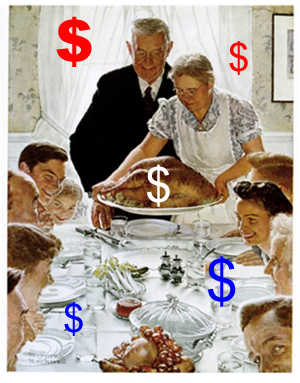
Norman-Rockwell-thanksgiving use

An article in our local paper’s Sunday Business Section both fascinated and sent a few chills up my spine at how effectively today’s marketeers can sell proverbial ice cubes to Eskimos.  They have persuaded large numbers of us to give up Thanksgiving as a day of gratitude for what we have, in favor of the chance to go buy more.

No one needs to wait for Black Friday now.  Major retailers will open their doors at 8:00 on Thanksgiving night, while Kmart’s shopping day will begin at 6:00 in the morning.  People like it and want it, the article says, but it’s instructive to look at the language used:

“The ever-earlier shopping frenzy is a source of dismay for traditionalists who view Thanksgiving more in terms of Norman Rockwell’s famous 1943 “Freedom from Want” painting…They ask: Isn’t the pace of life hectic enough without cutting into a day established for humble gratitude and quiet reflection?”

Is it just me or do you see a bias here?  Some implication that the traditional, quiet reflecting crowd, stuck in 1943, will probably spend the day watching reruns of “The Waltons.”

American Gothic by Grant Wood.  Public Domain

American Gothic by Grant Wood. Public Domain

The most interesting reason the article gave for jumping up from the table to hit the stores came from a “random” shopper at one of our malls, who said, “It’s fun, like a shared adventure for me and my friends.  We love it.”  An adventure is “an unusual, stirring experience,” according to Webster’s Dictionary, which isn’t what I equate with a trip to the mall, but hey, we all know Thanksgiving can be a chore.  

Millions of us have had the experience of traveling “home for the holidays,” only to remember exactly why we left in the first place.  And traditional Turkey Day roles still split along gender lines – who hasn’t heard women complain about working for hours preparing a meal, only to have the men snarf it down in 20 minutes, then pass out from tryptophans and beer in front of a football game?  From that perspective, a trip to the mall with friends might be, if not “an unusual, stirring experience,” at least a refreshing break.

Times are hard, and I can’t fault anyone for the Thanksgiving choices they make, but I do suggest a bit of reflection.  Many who read this blog are writers, and one of the best pieces of advice for writers is to create a mission statement; among all the choices I have now, what do I want from writing?  That’s a good question to ask as we face the holiday season.

Most of us long for peace and serenity, and a time of shared warmth in a community of family and friends.  Nobody wants to wake up on New Year’s Day saying, “Thank God all that is over,” though many will.  It’s a good time to review holiday options and “obligations” in light of the Dr. Phil question, “How does that work for you?”  

I’m no saint when it comes to keeping Thanksgiving “pure.”  For a number of years, when Tower Books was open, Mary and I and friends from work would gather for Thanksgiving dinner, then go browse Tower for an hour before having coffee and pumpkin pie.  Though we didn’t suspect it at the time, we may have been having a shared adventure.  So let’s admit that we’re free to spend Thanksgiving however we wish.  

It just saddens me to see corporate interests breech a once inviolate day, and turn it into an “ersatz” holiday, like Labor Day, stripped of all its original meaning and existing only so people can buy many things that they don’t really need.    

101 Things that Made America

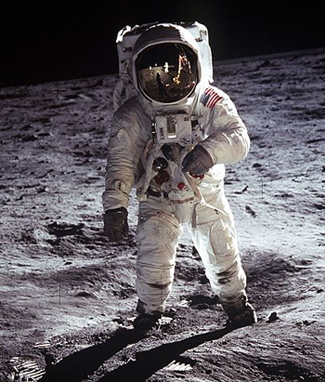
Apollo suit.  NASA photo, Public Domain

Apollo suit. NASA photo, Public Domain

The Novermber, 2013 issue of The Smithsonian Magazine is devoted to 101 things that made America.  The magazine lists 33 contributors who chose these items from among the 137 million artifacts housed in 19 Smithsonian museums and research centers.

Animals, vegetables, and minerals are represented, and the objects chosen evoke the range of both light and dark aspects of our history.  The opening photograph of a stuffed buffalo is as sad as it is iconic, and the inclusion of the Enola Gay, the plane that dropped the first atom bomb, reminds us that weapons of mass destruction are part of what made us what we are.

The chosen artifacts include:

– The Lewis and Clark Compass (1804). At a cost of $5, it wasn’t cheap, but it survived the 7,000 mile trip.

– A California Gold Nugget (1848)

– Polio Vaccine (1952)

– Abraham Lincoln’s Stovepipe Hat (1865)

– Barbie Doll (1959)

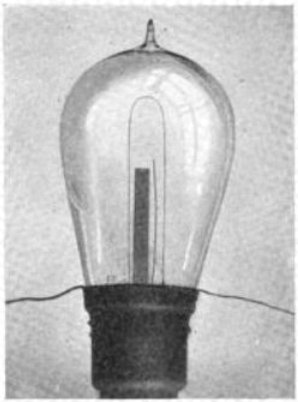
Edison Light Bulb.  Public Domain.

Edison Light Bulb. Public Domain.

– Louis Armstrong’s Trumpet (1946)

– Glass Shards from the Birmingham Church Bombing (1963). Barely a month after Dr. King’s “I Have a Dream,” speech, a bomb blast killed four African-American girls at their sunday school. Outrage over the murder of children at church lent a powerful impetus to the civil rights movement.

– Birth Control Pills (1965)

– The original, tattered Star Spangled Banner that flew over Fort McHenry during the War of 1812 and inspired Francis Scott Keys to compose the national anthem.

– Table and Chairs from Appomattox Court House, where General Lee surrendered to General Grant to end the Civil War (1865)

– The Model T Ford (1913)

– Section of a California Costal Redwood tree.

– Passenger Pigeons: Once there were billions of these birds, but 19th century communities slaughtered them to bake in pigeon pies. The last surviving bird died in 1914 and is stuffed in the Smithsonian.

– The Eniac Computer (1945). I would have chosen an Apple IIE, or even a TRS-80, since it was personal computers, not this behemoth, that changed the world.

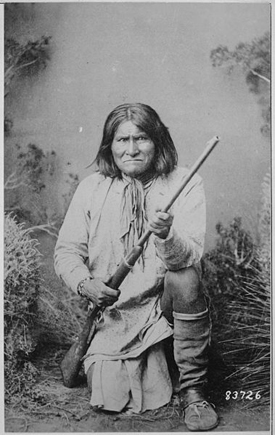
Geronimo, 1887.  Public Domain

Geronimo, 1887. Public Domain

This photograph of Geronimo, taken in 1887. The previous year, Geronimo surrendered his small band and was transported from his beloved Arizona to Florida. He spent the rest of his life in federal prison, though in 1905 he was brought out to ride in the inaugural parade of Theodore Roosevelt. His request to the president to return to his home was denied. On his deathbed in 1909, he reportedly said, “I should have fought until I was the last man alive.”

– Levi’s Jeans (1873)

– Singer Sewing Machine (1851)

– The Colt Revolver (1839)

– Alexander Graham Bell’s Telephone (1876)

– Wright Brothers’ Airplane (1903)

– The Huey Helicopter (1966).  Think of the “Ride of the Valkyries” scene in Apocalypse Now

– Section of the Aids Quilt (1987)

– The first Kodak camera (1888)

– Stage Coach (1851).  I would have included a covered wagon.

– The Teddy Bear (1903).  During a hunting trip in Mississippi, President Theodore Roosevelt refused to shoot a bear that guides had tied to a tree.  This inspired a political cartoon which featured a wide-eyed cub, and led to the toy that is still found in millions of nurseries.

Vintage Teddy Bear by David Crane, 2003, CC BY-SA-2.0

Vintage Teddy Bear by David Crane, 2003, CC BY-SA-2.0

– Ruby Slippers – the ones that Judy Garland wore to take us home in the 1938 Wizard of Oz.

– R2D2 (1983). Here’s the fun story from the Smithsonian Magazine: when filmmaker, George Lucas was finishing production of American Graffiti, the sound designer called for “R2-D2,” which meant, “Reel 2, Dialogue 2.” Lucas, who was already working on Star Wars, said, “What a great name!”

***

This is just a partial list.  You can see all the choices on the website.  No two people are likely to agree on all the artifacts.  What do you think is missing?  Which items should be dropped?  And for those who live in other countries, what are some of your key artifacts and their stories?

James Hillman on world change and political polarization

James Hillman, 1926-2011

James Hillman, 1926-2011

For decades, James Hillman brought us unique observations on modern life from the perspective of a depth psychology that embraced soul as its highest value.  Recently, I’ve wished I could hear his take on our current climate of political divisiveness, but Hillman, who died two years ago at the age of 85, wasn’t here to watch our most recent shenanigans.  Happily, I recently stumbled upon a pair of interviews in which Hillman discussed this very subject and set it in a context of massive cultural change.

Author and journalist Pythia Peay published the first interview on The Huffington Post in February, 2011 (Jungian Analyst Explains the Psychology of Political Polarization).  The occasion for their talk was the mass shooting in Tucson, which had happened a month earlier.  The most prominent victim was Representative Gabrielle Giffords.

Tragically, memory of that event, just two and a half years ago, has been lost in the wake of more recent carnage, including the Nevada school shooting earlier this week.  Though Hillman’s comments focused on the role of political divisiveness in the attempt to kill a congresswoman, his additional statements now seem eerily relevant to the 12 year old in Sparks who was so alienated that he ended his life with murder and suicide.

Hillman began with a general discussion of polarized thinking.  “Polarity,” he reminds us, is an electrical engineering term.  Batteries have poles; the psyche is far more nuanced than that, dwelling in shades of gray rather than black or white.  Ideological extremes subvert our ability to judge individual issues on their merit.

When asked if violently polarized politics caused the shootings, Hillman changed the focus to another kind of cultural rigidity and its effect on the Tucson shooter:

“I think that this kid was made a loner by an American educational system in which there is no room for the weird or the odd…We need to have an educational system that’s able to embrace all sorts of minds, and where a student doesn’t have to fit into a certain mold of learning. Our educational system has become so narrowed to a certain formula, that if you go through a weird phase, you’re dropped out — often at the age of schizophrenia, 19-23 — and that’s the danger.”

Arguments in the wake of gun violence bog down in specifics, like background checks and how many bullets a magazine should hold – we don’t ask why and how we’re producing more and more people prone to mass violence.  In the end, says Hillman, for a culture that pays so much lip service to “the individual,” we are terrified of real individuality, and attempt to stamp it out.

In the second interview, America and the Shift in Ages, Hillman suggests that much of that rigidity has to do with futile attempts to shore up outmoded systems and institutions during a period of massive change.  Not just one but “three or four” myths that are central to our culture are collapsing.

Everything we fear has already happened said Hillman:  “The fragility of capitalism, which we don’t want to admit; the loss of the empire of the United States; and American exceptionalism. In fact, American exceptionalism is that we are exceptionally backward in about fifteen different categories, from education to infrastructure. But we’re in a stage of denial.”  Other beliefs and structures are crumbling as well, he said.  White supremacy, male supremacy, the influence of monotheistic religions, and the belief that we are “the good people.”

If such institutions do not appear to be in decay, it’s because they are so staunchly defended, and that, Hillman says, is a sign of their lack of vitality — “If they were vital they wouldn’t need to be defended. And the fanaticism we’re witnessing goes along with the deterioration of the vitality of these myths.”

Many of our fundamental beliefs are under scrutiny and need to be.  Hillman mentions the meaning of “freedom.”  For many, freedom means, “I can do any goddamn thing I want on my property; that I am my own boss and don’t want government interference; that I don’t want anybody telling me what I can and can’t do.”  This, he says, is the freedom of an adolescent boy.  What of the different kinds of freedom, such as “freedom from the compulsions to have and to own and to be someone?”  What of the freedom Nelson Mandela found in prison?

Hillman cites economic assumptions that need to be questioned as well.  Falling demand needs to be stimulated, according to current assumptions, but from an ecological point of view, that’s exactly what the world needs at this time.  Sustainability models, which may be our hope for the future, terrify those in positions of power.

Many of our current fears, says Hillman – from fear of immigrants crossing our borders, to fear of failing education, to fear of cancer, to economic insecurity, terrorists, and of course fear of “the other” political party, results from the lack of a wider framework in which to understand the massive shifts that are already underway.

There is no going back, but as obsolete structures crumble, we can glimpse, if we look, new forms emerging.  Hillman gave the example of a “Bioneers” conference he attended where Paul Hawken showed a film that was simply the names of individuals and organizations involved in trying to innovate ways of building communities, economic systems, and ways of dealing with the natural world.  Hawken said there were thousands of names, and the film could roll for weeks.

Hillman said it’s important not to try to fit emerging structures into the patterns of the past.  For our peace of mind, a new kind of faith is required:   “I think it’s a matter of being free-wheeling, and trusting that the emerging cosmos will come out on its own, and shape itself as it comes. That means living in a certain open space — and that’s freedom.”

Dawn over Oostende, Belgium, 2007.  Photo by Hans Hillewaert, CC-BY-SA-3.0

Dawn over Oostende, Belgium, 2007. Photo by Hans Hillewaert, CC-BY-SA-3.0

Such words are a fitting conclusion to the lifework of a man who lived in defense of Anima Mundi, the World Soul and who taught that animals, trees, and rivers are intelligent and alive, and that at some deep level of the psyche, we can hear their voices.  In Hillman’s life work, observation of the modern psyche led to conclusions that mesh with the myths of the ancestors.

A thousand years from now, people will read of our times and shudder, as we do in contemplating the rigors of life in the middle ages.  A few visionaries stood out from the rest, those like Saint Francis, Dante, and Leonardo, who pointed toward a more benevolent and expansive future.

We cannot write our own history, but we can wonder how it will look to those in the future.  I am convinced that James Hillman will be remembered when most of what passes for news on TV is blessedly forgotten.

Stories that make the world

Photo by Manel, 2011, CC BY-ND 2.0

Photo by Manel, 2011, CC BY-ND 2.0

 On saturday, an acquaintance and I met at a local park to discuss some things of mutual interest.  It was a stunning fall day, with temperature in the low 80’s, so we sat for several hours at a picnic bench surrounded by tall oaks.

I met this man just a few months ago, and during the conversation, it became clear that his political views and mine are polar opposites.  We mentioned them but didn’t argue, for we had other things to discuss.  Besides, by then some people nearby had a birthday barbecue going, and we were both distracted from politics by the smells.  When someone said, “Anyone else want a burger?” I was sorely tempted to raise my hand.

Later though, I reflected on how the two of us could hold such different narratives of the same recent events.  The poet, Muriel Rukeyser’s phrase, “The universe is made of stories” came to mind, as it often does, for it summarizes a key observation of two disciplines that have deeply shaped my world view, eastern philosophy and depth psychology:

  • “The Buddhist does not inquire into the essence of matter, but only into the essence of the sense perceptions and experiences which create in us the idea of matter.” – Lama Angarika Govinda, 1969.
  • “Every notion in our minds, each perception of the world and sensation in ourselves must go through a psychic organization in order to “happen” at all.” – James Hillman, 1975. 

Such statements may seem too lofty for a number of common experiences, especially things like physical pain, even the sliver I have in a finger from hauling firewood onto the back porch.  Not long ago, however, I came upon a concrete example of how the mind creates reality.

A contemporary Tibetan lama spoke of an experience we all went through in learning to read.  One day when we were young, a teacher drew three marks on the board (or our parents did, or we saw it on Sesame Street).  That teacher then said something that changed our world forever:  “This is the letter A.”

a-elmo-alphabet 200

From that moment on, the letter “A” existed for us, and it always appears to exist “out there,” in the world, when in fact, all that’s “out there” are three lines in a specific pattern.  “A” exists only in the minds of those who have learned certain alphabets – a person who doesn’t read or only reads Chinese would not be able to find it.

This small story about the letter “A” parallels the complex stories we create, borrow, and use to make the sense of the world.  Sometimes, like this past saturday, when it seems like the person you’re talking to comes from an alternate universe, it’s because they do – not a universe we could travel to with  warp drive, but one that is simply constructed of very different stories.

The Four functions of a living myth and the evening news

In The Masks of God: Creative Mythology, 1968, Joseph Campbell identified four major functions of a “living myth:”

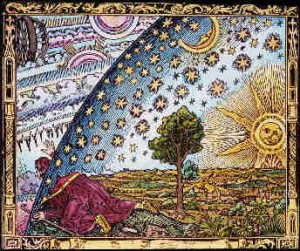
1) ” To awaken and maintain in the individual an experience of awe, humility, and respect in recognition of that ultimate mystery, transcending names and forms.”

CC By-NC-ND-2.0

CC By-NC-ND-2.0

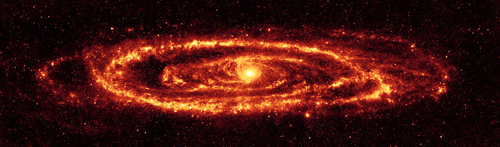
2) “To render a cosmology, an image of the universe.”  Today, Campbell notes, we turn to science for this.

Andromeda galaxy.  Nasa photo, public domain

Andromeda galaxy. Nasa photo, public domain

3) To shape “the individual to the requirements of his geographical and historically conditioned social group “

January from Les Très Riches Heures du duc de Berry, 15th c., public domain.

January from Les Très Riches Heures du duc de Berry, 15th c., public domain.

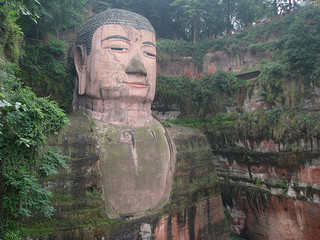
4)  “to foster the centering and unfolding of the individual…in accord with himself, his culture, the universe, and that awesome ultimate mystery.”

Leshan Giant Buddha, 2010, by Wilson Loo.  CC BY-NC-ND 2.0

Leshan Giant Buddha, 2010, by Wilson Loo. CC BY-NC-ND 2.0

Forty-five years ago, when conflict during the sixties was rending the social cohesion Americans had forged during WWII, Campbell wrote:  “The rise and fall of civilizations in the long, broad course of history can be seen to have been largely a function of the integrity and cogency of their supporting canons of myth.”

A mythological canon, said Campbell, is a group of symbols that “organize and focus the energies of aspiration.”  When the symbols no longer work for an individual, there is “dissociation from the local social nexus,” and, “if any considerable number of the members of a civilization are in this predicament, a point of no return will have been passed.”

In Creative Mythology, Campbell wrote at length of an earlier period of time when a different mythical canon broke down.  In 12th century Europe, Christianity ceased functioning as a socially cohesive world view.  Enough people stopped believing (even though belief was strictly enforced) that Europe went beyond the point of no return.

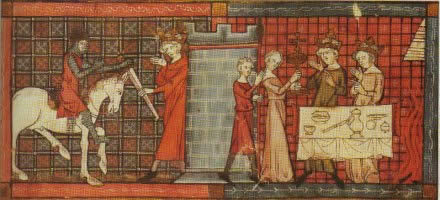
Many stories emerged during that era concerning the quest for the grail, which in the earliest written versions, had nothing to do with cup of the last supper, but everything to do with a quest to heal individuals and the land.  In Wolfram Von Eschenback’s Parzival, the grail was called lapis exiles, another name for the philosopher’s stone of alchemy.  The philosopher’s stone turns base metal into gold; the grail heals the wasteland, for that is what a country and culture become where there is a drought of aspiration and meaning.

Scenes from Perceval's quest of the grail, 1385-1390.  Public domain

Scenes from Perceval’s quest of the grail, 1385-1390. Public domain

That is where we are in America today.  In the absence of a shared core of attitudes and beliefs to unify us as a people, we are a nation of warring factions at all levels of culture and government.  For now, the party is over in the land of opportunity.  Even if our politicos won’t admit it, a “considerable number of members of our civilization” know this is true.

Campbell ended Creative Mythology by asking what might feature in a new and vital mythology.  In my opinion, he dithered with his answer, as he sometimes did in his writing.  Twenty years later, he answered the same question when it was posed by Bill Moyers at the end of the Power of Myth series.  This time Campbell suggested that any world view adequate to our times and our future would have, as a mandala, a view of the earth from space.

Earth from space

Neither Campbell nor one else back then knew the full extent of the danger climate change would pose.  Now we know it’s worse than anyone thought, (see the Intergovernmental Panel on Climate Change report, released Sept. 27).  Our governments are as impotent as the wounded Fisher King of the grail legend when it comes to enacting meaningful change.

Yet as Campbell said, the quest for the grail of healing begins with individual searchers venturing into the forest alone, at the place that seems best to them.  Like Nelson Kanuk, a University of Alaska freshman, whose home in a remote Eskimo village was swallowed by the sea as a result of melting permafrost.  Kanuk sued the state of Alaska for not curbing carbon emissions and his case is now being heard by the Alaska Supreme Court.  Similar suits are pending in 12 other states.  Such headlines echo words I recently quoted by Wendell Berry, who puts his trust in “ordinary people” and said:

We don’t have a right to ask whether we’re going to succeed or not.  The only question we have a right to ask is what’s the right thing to do? What does this earth require of us if we want to continue to live on it?”

We don’t even have to rush out and sue our state governments, for as Campbell suggested, stories and world views spark action and change when a critical mass is reached.  Hopefully, we are at or beyond that point. All we, as individuals, have to do is be still enough to hear what the world is asking of us, and then enter the forest at the place that seems best.

Ship of Fools

Ship of Fools.  German woodcut, 1549

Ship of Fools. German woodcut, 1549

I’m sure it won’t surprise anyone to learn that this is my second post of this title in two years.

“The ship of fools is an allegory that has long been a fixture in Western literature and art. The allegory depicts a vessel populated by human inhabitants who are deranged, frivolous, or oblivious passengers aboard a ship without a pilot, and seemingly ignorant of their own direction.“Wikipedia

The Wikipedia entry documents the origin of this image in a method that Renaissance people developed to rid themselves of their mentally challenged fellows.  As Michel Foucault put it in Madness and Civilization, “they were put on a ship and entrusted to mariners because folly, water, and sea, as everyone then ‘knew’, had an affinity for each other.”

OK, I gotta say it – don’t you wish we could send all members of the Federal government off on a Carnival cruise and hope the engine stalls at sea?

“Ship of Fools” has been a recurrent image in literature, art, and music for 500 years.  Somehow it’s comforting to to know that folly and madness are nothing new, even – or perhaps especially – at the helm of the Ship of State.