More About Tension

In my previous post, I considered literary agent, Donald Maass’, statement that “tension on every page” is the key ingredient of successful fiction.  I proposed an experiment:  open a few of your favorite books to random pages, (avoiding the obvious chills-and-thrills moments exemplified by the poster) and see if there is tension on that page.  I said I would try it with some of my favorite novels.

I’ve posted about all four of these books before.  The first two are YA fantasy novels I have read and enjoyed three or four times.  The last two are recent reads, adult fiction, that I’ve only read once but found compelling.  So here (drum roll) are my results:

Lirael (2001) by Garth Nix.

Lirael is the story of a seeming misfit and washout from a magical sisterhood, who is actually destined to spearhead the defense against an army of zombies.  Although the climax comes in a sequel, Nix breaks all kinds of rules by devoting the first 450 pages to the coming of age of Lirael and her cousin, Sam.  Three-quarters of the book passes before the battle is joined.  So why have I read this book so many times, and why do I still enjoy dipping back into certain sections?

For one thing, even Lirael’s lesser battles matter and carry public as well as private consequences.  Nix also gives us regular updates on the bad guys, so we know a storm is brewing.  For the “tension on every page” test, I opened to one of many instances where Nix reminds us of the growing menace and Lirael’s nagging self-doubts:

“It’s not so simple,” interrupted a stern-voiced Deputy, bearing down on them like a huge white cat on two plump mice.  “All the possible futures are connected.  Not being able to See where futures begin is a significant problem.  You should know that, and you also should know not to talk about the business of the Watch!”

The last sentence was said with a general glare about the room.  But Lirael, even half-hidden behind a huge press, felt it was particualrily aimed at her.

As a how-to tidbit, we have a fine example of Maass’ comments on the power of threatening images to ramp up the tension in “quiet” moments.  The Deputy does not just “approach” the girls, she “bears down on them like a huge cat on plump mice!”


The Dream-Maker’s Magic (2006) by Sharon Shinn

I reviewed this favorite here on December 10, 2010.  This randomly chosen passage really needs no additional comment – it is a great illustration of Maass’ conviction that disagreement is the factor that most easily spices up dialog:

She thinks of him as her brother,” Sarah murmured to me one day as I paused in the act of wiping down a table to frown over at Gryffin and Emily.  “There’s no need for you to be jealous.”

Now I was frowning at Sarah.  “I’m not jealous,” I sputtered.  “I’m – what?  I don’t care if they’re friends.  Jealous.  That never occured to me.”

Sarah was smiling a little.  “Oh.  I’m sorry.  Well, maybe you’re frowning because you have a headache or something.”

“I’m not frowning,” I said, giving her a fierce smile.


The Cypress House (2011) by Michael Koryta

If I had to classify this book, I would call it a supernatural thriller, which makes its inclusion here a little unfair.  After all, thrillers have more chills and thrills than other genres, by definition.  Still, we are talking of “tension on every page,” not adrenalin on every page, which is impossible.  My criteria was, tension in a spot where “nothing is happening,” and this is what I found with a random flip of the pages:

He sat there for a while and looked at the stone.  No words of sorrow or love marked Isaac’s stay in this place.  Just those dates, and too short a time between them.

That was all right, though.  It wouldn’t have troubled Isaac, Arlen knew that.  This life was nothing but a sojourn anyhow.  A temporary stay, that of a stranger in a strange land.

“Love lingers,” Arlen said, and then he straightened, put his jacket back on so that it covered his pistol, and left the graveyard.


The Forgotten Garden (2008) by Kate Morton

Donald Maass devotes an entire chapter in his Workbook to the problem of backstory as a tension-stopper, and suggests various ways around it.  One of them is to open with a minimal amount of needed history and sprinkle more in later.  That is exactly what I found when I opened this book to Chapter Fourteen, with the heading, “London, 1900,” where we meet the third of three major characters:

Despite its meanness, the room above the Swindells’ shop was the only home Eliza Makepeace and her twin brother, Sammy, had ever known, a modicum of safety and security in lives otherwise devoid of both.  They had been born in the autumn of London’s fear, and the older Eliza grew, the more certain she became that this fact, above any other, made her what she was.  The Ripper was the first adversary in a life that would be filled with them.

It was interesting to happen upon this passage as it reminds me of several writing friends who are quite averse to narrative.  I think it has to do with a misunderstanding of the advice to “show rather than tell.”  There are times when skillful telling is exactly what a story needs.  In Morton’s hands, it is hard to imagine a more economical way to paint the initial sketch of a girl who constantly battles to rise above difficult circumstances in a difficult time.  Morton later shows us in detail what she tells us here, in a scene where Eliza and Sammy play the “Ripper game” to try to deal with their fear.

***

I tried this experiment with other books too, and found the very same thing – some sort of tension, mystery, anxiety, discomfort, or unease everywhere.  Maass supplies a name for a factor I never quite saw in such sharp relief before.  Sure, I knew a page-turner when I had one, but I didn’t quite know how the magic was brewed.  Here is a concept and a field guide that makes it easier to spot the quarry, like when you suddenly notice a lizard hidden on a pile of rocks.  Maass tells me it’s simple, and in these examples, it is.  Now it is just a matter of creating this page-turning tension, one word and one page at a time..
What Is Tension?

No, I am not playing Jeopardy; I am trying to zero in on what Donald Maass considers the make-or-break element of all successful fiction.  I posted a general appreciation of Maass, agent, author, and writer-about-writing in December: https://thefirstgates.com/2010/12/07/donald-maass-and-the-breakout-novel/

In his Writing the Breakout Novel Workbook, Maass says:

Tension on every page is the secret of great storytelling.  Everyone knows that.  Practically no one does it...It’s so simple, really, and yet so many manuscripts that arrive at my office go right back to their authors in their self-addressed stamped envelopes.  Why?  The number one reason is insufficient tension.

Tension on every page works, says Maass, and low tension does not.  Good to know, but as I have considered the subject, I’ve come to think there is much misunderstanding of what tension really means.  Especially with the rise of digital special effects, you see it in movies all the time – the delusion that enough explosions can make a good story.  At the other extreme, I know writers who don’t understand that, according to Maass, tension is independent of the fictional situation:  it can happen – or fail to happen – in any situation, be it a battle or a walk in the woods.

At its simplest, tension results from anxiety over the wellbeing of a character we care about, and in the best fiction, identify with.  The Latin roots of “tension” and “attention,” are very similar, which is interesting, for as our bodies know, attention always follows tension.

One of the most interesting sections of Maass’ Breakout Novel Workbook is Chapter 22, “Low Tension Part I:  The Problem With Tea.”  In his workshops, Maass tells writers to cut “scenes set in kitchens or living rooms or cars driving from one place to another, or that involve drinking tea or coffee or taking showers or baths.”  According to Maass, “99.9 percent” of such scenes never make it into print because they:

“…lack tension.  They do not add new information.  They do not subtract allies, deepen conflict, or open new dimensions of character…Typically scenes like these relax tension, review what has already happened, and in general, take a breather.  They are a pause, a marking of time, if not a waste of time.  They do not do anything.”

Maass spends the rest of this and the next three chapters showing examples of authors who make such potentially low-tension scenes work.  How?  But creating “a mood of unease.”  In dozens of ways, conjuring “small anxieties [that] keep us on edge,” even when nothing appears to be happening.  “Mere talk does not keep us glued to the page,” says Maass, but, “disagreement does.”

***

If tension on every page is the secret of page turning fiction in any genre, I ought to be able to find it in my favorite books, the ones I have read more than once.  I have devised a little experiment I am going to try for my next post, and I invite anyone who is curious to try the same thing and comment on what you find.  Here is what I am going to do:

  • Take a half-dozen of my favorite books, especially the ones I have praised here.
  • Flip them open at random and carefully read the page I land on unless something “exciting” is going on – I want to avoid a fistfights, gunfights, or car chases, and the action-adventure genre in general.
  • See if there really is tension on that page, if that is one of the factors that makes these books so special.

In the past, I have studied these favorites for things like characterization and dialog; for descriptive language; to see how the authors deal with backstory, but I have never focused tension.  If Maass is right – and I bet he is – then this something to look for!

To Be Continued.

Between a Plot and a Hard place

Okay, okay, so I should be pun-ished for a title like that.  This post is really about finding one’s own right brain/left brain balance in plotting a novel, but I couldn’t work that into a catchy phrase.

The topic was suggested by an article on my friend, Rosi Hollenbeck’s blog, The WriteStuff,  http://rosihollinbeckthewritestuff.blogspot.com/2011/03/thinking-about-writing-or-writing-about.html.  Like all of Rosi’s posts, there is a lot to think about, but this one happens to feature a very flattering account of yours truly.  She talks about another writing friend, the inspiration she finds in Writing Down the Bones by Natalie Goldberg, and then she describes her own process of weaving a story.

Of my approach, she says:  “What amazes me is the discipline he brings to his writing. He works very hard at learning his craft and even writes synopses before he writes the books. I suspect he even outlines. He always knows where he’s going.” (I wish!)

Of her own method, Rosi says:  “I don’t even feel as if I’m in charge. I sit down with an inkling of an idea and characters walk into my head, fully formed and usually named, and tell me their stories.”

At this time, I am re-imagining my villain and his machinations, which makes it interesting to review some tactics I have used in the past and where they lie between the poles of pre-planning and letting things happen.

Rosi is wrong about one thing:  I am constitutionally incapable of outlining.  Several times over the years I came up with ideas for novels.  Unfortunately, I thought you had to start with an outline, and the inspirations never survived the attempt.  My breakthrough came during my years with the Sacramento Storytellers Guild when I learned that accomplished storytellers do not memorize their tales, but see the story unfold in the mind’s eye and describe the the inner drama.  I discovered this is my natural way of writing too – describing the inner visions with written rather than spoken words.

The advantage of such an approach is the excitement of the unknown and the adventure of discovery, of sitting down and wondering, “What’s going to happen today?”  The downside is incoherent plots.  After 2+ years, I abandoned my first novel as a wonderful learning experience, but one that could not be rescued.  Clearly, what I had learned in the visual arts applies to writing too – the visions of raw imagination must be carefully shaped if I want them to have meaning to anyone else but me.

I set about studying plot and structure, and now my process is something like this:

1)  Write the first chapter and a one line synopsis.  While studying screenwriting, I learned that “high-concept” movies – the only ones that get made these days – can be summarized in one sentence.  I would go so far as to say that until I can do that, I don’t have a story to tell.  Here’s the tagline for Karyn’s Magic:

An apprentice magician must stop a supernatural killer she unwittingly releases from his prison between the worlds.

2) Write a one paragraph synopsis (3-5 sentences).  I do this while writing maybe the first three chapters.  This is also a tactic I picked up from a screenwriter who was telling how she pitches her concept to a producer:  setup – conflict – resolution.

3)  Write a one page synopsis.  I’m going to have to do this anyway, and since a one page synopsis will reveal any glaring plot flaws, I might as well do it when I’m 30-40 pages in rather than 200.  The one page synopsis functions like a map that changes as the story landscape changes, and often the two play together nicely.

4)  The final tool I’ve come to rely on is a scene summary, an idea I got from Syd Field’s excellent book, Screenplay.  As described in an earlier post, a scene summary is a line or two on a 3×5 card that triggers a kind of mental storyboard image of what is going to happen.  Field’s suggest 52, 3×5 cards for a movie, a number he tried because a friend pointed out there are 52 cards on a deck, and which he continues to use because it works:  13 scenes in Act I, 26 scenes in Act II, 13 scenes in Act III.  Here are the two scenes that comprise the first chapter of Karyn’s Magic:

  1. When Karyn Robinson is twelve, her mother dies in a tragic accident, leaving her and her sister Emily, destitute.  (Inciting Incident – sets story in motion).
  2. Kari, proud of her half-fairy ancestry is fascinated by magic, and seeks a prosperity spell from a gypsy.  Despite her sister’s skepticism, Kari follows the gypsy’s instructions.

***

Letting things happen and planning them out – both are valuable tools, and there’s a time and place for each, but neither is really up to my current task, re-visioning my villain.  He’s already been through several iterations – you could say he exists in several parallel universes.  I don’t need to write more universes or organize the ones I’ve got;  what I need is answers to questions I don’t yet know how to ask.

I need something more powerful than any bag of tricks, something for which there aren’t any rules.  I need a skill I had in spades when I was a kid, but which has been buried by decades of “practical matters.”  I need to drop my sophistication and get to the world of Let’s Pretend.

I guess its a little like Narnia – being grown-up keeps you out, and the entrance is seldom in the same place twice.  Meanwhile two of the dogs are fussing at me, as if they think I’ve been at the computer too long, and they are right.  They want to pretend they are wolves, and I think it’s time I helped them.  The dogs don’t think my concerns are all that urgent, and maybe they’re right.  Besides, animals know how to open the gates of other worlds.

Read an eBook Week and Amazon in the News

Read an Ebook Week

This is Read an Ebook Week according to Catana, whose blog, “Tracking the Words,” is dedicated to exploring and entering the world of ebook publishing.  Check out the article here:  http://writingcycle.wordpress.com/2011/03/06/read-an-e-book-week/

Among other things, you can find special freebees and offers on Smashwords this week (a permanent link is now on my Blogroll).

And in case anyone hasn’t checked, you do not need special hardware to read an ebook.  All the major sellers have free apps for pc’s, macs, smart phones and tablets, so this might be a good time to take a look.

Amazon the Tax Evader?

A scathing editorial in the Sacramento Bee this morning condemned Amazon for refusing to pay state sales tax, and threatening California based affiliates if the legislature forces their hand.  http://www.sacbee.com/2011/03/07/3454226/amazon-refuses-to-pay-its-share.html

Weren’t all online sales initially tax free?  After that I thought it had to do with whether or not a company has a brick and mortar presence in the state in question.  Now with so many states in dire financial circumstances, I’m sure it’s only a matter of time until every online purchase is taxed.

There seems a bit much hand-wringing in this editorial though.  Noting that the state deficit is $26.5 billion, and uncollected taxes from Amazon total $300 million, it’s a bit disingenuous to suggest we blame Amazon if there’s not a cop when we need one, or if a disabled family member can no longer get in-home care.

Still, there’s the issue of fairness, and the local paper quotes the Seattle Times:  Amazon is a giant. It has helped drive hundreds, and maybe thousands, of bookstores out of business. The Internet retail industry already has a cost-of-real-estate advantage over free-standing stores. It should not have a tax advantage as well.

Given that eventual taxation is inevitable, the statement that really interested me is that Amazon “helped drive hundreds, maybe thousands of bookstores out of business.”

I’m skeptical of this one, for several reasons.

1)  I can think of several towns, like San Luis Obispo, where it was big box brick and mortar stores, rather than Amazon, that drove the appealing Indies away.

2)  Businesses big and small that ignored the web, including Tower, which I loved, are going or gone, but lavish web sites do not seem necessary to survive and thrive.  I’ve bought several rare editions from mom and pop used bookstores, with simple small-business type web sites.  You could argue that Amazon is one of the two major venues (eBay being the other) that give such enterprises a place in the virtual mall to display their wares.

These certainly are rapidly changing times.  How do you feel about it?  Is Amazon an enemy of the little guy?  A champion of the little guy?  Both?  Neither?  Email if you want more space to voice an opinion than a comment allows.

Some Words About Smashwords.com

My thanks to Brandon Halsey for pointing out a great oversight in my last post.  I completely neglected to mention smashwords.com, an increasingly popular site dedicated to publishing and distributing ebooks in all the popular formats:  Kindle, Nook, iBook, Sony, Stanza, as well as plain .html.

I don’t know a lot about Smashwords yet, but a place to start looking is this Q&A page by Mark Coker, the founder http://www.smashwords.com/about.

Another resource is Tracking the Words, the blog of Catana, a writer who posts almost daily about preparing for publication on Smashwords, and is now including reviews of titles they have published.  http://writingcycle.wordpress.com

Publication on Smashwords is free, but it’s worth looking at the “How to Publish” page to get clear that it isn’t easy.  Assuming your text is really ready, after numerous drafts and third-party checks for typos, the first requirements are outlined in the site formatting guide, which is checked electronically before a submission is accepted.  Apple iBooks have additional rules.  Then there’s a checklist for inclusion in the Smashwords Premium Catalog, which gets your book distributed to Sony, Barnes&Noble, Apple, Kobo, and (soon, they say) Amazon.

How about a catchy cover?  How about a one sentence tag line?  How about a compelling book-jacket blurb in case the title and cover are so compelling that someone stops to click on your title?  How about uploading a free short-story or novella, as some of the authors do, to encourage readers to search through their other titles?

Clearly, there is a lot of effort behind even the most stunning success stories, but I’ll end with an upbeat set of predictions for Indie publishing in 2011, made by Mark Coker in an interview on December 28, 2010.
http://www.mediabistro.com/galleycat/publishing-predictions-for-2011-from-smashwords_b18421

We are already seeing some of these predictions come true.  Here, for example, is one of them:

4. Self Publishing goes from option of last resort to option of first resort among unpublished authors – Most unpublished authors today still aspire to achieve the perceived credibility and blessing that comes with a professional book deal. Yet the cachet of traditional publishing is fading fast. Authors with finished manuscripts will grow impatient and resentful as they wait to be discovered by big publishers otherwise preoccupied with publishing celebrity drivel from Snooki, Justin Bieber and the Kardashians. Meanwhile, the break-out success of multiple indie author stars will grab headlines in 2011, forcing many unpublished authors off the sidelines. As unpublished authors bypass the slush pile, publishers lose first dibs on tomorrow’s future stars.

Writers Going Their Own Way in the eBook World

Over the last month I’ve seen a flurry of articles on hugely successful ebook authors, and indications that their success is part of a wider trend.  In January, the month when Amazon announced that ebook sales had overtaken all forms of print volumes, 12 of their 20 ebook best-sellers in the horror genre were by self-published authors, in a field that included Stephen King.  http://jakonrath.blogspot.com/2011/01/guest-post-by-terri-reid.html

Twenty-six year old Amanda Hocking is the best selling ebook author on Amazon’s kindle store.  Since April, 2010, she has self-published nine ebooks and sells 100,000 a month, at prices ranging from $0.99 – $2.99.  Amazon’s pricing allows her to keep 70% of the profits, where traditional publishing would give her 30%.  http://www.pcmag.com/article2/0,2817,2381193,00.asp

One of many articles on Amanda’s success quotes an anonymous publisher as saying there is no traditional publisher in the world right now that can offer Amanda Hocking terms that are better than what she’s currently getting, right now on the Kindle store, all on her own.  http://www.novelr.com/2011/02/27/rich-indie-writer

Terri Reid’s self-published ebooks are in Amazon’s top 20 lists for 10 different genres.  Her previous day-job included advertising and market research, and she references she some interesting discussions on the meaning of “ownership” and “value” in the digital age.  Everyone instinctively feels that an ebook is not worth as much as a paper copy and shops accordingly.  (One mathematician calculated the optimum price for ebooks as $2.99-$3.99).  Reid suggests that the traditional “agency model,” where the publisher sets the price is not going to work in this arena, and says, “Apparently Ken Follet’s publisher raised the price of his ebook from $7.99 to $9.99 and sales dropped 48%.

Reid further claims that:  “Publishers were, and still are, trying to slow the growth of ebooks in order to protect their business model, which is built around selling paper.  How has that been working out for them?  Not very well.”  (I referenced Reid’s article in the first paragrah, but here it is again:  http://jakonrath.blogspot.com/2011/01/guest-post-by-terri-reid.html Note:  last night I downloaded Reid’s The Ghosts of New Orleans for $2.99 from Amazon and will review it here when I finish).

***

Not long ago – like maybe last year – traditional publishing offered writers a huge carrot – the certification of legitimacy.  USA Today reported that Hocking sold 450,000 ebooks in January, 2011, so I doubt that she worries too much about that.  http://www.usatoday.com/life/books/news/2011-02-09-ebooks09_ST_N.htm

For a traditional game with winners and losers to endure, winning has to be possible.  At the 2007 San Diego Writer’s Conference, I heard an editor of adult Sci-Fi/Fantasy explain that traditional publishers, with their “stable” of known authors who are guaranteed to sell, have no financial motivation to risk an unpublished writer.  “If you want to break into this market, your best bet is to get some short stories in print,” he said.

I heard the same thing at the CWC February lunch, from a prolific local author of romance and romantic suspense, Kimberley Van Meter – that increasingly, not just editors but agents too, are not willing to risk unpublished authors, no matter how good the work seems, and that was always the sustaining idea:  if I write something really really good, I will make it into print.

Let’s assume that is still true, and I hustle and get some short stories or articles in print, and then write something really really good and, dream come true, in a couple of years it’s on the shelf at Barnes and Noble. Then what happens?  I suspect that despite all the hype about “building your online platform,” Donald Maass is still correct – bestsellers happen by word of mouth.  How did you hear about Harry Potter or The DaVinci Code? Somebody I knew raved about the books in both cases.

That seems to be what happens with ebooks as well.  After writing her whole life, Amanda Hocking had tried the agent submission route with no success.  The self-described muppet enthusiast was broke, but wanted to attend a Jim Henson exhibit in Chicago in October 2010, so at this time last year, she told her roommate: “I’m going to sell books on Amazon through Kindle, and I bet I can make at least a couple hundred bucks by the end of the summer to go to Chicago.” http://amandahocking.blogspot.com/2010/08/epic-tale-of-how-it-all-happened.html.  She uploaded two books, sold 45 copies in two weeks, and thought that “wasn’t too shabby.”   In her case, the breakthrough came when she discovered book review blogs and asked the authors to consider her work.  Those digital voices launched her path to success.

Hocking writes young adult fantasy, and as word of her success spreads like wildfire online, you can almost hear the keystrokes of 10,000 writers hurrying to finish their vampire ebooks.  Everyone knows about gluts and bubbles from recent economics.  There’s not enough time to read all the good stories now (or separate the wheat from the chaff), and there will be even less as the ebook revolution kicks into gear.

Still, there is a democracy-loving part of me that loves this kind of populist development.  Different, but similar to they way I felt watching how cell phones and Twitter helped spark the revolution in Egypt, and how it made me feel to realize my own career in technology had, in however small a way, helped it happen.

These are exciting times to be a writer.  I’ll close with a quote from Joe Konrath (link in the first paragraph).  Konrath, a traditionally published author, was an early adaptor and advocate of epublishing, who writes:

The future isn’t Big 6 publishing houses vetting manuscripts, rejecting the majority, taking 18 months to publish, and then insisting upon ebooks with high prices and DRM, all the while paying authors one third of what the house makes. The future is smart, talented writers doing it on their own.


The Golden Raspberry Awards

I enjoyed the Academy Awards on Sunday night. The nominations and the winners made sense.  On Monday morning, however, I read the rather sad story of a once-celebrated director’s fall from grace.

The night before the Oscars, the Golden Raspberry Foundation announced its Razzie awards for the “worst of” filmmaking in 2010.  Making a pretty complete sweep was M. Night Shyamalan, who was singled out as worst director of the worst movie, The Last Airbender, based on the worst screenplay, which he wrote.

Shyamalan wowed audiences and received six Oscar nominations, including Best Picture and Best Director in 1999,  for The Sixth Sense, starring Bruce Willis as a psychiatrist who, in the course of the movie, discovers he was murdered.  Willis plays opposite Haley Joel Osment, the boy who famously says, “I see dead people.”  The following year, Shyamalan worked with Willis again, and with Samuel L. Jackson, to make Unbreakable, which also received positive reviews.

The director’s career has gone downhill from there, both in terms of critical reviews, and in my own reaction to the two other movies of his I have seen.  What went wrong?

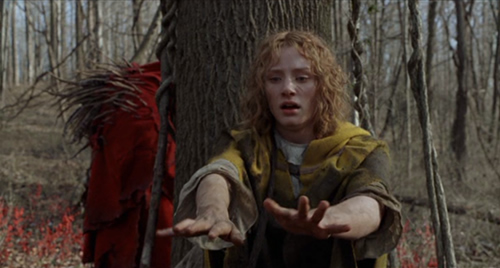
The next Shyamalan movie I saw, The Village, 2004, begins with an engaging premise:  the people in an isolated 19th century village live in fear of a race of beasts that roam the surrounding forest.  After a child dies, Lucius Hunt (Joaquin Phoenix) asks the village elders for permission to pass through the forest to “the towns” for medical supplies, but his request is denied.  The beasts paint the doors of village cabins with blood as a threat and warning after Lucius makes a short foray into the forest.

The beautiful Ivy Walker (Bryce Dallas Howard), blind daughter of the chief elder, becomes engaged to Lucius.  When he is stabbed by a rival, the prognosis is dire:  Lucius will die without medicine.  Ivy begs her father, Edward Walker (John Hurt), to allow her to go to the towns.  He agrees, against the wishes of the other elders.  Before she leaves, he reveals a secret:  the monsters do not exist.  They are a fabrication created by the elders to frighten children so they will not enter the forest.  Yet when Ivy ventures into the woods alone, a beast attacks her.

Ivy Walker and monster in The Village

So far so good. We are well into the movie and gripping our seats, but then, Shyamalan’s penchant for twists runs amok. Ivy manages to escape the beast, who turns out to be the boy who had stabbed Lucas, wearing a monster suit.  Ivy comes to a concrete wall, finds a handy ladder nearby, climbs up and over and winds up at the edge of a highway where a ranger in an SUV picks her up, looks at the list of needed medicine her father had written out, gets it for her (they have a bit of trouble), then helps her back over the wall with a warning to be careful.

We learn that the village elders are actually refugees from the culture of violence in America, who bet their lives and livelihoods on the grand experiment of trying to raise a peaceful generation in a peaceful agrarian culture.

You can check out the theme and logic behind the events at http://en.wikipedia.org/wiki/The_Village_(2004_film), but from my perspective, these elements were buried in a flawed story, one that would never ever, ever, ever, ever – as in, no way – have gotten past the the two writing critique groups I sit with.  In other words, not even the least experienced among us would get away with the plot flaws that pepper Shyamalan’s screenplay.

That, I believe, is the key to the disappointing trend of this director’s movies.  He tries to do it all – write the screenplay and direct the movie, and his early success must have isolated him from, or deafened him to, the collaborative voices that could have asked questions that should have been posed before the first scene was shot.

Questions like why Ivy’s father, a seemingly decent and caring man, would let his blind daughter brave the woods and the modern world alone?  And if simple antibiotics could save his future son-in-law, the town golden boy, why wouldn’t he just go out and get some.  And no matter how large his personal fortunre, (see the wikipedia page), who on earth is going to believe he could have bought secrecy for an entire village?  We’re supposed to believe that Homeland Security hasn’t studied the satellite photos in a post 9/11 world?

Contemplating this set of Razzies, I was struck with a deep appreciation for the members of my critique groups and all of their comments – those that seem pertinent and those that don’t.  They help keep me honest.  These are not the “discouraging words” I mentioned in my previous post.

Discouraging words sound like this:  You can’t.

Good criticism from people who value each other’s efforts sounds very different:  You can, and here are some ideas on how to proceed.

What Do I Really Know?

I’ve been very busy with writing lately, but in a one step forward, two steps back kind of way.  It has also been a time of discouraging words, to paraphrase “Home on the Range.”  Discouraging words about the never-so-crowded playing field for those trying to get into print.  Discouraging result (or lack thereof) from yet another writing contest I entered in the fall to no avail.  This is stuff I ordinarily blow off, but right now I’m in a doldrum phase in my novel.

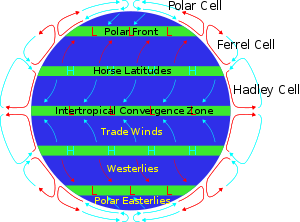
**Doldrums** –  Popular name for the “intertropical convergence zone,” just north of the equator, where winds of the northern and southern latitudes combine, causing extended periods of light or non-existant breezes.  (When my writing hits the doldrums, I Google way too much!)

I picked up a hand full of early chapters of the book to review, but found I was still too close to do any kind of evaluation.  A mass of questions arose:  This seems okay but is that all is – just okay?  Is this still the story I want or need to tell?  Should I take an extended break to write some short stories?  Should I take a non-fiction break.  Would it help to just walk away for a while?

When questions like this bounce around my head, I think of a section of Jack Kornfield’s marvelous book, A Path With Heart.

After a traumatic event, a former student came to Kornfield in a state of great confusion.  Lot’s of well meaning people, each with some claim to spiritual expertise, had been giving her contradictory advice, and she didn’t know who to believe or which way to turn.

Kornfield told her the 2500 year old story of a group of well-meaning spiritual seekers who faced similar confusion.  The sought out the Buddha to ask his advice.  He told them to take no one’s word for the truth, not even his, but to test what they heard for themselves and see which teachings led to “welfare and happiness…virtue, honesty, loving-kindness, clarity, and freedom.”  Kornfield reminds us that “in his last words, the Buddha said we must be a lamp unto ourselves, we must find our own true way.” Based on this teaching, Kornfield posed a question to the woman:

I asked her to consider carefully what she actually knew herself.  If she put aside the Tibetan teachings, the Sufi teachings, the Christian mystical teachings, and looked in her own being and heart, what did she know that was so certain that even if Jesus and the Buddha were to sit in the same room and say, “No, it’s not,” she could look them straight in the eye and say, “Yes, it is.”

Through great good fortune, I know what that truth is for me in the spiritual realm – I’ve written about it, or around it, or hinted at it in the “No-Self” series I posted in November and early December.  What startled me and led to this post was the realization I do not know what the equivalent truth is for me in writing.  What do I know beyond what any expert may say?  What have I hammered out of my own experience?  What is “my own true way?” I’ve been mulling it over, and if I don’t know the truth, I’m pretty darn sure of a few things:

  • In writing as in living, my own true way seems most likely to manifest when the me gets out of the way, and that implies that the first thing necessary, the main thing to take a break from, is attention to results.
  • Whatever kind of writing it is, when it comes alive, it is surprising.  If I am writing honestly, I learn things about myself and about the world.  “Oh, I didn’t quite realize I felt that way, but I guess I do.”
  • On a spectacular day like this, in between winter storms, it’s time to get outside and breathe some fresh air.

Keeping an eye on truths like these, even if they are not quite eternal verities, may be enough to spark a breeze in the doldrums and get the ship moving again.