The Unwinding: An Inner History of the New America, by George Packer

In the first sentence of The Unwinding, George Packer tells us what his title means:  “No one can say when the unwinding began – when the coil that held Americans together in its secure and sometimes stifling grip first gave way.”

Packer is a staff writer for The New Yorker, the author of an award winning book on American involvement in Iraq, two novels, and a play.  You could almost guess it would take someone with Packer’s chops to weave together the disparate threads of change that have irreversibly altered the country we thought we lived in.

It began in 1973, when the mid-east oil embargo coincided with models showing American had reached peak oil production.  And in 1977 when the steel mills in Youngstown, Ohio, that once stretched side-by-side for 25 miles, shut down.  When an idealistic young man named Jeff Connaughton, got an MBA and then decided to go to Wall Street, because by the early 80’s, getting a business degree and going to work for a company “that actually made things,” was viewed as failure.  When, according to Packer, concern over exported jobs prompted Wal-Mart to hang “Made in the U.S.A” signs over racks of clothing from Bangladesh.  When Connaughton became a Washington lobbyist and one of his colleagues told him, “Four-hundred thousand a year just doesn’t go as far as it used to.”

Poets see things before the rest of us, and Packer quotes Bruce Springsteen, who put it like this in 1984:  “Don’t you feel like you’re a rider on a downbound train?”

Now, almost 30 years later, when we all know we’re on a downbound train, Packer turns a light on some of the hydra-headed influences that led us collectively down this road.  He also shows us where positive change is likely to come from.  And where it is not.  It won’t come from the power elites, though it may come from disaffected refugees from those elites.

Jeff Connaughton, who made it into the outer circles of the inner circle, as a legal council for the Clinton White House, left Washington after being “radicalized by a stunning realization that our government has been taken over by a financial elite that runs the government for the plutocracy.”  Connaughton is now writing a book called The Payoff:  Why Wall Street Always Wins.

Packer also profiles Peter Thiel, a Silicon Valley entrepreneur who co-founded Paypal and helped bankroll Facebook as a startup.  Thiel put it like this:  “…the deep secret is there’s nobody at the steering wheel at all…People pretend to be in control, but the deep secret is there is no one.”  Thiel now looks for unusual entrepreneurial projects to fund.  Claiming that education is “the latest U.S. economic bubble,” he compares university administrators to sub-prime mortgage lenders.  In response, he began awarding Thiel Fellowships, two year grants of $100,000 each, to 20 people a year under the age of 20, willing to leave school to work on projects that “could make the world a better place.”

Packer doesn’t just profile movers and shakers in the post-unwinding world.  He details the story of Dean Price, son of generations of tobacco farmers, who overcomes multiple obstacles, including personal bankruptcy, to establish a working and profitable biodiesel refinery after learning about peak oil and taking the message to heart.

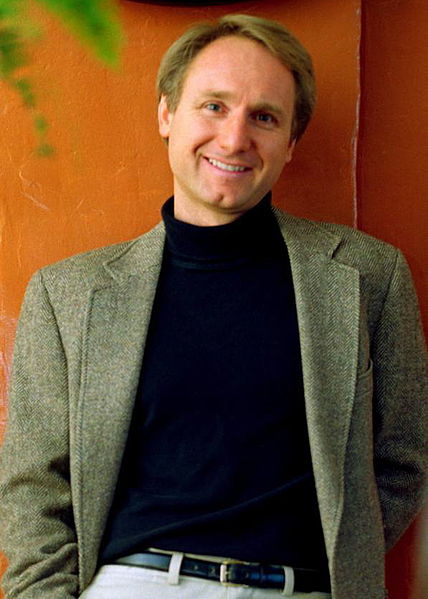
George Packer

author George Packer

In writing the book, Packer spent a lot of time with Tammy Thomas, an African-American woman who was 11 when the mills closed in Youngstown.  A few years later, she found herself an unwed mother of three, with a fierce determination, which she attributed to her grandmother, to get off welfare, even as jobs evaporated and gangs took over the neighborhoods.  She succeeded in doing so, and is now a community organizer and advocate, but her story makes clear that the odds were stacked against her.  She survived for 19 years in a car parts factory but is scornful of politicians who attach the label of “good jobs” to such work.  “Mitt Romney would be dead in week,” she said.

Packer interweaves the individual stories in a way that keeps you turning pages, like a novel with a large cast of characters that you care about.  Not all the stories have happy endings, and the suffering of individuals, cities, and regions is palpable.  By giving so many seemingly separate events the name, Unwinding, Packer helps clarify connections I had been sensing but unable to articulate.

“Alone on a landscape without solid structures, Americans have to improvise their own destinies, plot their own stories of success and salvation.”

A problem has to be named and described before we can begin to imagine solutions, and for this reason The Unwinding is a profoundly important book.

Inferno by Dan Brown: a book review

Inferno

I am one of the millions who couldn’t put The Da Vinci Code down when it was published in 2003.  Dan Brown’s breakout thriller went on to become the second best selling book of all time, trailing only The Bible.  Yet after reading his next offering, The Lost Symbol (2009), I swore off the author for good.  Information overload and a two dimensional, comic strip villain made it a disappointing read.

Time weakened my resolution, and happily so.  With Inferno, published this month, the author has found his stride again.  Weaknesses remain, but Dan Brown can tell an enthralling story.

The code that Robert Langdon must decipher this time comes from Dante’s Divine Comedy, and especially the first book of that trilogy, The Inferno.  It’s safe to say that everyone in the western world, Christian or not, has been influenced by The Divine Comedy, which gave us our graphic geographies of hell, purgatory, and paradise.  Artists then painted Dante’s vision, shaping the devils and angels that still lurk in imagination.

One of those paintings, Botticelli’s “La Mappa dell’Inferno” or “Map of Hell,” is a key to the mystery Langdon must decipher in his race to stop the release of an engineered plague designed to “cull the human herd” and prevent over population from destroying us all.

La Mappa dell'Inferno by Botticelli

La Mappa dell’Inferno by Botticelli

There aren’t many thrillers with stakes higher than this, and all the elements of it are real.  The threat of ever more people struggling for fixed or diminishing resources can hardly be exaggerated.  The threat of bio-terrorism is here.  Will genetic engineering open the gates of heaven or hell?  Into this nail-biting mix, drawn from the headlines, Brown adds a pretty and brilliant sidekick for Langdon, an equally brilliant mad scientist, and black-uniformed spooks in pursuit.  We have all the elements of an engrossing thriller, but Dan Brown has ways of subverting himself.

His most obvious flaw is excessive information dumping.  Inferno has two primary speeds, fast-forward chase scenes and slow motion data uploads.  When the pacing is off, both can become tiresome.

In one scene, Langdon searches for a clue in the 25th canto of Dante’s Paradiso.  He borrows an iPhone from a tourist to google the relevant passage, but then, although all the police in Florence and a surveillance drone are on his tail, the action stops for a treatise on different translations of Dante.  Robert Langdon, aka Brown, should take a page from Sherlock Holmes and not crowd his head or ours with facts that do not bear on the case at hand.

I also had a problem with several late-in-the-story surprises.  In any good thriller, things and people are not what they seem.  Sometimes it takes a magician’s sleight-of-hand and clever misdirection to pull off major twists with characters whose thoughts we have shared all along.  Several of Inferno’s revelations were clunky in a “What the…?” kind of way.  

Even with these flaws, I can recommend the book.  It had been a long time since I’ve found myself carried away by a work of fiction; as I read, I put everything I could on hold to keep turning the pages.

Dan Brown, 2007, by Phillip Scalia, CC-By-SA-3.0

Dan Brown, 2007, by Phillip Scalia, CC-By-SA-3.0

Reading Dan Brown convinces me yet again of the absolute primacy of story.  I had the same reaction after a pilgrimage to the home of Jack London, a writer I loved when I was young.  George Orwell, among others, described London’s writing and use of language as “poor,” yet more than 50 movies have been made from his novels and stories.  Not bad for a writer whose life was over at 40.

Fortunately for everyone who enjoys a gripping tale, Dan Brown, like London before him, has every reason to continue following his own star and forget the whining of critics like me.  If he does, he will likely continue to bring us supremely engrossing fiction.

Save the Cat Goes to the Movies by Blake Snyder: a book review

Save the cat2

What do these movies have in common: Alien, Fatal Attraction, and Godzilla? How about these: Star Wars, The Bad News Bears, and Lord of the Rings?  The first trio belong to the genre that Blake Snyder called “Monster in the House.”  The second set are “Golden Fleece” films in Snyder’s terminology.

He assigned distinctive genre names to help us think about films in a different manner and see connections we might miss with more familiar and less specific tags.  Some of the names came from Snyder’s love of the roots of our story traditions.  The Golden Fleece, for example, was the object of Jason’s quest in the myth of the Argonauts, while Theseus and the Minotaur is a “monster in the house” tale that is thousands of years old.

Snyder described his approach in Save the Cat, where he presented his top-down approach to writing a movie script, from idea to logline to pitch to outline to finished screenplay.  He presented a model of 10 movie genres and 15 critical plot points.  Save the Cat Goes to the Movies rounds out these concepts with detailed discussions of 50 well known and well respected movies – a valuable addition.  Here’s an example:

“Monster in the House” stories have three three key elements, a monster, a house, and a sin. The monster often has seemingly “supernatural” powers: Jaws is an uber-shark, while insanity lends a lot of power to human monsters.  The house may be a literal house, a spaceship, a town, or a planet, as long as escape from the monster is not an option. The sin is often greed (closing the beaches would hurt the tourist economy) or lust in a teenage slasher film. In the case of Victor Frankenstein and the atomic tests that spawned Godzilla, it is scientific hubris.  Sometimes ignorance is the “sin.”

frankenstein1

“Golden Fleece” movies are quest stories that span the millennia between Homer’s Odyssey and Bob Hope road movies.    The elements Snyder identifies are a road, a team, and a prize.  These movies run the gamut from comic (Planes, Trains, and Automobiles) to deadly serious (Saving Private Ryan), but in every case, winning the prize is less important to the story than the lessons the (surviving) team members learn.

road movie

In my previous post, I discussed Snyder’s “Fool Triumphant” genre.  His remaining seven categories also reveal unexpected similarities between movies where we don’t expect to find them.  It is also illuminating to look for his plot points in our favorite films.  Some of them are familiar through the names he assigns – “The bad guys close in,” “All is lost,” “Dark night of the soul.”  Others require explanation, which this second book in the Cat series provides.

A map is not a territory, as an outline is not the gripping story our hearts and minds crave.  That doesn’t mean a map isn’t useful in helping us reach our destination.  Blake Snyder’s Save the Cat Goes to the Movies is a useful and stimulating map to help us navigate the wilderness of a stack of blank paper.

Skinwalkers by Tony Hillerman: A book review

Skinwalkers

As I worked on a recent post, Favorite Fictional Detectives, I realized I didn’t remember the details of Skinwalkers, a key Tony Hillerman novel that I read soon after it was published in 1986.  I read it again and found it to be a thoroughly satisfying mystery.  I offer this brief review to encourage others who may not know Hillerman’s work to give it a look.

***

Officer Jim Chee, of the Navajo Tribal Police, tosses and turns one night in the airstream where he lives in the desert.  When his closest neighbor, a feral cat, shoots through the pet door, Chee gets up to peer out the window at what might have scared it so badly.  Probably a coyote, he thinks.  For a moment, thinks he sees a shape in the darkness.  Then the night explodes.  Three shotgun blasts tear holes in the trailer just above the bed where Chee was sleeping moments before.

In the morning, as he cleans up his trailer, Chee makes a frightening discovery.  Among the shotgun pellets that litter the floor is a small bone pellet.  Navajo witches, or skinwalkers, inject bone into the bodies of people they want to kill.  The bone produces the fatal “corpse sickness.”  This bone fragment links three apparently separate killings that Lt. Joe Leaphorn, a senior tribal detective, has been trying to solve without success.  When Leaphorn and Chee join forces, their first problem is persuading anyone to talk, when tradition holds that speaking a skinwalker’s name will attract his harmful attention.

Chee is learning to be a traditional Navajo healer.  With a background in college psychology classes, he understands his role to be restoring people to the core Navajo values of beauty and harmony.  Skinwalkers have fallen away and try to take others with them.

Leaphorn is not a believer, but he learned by hard experience that other people are.  Early in his career, when he ignored talk of witches, three murders and a suicide were the result.  As he and Chee grope through the dark, a very real menace is watching from a direction they do not expect.

This book represents fine storytelling, with characters and a setting that are outside our normal experience.  It’s one of the best mysteries I’ve read, and I suspect it will make you want to read more of Tony Hillerman’s work.

Alex Cross, Run: an audiobook review

In the 15 years since Morgan Freeman starred in the first Alex Cross movie, Kiss the Girls, I’ve enjoyed quite a few James Patterson thrillers in films, books, and audiobooks.  He knows how to keep you on the edge of your seat, whatever the medium.  Alex Cross, Run, the 20th tale in the series, is no exception.

When I’m doing a lot of driving, I often choose Patterson audiobooks – they make the miles fly, but once I started this one, I kept the earbuds plugged in while fixing breakfast, walking the dogs, and even late at night.  It wasn’t exactly pleasure that kept me listening.  It often felt like drinking coffee when nervous.

There’s an amped up quality to Alex Cross, Run that couldn’t quite hide a formulaic quality, even though Patterson created much of the formula.  Throw in enough serial killers – Alex Cross Run had three – and an author like Patterson will create plenty of tension, but I often felt manipulated.  Every book tries to manipulate an audience; successful ones do it with subtlety.  Here, elements like bad guy motives and family interludes felt somewhat perfunctory, like I might do if I started with a list of plot points and checked them off one by one.

Alex Cross, Run is not a bad book by any means.  I’d give it three and a half stars out of five.  It’s a thriller by any measure, but it adds nothing new to the series or the genre.

Perhaps it simply felt rushed compared to books I’ve read in Patterson’s other signature series, the “Women’s Murder Club.”  I find Lindsay Boxer a more rounded character, with a richer circle of friends and environment than Alex Cross.

Any reader who likes thrillers and any writer who wants to learn about tension will be rewarded by reading James Patterson, but Alex Cross, Run is not where I would advise them to start.

The Alchemist by Paulo Coelho: a book review

I started reading The Alchemist soon after its publication in 1988, but I didn’t finish it then, for reasons I don’t clearly remember. I picked it up again after author and writing friend, Amy Rogers, recommended the book for its affinity with the folk and fairytales I’ve recently spent so much time writing about.

She was right.  This time the story drew me in with its “Once upon a time” feeling.  It is not a fairytale by any measure; it’s far too sophisticated, yet it’s filled with folklorish magic.  The hero, Santiago, is named just once, when we meet him.  Through the rest of the tale, he is simply “the boy.”  Ironically, this generic quality, so typical of fairytales, allows us to identify with his journey, project our own yearnings into his far more closely than a modern, “three dimensional” characterization would have allowed.  In addition, the plot twist that ends The Alchemist is drawn directly from a folktale that appears around the world.

The Alchemist is a tale of spiritual self-realization.  From the start, Santiago tries to follow his “personal legend,” a term taken from alchemy.  At first, it is an instinct.  His search becomes explicit after a gypsy tells him his treasure lies near the pyramids.  A “chance” meeting with Melchizedek , the mysterious priest and king mentioned in Genesis, sets him on the path after he witnesses the unrequited longing of those who abandon the quest for their legends for the sake of expediency.  In order to follow his personal legend, Santiago learns to listen to the Soul of the World in his heart.  The world soul, or Anima Mundi is one of the key principles in the alchemical manuscripts that survive.

Anima Mundi, or Soul of the World, in alchemy

Anima Mundi, or Soul of the World, in alchemy

Paulo Coelho was born in 1947 in Rio de Janeiro.  When he was a teenager and told his mother he wanted to be a writer, she praised the steadiness of his father, an engineer, and asked if he knew what it meant to be a writer.  After research, Coelho concluded that a writer, “always wears glasses and never combs his hair” and “has a duty and an obligation never to be understood by his own generation.”

At age 16, because of his introversion and refusal to follow a traditional career path, his parents had him committed to a mental institution from which he escaped three times before his release at age 20.  He agreed to attend law school but dropped out to become a hippie and travel through South America, Mexico, North Africa, and Europe.  Upon his return to Brazil, he worked as a song writer, an actor, journalist, and theatre director.

In 1986, he walked the 500 mile pilgrimage road of Santiago de Compostela to the cathedral where St. James the apostle’s remains are believed to be buried.  Since the middle ages, it has been one of three major Christian pilgrimage destinations, along with Rome and Jerusalem.  On the way, Coelho had a spiritual awakening, which he described in his autobiographical novel, The Pilgrimage, 1987.  He published The Alchemist the following year, with a small Brazilian publisher that ran 900 copies and decided against a reprint.  Sales now total 65 million.

Paulo Coelho, 2012, by Sylvia Feudor.  Copyright free.

Paulo Coelho, 2012, by Sylvia Feudor. Copyright free.

I do not clearly remember why I disliked The Alchemist when I first read it more than 20 years ago.  I suspect, to put it in Santiago’s language, that at the time, I feared I’d lost hold of my own personal legend.  I’m glad I picked up The Alchemist again.  Our world is darker, harder, and more cynical now, and more than ever I think we need Coelho’s gentle parable.  However difficult it may be, it’s good to try to remember this conversation between King Melchizedek and Santiago:

“What’s the world’s greatest lie?” the boy asked, completely surprised.

“It’s this:  that at a certain point in our lives, we lose control of what’s happening to us, and our lives become controlled by fate.  That’s the world’s greatest lie.”

Once Upon a Time: On the Nature of Fairy Tales by Max Luthi

Why do fairytales continue to fascinate?  Why do we  think of Red Riding Hood when we find ourselves alone in the woods or even a city park?  Why does Hollywood still reap profit from retelling the old stories?  Why do they move us so deeply?

On the Nature of Fairy Tales by Max Luthi (1909-1991) is a wonderful place to begin to look under the surface of these deceptively simple tales.  The eleven essays gathered in this book explore different features of fairytales such as structure, symbolism, and meaning.  Luthi views the tales as a unique literary genre.  He knew and referred to the major schools of folklore research – the sociological, the psychological, and the comparative historical approaches – but he always returned to the stories themselves.  The meanings he found there were more than enough.

Fairytales have “a crispness and precision” in part, according to Luthi, because they eliminate most descriptions.  We hear of a dark forest, a cottage, a witch, but any and all details come from our own imagination.  In a similar way, there is no real character development.  “The fairy tale is not concerned with individual destinies,” but this lends the tales a universal meaning.  The prince or princess stands for all of us, “as an image of the human spirit.”

At its core, the fairytale is about our “deliverance from an unauthentic existence and [the] commencement of a true one.”    Prince or princess, goose girl or goatherd, all have lost their way.  Their radiance, which is our radiance, is hidden.  The kitchen lad wears a hat to hide his golden hair.

Sometimes the hero or heroine sets off into the forest alone.  Sometimes they sit and weep.  “Crying, the sign of helplessness, summons assistance – again a feature recurring in innumerable fairy tales.  Precisely as an outcast can man hope to find help.”  The caveat is that one must be kind and compassionate to all living creatures in order to find the right kind of help at the right time.  Even ants will repay a kindness that can save the hero’s life.

Luthi quotes Mircea Eliade who said that fairytale listeners experience an “initiation in the sphere of imagination.”  In Luthi’s view, fairytales echo the truths of the great spiritual traditions – both we and the world are far more than what we seem.

The Psychology of Superheroes

superheroes

Robin Rosenberg grew up with superhero comics. Later she shared them with her children, and after becoming a clinical psychologist, she studied them through the lens of psychology and discovered that “superhero stories are about morality and loyalty, about self-doubt and conviction of beliefs. I also saw that, like any good fiction, the sagas of superheroes bring us out of ourselves and connect us with something larger than ourselves, something more universal.”

Rosenberg published “We Need a Hero” in the current Smithsonian Magazine http://www.smithsonianmag.com/arts-culture/The-Psychology-Behind-Superhero-Origin-Stories-187938991.html#ixzz2IrHHrBBI.  The article inspired me to read The Psychology of Superheroes a collection of essays that Rosenberg edited in 2008 on what makes these caped crusaders tick.

Sometimes it seems that superheroes can’t get no satisfaction, but is that accurate?  Not according to the opening essay in the collection, “The Positive Psychology of Superheroes,” by Christopher Peterson and Nansook Park.  “One of the defining features of a superhero is an over-riding mission to serve the larger world and to defend it.  In this sense, superheroes have profoundly meaningful lives.”   

Peterson and Park assert that meaning is more important than pleasure in leading a satisfying life. That’s a good thing, because with a few exceptions, superheroes are challenged on the relationship front.  I’ve always thought it’s the flaws embodied in the secret identities of Clark Kent and Peter Parker that bonds us to these characters.  In one sense, they’re just like us, and their stories suggest that we too may choose the highroad.

Though superpowers isolate them from others, sometimes superheroes band together with superior results, according to the second essay in the collection, “The Benefits of a Group,” by Dr. Wind Goodfriend. This article may shed some light on why The Justice League of America functions more efficiently than your team at work or committees at church.

Another topic discussed in the book is the question of nurture vs. nature in the development of superhero psychology.  Superman may have his powers through genetics, how did he come to use them for altruistic rather than narrow and selfish ends?  Did he inherit those qualities too, or were they a result of his wholesome upbringing on a farm in America’s heartland?  What would have happened if his pod had landed in New York City?

Good and evil are usually clearly drawn in superhero stories, but not always. In “Anti-Heroism in the Continuum of Good and Evil,” Dr. Michael Spivey and Steve Knowlton discuss the ambiguous, gray-zone nature of super anti-heroes and sympathetic villains (think of Darth Vader and Gollum).  Each of the 18 essays in The Psychology of Superheroes addresses some facet of the super-psyche that you may or may not have wondered about.

Humans have relished hero tales for millennia.  Superman joined the ranks 75 years ago, and if you’ve been to the cineplex lately, you know that his saga is going to continue this summer.  The trailer for Man of Steel 2013 zeroes in on Clark’s inner struggles to understand who he is and why he is here.  Earlier incarnations of Superman did not live in a world of such moral ambiguity and mistrust of the government, themes which place this telling squarely in the 21st century.

As The Psychology of Superheroes makes clear, what we really admire is not the superpowers but the hero, the one who overcomes their doubts and demons and then acts to make the world a better place. This book is a fascinating read in its own right and will whet your appetite for the new movie.  It will give you some new perspectives on movies you’ve seen in the past as well as the comic books that once inspired some of us to run around wearing capes made out of bedsheets.