No-Self, Part 3

Jack Kornfield is a widely respected author, teacher of Vipassana or Insight meditation, and a founder of the Spirit Rock Meditation Center, http://www.spiritrock.org.

In a classic discussion of spiritual practice in general, and Buddhist practice in particular, A Path With a Heart, Kornfield devotes a chapter, “No Self or True Self?” to the question of identity.  Two key points emerge:  not to take this too literally, and not to be upset by the concept.  He notes that his teacher, Achaan Chah, said, “If you try to understand it intellectually, your head will probably explode.”

Achaan Chah spoke of this paradox one evening in his monastery in a way that was quite astonishing for a Buddhist master.  He said, “You know, all this teaching about ‘no self’ is not true.”  He went on, “Of course, all the teachings about ‘self’ are not true either,” and he laughed.  Then he explained that each of these sets of words, “self” and “no self,” are only concepts or ideas that we use in a very crude approximation, pointing to the mystery of a process that is neither “self” nor “no self”

Another of Kornfield’s teachers, used to laugh at how easily and commonly we would grasp at new identities.  As for himself, he would say, “I am none of that.  I am not this body, so I was never born and will never die.  I am nothing and I am everything.  Your identities make all your problems.  Discover what is beyond them…

Those teachers and authors I have quoted over the last several posts share an interest in an experience I stumbled into – the seemingly counter-intuitive freedom that comes with relaxing our grip on rigid concepts of what we are and what we are not.  At any time this seems troublesome, the real question becomes, who or what feels enhanced or diminished by the words, “self” or “no-self?”

An excellent resource on this and other questions is the Spirit Rock website given above. Under the “Meditation 101” tab is another tab called “Audio Resources,” with links to literally hundreds of recorded talks, given at Spirit Rock and elsewhere, that plunge into seemingly difficult topics like this.

No Self, Part 2

People and things appear solid and self contained. We mostly experience ourselves as if we just appeared on earth the way Superman did – one day the wonder-baby showed up from outer space. Buddhism suggests that this conventional view is just a story, an idea, that doesn’t align very well with what we discover if we pay attention. In other words, Buddha told some different stories, that align more closely with experience, and with happier experience.

Like other great spiritual teachers, the Buddha knew he was telling stories (google on the Heart Sutra), and in particular, he warned his followers, that just because we suffer if we get attached to the story of a separate self, we will also suffer if we attach to the story of no-self – if we take it as a hard truth, a doctrine, a dogma.

Why does belief in a separate self cause suffering? Because it leads to a foxhole existence. Halt, who goes there, friend or foe? It also brings an awareness of physical mortality as loss – we aren’t going to last and neither is anyone we care about. My favorite analogy is one of the simplest: we experience ourselves as waves on the ocean, rushing to shore.  It may be exhilarating when we’re young and death is something that happens to old people, but let a few decades whiz by, and the rocks and shore look a whole lot closer. And aside from that, how often does the sense of separation cause an uncomfortable sense of disconnection?  A million variations on loneliness.  And how much more suffering do we create for ourselves and others in an effort to scratch the itch, dull the pain?

Jerry Uelsmann - Untitled

Buddha tried to shift our understanding. Yes, we are waves for a while, but our true nature is ocean. Ocean changes but it doesn’t go anywhere.  A wave that knows it is and will ever be ocean has a lot less to worry about.

***

Our true essence goes beyond birth and death.  It can never get sick.  It can never get old.  It is beyond all conditions.  It is like the sky.  This is not a theory.  This is the truth that can only be realized in the realm of enlightened consciousness.  This consciousness is surprisingly accessible to each of us. – Anam Thubten

When that awakening happens there is no longer any desire to become something other than who we are. Every previous idea of who we are vanishes, along with the pain, guilt, and pride associated with our body. In Buddhism this is called no-self. This is the only true awakening. Everything else is a spiritual bypass.– Anam Thubten (emphasis added).

Try this.  Pay attention to your breath in silence.  Look at your mind.  Immediately you see thoughts are popping up.  Don’t react to them.  Just keep watching your mind.  Notice that there is a gap between each thought.  Notice that there is a space between the place where the last thought came to an end and the next one hasn’t arrived.  In this space there is no “I” or “me.”  That’s it. – Anam Thubten (emphasis added).

***

The sense-of-self is an assumed reality.  Only the idea of “me” separates us from the unconditioned truth of our being…It is possible to simply stop believing in the validity of the view of separation and free it from its isolated position by bringing the view of separation itself into awareness.  This means we are cued to the subtle pain caused by separation, and simply release the thought of separation without picking it back up. – Rodney Smith

***

I like the rainbow analogy; I can grasp it because we’re not dealing with something that appears to be solid like a person or a rock.

Let’s say a rainbow decided to practice a meditation common to eastern traditions, by asking the question, “Who am I?” and watching what thoughts pop up.  The rainbow starts out believing it is a thing, but what kind of thing?  Strangely enough, if this rainbow is very determined, it will not find anything called “rainbow!”  It sets out to discover its true rainbow self, and simply but it simply cannot be found.

What am I?   –    A rainbow.
What is a rainbow? – Umm…

What am I? – A person.
What is a person? – Umm…wanna check my ID?

If this rainbow has a lot of courage, it will discover it is made of water droplets.  And sunlight, since there are no rainbows until the storm breaks up.  And it is made of the time of day, since there are no rainbows at night.  And it its existence depends on the perspective of people watching.  Drive another five or ten miles down the highway and we may not see the rainbow anymore, though others behind us may.

As Thich Nhat Hahn would say, our rainbow discovers it is made entirely of non-rainbow elements.  It exists, but it is “empty” of a true, essential, rainbow-self.  The poor little guy may freak out at first, and yet…

Rainbow over Carmel Beach

Ultimately, it may be quite a relief. Rainbows don’t live very long.  Not even as long as flies.  Yet water and sunlight and clouds and daytime and people watching the sky are not going away…

To sneak in a Shakespeare quote:

Nothing of him that doth fade,
but doth suffer a sea-change,
into something rich and strange.

TO BE CONTINUED

No-Self, Part 1

For several months, I have been side-stepping the article I really want to write, because it is difficult, potentially upsetting to some readers if I say it wrong, and because “who do I think I am?”

I have been wanting to write about the Buddha’s teaching of “No-Self,” or Anatta, in the up-close and personal way I have come to experience it.

Joseph Cornell - "Medici Princess"

One of the saner things I did at the end my mis-spent youth, was to begin practicing meditation and contemplative spirituality.  Twenty-five years later I was still at it.   I had experienced incremental results: better, health, concentration, relaxation, and so on.  But something was still missing.

Around 2005 I was itching to drop some of my baggage of meditation techniques, theories and beliefs and “cut to the chase.”  To simplify!  It was like walking into a cluttered room and deciding some of the crap has to go.  My thoughts turned to  Zen practice because I had read The Three Pillars of Zen, and I couldn’t think of anything more bare-bones than just to sit and breathe, which I was (hopefully) going to continue doing anyway.

I had shied away from Buddhism because I once tried to read Thich Nhat Hahn and misunderstood what he had to say about “No-Self.”  I thought he was saying the soul or “true-self, that part of us that feels very valuable, is not real.  Buddhists do not say that “self” isn’t real, so much as they say it isn’t real in the way we think it is real.

I like the analogy to a rainbow.  A rainbow is real (while it lasts) but it isn’t real in the way it appears – and we’re better off not pinning our hopes to the pot of gold at the end.

Jerry Uelsmann - "Undiscovered Self"

Anyway, in 2005, I attended a Zen Sesshin (several days of morning-to-night practice) taught by a Catholic priest (which isn’t as uncommon as people might think).  It was…nice.  Not bad, not great, but overall, relaxing and…nice.  I appreciated the simplicity and it hooked me enough that I kept sitting like that once I got home.  And a few months later, nice turned into something a lot more powerful.

One evening during the holiday season, as I thought of family members and friends who were gone, and a parent who was ailing, I felt a profound sense of loss, of precious things slipping away.  But in the next instant a thought came; with perfect, instant, compelling clarity.  The thought just appearedWho is sad? And in that instant, there was nobody there! All that saddness was gone because there was no one there to feel sad.

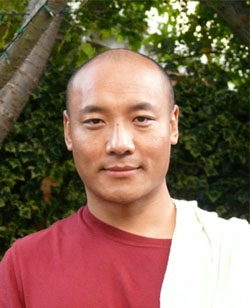
I didn’t need the priest to confirm that it was the real deal, though he did a while later when I spoke to him again.   I got a further confirmation when I attended a daylong retreat led by Anam Thubten, a Tibetan Buddhist teacher whose message is summarized in the title of his book, No Self, No Problem.  His basic suggestion for meditation is simply to rest from all physical and mental effort:

As we begin to rest and pay attention, we begin to see everything clearly.  We see that the self has no basis or solidity…We might want to apply this simple inquiry whenever problems arise.  If we feel angry or disappointed, simply ask, “Who is the one being angry or disappointed?”  In such an inquiry, inner serenity can effortlessly manifest…When all the layers of false identity have been stripped off, there is no longer any version of that old self.  What is left behind is pure consciousness.  That is our original being.  That is our true identity. No Self, No Problem pp. 5-6.

Anam Thubten

Anam Thubten’s website:  http://www.dharmatafoundation.com/about.aspx

TO BE CONTINUED.

Murder, Magic, and Redemption – the Story of Milarepa

This rather dramatic lead-in comes from a movie teaser: “Milarepa is a tale of greed and vengeance – demons, magic, murder and redemption. It is the story of the man who became Tibet’s greatest mystic.” http://www.imdb.com/title/tt0499238/

Milarepa film poster

“Milarepa is one of the most powerful and moving stories of love and transformation in world literature” – Richard Gere

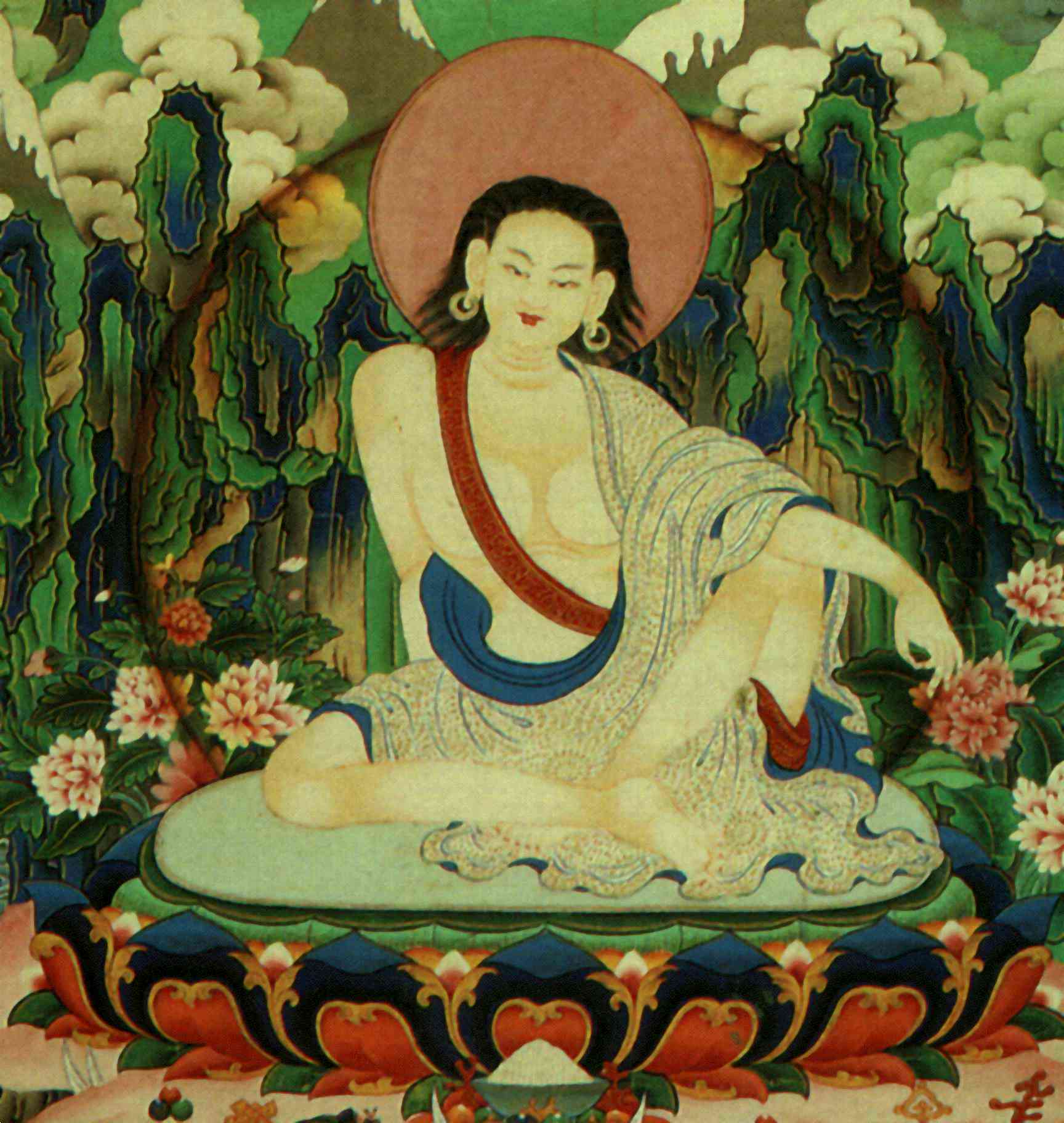
To borrow a term from the previous post, the stories of mystics and prophets are almost always strange attractors. History, shaped by our collective imagination of ultimate things, is guaranteed to be larger than life. Milarepa’s (1052-1135 CE) own teachings are found in the songs and poems he wrote, while the magical legends are from a biography written several centuries later.  The Dalai Lama said, “I cry, weep, and feel a strong sense of faith each time I read or hear the story of Milarepa, the greatest yogi of Tibet.”

Here is a one sentence synopsis: A young man in ancient Tibet commits mass-murder to save his mother, undertakes rigorous spiritual practice to expiate his sin, and becomes a saint whose teachings are still alive nine-hundred years later.

This is the story in greater detail:  Milarepa was born into a prosperous family, but his father died when he was seven, and the house and property went to a greedy aunt and uncle, who treated the family like slaves; they lived in a hovel, ate swill, and toiled in the fields all day.  When he was 15, Milarepa’s mother demanded that he visit a certain sorcerer and learn black magic to extract revenge.  If he didn’t do her bidding, she threatened to kill herself in front of him.

In our culture, where obeying your parents is optional, it’s easy to think the mother was just a whack job, and why didn’t someone think to call CPS?  To understand Milarepa’s story at all, we have to imagine a culture where family honor was more important than life itself.  Where a human incarnation was held to be infinitely precious, and your mother was revered as the chief giver of this gift.  Where allowing harm to come to your mother if you had the power to prevent it was an unimaginable sin.

We speak casually of choosing the lesser of two evils, and for most of us, the dilemma will be over once election day is past.  Not so for Milarepa.  The closest I can come to imagining him wrestling with his choice is to recall the scene of Gary Cooper on the mountain in Sergeant York, a Bible in one hand and the Constitution in another, trying hear the voice of his own conscience.
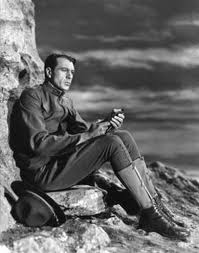
Gary Cooper as Sergeant York

Milarepa chose to obey his mother.  He went to the sorcerer and learned a complex practice that allowed him to invoke spirts who pulled down the stone house where his uncle’s family was celebrating a wedding.  Thirty-five people were in the house.  Ironically, only the aunt and uncle survived.

All hell broke loose.  The relatives of the dead were furious and gave chase.  Milarepa barely escaped pursuit, but he couldn’t escape his own conscience or the negative karma for 33 murders that was sure to land him in Buddhist hells for quite a few incarnations.  His sorcerer contact advised him to seek out a famous guru named Marpa.  When he heard the name, a thrill went through Milarepa, as if a glimpse of his destiny had just opened up.  The night before he arrived, the guru dreamed of someone very special coming into his life.  Though he instantly recognized Milarepa’s potential, he also saw the dark karma and knew the boy would have to work it out before anything else could take place.

Milarepa asked for initiation into spiritual practice, but Marpa refused, saying such treasures were not for someone as “worthless” as he.  Instead, he told Milarepa to move a stone tower to another location three miles away.  It took Milarepa three years to carry the rocks on his back.  Marpa looked at his work, scratched his chin, and said, “You know what?  I think I liked it better at the first location.  Move it back.”

At that point, most of us would be on the phone to our therapist, but Milarepa did what he was told.  In those days, spiritual seekers sometimes endured great hardships and life-threatening journeys for spiritual instruction.  It was all right;  Marpa never wound up on the 6:00 news with charges of fraud or scandal.

Milarepa toiled for for twelve years before receiving spiritual initiation.  After that, he undertook an eleven month retreat in a sealed cave with only a butter lamp for light, and a little slot where someone passed him one meal a day.  Later he moved to another remote cave where he lived on nothing but nettles and local vegetation.  He looked like a living skeleton, but there he attained final awakening.  Just like the parable of the Prodigal Son and related stories from India, Milarepa’s tale asserts that no one is beyond redemption once they sincerely turn in that direction.
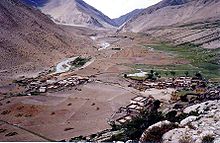
View from Milarepa's cave

Naturally, there are miracle stories about Milarepa.  One of them tells that he pressed his hand into the rock wall of his cave where it still holds the impression.  Here is an online account of someone who visited the site:  http://www.dreammanifesto.com/milarepa-miracle-set-stone.html

During a group pilgrimage to Tibet in the spring of 1998, I chose a route that would lead us into directly to Milarepa’s cave…To demonstrate his mastery over the limits of the physical world, Milarepa had placed his open hand against the cave’s wall at about shoulder level . . . and then continued to push his hand farther into the rock in front of him, as if the wall did not exist! When he did so, the stone beneath his palms became soft and malleable, leaving the deep impression of his hand for all to see…

In anticipation of my questions, our Tibetan translator…answered before I even asked them. “He has belief,” he stated in a matter-of-fact voice. “The geshe [great teacher] believes that he and the rock are not separate.” I was fascinated by the way our 20th-century guide spoke of the 900-year-old yogi in the present tense, as if he were in the room with us. “His meditation teaches him that he is part of the rock. The rock cannot contain him.”
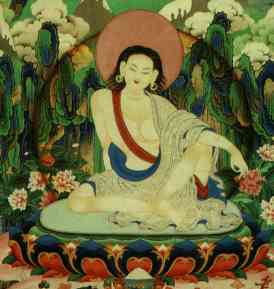
Milarepa

“In my youth I committed black deeds. In maturity I practiced innocence. Now, released from both good and evil, I have destroyed the root of karmic action and shall have no reason for action in the future. To say more than this would only cause weeping and laughter. What good would it do to tell you? I am an old man. Leave me in peace.” – Milarepa http://en.wikipedia.org/wiki/Milarepa

I’m all for stories of solitary heroes going against the crowd.  For stories of finding your life’s purpose and for tales of redemption and spiritual mastery.  My fiction always seems to circle around such themes, but for me, there is even more to the tale of Milarepa.  I’ve been fortunate enough to experience the living nature of his teachings in the person of Lama Kunga Thartse Rinpoche.

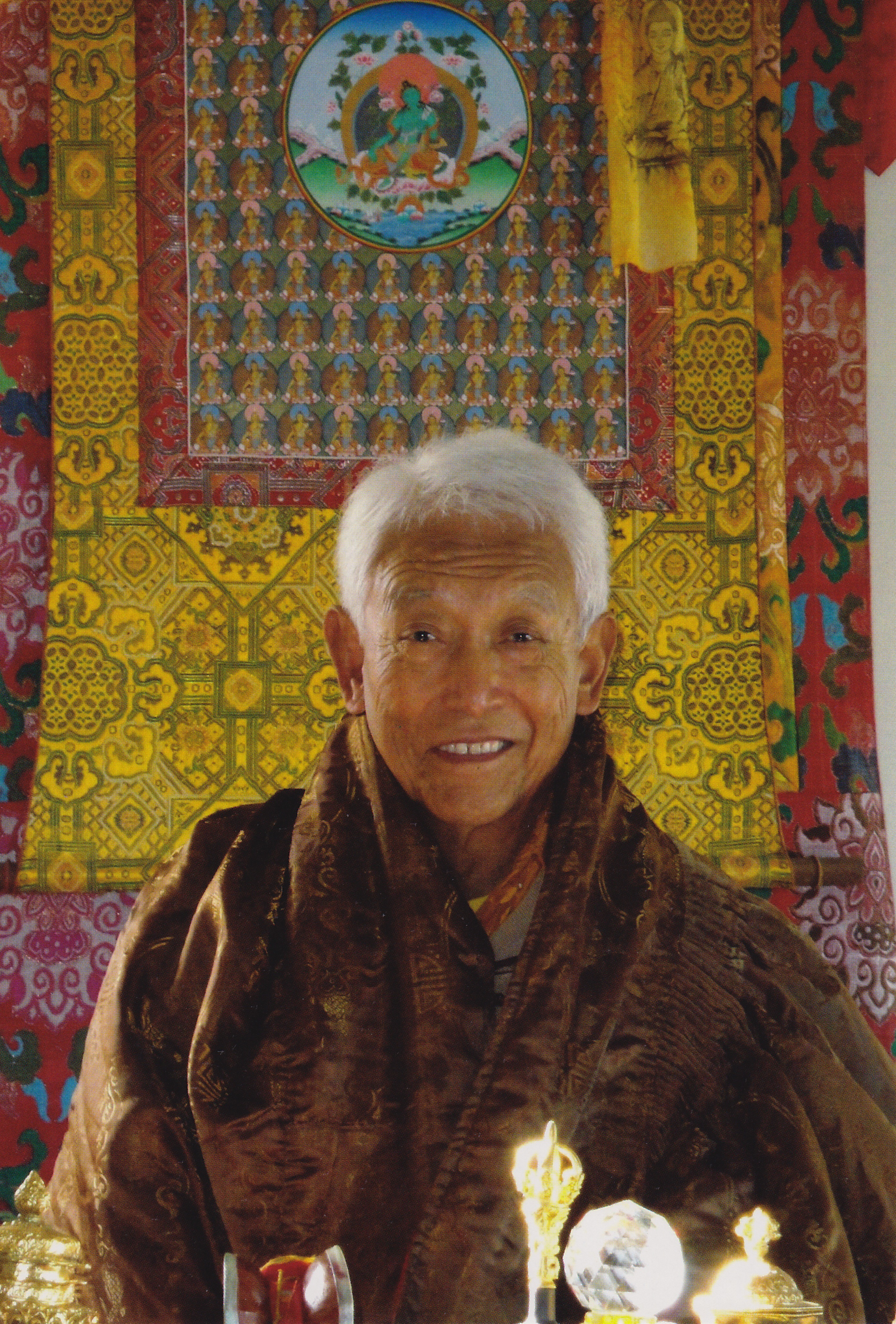
Born in Lhasa in 1935, he was recognized at the age of 7 as a reincarnation of Sevan Repa, one of Milarepa’s closest disciples.  He entered a monastery at 8, was ordained as a monk at 16, and became a Vice-Abbot at 24.  Lama Kunga fled from Tibet in 1959, and in 1972, he founded Ewam Choden Tibetan Buddhist Center in the hills just north of Berkeley (there’s a permanent link to the website on this blog).
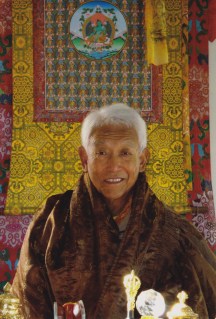
Lama Kunga Thartse Rinpoche

I met Lama Kunga two years ago while searching online for a particular Tibetan ceremony. I knew there was a place in Tucson and had calculated the cost of plane tickets when I found the ceremony was being offered at Ewam Choden, in two days time. I left a phone message, afraid there would be some barrier or pre-requisite, but when Rinpoche returned my call a little while later, he said, “Just come!” I asked if he was sure, and he said once more, “Just come, you are very welcome.”

Ewam Choden is just 90 minutes away, and I’ve been back many times.  On several occasions, I’ve sat through all day teaching sessions that end with the 75 year old lama more energetic than the students who are – at least speaking personally – desperate for a cup of coffee.

No rocks on the back or towers to move.  Lama Kunga is not that sort of teacher at all, as one can gather from the story written about him in the November, 2002 issue of Golf Digest, where he told the interviewer that good golf demands getting past the ego, but then said, “I would like to be reincarnated as a better golfer someday.” http://www.ewamchoden.org/?page_id=46

And finally, if the story of Milarepa seems like a pretty decent fantasy tale and nothing more, that’s fine. It would be fine with Milarepa and with the Buddha before him, who told a group of seekers, “Don’t take my word for anything.”

“Do not go by oral tradition, by lineage of teaching, by hearsay, by a collection of scriptures, by logical reasoning, by inferential reasoning, by a reflection on reasons, by the acceptance of a view after pondering it, by the seeming competence of a speaker, or because you think: ‘The ascetic is our teacher.’ But when you know for yourselves, ‘These things are wholesome, these things are blameless; these things are praised by the wise; these things, if undertaken and practiced lead to welfare and happiness’, then you should engage in them. (Numerical Discourses of the Buddha, p. 66)
Thoughts on Impermanence

A friend recently emailed about a retreat she had attended, and added that the husband of the presenter died two days after the program ended.  “A real lesson in impermanence,” she said.  She was not being dismissive or flip.  “Impermanence” is a term we share as members of the same Buddhist sangha (community of practitioners).

The Buddha made the simple observation that everything in this world, without exception, is changing, and he called it, “Impermanence.”  Big events, like birth, death, or illness bring it right to mind, but over the weekend, I was reminded of impermanence in a simpler way.  I was hunting for a particular family photo.  I didn’t find the one I was after, but came upon some other pictures in a desk.  Look at pictures of yourself, or your dog, or someone you have grown up with, for a living experience of impermanence.

The Buddha said the problem is not with impermanence itself, but that we “attach” to conditions as they are with desire or aversion, and suffer when we try to hold back or push the river.

Great grandmother Hannah reads me a story

We like youth but we don’t like old age. What are the odds of having one without the other? Or rather, what’s the alternative to growing old?

Writing stories in the 4th grade

Here’s the good news about impermanence: when things are bad, we know for certain, this too shall pass. Here is the bad news: when things are good, we know for certain, this too shall pass.

Impermanence is right at the core of “the American Dream,” our confidence that we can better ourselves, lift ourselves up by our bootstraps. Whether true or not, that image is in direct contrast to the European cultures the original settlers fled, where one’s place in the world was fixed (permanent), based on the circumstances of ones birth.

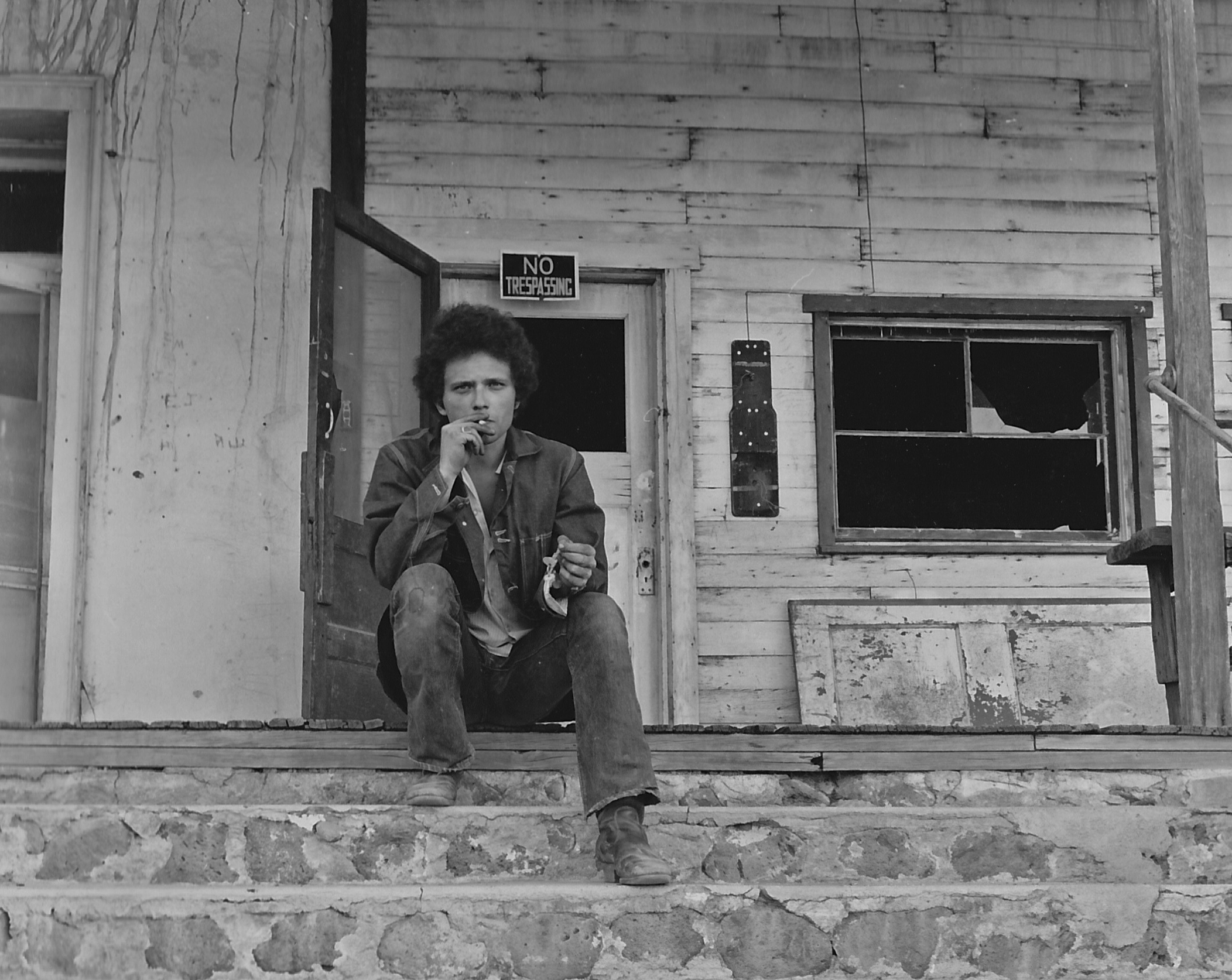
Thinking I am a bad-ass in Arizona

Seen from the right perspective, there’s a lot of good news about impermanence: because change is possible, I was not condemned to live my life as the Bob Dylan wannabe pictured above. (Actually, I’ve developed a lot of compassion for my younger selves. They simply didn’t have a clue).

With Mary in 1975

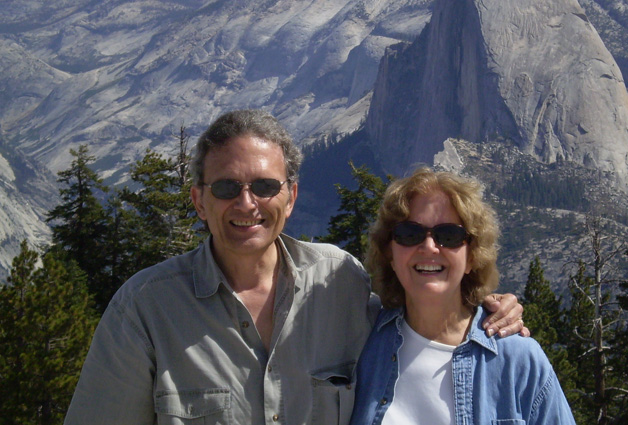
On Sentinel Dome last year

Of course it’s always hardest to watch impermanence play out with the people and things that you love:

With you I don’t hear the minutes ticking by,
I don’t see the hours as they fly,
I don’t see the summer as it wanes,
Just a subtle change of light on your face.

– Bruce Springsteen

No one would pay attention to the Buddha if all he had done was point out the problem, say, “You’re really up shit creek – good luck.” People have been seeking his solution for 2600 years. What the wisest teachers seem to say is that the solution turns out to be very simple once get it, but that it cannot be conveyed with words. Kind of like first year calculus I guess.

What can be described in words are various bits of advice and practices that will take us in the direction of ending the kind of suffering impermanence conveys. One of the practices that old photographs suggest – and this anticipates one of Buddha’s most profound teachings – is to gently pose questions like:

Where are the people in these photographs?
Where is the me in these photographs?
All these different photographs of “me” – which is the real me? All of them? None of them? Some of them? Which ones?

You get the idea.

And if the teaching of impermanence is troubling, it’s often helpful to ask, “Who (or what) is troubled? And to notice if the me who is there thirty seconds or five minutes from from now is also troubled, or is troubled in quite the same way.

Our Heroes Have No Shame

For some time I’ve been mulling over the qualities that make fictional characters unforgettable.  Among other things, they seem to like themselves and champion themselves unconditionally.  They are comfortable in their own skins.   Even when they mess up badly, they are in their own corner.  We want to be like them, be our own best friends.

Something else came to mind recently in a writing critique group, when a member’s character felt “a sense of shame.”  The phrase did not ring true.  The characters we love  do not experience shame. That goes along with being their own best friends.

The most common definition of “guilt” I have heard is remorse for something I’ve done, while “shame” is remorse for what I am.  If I feel guilty about a particular act, I can make amends, vow to change, and eventually move on.  Not so when the voices of shame tell me that is how I am.  No one growing up in our shame based culture can escape it altogether (at least not without a lot of inner work), but our heroes do.

When Frodo Baggins says, “I will take the ring, but I do not know the way,” he does not then tell himself, “I should know the way.  Why don’t I know the way?  These people do.  What is the matter with me?”

Police detective, Alex Cross,  in James Patterson’s Along Came a Spider, is supposed to exchange a ten million dollar ransom for a kidnapped girl.  He’s been set up in a complex double-cross and loses both the money and the girl.  The national media trumpet his failure.  Reporters hound him.  His superiors pull him from the case, but he maintains his internal compass:

If I had screwed up the ransom exchange in anyay, I would have taken the criticism.  I can take heat okay.  But I hadn’t screwed up.  I’d put my life on the line in Florida.

Cross, whose character is so well portrayed by Morgan Freeman in the movie, battles politics, FBI secrecy, beaurocratic red tape, and betrayal by the woman he loves to stay on the case for two years to rescue the girl after everyone else has given up.  What keeps him going?  What allows him to believe in himself in the face of repeated missteps and the worst knd of notoriety?  Whatever it is we, the readers, want some!!

One thing our special characters all seem to have is someone who believes in them unconditionally. Frodo has Sam.  Alex has his partner, Sampson, and his grandmother, Nana Mama, who lets him know when she thinks he is wrong, but is always his supporter.

Kellen, the heroine of Sharon Shinn’s young adult masterpiece, The Dream-Maker’s Magic was raised by a mother who is convinced that she is truly a boy who was somehow bewitched into the shape of a girl:

…my mother watched me with a famished attention, greedy for clues.  I had changed once; might I change again?  Into what else might I transform, what other character might I assume…She never did learn to trust me…or accept me for who I was.  It was my first lesson in failure, and it stayed with me for the rest of my life.

Even through her painful fumbling for who and what she really is, Kellen somehow keeps her balance, learns to trust her own council, and on the way, finds her ally in Gryffin, a crippled boy:

…he always greeted me with a smile and my name.  I did not bewilder or surprise him.  He did not think I as trying to be something I was not, as my mother did; he did not think I was trying to break a chrysalis and become something I was meant to be, as Betsy and Sara surely believed.  He just thought I was Kellen.
I found this the most comforting thing that had ever happened to me. At times, when I lay awake at night, confused myself about what role I should take and what direction I should try to follow, all that kept me from slipping into tears was knowing that I was not completely lost if Gryffin knew how to find me.

Something in us longs to be brave, longs to be heroic.  We want to be true to ourselves, right wrongs, bring down the forces of evil, or simply learn how to live a happy life.

As the Buddha lay dying, his disciple, Ananda, asked who would be the teacher when he was gone.  Buddha replied:

be a lamp unto yourself, be a refuge to yourself.  Take yourself to no external refuge. Hold fast to the Truth as a lamp; hold fast to the Truth as a refuge.

Whatever our philosopy, this is the way I think we want to live.  The charaters in the stories we love give us hope that it is possible.