Where to find “Tales of the Elves: Icelandic Folktales for Children.”

In December, 2012, I reviewed a wonderful illustrated book of Icelandic folktales, Tales of the Elves.  I’d brought a copy back from our trip to Iceland in the fall, but was unable to find ordering information.

Tales of the Elves cover

At the end of the post, I invited anyone who discovered that information to pass it along, and a reader named Kimberly just did!  Here’s a link to page for this book at Eymundsson, the premier Icelandic bookseller.  This page, in English, gives a price of 2,499 kronur – at about 100 kronur per dollar, that’s $24.99, what I paid in-country.  If you’re still interested, read on, because now the fun begins:

When you add the book to your cart and move on, the next pages are in Icelandic.  With the aid of an online Icelandic to English dictionary, I came up with translations of these questions you’re asked:

Nafn: name
Heimilisfang: address
Postnumer: zip code
Baer: town
Land: That’s country, and there’s a pulldown
Netfang: email address
Simi: phone

Kodi gjafabrefs: Kodi is code, and I couldn’t find the second term. I’m guessing they mean country codes, which from Iceland to the US is 00 + 1 + area code + number.  Here is a look-up table if you live elsewhere.

Okay, fine!  No one ever said navigating through faerie was easy!  Eymundsson says they’re working to bring their international pages online, so one option is to check back with them in six months.

Would I order this book from them if I didn’t have it?

I have a collection of half a dozen illustrated fairytale books I’ve collected over the course of many years and they have an honored place on the bookshelf.  Each one reminds me of some special moment or place when I found it.  Tales of the Elves is the only souvenir I brought back from Iceland, as the sweaters were too warm for this part of California.

The illustrations inside are as fine as the one on the cover, so if you like this kind of illustrated book and have read this far, you won’t be disappointed.

Jorinda and Joringel, Part 2

Photo by Jon Sullivan, public domain

Photo by Jon Sullivan, public domain

This post continues my discussion of Jorinda and Joringel, a fairytale from the Brothers Grimm.  If you haven’t read Part 1, I suggest you do so.  What follows will make more sense.  Here is a summary of the story:

A young couple, betrothed to be married, stray too close to the castle of a witch in a dense forest.  The witch freezes the young man, Joringel, on the spot and turns the young woman, Jorinda, into a nightingale.  She cages Jorinda and carries her into the castle where she keeps thousands of other girl-songbirds.  

The witch then frees Joringel, who wanders to a strange town and works as a shepherd for a long time.  At last he dreams of a red flower enclosing a jewel which overcomes all enchantments.  After searching for nine days, he finds such a flower with a large drop of dew inside.  He uses the flower to free Jorinda and the other girls, and strip the witch of her magical powers.  Jorinda and Joringel marry and live happily for many years.

I have referred before to the writings of Marie-Louise Von Franz, Carl Jung’s closest associate, who wrote several books on folklore from a Jungian perspective.  In approaching this story, I reread parts of her Individuation in Fairy Tales (1977).

Individuation was  Jung’s central concept.  He used the term for the ultimate goal of inner-work, the lifelong struggle to realize the Self – not the ego-self but our unique totality, the union of all our tendencies, good, bad, and ugly.  This psychic wholeness can free us from the prison of neurosis.  

Jung and Von Franz listed numerous symbols for the Self:  the divine figures of all religions; the wise old man or wise old woman; the divine child, the helpful animal, mandalas, flowers, jewels, birds, golden balls, circular towers, and almost anything else that implies wholeness or completeness in itself. 

Rose windows in the cathedrals are well known western mandalas, symbols of unity in the cosmos, while our fairytale rose, which breaks all enchantments and hides a pearl, has a similar meaning for the lovers in this story.

English stained glass by William Wailes, ca 1865. Photo by TTaylor, 2006. Public Domain via Wikimedia Commons

Jorinda and Joringel, when they finally marry, embody another symbol of the Self in the Jungian view, the divine pair.  The mystery of the male-female union of opposites was often illustrated as a hermaphrodite in the alchemical texts that Jung studied, a western equivalent of the yin-yang symbol.

Fairytales don’t feature hermaphrodites, just normal weird being like giants and dragons, but I think we can look for this theme of “higher union” whenever a folktale ends with a wedding.  But before the happy ending, Jorinda and Joringel have to experience loss and getting stuck.

At the start of the story, they seem very young.  Young people don’t know the dark regions in the forest.  They play with golden balls, their original wholeness, but that is destined to go.  In folklore and in life, innocence makes a fall inevitable.

Everyone goes through stuck times. – the unsatisfactory job or relationship.  What once sustained us loses its flavor.  Marie-Louise Von Franz gave the example of one of her patients – a 43 year old unmarried man who lived at home and took care of his mother.  She had spells of illness whenever he talked of getting a place of his own.

Jorinda is caught in a different but similar trap.  Her transformation into a songbird is unique in my experience.  I haven’t come across this motif in any other tale.  A songbird is a pretty, entertaining, and unthreatening creature – perhaps what our culture wishes for young women and girls.  Yet to interpret the story like that amounts to projecting our modern sensibility onto earlier generations who shared this story around their hearths for hundreds of years – a risky proposition at best.

The witch is old.  Freezing people and caging them as songbirds can be seen as similar strategies for stopping time.  If we want to read this psychologically, we can imagine the witch as those places within that hate change, that cling to youth and beauty as if grasping will prevent them from slipping away.  It’s interesting that the healing flower contains a drop of dew, one of life’s more ephemeral things.

As happens when people are truly stuck, the solution doesn’t come from the characters’ ego selves – it comes from a transpersonal source, a “big dream” that leads Joringel to the magical flower.  And it doesn’t come immediately, but only after this one-time golden boy labors for a long time as a lowly shepherd.  Robert Bly has written in detail about the sobering quality of menial work in folklore.  Von Franz wrote about the value of work in helping the flighty, “eternal youth” in us get grounded.

The historical Saint Patrick was captured at 16 by Irish pirates and sold into slavery.  He worked for six years herding sheep.  He learned to pray in the wilderness and found his way to Christianity.  When the time was right, he heard a voice tell him his ship was ready, so he made his rather miraculous escape.  According to Jung and Von Franz, our inner center, the Self, does things like that.

To me, there is a beauty in these stories that equals scripture.  Faith, trust, kindness, belief in oneself and in the goodness of life, are implicit.  The heroes and heroines have to learn timing and instinct, when to trust and when to be wary, when to speak and when to be still.  They generally learn things the hard way (like us) after taking a fall – if their attention doesn’t falter in the forest, they wind up with a stepmother.  But those who listen to birds, to their own hearts, and to the voices in the wind, find a way to keep going and chose the right path.
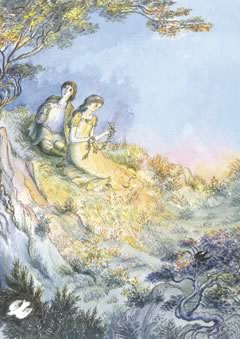
jorinda

I don’t have any definitive answers about what the stories mean – the paths through the otherworld shift too fast for that.  I’m not sure that folklore meanings have that much meaning – I offer the ideas of Jung, Von Franz, and others as maps of where other explorers have gone.  In the end, I think it is living with these stories that matters most.  And then, as Joseph Campbell, another great explorer said, we enter the forest at the point that seems best us and watch for the birds or small creatures beside the road who can guide us.

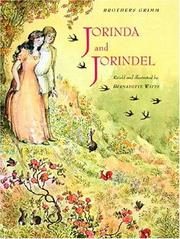
Jorinda and Joringel: a fairytale from The Brothers Grimm

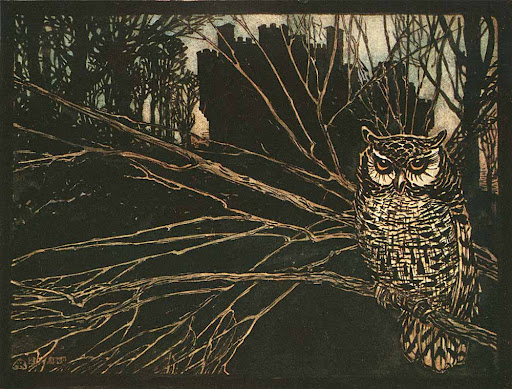
The witch as an owl by Arthur Rackham

The witch as an owl by Arthur Rackham

I have seen Jorinda and Joringel (sometimes spelled Jorindel) in many folklore collections, but I always passed it by.  A cursory glance led me to think it was much like Hansel and Gretel, not one of my favorite tales.  I’m not alone in skipping it:  I’ve never seen it discussed or analyzed by any of the writers on folklore I read.

I picked it up recently, intending to read myself to sleep, but stayed awake instead.  Jorinda and Joringel is a scary story with unexpected depths as well as features found in other celebrated stories.  One key image strikingly parallels a central symbol from India, which raises other questions.  Here is a summary of the tale:

***

Synopsis of “Jorinda and Joringel” in The Annotated Brothers Grimm

Once there was a witch who lived in a castle in the depths of a thick forest.  By day she took the shape of a cat or and owl, but at night she appeared as an old woman whose nose curved down to touch her chin.  She would kill and eat any bird or animal that ventured near.  If any human came within 100 feet of the castle, she would freeze them on the spot; they’d be unable to move until she released them.  She turned innocent girls into songbirds and keep them in cages inside the castle; she had 7000 birds and counting.

A beautiful maiden named Jorinda was betrothed to a youth named Joringel.  They enjoyed nothing more than spending time together, and one day they decided to walk in the woods.  “We just have to stay away from the castle,” Joringel said.

As the sun began to set, they heard the plaintive song of a turtledove. Jorinda began to weep while Jorindel sighed and felt oppressed with sadness. He noticed the wall of a nearby castle, but before he could utter a warning, Jorinda was turned into a nightingale. An owl with flashing eyes flew around them thrice and Joringel was frozen in place, a living statue unable to move.

The owl flew into a bush and a moment later an old woman emerged to carry Jorinda into the castle.  When she returned, she freed Joringel from the spell.  He fell to his knees and begged the witch to return his beloved, but she only said, “You will never see her again,” and departed.

Joringel wandered aimlessly in great despair.  He came to an unknown village where he worked for a long time tending sheep.  Sometimes he would circle the castle there but never too closely.

One night he dreamed of a blood-red flower with a beautiful pearl inside.  In the dream, he was back at the witch’s castle, and everything he touched with the flower was disenchanted.  When he woke in the morning, he started to search for the flower.  For nine days he roamed wilderness and village, and at last he found a blood-red flower with a large drop of dew inside that was as bright as any pearl.

He returned to the witch’s castle, boldly strode up, and touched the gate with the flower.  It flew open.  He found the room where the sorceress was feeding her birds.  When she saw Joringel, she was filled with rage, but she couldn’t come within two feet of him.  There were several hundred nightingales – how would Joringel find the right one?  Then he noticed the witch sneaking toward the door with a single cage.

Joringel ran to touch both her and the cage with the flower.  In an instant, Jorinda stood beside him and the witch lost her magical powers forever.  After freeing the other birds, Jorinda and Joringel departed.  They were married and lived with great happiness for a very long time.

*** 

After reading the story several times, I jotted down a few of the questions that came to mind:

  1. Why are Jorinda and Jorigel depicted as being so young?  In several translations, they are called “girl” and “boy” rather than “maiden” and “youth.”  Of the three illustrations I found, one depicts them as children.  Why?
  2. People are frozen or turned to stone in stories all over the world.  I thought of The Water of Life which I discussed here, as well as the ice queen in The Lion, the Witch, and The Wardrobe by C.S. Lewis.  What does it mean to be frozen like that?
  3. Why were the girls turned into songbirds?  Enchanted fairytale people usually wind up in far less appealing shapes.
  4. Another widespread motif is doing menial work for a very long time.   Here it is tending sheep.  More often it’s kitchen work.  Cinderella worked in the ashes for as long as it took a hazel twig, watered with her tears, to grow into a large tree.  Fairytale heroes and heroines wind up doing menial work when they are stuck or stalled in their quest.  If they do it well and for long enough, they find solutions.  Can this tell us anything useful?
  5. My final question concerned the pearl in the blood-red flower.  In western stories, such flowers are always roses; in the east, it would be a lotus.  Om Mani Padme Hum, is probably the world’s best known mantra and is usually (though incorrectly) translated as, “The jewel is in the lotus.”  Are the parallel images merely coincidence?  Or diffusion of stories?  Or the collective unconscious, or what?

These are the kind of things I always wonder about in stories like this.  I hunted and found a reference that doesn’t discuss this particular tale but casts light on these issues.  I’ll discuss them next time.  Meanwhile, if the story raised other questions for you, please post them.  Maybe someone here or a songbird in the tree outside will have an answer for you.

To Be Continued

More about Dummlings and Fools

Fool Tarot of Marseilles

In an earlier post, Tales of the Dummling, (January, 2013) I discussed a theme from folklore, and specifically from The Brothers Grimm, which has long intrigued me.  In this story type, the youngest of three brothers, whom everyone else considers a fool, triumphs because of virtues like honesty, compassion, and attention to the present moment.

I mentioned Forrest Gump, 1994, as a recent movie version of the theme, and several readers were quick to point out that Being There, 1979, with Peter Sellers also fits the type.  I’m currently reading an excellent book on screenplays, Save the Cat Goes to the Movies, by Blake Snyder (1957-2009) that widens the scope of this kind of movie by calling the genre, “The Fool Triumphant.”  This shift allows us to see the connections between many other types of tales where innocence and virtue are rewarded.

Save the cat2

I reviewed Snyder’s first book on screenwriting, Save The Cat, in January, 2012.  I expect to write a review of this book after I finish, but first I want to focus on Snyder’s words about films with “fools” as heroes.

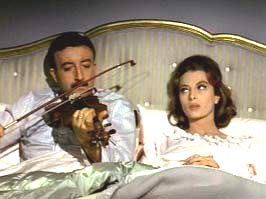
Inspector Clouseau in The Pink Panther, 1963

Inspector Clouseau in The Pink Panther, 1963

He lists three key elements:

  1. The “fool” is someone with skills or powers that are overlooked or unnoticed by everyone except (sometimes) an antagonist who resents the fool’s success.  Example:  Inspector Dreyfus in the Pink Panther movies.
  2. The fool is foolish to an establishment that opposes him or her.  In Snyder’s words, “while he does not set out to do anything but live his life, it’s usually the establishment that’s exposed as the real fool in the equation.  Have no fear, our unlikely hero won’t become a part of the system – or want to!”
  3. Finally, Snyder says, a “transmutation” occurs for the fool.   Sometimes this involves a change of name, as when Chance the gardener becomes Chauncey Gardner in Being There.  It may be a change of life circumstance, like Goldie Hawn in Private Benjamin.  It may involve gender swapping as in Tootsie and Mrs. Doubtfire.  The fool’s mission may change as it does in Legally Blonde, where Reese Witherspoon first enrolls in Harvard law to win back her fiancé, but then discovers that law is her true calling.
Reese Witherspoon for the defense in "Legally Blonde"

Reese Witherspoon for the defense in “Legally Blonde”

Blake Snyder identifies sub-genres in stories about the wisdom of foolishness.  “Political Fool” movies include Being There, Mr. Smith Goes to Washington, and The Princess Diaries.  Films like Tootsie, Miss Congeniality, and Some Like it Hot are grouped together as “Undercover Fool” stories.  Forest Gump and Zelig are “Society Fool” movies.

the-three-stooges

In addition to Legally Blonde, “Fool Out of Water” movies include Stripes, Beverly Hills Cop, and Crocodile Dundee.

Snyder is aware of the deep roots of these stories.  The fool “has a bead on the truth,” he says, whether it’s Shakespeare’s Puck, saying, “Lord what fools these mortals be,” or Forrest Gump, who “can find a whole universe sitting on a bench waiting for a bus.” In discussing Gump, Snyder suggests that ultimately, the fool opens our minds and our hearts to spiritual wisdom.

I thought of an 11th century Buddhist master, Tilopa, who lived as an itinerant sesame seed grinder.  A thousand years later, people still study his teachings, which are very complex in one sense, but can also be boiled down to these “six words of advice:”

  1. Let go of what has passed.
  2. Let go of what may come.
  3. Let go of what is happening now.
  4. Don’t try to figure anything out.
  5. Don’t try to make anything happen.
  6. Relax, right now, and rest.

Clearly such wisdom lies beyond the reach of anyone but a fool!

Skinwalkers by Tony Hillerman: A book review

Skinwalkers

As I worked on a recent post, Favorite Fictional Detectives, I realized I didn’t remember the details of Skinwalkers, a key Tony Hillerman novel that I read soon after it was published in 1986.  I read it again and found it to be a thoroughly satisfying mystery.  I offer this brief review to encourage others who may not know Hillerman’s work to give it a look.

***

Officer Jim Chee, of the Navajo Tribal Police, tosses and turns one night in the airstream where he lives in the desert.  When his closest neighbor, a feral cat, shoots through the pet door, Chee gets up to peer out the window at what might have scared it so badly.  Probably a coyote, he thinks.  For a moment, thinks he sees a shape in the darkness.  Then the night explodes.  Three shotgun blasts tear holes in the trailer just above the bed where Chee was sleeping moments before.

In the morning, as he cleans up his trailer, Chee makes a frightening discovery.  Among the shotgun pellets that litter the floor is a small bone pellet.  Navajo witches, or skinwalkers, inject bone into the bodies of people they want to kill.  The bone produces the fatal “corpse sickness.”  This bone fragment links three apparently separate killings that Lt. Joe Leaphorn, a senior tribal detective, has been trying to solve without success.  When Leaphorn and Chee join forces, their first problem is persuading anyone to talk, when tradition holds that speaking a skinwalker’s name will attract his harmful attention.

Chee is learning to be a traditional Navajo healer.  With a background in college psychology classes, he understands his role to be restoring people to the core Navajo values of beauty and harmony.  Skinwalkers have fallen away and try to take others with them.

Leaphorn is not a believer, but he learned by hard experience that other people are.  Early in his career, when he ignored talk of witches, three murders and a suicide were the result.  As he and Chee grope through the dark, a very real menace is watching from a direction they do not expect.

This book represents fine storytelling, with characters and a setting that are outside our normal experience.  It’s one of the best mysteries I’ve read, and I suspect it will make you want to read more of Tony Hillerman’s work.

The Alchemist by Paulo Coelho: a book review

I started reading The Alchemist soon after its publication in 1988, but I didn’t finish it then, for reasons I don’t clearly remember. I picked it up again after author and writing friend, Amy Rogers, recommended the book for its affinity with the folk and fairytales I’ve recently spent so much time writing about.

She was right.  This time the story drew me in with its “Once upon a time” feeling.  It is not a fairytale by any measure; it’s far too sophisticated, yet it’s filled with folklorish magic.  The hero, Santiago, is named just once, when we meet him.  Through the rest of the tale, he is simply “the boy.”  Ironically, this generic quality, so typical of fairytales, allows us to identify with his journey, project our own yearnings into his far more closely than a modern, “three dimensional” characterization would have allowed.  In addition, the plot twist that ends The Alchemist is drawn directly from a folktale that appears around the world.

The Alchemist is a tale of spiritual self-realization.  From the start, Santiago tries to follow his “personal legend,” a term taken from alchemy.  At first, it is an instinct.  His search becomes explicit after a gypsy tells him his treasure lies near the pyramids.  A “chance” meeting with Melchizedek , the mysterious priest and king mentioned in Genesis, sets him on the path after he witnesses the unrequited longing of those who abandon the quest for their legends for the sake of expediency.  In order to follow his personal legend, Santiago learns to listen to the Soul of the World in his heart.  The world soul, or Anima Mundi is one of the key principles in the alchemical manuscripts that survive.

Anima Mundi, or Soul of the World, in alchemy

Anima Mundi, or Soul of the World, in alchemy

Paulo Coelho was born in 1947 in Rio de Janeiro.  When he was a teenager and told his mother he wanted to be a writer, she praised the steadiness of his father, an engineer, and asked if he knew what it meant to be a writer.  After research, Coelho concluded that a writer, “always wears glasses and never combs his hair” and “has a duty and an obligation never to be understood by his own generation.”

At age 16, because of his introversion and refusal to follow a traditional career path, his parents had him committed to a mental institution from which he escaped three times before his release at age 20.  He agreed to attend law school but dropped out to become a hippie and travel through South America, Mexico, North Africa, and Europe.  Upon his return to Brazil, he worked as a song writer, an actor, journalist, and theatre director.

In 1986, he walked the 500 mile pilgrimage road of Santiago de Compostela to the cathedral where St. James the apostle’s remains are believed to be buried.  Since the middle ages, it has been one of three major Christian pilgrimage destinations, along with Rome and Jerusalem.  On the way, Coelho had a spiritual awakening, which he described in his autobiographical novel, The Pilgrimage, 1987.  He published The Alchemist the following year, with a small Brazilian publisher that ran 900 copies and decided against a reprint.  Sales now total 65 million.

Paulo Coelho, 2012, by Sylvia Feudor.  Copyright free.

Paulo Coelho, 2012, by Sylvia Feudor. Copyright free.

I do not clearly remember why I disliked The Alchemist when I first read it more than 20 years ago.  I suspect, to put it in Santiago’s language, that at the time, I feared I’d lost hold of my own personal legend.  I’m glad I picked up The Alchemist again.  Our world is darker, harder, and more cynical now, and more than ever I think we need Coelho’s gentle parable.  However difficult it may be, it’s good to try to remember this conversation between King Melchizedek and Santiago:

“What’s the world’s greatest lie?” the boy asked, completely surprised.

“It’s this:  that at a certain point in our lives, we lose control of what’s happening to us, and our lives become controlled by fate.  That’s the world’s greatest lie.”

Authenticity and folklore

In his comment on my review of Once Upon a Time, Calmgrove zeroed in on one of author Max Luthi’s key concepts, that fairytales show us “man’s deliverance from an inauthentic existence and his commencement of a true one.” Luthi gives us story examples: “a penniless wretch becomes wealthy, a maid becomes queen…or a toad, bear, ape, or dog is transformed into a beautiful maiden or handsome youth.”

What can we make of such a statement in terms of our own lives? Is there anything we can learn from stories of toads and bears transformed?

Rumpelstiltskin by Henry Justice Ford, 1889. Public domain.

In trying to answer the question, our first hurdle is trying to figure out what an “authentic existence” might look like, a philosophical exercise right up there with defining “the true,” “the good,” or “the beautiful.” When I try to imagine “authentic” in our world, one of the first things that comes to mind is Crazy People, 1990, a movie in which Dudley Moore, as an advertising executive, is checked into an insane asylum after he suffers a nervous breakdown and begins writing truthful adds.

Truth in advertising wins Dudley Moore a straight-jacket in “Crazy People,” 1990

Fairytales mirror philosophy and religion in their concern with lives well lived, but they are much less precise in prescribing what to aim for and how to proceed. When someone achieves their happy destiny, we see outer events representing that highest good, like a royal wedding or the discovery of buried treasure, but what works for one hero or heroine may not work for others.

This observation offers a segue into the first of several attribute that fairytale heroes and heroines seem to share – they chart their own course. In Luthi’s terms, they are “wanderers” who “set forth into the unknown in search of the highest, the most beautiful, or the most valuable thing.” Most often, but not always, it is male characters who cover the greatest outer distance, but in Faerie, the unknown waits outside your door. Cinderella’s journey begins with a solitary trip every day to weep at her mother’s grave. The smallest step into the forest is fraught with danger for one who goes their own way, whether the goal is the end of the world or the prince’s ballroom.

Arthur Rackham illustration from “The White Snake”

A second attribute of successful folklore characters is kindness, at least for those creatures who turn up with guidance for the quest. It is not the kind of universal compassion espoused by religion, but is more practical and down to earth. Cinderella is kind to birds, and they always assist her, but she makes no objection when they later peck out the stepsisters’ eyes. The hero of “The White Snake,” who learns the speech of animals, goes out of his way to help ants, fish, and ravens, who will later save his life, but he doesn’t hesitate to sacrifice his horse when events demand it.

According to Max Luthi, the fairy tale character’s estrangement from conventional social relations allows him or her to connect with help from unexpected quarters, with toads or foxes, crones or dwarves. Luthi often distances himself from Jungian interpretation, but not in the case of fairytale helpers. They can be viewed,not only as outer creatures, but “as forces within the soul of the individual which are at first in need of assistance but finally unfold and develop.”

A third attribute of folktale heroes and heroines is patience. Things take a long time to unfold. In the Grimm brothers version, Cinderella has no fairy godmother. Instead she plants a hazel twig on her mother’s grave and waters it with her tears every day until it is grown. Only then do the tree and the dove that lives in its branches grant her wishes. In “The Devil’s Sooty Brother,” a former soldier works in the devil’s kitchen for seven years, forbidden to bathe, cut his hair, his beard, or his fingernails, or wipe the tears from his eyes.

“Kitchen work,” as Robert Bly calls it, applies to both men and women in fairytales. In Iron John, he wrote, “The way down and out doesn’t require poverty, homelessness, physical deprivation, dishwasher work, necessarily, but it does seem to require a fall from status, from a human being to a spider, from a middle-class person to a derelict. The emphasis is on the consciousness of the fall.”

Fairy tale time, as both Luthi and Bly point out, is not literal time. Seven years in the kitchen might equate to several decades for the writer who has to make a living by some other means. Yet in all the stories, this tempering process is essential. Shortcuts don’t work. After seven years, even the devil is forced to keep his bargain.

Arthur Rackham, “The Goose Girl”

When I was young, I assumed the signs of an “authentic life” were visible – at a minimum, bohemian trappings were required. Now I know that such plumage is far too easy.

The courage to go one’s own way, to keep one’s own council. To be kind to the odd and despised parts of oneself and to give them a hearing. The poise and patience to allow events to unfold at their own pace rather than try to push the river. Fairy tale heroes and heroines champion themselves and their deepest desires. Their stories lead us to wonder what would happen if we follow their example. What do their footsteps look like in the 21st century?

Once Upon a Time: On the Nature of Fairy Tales by Max Luthi

Why do fairytales continue to fascinate?  Why do we  think of Red Riding Hood when we find ourselves alone in the woods or even a city park?  Why does Hollywood still reap profit from retelling the old stories?  Why do they move us so deeply?

On the Nature of Fairy Tales by Max Luthi (1909-1991) is a wonderful place to begin to look under the surface of these deceptively simple tales.  The eleven essays gathered in this book explore different features of fairytales such as structure, symbolism, and meaning.  Luthi views the tales as a unique literary genre.  He knew and referred to the major schools of folklore research – the sociological, the psychological, and the comparative historical approaches – but he always returned to the stories themselves.  The meanings he found there were more than enough.

Fairytales have “a crispness and precision” in part, according to Luthi, because they eliminate most descriptions.  We hear of a dark forest, a cottage, a witch, but any and all details come from our own imagination.  In a similar way, there is no real character development.  “The fairy tale is not concerned with individual destinies,” but this lends the tales a universal meaning.  The prince or princess stands for all of us, “as an image of the human spirit.”

At its core, the fairytale is about our “deliverance from an unauthentic existence and [the] commencement of a true one.”    Prince or princess, goose girl or goatherd, all have lost their way.  Their radiance, which is our radiance, is hidden.  The kitchen lad wears a hat to hide his golden hair.

Sometimes the hero or heroine sets off into the forest alone.  Sometimes they sit and weep.  “Crying, the sign of helplessness, summons assistance – again a feature recurring in innumerable fairy tales.  Precisely as an outcast can man hope to find help.”  The caveat is that one must be kind and compassionate to all living creatures in order to find the right kind of help at the right time.  Even ants will repay a kindness that can save the hero’s life.

Luthi quotes Mircea Eliade who said that fairytale listeners experience an “initiation in the sphere of imagination.”  In Luthi’s view, fairytales echo the truths of the great spiritual traditions – both we and the world are far more than what we seem.