
Petroplague by Amy Rogers: A Book Review

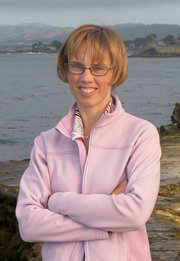
Dr. Amy Rogers

Dr. Amy Rogers

Neil, a disaffected eco-activist, meets an explosives expert at 2:00am.  They drive to a deserted gas station in south-central LA.

Christina Gonzales, a PHD student at UCLA, volunteers at the La Brea tar pits.  After monstrous gas bubbles burst over the tar, Christina and her co-worker smell vinegar, which doesn’t make any sense.

An elderly woman spots a huge puddle of “drain cleaner” in the alley behind her house.  She blames the neighbors and calls the police because this could injure her cats.  A moment later, explosions rock the entire block.

Christina learns that an apparent methane explosion at a deserted gas station has ruined her PHD project, an attempt to use genetically altered bacteria to break down heavy crude oil into easy-to-harvest natural gas.

If you think these events are coincidence, you have probably never watched a disaster film.  Like the best movies in the genre, or the novels of Stephen King, Amy Rogers takes a mixed group of people, with their individual hopes, plans, secrets, and strengths, and puts them in an impossible situation.  By the time I had read this far, I was hooked.  From here, Petroplague just gets better and better – meaning the tribulations of Rogers’s characters get worse and worse.

Imagine Los Angeles, or the largest car-dependant megalopolis you know.  Imagine a mutant bacteria in the underground oil supply and the local refineries that breaks down hydrocarbons, reducing petroleum  into acetic acid and highly flammable hydrogen, among other things.  Cars stall on the freeway.  Airplanes fall from the sky.  The acid corrodes gas tanks and lines, releasing hydrogen that the smallest spark can ignite.  Nothing that runs on gasoline moves:  no firetrucks or ambulances or police cruisers.  No food deliveries or garbage pickups.  The looting begins.  Instability under the Santa Monica fault leads to bigger and bigger earthquakes.  The La Brea Tar Pits “erupt.”   When Christina and her PHD supervisor discover an antidote for the plague, both an eco-terrorist network and ruthless corporate interests are willing to go to any lengths to suppress it.

Are you scared yet?  If not, as Yoda told Luke, You will be!  Because this is just the beginning.  Now that we care about Christina, the real chills and thrills begin.  Eco-terrorists smuggle the petroplague out of the LA quarantine area and plot to release it worldwide in a matter of days.  Christina and her allies face virtually every danger you can think of as LA spins into chaos – and some you can’t.  Think of all the seat gripping you do watching James Cameron movies like,  The Terminator and Titanic.  This is what Amy Rogers does; she throws the good guys into a tight situation and keeps cranking up the pressure.

I read lots of thriller/action adventure stories.  When you become familiar with a genre, you begin to recognize conventions and trends.  As anyone who has glanced at this week’s movie listings can attest, epidemics are a standard disaster scenario, but as far as I know, Rogers’s story question is unique – what would happen in our oil-dependant world if a petroleum-destroying plague got loose?

A lot of books in this genre suffer from forgettable heroes and two-dimensional villains.  Psychopaths are a dime a dozen these days, but not in Petroplague.  Several of the bad guys are idealists-gone-wrong, sometimes-conflicted fanatics of conscience, who you cannot hate even as you cringe at their actions.  One of the evil-doers is a corporate higher-up, willing to screw anyone or everyone in the name of profit.  Even if that is a stereotype, it is not hard to imagine in our post-economic meltdown world.

We bond with the heroes of the story because they are very human, even as events evoke courage they didn’t know they had.  When Christina first learns of the plague, all she can think of is her ruined dissertation, but her circle of concern and her actions rapidly grow beyond self-interest.  Her cousin, River, and River’s boyfriend, Mickey, are ready to run when things get tough – but they don’t.  A politician who survived a helicopter crash in Iraq, finds the courage to pilot another chopper filled with fuel that might have been compromised by the plague.

It’s always a pleasure to post here about a book I really enjoyed.  I couldn’t put this one down.  I urge you to stop by Amy Rogers’s web site to learn more about the author and the various formats in which you can read Petroplague.  http://www.amyrogers.com/
A Science Thriller by Amy Rogers

I met Dr. Amy Rogers at the Sacramento branch of the California Writer’s Club where she is Web Site Coordinator, and an author of science thrillers. What is a science thriller? Think of Frankenstein, Jurassic Park, and Contagion, coming soon to a theater near you. You can learn a lot more about the genre and read a number of reviews at Roger’s blog, http://www.sciencethrillers.com.

Dr. Amy Rogers

Dr. Rogers just published her debut thriller, Petroplague, in ebook format, with a paperback release due in November. She sent this synopsis:

UCLA graduate student, Christina Gonzalez, wanted to use biotechnology to free America from its dependence on Middle Eastern oil. Instead, an act of eco-terrorism unleashes her genetically-modified bacteria into the fuel supply of Los Angeles, turning gasoline into vinegar.

With the city paralyzed and slipping toward anarchy, Christina must find a way to rein in the microscopic monster she created. But not everyone wants to cure the petroplague – and some will do whatever it takes to spread it.

From the La Brea Tar Pits to university laboratories to the wilds of the Angeles National Forest, Christina and her cousin, River, struggle against enemies seen and unseen to stop the infection before it’s too late.

A former professor of microbiology, with a PHD from Washington University, Dr. Rogers has the background to make such a story plausible. In addition, Petroplague is one of two of her novels picked up by New York agents who were then unable to sell them. At this point, Rogers mentioned self-publishing, and her agent directed her to Diversion Books, which she says, “lies somewhere between self-publishing and a traditional Big Six contract. Diversion Books is loosely associated with a traditional literary agency – the first such publisher, though others have sprung up since.”

I plan to review Petroplague here, but you don’t have to wait for me. Click on the book cover photo above to go to the authors website, http://www.amyrogers.com, to view a trailer and read the first two chapters for free.

In addition, Amy has said she’ll be happy to write a guest post or answer interview questions here. So stop back soon, and visit Amy Rogers’ website and blog, for information on publishing, on scary microbes, and to check out what promises to be an exciting read!

The Story of Charlotte’s Web by Michael Sims

In a recent interview on NPR, author Michael Sims discussed a project “that got really out of hand.”  He set out to do a natural history of children’s talking animal stories but became so fascinated by Charlotte’s Web that he never got beyond it.

Sim’s study, The Story of Charlotte’s Web: E.B. White’s Eccentric Life in Nature and the Birth of an American Classic, was published in June.  It’s interesting see what eccentricities and other facts Sims discovered about E.B. White.

White was quite a naturalist; on a farm in Maine, he studied spiders and raised pigs.  There really was a “Wilbur,” a pig that White was raising to slaughter in the fall, but it grew sick and died, despite all attempts to save it.  In his essay, “Death of a Pig,”  White recognized the irony of his sadness at the loss of an animal he had planned to kill, and his “sense of loss when the pig died, not as if he’d just lost some future bacon but as if he had lost…a fellow creature who was suffering in a suffering world.” 

Another time, while feeding the replacement Wilbur, White noticed a spider web with an egg sac.  The spider that wove the web disappeared, and White cut the egg sac down and carried it with him back to his apartment in New York.  He dropped it in a bureau drawer and forgot about it until the little spiders began to hatch.  According to Sims, White was delighted to watch them start to weave their webs in his room – that is, until the maid refused to work “in a spider refugee camp” and they had to go.

Sims explains that “eccentric” is a Greek word that originally meant, “off center.”  He goes on to say:

if ever there was a human being born off-center, it was E.B. White. He simply could not…follow in an established path if his life depended on it. And so he had his own quirky way. He was very fierce and funny hypochondriac. He liked to spend a lot of time alone. He loved working with animals, as much as possible. Even in New York City, even in writing for The New Yorker to begin with, he was off, you know, exploring what rats were doing in some alley.

Fans of E.B. White should enjoy listening to the interview or reading the transcript:  http://www.npr.org/2011/08/19/139790016/weaving-charlottes-web.  Of interest too, will be Michael Sims’s current project.  In keeping with his theme of “writing about how our imagination responds to nature in one way or another,” he is researching between the lines of Thoreau’s sojourn at Walden Pond to see how that great naturalist and philosopher filled up his days in ways we don’t yet know about.

The Magicians by Lev Grossman: A Book Review

Lev Grossman’s, The Magicians, 2009, was highlighted in a recent NPR feature on “Books for the Hogwart’s Grad.” It is an adult fantasy that begins with a 17 year old boy and does something no YA novel I’ve recently come upon has done – it nails what being 17 is really like.

On his way to a preliminary interview for admission to Princeton, Quentin Coldwater reflects on his life:  I should be happy, Quentin thought.  I’m young and alive and healthy.  I have good friends.  I have two reasonably intact parents…I am a solid member of the middle-middle class.  My GPA is a number higher than most people even realize it is possible for a GPA to be.  But walking along Fifth Avenue in Brooklyn…Quentin knew he wasn’t happy.  Why not?  He had painstakingly assembled all the ingredients of happiness…But happiness, like a disobedient spirit, refused to come.  He couldn’t think what else to do.

In a passage that reminds me of my own adolescence, Quentin believes that “his real life, the life he should be living, had been mislaid through some clerical error by the cosmic bureaucracy.  This couldn’t be it.  It had been diverted somewhere else, to somebody else, and he had been issued this shitty substitute faux life instead.”

When he finds the interviewer dead of a cerebral hemorrhage, events catapult Quentin into “the life he should be living,” with dizzying speed.  Walking by himself in the rain after finding the dead man, Quentin is transported to the upstate New York campus of the Brakebills College for Magical Pedagogy.

Grossman clearly has chutzpah to write of a school of magic in a decade dominated by Harry Potter, but Brakebills has little to do with Hogwarts.  After a grueling entrance exam, Quentin begins his even more grueling, five year course of study with a small group of nerdy prodigies like himself.  He’s as slammed by as much work as any freshman at Harvard or MIT.  Magic becomes truly serious for Quentin when he casts a minor spell as a joke that sets off a chain reaction resulting in another student’s death.  Like people in the real world who make such mistakes in youth, he learns to live with the guilt and “move beyond,” but it never entirely goes away.

Quentin and a few other students begin to bond, most notably, Alice who becomes his lover.  Quentin, Alice, and most of their friends at Brakebills have been entranced since childhood by the magical world of Fillory, the creation of a 1930’s reclusive English author.

Stories of Fillory are woven throughout The Magicians, but grow in importance after Quentin and his friends graduate.  They move to Manhattan, and though Alice buries herself in serious magical research, Quentin and the others settle into serious dissipation:  “They had all the power in the world, and no work to do, and nobody to stop them.  They ran riot through the city.”  Happiness still eludes Quentin until he and the others discover Fillory is real and they find the means to go there.

The Magicians belongs to the adult “urban fantasy” sub-genre, and one of the characteristics of such books is a very realistic portrait of the gritty, day-to-day world we share, which makes the magic seem real when it appears.  The Brakebills graduates pass the bottle while discussing what supplies they should pack for their expedition:  how about parkas in case it’s cold?  Food of course, and trade goods – what would they be?  And weapons – handguns, and body armor, and battle magic, which they have to create for themselves, since it is forbidden

By this point in the narrative, every reader who knows Narnia, which Fillory consciously echoes, must be cringing at the thought of a bunch of armed and boozy, world-weary twenty-somethings storming the gates.  It turns out the explorers were wise to arm themselves, for Fillory is a gritty realm where strange creatures kill each other for no clear rhyme or reason.  When a human size praying mantis fires an arrow at Quentin, they realize this magic is not magical in the way the stories we loved as children are magical.

“This isn’t a story,” Alice says.  “This isn’t a story!  It’s just one fucking thing after another!”

Aside from a page-turning narrative, there is much to ponder in Grossman’s tale, and I find myself thinking of Woody Allen’s movies about movies, especially, The Purple Rose of Cairo, where a movie hero get loose in our world and is hopelessly unable to cope.  In The Magicians, characters from our world are equally out of their depths in a fictional story world.

Clinically speaking, our lives (apparently) are just one thing after another, but making stories is an instinct we all are born with.  From a two year old with stick figures, to the water cooler at work, to Jesus and Buddha, to writers of fiction, making stories is how we make sense of things.  Lev Grossman offers a fascinating reflection on making stories in the shape of a story that keeps us turning pages.

***

Lev Grossman, whose day job involves reviewing books for Time, published the second book of his trilogy The Magician King, this summer, which has moved to the head of my book queue.   Grossman is a lover, connoisseur, and advocate for the fantasy genre.  He strongly resists the notion that fantasy is “less than” other types of literature in any way.

Lev Grossman

The Wind In the Willows by Kenneth Grahame: An Appreciation

It was a golden afternoon; the smell of the dust they kicked up was rich and satisfying - Illustration for The Wind in the Willows by Arthur Rackham, 1940

Kenneth Grahame was a turn of the century British author who was Secretary of the Bank of England “in his spare time” (according to A.A. Milne).  In 1908, Grahame published The Wind in the Willows, his third novel.  Unlike his first two books, The Wind in the Willows was not an immediate success, though its early supporters included Theodore Roosevelt, who wrote to the author in 1909, “I have read it and reread it, and have now come to accept the characters as old friends.”

Arthur Rackham was perhaps the best known artist of “the golden age of illustration,” from 1870-1930.  His illustrations for The Wind in the Willows were his last work, published posthumously in 1940, a year after Rackham died of cancer.

Shove that under your feet, he observed to the mole, as he passed it down into the boat - Arthur Rackham, 1940

I cannot think of a more auspicious partnership in the history of book illustration, though I am biased.  I’m writing about The Wind in the Willows because I stopped by a blog that asked, “What is your favorite book?”  This has been mine since my mother read it to me when I was four.  When she finished, I begged her to start it again.  I began school determined to learn to read as soon as I could so I would not have to wait on anyone else’s convenience to row up the river with Rat and Mole.

The badger's winter stores, which indeed were visible everywhere, took up half the room - Arthur Rackham, 1940

I called this post an appreciation rather than a book review, because my intent is not to be systematic. Besides, in his introduction, A.A. Milne warns us not to dare anything so foolish:

One does not argue about The Wind in the Willows.  The young man gives it to the girl with whom he is in love, and if she does not like it, asks her to return his letters.  The older man tries it on his nephew, and alters his will accordingly.  The book is a test of character.  We can’t criticize it because it is criticizing us.

She arranged the shawl with a professional fold, and tied the strings of the rusty bonnet under his chin - Arthur Rackham, 1940

The magic of this volume lies in text as well as the illustrations.  This is story of friendship, of terror in the Wild Wood, of the ache of standing outside looking in on Christmas eve.  There is slapstick and comedy, and a battle against heavy odds to restore the natural order along the river bank, but the center of the story for me has always been Chapter 7, “The Piper at the Gates of Dawn.”

Otter’s son Portly has gone missing, and one mild summer evening, Rat and Mole row the backwaters trying to find him.  They catch the strains of a haunting tune:

“It’s gone!” sighed the Rat, sinking back in his seat again.  “So beautiful and strange and new!  Since it was to end so soon, I almost wish I had never heard it.  For it has roused a longing in me that is pain, and nothing seems worth while but just to hear that sound once more and go on listening to it for ever.  No!  There it is again!”

The animals follow the sound and it leads them to a place where a great Awe falls upon them and they are granted a vision:  [Mole] raised his humble head; and then, in that utter clearness of the imminent dawn, while Nature, flushed with fullness of incredible color, seemed to hold her breath for the event, he looked in the very eyes of the Friend and Helper.”

The animals find the baby otter and the vision fades, leaving them in misery as they feel what they have lost, but then, a capricious little breeze, dancing up from the surface of the water, tossed the aspens, shook the dewy roses, and blew lightly and caressingly in their faces, and with its soft touch came instant oblivious.  For this is the last best gift that the kindly demigod is careful to bestow on those to whom he has revealed himself in their helping:   the gift of forgetfulness.  Leset the awful remembrance should remain and grow, and overshadow mirth and pleasure, and the great haunting memory should spoil all the after-lives of little animals.

The minister in the church I attended when I was young once said from the pulpit that “The Piper at the Gates of Dawn,” was the best theology he knew outside the Bible.

Together, Kenneth Grahame and Arthur Rackham preserved and shared a vision of an older, idyllic England of quiet lanes and riverbanks and launched it into a new century that needed such a dream, after one World War and on the eve of a second.  Last time I looked for a gift for a friend, a facsimile edition was available (from Modern Library I believe).

There are other nice editions like the one illustrated by Michael Hague and published in 1980, for there are more ways than one into this dream.

Wind in the Willows cover by Michael Hague, 1980

I guess you could say I’ve been dreaming along with the great British storytellers all my life – with Rat and Mole, with Pooh and Piglet; in Middle Earth and Narnia; with King Arthur and his knights; with Welsh wizards and Irish warriors and Tam Lin in Faerie; Harry Potter is simply the latest feast from the cornucopia I first encountered when I was four years old.

If you have not yet discovered the magic of The Wind in the Willows (and I don’t mean Mr. Toad’s Wild Ride @Disney) I suggest you give it a look as soon as can.  In my experience (as in Bilbo’s) there is no telling where the road will take you.

The wayfarer saluted with a gesture of courtesy that had something foreign about it - Arthur Rackham, 1940

Guest Post by Indie Author, Jayden Scott – Part 2

Yesterday, our guest blogger, Jayde Scott, spoke of what led her to publish her novels on Smashwords.  Today she describes all the work behind her growing success, (in addition to writing novels).  She cautions that:   Independent publishing isn’t an easy route to go and it’s certainly not a ‘get rich quickly’ scheme. Be prepared to invest more time than in a nine to five job.

She includes a link to her blog, Fiction and More, and I’ve added it to my blogroll, since her stated intent is to help writers promote and market their work.  

Also, If you have not already done so, please visit her Smashwords homepage to look at the full range of her books: http://www.smashwords.com/profile/view/JScott

My sincere thanks to Ms. Scott for sharing all she has done to champion her own work.  This is vital information to anyone thinking of following her path into print.

_______________________________________________________

So how did I do it? With lots and lots of marketing such as contacting blog hosts for reviews, giveaways, interviews and book spotlights. I don’t just copy and paste the information about my book into my emails to possible reviewers; I take the time to get to know their blogs and preferences and try to send them all information as requested in their review policies. Since they invest so much of their time and effort into reading my books, it’s only respectful that I at least try to make it easier for them to decide whether my book is something they might enjoy or not.

Independent publishing isn’t an easy route to go and it’s certainly not a ‘get rich quickly’ scheme. Be prepared to invest more time than in a nine to five job. Establishing a presence with all the fierce competition is tough work. Several times I changed the covers of my books, which involved days of searching sites like istockphoto.com and fotolia.com for the right digital art; once I changed the title, after which sales picked up. I also spend days on designing my print books and book trailers, and promoting those on various sites. As a very active Goodreads member, I devote a great amount of time to answering messages and updating my blog, http://jayde-scott.blogspot.com/, in case readers stop by to find out more about me and my books. And finally, I try to keep in touch with many author friends because, like in every job, connections matter. One of the most important tasks for any indie author, however, is writing and publishing a constant flow of well-edited quality work to keep up with fast moving trends. Even though I can’t afford paying a professional editor, I have two editor friends who proofread my work. My critique group helps with brainstorming and provides feedback on character development, story elements and pace. Even though my books are cheap, I try my best to give readers good quality for their money.

Writing has gifted me with a purpose in life, and nothing gives me more pleasure than hearing how much readers enjoyed my books. I’m a full time writer now who’s still sending out application forms to get a job, but the job market in the UK is shaky and doesn’t seem to want to recover any time soon. Independent publishing has at least helped ease my financial struggles and I know it’s helped many of my fellow authors, too.

Guest Post by Indie Author, Jayden Scott – Part 1

At the start of May, Jayde Scott, a young writer from England, invited me to review her eBook, A Job From Hell.  Based on the professional presentation of her Smashwords page,  http://www.smashwords.com/books/view/56864, I agreed, though with some trepidation:  vampire romance isn’t normally “my thing.”

To our mutual relief, I enjoyed A Job From Hell and posted my review here at the end of May:  https://thefirstgates.com/2011/05/25/a-job-from-hell-by-jayde-scott-book-review/.  During the process, we exchanged a few emails – enough for me to realize what a complex operation an ebook publishing and marketing venture can be.  I invited Ms. Scott to describe her process, and she found the time – despite publishing two new titles this summer – to send a very detailed reply.  So detailed, in fact, that I’ve split her post into two sections.

In this section, the author describes what led her to the world of Indie publishing.  The next section outlines the nuts and bolts of her procedure.  Anyone who is interested in ebook publishing will find a wealth of information in Ms. Scott’s account.

__________________________________________________

Jayde Scott

A year ago, I would never have thought I’d be an indie author one day. At that time, I was unemployed, like many people in the UK, and could barely afford paying the rent let alone meet the monthly repayments of my student loan. Even with two good degrees, I had been looking for a job for three years without much success. During breaks from filling out application forms and struggling to get freelance work, I kept myself sane by writing as much as I could. It was my way to deal with the stress and pressure of not having a regular job.

Writing had been a hobby of mine for more than ten years. I had six books ready for publication and was actively seeking an agent or publisher for my work. Several times I came very close to landing an agent and did the ‘suggested’ changes to my manuscripts, only to have my hopes dashed again. With publishers I had similar experiences, some rejected me because I wouldn’t cut down on a 94k manuscript, others because they didn’t like a particular character. There was a time when I just couldn’t afford the horrendous postage charges for sending a manuscript to the US, so I kept postponing sending off large parcels until I got a freelance gig and had some money left.

After reading about Amanda Hocking’s success, I realised publishing doesn’t start and end with landing an agent and selling one’s work to one of the big six publishers. Sure, that would be a nice accomplishment, but I figured I might be more likely to win the lottery. It took me a long time to take this step because I kept hoping someone might make an offer soon, but when the offer never came in and I was more and more struggling to get a job and pay the bills, I decided I had nothing to lose by going the independent route. At least I had tried my best.

So, instead of wasting yet more time, I spent two weeks getting my first manuscript, Alex Gonzo, Royal Spy, ready for publishing via Kindle. It took a few attempts (actually, more than I care to reveal), but I finally figured out how to format it correctly after which it became easier with every book published.

Needless to say, I knew next to nothing about self-publishing a book or the marketing involved. I had heard of authors using Twitter and Facebook to promote their work, but that about summed up my knowledge of social media. My first attempts at Tweeting were pretty much useless and Alex Gonzo, Royal Spy didn’t sell a single copy. Five months later, I had barely sold 100 copies of that book, but I wasn’t ready to give up and self published A Job From Hell, which is the first book in the Ancient Legends series. That book didn’t take off straight away. In fact, I only sold about 60 copies in the first month. However, the more time I spent researching on the Internet and reading as many blog on publishing as I could find, the more I was determined to succeed, not least because I still hadn’t found a job and it didn’t look like I would in the near future.

Three months and a few more books later, I sell a few thousand copies a month. My books aren’t doing as great on Amazon as those of some of my fellow authors and I’m thinking maybe my coverart isn’t that great, maybe my blurbs would benefit from a makeover. However, at a price of 99c a book, my earnings at least pay the monthly rent, which is more than I would’ve earned if I kept contacting agents and publishers only to have my confidence crushed.

TO BE CONTINUED

Three Requirements of a Book Review (?)

In a post entitled, “How Not to Write a Book Review,” Robert Pinsky, who has been writing reviews since typewriter days, discusses a famous and venomous book review a critic leveled at John Keats in 1818. http://www.slate.com/id/2299346/pagenum/all/#p2.  The review, by Irishman, John Wilson Croker, founder of modern political conservatism, became known as “the review that killed Keats.”  Croker really is nasty, but by himself,would not inspire me to write a blog post.

What I found noteworthy in the article are the basic principles Pinsky has used for decades to write his reviews.  In the 1970’s, when he wrote freelance for newspapers, one of them gave him a mimeographed style sheet with three rules  for every book review:

1. The review must tell what the book is about.
2. The review must tell what the book’s author says about that thing the book is about.
3. The review must tell what the reviewer thinks about what the book’s author says about that thing the book is about.

At first reading, the list seems to apply to non-fiction more than fiction.  Novelists don’t really say things about what their books are about except during interviews, but if we are less literal, do these criteria work?  As an experiment, let’s consider Harry Potter and the Sorcerer’s Stone, which I’m choosing because it’s pretty well known.

Criterion #1 is really the synopsis:  A lonely orphan discovers he is a wizard and finds allies as well as a deadly enemy at Hogwarts School of Witchcraft and Wizardry.  I like to set a story in context with (relatively) objective information.  For the first Potter, I might discuss characteristics of middle-grade fantasy – a magical world must be internally consistent, but does not require a detailed explanation:  some people are wizards and some are muggles, and that’s how it is.  This is common in middle grade, while adult fantasy needs more – a theory of mutant genes or something like that.  This first criterion, a summary of what the book is about, is essential for any review.

Criterion #2, is phrased in a strange manner.  An author writing a history of the Third Reich will have things to “say about that thing that the book is about,” but J.K. Rowling doesn’t.  For fiction, I interpret this as detailing what the author does to flesh out the plot and make it dynamic.  Rowling’s main characters, for instance, are so well drawn that they feel like people we’ve known.  You feel like you’ve met Hermione, Snape, and Hagrid, whether or not you have.  In addition, this is where I would speak of the richness of the world of Hogwarts, and maybe research a brief history of academies of magic in fiction and legend.

Criterion #3 is a tongue twister that boils down to my take on #1 and #2.  For Potter, I might talk about how it evokes the longing for connection; how sometimes we all feel like orphans longing for a virtual family  of kindred spirits like Ron, Harry, and Hermione.  How Hogwarts is an endless world our imaginations want to explore.  In other words, if I can find words for my deepest reactions, presumably – hopefully, others will know or echo what I am talking about.

I enjoy reading and writing book review as do a lot of bloggers I follow.  The exact phrasing of Pinsky’s rules seem a little too cutesy, but they got me thinking and I can come up with lots of ways to conceptualize the same thing. Here is one, off the top of my head:

1.  What is the story about?
2. How does the author make it uniquely their own?
3. Does it work for me?

Can you write an effective review with less than these basic criteria?  Are there others that will make it more effective?  Is it possible to do all of this and still wind up in left field?