The Colorado shootings will forever cast a pall over the opening day of the latest Batman movie, the kind of action-adventure fantasy many of us were looking forward to as an escape from all the other bad news that fills the papers these days.
I cannot add anything to the expressions of grief and outrage that the people of Colorado have and will make, but I heard one thing this morning that gave me pause.
The governor of Colorado said, “This is the act of a very deranged mind.” It’s a natural thing to say, and we hear the same words after every similar tragedy. The Texas Tower. Oklahoma City. Columbine. The first thing we try to do is assure ourself that the crime was the work of a nut or monster. The last thing we want to hear are comments now emerging from people who knew the suspect and say he seemed “really smart,” and “a nice guy.” It’s terrifying to think that an “ordinary person” or a neighbor could do something like this.
Thich Nhat Hahn, the Vietnamese Buddhist monk who Martin Luther King nominated for a Nobel Peace Prize, was versed both in Buddhist and western psychology. His teachings gave me the concept of “store consciousness.”
Thich Nhat Hahn
This is the part of our unconscious psyche where all possible tendencies reside, like seeds, waiting to germinate. The ones we water with our attention, thought, and action are the ones that grow. Like all Buddhists, Thich Nhat Hahn believes that we cannot know for sure which seeds we have watered in previous lives, but our proclivities in this life, for good or ill, give a strong hint.
Metaphysics aside, we can recognize the truth of the core concept – the seed tendencies we water are the ones that grow. The only memorial we can make to the people who died in that theater is to stand beside those like Thich Nhat Hahn, Martin Luther King, and all men and women of goodwill of the present and past. We can join with them in trying to give the water of attention to qualities like compassion, patience, and non-violence – the seeds we want to grow.
Those who follow this blog know how often I quote Walt Kelley’s comic strip character, Pogo, who said, “We has met the enemy and he is us.” It doesn’t have to be that way.
Lewis Richmond, an ordained Zen priest and author of Aging as a Spiritual Practice, began his studies 40 years ago with the renowned teacher, Shunryu Suzuki Roshi. Richmond relates that one day, after a talk, a student said, “Suzuki Roshi – you’ve talked for an hour, and I haven’t understood a word you’ve said. Could you please tell me one thing about Buddhism I can understand?”
The master waited for the laughter to die down and said, “Everything changes.”
“Everything changes” is a truth we often would rather forget, but sometimes events make that impossible. Our oldest dog, Holly, has serious medical issues. She has come to the end of her life. This month has been a daily exercise in letting go, in watching her, in trying to gauge the quality of her life and which interventions make sense.
The vet confirms that she’s not in any pain. She is still feisty and cuddlesome in turn. She turns up her nose at dog food much of the time, but still likes buttered toast and hot dogs, so antibiotics make sense. So does medication to increase the blood flow to her kidneys, which are failing. We take turns administering “subcutaneous fluid replacement therapy” each morning, which was scary at first, but has become a very serene, if bitter-sweet, time to bond with her and reflect. With quiet music and morning sun slanting into the room, we calm ourselves so Holly calms down and stroke her head while 150 ml of solution flow through the drip.
We brought her home as a puppy when she was eight weeks old. She’ll be 16 at the end of the month if she lasts that long – we don’t know – it could be days or weeks or months. It’s hard to believe how quickly sixteen years goes by.
Is there anything that doesn’t change? All of the major religions say yes, there are the ways to unravel the knot. A reminder of why there is nothing more important may be Holly’s final gift.
Yesterday NPR interviewed two monks of the Benedictine Abbey of Christ in the Desert in Abiquiu, New Mexico, concerning the Gregorian Chants that are part of the fabric of their lives.
Monastery of Christ in the Desert
The occasion was the release of a CD of their music, “Blessings, Peace, and Harmony.” Brother Christian Leisy explained that an email from Sony arrived proposing the recording. “We thought at first it was spam,” he said, “but apparently someone at Sony felt the world wasn’t getting any better, and they wanted to work with a community that might focus on some of the peace elements.”
Chanting does exactly this. Abbot Phillip Lawrence explained that scientific studies of the effects of contemplative chanting match those of meditative practice: relaxation, stress reduction, lowered blood pressure and a general sense of wellbeing.
I bought my first album of Gregorian Chants in high school. Even though I was usually given to rock n roll, there were times when I was drawn to this seemingly strange music with the power to draw me outside of ordinary concerns. I’ve collected other music like it since then. Abbot Lawrence understands the power of different types of contemplative music. He stayed for a time in a Tibetan monastery and found that the deep chanting that is part of that spiritual discipline has the same power as the music he is familiar with.
Music has always influenced me, especially while I was growing up. One of the poet/songwriters I really loved was Phil Ochs, who died in April, 1976. Ochs corrected the people who labelled him a protest singer – “topical singer” was his phrase. Though his music extended beyond topical songs, his anti-war songs, and music that demanded social justice remain his best known pieces.
Ochs was born in El Paso in 1940. His father, a doctor, had been drafted during WWII and suffered from depression after his discharge. The moved a lot as he had trouble establishing a medical practice. Phil dropped out of college, but after an arrest for vagrancy in Florida, decided to become a writer and journalist. He enrolled at Ohio state where he discussed politics and learned the guitar from a fellow student who turned him on to Woody Guthrie, Pete Seeger, and the Weavers.
Ochs learned quickly and was invited to the 1963 Newport Folk Festival, where Bob Dylan, Joan Baez, and Peter, Paul, and Mary also appeared. During the ’60’s, he wrote hundreds of songs. One of his best known was “I ain’t a marchin’ anymore.” Ochs quoted the lyrics when called to testify at the Chicago Seven trial after the 1968 police riot during the Democratic Convention.
It’s always the old to lead us to the wars, always the young to fall. Now look at all we’ve won with the saber and the gun, Tell me is it worth it all?
Several of Ochs’ most haunting ballads center on Christian themes. I haven’t read either of the two biographies, so I don’t know the role of faith in his life, but these songs are filled with poetry, sadness, and a vision of Jesus that lies on the opposite end of the spectrum from those who invoke Christian themes to support their political views nowadays. Here’s a clip of the first two minutes of a live version of, “The Crucifiction,” performed in Stockholm in 1969. The recorded version runs to almost nine minutes and is available on iTunes for anyone interested.
In the green fields a turnin’, a baby is born His cries crease the wind and mingle with the morn An assault upon the order, the changing of the guard Chosen for a challenge that is hopelessly hard And the only single sound is the sighing of the stars But to the silence of distance they are sworn
Images of innocence charge him go on But the decadence of destiny is looking for a pawn To a nightmare of knowledge he opens up the gate And a blinding revelation is laid upon his plate That beneath the greatest love is a hurricane of hate And God help the critic of the dawn.
So he stands on the sea and shouts to the shore, But the louder that he screams the longer he’s ignored For the wine of oblivion is drunk to the dregs And the merchants of the masses almost have to be begged ‘Till the giant is aware, someone’s pulling at his leg, And someone is tapping at the door.
So dance dance dance Teach us to be true Come dance dance dance ‘Cause we love you
Another one of my favorites has always been the “Ballad of a Carpenter.”
Two thousand years have come and gone
many a hero too.
But the dream of this poor carpenter
remains in the hands of you
remains in the hands of you.
The events during and after the 1968 election convinced Ochs that no one was listening to “topical songs.” He tried to return to his musical roots – Buddy Holly, Elvis, and Merle Haggard – hoping that would open better avenues of communication, but he began to rely more heavily on valium and alcohol to keep him going while touring.
He travelled to Chile in support of Salvatore Allende, a democratically elected Marxist. He and another Chilean folksinger barely escaped with their lives after visiting other South American countries. In 1973, he was attacked by robbers during a trip to Africa and his vocal cords were damaged as the attackers tried to strangle him. Ochs believed the CIA might have arranged the attack. Paranoid? Perhaps, although after his death, the freedom of information act revealed that his dossier was 500 pages long.
The final recording on Ochs’ final album was the haunting, “No More Songs.” Plagued by bipolar disorder and alcoholism, Phil Ochs took his own life on April 9, 1976.
A star is in the sky, it’s time to say goodbye, A whale is on the beach, he’s dying. A white flag in my hand, and a white bone in the sand, And it seems that there are no more songs.
Hello, hello, hello, is there anybody home? I’ve only called to say I’m sorry The drums are in the dawn and all the voices gone And it seems that there are no more songs.
To paraphrase what he sang in “The Carpenter,” the dreams Phil Ochs tried to embody, remain in our hands. May he rest in peace.
The title of this post comes from Bill Wilson, co-founder of Alcoholics Anonymous, who tried repeatedly to get sober and only succeeded when he helped another problem drinker. “In order to keep it, you have to give it away,” became an AA motto.
The title could have just as well come from Lama Thubten Yeshe who said, “According to Buddhist psychology, unless you dedicate yourself to others, you will never be happy.”
I could have quoted Jesus: “Whoever tries to keep his life will lose it, and whoever loses his life will preserve it.” (Lk 17:33).
In my previous post, I tried to name something distressing I sense as part of the vibe of our time: “a miasma of anger and greed, driven by fear and disillusionment.” When I wrote it, I was recalling a couple of drivers I’d seen playing chicken for parking places earlier that day. Gotta get mine – there might not be enough to go around.
In psychology, anger is understood as a “secondary emotion.” The question becomes, what is hidden beneath the anger? In a lot of cases, I think it is fear, which also drives greed: it’s a jungle out there; a dog-eat-dog world; a zero sum game.
Back in the eighties, before the Berlin wall came down, a retired military officer told me that if the Russians prevailed, they would soon “arrive on your doorstep and take all your private property.” We still operate from that mindset; fill in the blank with the name of your favorite villain(s).
The problem is, fear and scarcity-consciousness often lead to bad decisions, individually and collectively. During the 30’s, Paramahansa Yogananda taught that generosity creates a “prosperity consciousness” that is one of the keys to surviving difficult times. He believed we attract what we hold in our minds, and he told a story that illustrates where grasping can lead:
In villages near the jungles in India, farmers used a simple trap to capture monkeys, a favorite source of meat. They would drill a hole in a gourd, just big enough for the monkey’s hand to pass through, then fill the gourd with rice and attach it to a stake. When a monkey happened along, it would reach in and grab a fist full of rice and find it couldn’t withdraw its fist. The villagers would have it. The monkey would die because it couldn’t let go of a handful of rice.
With that story in mind, and because everyone I want to emulate comes down on the side of generosity and letting go, perhaps I can trust the universe to provide me a parking place. And take it from there and see where it leads…
Last summer I wrote about a retreat I attended with Anam Thubten. http://wp.me/pYql4-Wp . Another time I posted about his first book, No Self, No Problem. http://wp.me/pYql4-gg. Just over a week ago, I join a large group to attend another retreat with this Tibetan master. The event coincided with the publication of his new book, The Magic of Awareness.
At first I was not going to write about the day because, in Anam Thubten’s own words, “I don’t have so much to say today.” After a pause, he added, “I think you already know these things.” A lot “happened,” that day, but not the sort of things you can write about.
I thought of the Buddha’s flower sermon. One day when a group of monks assembled to hear Sakyamuni Buddha, he simply held up a white flower someone had given him as he climbed onto the teaching dais. One monk, Mahākāśyapa, smiled in understanding, and we date the practice of Zen from that moment. A lot happened that day too – we remember it 2600 years later – but there is also not much to write about. What are you going to “say” about holding up a flower?
That’s sort of the point. And the point of this post.
For some reason, I was wide awake at 5:00am this morning. I got up, made coffee, and dug into the Sunday paper – for some other unfathomable reason, I was really looking forward to catching up on all the news (what are they putting in the water these days?). It only took one article on the presidential campaign to cure that delusion and cause me to trash a political post I almost had ready for Monday. No way I wanted to add my $0.02 to the chatter. There in the pre-dawn quiet, I thought again of Anam Thubten, the wisdom of silence, and the Buddha’s flower.
At the retreat, Anam Thubten gave few instructions on meditation beyond this: “The essence of meditation is doing nothing.” He elaborates in his first book:
“to rest means to pause, to pause from working very hard, to pause from continuously constructing this world of illusions, the dualistic world, the world that is based on the separation between self and other, you and me, good and bad. When you completely take away the egoic mind, the creator of this illusory world, then realization is already there and truth is automatically realized. Therefore, the heart of Buddhist meditation practice is to relax and to rest.”
When you think about it, those are really quite enough words for a lifetime…
The local California Writer’s Club branch hosts an annual short-short story contest every year. I hadn’t intended to enter until this morning when one of those end-of-the-night inspirations slipped into awareness. A story idea: A reprobate is convinced that “they” are stealing our memories, and he is probably right.
I wrote the opening with relative ease. We’ll see how it goes; openings are easy, but I also have a great fondness for this kind of character – the guardian or the wise one whose appearance is humble or even repulsive. You meet him – he is most often male – in various guises in movies and fiction:
Mel Gibson in "Conspiracy Theory," 1997
He is found in myth and scripture. John the Baptist is a classic example, who must have dismayed a lot of the city people who came out to hear him.
John the Baptist
Tilopa, (989 – 1069) one of Tibetan Buddhism’s greatest teachers, was expelled from a monastery and made his living as a sesame pounder, a pretty low rung on the social ladder.
Tilopa
Once in a while, you meet someone like this in real life. I read an account by a man who wanted to go to India in search of a guru, but then found his teacher, a Zen master, earning his living by fixing washing machines in a laundromat 12 miles away.
When my wife was a social worker at Loaves and Fishes, a local center that helps the homeless, she was startled one day as a small hispanic man climbed out of a dumpster in a parking lot. Significantly, his name was Jesus. Mary’s eye’s still light up when she tells what a joyful man he was. The meeting was so unexpected, but left such a vivid memory, that she thinks of him whenever the subject of angels comes up.
These reflections led me to think of one of my all time favorite fantasy novels, King of Morning, Queen of Day, by Ian McDonald, 1991. The story features a pair of otherworldly guardians who look a lot like bums as they craft powerful magical charms from bottle caps and debris. McDonald came to mind when he published his latest novel in December. I haven’t yet read the new one, but I’ll discuss King of Morning next time.
Meanwhile, has anyone else encountered an angel, a wise man or woman, a mentor or a guardian who showed up disguised as an “ordinary” person but then turned out to be anything but?
I thought I would begin the 2012 blogging year with words that have long been an inspiration to me. They come from advice the Buddha gave his disciple, Ananda:
“Therefore, Ananda, be a lamp unto yourself, be a refuge to yourself. Take yourself to no external refuge. Hold fast to the Truth as a lamp; hold fast to the Truth as a refuge.” – Mahaparinibbana Sutta
Part of the problem, then as now, was knowing the truth when you found it. The Buddha’s India of 2600 years ago was similar to ours in this respect – it was awash in competing and often conflicting philosophies, teachers, and religions, each claiming special access to the truth.
Gandhara Buddha (4th-5th c.)
Once, as the Buddha passed through a village called Keshaputta, the inhabitants, members of a clan called the Kalamas, approached him for advice. The Kalamas were seekers of truth. They were happy to welcome traveling yogis, holy men, and teachers of all sorts, but by the time Buddha arrived, they were thoroughly confused by contradictory teachings from too many “experts.”
In response, the Buddha gave the teaching known as the Kalama Sutta, a fuller version of the advice he later gave Ananda. In his discourse, the Buddha listed ten ways of knowing that are not sufficient to indicate the truth: oral history, tradition, scripture, news, ordinary reasoning, dogmatism, common sense, one’s own opinions, expert opinions, opinions of authorities. Instead, the Buddha asserts our need to test such sources experientially, and trust our own conclusions:
“O Kalamas, do not be satisfied with hearsay or tradition, or any teachings, however they may come to you. Only when you know in yourself when things are wholesome, blameless, commended by the wise, and when adopted and practiced lead to welfare and happiness, should you practice them. When they lead to virtue, honesty, loving-kindness, clarity, and freedom, then you must follow these.” (as quoted in A Path With Heart by Jack Kornfield)
A teaching like this can be difficult with its demand for our own freedom and responsibility. The teaching seems to throw us back on our own moment by moment awareness. If we lose our way in the maze of conceptual thought, our own direct experience is one of the few things left to trust.
Most traditions and most of the world’s folklore suggest that we each have a deep way of knowing within us. It goes by many names: Higher Power, Buddha Nature, Christ Consciousness, Holy Spirit, Inner Guru. How and when do we contact this wisdom?
This seems like a very good question to ask at the start of a brand new year.
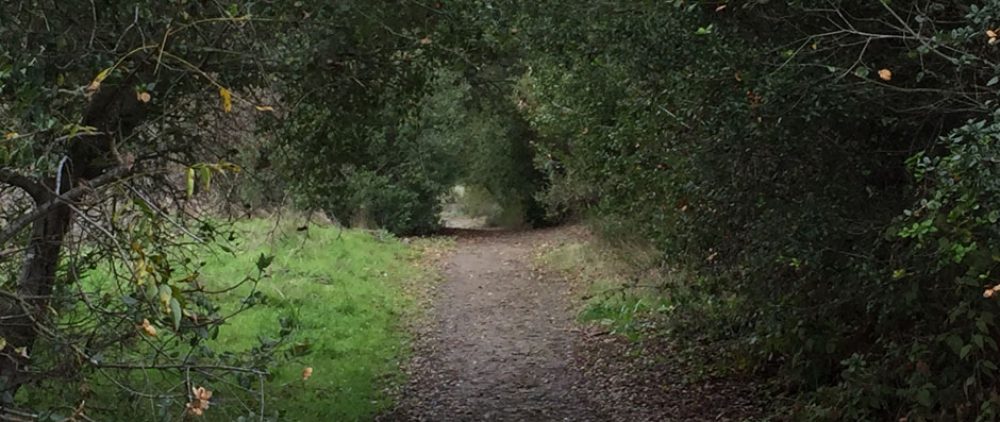


 The First Gates