Light and Shadow

Light and Shadow 6 blog

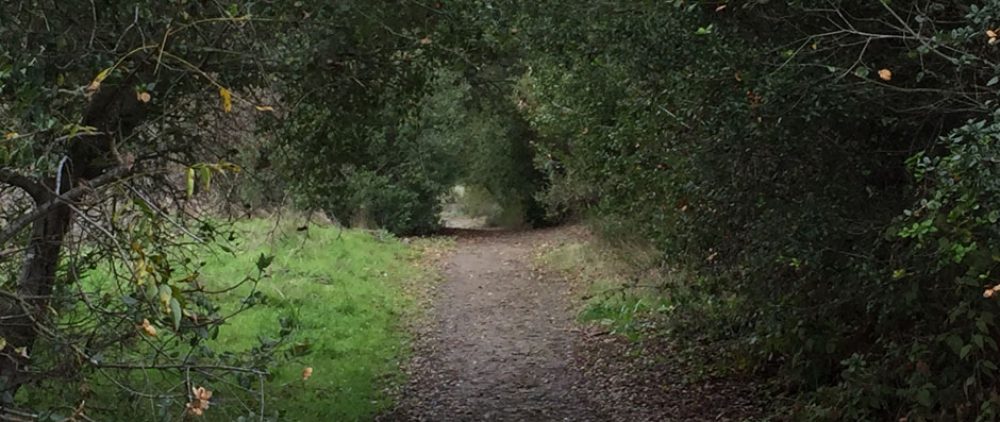
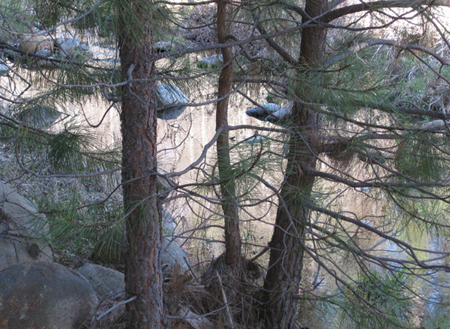
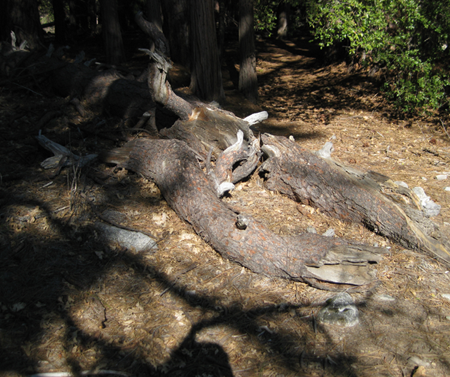
These photographs were taken in Wawona, just inside the south entrance to Yosemite National Park.

Light and Shadow 4 blog


Light and Shadow 5 blog

April is warm this year.  Mornings in the 30’s, daytime temperatures sometimes reaching the 70’s.  A few days ago it snowed, though all traces are gone.

Light and Shadow 8 blog


Light and shadow 1 blog

I think of the Summer King and the Winter King in Celtic folklore.  Their battle for ascendency never ends.  The King of Summer is winning now, but they’ll meet again in autumn.

Light and Shadow 2 blog


Light and shadow 3 blog

The sun is so bright and the shadows so deep they stop you.  Their interweaving patterns, stirring in the breeze, shift from moment to moment.

Light and Shadows 7 blog

The world changes before our eyes. Always the same and never the same.

The Secret of Getting Ahead?

Those who are old enough to have watched “Hee-Haw” will remember a song that Tennessee Ernie, Buck Owens, and the gang sang almost every week, “Gloom, Despair, and Agony on Me.”  One of the lines was, “If it weren’t for bad luck, I’d have no luck at all.”

These days, it sometimes seems like if it weren’t for bad news, we’d have no news at all, especially on the economic front.  I’ve been thinking about this a lot lately – not the economy per se, but the news, that is, the stories we tell about the economy.  I’ll have more to say about this later, but it’s increasingly clear that what we have beneath the headlines are dueling paradigms, different core assumptions of what is good and bad, what works and what doesn’t.

Here is a core assumption that never has gotten much air time:  altruism rather than self interest may be the greatest motivational force for people at work.  This is the thrust of the teaching and writing of Adam Grant, 31, the youngest tenured and highest ranked professor at the Wharton School of Business.  Sarah Dominus, a writer for the New York Times Magazine, profiled Grant in a March 27 article,  Is Giving the Secret to Getting Ahead?.

Grant first made a name for himself in the field of economics as a 22 year old grad student in organizational psychology, when he applied himself to boosting motivation and output at a university fund raising call center, a notoriously unpopular student employment option.

Realizing that the call center helped fund scholarships, Grant invited a scholarship recipient to address the callers to give them an idea of the value of their work.  Even Grant was amazed when the next month, revenues were up 171%.  In later studies, the jump was as high as 400%.  Since then, Grant designed other studies in other fields that gave parallel and equally quantifiable results.

Grant’s work has drawn criticism as well as praise, much of it centered on the potential for abuse of the findings.  Will corporations try to use them to keep workers happy while cutting their wages and benefits?  According to Sarah Dominus, Grant is skeptical of corporate motivation as well and says his effort is to understand the mechanism, not necessarily suggest implantation.

Two weeks ago, I attended a day long retreat with Norman Fischer, a long time teacher and former abbot at the San Francisco Zen Center.  The subject of his retreat was compassion.  “Self-cherishing never makes anyone happy,” he said.  “In the long run, concern for others is very practical.  It’s our only chance for living a satisfying life.”

I started thinking of the how and why of our bad news headlines when Fischer said he remains optimistic.  Despite the chaos and breakdowns of our traditional systems, he believes that interactions based on compassionate regard for each other are the future.  “Not in my lifetime and maybe not in yours, but I think it’s coming,” he said.

That’s why I was so pleased to discover Adam Grant’s work.  I don’t often think of economics as a likely field of compassionate action, but if, as the Buddha asserted, it’s an impulse at the core of our being, we should expect to find the evidence everywhere.  Adam Grant seems to have found it at the heart of “the dismal science.”  His first book for a wide audience, Give and Take, was published on April 9.

Finding Happiness

Here is a wonderful post from the Bhutan Chronicles, a blog by two European professionals who found work in Bhutan, the country that replaced GDP as a measure of its wellbeing with the Gross National Happiness index. Reflecting on life in Bhutan, Antonia says, “Coming from a competitive environment where superlatives are the norm, I find myself suddenly absorbed by this difference between driving myself to be happier and just accepting happiness.” Enjoy!

randallkrantz's avatarbhutan chronicles

“Stop running. Happiness has been chasing you all this time…”

Moving to Bhutan does funny things for one’s happiness. Increasingly famous for developing the concept of Gross National Happiness, Bhutan is the first country many people think of when asked to name the happiest place on earth. This has even led the Tourism Council of Bhutan to adopt the slogan, “Happiness is a Place”. Happiness is much more than a place, but indeed, Bhutan has been a great place for me to learn about my own happiness.

People often ask me if I am happier here, and whether those around me are truly the happiest people in the world. The answers to such questions are at first complicated, and eventually simple. People here are not in a race to be happier or happiest. I was amazed to learn recently that the happiness of an individual is 50% genetic, 40% attitude…

View original post 831 more words

Save the Cat Goes to the Movies by Blake Snyder: a book review

Save the cat2

What do these movies have in common: Alien, Fatal Attraction, and Godzilla? How about these: Star Wars, The Bad News Bears, and Lord of the Rings?  The first trio belong to the genre that Blake Snyder called “Monster in the House.”  The second set are “Golden Fleece” films in Snyder’s terminology.

He assigned distinctive genre names to help us think about films in a different manner and see connections we might miss with more familiar and less specific tags.  Some of the names came from Snyder’s love of the roots of our story traditions.  The Golden Fleece, for example, was the object of Jason’s quest in the myth of the Argonauts, while Theseus and the Minotaur is a “monster in the house” tale that is thousands of years old.

Snyder described his approach in Save the Cat, where he presented his top-down approach to writing a movie script, from idea to logline to pitch to outline to finished screenplay.  He presented a model of 10 movie genres and 15 critical plot points.  Save the Cat Goes to the Movies rounds out these concepts with detailed discussions of 50 well known and well respected movies – a valuable addition.  Here’s an example:

“Monster in the House” stories have three three key elements, a monster, a house, and a sin. The monster often has seemingly “supernatural” powers: Jaws is an uber-shark, while insanity lends a lot of power to human monsters.  The house may be a literal house, a spaceship, a town, or a planet, as long as escape from the monster is not an option. The sin is often greed (closing the beaches would hurt the tourist economy) or lust in a teenage slasher film. In the case of Victor Frankenstein and the atomic tests that spawned Godzilla, it is scientific hubris.  Sometimes ignorance is the “sin.”

frankenstein1

“Golden Fleece” movies are quest stories that span the millennia between Homer’s Odyssey and Bob Hope road movies.    The elements Snyder identifies are a road, a team, and a prize.  These movies run the gamut from comic (Planes, Trains, and Automobiles) to deadly serious (Saving Private Ryan), but in every case, winning the prize is less important to the story than the lessons the (surviving) team members learn.

road movie

In my previous post, I discussed Snyder’s “Fool Triumphant” genre.  His remaining seven categories also reveal unexpected similarities between movies where we don’t expect to find them.  It is also illuminating to look for his plot points in our favorite films.  Some of them are familiar through the names he assigns – “The bad guys close in,” “All is lost,” “Dark night of the soul.”  Others require explanation, which this second book in the Cat series provides.

A map is not a territory, as an outline is not the gripping story our hearts and minds crave.  That doesn’t mean a map isn’t useful in helping us reach our destination.  Blake Snyder’s Save the Cat Goes to the Movies is a useful and stimulating map to help us navigate the wilderness of a stack of blank paper.

More about Dummlings and Fools

Fool Tarot of Marseilles

In an earlier post, Tales of the Dummling, (January, 2013) I discussed a theme from folklore, and specifically from The Brothers Grimm, which has long intrigued me.  In this story type, the youngest of three brothers, whom everyone else considers a fool, triumphs because of virtues like honesty, compassion, and attention to the present moment.

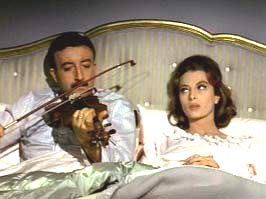
I mentioned Forrest Gump, 1994, as a recent movie version of the theme, and several readers were quick to point out that Being There, 1979, with Peter Sellers also fits the type.  I’m currently reading an excellent book on screenplays, Save the Cat Goes to the Movies, by Blake Snyder (1957-2009) that widens the scope of this kind of movie by calling the genre, “The Fool Triumphant.”  This shift allows us to see the connections between many other types of tales where innocence and virtue are rewarded.

Save the cat2

I reviewed Snyder’s first book on screenwriting, Save The Cat, in January, 2012.  I expect to write a review of this book after I finish, but first I want to focus on Snyder’s words about films with “fools” as heroes.

Inspector Clouseau in The Pink Panther, 1963

Inspector Clouseau in The Pink Panther, 1963

He lists three key elements:

  1. The “fool” is someone with skills or powers that are overlooked or unnoticed by everyone except (sometimes) an antagonist who resents the fool’s success.  Example:  Inspector Dreyfus in the Pink Panther movies.
  2. The fool is foolish to an establishment that opposes him or her.  In Snyder’s words, “while he does not set out to do anything but live his life, it’s usually the establishment that’s exposed as the real fool in the equation.  Have no fear, our unlikely hero won’t become a part of the system – or want to!”
  3. Finally, Snyder says, a “transmutation” occurs for the fool.   Sometimes this involves a change of name, as when Chance the gardener becomes Chauncey Gardner in Being There.  It may be a change of life circumstance, like Goldie Hawn in Private Benjamin.  It may involve gender swapping as in Tootsie and Mrs. Doubtfire.  The fool’s mission may change as it does in Legally Blonde, where Reese Witherspoon first enrolls in Harvard law to win back her fiancé, but then discovers that law is her true calling.
Reese Witherspoon for the defense in "Legally Blonde"

Reese Witherspoon for the defense in “Legally Blonde”

Blake Snyder identifies sub-genres in stories about the wisdom of foolishness.  “Political Fool” movies include Being There, Mr. Smith Goes to Washington, and The Princess Diaries.  Films like Tootsie, Miss Congeniality, and Some Like it Hot are grouped together as “Undercover Fool” stories.  Forest Gump and Zelig are “Society Fool” movies.

the-three-stooges

In addition to Legally Blonde, “Fool Out of Water” movies include Stripes, Beverly Hills Cop, and Crocodile Dundee.

Snyder is aware of the deep roots of these stories.  The fool “has a bead on the truth,” he says, whether it’s Shakespeare’s Puck, saying, “Lord what fools these mortals be,” or Forrest Gump, who “can find a whole universe sitting on a bench waiting for a bus.” In discussing Gump, Snyder suggests that ultimately, the fool opens our minds and our hearts to spiritual wisdom.

I thought of an 11th century Buddhist master, Tilopa, who lived as an itinerant sesame seed grinder.  A thousand years later, people still study his teachings, which are very complex in one sense, but can also be boiled down to these “six words of advice:”

  1. Let go of what has passed.
  2. Let go of what may come.
  3. Let go of what is happening now.
  4. Don’t try to figure anything out.
  5. Don’t try to make anything happen.
  6. Relax, right now, and rest.

Clearly such wisdom lies beyond the reach of anyone but a fool!

Singing along with Merle Haggard

In honor of a pair of local concerts Merle Haggard is set to perform the week after this, our paper ran an article and an interview with Haggard, a country music classic.  Unfortunately, I’m busy both nights he’ll be in town, so I thought I’d post an article and a couple of songs for my pleasure and hopefully yours.

Merle Haggard was born in 1937, in Oildale, CA, near Bakersfield.  He grew up wild and drew a three year term in San Quentin when he was 20.  While in prison, he decided playing music would be a better way to live, and 1967 he recorded his first number one country music song, “The Fugitive,” which remains my all time Haggard favorite:

I first heard Haggard after he released his 1969 counter-counter-cultural anthem, “Okie from Muskogee.”  Lyrics like, “We don’t smoke marijuana in Muskogee,” made it a tongue-in-cheek favorite on hippie radio stations of the day.  Later that year, the Grateful Dead covered one of his songs, as did Joan Baez a short while later.

Haggard, who had his own battles with alcohol and drug abuse, is far less doctrinaire these days:  he built a recording studio near his home in Redding, CA where he’s currently working on a tribute album to Bob Dylan.  At 76, having also survived lung cancer, Haggard sounds grateful as well as surprised at his success and still being alive.  If you like country music, you’re sure to enjoy the article and the interview.

Haggard says country music is “pretty shallow” these days, and when you listen to his work, it’s hard not to come to the same conclusion.  Here is a country singer who shows the depths and soul that are possible in this classic American genre.

Skinwalkers by Tony Hillerman: A book review

Skinwalkers

As I worked on a recent post, Favorite Fictional Detectives, I realized I didn’t remember the details of Skinwalkers, a key Tony Hillerman novel that I read soon after it was published in 1986.  I read it again and found it to be a thoroughly satisfying mystery.  I offer this brief review to encourage others who may not know Hillerman’s work to give it a look.

***

Officer Jim Chee, of the Navajo Tribal Police, tosses and turns one night in the airstream where he lives in the desert.  When his closest neighbor, a feral cat, shoots through the pet door, Chee gets up to peer out the window at what might have scared it so badly.  Probably a coyote, he thinks.  For a moment, thinks he sees a shape in the darkness.  Then the night explodes.  Three shotgun blasts tear holes in the trailer just above the bed where Chee was sleeping moments before.

In the morning, as he cleans up his trailer, Chee makes a frightening discovery.  Among the shotgun pellets that litter the floor is a small bone pellet.  Navajo witches, or skinwalkers, inject bone into the bodies of people they want to kill.  The bone produces the fatal “corpse sickness.”  This bone fragment links three apparently separate killings that Lt. Joe Leaphorn, a senior tribal detective, has been trying to solve without success.  When Leaphorn and Chee join forces, their first problem is persuading anyone to talk, when tradition holds that speaking a skinwalker’s name will attract his harmful attention.

Chee is learning to be a traditional Navajo healer.  With a background in college psychology classes, he understands his role to be restoring people to the core Navajo values of beauty and harmony.  Skinwalkers have fallen away and try to take others with them.

Leaphorn is not a believer, but he learned by hard experience that other people are.  Early in his career, when he ignored talk of witches, three murders and a suicide were the result.  As he and Chee grope through the dark, a very real menace is watching from a direction they do not expect.

This book represents fine storytelling, with characters and a setting that are outside our normal experience.  It’s one of the best mysteries I’ve read, and I suspect it will make you want to read more of Tony Hillerman’s work.

We are barely a month shy of the 150th anniversary of the Battle of Chancellorsville, one of the key clashes of the Civil War. At the Chancellorsville Visitor Center, Mary Stong-Spaid discovered her home is actually on the battlefield. Earlier this month, she offered these moving reflections and photographs of Civil War graves and monuments.