The Wind In the Willows by Kenneth Grahame: An Appreciation

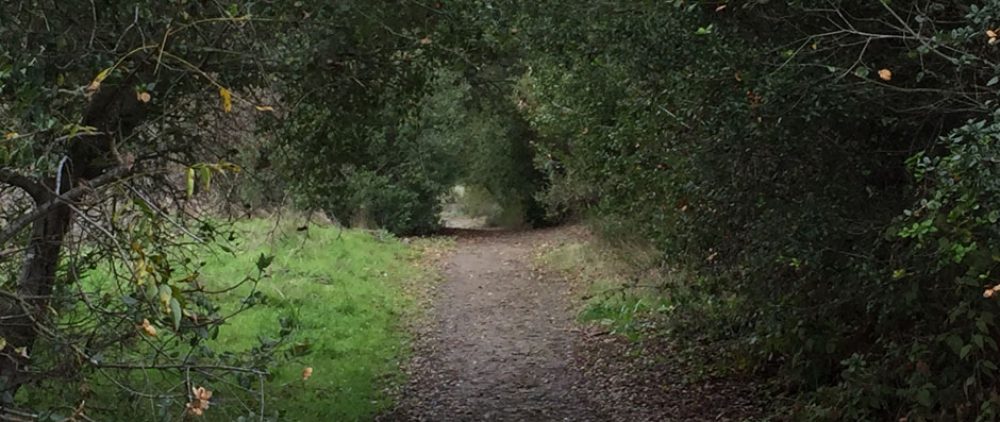
It was a golden afternoon; the smell of the dust they kicked up was rich and satisfying - Illustration for The Wind in the Willows by Arthur Rackham, 1940

Kenneth Grahame was a turn of the century British author who was Secretary of the Bank of England “in his spare time” (according to A.A. Milne).  In 1908, Grahame published The Wind in the Willows, his third novel.  Unlike his first two books, The Wind in the Willows was not an immediate success, though its early supporters included Theodore Roosevelt, who wrote to the author in 1909, “I have read it and reread it, and have now come to accept the characters as old friends.”

Arthur Rackham was perhaps the best known artist of “the golden age of illustration,” from 1870-1930.  His illustrations for The Wind in the Willows were his last work, published posthumously in 1940, a year after Rackham died of cancer.

Shove that under your feet, he observed to the mole, as he passed it down into the boat - Arthur Rackham, 1940

I cannot think of a more auspicious partnership in the history of book illustration, though I am biased.  I’m writing about The Wind in the Willows because I stopped by a blog that asked, “What is your favorite book?”  This has been mine since my mother read it to me when I was four.  When she finished, I begged her to start it again.  I began school determined to learn to read as soon as I could so I would not have to wait on anyone else’s convenience to row up the river with Rat and Mole.

The badger's winter stores, which indeed were visible everywhere, took up half the room - Arthur Rackham, 1940

I called this post an appreciation rather than a book review, because my intent is not to be systematic. Besides, in his introduction, A.A. Milne warns us not to dare anything so foolish:

One does not argue about The Wind in the Willows.  The young man gives it to the girl with whom he is in love, and if she does not like it, asks her to return his letters.  The older man tries it on his nephew, and alters his will accordingly.  The book is a test of character.  We can’t criticize it because it is criticizing us.

She arranged the shawl with a professional fold, and tied the strings of the rusty bonnet under his chin - Arthur Rackham, 1940

The magic of this volume lies in text as well as the illustrations.  This is story of friendship, of terror in the Wild Wood, of the ache of standing outside looking in on Christmas eve.  There is slapstick and comedy, and a battle against heavy odds to restore the natural order along the river bank, but the center of the story for me has always been Chapter 7, “The Piper at the Gates of Dawn.”

Otter’s son Portly has gone missing, and one mild summer evening, Rat and Mole row the backwaters trying to find him.  They catch the strains of a haunting tune:

“It’s gone!” sighed the Rat, sinking back in his seat again.  “So beautiful and strange and new!  Since it was to end so soon, I almost wish I had never heard it.  For it has roused a longing in me that is pain, and nothing seems worth while but just to hear that sound once more and go on listening to it for ever.  No!  There it is again!”

The animals follow the sound and it leads them to a place where a great Awe falls upon them and they are granted a vision:  [Mole] raised his humble head; and then, in that utter clearness of the imminent dawn, while Nature, flushed with fullness of incredible color, seemed to hold her breath for the event, he looked in the very eyes of the Friend and Helper.”

The animals find the baby otter and the vision fades, leaving them in misery as they feel what they have lost, but then, a capricious little breeze, dancing up from the surface of the water, tossed the aspens, shook the dewy roses, and blew lightly and caressingly in their faces, and with its soft touch came instant oblivious.  For this is the last best gift that the kindly demigod is careful to bestow on those to whom he has revealed himself in their helping:   the gift of forgetfulness.  Leset the awful remembrance should remain and grow, and overshadow mirth and pleasure, and the great haunting memory should spoil all the after-lives of little animals.

The minister in the church I attended when I was young once said from the pulpit that “The Piper at the Gates of Dawn,” was the best theology he knew outside the Bible.

Together, Kenneth Grahame and Arthur Rackham preserved and shared a vision of an older, idyllic England of quiet lanes and riverbanks and launched it into a new century that needed such a dream, after one World War and on the eve of a second.  Last time I looked for a gift for a friend, a facsimile edition was available (from Modern Library I believe).

There are other nice editions like the one illustrated by Michael Hague and published in 1980, for there are more ways than one into this dream.

Wind in the Willows cover by Michael Hague, 1980

I guess you could say I’ve been dreaming along with the great British storytellers all my life – with Rat and Mole, with Pooh and Piglet; in Middle Earth and Narnia; with King Arthur and his knights; with Welsh wizards and Irish warriors and Tam Lin in Faerie; Harry Potter is simply the latest feast from the cornucopia I first encountered when I was four years old.

If you have not yet discovered the magic of The Wind in the Willows (and I don’t mean Mr. Toad’s Wild Ride @Disney) I suggest you give it a look as soon as can.  In my experience (as in Bilbo’s) there is no telling where the road will take you.

The wayfarer saluted with a gesture of courtesy that had something foreign about it - Arthur Rackham, 1940

Guest Post by Indie Author, Jayden Scott – Part 2

Yesterday, our guest blogger, Jayde Scott, spoke of what led her to publish her novels on Smashwords.  Today she describes all the work behind her growing success, (in addition to writing novels).  She cautions that:   Independent publishing isn’t an easy route to go and it’s certainly not a ‘get rich quickly’ scheme. Be prepared to invest more time than in a nine to five job.

She includes a link to her blog, Fiction and More, and I’ve added it to my blogroll, since her stated intent is to help writers promote and market their work.  

Also, If you have not already done so, please visit her Smashwords homepage to look at the full range of her books: http://www.smashwords.com/profile/view/JScott

My sincere thanks to Ms. Scott for sharing all she has done to champion her own work.  This is vital information to anyone thinking of following her path into print.

_______________________________________________________

So how did I do it? With lots and lots of marketing such as contacting blog hosts for reviews, giveaways, interviews and book spotlights. I don’t just copy and paste the information about my book into my emails to possible reviewers; I take the time to get to know their blogs and preferences and try to send them all information as requested in their review policies. Since they invest so much of their time and effort into reading my books, it’s only respectful that I at least try to make it easier for them to decide whether my book is something they might enjoy or not.

Independent publishing isn’t an easy route to go and it’s certainly not a ‘get rich quickly’ scheme. Be prepared to invest more time than in a nine to five job. Establishing a presence with all the fierce competition is tough work. Several times I changed the covers of my books, which involved days of searching sites like istockphoto.com and fotolia.com for the right digital art; once I changed the title, after which sales picked up. I also spend days on designing my print books and book trailers, and promoting those on various sites. As a very active Goodreads member, I devote a great amount of time to answering messages and updating my blog, http://jayde-scott.blogspot.com/, in case readers stop by to find out more about me and my books. And finally, I try to keep in touch with many author friends because, like in every job, connections matter. One of the most important tasks for any indie author, however, is writing and publishing a constant flow of well-edited quality work to keep up with fast moving trends. Even though I can’t afford paying a professional editor, I have two editor friends who proofread my work. My critique group helps with brainstorming and provides feedback on character development, story elements and pace. Even though my books are cheap, I try my best to give readers good quality for their money.

Writing has gifted me with a purpose in life, and nothing gives me more pleasure than hearing how much readers enjoyed my books. I’m a full time writer now who’s still sending out application forms to get a job, but the job market in the UK is shaky and doesn’t seem to want to recover any time soon. Independent publishing has at least helped ease my financial struggles and I know it’s helped many of my fellow authors, too.

Guest Post by Indie Author, Jayden Scott – Part 1

At the start of May, Jayde Scott, a young writer from England, invited me to review her eBook, A Job From Hell.  Based on the professional presentation of her Smashwords page,  http://www.smashwords.com/books/view/56864, I agreed, though with some trepidation:  vampire romance isn’t normally “my thing.”

To our mutual relief, I enjoyed A Job From Hell and posted my review here at the end of May:  https://thefirstgates.com/2011/05/25/a-job-from-hell-by-jayde-scott-book-review/.  During the process, we exchanged a few emails – enough for me to realize what a complex operation an ebook publishing and marketing venture can be.  I invited Ms. Scott to describe her process, and she found the time – despite publishing two new titles this summer – to send a very detailed reply.  So detailed, in fact, that I’ve split her post into two sections.

In this section, the author describes what led her to the world of Indie publishing.  The next section outlines the nuts and bolts of her procedure.  Anyone who is interested in ebook publishing will find a wealth of information in Ms. Scott’s account.

__________________________________________________

Jayde Scott

A year ago, I would never have thought I’d be an indie author one day. At that time, I was unemployed, like many people in the UK, and could barely afford paying the rent let alone meet the monthly repayments of my student loan. Even with two good degrees, I had been looking for a job for three years without much success. During breaks from filling out application forms and struggling to get freelance work, I kept myself sane by writing as much as I could. It was my way to deal with the stress and pressure of not having a regular job.

Writing had been a hobby of mine for more than ten years. I had six books ready for publication and was actively seeking an agent or publisher for my work. Several times I came very close to landing an agent and did the ‘suggested’ changes to my manuscripts, only to have my hopes dashed again. With publishers I had similar experiences, some rejected me because I wouldn’t cut down on a 94k manuscript, others because they didn’t like a particular character. There was a time when I just couldn’t afford the horrendous postage charges for sending a manuscript to the US, so I kept postponing sending off large parcels until I got a freelance gig and had some money left.

After reading about Amanda Hocking’s success, I realised publishing doesn’t start and end with landing an agent and selling one’s work to one of the big six publishers. Sure, that would be a nice accomplishment, but I figured I might be more likely to win the lottery. It took me a long time to take this step because I kept hoping someone might make an offer soon, but when the offer never came in and I was more and more struggling to get a job and pay the bills, I decided I had nothing to lose by going the independent route. At least I had tried my best.

So, instead of wasting yet more time, I spent two weeks getting my first manuscript, Alex Gonzo, Royal Spy, ready for publishing via Kindle. It took a few attempts (actually, more than I care to reveal), but I finally figured out how to format it correctly after which it became easier with every book published.

Needless to say, I knew next to nothing about self-publishing a book or the marketing involved. I had heard of authors using Twitter and Facebook to promote their work, but that about summed up my knowledge of social media. My first attempts at Tweeting were pretty much useless and Alex Gonzo, Royal Spy didn’t sell a single copy. Five months later, I had barely sold 100 copies of that book, but I wasn’t ready to give up and self published A Job From Hell, which is the first book in the Ancient Legends series. That book didn’t take off straight away. In fact, I only sold about 60 copies in the first month. However, the more time I spent researching on the Internet and reading as many blog on publishing as I could find, the more I was determined to succeed, not least because I still hadn’t found a job and it didn’t look like I would in the near future.

Three months and a few more books later, I sell a few thousand copies a month. My books aren’t doing as great on Amazon as those of some of my fellow authors and I’m thinking maybe my coverart isn’t that great, maybe my blurbs would benefit from a makeover. However, at a price of 99c a book, my earnings at least pay the monthly rent, which is more than I would’ve earned if I kept contacting agents and publishers only to have my confidence crushed.

TO BE CONTINUED

Three Requirements of a Book Review (?)

In a post entitled, “How Not to Write a Book Review,” Robert Pinsky, who has been writing reviews since typewriter days, discusses a famous and venomous book review a critic leveled at John Keats in 1818. http://www.slate.com/id/2299346/pagenum/all/#p2.  The review, by Irishman, John Wilson Croker, founder of modern political conservatism, became known as “the review that killed Keats.”  Croker really is nasty, but by himself,would not inspire me to write a blog post.

What I found noteworthy in the article are the basic principles Pinsky has used for decades to write his reviews.  In the 1970’s, when he wrote freelance for newspapers, one of them gave him a mimeographed style sheet with three rules  for every book review:

1. The review must tell what the book is about.
2. The review must tell what the book’s author says about that thing the book is about.
3. The review must tell what the reviewer thinks about what the book’s author says about that thing the book is about.

At first reading, the list seems to apply to non-fiction more than fiction.  Novelists don’t really say things about what their books are about except during interviews, but if we are less literal, do these criteria work?  As an experiment, let’s consider Harry Potter and the Sorcerer’s Stone, which I’m choosing because it’s pretty well known.

Criterion #1 is really the synopsis:  A lonely orphan discovers he is a wizard and finds allies as well as a deadly enemy at Hogwarts School of Witchcraft and Wizardry.  I like to set a story in context with (relatively) objective information.  For the first Potter, I might discuss characteristics of middle-grade fantasy – a magical world must be internally consistent, but does not require a detailed explanation:  some people are wizards and some are muggles, and that’s how it is.  This is common in middle grade, while adult fantasy needs more – a theory of mutant genes or something like that.  This first criterion, a summary of what the book is about, is essential for any review.

Criterion #2, is phrased in a strange manner.  An author writing a history of the Third Reich will have things to “say about that thing that the book is about,” but J.K. Rowling doesn’t.  For fiction, I interpret this as detailing what the author does to flesh out the plot and make it dynamic.  Rowling’s main characters, for instance, are so well drawn that they feel like people we’ve known.  You feel like you’ve met Hermione, Snape, and Hagrid, whether or not you have.  In addition, this is where I would speak of the richness of the world of Hogwarts, and maybe research a brief history of academies of magic in fiction and legend.

Criterion #3 is a tongue twister that boils down to my take on #1 and #2.  For Potter, I might talk about how it evokes the longing for connection; how sometimes we all feel like orphans longing for a virtual family  of kindred spirits like Ron, Harry, and Hermione.  How Hogwarts is an endless world our imaginations want to explore.  In other words, if I can find words for my deepest reactions, presumably – hopefully, others will know or echo what I am talking about.

I enjoy reading and writing book review as do a lot of bloggers I follow.  The exact phrasing of Pinsky’s rules seem a little too cutesy, but they got me thinking and I can come up with lots of ways to conceptualize the same thing. Here is one, off the top of my head:

1.  What is the story about?
2. How does the author make it uniquely their own?
3. Does it work for me?

Can you write an effective review with less than these basic criteria?  Are there others that will make it more effective?  Is it possible to do all of this and still wind up in left field?

After Potter

Of course it is happening in your head, Harry, but why on earth should that mean it isn’t real?  –   Albus Dumbledore

The fact that everyone is weighing in on Harry Potter stands as a tribute to the impact the saga has had on us all.  There’s no doubt the release of the final movie is most poignant for those who grew up with the series; a span of 13 years for the books or 10 for the movies is huge when you are young.  Some of those who picked up The Sorcerer’s Stone in grade school have finished college.

Annie Ropeik, an intern at NPR suggests three adult fantasies for the “Hogwarts Grad.”  She calls one of them, The Magicians by Lev Grossman, a cathartic examination of the nature of magic and our relationship to the stories we wanted to live in as kids — required reading for anyone trying to recover from a lifelong love affair with a fictional world.  http://www.npr.org/2011/07/14/137802346/3-grown-up-books-for-the-hogwarts-grad

Note the language Ropeik uses, especially the word, “recover,” which suggests that a love affair with a fictional world is something we should fight the way someone “in recovery” uses the 12 steps to fight for freedom from an addiction.

I’ve been sensitive to this kind of nuance ever since one of my psychology professors, a colleague of James Hillman and Joseph Campbell, recommended The Neverending Story by Michael Ende with the comment that, “It’s about our culture’s war on imagination.”  Can we graduate from the fictional worlds we have loved and lived in?  Should we even want to?  According to Hillman, our greatest danger is literalism, the mind that is closed to fantasy, or rather, refuses to see the fantasy in all our realities and the reality of our fantasies.

Today may be a day to mourn the end of an era, but it is also a day to celebrate the gifts we have received from Rowling, the young actors, and everyone who worked on the movies.  They have given us an unforgettable world of imagination and dreams where courage and friendship matter, even when the odds are bad, in the struggle of good against evil.

Harry Potter Fan Fiction

Harry, Ron, and Hermione in The Sorcerer's Stone, 2001

Fan fiction did not begin with Harry Potter or the internet.  According to Lev Grossman’s article, “The Boy Who Lived Forever,” in the July 18, issue of Time, xeroxed fanzines appeared after the premier of “The Man from U.N.C.L.E.” in 1964, and really took off with “Star Trek.”

In the broader sense, telling original stories with borrowed settings and characters is nothing new at all.  Homer did not create the Trojan War, Achilles, or Odysseus.  Shakespeare did not make up either King Lear or Henry V.  But with the internet and Harry Potter, fan fiction has exploded.  There are more than 2 million pieces on fanfiction.net and more than a quarter of these are based on Potter – everything from short stories to full length novels.

The final movie will not be the end of original Potter creations

Grossman explodes most of the stereotypes of those who write and read these tales.  One 38 year old writer and actress says it’s like character improvisation.  A best selling fantasy writer whose novels have been optioned by Peter Jackson says, “Fanfic writing isn’t work, it’s joyful play.”  This raises the key question of why writer’s of fiction write.  Joyful play, a platform, and an appreciative audience are there – and it’s not like many creators of “original” stories get to leave their day-jobs.

Well known authors fall on both sides of the unanswered copyright issue.  J.K. Rowling and Stephanie Meyer encourage new fiction based on their characters and worlds.  Orson Scott Card, Anne Rice, and George R.R. Marin, author of A Game of Thrones do not, and threaten lawsuits.  It may or may not be coincidence that the authors Lev Grossman names as supporting fanfic are more recent and write for a younger audience than those who are in opposition and write for adults.  So far, all cease and desist requests have been honored, so there are no legal precedents in the world of fiction, though court cases involving music have been liberal in their interpretation of what constitutes “fair use.”

This begs the interesting question of who a character or world belongs to.  Groosman says that until recently:

Writers weren’t the originators of the stories they told; they were just the temporary curators of them.  Real creation was something the gods did…Today the way we think of creativity is dominated by Romantic notions of individual genius and originality and late-capitalist concepts of intellectual property, under which artists are businesspeople whose creations are commodities they have for sale.

Personally, I have always loved the poet’s invocation at the start of The Odyssey:  Sing in me, muse, and through me tell the story… 

In my experience, the “I” does not invent worlds or characters.  Whether you call it the muse, the gods, or the collective unconscious, fictional worlds and imaginal people come from somewhere else.  With a bit of luck and humility, the “I” may get to witness what happens, and may even get adept at finding new rabbit holes.  To me, the idea of “owning” a “product” of imagination smacks of hubris.

There is no real data on whether fanfic hurts an author economically.  Intuitively, I can only imagine it benefits Rowling and Meyer.  I hope so.  Creativity is creativity, regardless of what spark ignites it.  I’m thinking of dropping by some of the sites to see what these authors are up to.  For those who write for the joy of it, I wish them a lot more.

Gettysburg Day: The Third Day, July 3, 1863

On the afternoon of July 3, 1863, 15,000 men of General George Pickett’s division sheltered behind McPherson’s Wood during the fiercest artillery bombardment of the war.  Ninety minutes later, when the cannons fell silent, they passed through the wood and and marched over a mile of open ground to attack the Union center.

Numbers identify trees the War Dept. has identified as survivors of the battle

As you stand beneath the boughs of the trees, and gaze at the stone wall marking the Union position, it is almost beyond imagining what those men were feeling as they formed their ranks.  They were all veterans.  They probably knew what would happen as well as their commander, General James Longstreet, who did his best to talk Robert E. Lee out of the attack.  Lee would not budge.  His men had repeatedly done the impossible; maybe they would do it again at Gettysburg.

Where some of the generals wore plumes in their hats, talked of the bravery of southern manhood, and thought in terms of Napoleonic tactics, Longstreet was a pragmatist who knew that warfare had changed.  He had already invented a new kind of trench, anticipating the tactics of WWI.  He knew that bravery wouldn’t keep you alive when facing the fire of rifled muskets that were lethal at half a mile or when charging into cannons loaded with ball bearings.  He told Lee that no 15,000 men ever assembled could take the ridge, but he was overruled.  When Pickett asked, “Shall I go,” Longstreet could not even answer; all he could do was nod his head.

In one of the most tragic events of the Civil War, the men of Pickett’s division formed their ranks and moved over the fields in lines the northern men found stunningly beautiful, even as they fired their cannons and blew them apart.

Pickett’s 15,000 men suffered 60% casualties that afternoon.  As the survivors staggered back to the woods, Lee met them.  “It is all my fault,” he told the troops.  “All my fault.”  The south never had another chance to win the war.

The only brigade to reach the wall was led by General Lewis “Lo” Armistead.  His story illustrates the brother-against-brother tragedy of the Civil War.  Armistead and Union General John Hancock were close friends during the Mexican War and later in California.  On the night before they took separate trains to join opposing armies, they gathered with other officers to drink and sing and make tearful toasts to each other.  Armistead said, “May God strike me dead if I ever lift a hand against you.”  When he learned that he would have to march against Hancock, who commanded the Union center, Armistead did not think he would survive; he sent his family bible to Myra Hancock, his old friend’s wife.

Armistead was shot three times as he crossed the wall.  As union solders gathered around him, he said, “Tell General Hancock that General Armistead is so very sorry.”

This clip from Gettysburg is one of the most moving of the film and represents one of the saddest events in American history.  It is Armistead who gives the order to March.  It is worth noting that this scene, like most in the movie, was filmed on the Gettysburg battlefield, with the help of thousands of Civil War re-enactors who bring tremendous realism into all of the scenes involving the armies.

On the next day,  July 4, the Confederates reformed their lines as driving rain fell.  Lee hoped Meade would attack, mirroring his own mistake of the day before, but no attack came.  That night, the southern troops left the field and started their march back to Virginia.  Meade pursued the retreating Confederates, but half-heartedly, allowing the remnants of Lee’s army to escape.  WIth vigorous action, he might have ended the war – instead it dragged on for another two years.

What is YA and Who Reads It?

Recently someone suggested a novel to me, but cautioned that I might not like it because it was “women’s fiction.”  That sparked a mini-revelation.  I realized I read a lot of women’s fiction because I read a lot of young adult books, and the two have become synonymous.  As if to underscore the notion, an email from Amazon popped up in my inbox called, “New Releases in Young Adult.”  Of the ten recommendations, nine were by women, and the single title written by a man was a paranormal romance with a female protagonist.

That got me wondering about the history of YA, its origins, its audience, and its nature in the olden days, which I guess means before Twilight.  Wikepedia came to the rescue with a well done page on the history of YA fiction:  http://en.wikipedia.org/wiki/Young-adult_fiction.

The honors for coining the phrase, “young adulthood,” and distinguishing “books for children” from “books for young persons,” goes to Sarah Trimmer, in 1802.  Even so, 19th century publishers did not use any distinct classification for young readers, though some of the titles published remain classics to this day:  Swiss Family Robinson, Oliver Twist, Alice in Wonderland, The Adventures of Tom Sawyer, Kidnapped, and The Jungle Book to name a few.

The trend continued into the 20th century, and the roaring 20’s established young adults as a group apart, but it wasn’t until the 50’s and 60’s that “young adult” as a classification entered the publishing world.  The genre as we know it did not begin to emerge until the 70’s and 80’s, for books like The Catcher in the Rye (1951) and The Lord of the Flies (1954) bear little resemblance to what you find in the YA section today.  In case I’m being too subtle, I don’t really think that’s a good thing.

Neither did a thoughtful blogger named Annalee Newits, who posted a piece called, “Stop Writing Young Adult Science Fiction,” in 2008.  Though she writes in defense of her favorite  genre, her observations transcend such confines:

If we really want to open science fiction up to new readers, we won’t do it by dividing our audience up into smaller and smaller groups. Nor will we expand the minds of young people by telling them that they should only read specially-designated novels for young people. Why not admit that teens have a place in the world of adult imagination, and vice versa? Adults and teens are different in all kinds of ways, but surely they can meet in the world of fiction.  http://io9.com/5037686/stop-writing-young-adult-science-fiction

I posted earlier about my frustration one day when I cruised the blogs, in search of the “proper” age for protagonists in young adult vs. middle grade fiction.  It turned out that just as in real life, no one knew what to do with the 14 year olds.  The real question is why we are asking this question at all?  Who told us we have to, and why?

Ursula le Guin, Madeline L’Engle, C.S. Lewis, Tolkien of course, Mercedes Lackey, Robin McKinley, and Neil Gaiman – these are just a few of the names that pop right to mind when I think of writers who have played by their own rules, who have written stories for young adults that have weight, substance, and staying power, and defy our feeble attempts at classification.

The blurb for the young adult winner of the 2011 Amazon Breakout Novel Award begins, “In the increasingly crowded paranormal marketplace…”  Apparently that’s what it has all come down to in young adult – we introduce an award for excellence by noting how the book has positioned itself in the marketplace.

Life is way too short to play by this kind of rule.