Paracosms in Writing and Music

When I turned to the editorial page of the local paper this morning, I learned a new word and a wonderful concept.  http://www.sacbee.com/2012/06/27/4591277/springsteens-global-attraction.html.

David Brooks, a writer for The New York Times, and several friends “threw financial sanity to the winds” to follow Bruce Springsteen on tour through France and Spain , because supposedly the crowds are even more intense than their American counterparts. 

Young European fans know every word of songs The Boss recorded twenty years before they were born.  Their enthusiasm “sometimes overshadows what’s happening onstage,” says Brooks.  The moment that spawned his article was seeing “56,000 enraptured Spaniards, pumping their fists in the air…and bellowing at the top of their lungs, ‘I was born in the USA.‘”  

How could this be, especially since in Springsteen’s music, USA often means New Jersey?

Brooks asked himself the same question and borrowed a term from child psychology to help understand it.  The word is paracosm, meaning a world in imagination, “sometimes complete with with imaginary beasts, heroes and laws that help us orient ourselves in reality.  They are structured mental communities that help us understand the wider world.”

Children do it, says Brooks, and as adults we continue the habit.  Then he adds the observation that is the point of this post:

“It’s a paradox that the artists who have the widest global purchase are also the ones who have created the most local and distinctive story landscapes.”

Springsteen’s New Jersey.  J.K. Rowling’s English boarding school.  Tony Hillerman’s Navajo country.  221B Baker Street.  Downton Abbey.  Tolkein’s Edwardian rural England, aka, The Shire.

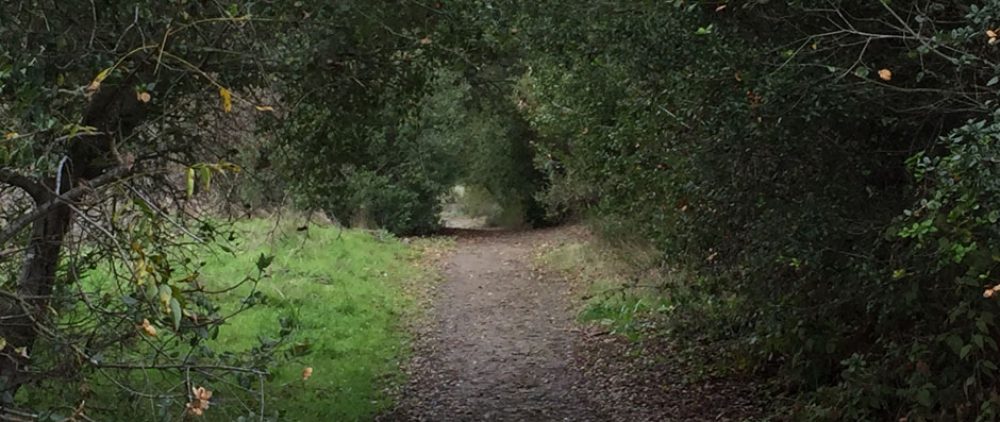
Hob Lane, near where Tolkien lived as a boy

I often think of the books I hate to see end, the kind that inspire fans to continue the story on their own, as I described in a recent post on fan fiction http://wp.me/pYql4-298.  Character remains the essential ingredient – we want to follow Harry, Ron, and Hermione wherever they may lead us – but in his article David Brooks points out the critical nature of the world where they more and act and love and fight.  We wouldn’t really want to see the Hogwarts gang on Sunset Boulevard anymore than we’d want Sam Spade in St. Mary Meade, working a case with Miss Marple.

“If you build a passionate and highly localized moral landscape, people will come,” says Brooks, echoing Field of Dreams, a movie that largely took place in a cornfield.  “If your identity is formed by hard boundaries, if you come from a specific place…if your concerns are expressed through a specific paracosm, you are going to have more depth and definition than if you grew up in the far-flung networks of pluralism and eclecticism…sampling one style then the next, your identity formed by soft boundaries, or none at all.”

I think this is an important thing to consider – one you seldom read about in books on writing but which instantly resonates when called to mind in the context of our favorite fiction.

But let’s end with The Boss

One of Springsteen’s best known songs, “My Hometown,” moves me the way “Born in the USA” moved a stadium full of Spaniards.  Hometown for me is part of a paracosm, a special kind of imaginary landscape.  I’ve said elsewhere that when I was young, we moved around too often for me to have any sense of a hometown, yet the moment I say the word I can see it vividly, with eyes opened or closed.

We’ll let the master paint the picture, since someone (I forget who) once observed that only a troubadour of Springsteen’s calibre could make you nostalgic for New Jersey.

Enjoy the paracosm.

American Literary Merit Short Story Contest

A friend on a writer’s mailing list sent this notice of the ALMA short story contest.  First prize is $1000 and inclusion in the ALMA Short Story Compilation for 2013.  Word limit is 3000.  Due date is Nov. 12, 2012.  The entry fee is $15 before Aug. 12 and $20 after that.  Here are the details:

http://americanliterarymeritaward.com/ALMA_Contest.html

Fan Fiction on the Radar

A year ago, I wrote a post on Harry Potter fan fiction,  http://wp.me/pYql4-14b.  My information came from an article in Time on the occasion of the release of the final Potter movie.  I had no idea how popular fan fiction had become, since my only prior experience was with its 20th century incarnation as cheaply printed fanzines on the magazine racks at Tower.  I sometimes skimmed but never bought.

All of that has changed.  The genre was featured last Friday in a Wall Street Journal article, “The Weird World of Fan Fiction.”  No wonder the Journal took notice.  E.L. james, author of the Fifty Shades of Gray erotic trilogy, which sold 15 million copies in three months, got her start writing fan fiction based on the Twilight Series (Edward as a powerful CEO and Bella as his sex slave).

The article mentions other well known writers whose first work was fan fiction. Meg Cabot, author of The Princess Diaries began writing Star Wars stories when she was 11.  Naomi Novik, author  of the Temeraire series, which has been optioned by Peter Jackson, continues to write fan fiction.  For her it is play, and she has more than 400 stories online, set in the worlds of Star Trek, Sherlock  Holmes, and The Avengers.

In addition to fan fiction writers who have broken into the mainstream, some have gathered huge numbers of online readers at sites like fanfiction.net or wattpad.net.  One story based on The Hunger Games has been read two million times.

Fan fiction isn’t new.  Conan Doyle fans in the late 19th century wrote their own Sherlock Holmes stores as authors continue to do.  The theme for an upcoming TV series with a female Watson appeared first on fanfiction.net.  One can argue that both Homer and Shakespeare in his histories, created stories akin to fan fiction; they used pre-existing worlds, situations, and characters.

The Journal gives a sense of the wild playfulness of fan fiction authors.  There is Pride and Prejudice in Space. We have Alice and the Mad Hatter battling zombies, and The Lord of the Whiskers, which populates Middle Earth with cats.  Male-male romance appears to be common, with Kirk and Spock, and Harry and Draco among readers’ favorite couples.  There are character cross-over stories too, like characters from the TV series, Glee, winding up in Middle Earth.

Published authors are mixed in their response.  Some, like J.K Rowling and Stephanie Meyer welcome the spinoff stories.  Others like George R.R. Martin and Anne Rice are dead set against fan fiction, and threaten lawsuits, though suits are seldom launched except when fans try to move borrowed worlds into mainstream publication.  Orson Scott Card was initially opposed to fan fiction but has come to embrace it.  This fall he will host a contest for Ender’s Game fan fiction.  Fans can submit works to his website, and the winning stories will be published in a anthology.  “Every piece of fan fiction is an add for my book,” Card said.  “What kind of idiot would I be to want that to disappear?”

I understand the draw of fan fiction.  My first real literary effort was a sequel to The Wind in the Willows that I wrote in the fifth grade because I didn’t want the story to end.  In college I was seized with great, “What am I going to do now?” angst when I finished Lord of the Rings.  One of the things I did was work with a group of independent filmmakers on a 20 minute epic entitled, Billy the Kid Meets the Wizard of Oz

The word, “amateur” comes from the Latin, amare, to love.  With that in mind, I look forward to checking out some of the web sites where these amateurs post their work.

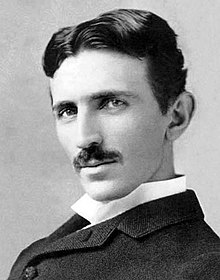
The Nikola Tesla Guide to Writing

Albert Berg’s Unsanity Files is one of the blogs I follow, enjoy, and draw inspiration from. Here is a uniqute take on Nikola Tesla, the famous inventor who held more than 100 patents. Albert discovered more than electro-mechanical genius in Tesla’s book, “My Inventions.” Here are several valuable principles about writing he discovered.  Enjoy

Albert Berg's avatarThe Unsanity Files

Those of you who follow my Twitter feed know that I recently finished reading a book called My Inventions by Nikola Tesla. Before reading this book, I had a nominal knowledge of Tesla. I read a short biography on him back when I was in high school, and I was aware of his hero status on the internet, but reading his life story in his own words gave me a new appreciation for the man.

As a child who grew up idolizing the likes of Thomas Edison, and dreaming of what it might be like to have a career as an inventor, Tesla has always held a special place in my heart. But as a writer, I realized that his approach to life was something I could emulate as a writer as well. What follows is a short list of the things I learned from Tesla’s life that I think could benefit writers…

View original post 1,223 more words

An Author’s Guide to Publishing in 2012, by Amy Rogers.

Those who have followed thefirstgates for a while will be familiar with Dr. Amy Rogers.

Amy Rogers

I reviewed her excellent first novel, Petroplague, in September, 2011 http://wp.me/pYql4-1ep.  In March of this year, she contributed a two part guest post detailing some of the rapid changes in today’s publishing landscape, an issue she follows in depth http://wp.me/pYql4-1MR.  Last Friday, Amy gave an updated presentation on  publishing options to the Sacramento branch of the California Writer’s Club during our monthly breakfast meeting.

Not long ago, there were only two publishing choices:  traditional publishing and the so called vanity press.  Now we have a spectrum of possibilities which keep getting harder to navigate.  Hybrid arrangements are multiplying:  traditional agencies offering ebook options, and agented independent publishing companies.

Rogers began her presentation by stressing the importance of every writer evaluating their individual goals.  Why do we want to publish this particular book?  How will we measure success?

Do we seek the implied approval that selection by a traditional publisher confers?  If so, do we have the time to invest in the process, knowing there is no guarantee of ultimate success?

If we choose to go the independent route, are we ready and willing to spend the time and/or money on five key tasks required for any book to be successful:  editing, cover design, layout, getting an isbn number, and marketing/distribution?

With a sense of our goals, Amy Rogers presentation, posted in full on her blog, will prove especially valuable.  A downloadable pdf version, is available too http://tinyurl.com/739ga5s.

After reviewing the presentation, take the time to explore Ms Rogers’ website, ScienceThrillers.com.  With a Ph.D in immunology, teaching experience in microbiology, and a writing career that began in grade school, Amy is uniquely qualified to write and review thrillers involving the depredations of “wee beasties.”  ScienceThrillers has grown to include reviews of books in multiple genres, publishing news, book giveaways, notices of writing contests, and her own quarterly newsletter.  It’s a site I’m very happy to recommend.

Historical Novel Contest

I haven’t been posting writing contests recently, but a local author sent this one out, and I know several readers who may be interested.  Sponsored by The Historical Novel Society International, this contest has an $8000 prize plus ebook publication with professional editing and cover design.  Initial entry of a synopsis and first chapters, to 5000 words, due Sept. 30, 2012.  The fee is $25 for non-society members.  “Historical fiction of any kind admissible.”

http://historicalnovelsociety.org/hns-award/

What ho, ye valiant lads and lassies of the quill – go for it!

The Wind Through the Keyhole, by Stephen King: A Book Review

I recently said I look for “imaginative escapism” in summer reading, and Stephen King’s, The Wind Through the Keyhole, 2012, qualifies on both scores.

This book is a celebration of stories by a consummate storyteller.  It is structured as a frame tale, three levels deep – a story within a story within a story, something you find in some our oldest epics and story collections like The Odyssey and The Arabian Nights.

In case we we miss that connection, King says it another way through his main character, Roland Deschain, who tells his traveling companions, “There’s nothing like stories on a windy night when folks have found a warm place in a cold world.”  Later, during a story concerning his younger self, Roland says, “A person’s never too old for stories…Man and boy, girl and woman, never too old.  We live for them.”

This is the eighth of King’s Dark Tower Novels, and the first I have read, but the introduction caught me up well enough to proceed.  Roland Deschain is a gunslinger in Mid-World.  A gunslinger is a cross between a knight errant and an old west marshall.  Many gunslingers are descendants of “the old White King, Arthur Eld.”

Mid World borders our own and is “filled with monsters and decaying magic.”  In places, there are gates between the worlds, or places where “the veils are thin.”  Three of Roland’s companions come from New York.  The fourth is a billy bumbler, a talking, dog-like creature.

Roland and his companions – his ka-tet – barely have time to find shelter from a starkblast, a devastating storm, with winds like a hurricane, the sudden onset of a tsunami, and temperatures so cold that trees snap and explode.  While the friends shelter by the fire in the only stone building in a deserted town, Roland tells of one of his first assignments as a gunslinger.

In the first story, “The Skin-Man,” Roland rides with his partner, Jamie Red-Hand, to the desolate mining town of Debaria, where a shapeshifter has slaughtered dozens of people.  This a gritty western world, like the bleakest of early Clint Eastwood’s westerns, and the monster is more deadly than the bad and the ugly Clint faced down.

While talking to an 11 year old survivor of an attack, a boy whose father and a dozen others were slaughtered, young Roland tells the second tale, “The Wind Through the Keyhole,” about another 11 year old, Tim Ross, who goes on a dangerous quest to save his mother who has been injured by a treacherous step-father.  Tim sets off to find Maerlyn, aka Merlin, at the heart of The Endless Forest.

Picture an 11 year old on an Arthurian quest, who stumbles into a swamp filled with gators and is saved by a group of plant people who communicate telepathically and give him a strange disk with buttons and lights that speaks and answers his questions in a female voice.  Her name is Daria.  Once she tells him she’ll be “offline” for half an hour, “searching for a satellite link.”

Just when he’d begun to believe she really had died, the green light came back on, the little stick reappeared, and Daria announced, “I have reestablished satellite link.”

“Wish you joy of it,” Tim replied.

Well, why not?  Is a magical iPhone so different from an enchanted sword or magical ring?  A master storyteller like Stephen King can pull of escapades like this because he always has me asking the one question that really matters in storytelling.  To quote Neil Gaiman, that question is, “What happened next?”

There’s adventure, courage, cruelty, humor, horror and much more as Roland Deschain takes us in and leads us back out of three levels of story.  One constant throughout all the tales is the wind, and I think Roland speaks for King when he says:

In the end, the wind takes everything, doesn’t it?  And why not?  Why other?  If the sweetness of our lives did not depart, there would be no sweetness at all.

The Wind Through the Keyhole is a very satisfying summer read – and quite a bit more.

RIP Maurice Sendak

If you haven’t heard, Maurice died today of a stroke, at age 83.  Here is a nice five minute interview he gave in 2002 that ran on the PBS Newshour tonight.  It’s illuminating to hear him say, “I don’t know how to write for children.  I don’t think anyone knows how to write for children, and those that say they do are frauds.”

He goes on to say, “I write for me,” and adds that it isn’t always easy to be driven by something internally that is “riotous and strange.” What a great gift he gave to riotous strangers!

http://www.pbs.org/newshour/bb/entertainment/jan-june12/wildthings_05-08.html