
Thoughts on Impermanence

A friend recently emailed about a retreat she had attended, and added that the husband of the presenter died two days after the program ended.  “A real lesson in impermanence,” she said.  She was not being dismissive or flip.  “Impermanence” is a term we share as members of the same Buddhist sangha (community of practitioners).

The Buddha made the simple observation that everything in this world, without exception, is changing, and he called it, “Impermanence.”  Big events, like birth, death, or illness bring it right to mind, but over the weekend, I was reminded of impermanence in a simpler way.  I was hunting for a particular family photo.  I didn’t find the one I was after, but came upon some other pictures in a desk.  Look at pictures of yourself, or your dog, or someone you have grown up with, for a living experience of impermanence.

The Buddha said the problem is not with impermanence itself, but that we “attach” to conditions as they are with desire or aversion, and suffer when we try to hold back or push the river.

Great grandmother Hannah reads me a story

We like youth but we don’t like old age. What are the odds of having one without the other? Or rather, what’s the alternative to growing old?

Writing stories in the 4th grade

Here’s the good news about impermanence: when things are bad, we know for certain, this too shall pass. Here is the bad news: when things are good, we know for certain, this too shall pass.

Impermanence is right at the core of “the American Dream,” our confidence that we can better ourselves, lift ourselves up by our bootstraps. Whether true or not, that image is in direct contrast to the European cultures the original settlers fled, where one’s place in the world was fixed (permanent), based on the circumstances of ones birth.
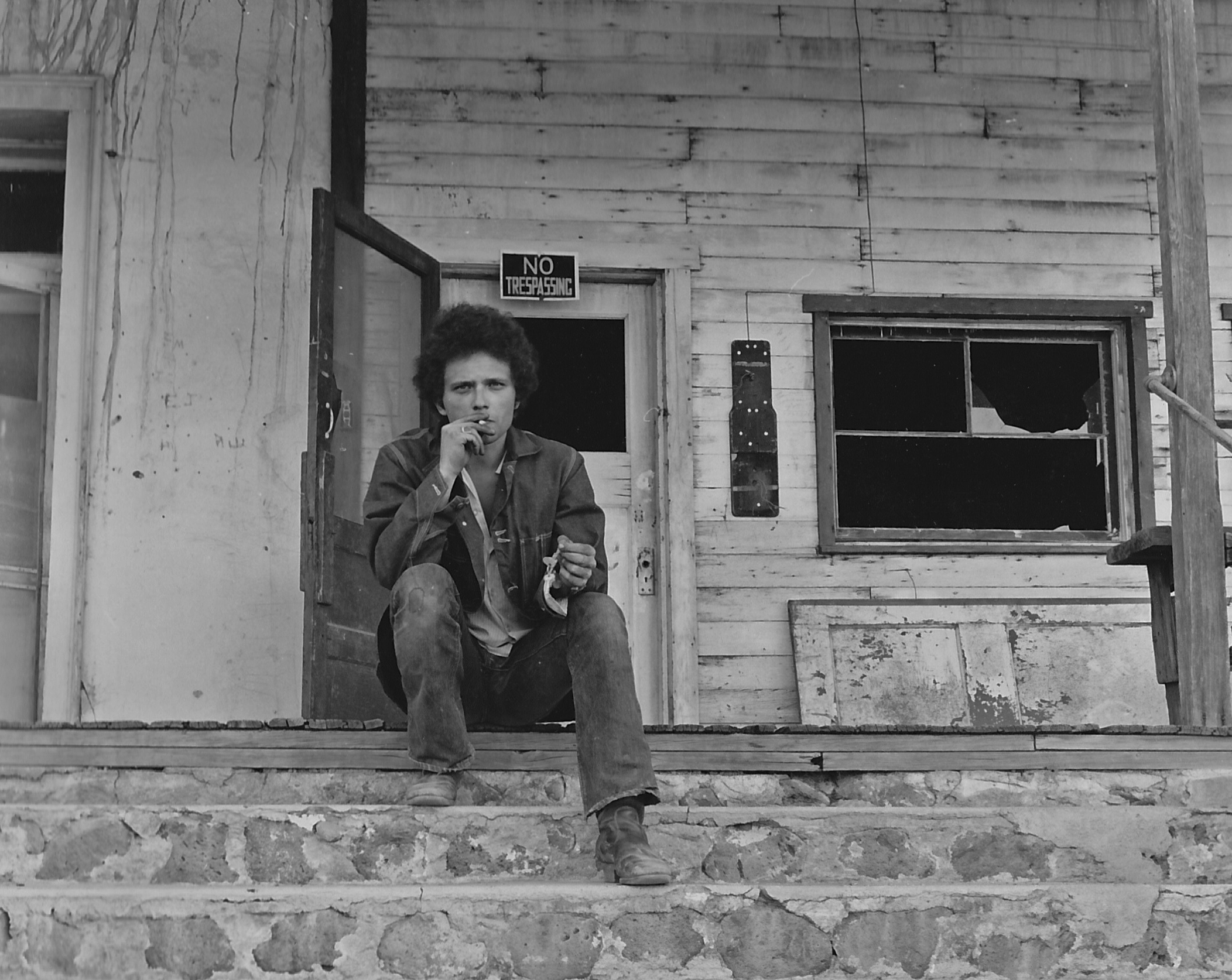
Thinking I am a bad-ass in Arizona

Seen from the right perspective, there’s a lot of good news about impermanence: because change is possible, I was not condemned to live my life as the Bob Dylan wannabe pictured above. (Actually, I’ve developed a lot of compassion for my younger selves. They simply didn’t have a clue).

With Mary in 1975
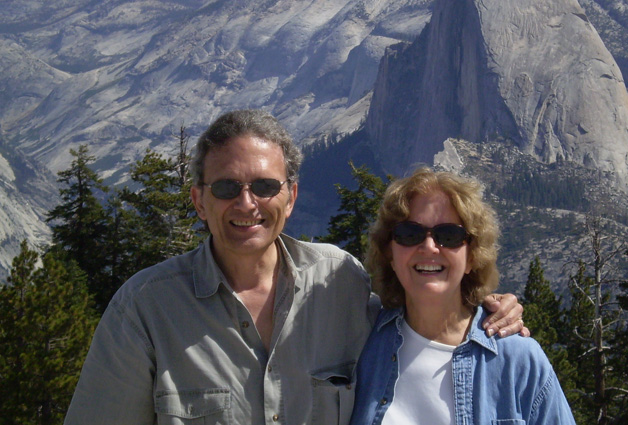
On Sentinel Dome last year

Of course it’s always hardest to watch impermanence play out with the people and things that you love:

With you I don’t hear the minutes ticking by,
I don’t see the hours as they fly,
I don’t see the summer as it wanes,
Just a subtle change of light on your face.

– Bruce Springsteen

No one would pay attention to the Buddha if all he had done was point out the problem, say, “You’re really up shit creek – good luck.” People have been seeking his solution for 2600 years. What the wisest teachers seem to say is that the solution turns out to be very simple once get it, but that it cannot be conveyed with words. Kind of like first year calculus I guess.

What can be described in words are various bits of advice and practices that will take us in the direction of ending the kind of suffering impermanence conveys. One of the practices that old photographs suggest – and this anticipates one of Buddha’s most profound teachings – is to gently pose questions like:

Where are the people in these photographs?
Where is the me in these photographs?
All these different photographs of “me” – which is the real me? All of them? None of them? Some of them? Which ones?

You get the idea.

And if the teaching of impermanence is troubling, it’s often helpful to ask, “Who (or what) is troubled? And to notice if the me who is there thirty seconds or five minutes from from now is also troubled, or is troubled in quite the same way.

Save the Words

The following link was sent by a friend some time ago, a website by the Oxford Dictionary people, dedicated to saving endangered words.

http://www.savethewords.org

It works kind of like the  endangered animal sites where you can chose an animal to adopt, but just because word-adoption is free, does not mean the situation isn’t dire!  My friend wrote: 90 percent of everything written today uses only 7000 words. That’s a little over 4 percent of the 171,476 words that are listed in the Oxford University Dictionary.

To adopt a word, follow the link and scroll around until you find a word or words that move you, and complete the online pledge:  I hereby promise to use this word, in conversation and correspondence, as frequently as possible, to the very best of my ability.

Look at all the choices!

aquabib – water-drinker
blateration – blabber; chatter
frutescent – having or approaching the habit or appearance of a shrub
latibule – hiding place
leeftail – in great demand
nidifice – a nest
pessundate – to cast down or destroy
pudify – to cause to be embarrased
quibbleism – the act of beating around the bush
squiriferous – having the character or qualities of a gentleman

I will not indulge in quibbleisim, but shall tell you directly that my chosen word is flosculation – an embellishment or ornament in speech.

Genre Soup

Genre bending and blending has gone mainstream. (Vampire-romance-coming of age tales anyone?).  It’s really not anything new (Think of The Odyssey:  paranormal-action adventure-romance), but lately it it seems to be the golden road to standing apart from the crowd, and to blockbuster sales, action figures, and movie deals – except when it doesn’t work.

I once heard a literary agent explain that one reason the first Harry Potter book was rejected 23 times was because J.K. Rowling mixed the conventions of middle-grade and young adult fiction, which was a no-no at the time.

So if you feel the urge to cross the boundaries, whaddya do?

First, realize you are in good company.  In his introduction to Stories, Neil Gaiman says: I realized that I was not alone in finding myself increasingly frustrated with the boundaries of genre:  the idea that categories which existed only go guide people around bookshops now seemed to be dictating the kind of stories that were being written.

Literary agent, Joanna Stampfel-Volpe discusses the question with advice and cooking metaphors: http://www.writersdigest.com/article/dos-and-donts-of-combining-genres.  She boils it down to some common sense guidelines.

1) Write the stories you’re dying to tell.
2) Don’t try to please everyone.
3) Know your story and intended audience well enough to identify your “base genre.”

I’d add one more, based on something I saw the first time I told a story from a stage. Almost twenty years ago, our local storytelling guild was preparing a show for “Tellabration,” a day in November set aside by storytellers around the world to bring this most ancient art form to as many people as possible. http://www.tellabration.org/

It was the first Tellabration for a young woman and me. The old timers had coached us thoroughly. My inner-ham emerged and mine went pretty well. Then it was my fellow newbie’s turn. She was telling a spooky Eskimo story called, “The Skeleton Woman,” but when she got to the first chilling moment, everyone started to laugh! The hero of the tale, a young fisherman, was out in his kayak and managed to hook a skeleton which rose to the surface and pursued him as he paddled like hell, and that image struck the audience as funny.

With no indication of how nervous she was (she’d confided to the group before we started), the woman turned on a dime, and played the story for laughs, making it up as she went along. She finished with a well-deserved round of thunderous applause.

Horror and comedy genres are not “natural” companions but ever since I saw that switch,  my fourth rule for genre – and maybe my first rule for everything else would have to be:

4) Flexibility and a sense of humor are highly recommended!

More Writing Contests

Here are some additional listings of writing contests that people have recently sent me:

  • The Writers of the Future Contest (founded by L. Ron Hubbard in 1983 for SciFi and Speculative Fiction writers), and the Illustrators of the Future Contest.  Quarterly prizes plus a $5000 annual prize in both categories: http://www.writersofthefuture.com/contest

Also, anyone interested in writing for children or young adults should seriously think of joinign the Society of Children’s Book Writers & Illustrators, aka, SCBWI:   http://www.scbwi.org

Although there are grants available to members, the primary focus is support and information, through newsletters, regional and national conferences, listings of regional critique groups, listing of online manuscript exchange opportunities, and a lot more.

Disclaimer:  I’m praising the SCBWI (it takes about six months to get the acronym straight) simply as a satisfied member.  The $75 annual fee is money very well spent IMO.

I suspect that a simple google search on “writing contest” will turn up a whole lot more, but I will post additional listings as people send them to me.

The Murder Room

 I’ve been a fan of Sherlock Holmes through his many permutations, from Basil Rathbone to Robert Downey Jr., from Arthur Conan Doyle to Laurie R. King’s novels of the wife of Sherlock Holmes, so when I caught this title on an NPR interview this morning I stopped to listen:   The Murder Room: The Heirs of Sherlock Holmes Gather to Solve the World’s Most Perplexing Cold Cases, by Michael Capuzzo.

Capuzzo writes about the Vidocq Society, a group of 82 full members (and 150 associates), all experts in the field of crime solving, who meet once a month over lunch in Philidelphia to discuss and work on solving cold cases. 

Why 82?  Because that is how many years their namesake, the French detective, Eugene Francois Vidocq (1775-1857) lived.  Vidocq was a a former criminal, “a kind of Willie Sutton,” who made a deal with the police to help them fight crime.  In the process, he founded the first private detective agency, and inspired the stories of Conan Doyle and others.

According to Capuzzo, the Vidocq Society had an initial academic focus, the way people still put forth new theories on the identity of Jack the Ripper, but after a New York Times interview, they decided to turn their talents to working on cases where resolution is possible.  Members of various police departments as well as friends and family of victims are invited to the lunch meetings, and acccording to Capuzzo, the considerable talents of these sleuths has resulted in closing some old cases (he did not say how many in the interview).

Anyway, the story is worth a listen and the book looks to be an interestingread for those with mystery and CSI type interests. 

http://www.npr.org/templates/story/story.php?storyId=129210703


A Twenty-Five Word Short Story Contest

How about a contest that is free to enter and offers prizes for your cleverest twenty-five words?  I received this announcement recently for the Gotham Writer’s Workshop, “Hint Fiction Writing Contest.”

http://www.writingclasses.com/ContestPages/hintfiction.php?utm_content=12455257?utm_campaign=Early%20Enrollment%20Offer%20-%20Save%20$30?utm_source=streamsend?utm_medium=email

As they define it, “hint fiction” is a complete story of no more than twenty-five words that hints “at a larger chain of events.” The word limit does not include the title. Here is an example given in the announcement:

Corrections & Clarifications

It was Fredrick Miller, not his murdered son Matthew, who was executed Monday night at Henshaw Prison.

The deadline for entries is October 11, one entry per person. It’s anything but easy, of course, but the interesting thing is, one can begin with almost any image or phrase that comes to mind, and create something complete from it in one sitting – who knows, perhaps the seed of something larger. After reading the announcement, the phrase, “ends of the earth” popped to mind and I sat down with a cup of coffee and a pencil and came up with a credible first draft. Beats crosswords any day IMO.

One caution: last fall I entered a “first hundred and fifty word” contest from these folks (you would already know if I’d won) and I continue to get periodic announcements from them. I’m sure there is a way to opt out, but I haven’t looked for it, since additional interesting tidbits like this come along, and there is a delete key for the rest.

LATE BREAKING NEWS:

While we’re at it, this arrived in my inbox this morning, an announcement for a more traditional (5000 word) short story contest from Writer’s Digest:

http://www.writersdigest.com/popularfictionawards

For those who delight in short fiction, why not?

Biff, Pow, Bam; how not to begin a story.

The books I most enjoy reading have one or two things in common:  characters I enjoy so much I’d rather hang out with them than do anything else and/or such a compelling plot that I resent anything – like fatigue at 2:00am – that forces me to put the book down.

At writer’s conferences, critique groups, and blogs or newsletters devoted to the craft of writing, a common piece of advice emphasizes the effort to construct a thrilling plot: “Throw out the first three chapters of your story and begin in the middle of the action or conflict.”

Here’s a refreshing take that advances the primacy of character, the factor that seems central to the few special books I read again and again.

It’s probably the most over-repeated and cliche advice—so much so that writers have come to hate hearing it: Start with action.

I’ve critiqued hundreds, maybe thousands, of first pages, and this advice is most to blame for story beginnings that leave the reader in a quivering mass of Why-the-Hell-Do-I-Care-About-This?

http://blog.writersdigest.com/norules/2010/03/11/TheBiggestBadAdviceAboutStoryOpenings.aspx

Inception

Is all that we see and all that we seem but a dream within a dream?
– Edgar Allen Poe

Romantic poets, surrealists, Freudians, Jungians, mystics of all stripes, and popular culture at least from the time of “Twilight Zone,” have questioned the solidity of the world of consensus reality, and in some cases, asserted the primacy of the dream.  Twenty-six hundred years ago, in the Lankavatara Sutra, the Buddha said:

All things, external and internal,
are imputed by the mind,
Apart from the mind nothing else exists.

Now Inception bursts on the scene with a multi, multi, multi layered texture that makes The Matrix look like linear storytelling.

Once I heard author John Barth read his story, “The Menelaid,” a frame tale with characters from The Odyssey ,  that was eight – as in “”””””””eight”””””””” layers deep.  It was something of an academic exercise but the key image that sticks was the main character meeting Proteus, the shape-changer, and afterwards, never being quite sure of the “reality” of his experience again.

Imagine that kind of concept playing through a two and a half hour action adventure epic that is five layers deep (is that right – the plane, the van, the hotel, the fortress, limbo – yep) with thrills and chills, surround sound, and computer generated stuff flying at you…whew.

There is absolutely no way I can say much about the content of the film itself after just one viewing – I’m still in the – “Oh wow, man,” phase, but one among many things that really interest me is the sophistication of current movie going audiences.  We have come to accept, ponder, and even revel in multi-dimensional ambiguity that wasn’t part of movie going when I was young.  Along with the recent success of a similar fractured reality novel The Time Traveler’s Wife (I’m not sure if the movie did as well), it’s clear that the age-old tradition of of linear storytelling, much as I love it, is only one of several options these days.