Dwight Swain’s Motivation-Reaction Units

A recent discussion in one of my critique groups sent me back to my reference-of-choice for writing fiction, the book I would probably pick if I could have only one book on writing.  This is the writing book I’ve read cover to cover twice and dipped into many other times.  It was written in 1965 and updated in 1982 by Dwight Swain, a long-time professor at the University of Oklahoma, who gave it the slightly embarrassing title, Techniques of the Selling Writer.  I’m sure he did it on purpose.  There’s a no-nonsense, let’s-get-real quality to the book; show me a writer who wouldn’t like to get paid for prose.

I went back to the text to look up one of Swain’s most valuable concepts, and hands down, the one with the silliest name: the Motivation-Reaction Unit, aka, (you guessed it) the MRU.  I think this name is deliberate too; once you get it, you never forget it.  You can look up another take on MRU’s on Randy Intermanson’s AdvancedFictionWriting.com, the site where I first heard of Dwight Swain: http://www.advancedfictionwriting.com/art/scene.php

***

Motivation-Reaction Unit is the fundamental building block of an action sequence (it’s important to stress that it does not apply do description, exposition, or reverie).  It’s pretty simple:  something happens, the hero reacts to it, the situation changes, and something else happens.  How characters react to events will largely determine their plausibility and how closely we bond with them.

There’s a lot more to it than that, of course, but this is an introduction.

The Motivation part is the easiest:  something external happens, something apprehended by the senses.  The house catches fire, a car almost hits me, the boss says, “You’re fired,” I pass a bakery and smell bread like my grandmother used to bake.  The key point here is to chose events that are meaningful to the character or the story:  a flight of Canadian geese overhead might change the life of a man in a dead-end job and a loveless marriage, who has always equated birds with freedom, but if the same man only worries about getting pooped on, why include it at all?

The Reaction component is harder:  it includes three events that Swain calls Feeling, Action, and Speech.  Ingermanson calls them Feeling, Reflex, and Speech.  I call them “Involuntary Response, Reflex, and Speech/Decision.  In real life they can be virtually simultaneous, but in fiction we need to write them sequentially.

Feeling, as Swain uses it, refers to an immediate, involuntary response –  what do you do when a horn blares behind you?  That is why I prefer “involuntary response.”  It may be physiological – you jump out of your skin at the horn, but depending on the stimulus, it could be a memory – what does the smell of the bread bring up?

Reflex or Action is a response I have some control over, and as such, will reveal more of my character than being startled by a loud noise.  I may spin in the direction of the horn with clenched fists.  Or grasp a parking meter to steady myself.  Or count to ten.  Or pull the gun from my shoulder holster.

Speech/Decision is where response is most rational.  It’s going to involve rational thought/feeling, expressed as speech or as inner dialog, and maybe a decision.  Maybe the horn-blower is Eddie Haskel, an old high school adversary.  Maybe I say, “Jeeper’s Eddie, I’ve asked you before to quit doing that,” then I slink away with bent shoulders, berating myself once again for not standing up to him.  Maybe I aim my 38 at his head and say, “This time you’ve gone too far, dirt bag!”  Maybe, if I’ve smelled grandmother’s bread, I think “There’s a poker game tonight.  If I’m lucky, I could win bus fare to get back home.”

The key point Swain makes is that we don’t need all three responses to every stimulus; two or even one will do, but, the responses must come in this order, from least-to-most “rational” to avoid confusion.  It makes no sense to say, “When I spotted Eddie Haskell, I drew my 38 and aimed at his head.  I nearly jumped out of my skin when he blared the horn.”  You get the idea.

SO WHAT???

We want readers to feel what we want them to feel, and our greatest chance is usually through the protagonist.  If the audience bond’s with our lead character, and the character’s responses to events are plausible, the audience will deeply experience what they experience.  Huck Finn, Ebenezer Scrooge, Frodo Baggins.  Swain has presented a template.  Constraining?   Yes, but like the constraints of a three act structure, or pigment on a rectangular canvas, I think there’s a lot of room for creativity within the MRU structure.

I caught myself not long ago, relying too heavily on just the immediate and largely inarticulate visceral responses of my character to convey emotional states; it wasn’t working.  When I came back to Swain I realized I had a pattern.  I realized my approach wasn’t wrong, so much as it was insufficient.  I had more work to do.  We always have more work to do – it helps when we know what it is.

RIP – Leslie Nielsen

Part of my holiday weekend was a self-imposed media blackout; often enough, it’s refreshing not to know what is going on, and so it was only this morning that I learned that Leslie Nielsen is gone.

http://www.npr.org/blogs/monkeysee/2010/11/29/131661180/remembering-leslie-nielsen-a-master-of-the-art-of-not-being-funny

There are precious few movies that stay fresh after three or four viewings, and almost any of his silly flicks will have me in stitches though I have seen them numerous times. Laughter and good humor – what a gift in this world!

http://www.youtube.com/watch?v=dTHsNVXXlus

So long, Shirley!

Good Grief – A Visit to the Charles Schulz Museum

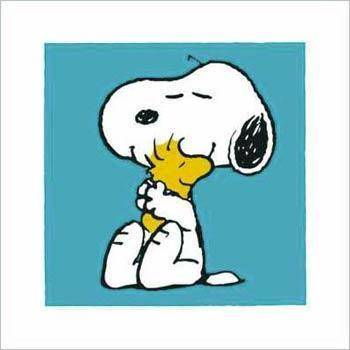
Eleven years ago, in December, 1999, we managed to round up everyone and get to the mountains for Christmas. There was good health and good cheer in abundance, and we had an exceptionally nice holiday. One of my gifts was a watch with this picture of Snoopy and Woodstock, which I still have, and which still evokes the memory of family and dogs, together, warm, and happy.

Snoopy and Woodstock

The man who gave us Snoopy and Woodstock died six weeks after that Christmas, in February, 2000. When a long-planned museum opened in his home town of Santa Rosa, it instantly became a desired destination, one of those spots I “definately had to visit someday.” Funny how many trips of thousands of miles we took, perhaps because they seemed like real vacations, before getting to this gem in our own backyard.

Snoopy, Woodstock, and Me

The displays do a fantastic job of illuminating Schulz’s creative process. Anyone who has flipped through a Peanuts picture book has seen the evolution of drawing styles for Lucy, Charley Brown, and Snoopy, but this exhibit goes a lot farther. Schulz worked out ideas using doodles and notes, often on yellow legal paper, which he tossed. One secretary recovered these crumpled drafts from the wastebasket, took them home and ironed thm flat, and now several of them are displayed beside the published comic strips they inspired. We get to see themes, characters, and narrative styles that were tried and discarded, along with some of Schulz’s comments, like:  “That was a bust,” or, “If I’d known then…”  We really get to see how the Peanuts we know and love resulted from the fifty year struggle of a man with a lot to say in a very strict medium, who developed his own unique form of visual-verbal haiku.

Charley Brown outside the skating rink

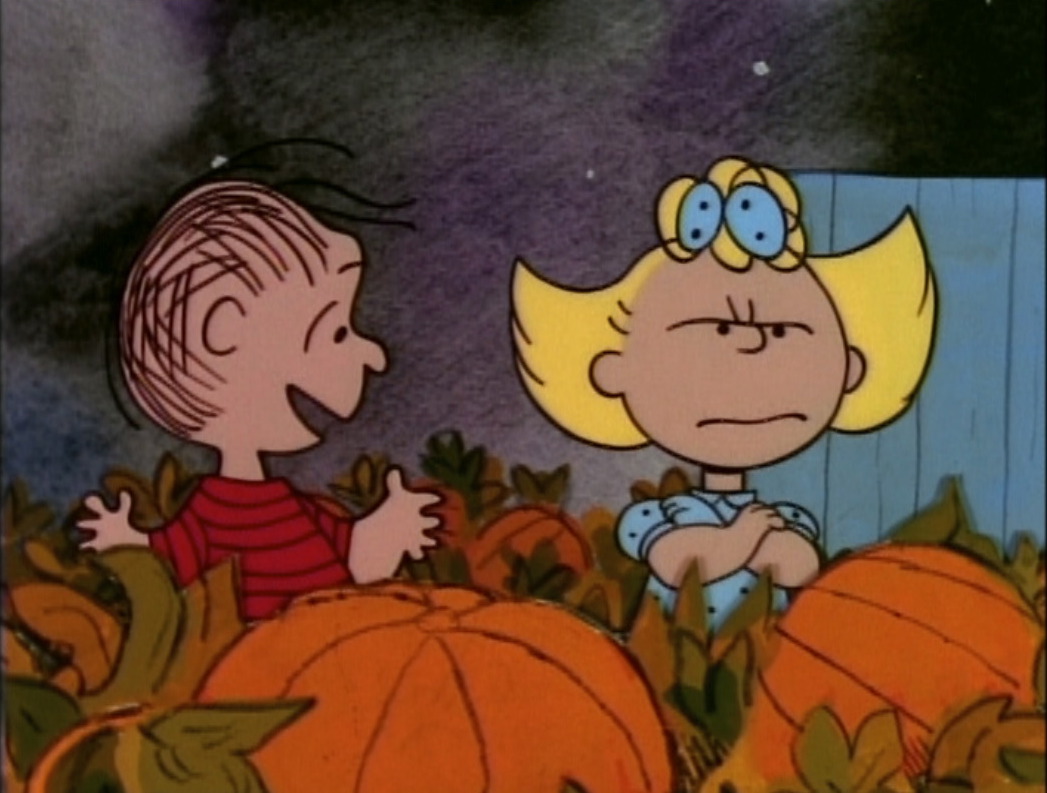
I just got up to fill my coffee cup and glanced out the kitchen window. How many rites of autumn have been forever shapped by Charles Schulz? Leaves. Football kickoffs. Hot chocolate. World series pitchers (GIANTS ROCK!!!!!!!). The eternal longing for the Great Pumpkin. And soon, our attention to the little orphan Christmas tree at the back of the lot, that nobody wants.

Waiting for the Great Pumpkin

One more hint if you visit:  the burgers at the Warm Puppy Cafe are exceptional, better than any fast food I can think of.  For those who can do it without breaking their necks, the attached ice skating rink is as fine as the rest of the facilities. 

Over by the door at the Warm Puppy is an empty table with a flower and a sign that says, “Reserved.” That is where Charles Schulz sat for lunch, where he watched the skaters and people passing outside. Where he dreamed and dreamed up a humble little comic strip that did things the medium hadn’t done before, and is still as much a part of starting the day as coffee.
http://www.schulzmuseum.org/

More on, “So Cold the River”

(Warning: spoilers ahead)

It is rare and delightful to find a book I hate to see end.  It is rarer to find a creepy book I hate to see end, and this is the first time ever I have hated to see a story end when the most compelling character is the villain.

Campbell Bradford, the villain of Michael Koryta’s,  So Cold the River, is no ordinary bad guy; he not just a bad man, he is evil. This important distinction is made by eighty-something, Edgar Hastings.  “He [Bradford] put a chill in your heart. My parents saw it; hell, everybody saw it. The man was evil.” The only fictional villain I can think of in his class – as evil and fascinating – is Hannibal Leckter in Silence of the Lambs

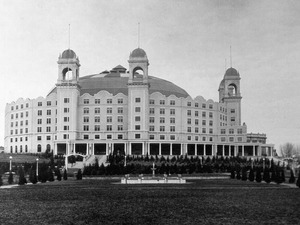
The evil Campbell Bradford is not the ninety-five year old Campbell Bradford who freaks out when hero, Eric Shaw, shows him a bottle of haunted “Pluto Water.”  This faux Bradford whispers, “So Cold the River,” and dies a short time later, sending Eric, a failed Hollywood filmmaker, to West Baden, Indiana, to learn the story of Bradford, Pluto water, and the newly restored West Baden hotel, (which actually exists), a once famous spa that was the domain of presidents, prize fighters, royalty, and gangsters.

The West Baden Hotel

The evil Campbell Bradford is a ghost, a very malevolent ghost, who possesses his great-great-grandson, Josiah, and later tries to possess Eric.  Bradford’s era is the roaring twenties, but his voice and tone suggest an earlier time.  Perhaps it is his fictional distance, the sepia toned feel of the old west that surrounds this villain, that works like the glass that allows us to watch a cobra in a zoo with an equal degree of fascination.  Imagine the Clint Eastwood of the sphagetti westerns as an angry psychopath, ready to sacrifice anything and anyone for his ambitions.  The ambitions of Campbell Bradford’s ghost drive the story.

“Look for the artifacts of their ambitions.”  That is Eric Shaw’s philosophy of documentary filmmaking, announced at the opening of the book.  The artifacts of Bradford’s ambitions are dead people. In the end, the mysterious Pluto Water, which carried Bradford’s spirit back to West Baden, allows Eric to survive his onslaught to tell the tale.

But Eric stops short of trying to unravel the whole story.  He will not seek the honey-flavored spring where Bradford lost his life.  Is the spirit really gone? Apparently. And yet, as Anne McKinney, who has devoted her life to watching the weather and waiting for the big storm cautions, “You can’t be sure what hides behind the wind.”

Sequeul anyone? I will definately read it if it comes.

A Twenty-Five Word Short Story Contest

How about a contest that is free to enter and offers prizes for your cleverest twenty-five words?  I received this announcement recently for the Gotham Writer’s Workshop, “Hint Fiction Writing Contest.”

http://www.writingclasses.com/ContestPages/hintfiction.php?utm_content=12455257?utm_campaign=Early%20Enrollment%20Offer%20-%20Save%20$30?utm_source=streamsend?utm_medium=email

As they define it, “hint fiction” is a complete story of no more than twenty-five words that hints “at a larger chain of events.” The word limit does not include the title. Here is an example given in the announcement:

Corrections & Clarifications

It was Fredrick Miller, not his murdered son Matthew, who was executed Monday night at Henshaw Prison.

The deadline for entries is October 11, one entry per person. It’s anything but easy, of course, but the interesting thing is, one can begin with almost any image or phrase that comes to mind, and create something complete from it in one sitting – who knows, perhaps the seed of something larger. After reading the announcement, the phrase, “ends of the earth” popped to mind and I sat down with a cup of coffee and a pencil and came up with a credible first draft. Beats crosswords any day IMO.

One caution: last fall I entered a “first hundred and fifty word” contest from these folks (you would already know if I’d won) and I continue to get periodic announcements from them. I’m sure there is a way to opt out, but I haven’t looked for it, since additional interesting tidbits like this come along, and there is a delete key for the rest.

LATE BREAKING NEWS:

While we’re at it, this arrived in my inbox this morning, an announcement for a more traditional (5000 word) short story contest from Writer’s Digest:

http://www.writersdigest.com/popularfictionawards

For those who delight in short fiction, why not?

Our Heroes Have No Shame

For some time I’ve been mulling over the qualities that make fictional characters unforgettable.  Among other things, they seem to like themselves and champion themselves unconditionally.  They are comfortable in their own skins.   Even when they mess up badly, they are in their own corner.  We want to be like them, be our own best friends.

Something else came to mind recently in a writing critique group, when a member’s character felt “a sense of shame.”  The phrase did not ring true.  The characters we love  do not experience shame. That goes along with being their own best friends.

The most common definition of “guilt” I have heard is remorse for something I’ve done, while “shame” is remorse for what I am.  If I feel guilty about a particular act, I can make amends, vow to change, and eventually move on.  Not so when the voices of shame tell me that is how I am.  No one growing up in our shame based culture can escape it altogether (at least not without a lot of inner work), but our heroes do.

When Frodo Baggins says, “I will take the ring, but I do not know the way,” he does not then tell himself, “I should know the way.  Why don’t I know the way?  These people do.  What is the matter with me?”

Police detective, Alex Cross,  in James Patterson’s Along Came a Spider, is supposed to exchange a ten million dollar ransom for a kidnapped girl.  He’s been set up in a complex double-cross and loses both the money and the girl.  The national media trumpet his failure.  Reporters hound him.  His superiors pull him from the case, but he maintains his internal compass:

If I had screwed up the ransom exchange in anyay, I would have taken the criticism.  I can take heat okay.  But I hadn’t screwed up.  I’d put my life on the line in Florida.

Cross, whose character is so well portrayed by Morgan Freeman in the movie, battles politics, FBI secrecy, beaurocratic red tape, and betrayal by the woman he loves to stay on the case for two years to rescue the girl after everyone else has given up.  What keeps him going?  What allows him to believe in himself in the face of repeated missteps and the worst knd of notoriety?  Whatever it is we, the readers, want some!!

One thing our special characters all seem to have is someone who believes in them unconditionally. Frodo has Sam.  Alex has his partner, Sampson, and his grandmother, Nana Mama, who lets him know when she thinks he is wrong, but is always his supporter.

Kellen, the heroine of Sharon Shinn’s young adult masterpiece, The Dream-Maker’s Magic was raised by a mother who is convinced that she is truly a boy who was somehow bewitched into the shape of a girl:

…my mother watched me with a famished attention, greedy for clues.  I had changed once; might I change again?  Into what else might I transform, what other character might I assume…She never did learn to trust me…or accept me for who I was.  It was my first lesson in failure, and it stayed with me for the rest of my life.

Even through her painful fumbling for who and what she really is, Kellen somehow keeps her balance, learns to trust her own council, and on the way, finds her ally in Gryffin, a crippled boy:

…he always greeted me with a smile and my name.  I did not bewilder or surprise him.  He did not think I as trying to be something I was not, as my mother did; he did not think I was trying to break a chrysalis and become something I was meant to be, as Betsy and Sara surely believed.  He just thought I was Kellen.
I found this the most comforting thing that had ever happened to me. At times, when I lay awake at night, confused myself about what role I should take and what direction I should try to follow, all that kept me from slipping into tears was knowing that I was not completely lost if Gryffin knew how to find me.

Something in us longs to be brave, longs to be heroic.  We want to be true to ourselves, right wrongs, bring down the forces of evil, or simply learn how to live a happy life.

As the Buddha lay dying, his disciple, Ananda, asked who would be the teacher when he was gone.  Buddha replied:

be a lamp unto yourself, be a refuge to yourself.  Take yourself to no external refuge. Hold fast to the Truth as a lamp; hold fast to the Truth as a refuge.

Whatever our philosopy, this is the way I think we want to live.  The charaters in the stories we love give us hope that it is possible.

Richard Peck’s Characters: Blossom Culp

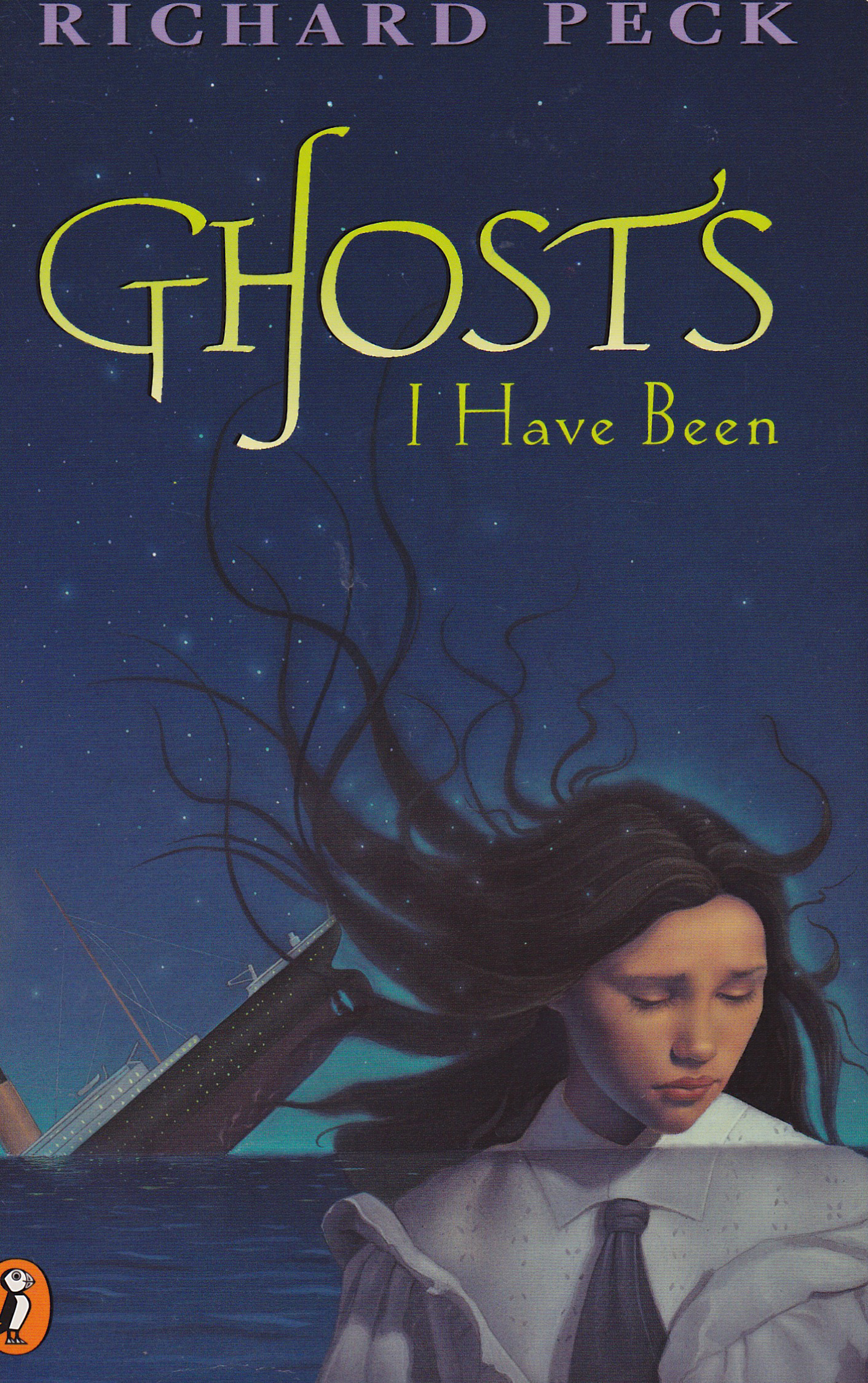
One of the most compelling story openings I know in young adult literature comes from Richard Peck’s, Ghosts I Have Been:

“I tell you the world is so full of ghosts, a person wonders if there’s a soul to be found on the Other Side.  Or anybody snug in a quiet grave.  I’ve seen several haunts, and been one myself.

When I heard Richard Peck speak of his work at a local Borders, someone asked how many times he rewrote his opening paragraphs.  “Probably seventy times, on average,” he said.  Such dedication to craft is one reason Peck’s career spans more than 39 years, includes 39 novels, a Newbery Medal, and the National Humanities Medal.

Of the many other reasons for Peck’s success, one of the most notable is his unforgettable characters.  Peck writes about outsiders, and the heroine of Ghosts, by circumstance and choice goes her own way:

There are girls in this town who pass their time up on their porches doing fancywork on embroidery hoops.  You can also see them going about in surreys or on the back seats of autos with their mothers, paying calls in white gloves.  They’re all as alike as gingerbread figures in skirts.  I was never one of them.  My name is Blossom Culp, and I’ve always lived by my wits.”

Peck, who believes that “a novel must entertain first before it can be anything else,” leads his heroine through episodes both side-splittingly funny and tragic.  Blossom’s friend Alexander Farnsworth (not that she’s sweet on him, she assures us) has fallen in with a rough crowd, who plan to go outhouse-tipping on Halloween night, 1913.  She teams up with Old Man Leverette so save his privy.  As the boys begin to push at the structure, Blossom, dressed as a ghost, jumps out:

“The candle flickered and guttered between my white veil and [Alexander’s] suddenly white face.  His arms fell from the door jamb, and he let out the high whinny of a fire-crazed horse…He keeled backwards and fell flat on the ground.  ‘A HAUNT!  I AM CURSED!’ he screamed and lay on his back like a turned turtle, with his fists jammed into his eyes.”

That’s only the start of the night’s trouble for the vandals, for Old Man Leverette is hiding nearby, his shotgun loaded with rocksalt.  Blossom has a talent for righting wrongs and what is imbalanced.  Declaring that there is more to be learned on the wrong side of the tracks than the right, she next takes on the “mean girls” of the town, members of the exclusive “Sunny Thoughts and Busy Fingers,” club.

CONTINUED