Once Upon a Time: On the Nature of Fairy Tales by Max Luthi

Why do fairytales continue to fascinate?  Why do we  think of Red Riding Hood when we find ourselves alone in the woods or even a city park?  Why does Hollywood still reap profit from retelling the old stories?  Why do they move us so deeply?

On the Nature of Fairy Tales by Max Luthi (1909-1991) is a wonderful place to begin to look under the surface of these deceptively simple tales.  The eleven essays gathered in this book explore different features of fairytales such as structure, symbolism, and meaning.  Luthi views the tales as a unique literary genre.  He knew and referred to the major schools of folklore research – the sociological, the psychological, and the comparative historical approaches – but he always returned to the stories themselves.  The meanings he found there were more than enough.

Fairytales have “a crispness and precision” in part, according to Luthi, because they eliminate most descriptions.  We hear of a dark forest, a cottage, a witch, but any and all details come from our own imagination.  In a similar way, there is no real character development.  “The fairy tale is not concerned with individual destinies,” but this lends the tales a universal meaning.  The prince or princess stands for all of us, “as an image of the human spirit.”

At its core, the fairytale is about our “deliverance from an unauthentic existence and [the] commencement of a true one.”    Prince or princess, goose girl or goatherd, all have lost their way.  Their radiance, which is our radiance, is hidden.  The kitchen lad wears a hat to hide his golden hair.

Sometimes the hero or heroine sets off into the forest alone.  Sometimes they sit and weep.  “Crying, the sign of helplessness, summons assistance – again a feature recurring in innumerable fairy tales.  Precisely as an outcast can man hope to find help.”  The caveat is that one must be kind and compassionate to all living creatures in order to find the right kind of help at the right time.  Even ants will repay a kindness that can save the hero’s life.

Luthi quotes Mircea Eliade who said that fairytale listeners experience an “initiation in the sphere of imagination.”  In Luthi’s view, fairytales echo the truths of the great spiritual traditions – both we and the world are far more than what we seem.

Pandora’s box, repression, and gun violence

From my perspective, the big news this week was the start of senate hearings on gun violence, which evoked a wide range of passions across the spectrum of public opinion.  More poignant than any testimony in Washington was the death of Hadiya Pendleton, a 15 year old honor student who performed at President Obama’s inauguration on the 21st.  The day before the speechifying began, Hadiya was shot and killed in public park in a “nice” section of Chicago, about a mile from the president’s house.  Police think it was a case of mistaken identity.

I thought of Hadiya Pendleton as I was out walking the dogs in a “nice” local park.  I remembered a lecture one of my psych professors gave 20 years ago.  We were studying defense mechanisms, and of these, repression gets a lot of bad press.  Nobody wants to be repressed or live in a repressive society.

My professor expressed an alternate view in his lecture:  repression kept a lid on many antisocial behaviors.  He quoted James Hillman who said, “What used to be the darkest dreams of Freud’s neurotic patients are now played out on our streets.”

The human psyche has not changed in 100 years, but our world has altered dramatically.  Men no longer need to wear boiled shirts, and women are free to bare their ankles.  We’ve learned to embrace the individual conscience and the search for an “authentic me,” but we don’t know what to do if someone’s “authentic me” turns out to be a sociopath.

We’ve found out the hard way that you  can’t just unrepress the good stuff.  When we let our angels out of the box, the demons get a pass too.  Which brings to mind the story of Pandora.

In order to punish humans for Prometheus’ theft of fire, Zeus sent Pandora to earth with a sealed jar (later mistranslated as “box”) and instructions not to open it.  We all know what happens in folklore with orders like that.

Pandora by John Waterhouse, 1896

By the time Pandora got the lid back on, all the evils of the world had been released.  Only hope remained in the jar.  Pandora’s dilemma is ours.

When it comes to our violent behaviors, inhibition was not such a bad thing.  Now that it’s out of the box, the question becomes, what do we do with our hope?

The Psychology of Superheroes

superheroes

Robin Rosenberg grew up with superhero comics. Later she shared them with her children, and after becoming a clinical psychologist, she studied them through the lens of psychology and discovered that “superhero stories are about morality and loyalty, about self-doubt and conviction of beliefs. I also saw that, like any good fiction, the sagas of superheroes bring us out of ourselves and connect us with something larger than ourselves, something more universal.”

Rosenberg published “We Need a Hero” in the current Smithsonian Magazine http://www.smithsonianmag.com/arts-culture/The-Psychology-Behind-Superhero-Origin-Stories-187938991.html#ixzz2IrHHrBBI.  The article inspired me to read The Psychology of Superheroes a collection of essays that Rosenberg edited in 2008 on what makes these caped crusaders tick.

Sometimes it seems that superheroes can’t get no satisfaction, but is that accurate?  Not according to the opening essay in the collection, “The Positive Psychology of Superheroes,” by Christopher Peterson and Nansook Park.  “One of the defining features of a superhero is an over-riding mission to serve the larger world and to defend it.  In this sense, superheroes have profoundly meaningful lives.”   

Peterson and Park assert that meaning is more important than pleasure in leading a satisfying life. That’s a good thing, because with a few exceptions, superheroes are challenged on the relationship front.  I’ve always thought it’s the flaws embodied in the secret identities of Clark Kent and Peter Parker that bonds us to these characters.  In one sense, they’re just like us, and their stories suggest that we too may choose the highroad.

Though superpowers isolate them from others, sometimes superheroes band together with superior results, according to the second essay in the collection, “The Benefits of a Group,” by Dr. Wind Goodfriend. This article may shed some light on why The Justice League of America functions more efficiently than your team at work or committees at church.

Another topic discussed in the book is the question of nurture vs. nature in the development of superhero psychology.  Superman may have his powers through genetics, how did he come to use them for altruistic rather than narrow and selfish ends?  Did he inherit those qualities too, or were they a result of his wholesome upbringing on a farm in America’s heartland?  What would have happened if his pod had landed in New York City?

Good and evil are usually clearly drawn in superhero stories, but not always. In “Anti-Heroism in the Continuum of Good and Evil,” Dr. Michael Spivey and Steve Knowlton discuss the ambiguous, gray-zone nature of super anti-heroes and sympathetic villains (think of Darth Vader and Gollum).  Each of the 18 essays in The Psychology of Superheroes addresses some facet of the super-psyche that you may or may not have wondered about.

Humans have relished hero tales for millennia.  Superman joined the ranks 75 years ago, and if you’ve been to the cineplex lately, you know that his saga is going to continue this summer.  The trailer for Man of Steel 2013 zeroes in on Clark’s inner struggles to understand who he is and why he is here.  Earlier incarnations of Superman did not live in a world of such moral ambiguity and mistrust of the government, themes which place this telling squarely in the 21st century.

As The Psychology of Superheroes makes clear, what we really admire is not the superpowers but the hero, the one who overcomes their doubts and demons and then acts to make the world a better place. This book is a fascinating read in its own right and will whet your appetite for the new movie.  It will give you some new perspectives on movies you’ve seen in the past as well as the comic books that once inspired some of us to run around wearing capes made out of bedsheets.

A Dilettante Among Symbols

Heinrich Zimmer (1890-1943), was a scholar of eastern art and folklore, a friend of Carl Jung, a mentor to Joseph Campbell, and the author of a classic book on the psychological interpretation of folktales.  In The King and the Corpse, 1948, Zimmer included an introduction he called “A Dilettante Among Symbols,” a name he chose to sum up his approach.  Dilettante, from the Italian verb, dilettare, means “one who takes delight in something.”  Zimmer explained that his book was for “those who take delight in symbols, like conversing with them, and enjoy living with them continually in mind.”

I discussed The King and the Corpse on this blog in December, 2011 (http://wp.me/pYql4-1vt), but I focused then on the title story rather than Zimmer’s methods of interpretation.  That is what I want to consider here.

Zimmer analyzed stories from the perspective of psychology without ever falling into psychobabble.  Jung’s theories inform his work, but knowledge of those theories is never required to understand him.  Readers of Joseph Campbell will recognize the similarity in both men’s approach, and there’s good reason for this.

In 1938, the nazi’s dismissed Zimmer from the University of Heidelberg.  He migrated to England and taught at Oxford until 1940 when he moved to New York and found a teaching position at Columbia.  Joseph Campbell attended his lectures and the two became close friends.  After Zimmer died in 1943 of pneumonia, Campbell spent the next 12 years compiling Zimmer’s lecture notes into four books, including The King and the Corpse, which Bollingen Press published in 1948.

Heinrich Zimmer, 1933 (public domain)

The King and the Corpse features Zimmer’s discussion of stories from India, from the middle-east, from Ireland, Wales, and England.  Whether in Baghdad, Camelot, or an Indian cremation ground, his tone is one of engaged curiosity.  He insisted that all attempts to systematize the living reality of symbols are doomed: “Whenever we refuse to be knocked of our feet…by some telling new conception precipitated from the depths of our imagination by the impact of an ageless symbol, we are cheating ourselves of the fruit of an encounter with the wisdom of the millenniums…the boon of converse with the gods is denied us.”

I discovered Heinrich Zimmer during my freshman year in college.  The King and the Corpse introduced me to a number of marvelous stories, and gave me a way of approaching them, with head and heart, that I rely on to the present day.

Tales of the Dummling

Many of Grimm’s fairytales begin with three sisters or three brothers who have a critical task to perform.  Invariably, the youngest succeeds.    In her introduction to a story called “The Golden Bird,” Maria Tatar, editor of the recently published bicentennial collection says: “If the female protagonists of fairy tales are often as good as they are beautiful, their male counterparts often appear to be as young and naive as they are stupid.”

“The Golden Bird” illustrates the point.  The youngest son is so hopeless that even his animal guide, a fox, grows frustrated, yet in the end, the boy wins “complete happiness.”

Not all youngest sons are so dense, and sometimes the stories have great depth, like “The Water of Life,” which I discussed here last March (http://wp.me/pYql4-1OC and http://wp.me/pYql4-1Pm).

According to Marie-Louise von Franz, Carl Jung’s closest colleague and author of five books on fairytales, the Brothers Grimm published  50-60 stories of dumb youngest sons.  Von Franz thought these stories were so important, individually and culturally, that she started her first book on folklore, The Interpretation of Fairytales 1970, with a detailed study of one Dummling tale, “The Three Feathers.”  The story is one of the better known Grimm stories, present in the new annotated edition as well.  What follows is a brief synopsis.  The tale isn’t long and those who wish can read it on Project Gutenberg: http://www.reelreality.com/fairy_tales/grimms_fairy_stories/index.html#dummling

“The Three Feathers” from the Project Gutenberg ebook edition of Grimm’s fairytales.

*** Synopsis of The Three Feathers ***

Once an aging king had three sons. Two were clever, but the third didn’t say much and was considered dim-witted.  People called him Dummling [or “Dummy” depending on the translation].  The king decided to test the boys to determine who should rule his kingdom when he was gone.   He told them whoever returned with the most beautiful carpet would inherit the kingdom.  Then he took them outside, blew three feathers into the air and told his sons the feathers would determine which way they should go.

One son’s feather flew east and another’s west, but Dummling’s feather flew straight ahead a few paces and fell to the ground.  The other brothers laughed and set out, but Dummling just sat down by the feather and waited.  Eventually he noticed a trapdoor nearby.  It opened onto a staircase descending into the earth.  The boy followed the stairs down to another door on which he knocked.  From inside a voice called:

“Maiden, fairest, come to me,
Make haste to ope the door,
A mortal surely you will see,
From the world above is he,
We’ll help him from our store.”

Inside was a fat toad, surrounded by many smaller toads.  The boy said he needed the world’s most beautiful carpet.  The toad called out to the younger ones to “bring the box for the boy at the door.”  Inside was a beautiful carpet.  Dummling carried it home, his father was astonished, and declared that he should be the next king.

“The Three Feathers” from the Project Gutenberg ebook edition of Grimm’s fairytales.

The two other brothers, who had simply bought pieces of linen from the first peasant women they met on the road, protested so loudly that the king decreed another test.  He sent his sons out to find the most beautiful ring.  Again one feather blew east, another west, and Dummling’s by the trapdoor.  The fat frog called for a box in which the boy found a beautiful gold ring.  The brothers brought rings they had made from  nails they had taken from cart wheels.

Again the king declared Dummling the winner, and again the older brothers protested.  The king’s third test was to bring home the most beautiful wife.  Dummling won a toad bride who became a beautiful human woman after he took her home.  The brothers, who had married the first peasant women they met, complained again so the king ordered a fourth test.  The brides were ordered to jump through a hoop suspended in air.  Naturally, Dummling’s wife, who had been a toad, easily won.  Dummling received the crown and he ruled “with great wisdom” for many years.

Jumping through the hoop by Arthur Rackham

Jumping through the hoop by Arthur Rackham

***

In The Interpretation of Fairytales, Marie-Louise von Franz devoted three chapters to an in depth analysis of this tale.  She believed Dummling stories reflect the situation of individuals, cultures, and institutions that get stuck when certain rigid patterns and ideas cut them off from sources of renewal.

The first thing she notes is that all the Dummling tales begin with a father and three sons but no wife or sisters.  The feminine element is missing and regardless of what he sets out to do, the most important achievement of the younger son will be to bring home a bride.  In abstract terms, that is bringing Eros into a situation overweighted with Logos.  Von Franz cites cultural examples like the importance of the cult of the Virgin Mary in the medieval Catholic church.  She also says that third-son stories:

“compensate the conscious attitude of a society in which patriarchal schemes and oughts and shoulds dominate.  It is ruled by rigid principles because of which the irrational, spontaneous adaptation to events is lost.  It is typical that Dummling stories are statistically more frequent in the white man’s society than in others, and it is obvious why that is so.”

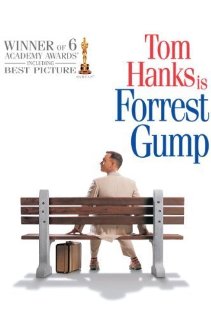
Once you start thinking along these lines, many characters spring to mind from history as well as the arts.  Saint Francis, who called himself “God’s Fool,” brought flexibility and Eros to the medieval church.  A classic movie example from recent times is  Forest Gump 1994.  Tom Hanks’ Dummling character succeeded where the smart people failed.  Gump, who lived in the moment and was close to his emotions, reacted to things as they happened rather than to his own fixed ideas.  Remember the movie’s opening shot of a feather?  If nothing else, that convinces me that Forest Gump’s creators knew the Dummling stories in detail.

Tom Hanks as a modern Dummling

Tom Hanks as a modern Dummling

Von Franz amplifies the detail of the feather, saying it was a common medieval practice in many countries.  “If someone did not know where to go, if they were lost at a crossroads or had no special plan, he would take a feather, blow on it and walk in which ever direction the wind took it.  That was a very common kind of oracle by which you could be guided.”

It isn’t as apparent in this Dummling tale as it is many others that the older brothers are modern A-types.  They don’t have time to fuss with insignificant creatures like frogs, or dwarves, or old ladies, or any of those helpful beings who guide the youngest brothers on their way.  Youngest brothers have time to listen because their calendars are clear.  They sit by their feathers or walk through the forest, paying attention and waiting for new ideas to arrive.

Von Franz used the feather analogy in discussing her method of therapy.  She said when her patients were stuck, she would listen to their dreams to see which way the winds of the psyche were blowing.  When I studied psychology, one of my teachers spoke in the same vein, of the importance of listening to the little impulse, the small thoughts that are easy to ignore, like “Oh, that looks interesting,” or “Wouldn’t it be nice to take a few hours off for a walk beside the river?”  Smart older brothers, working on their MBA’s, don’t have time for things like that, which is how they get into therapy in the first place.

I’ve heard that when he was president, Harry Truman once said, “We’re going to try X, and if that doesn’t work, we’ll try something else.”  Our government might not be so stuck if politicians dared to admit that sometimes they don’t know the answers and need to see which way their feathers blow.

Sometimes being “smart” is a greater hindrance than being “dumb,” for the key thing is to be teachable.

I came upon the Dummling stories years ago, and they often come to mind when things are stuck in my own life or in what I observe around me.  “When you don’t know what to do, do nothing,” is a common and useful bit of advice.  I sometimes restate it and say, “When you don’t know what to do, sit by your feather and pay attention.”

We have met the enemy…

The Colorado shootings will forever cast a pall over the opening day of the latest Batman movie, the kind of action-adventure fantasy many of us were looking forward to as an escape from all the other bad news that fills the papers these days.

I cannot add anything to the expressions of grief and outrage that the people of Colorado have and will make, but I heard one thing this morning that gave me pause.

The governor of Colorado said, “This is the act of a very deranged mind.”  It’s a natural thing to say, and we hear the same words after every similar tragedy.  The Texas Tower.  Oklahoma City.  Columbine.  The first thing we try to do is assure ourself that the crime was the work of a nut or monster.  The last thing we want to hear are comments now emerging from people who knew the suspect and say he seemed “really smart,” and “a nice guy.”  It’s terrifying to think that an “ordinary person” or a neighbor could do something like this.

Thich Nhat Hahn, the Vietnamese Buddhist monk who Martin Luther King nominated for a Nobel Peace Prize, was versed both in Buddhist and western psychology.  His teachings gave me the concept of “store consciousness.”

Thich Nhat Hahn

This is the part of our unconscious psyche where all possible tendencies reside, like seeds, waiting to germinate.  The ones we water with our attention, thought, and action are the ones that grow.  Like all Buddhists, Thich Nhat Hahn believes that we cannot know for sure which seeds we have watered in previous lives, but our proclivities in this life, for good or ill, give a strong hint.

Metaphysics aside, we can recognize the truth of the core concept – the seed tendencies we water are the ones that grow.  The only memorial we can make to the people who died in that theater is to stand beside those like Thich Nhat Hahn, Martin Luther King, and all men and women of goodwill of the present and past.  We can join with them in trying to give the water of attention to qualities like compassion, patience, and non-violence – the seeds we want to grow.

Those who follow this blog know how often I quote Walt Kelley’s comic strip character, Pogo, who said, “We has met the enemy and he is us.”  It doesn’t have to be that way.

Notes on Imagination and James Hillman

Here’s my dilemma:  it’s impossible for me to write about imagination without mentioning James Hillman.  Yet every time I’ve started a post on Hillman, I’ve given it up because the scope of his thought and writing, over almost 50 years, is just too vast.  Hillman died last October at 85 and a two volume work on his life and thought is underway.  Two volumes might not be enough.  So what can a blog post accomplish?  We are about to find out.

James Hillman

Three days after Hillman’s funeral, his friend, Thomas Moore, wrote, “James’s many books and essays, in my view, represent the best and most original thought of our times. I expect that it will take many decades before he is truly discovered and appreciated.  He changed my life by being more than a mentor and a steady, caring friend. If I had to sum up his life, I would say that he lived in the lofty realm of thought and yet also like one of the animals he loved so much. He was always close to his passions and appetites and lived with a fullness of vitality I have never seen elsewhere. To me, he taught more in his lifestyle and in his conversation than in his writing, and yet his books and articles are the most precious objects I have around me.”

Hillman, who served as Director of Studies at the C.G. Jung Institute in Zurich, will be remembered with Freud and Jung as one of the most original psychological thinkers of the 20th century, yet his appeal may be greater outside that discipline than it is with traditionalists in it.  He never pulled his punches.  In 1992 he co-authored, We’ve Had a Hundred Years of Psychotherapy and the World is Getting Worse.  In an interview published a year earlier, he said:

“By removing the soul from the world and not recognizing that the soul is also in the world, psychotherapy can’t do its job anymore. The buildings are sick, the institutions are sick, the banking system’s sick, the schools, the streets – the sickness is out there. … The world has become toxic. … There is a decline in political sense. No sensitivity to the real issues. Why are the intelligent people – at least among the white middle class – so passive now? Why? Because the sensitive, intelligent people are in therapy! …Every time we try to deal with our outrage … by going to therapy with our rage and fear, we’re depriving the political world of something. And therapy, in its crazy way, by emphasizing the inner soul and ignoring the outer soul, supports the decline of the actual world.”

Let me say it again:  those statements were made in 1991.

During the late 80’s, Hillman joined Robert Bly and Michael Meade in presenting a series of conferences exploring the myths and archetypes of the male psyche.  Bly’s, Iron John came out of that work, as did Hillman’s and  Meade’s concern with the genius within, (see my previous post).  This was the subject of Hillman’s, The Soul’s Code, 1997, the first and only one of his books to become a bestseller.  In it, he suggested we come into the world with a calling or destiny, the way an acorn carries the pattern of a mature oak.  Our mission in life is to realize this deeper purpose.

***

An editor once rejected an articles of Hillman’s, saying it would set psychology back three-hundred years.  Hillman said that was exactly what he was trying to do.  Soul and soul-making were his constant concerns, but not as the words are used in modern terms.  He often quoted Keats who said, “Call the world if you please, ‘The vale of Soul-making.’  Then you will find out the use of the world…”  He also repeated a fragment of Heraclitus, “You could not discover the limits of the soul, even if you traveled every road to do so; such is the depth of it’s meaning.”

Hillman did more than offer poetic metaphor; his goal was nothing less than a return to an earlier, three part formulation  of the human person, embraced by the ancients but lost to modernity.  People in earlier times conceived of soul as an intermediate faculty that inhabits an imaginal realm between the physical world of body and the disembodied heights of pure spirit.  Imaginal not imaginary, a disparaging term which suggests that soul, vision, dream, and myth are not real.  In his key work, Revisioning Psychology, 1975, he said:

“First, ‘soul’ refers to the deepening of events into experiences; second, the significance soul makes possible, whether in love or in religious concern, derives from its special relation with death.  And third, by ‘soul’ I mean the imaginative possibility in our natures, the experiencing through reflective speculation, dream, image and fantasy – that mode which recognizes all realities as primarily symbolic or metaphorical.”    

Another key point Hillman makes is the primacy of image in the life of the psyche:  Speaking of Jung he says:

“He considered the fantasy images that run through our daydreams and night dreams, which are present unconsciously in all our consciousness, to be the primary data of the psyche.  Everything we know and feel and every statement we make are all fantasy-based, that is, they derive from psychic images….Every notion in our minds, each perception of the world and sensation in ourselves must go through a psychic organization in order to ‘happen’ at all.  Every single feeling or observation occurs as a psychic event by first forming a fantasy-image.” 

***

At the start of this post, I wondered what I could say in a brief article about a prolific and protean thinker like James Hillman.  Inspire someone to learn more, I hope.  A good place to begin is A Blue Fire, a collection of key writings, edited by his friend, Thomas Moore.

Here are some noteworthy links:

The New York Times obituary:  http://www.nytimes.com/2011/10/28/health/james-hillman-therapist-in-mens-movement-dies-at-85.html?_r=1

“On Soul, Character, and Calling” by Scott Landon, published in The Sun, July, 2012: http://www.scottlondon.com/interviews/hillman.html

A tribute by his friend, Michael Ventura, a journalist, who asks, “What do you say about an intellectual genius who learned to tap dance in his 60s?”   http://www.austinchronicle.com/columns/2012-01-13/letters-at-3am-james-hillman-1926-2011/

A remembrance by Thomas Moore: http://www.huffingtonpost.com/thomas-moore/james-hillman-death_b_1067046.html

I have more to say, but this is enough for now.  I’ll end with a message Hillman sent to his friends during the last few weeks of his life, when he finally became too ill to work:   

“I am dying, yet in fact, I could not be more engaged in living. One thing I’m learning is how impossible it is to lay out a border between so-called ‘living’ and ‘dying’.” 

I think Moore is right – it will take decades to fully appreciate the scope of Hillman’s life and work, but there’s no reason not to begin right now.

The Serious Business of Play

As I worked on the previous post and began to envision a series of articles on imagination, the July-August issue of the Smithsonian Magazine arrived with a piece that fit the theme.  In “Why Play is Serious,” Alison Gopnik, a leading researcher in cognitive development, says play is “a crucial part of what makes all humans so smart.”

Alison Gopnik

Many of us intuitively know that play matters, but Gopnik and her colleagues at UC Berkeley have new theories and research on why it’s so important.  http://www.smithsonianmag.com/science-nature/Let-the-Children-Play-Its-Good-for-Them.html

How is it that very young children learn so much so quickly?  Gopnik’s research focuses on pretending, which she calls “counterfactual” thinking.  She gives the example of Einstein wondering what would happen on a train traveling at the speed of light.

Gopnik found that “Children who were better at pretending could reason better about counterfactuals – they were better at thinking about different possibilities.  And thinking about possibilities plays a crucial role in the latest understanding about how children learn.”

Photo by Don Bergquist, licensed by Creative Commons

Ms Gopnik is concerned about policymakers who “try to make preschools more like schools.”  In hard times, “frivolous” programs are always the first to go – disciplines like the arts, music and humanities – the very ones that stretch imagination and encourage us to envision new possibilities.

public-domain-image.com

By the time we are adults, we’ve learned how to sideline play in order to get down to business.  Even – or perhaps especially – in the creative realm, it’s no simple matter to let go of goal-oriented behavior when competition in the marketplace is so stiff.  Working for concrete or pre-defined results is the antithesis of the kind of free experimentation that opens up new vistas.

Some sort of strategy is usually needed for us to approach the unselfconscious freedom of children at play, but it doesn’t need to be anything dramatic.  At the end of his life, Joseph Campbell said an hour a day in a quiet room with a favorite book or a journal is enough for us to step into sacred space where the real hero’s journey always takes place.

Simple but never easy.  In a recent post on his own blog, Michael Meade quoted these marvelous lines penned by E.E. Cummings:

“To be nobody-but-yourself — in a world which is doing its best, night and day,
to make you everybody else — means to fight the hardest battle which any
human being can fight; and never stop fighting.”

The fact that the battle is hard is all the more reason why we cannot afford to forget how to play.