An Author’s Guide to Publishing in 2012 – A Guest Post by Amy Rogers, Part 2

This is the second part of a guest post outlining ways writers can understand and respond to the rapid changes in the world of publishing.  If you haven’t read Part 1, I suggest you start with that post, which immediately precedes this one.

_____________________________________________________________________

An Author’s Guide to Publishing in 2012 – Part Two, by Dr. Amy Rogers

Part 2: Indie Publishing

Take all of the above and add another, less glamorous tech advance: print-on-demand publishing.  What you get is a slew of new publishing options.  Traditional New York-based publishers (now consolidated into six major houses with many imprints) used to be the only game in town.  What was once derisively called vanity publishing has become “indie”, and indie publishing encompasses a wide range of approaches.

Self-publishing:

This is the buzzword on everyone’s lips, but what does it mean?   I find that many people use the term “self-published” to broadly describe any book in any format that does not have the imprimatur of a Big Six publisher.  This fails to account for the various degrees of self-publishing and also the new professional indie publishing options out there.

1.  A truly self-published book is written, edited, designed, formatted, and distributed all by the author.  The main advantages of this approach are total control and minimal financial expense (though the investment of time may be substantial).  Some writers create their own publishing company to do this.  However most self-pubbing authors hire out at least some the non-writing tasks.  In fact, the majority of “self-published” titles were published by a subsidy publisher chosen and paid for by the author.

2.  Subsidy publisher

A subsidy publisher is a company hired by the author to turn his text file into a paper or digital book.  In most cases, the subsidy publisher provides online distribution but NOT to bricks-and-mortar bookstores.

With subsidy publishing, the author pays out of pocket for all expenses.  The cost and services provided vary a lot, so it pays to shop around.  Unlike old “vanity” publishing, print on demand technology frees the author from having to pay in advance for a print run of books that might never sell.  This keeps the costs low relative to the old days.  In this model, the author is the publisher’s customer.

The next step closer to a traditional publishing arrangement is assisted self-publishing where the author does not pay the costs upfront but rather shares future royalties with the service provider.  This means the book has to be good enough that somebody is willing to take a modest financial risk in publishing it.  Several literary agencies are now offering this type of “consulting” service to their existing clients in exchange for a commission.

3.  Not self-pub: Small presses

A small press is any traditionally-structured publisher that is not owned by the Big Six.  University presses, regional presses, niche publishers and others fit in this category.  Such companies may only publish a few titles per year.  The key distinction that makes this “not self-pub” is the publisher, not the author, pays the costs of getting the book out there.  In this model, booksellers and readers are the publisher’s customers.  Unlike self-publishing, the author must provide a manuscript that is deemed commercially viable on at least a small scale.

4.  Digital-only full-service publishers

This category didn’t exist until a few years ago.  Digital-only publishers operate like small presses but release their titles only in e-book formats.  This keeps their costs lower and allows them to take on riskier projects—such as first novels—that may not sell enough copies to catch the attention of a Big Six imprint.  My own publisher, Diversion Books, is a leader in this category.

With Diversion, the author retains the right to self-publish in paper.  This creates an interesting situation: my science thriller Petroplague is currently on sale with two different covers and two different publishers.  One cover is for the professional e-book with Diversion; the other cover is on the paper books I produced at my own expense with the help of a subsidy publisher.

One size does not fit all in publishing these days.  Indie authors can choose to learn a variety of non-writing skills and publish their books themselves, or they can hire others to do it for them.  If the book is marketable and the author is willing to split royalties, a small press or a digital-only publisher may be an alternative to the Big 6.  For the first time in the history of the book, barriers to entry are low and every writer has the power to bypass the gatekeepers and put his or her words in the hands of readers.

—–

Amy Rogers is a Harvard-educated scientist, educator, and critic who writes science-themed thrillers. Her debut novel Petroplague is about oil-eating bacteria contaminating the fuel supply of Los Angeles and paralyzing the city.  She is a member of International Thrillers Writers Debut Class (2011-2012).  At her website ScienceThrillers.com [there’s a link on thefirstgates blogroll], Amy reviews books that combine real science with entertainment.  You can follow Amy on Twitter @ScienceThriller or on her Facebook fan page http://www.facebook.com/pages/Amy-Rogers/202428959777274

_____________________________________________________________________

Please stop by Amy’s blog, ScienceThrillers.com, to leave a comment if you enjoyed this series.  While you are there, take a look at the features, sign up to receive the newsletter, and enjoy the reviews of a number science-related thrillers, ranging from The Hound of the Baskervilles to Jurassic Park.  

An Author’s Guide to Publishing in 2012 – A Guest Post by Amy Rogers

Last September, I wrote an enthusiastic review of Petroplague by Amy Rogers http://wp.me/pYql4-1ep. With a PHD in microbiology, Dr. Rogers is uniquely qualified to bring her considerable writing skills to bear on a thriller in which an oil-eating bacteria ravages Los Angeles.  Airplanes fall from the sky.  Millions of cars stall on the streets and freeways.  No food deliveries.  No ambulance, police, or fire service as a greedy corporate criminal and deluded eco-terrorists strive to suppress a solution.

On two occasions, New York agents represented Amy Rogers’ work but were unable to sell it.  With a keen understanding of the turmoil in traditional publishing, Amy decided to take matters into her own hands.  After I posted my review, I invited her to write a summary of her experience for us.

Last week I received an email saying she’d finished a “5,000 word treatise” on current publishing options for writers.  This will form the basis for her presentation at the June meeting of the Sacramento California Writer’s Club branch.  She graciously sent a 1500 word, abridged version, for thefirstgates.  I am delighted to be able to share her account, for I think her observations and experiences can serve as as Ariadne’s thread as we work our way through the current publishing maze.

Because of the length, I am going post this article in two parts.  Meanwhile, I invite everyone to visit Amy’s blog, Science Thrillers.com (listed on my blogroll), and to follow her on Twitter at, @ScienceThriller.  Also, check out her Facebook fan page, where you’ll see that she has been invited to participate in the New Author’s Breakfast at the Left Coast Crime 2012 conference in Sacramento at the end of the month. http://www.facebook.com/pages/Amy-Rogers/202428959777274

And now, without further delay…

_____________________________________________________________________

An author’s guide to publishing in 2012 by Dr. Amy Rogers

Part 1: What’s going on with publishing today?

Book publishing is undergoing a revolution unlike anything seen since the invention of moveable type, an explosion of diversity in the paths leading to publication.  After centuries in a desert of limited choices, writers now have a rainforest of options to get their work in front of readers.

But the changes are so profound and happening so rapidly, many writers can’t keep up with the business.  We’re writers, so we write, but what then?  The simple formula—write book, sell rights to a print publisher, collect royalties—doesn’t apply to the majority of published books today.  Is this a bad thing?

The big changes in publishing are both challenge and opportunity.  Whether the changes are “good” or “bad” depends on where you stand.  In this series, I’ll first summarize some of the major trends in the book business that are affecting the way books get published and sold.  In the second, I’ll discuss how writers seeking “publication” of their work can navigate the path that’s right for them.

So why does the publishing business feel like a Kansas farmhouse in a tornado?  Simple: technology.  Digital disruption devastated the music industry; now it’s rolling over publishing.  The end results for various stakeholders (authors, publishers, readers, retailers) are far from certain.

1.  Ebooks

Top of the list of disruptive technologies: e-books.  Amazon’s Kindle e-reader is now in its third or fourth generation.  The critical $100 price point has been breached (a Kindle now costs as little as $79).  Barnes & Noble’s Nook e-reader and tremendous numbers of Apple’s iPad plus various smartphones (which can also be used as e-readers) give millions of Americans easy access to e-books.  (Not to mention ubiquitous laptop and desktop computers, which can be used to read e-books, though uncomfortably.)

How rapid is the rise of the e-book?  The Economist reports that in the first five months of 2011, “sales of consumer e-books in America overtook those from adult hardback books” and “amazon now sells more copies of e-books than paper books”. http://www.economist.com/node/21528611 Granted, Amazon’s experience does not represent the entire bookselling business, but it is significant.  In my own genre—thrillers—over half the books sold are now in digital formats.

2.  Distribution

Digital technology is changing the way books are distributed.  Obviously, e-books can be sold online—from anywhere in the world, to anywhere in the world, no neighborhood bookstore required.

But it’s not only e-book sales that are affected by digital tech.  The emergence of amazon as a global book retailer with no physical presence in communities has also changed how paper books are sold.  People are shopping for paper books over the Internet and getting them shipped.  Neighborhood and mall bookstores are struggling.  Browsing is nice, taking your book home with you on the spot is nice too.  But amazon’s price advantage is killing these stores.  The giant online retailer subsidizes much of its bookselling business, has smaller fixed costs, and still dodges sales tax in most states.

3.  Publicity

The best way to get a person to buy a book is word of mouth: a trusted source, whether a friend or a reviewer, mentioned the book.  Digital technology—the Internet and “social networking”—is truly revolutionizing word of “mouth”.  Successful book marketing is increasingly based in this virtual world.  Book bloggers, readers’ collectives like GoodReads and LibraryThing, Facebook, Twitter, book trailers on YouTube—this is what sells books.  Reviews remain critical, but the traditional venue—newspaper sections devoted to in-house book reviews—is vanishing.  Only a few papers still publish their own book reviews, and generally these reviews are few in number.  So authors and publishers must go online to get reviews and build “buzz” around a title.

_____________________________________________________________________

Section two of Dr. Amy Rogers, A Writer’s Guide to Publishing in 2012 will be featured in my next post.

The Shape-Changer’s Wife by Sharon Shinn: A Book Review

I’ve enjoyed several young adult fantasies by Sharon Shinn and reviewed one of them here http://wp.me/pYql4-iQ.  Before she published her first YA book, Summers at Castle Auburn, in 2001, Shinn had a solid reputation as an adult fantasy writer.  I recently finished her first novel, The Shape-Changer’s Wife, which won the Locus award for Best First Fantasy Novel in 1995. Shinn was nominated for the John W. Campbell Award for Best New Writer that year.  On top of these honors – all well deserved – long time readers of this blog will know I am fascinated by stories of shape shifters (check out three posts I wrote on the theme in Feb., 2011).

At the start of The Shape-Changer’s Wife we meet Aubrey, a young man with a sunny disposition who is already on his way to becoming a skilled magician. His master sends him to study with Glyrenden, highly skilled in the art of shape-changing:

“Learn everything he teaches you so well you can cast his own spells back at him,” the old wizard had said. “Glyrenden respects only those stronger than he is, and those he hates. If you cannot beat him, he will destroy you.”

With the optimism of youth, Aubrey brushes the warning aside and sets out. Even when local villagers react to Aubrey’s request for directions with narrowed eyes and cold responses, his hunger to learn drives him on.

Shinn is masterful in building a sense of menace, which begins the moment Aubrey steps into the 3″ of dust that cake the entry way of the shape-changer’s house.  It builds when he meet the uncanny servants – Orion, covered with hair except for his eyes and nose, and Arachne, a woman who fights a loosing battle against the dust, while muttering curses and shooting everyone hostile glances.  Above all, Aubrey is fascinated by Lilith, the shape-changer’s wife, whose emerald eyes seem to see right through him, who is silent and self-contained, and doesn’t react to anything like any other woman he’s ever met.

Shinn’s presents magic as matter-of-fact.  Shape-changing sounds dramatic to Aubrey, so he is dismayed when Glyrenden hands him piles of books on anatomy and science and makes him practice hours of concentration exercises.  “How can you change into something you don’t understand in all of it’s details,” the shape-changer asks.  In Shinn’s books, magic is seldom dramatic.  More often, it forms an atmosphere like the felt danger offstage in a Hitchcock movie.

By the middle of the tale, Aubrey is hopelessly in love with Lilith, even as he perceives that “She seemed to be fashioned from the idea of a woman, and not to be a woman at all.”  This and other related perceptions lead him to pierce the secret of Glyrenden’s house – why the townspeople fear him, and why no bird or animal will come anywhere near the wizard’s dwelling.  Aubrey learns that the only way to undo Glyrenden’s “barbaric spells” is to kill him or become a better wizard, and even if he succeeds, the spells may prove too strong to break.

“I came to magic with joy.” Aubrey says.  “I thought it was a splendid thing to take the well of power that I found within me and shape it to marvelous uses…But magic, I have discovered…is not inherently good in itself.  And some of it – yes, some of it is inherently evil.  There are wicked spells, savage spells, enchantments that are so black that even to know them withers the heart just a little, taints the soul.  And yet to be a great magician, to be a sorcerer of any ability or renown, those spells must be learned as well.  For if a magician does not know them, they can be used against him.”

With measured pace, Shinn has brings us through her imagined world to one of our oldest stories, that of tasting the fruit of the Tree of Knowledge.  The Shape-Changer’s Wife is also a love story, but told with a kind of restraint that is rare in the fantasy genre.

You seldom see titles by Sharon Shinn on the shelves of Barnes&Noble, and never her YA titles.  At first glance, her books are not the stuff of blockbuster series and lucrative movie deals, though I can see them as moody, gothic dramas.

Shinn is a wizard in her own right.  Beyond the pleasure I’ve gained from six of her novels, I return to them often to study the masterful way she can weave character and atmosphere into stories I cannot forget.

Sharon Shinn

King of Morning, Queen of Day by Ian McDonald: An Appreciation

My recent discussion of unlikely mentors and guardians http://wp.me/pYql4-1J8 reminded me of Tireseas and Gonzaga, two “mystical vagabonds” (book jacket description) in one of the best fantasy novels I’ve ever read.

Ian McDonald, a visionary author who lives in Belfast, published  King of Morning, Queen of Day in 1991.  I still pick it up to read certain passages or a random chapter, to study and enjoy the ideas, the writing, and characters.

The narrative follows three women of three generations who are alternately attracted and attacked by creatures of the Mygmus, a technical name for the infinitely overlapping worlds of Faerie.

“The Mygmus may be viewed not so much as a place, a spatio-temporal relationship, a quasi-Euclidean geometrical domain, but as a state.  The concept is a familiar one in modern quantum physics, in which time is not considered a dynamic process, but a succession of recurring states eternally coexistent.  Such thinking liberates us from our essentially linear concepts of time, with past, present, and future.”  So reads a manuscript given to one of the women by a strange group of deformed, “Midnight Children.”

The first of the women, romantic, Edwardian Emily, dreams of a faerie lover and seeks him out.  First her rapes her, and then she disappears.

Gonzaga and Tireseas help Emily’s daughter, Jessica, battle free of the otherworld threat, which is personified by her mother, who has become a demonic force.

Jessica’s daughter, Enye, modern young woman in Dublin, battles Otherworld manifestations at night with martial arts swords.  Gonzaga and Tireseas charge her blades with high tech wizardry as well as ancient charms that allows her to win her way into Faerie, redeem her grandmother, Emily, and return to modern day Dublin.  The author gives the ending a contemporary twist that I won’t reveal here.

McDonald’s characters are among the most vivid in any novel I can remember, painted with a sure touch both in broad stroke and detail.  Every December, for instance, I reread “Enye’s soliloquy” – my name for it, with a nod to Molly Bloom.  It’s her internal monologue, in response to the question, “Wouldn’t it be nice if we could have Christmas all year long?”  It’s a long single sentence paragraph – not quite as long as the one that ends Joyce’s Ulysses, but then Joyce doesn’t make me laugh out loud.  I’ll quote the whole thing next December.

With his first book, Desolation Road, 1988, Ian McDonald won critical acclaim, and an Arthur C. Clarke award nomination.  Like other cyberpunk authors at the time, his vision of the impact of  technology at the birth of the internet age continues to amaze.  As a quick aside in King of Morning, Queen of Day, McDonald throws out a challenge to fantasy writers that has largely remained unanswered in the 21 years since it was written.  In the same manuscript that defined the Mygmus, Enye reads:

“I have this dread that…somehow we have lost the power to generate new mythologies for a technological age.  We are withdrawing into another age’s mythotypes, an age when the issues were so much simpler…and could be solved with one stroke of a sword called something like Durththane.  We have created a comfortable, sanitized pseudo feudal world of trolls and orcs and mages and swords and sorcery, big-breasted women in scanty armor and dungeon masters; a world where evil is a host of angry goblins threatening to take over Hobbitland and not starvation in the Horn of Africa, child slavery in Filipino sweatshops, Colombian drug squirarchs, unbridled free market forces, secret police, the destruction of the ozone layer, child pornography, snuff videos, the death of whales, and the desecration of the rain forests.

Where is the mythic archetype who will save us from ecological catastrophe, or credit card debt…where are the Translators who can shape our dreams and dreads, our hopes and fears, into the heroes and villains of the Oil Age?”

Ian McDonald

I haven’t kept up with the work of Ian McDonald in the two decades since I first read King of Morning but returning to the book via the characters of Tireseas and Gonzaga reminded me to do so. McDonald published Planesrunner, his first YA fantasy, in December, 2011. Here’s the blurb:

“When Everett Singh’s scientist father is kidnapped from the streets of London, he leaves young Everett a mysterious app on his computer. Suddenly, this teenager has become the owner of the most valuable object in the multiverse—the Infundibulum—the map of all the parallel earths, and there are dark forces in the Ten Known Worlds who will stop at nothing to get it.”

I don’t know about anyone else, but this is my very next read.

An Interesting Take on the Publishing World

I’ve been following Kristen Lamb’s blog for a while.  I’ve picked up some useful writing tips, like the recommendation that led me to Save the Cat. http://wp.me/pYql4-1BC.

Ms. Lamb is also a keen observer of changes roiling the publishing industry, and her latest post is worth a look by anyone with an interest in that world.  The post is called,  “Bracing for Impact – The Future of Big Publishing in the New Paradigm.” http://warriorwriters.wordpress.com/2012/02/15/bracing-for-impact-the-future-of-big-publishing-in-the-new-paradigm/

The author makes several key points:

  1. The music industry was the first to get steamrolled by new technology.  They buried their heads in the sand and thought their customers were music stores when they really were music lovers.  I don’t buy CD’s anymore, do you?
  2. Kodak went bankrupt because management thought they were a film company.  They forgot the vision of George Eastman, their founder, who knew their customers cared about pictures, not film.
  3. Finally, Ms. Lamb quotes a startling line in an Author’s Guild report:  “For book publishers, the relevant market isn’t readers (direct sales are few), but booksellers.”   I read this a few times and found the analogy to a car wreck very appropriate. 

Ms. Lamb offer suggestions to traditional publishers – the same message she sent to their headquarters in the past, to no avail.  For instance, what if the Big Six developed their own ebook divisions where new authors could get a launch, and a print contract later if online sales were strong?  Why couldn’t they design apps for smart phones and e-readers, and set them up so that indie bookstores could help customers with downloads and get a commission in the process?

There’s much in this post of interest, including a link to another blog that details the latest turf war between Amazon and everyone else.   Everywhere you look are signs that traditional publishing has hit an iceberg.  Kristen Lamb, among many other things, does an excellent job in helping us sort this out.

Angels Incognito

The local California Writer’s Club branch hosts an annual short-short story contest every year.  I hadn’t intended to enter until this morning when one of those end-of-the-night inspirations slipped into awareness.  A story idea:  A reprobate is convinced that “they” are stealing our memories, and he is probably right.

I wrote the opening with relative ease.  We’ll see how it goes; openings are easy, but I also have a great fondness for this kind of character – the guardian or the wise one whose appearance is humble or even repulsive.  You meet him – he is most often male – in various guises in movies and fiction:

Mel Gibson in "Conspiracy Theory," 1997

He is found  in myth and scripture.  John the Baptist is a classic example, who must have dismayed a lot of the city people who came out to hear him.

John the Baptist

Tilopa, (989 – 1069) one of Tibetan Buddhism’s greatest teachers, was expelled from a monastery and made his living as a sesame pounder, a pretty low rung on the social ladder.

Tilopa

Once in a while, you meet someone like this in real life.  I read an account by a man who wanted to go to India in search of a guru, but then found his teacher, a Zen master, earning his living by fixing washing machines in a laundromat 12 miles away.

When my wife was a social worker at Loaves and Fishes, a local center that helps the homeless, she was startled one day as a small hispanic man climbed out of a dumpster in a parking lot. Significantly, his name was Jesus. Mary’s eye’s still light up when she tells what a joyful man he was.  The meeting was so unexpected, but left such a vivid memory, that she thinks of him whenever the subject of angels comes up.

These reflections led me to think of one of my all time favorite fantasy novels, King of Morning, Queen of Day, by Ian McDonald, 1991.  The story features a pair of otherworldly guardians who look a lot like bums as they craft powerful magical charms from bottle caps and debris.  McDonald came to mind when he published his latest novel in December.  I haven’t yet read the new one, but I’ll discuss King of Morning next time.

Meanwhile, has anyone else encountered an angel, a wise man or woman, a mentor or a guardian who showed up disguised as an “ordinary” person but then turned out to be anything but?

Gaia’s Secret by Barbara Kloss: A Book Review

I met Barbara Kloss a year ago at a California Writer’s Club workshop. We talked during the breaks, and later traded a few emails, based on a shared interest in young adult fantasy, but we lost touch when she and her husband moved to Phoenix.

Last fall, when Barbara emailed that she had published her first novel to Smashwords, I offered to review it here.  Due to the holidays and a penchant for multi-tasking, I am only getting to it now.

Daria Jones lives on a ranch outside of Fresno.  Her biggest worry is talking her overprotective father into letting her go away to college – that is, until her father disappears, and two non-human creatures show up at the ranch to kill her.  Family friends she has known all her life hustle her through a portal into Gaia, a world where magic not only works but can easily get you killed.

Gaia’s Secret introduces an appealing heroine whose 21st century sensibilities do not mesh well with the her destiny as a “special” child who was hidden away for her own safety.  Daria reacts as we might, with anger and fear, as all of her certainties crumble.  She doubts herself, her sanity, and her friends in turn.  It is her human failings, her pouts and impetuous actions, that make her so appealing, and save her from the “secret princess” cliche of so much YA fiction.

Early in the story, an ally of Daria’s father plays chess with her as her party hides from pursuit.  “You learn a lot about a person by their strategy,” he says.

“What about a person who has none?” Daria asks.

“Having no strategy is still a reflection of character,” her father’s friend replies.  “You’re impetuous and you don’t understand the consequences of your actions.  And you don’t have the patience to learn, which prevents you from making good decisions.”

Daria fumes but later admits that he’s right as her party ventures farther into a magical world where bad decisions become increasingly dangerous.

Structured along the lines of Joseph Campbell’s hero story, Gaia’s Secret also appeals as a quest tale and a romance, thought Daria’s temper and “bad decisions” lead to muddles on all fronts.  They ultimately deliver her into the hands of the traitor who started by sending assassins to kill her on earth.

Can Daria harness her newly emerging and uncontrolled magical powers in time to save herself, her father, and friends?  Since Ms. Kloss has said on her website that she is working on the sequel, I don’t think it’s a huge spoiler to say the answer is yes. http://scribblesnjots.blogspot.com/

Author, Barbara Kloss

Daria attains her quest in the end.  She and her father are reunited in safety.  She and her heart throb finally admit their love for each other, but that doesn’t mean things end happily ever after.

The world of Gaia is ruled by a king, and though it’s a magical world, as a young woman at court, Daria has far less freedom than she did in Fresno.  When temper overrules caution, and she mouths off to the king, she winds up with guards outside her door – for her “protection,” and no chance to marry the man she loves.  Good thing a sequel is coming.

A click on the book at the top of this post will take you to Smashwords where you can read the opening pages.  Those who enjoy  YA fantasy will probably choose to download the rest of this lively story with its feisty and endearing heroine.

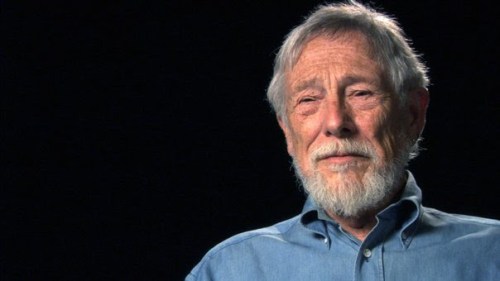
For All, by Gary Snyder

Gary Snyder

Fascinating as it can be, focusing on politics, as I have been doing lately, can overwhelm the thoughts with all that is wrong.  Take a step back, and the question becomes what is right?  And also, what isn’t touched by any of that?

Watching something that’s always right – the dogs running around the yard – I thought of this poem by Gary Snyder.  For All has long been one of my favorites, and it seems especially important now:  “I pledge allegiance to the soil of Turtle Island…”

For All

Ah to be alive
on a mid-September morn
fording a stream
barefoot, pants rolled up,
holding boots, pack on,
sunshine, ice in the shallows,
northern rockies.

Rustle and shimmer of icy creek waters
stones turn underfoot, small and hard as toes
cold nose dripping
singing inside
creek music, heart music,
smell of sun on gravel.

I pledge allegiance

I pledge allegiance to the soil
of Turtle Island,
and to the beings who thereon dwell
one ecosystem
in diversity
under the sun
With joyful interpenetration for all.

(from Axe Handles, 1983)