Career Suggestion for Newt: Science Fiction Writer

The Republican reality TV show is basically over.  The biggest difference I see between the “debate”/primary sideshow and American Idol is that I don’t think the winner of Idol is predetermined.

While the rest of us bit our nails once or twice as illusion kicked in and it seemed for a moment like Perry, could conceivably get elected, the men behind the curtain had their moment of fear in South Carolina.  You could almost hear Romney and the Republican honchos mutter, like Apollo Creed in Rocky I, “This guy thinks it’s a real fight!”

Don’t get me wrong – I am not a Gingrich supporter, but I am grateful to him for exposing the farce for exactly what it is.  The moment it seemed like he actually had a shot, the machinery kicked into high gear.  Bob Dole and John McCain got dragged in for endorsements.  Untold amounts of superPAC money flowed in to buy the election for the most qualified candidate, the one who appears to check the polls each week to see what he believes.

So Newt has to face the fact that the game was rigged, the status quo wins, and his political career will soon be over.  BUT, I have good news for him – a far greater opportunity is his if he chooses to seize it – rich and famous science-fiction author!

I used to think of Newt as a loose cannon, until I heard of his plan to colonize the moon.  I was delighted!  In this tapioca pudding election year, to hear a “serious” candidate talk of lunar outposts changed my estimation of him.  This man has too much imagination for politics!  He could be the next Ray Bradbury!  Think of it – he has enough name recognition to guarantee publication.  He could either devote himself to learning the craft or hire a ghostwriter.  Heck, if Sarah Palin can “write” a book…

All of us have known defeat in our lives, and it’s hard, but Newt, if you ever find yourself with enough time on your hands to read this blog, just please give it some thought.  And meanwhile, in the words of a very deep thinker, “Live long and prosper, dude.”

Of Inflection Points and eBooks

“Inflection point” is an interesting concept.  Originally a term from calculus, it signifies the mathematical point where a curve changes from convex to concave or vice-versa.

When I was at Intel, Andy Grove, the CEO, spoke of inflection points as key moments of transition in the life of a business or industry.  Here is a good definition of that usage from Investopedia:

“An event that results in a significant change in the progress of a company, industry, sector, economy or geopolitical situation. An inflection point can be considered a turning point after which a dramatic change, with either positive or negative results, is expected to result.”   http://www.investopedia.com/terms/i/inflectionpoint.asp#ixzz1kdT0EAcg

I don’t think we can clearly see inflection points until after the fact.  We can sense the importance of an event, but not be sure until we see the results.  Apple’s introduction of the iPod was such an inflection point, but even if Steve Jobs sensed it, the rest of us didn’t how thoroughly the way we listen to music would change.

A sadder inflection point became clear last week when Kodak filed for bankruptcy.  That was the moment, in 1975, when Kodak invented digital photography, but then chose not to purse it.

I spotted something last night that made me even more certain that Amazon’s introduction of the kindle will be seen as such an inflection point.

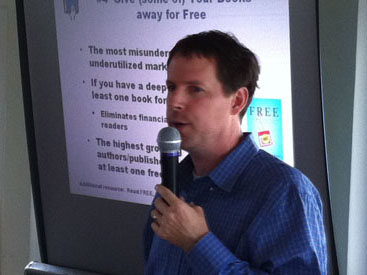
Last week I wrote about hearing a talk by Mark Coker, founder of Smashwords.  http://wp.me/pYql4-1DD.  Last night I saw that Coker is one of two keynote speakers, and is presenting three workshops, at one of the better writing conferences, the 28th annual San Diego State conference, taking place this weekend.

I attended the SDSU conference in 2007 because I’d met someone who sold her book there.  In 2007, one speaker talked about Print on Demand.  Ebooks were not even mentioned.  This year there are the same number of seminars on traditional publishing as there are on ebook publishing, and this in a conference that draws a lot of agents and editors. http://writersconferences.com/index.htm

I did a rough count of seminar topics, judging their their emphasis as well as I could by the titles:

39 seminars on craft of writing
8 seminars on how become traditionally published
8 seminars on how to e-publish
8 seminars on marketing or other topics
1 seminar on social media

To me, these numbers do not signify an inflection point; they signify an inflection point that has already passed.  Last week I heard an established writer say “the jury on ebooks is still out.”  I don’t think so.  I think the battle is already over.  When new technologies affect traditional media, be it music, photography, or writing, they always carry it toward greater democracy, toward putting ever more powerful tools in everyone’s hands.  This does not appear to be a reversible trend.

We all miss certain artifacts after they’re gone.  Some music lovers swear by the sound of vinyl, and while I don’t miss the darkroom, silver prints could be beautiful, and I love old kodachromes.

I hope we don’t see a day when paper books become collectors items, but nostalgia will not hold back the tide, especially when it’s grounded in both a sense of personal freedom and economic reality.  To paraphrase what a Zen teacher said about change:  we can be okay with it.  Or not be okay with it.  The one thing we cannot do is stop it.

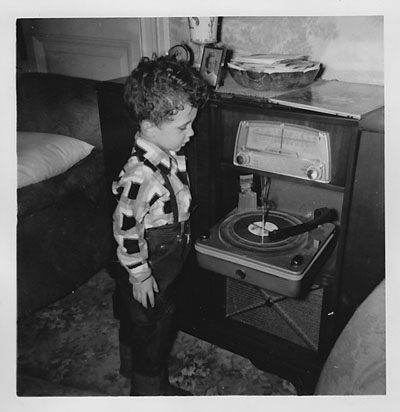
Yep, thats me. How many artifacts of the past can you count?

Lunch with Ebook Advocate, Mark Coker

According to Time Magazine, in 1812, the year Charles Dickens was born, 66 novels were published in Britain.  Many were written by “Anonymous,” since novels were not very reputable.  No one dreamed of making a living writing them.  Dickens, the first literary celebrity, whose bicentennial we celebrate this year, was instrumental in changing that, but he never could have imagined today’s literary landscape, which his work helped to create.

Mark Coker, guest speaker for January’s California Writer’s Club lunch, described an experience that is emblematic of the challenges faced by new writers today.  Coker and his wife co-wrote a novel.  They went through the revision process, and eventually became clients of a prestigious New York agency.  Two years later, their book remained unsold.  Coker’s solution was Smashwords, an ebook publishing service he started in 2008 that is at the forefront of changes rippling through the industry.

Mark Coker

Coker says that large publishers “look in the rearview mirror” for what has worked in the past.  There is little financial incentive for them to risk new concepts and new authors.  Even an author who wins the publishing game and gets a book on the shelves has no guarantee that a title with slow sales will not be remaindered within a matter of weeks.  That may not be enough time to establish the buzz that drives success.

Publishing on Smashwords is free and fast.  Correctly formatted books are distributed to all the major ebook publishers, and authors receive 85% of the sales.  Books do not go out of print, so there’s time for word of mouth to evolve.  Smashwords usage is growing exponentially.  Authors uploaded 140 books in 2008.  In 2011, the total was 92,000.

Smashwords historical usage, from a chart on their blog

Coker’s talk was animated with a sense of mission.  He said what gets him up in the morning is, “enabling writers to express themselves.”  He never suggested it’s easy, however, and most of the rest of his presentation detailed what is required.

First in importance, of course, is a really good book.  Coker suggested as many revisions and beta readers as necessary, and possibly professional editing.  At stake is the trust of readers, hard to build and easy to lose.

Next in importance are a well designed cover and compelling blurb.  Coker says polls reveal that “discovery” accounts for 50% of ebook sales – in other words, we still buy books by their cover.  This is good news for indie authors.  Only 18% of readers polled reported sticking with authors they know.  This means that for independent authors without design skills, hiring an artist is almost essential to come up with a cover that will capture attention as readers scroll through pages of thumbnails.  An email to list@smashwords.com will generate an auto reply listing 3d party artists and people who handle format.

Coker presented more information than I can cover in one article.  He has free guides to ebook formats and marketing at https://www.smashwords.com/.  Other topics are covered on the Smashwords blog, (referenced on the blogroll here) and at http://www.huffingtonpost.com/mark-coker.

With ebook sales continuing to climb; with Apple’s move into electronic textbooks; with Smashword’s impending foray into library distribution, it becomes increasingly clear that ebooks are where the future of publishing lies.  Mark Coker used the phrase, “democratization,” which again brought to mind the Time article on Dickens I referenced to begin post.

“The flood of books in the 19th century elicited two powerful institutional responses:  the rise of prize culture and the rise of literature as a field of study.  The message (sometimes subliminal, sometimes not) was that the masses needed help figuring out what to read, and the cultural elite…was going to provide it.”  (“Charles in Charge” by Radhika Jones in Time, Jan. 30, 2012)

Noting that such elitism broke down well before the advent of ebooks, (for example, with the rise of Oprah as our great taste-maker), Radhika Jones ends her article with a question that would likely delight Mark Coker and maybe Charles Dickens as well:  “Will the readers of the future find their 21st century Dickens on the Pulitzer roster or the best-seller list or FanFiction.net?”

“The future is in your hands,” said Coker at the end of his talk.  “The power of publishing is shifting to the authors.  Go and serve your readers.”

The Lightning Thief by Rick Riordan: A Book Review

I’ve been less active on my blog this week because of the happy event of finding a book I couldn’t put down. Like most such discoveries, I came to it by word of mouth.  In December, we called my sister-in-law to ask what our fifth grade nephew might want for Christmas.  She said he had really enjoyed  The Lightening Thief by Rick Riordan, the first book in a middle grade series called Percy Jackson and the Olympians.  Without even stopping to read the blurb in that hectic season, we ordered the boxed set on Amazon, had it shipped as a gift, and forgot about it – until this month, when I spotted a display of the series at the local Barnes&Noble.

I was instantly impressed as I realized these books feature the 12 year old son of Poseidon and a mortal woman in a 21st century America where the figures of Greek mythology – and their numerous offspring – are on the loose.  If you remember your Greek myths, you recall that the gods were best avoided by mortals.  There was a lot of collateral damage in the Olympians’ constant bickering.  Think of Troy.

Percy Jackson, our half-blood (aka, demigod) hero, would not wish his fate on anyone.  Dyslexic, diagnosed with ADHD, and a D student, he has been shuffled from school to school six times in six years.  And that was when his life was easy – before one of the furies and the Minotaur try to kill him.  By sheer luck, he finds refuge in Camp Half-Blood, but not for long.  Zeus believes Percy has stolen his thunderbolt thrower.  If Percy does not return it in ten days time, a battle will erupt on earth, “that will make the Trojan war look like a water-balloon fight,” according to Chiron the centaur, Percy’s mentor.

Though this book is aimed at a young audience, it has all the attributes writers are taught to build into their novels:  an engaging protagonist, a unique premise, tension on every page, and ever-rising stakes.  I love the way this story encourages younger readers to explore the classics.  One of the items I saw on display at the Barnes & Noble was an illustrated summary of the figures of Greek myth, presented in contemporary form.  Zeus had shoulder length hair, a pin stripe suit, and the good looks that could land him on the cover of a romance novel.  Dionysus was a pudgy, middle-aged reprobate, given to loud Hawaiian shirts.  Such images make the gods more immediate than the older toga and grape-eating portraits.

I am late to this party.  The Lightning Thief was published in 2005. A movie version was made in 2010. I don’t know if it was ever released, but the Wikipedia summary shows it diverges significantly from the novel.  That makes me wary since I liked the book so much.

Most of the online reviews I read were written by adults who enjoyed Riordan’s stories as much as younger readers. Several mentioned the kind of pleasure they found in Harry Potter.  I can’t say for sure, since I’ve only read the first book, but I know I’m looking forward to reading the others.

Save the Cat by Blake Snyder: A Book Review

I love (good) books on screenwriting, because of all the available guides to writing fiction, these focus most squarely on the primacy of story; first the forest, then the trees.  Last week a fortunate weblink led me to Save the Cat, 2005, a brief but idea packed gem of a book by Blake Synder (1957 – 2009).

Snyder was a successful screenwriter and a respected teacher who began his career in movies doing voice-overs for his father at the age of eight.  By his own admission, when he started writing for movies, he had only a vague idea of structure.  Discovering Syd Field’s Screenplay was a revelation:  “truly career-saving,” Snyder says, but there were still gaps in his sense of movie architecture.  Snyder developed the methods he presents in this book in response.  Because he spun things in an unusual way, and uses his own terms for concepts that may have become overly familiar, his methods move the imagination in fresh ways.

Blake Snyder 1957-2009

The title of his book, for instance, is a code for his belief in the primacy of creating characters we want to follow.  In the opening scenes of older movies, the protagonist often did something nice – like saving a cat – to bond with the audience, a step contemporary movies often skip in favor of showing a lead who is hip, slick, and cool.  Snyder cites this as the cause of failures of several recent films.

His approach is top down.  He begins with the log line and the title, and demands that the writer polish them before moving on, because they are a touchstone for writing the script itself as well as a key selling point.  This single sentence and title, when well crafted, reveal what the movie’s about, its genre, the lead characters, and (ideally) pique curiosity.  Snyder gives examples like:  “A cop comes to L.A. to to visit his estranged wife and her office building is taken over by terrorists – Die Hard.”

Snyder then suggests we do something that few writers ever dream of – pitch the concept to strangers.  He would literally pick people out in a Starbucks line, and say, “Excuse me, I’m working on a movie concept, and I wonder if I could get your feedback.”  Since he lived in L.A., the answer was often yes, but he challenges us to do the same wherever we are.

He moves through ever increasing levels of detail as he takes the reader through the development of the script, and one thing I really appreciated was his in-depth knowledge of stories:

“Jaws is just a retelling of the ancient Greek myth of the Minatour or even the dragon-slayer tales of the Middle Ages.  Superman is just a modern Hercules.  Road Trip is just an update of Chaucer’s Canterbury Tales – isn’t it?  To not know the roots of the story you’re trying to create, either from the last 100 years of movie storytelling or the last thousand, is to not honor the traditions and fundamental goals of your job.”

Though Blake Snyder died suddenly in 2009, a website serves as a blog on his methods, and offers a bulletin board as well as classes geared to both screenplays and novels.  http://www.blakesnyder.com/

I’m sure this is old news to the screenwriters who read this blog.  If so, pass it along to your novelist friends; it seems we don’t get out often enough.

Ebooks at the New Year

A funny thing happened to ebooks last year – they became legit.

Last January, right after I got my kindle, I started noticing stories about Amanda Hocking and a few other ebook superstars in places like the New York Times and the Wall Street Journal.   The articles had a semi-surprised, “look at this,” tone.  No longer.  Now an ebook author doing well raises no more eyebrows than John Grisham writing another best seller.

Even though I was paying attention, I don’t quite know when the shift in attitude happened.  It was a done-deal by October.  That’s when a local member of the California Writer’s Club asked advice from the group:  his manuscript was ready.  Should he submit it through traditional channels or go the ebook route?  Everyone in the room, with no exceptions, recommended the ebook option.

As recently as twelve months ago, people still talked of ebooks as “self-publishing,” a phrase that carries a touch of “vanity press” stigma.  That has changed.  Now we speak of “traditionally published” in contrast to “independently published” authors.  Listen to the words:  traditional vs. independent.   Which one has more panache?

Not long ago, approval by traditional agents and editors signified quality.  I think the rapid loss of brick and mortar stores was a factor in changing that.  When Borders folded, half the gates that gatekeepers kept disappeared.  As the industry scrambles to find new ways to stay afloat, literary quality may not be so big a factor in the mix.  Mark Coker, the founder of Smashwords put it like this:  “The cachet of traditional publishing is fading fast. Authors with finished manuscripts will grow impatient and resentful as they wait to be discovered by big publishers otherwise preoccupied with publishing celebrity drivel from Snooki, Justin Bieber and the Kardashians. 

When you consider more serious fiction, odds seem to favor established names more than ever these days, in stores both large and small.  I stopped at an independent bookstore last fall in a small town.  It has been around for a while and continues to thrive.  There were lots of attractive craft and gift items – pens, handmade notebooks, and things like that.  The books were shelved by genre, and carefully chosen to reflect popular titles and series.  It was easy to find something good to read, but almost all the choices were books by established authors.  I’d do the same if I was the owner and wanted to stay in business, but that’s bad news for authors just starting out.

This is where time enters the equation for everyone, especially for older writers.  The man who asked the ebook question at CWC was about my age and put it like this:  “I don’t have forever.”  Mid-list titles, which authors used to be able to sell while learning their craft are an endangered species.  “Their demise has been predicted for years,” said agent Donald Maass.  “This time it’s true.”  As all these trends converge, the attraction of the ebook publishing has exploded.

One thing I notice consistently in the ebooks I have enjoyed is a certain playfulness or quirkiness,  a willingness to step off the path of genre convention.  I’m reminded of fantasy fiction in the ’80’s, when getting published wasn’t such a nail biting affair.  The stories were full of surprises.  Writers took more chances than those I see today at Barnes&Noble.

Recently, a well-meaning writer friend warned me that, “Editors don’t like colons.”  That’s the second time someone has said that, and I’ve heard exclamation points are out of favor too!  The only kind of writer who’s going to remember tidbits like that is one who is contentious, dedicated to learning her craft, and interested in giving her peers a leg up.  And yet…isn’t that kind of “wisdom” going to backfire?  Where is my imagination when I’m trying to remember which punctuation marks are okay to use?  I’m not going to be fully engaged in telling the best story I can, especially if runs afoul of news of “what editors are looking for now.”

Everyone has to come to their own conclusions about what to read, what to write, and what to do with their writing.  I find myself ever more grateful for ebooks and independently published authors.  I plan to champion more of them this year.

The Wasteland

One of the books I treasure is a battered old trade paperback with yellowing pages.  I value the book,  Creative Mythology, because of the author’s inscription: “For Morgan with all my good wishes. Joseph Campbell, 3/13/79.”  

joseph_campbell_4

You could say Campbell’s  four day lecture series that spring did much to open the path my imagination has followed ever since.  None of the stories Campbell unpacked in his lectures or books affected me more than Parzifal (or Parsifal) and his quest for the holy grail. The version of the grail story Campbell recounts is by Wolfram Von Eshenbach (1170 – 1220).  Wolfram was a German knight and poet, and his Parzivalis regarded as one of the finest medieval German epics.  Campbell looks to this version because it’s roots reach deeper than later Christianized versions where only the pious and chaste Galahad can attain the grail.  What matters for this post are those echoes we can see in the tale of the ancient legends of sacred kingship, and the ways an unfit or weakened king can blight the land.

Wolfram Von Eshenbach from Codex Manasse

Sometimes in youth we receive a vision or powerful experience that shapes much of the rest of our lives.  So it is with Parzival who finds his way to the mystical Grail Castle and meets its wounded king, Anfortas,  who is also known as The Fisher King.  As a young knight, a spear pierced the Fisher King’s “thighs” – a euphemism for testicles according to Campbell.  In ancient times, the virility of the king and the fertility of the land were one.  In the grail stories, Fisher King could not be healed and couldn’t die.  All the realm was barren.

Robin Williams as the Fisher King in the 1991 movie of that name, a contemporary retelling of the story

While in the castle, during a mysterious ritual, Parzival has a vision of the grail, which is described as a stone, though its shape isn’t fixed, and it brings everyone “what their heart most desires.”  Though he is intensely curious, Parzival does not ask the meaning of what he sees.  In the morning, the castle is empty.  All traces of life are gone.  He rides away, and when he tells his story, listeners turn away in disgust.  If Parzival had asked the right question, he would have healed the king and restored the land.    The young knight wanders the blighted realm for 20 year, enduring hardships and contemplating his failure.  Just like us, he watches time turn his youthful dreams of glory to ashes.

“Parsifal” by Odilon Redon

At last, one cold Christmas Eve, Parzival encounters a hermit, tells his tale, and learns the question he should have asked. After that, he achieves the castle again.  When the ritual ends, Parzival asks, “Whom does the grail serve?”   Everything hinges on asking the right question.  Anfortas is healed, spring returns, and Parzival becomes the new Grail King.

***

Hearing this old tale, we have to ask how the story plays forward.  “Wasteland” clearly describes the state of the world we read about in the papers, and “impotent” seems an apt description of most of the world’s governments.  This perception is not even new, for T.S. Eliot named it ninety years ago in his poem, The Wasteland:

What are the roots that clutch, what branches grow Out of this stony rubbish? Son of man, You cannot say, or guess, for you know only A heap of broken images, where the sun beats, And the dead tree gives no shelter, the cricket no relief, And the dry stone no sound of water.

Giving mythical weight to our latest headlines, storyteller and mythologist, Michael Meade says: “Like Parsifal, the modern world has awakened from a deep sleep to find that the castle of abundance has disappeared, that the financial markets are in ruins, that blind religious beliefs are once again producing mindless crusades, and that great nature itself threatens to become a barren wilderness. Like Parsifal, we failed to ask the right questions when surrounded by abundance.” From “Parsifal, the Pathless Path, and the Secret of Abundance,” first published in Parabola, Fall 2009.  http://www.mosaicvoices.org/index.php?option=com_content&view=article&id=72:essay4parsifal&catid=53:essays&Itemid=68

This has happened before, again and again, Meade reminds us – beginnings and endings, decay and renewal.  The castle of abundance waits for us, individually and collectively, somewhere in the wilderness, but old pathways won’t take us there.  There’s a time to do as Parsifal did – drop the reins and let the horse, an image of our instinctive wisdom, pick its way through the forest. The old stories were told in the winter, when the nights were long and the fires warm.  This winter, I am drawn to look at some of these tales, to see what they are still whispering to our souls, for they are wiser than the daily ephemera that passes for wisdom but is really the source of our confusion.

As Michael Meade puts it: “Despite the current confusions of dogmatic religions and the literalism common to modern attitudes, the earthly world has always been a manifestation of the divine. Call it the Grail Castle, the Kingdom of Heaven, Nirvana, the Otherworld; it has many names and each is a representation of the eternal realm that secretly sustains the visible world. When time seems to be running out it is not simply more time that is needed, rather it is the touch of the eternal that can heal all time’s wounds and renew life from its source.”

Handmade books

Recently, I came across an estimate of the number of ebooks that will be published next year. I think it was 3 million, but I don’t really remember, and I cannot recall if that was in the US or worldwide. Funny that such a huge number of books was such a non-event for my brain – or maybe it isn’t funny.  Maybe it’s very natural.  Add to that, say, 780,000, the number I remember for traditionally published books last year, and you get, 3,780,000 / 365 = 10,356.16 books per day in 2012.  Even if I am high by an order of magnitude, that’s still more books  being published in one day than I will read in ten years.

Of that total number, I’m guessing a dozen or so will matter to me.  The others will be non-events.  These reflections led me to recall when I was in art school, and there was a large revival of handmade paper as art and craft.  One thing people did with handmade paper was make books by hand.

Books!  Do you remember the sense of wonder books can evoke?  Remember how mysterious they were as when you were just learning to read?  The books you carried everywhere, as a kid and as an adult?  The books that opened new worlds to you or opened new ways of looking at this one?  Have you ever prowled used bookstores, remember stories of people just like you who discover hidden books on magic or other forgotten lore?

It must be this kind of love and fasciation that inspires the artists I picked at random while searching for “handmade books.”  There is nothing comprehensive about these choices .  There are far too many wonderful people making books these days for that.  Hopefully these few pictures will give an idea of what’s possible.  Check the links for further information.

Wooden Book by Barbara Yates

Barbara Yates is an environmental artist who recycles dead trees into art for parks and retreat centers

History of Western Europe by Brian Dettmer

Brian Dettmer’s work reminds me of a dream I’ve had on several occasions, where I am reading a book but cannot decipher the key passages.  Here is the link for his work and Barbara Yates’s:  http://mywiki.ws/The_Most_Unusual_Books_of_the_World

***

Handmade book by Geraldine Newfry

Check out the section on handmade books on Geraldine Newfry’s blog, The Creative Life Unfolds: http://newfry.typepad.com/newfry/handmade_books/

***

Handmade book by Lauren Evatt Finley

There are a number of step-by-step photos of the binding process in the handmade book archive section of Ms Finley’s blog, The Disarranged Studio:   http://laurenfinley.wordpress.com/category/handmade-books/

***

A tintype journal

Website for this tintype journal: http://www.thisnext.com/tag/handmade-books/

***

Handmade book by Carol Roemer

Carol Roemer is an artist whose primary medium for the last ten years has been handmade books. This is her website:  http://www.carolroemer.com/handmadebooks.html

***

This is the cover of a scrapbook “Garbonzobeenz1” made for Christmas photos of her first Christmas in a new house, with her first grandchild.

The website where I found this illustration, twopeasinabucket.com, is an extensive site devoted to scrapbooking, using traditional and digital tools. It should be of interest to anyone who won wants to explore this craft. http://www.twopeasinabucket.com/gallery/member/18824-garbonzobeenz1/1253837-christmas-magic-handmade-book/

***

And finally, here is an electronic pop-up book made by Jie Qi, a grad student in the MIT lab’s Hi-Low Tech group:

***

It’s interesting that many people who recognize the magical and iconic nature of books are visual artists and craftspeople.  It wouldn’t be the first time “outsiders” bring a fresh perspective to a discipline.  I’m not suggesting a fuzzy nostalgia for the old days:  I no more want to trade WordPress for a Gutenberg press than I want to exchange my mac air for an eniac.

What I am suggesting is that the work of these artists leads me to a deeper appreciation of the wonder of what we book creators are doing.