The Legend of Bagger Vance: a movie review

Bagger_Vance_9176

One of my favorite movies of all time centers on the game of golf, which has never interested me.  It is not about golf, however.  As Roger Ebert said in his review, “It is the first zen movie about golf.”  The Legend of Bagger Vance (2000) was directed by Robert Redford and stars Will Smith in the title role, Matt Damon, and Charlize Theron.

Rannulph Junuh (Damon) is a promising golfer whose girlfriend, Adele (Theron) is the daughter of a wealthy and prominent family in Savannah, Georgia.  Junah, the golden boy, has everything going for him until, as a captain in the first world war, his entire company dies in battle.  Though he wins the medal of honor, when Junah returns home, he lives in the shadows for a decade, as a drunk, abandoning everything from his former life.

In 1930, in an effort to recover the family fortune, Adele organizes an exhibition tournament between Bobby Jones and Walter Hagen, the most famous golfers of the era, at an extravagant golf resort her father built just as the depression struck.  To try to generate local interest, she asks her estranged boyfriend, Junuh, to play.  Junuh can barely hit a straight shot when the mysterious Bagger Vance (Smith) literally steps out of the night and announces he will be Junuh’s caddy.

Vance and Junuh

Vance and Junuh

Bagger Vance becomes a mentor in every sense of the word, helping Junuh recover his “own authentic swing,” a metaphor for recovering an authentic life.

The movie did not do well at the box office, and critical opinion was mixed.  Though Roger Ebert gave it 3 1/2 stars, George Perry of the BBC called it “pretentious piffle,” and Dana Stevens, writing in the New York Times said, “it’s central premises are so banal and dubious as to border on offensiveness.”  Such a reading results from failing to understand that the movie’s genre is mythological, and Bagger Vance is a spiritual guide.

When the movie was released, director, Robert Redford, spoke of the “spiritual journey.” In one interview said he believed in “mythology as a foundational storyline,” and in Bagger Vance, the image of losing and finding one’s “authentic swing,” meant losing and recovering one’s soul.

The theme was close to my own heart.  Nine years earlier, I’d finished a psychology masters thesis on “Imaginal Guides,” but when the movie came out, I felt my corporate work milieu threatened my own soul.  Part of the problem, I think, confronts us all, as the mythical/imaginal dimension of our collective psyche has collapsed.  Events, which once were woven into stories and ballads, become the stuff of headlines and clips on Entertainment Tonight, which are no more nourishing to the soul than yesterday’s tweets.

Redford came “from a big family of storytellers,” which led him to “place value…on mythological story lines because they’re the most solid and they usually have moral and rich characters and a simply told story. And [Bagger Vance] had that…a wonderful, simple, mythological story. A classic hero’s journey.”  

The fact that the movie didn’t have more success may say more about our “entertainment culture” than about the film itself.  Watch this clip, and if it resonates, you are sure to enjoy the movie.
Heat and Air

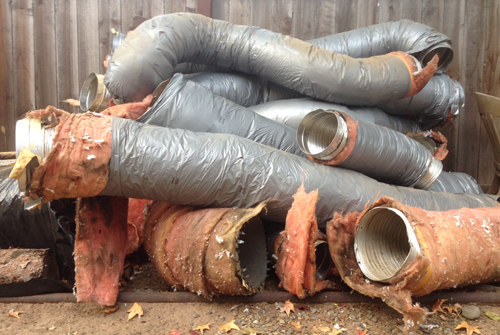
Day 1 - a portion of the old ducts

Day 1 – a portion of the old ducts

Here’s why I may be a bit light on blog posts for the next week and a half: we have an obsolete heat and air system and a lot of collapsed ducts.  We also have a trusted heat and air guy – an old school type craftsman who has helped us keep warm and cool at the proper times for over 20 years.  He’s going to retire soon, so last spring we worked out a plan to replace everything.

Day one was rendered somewhat chaotic by our two rescue dogs who were exceedingly vocal in their disapproval of someone crawling around the attic hammering things and sawing things.  As in vocal for hours.  We will also be without heat for about 10 days, but you know what?  We lucked out.  Temperatures are mild, and today is a burn day, according to the county air quality board, so there’s a fire in the wood stove right now.

As I lit the fire, I turned on the PBS News Hour, which put our minor inconvenience into perspective as I watched the horrific suffering in the Philippines:  tens of thousands of storm survivors with nothing – no shelter, no food, no water.

A few days ago, I tweeted a New Yorker blog post which discussed a leaked copy of the most recent installment of the  I.P.C.C. (Intergovernmental Panel on Climate Change) report, this one suggesting that “preparing for climate change,” an emerging theme in some quarters, is largely an illusory goal, at least for the most vulnerable portions of our world population.

The blog quotes the president in a speech he gave last spring:  “Those of us in positions of responsibility, we’ll need to be less concerned with the judgment of special interests and well-connected donors, and more concerned with the judgment of posterity. Because you and your children, and your children’s children, will have to live with the consequences of our decisions.”

The way I see it, everyone living and breathing is in a “position of responsibility.”  This is how I understand it for myself:

  1. Being responsible means I contribute to the relief effort for Haiyan, just as I have for Katrina, and Sandy, and the tornadoes last spring, and just as I will for the next superstorm.
  2. Being responsible means I cultivate gratitude for all I have and compassion for those who are suffering loss – all kinds of losses – and try to manifest this somehow every day.
  3. Being responsible means I can no longer tolerate those who would deny the reality of climate change.  Leaving aside the blame game, the world is changing, and there’s no time for those who pretend otherwise.

Not much in relation to the magnitude of the problems we are just beginning to see.  And yet…If enough people of goodwill face our situation and consider what may lie within their power to do…who knows what the outcomes may be?

Assurance: a poem by William Stafford and autumn photographs

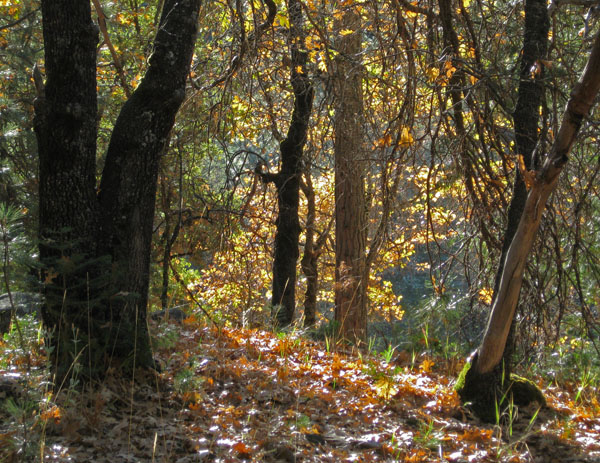
Wawona, CA.  November 2013

Wawona, CA. November 2013

We were fortunate enough to be able to spend most of last week in Yosemite.  Though all seasons are wonderful there, late fall is my favorite in the Sierras.  It had recently snowed, and another storm was said to be moving in, but our days were mild, and the winter light was on fire.  Wherever I walked, a poem by William Stafford accompanied me.

Wawona, CA.  November, 2013

Wawona, CA. November, 2013

Assurance by William Stafford

You will never be alone, you hear so deep
a sound when autumn comes. Yellow
pulls across the hills and thrums,
or the silence after lightening before it says
its names- and then the clouds’ wide-mouthed
apologies. You were aimed from birth:
you will never be alone. Rain
will come, a gutter filled, an Amazon,
long aisles- you never heard so deep a sound,
moss on rock, and years. You turn your head-
that’s what the silence meant: you’re not alone.
The whole wide world pours down.

– from The Way It Is, Graywolf Press, 1999

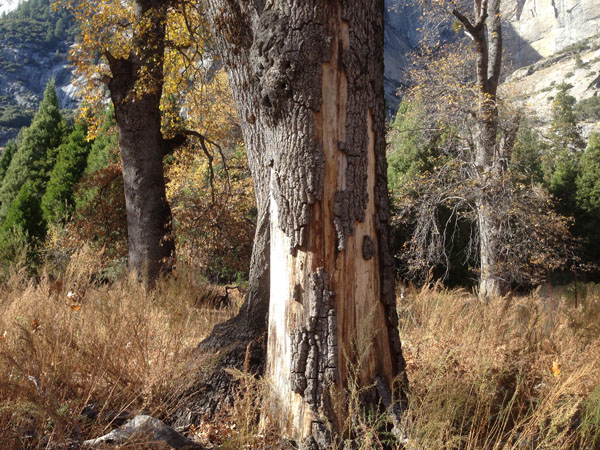
Yosemite Valley, November 2013

Yosemite Valley, November 2013

You will never be alone, you hear so deep
a sound when autumn comes.

Yosemite Valley, November 2013

Yosemite Valley, November 2013

Yosemite Valley, November, 2013

Yosemite Valley, November, 2013

Yellow pulls across the hills and thrums

Yosemite Valley, November, 2013

Yosemite Valley, November, 2013

You were aimed from birth:
you will never be alone.

Yosemite Valley, November, 2013

Yosemite Valley, November, 2013

You turn your head-
that’s what the silence meant: you’re not alone.

Wawona, CA.  November, 2013

Wawona, CA. November, 2013

The whole wide world pours down.

Delisting the Wolf – Your Help is Needed!

If wolves are removed from Endangered Species protection, the day may soon return when there are none in the lower 48. I’ve worked with these magnificent creatures as a volunteer at the Folsom City Zoo Sanctuary, and in my opinion, that would be a tragedy. Please read this article and make your comment on the Federal website.
Update: As of November 6 at 5:00pm, the website is up again and I was able to comment.

Mungai and the Goa Constrictor's avatarMungai and the Goa Constrictor

The U.S. Fish and Wildlife Service is in its comment period on their proposal to remove the wolf from the Endangered Species Act in the lower 48.  Hearings are being held throughout the country.  If you can go, please do.  If that’s not possible, please write or call.  They need to hear from people who want the wolf protected, not only from those who don’t.

AMENDMENT
Many thanks to my good friend, Carmen Mandel, for providing a DIRECT LINK to add your comments. Please add yours. There are almost 32,000 signatures, as I write this, but this figure falls a long way short of previous opportunities.
This is so important
Please add your comment now
Your Voice in Federal Decision-Making

ALTERNATIVE WAYS TO COMMENT
Please click here for details

Click here for more details:
The U.S. Fish and Wildlife Service

Related links:
Defenders of Wildlife
Grey Wolves Left Out…

View original post 59 more words

The Eye of God by James Rollins: a book review

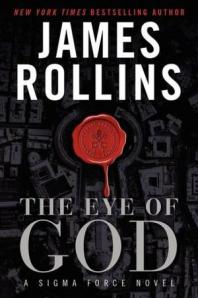
The eye of God

In a post in August, It’s mostly insubstantial, I discussed an interview with James Rollins that I read on Sciencethrillers.com.  The title for my post came from some mind-blowing conversations Rollins described with quantum physicists while researching his latest thriller, The Eye of God.  The gist of what Rollins learned involved the insubstantial nature of our apparently solid physical world.  “If you remove all the space within the atoms making up the human body, every person that’s ever lived would fit inside a baseball,” said physicist, Brian Greene.

I heard Rollins speak in September at a writer’s lunch where he gave a lively talk on the nuts and bolts of his process.  Afterwards, I hurried home with a copy of The Eye of God.  Sadly, I didn’t finish the book until this week.  It doesn’t speak well for a thriller when it takes me weeks to “get through” it.

The book opens with a compelling synchronicity between the discovery of an ancient prophecy and the last transmission of a NASA satellite nicknamed “The Eye of God,” launched to study a comet as it passes close to earth.  Before it crashes, the satellite transmits an image of the eastern United States as a ruin of smoking craters.

Astrophysicist, Dr. Jada Shaw, theorizes that dark matter associated with the comet is bending time as well as space in the atmosphere, and the image shows our world in four days time.  Simultaneously, a priest in the Vatican receives a package containing a copy of The Gospel of Thomas, bound in human skin, and a skull inscribed with prophecy of the end of the world in four days.

Soon Dr. Shaw, the priest and his niece, and members of the Sigma Force, a covert group of ex-special forces soldiers, converge on Mongolia, where the Eye of God went down.  An asteroid storm in Antarctica is a prelude to what is coming if the satellite can’t be recovered and if it offers no clue to reversing the space-time distortion that is opening earth’s atmosphere to deadly “near-earth objects.”  Integral to the effort is a legendary black cross, made from an earlier NEO that struck earth.  The cross belonged to St. Thomas the Apostle, who evangelized in Asia, according to the apocryphal “Acts of Thomas” and ancient Christian communities in southern India.

So what’s not to like about the story?

I enjoyed elements of The Eye of God, not the least, an appendix in which Rollins’ discussed what was fact and what was fiction in the book, including a real comet that will pass near the earth this winter.

If it doesn’t break up as it swings by the sun, Comet ISON, one of the brightest comets in history, will pass so close to the earth in November and December that it may be visible during the day.

Comet ISON, via NASA Hubble telescope, will make it's closest pass to the earth on Dec. 28.

Comet ISON, via NASA Hubble telescope, will make it’s closest pass to the earth on Dec. 28.

My biggest problem with The Eye of God is that I never truly felt the danger.  The threat was arcane and not clearly articulated until midway through the book.  The solution (which I won’t give away) remained rather abstract.  The constant reminders of danger and the way out that we find in other page-turners would have helped, as would the disaster film convention of showing a few ordinary people who don’t yet know they are doomed.

Rather than keeping us focused on the real threat, restating it until it was vivid, Rollins threw in distracting subplots which included six major gunfights with Chinese triads, North Korean soldiers, and Mongolian nationalists.  Obstacles while the clock is ticking is a proven way to ramp up tension, but the repetitive nature of these firefights – bad guys who can’t shoot versus outnumbered, crack-shot good guys – was the equivalent of digital special effects at the expense of story in the movies.

The Eye of God received good reviews, especially from established fans of James Rollins. That may be the difference.  This is the ninth Sigma Force novel, and those who read the others are probably bonded with the characters and care more than I if they get shot at.  Next time I read this author, I’ll start at the beginning, though I don’t think that will be any time soon.

101 Things that Made America

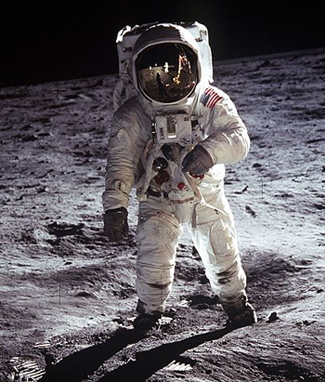
Apollo suit.  NASA photo, Public Domain

Apollo suit. NASA photo, Public Domain

The Novermber, 2013 issue of The Smithsonian Magazine is devoted to 101 things that made America.  The magazine lists 33 contributors who chose these items from among the 137 million artifacts housed in 19 Smithsonian museums and research centers.

Animals, vegetables, and minerals are represented, and the objects chosen evoke the range of both light and dark aspects of our history.  The opening photograph of a stuffed buffalo is as sad as it is iconic, and the inclusion of the Enola Gay, the plane that dropped the first atom bomb, reminds us that weapons of mass destruction are part of what made us what we are.

The chosen artifacts include:

– The Lewis and Clark Compass (1804). At a cost of $5, it wasn’t cheap, but it survived the 7,000 mile trip.

– A California Gold Nugget (1848)

– Polio Vaccine (1952)

– Abraham Lincoln’s Stovepipe Hat (1865)

– Barbie Doll (1959)

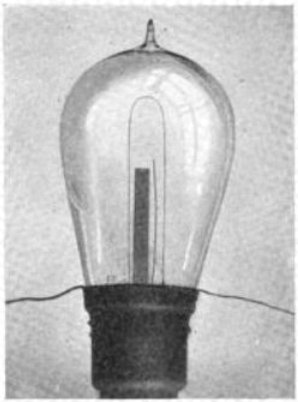
Edison Light Bulb.  Public Domain.

Edison Light Bulb. Public Domain.

– Louis Armstrong’s Trumpet (1946)

– Glass Shards from the Birmingham Church Bombing (1963). Barely a month after Dr. King’s “I Have a Dream,” speech, a bomb blast killed four African-American girls at their sunday school. Outrage over the murder of children at church lent a powerful impetus to the civil rights movement.

– Birth Control Pills (1965)

– The original, tattered Star Spangled Banner that flew over Fort McHenry during the War of 1812 and inspired Francis Scott Keys to compose the national anthem.

– Table and Chairs from Appomattox Court House, where General Lee surrendered to General Grant to end the Civil War (1865)

– The Model T Ford (1913)

– Section of a California Costal Redwood tree.

– Passenger Pigeons: Once there were billions of these birds, but 19th century communities slaughtered them to bake in pigeon pies. The last surviving bird died in 1914 and is stuffed in the Smithsonian.

– The Eniac Computer (1945). I would have chosen an Apple IIE, or even a TRS-80, since it was personal computers, not this behemoth, that changed the world.

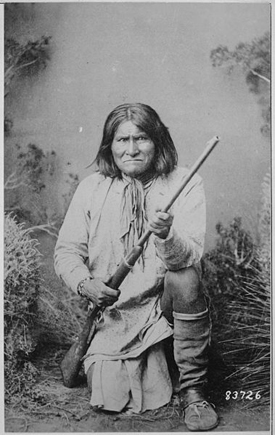
Geronimo, 1887.  Public Domain

Geronimo, 1887. Public Domain

This photograph of Geronimo, taken in 1887. The previous year, Geronimo surrendered his small band and was transported from his beloved Arizona to Florida. He spent the rest of his life in federal prison, though in 1905 he was brought out to ride in the inaugural parade of Theodore Roosevelt. His request to the president to return to his home was denied. On his deathbed in 1909, he reportedly said, “I should have fought until I was the last man alive.”

– Levi’s Jeans (1873)

– Singer Sewing Machine (1851)

– The Colt Revolver (1839)

– Alexander Graham Bell’s Telephone (1876)

– Wright Brothers’ Airplane (1903)

– The Huey Helicopter (1966).  Think of the “Ride of the Valkyries” scene in Apocalypse Now

– Section of the Aids Quilt (1987)

– The first Kodak camera (1888)

– Stage Coach (1851).  I would have included a covered wagon.

– The Teddy Bear (1903).  During a hunting trip in Mississippi, President Theodore Roosevelt refused to shoot a bear that guides had tied to a tree.  This inspired a political cartoon which featured a wide-eyed cub, and led to the toy that is still found in millions of nurseries.

Vintage Teddy Bear by David Crane, 2003, CC BY-SA-2.0

Vintage Teddy Bear by David Crane, 2003, CC BY-SA-2.0

– Ruby Slippers – the ones that Judy Garland wore to take us home in the 1938 Wizard of Oz.

– R2D2 (1983). Here’s the fun story from the Smithsonian Magazine: when filmmaker, George Lucas was finishing production of American Graffiti, the sound designer called for “R2-D2,” which meant, “Reel 2, Dialogue 2.” Lucas, who was already working on Star Wars, said, “What a great name!”

***

This is just a partial list.  You can see all the choices on the website.  No two people are likely to agree on all the artifacts.  What do you think is missing?  Which items should be dropped?  And for those who live in other countries, what are some of your key artifacts and their stories?

Samhain ~ The Beginner’s Guide To The Wheel Of The Year

Here is another of Lily Wight’s fine articles on the Celtic Wheel of the Year. This one discusses Samhain, a time of ending and beginning, when the veil between the worlds was especially thin. This is key information for those who love Celtic mythology as well as providing fun background for those who love Halloween.

Lily Wight's avatarLily Wight

     Updated 23/10/2014

     Samhain – pronounced “sow – inn” and known presently as Halloween – is celebrated from sunset to sunset on 31st October to 1st November.  It is the most important Fire Festival or Sabbat on the ancient Wheel of The Year calendar.

     “Samhain” has been variously translated as “first frost” or “Summer’s end”:  opposing suggestions with the same meaning.  It is the name for November in ancient and modern Gaelic.

     Samhain lies between The Autumn Equinox and The Winter Solstice.  It marks the death of the year and the end of the annual agricultural cycle.  Many ancient cultures throughout The Western Hemisphere regarded Samhain as their New Year’s Eve.

     Samhain is the third and final harvest on The Wheel of The Year calendar.  After Lughnasadh (grain and cereals) and Modron (fruit and vegetables) herding…

View original post 428 more words

Weekly Photo Challenge: Horizon

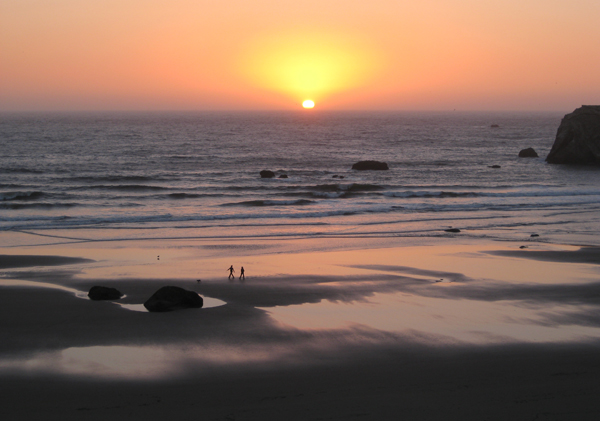
Bandon, Oregon, 2013

Bandon, Oregon, 2013

Elle est retrouvée.
Quoi? – L’Éternité.
C’est la mer allée
Avec le soleil.
– Arthur Rimbaud, 1872

Bandon, Oregon, 2011

Bandon, Oregon, 2011

It has been found again.
What? – Eternity.
It is the sea gone away
With the sun.
– Arthur Rimbaud, 1872

Bandon, Oregon, 2013

Bandon, Oregon, 2013