The English Girl by Daniel Silva: an audiobook review

I’ve mentioned before that I’m a big fan of audio books. When recently faced with several commutes to the bay area, I wanted a story to listen to.  I picked a contemporary spy novel, The English Girl, by Daniel Silva, rated as one of Amazon’s “Best Books for July,” last month when it was published.

This was my first encounter with Silva’s work but the 13th in his spy thriller series featuring Gabriel Allon, an art restorer and master spy for the Israeli Secret Service.  Few audio books are exciting enough to make me regret arriving at my destination, but this was one.

A beautiful woman, with a promising career in the British government, is kidnapped during a holiday on the island of Corsica.  A month later, a message arrives at 10 Downing Street with a ransom demand and a recording of the girl confessing to an affair with the Prime Minister.  “You have seven days,” the message says, “or the girl dies and the video goes public.”

British Intelligence contacts Gabriel Allon, the best man they know for the job.  Hours later, Allon and a British ex-patriot assassin are plowing through the Corsican and French underworlds, trying to find the girl while there’s still time.

The affair goes horribly wrong, but not everything is as it seems.  Allon discovers that North Sea oil drilling rights lie behind the kidnapping, along with trechery at the highest levels of British Government.

“If you go to the City of Heretics (Moscow), you will die,” an elderly Corsican sooth-sayer tells Allon, but that is his next destination, with a strike team out for revenge and the truth.  The truth they discover is more than even Allon expected, one that will shake the highest levels of British government – if his team can make it out of Russia alive.

Some reviewers call Daniel Silva the greatest spy novelist of his generation.  I don’t know the genre well enough to be sure, but based on The English Girl, it’s a claim that could be true.

Daniel Silva

Daniel Silva

It’s mostly insubstantial

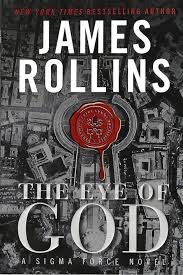
This morning, on friend and author Amy Rogers’ website, Sciencethrillers.com, I found the link to a great article by New York Times bestselling author James Rollins.  Rollins writes science thrillers, and the article, Turning Science Into Fiction, details a tour he took of Fermilab, near Chicago, the conversations he had with physicists there, and how he turns such information into riveting stories like his most recent novel, The Eye of God.

The Eye of God

The article holds points of interest for writers of all sorts.  When Rollins sat down with a group of Fermilab physicists, his question was, “Tell me what scares you about your research, what keeps you up at night?”  Not only did the answers become central to The Eye of God, but they hold great interest to me as a student of Eastern thought.

All religions hold that the world we perceive with our senses hides much of what is really real, but according to Rollins, his conversation with these scientists centered on “the insubstantiality of the physical world.”  He gives this quote he discovered after his visit:

“If you remove all the space within the atoms making up the human body, every person that’s ever lived would fit inside a baseball.” – Brian Greene, physicist

Beyond such ultimate pondering, Rollins’ article is full of details on his research which should be of interest to any novelist who wonders how much one needs to learn of an esoteric topic to be able to tell a convincing story.

I highly recommend this article, and for more of the same, Sciencethrillers.com, which you will find in the link above and on my blogroll.

Two views of the hero myth

In a recent post, I discussed heroes and anti-heroes in spy movies and westerns.  This is the followup post I promised, but I’m going to leave the realm of popular heroes – those of fiction, entertainment, sports, and all who wear masks and tights.  I’m going to discuss the heroes of myth, especially the “monomyth” as Joseph Campbell summarized it in The Hero With a Thousand Faces:

“A hero ventures forth from the world of common day into a region of supernatural wonder: fabulous forces are there encountered and a decisive victory is won: the hero comes back from this mysterious adventure with the power to bestow boons on his fellow man.”

Here is a graphic that makes the elements of this type of story clearer:

Heroesjourney

I can’t think of heroes without remembering James Hillman, (1926-2011), the father of archetypal psychology and one of the most creative thinkers of our time.  The two differing views of the mythic hero announced in the title of this post are Hillman’s own.  He never shied away from ambiguity; “I don’t have answers, I have questions,” he said.

James Hillman

James Hillman

Hillman often railed at the negative effects he saw flowing from the hero archetype, which he saw as ego enshrined as narrow self-interest, both individually and collectively.  For Hillman, the “heroic ego” was often a source of evil and mischief.  Noting that heroes slay dragons, and earlier generations of Jungians wrote of dragons as “the mother,” Hillman claimed that heroes like Hercules in Greek mythology were emblematic of the modern world’s subjugation of women, “the feminine,” and “mother nature.”  On another occasion he said, “Killing the dragon in the hero myth is nothing less than killing the imagination.”

Yet a recently published collection of Hillman’s work (Mythic Figures, 2012) includes a chapter on Joseph Campbell, compiled from talks he gave in 2004 in which he spoke at length of the positive hero.  He put his earlier negative comments in context:

“A mistake in my attacks on the hero has been to locate this archetypal figure within our secular history after the gods had all been banished.  When the gods have fled or were declared dead, the hero serves only the secular ego.  The force that prompts action, kills dragons, and leads progress becomes the Western ‘strong ego’ – capitalist entrepreneur, colonial ruler, property developer, a tough guy with heroic ambitions on the road to success.”

When Hillman used terms like “soul” and “the gods,” his concern was religious, but not in the way of the literal truths of most organized religions.  For Hillman, such literalism was the enemy of soul.  He spoke only and always of the truth of the psyche because it precedes every other kind of truth:  “Every notion in our minds, each perception of the world and sensation in ourselves must go through a psychic organization in order to ‘happen’ at all.” (Revisioning Psychology, 1977).

This understanding of the true hero in service to a Power greater ego prompted Hillman to revise his understanding of the “Father/Dragon/Ogre/King” the hero slays:

“A civilization requires the Ogre to be slain.  Who is the Ogre?  The reactionary aspect of the senex who promotes fear, poverty, and imprisonment; who tempts the young and devours them to increase his own importance.  The Ogre is the paranoid King who must have an enemy.  He is the deceitful, suspicious, illegitimate King whose Nobles of the Court [have] committed themselves to the enclosed asylum of security where they nourish their world-devouring megalomania.”
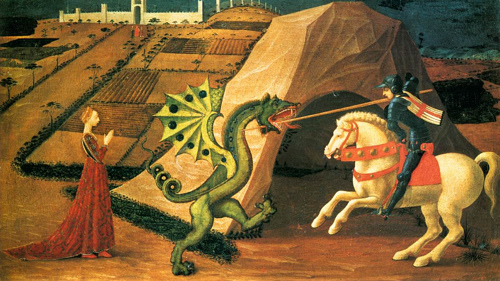
St. George and the Dragon by Paolo Uccello, ca. 1458

St. George and the Dragon by Paolo Uccello, ca. 1458

I think we know what he meant in 2004 by speaking of “paranoid kings” whose nobles live in “the enclosed asylum of security.”  It has only gotten worse. How desperate the Ogre is to quash any budding heroes was revealed in a piece on August 19 on Time.com, “School Has Become too Hostile to Boys,” by Christina Hoff Summers.  Three seven year old boys, in Virginia, Maryland, and Colorado, were recently suspended from school for the following acts:

  1. Using a pencil to “shoot” a “bad guy.”
  2. Nibbling a pop-tart into the shape of a gun.
  3. Throwing an imaginary hand grenade at “bad guys” in order to “save the world.”

The rationale for these suspensions were “zero tolerance for firearms” policies.  Punishing pop-tart weapons in a culture that went on a gun buying binge in the wake of the Sandy Hook shootings seems too ludicrous to believe unless you see it from Hillman’s perspective – another step in the dragon’s war on imagination, in this case, the male imagination, the perspective from which most of our current hero myths derive.  Along with banning snack food guns, such schools have renamed “tug of war” games as “tug of peace,” and halted dodge ball as too violent.

Fortunately, as Christina Hoff notes, such efforts to “re-engineer imagination” are doomed to fail – all they will do is “send a clear and unmistakable message to millions of schoolboys: You are not welcome in school.”

In We’ve Had a Hundred Years of Psychotherapy and the World is Getting Worse, 1993, Hillman made clear his belief that pathology lies in cultures as well as individuals, and we deprive the world of something when we take our rage and our grief exclusively to the therapist.  Hillman never shied away from critiques of the world at large.  Depression is “an appropriate response” to the world we live in, he said.

Yet stronger than the Ogre, said Hillman, is the myth of the Hero – not this or that particular hero, but the heroic pattern itself that Joseph Campbell restored for our times, which renews culture “by revivifying the archetypal imagination displayed by peoples the world over…The panoply of materials that Campbell catalogued shows that the hero wears a thousand faces and cannot be reduced to the modern ego.  Especially important in recognizing him is recognizing the heroic liberating function of myth – that it speaks truth to power, even the Ogre’s power.”

We know from history and the nightly news how much suffering the decay of empires involve as paranoid kings strive desperately to hold on to power.  We also have the examples of James Hillman and Joseph Campbell, who spent their lives pointing toward soul, psyche, and the language of myth and imagination.  That is where we must look to find the larger truth – the hero brings the gift of renewal as surely as spring returns after the darkest time of the year.

Big news for online education

In mathematics, an inflection point is the place on a curve where the curvature changes from concave upward (positive) to concave downward (negative) or vice versa.

point_of_inflection

Andy Grove, former Intel CEO, gave the term a new relevance.  In his management book, Only the Paranoid Survive, he wrote:  “A strategic inflection point is the time in the life of a business when its fundamentals are about to change.  That change can mean an opportunity to rise to new heights.  But it may just as likely signal the beginning of the end.”

Grove borrowed a parallel term, “disruptive technology,” from business writer, Clayton Christensen.  A disruptive technology is an innovation, very often appearing crude at inception, that can change or eliminate entire industries.  The first horseless carriage must have seemed silly to buggy makers, just as the first kindle looked like a toy to brick-and-mortar bookstores.

A week after my first post on free online college classes, an article in Sunday’s Sacramento BeeAn elite school offers master’s degree online, suggests that we’ve already  passed an inflection point and that online coursework is a “disruptive technology” that is destined to change higher education in ways we cannot yet grasp.

Online classes are nothing new; I took an early online programming class in 1998, with mixed results.  Online graduate degree programs in business as well as software exist, many offered by private colleges.  What’s different now is the scale.

Beginning in January, Georgia Tech will offer online master’s degrees in computer science at a cost of $6,600, compared to the $45,000 price tag for the same courses taken on campus.  Some of the funding comes from AT&T which “will use the program to train employees and find potential hires.”  Estimates of future interest in this degree run as high as 10,000 students a year, including international participants.

Because of Georgia Tech’s prestige and the ambitious nature of this undertaking, educators are watching closely.  There is no guarantee of success for this particular program, but from the perspective of student loans alone, there is a huge need for innovation of this sort.  The first producers of new technologies are not always the ones who succeed, but like the first makers of personal computers and ebooks, they define inflection points that change the world.  Georgia Tech may well be doing the same thing.

Notes on spies, cowboys, and heroes.

I’ve done some car travel recently, and that is my favorite time to listen to audio books.  This time I picked a spy novel by a popular author I hadn’t read before.  I’ll discuss the specifics when I finish the story, but it sparked some new thoughts on a subject that I’ve written about before:  heroes, antiheroes, and how they change with the times.

As a teenager, I loved reading James Bond novels and probably finished all 11 books that Ian Fleming wrote between 1952 and his death in 1964.  In the novels and early movies, 007 was confident and competent in every area of life, including protecting a world in which good and evil were clearly defined.  That wasn’t just the fantasy of an adolescent male; Fleming’s huge popularity suggests that Bond embodied much of the cultural dream of the early cold war era.

Sean Connery and Ursula Andress in "Dr. No," the first Bond movie, 1962

Sean Connery and Ursula Andress in “Dr. No,” the first Bond movie, 1962

Fleming’s first novel, Casino Royale, was published in 1952, just seven years after the end of World War II, a conflict in which the author served as a naval intelligence officer.  There was little moral ambiguity in Fleming’s world or in his novels.  How different that is from the latest Bond movie, Skyfall, 2012, where moral clarity is scarce, and the adversary of British Intelligence is one of their own, gone rogue.

skyfall4

Daniel Craig makes a good Bond but has little time to exhibit all of Sean Connery’s gentlemanly skills.  This 21st century Bond is too busy killing people to worry about whether his drinks are stirred or shaken.

I’ve watched more westerns than spy movies, so that’s where I’ve seen the changing dynamic of heroes with greatest clarity.  Yet I begin to sense a parallel progression in both genres.   Using westerns as examples, I think we can identify three types of protagonists:

The Hero:  He (it’s always “he” in this kind of western) fights for a righteous cause, greater than himself.  In John Ford’s classic Fort Apache, John Wayne may feel for the Apaches, and thrash the corrupt trader who sold them whisky, but they still have to go back to the reservation.  It’s manifest destiny – the American way.

Fort Apache, 1948

Fort Apache, 1948

The Anti-hero:  Though the term dates from the 18th century, Clint Eastwood’ westerns pushed it into the popular lexicon.  There are no grand causes in these movies, just the gritty play of good and evil, but there is still room for the stranger – or in one of my favorites, Pale Rider, 1985, “the Preacher” –  to lend his aid, and especially his skill as a gunfighter, to those he finds deserving.

Clint Eastwood as Preacher in "Pale Rider."

Clint Eastwood as Preacher in “Pale Rider.”

The Non-hero:  This protagonist may be sympathetic, but should not bear the title of “hero,” with its implication of honor.  He’s the winner who gets to write the history, and that may be his only claim to moral high ground.  In Unforgiven, 1992, Clint Eastwood plays William Munny, a widower who has tried to give up killing and drinking.

"Deserving's got nothing to do with it," says  Munny in "Unforgiven

“Deserving’s got nothing to do with it,” says Munny in “Unforgiven”

Unfortunately, he’s failing in his new trade as a pig farmer, so to raise money to support his kids, he takes one more job as a hired killer: to take revenge on two cowboys who disfigured a prostitute.  The body count is a higher than two when the movie ends with an epilogue saying Munny is rumored to be in San Francisco and prospering in the dry goods trade.

***

So why does this matter?  I’ll have more to say on this in my next post, but for now, a couple of ideas that come to mind are:

– In the movies I’ve highlighted, we see the concern of characters shrinking from the common good to narrow self-interest.  This is a trend we see echoed in headlines every day.

– What do we mean when we call someone a “hero?”  Do we actually bestow the name, or is it most often done for us by various outside agencies, usually of the government or the entertainment industry?

– When is the last time we heard the great story that Joseph Campbell identified as the “monomyth?”   “A hero ventures forth from the world of common day into a region of supernatural wonder: fabulous forces are there encountered and a decisive victory is won: the hero comes back from this mysterious adventure with the power to bestow boons on his fellow man.”

I’ll have other reflections to add to this in the next post.

MIT Open Courseware

Open: characterized by ready accessibility and usually generous attitude: as (1) : generous in giving  – Webster’s Online Dictionary

“The idea is simple: to publish all of our course materials online and make them widely available to everyone.” – Dick K.P. Yue, Professor, MIT School of Engineering

Between 1968 and 1972, an idealistic Stanford educated biologist named Stuart Brand published an amazing compendium of ideas called, The Whole Earth Catalog:  Access to Tools.  The title came from photos of our planet taken from space – appropriate, since it was Brand who launched a public campaign in 1966 to get NASA to release the pictures.

In his 2005 Stanford graduation speech, Steve Jobs said, “When I was young, there was an amazing publication called The Whole Earth Catalog, which was one of the bibles of my generation…. It was sort of like Google in paperback form, 35 years before Google came along. It was idealistic and overflowing with neat tools and great notions.”

One of the great notions that inspired Jobs and other idealists was the thought of putting computing power into the hands of “the people.”  That much has been accomplished.  Every kid with a smartphone holds more computing power in the palm of one hand than NASA had when they made those pictures in space.  Now, off course, we see plenty of less-than-ideal side effect of the digital age – unintended consequences that dreamers like Brand did not imagine.  I won’t repeat the headlines – if you’re reading this blog, you’ve seen them.

That is all the more reason why it’s a pleasure to learn how one of our finest universities has embodied the best of the information age dream in order to benefit people all over the world.  The Massachusetts Institute of Technology has freely posted class materials from every one of its courses online – MIT Open Courseware.

Sign on Canal Street, New Orleans, CC-BY-SA-3.0

Sign on Canal Street, New Orleans, CC-BY-SA-3.0

Under the “Courses” button, you can see class offerings by department.  I invite everyone to look at some of the courses.  The technical classes are vast and impressive, as one would expect, but they aren’t the only ones.  I saw more than one syllabus in the Literature section I plan to check out.  This is attractive enough, but I think the importance of MIT’s move goes beyond personal enrichment.

Our system of higher education is floundering; while technical jobs go unfilled for lack of qualified applicants, tens of thousands of students who thought a college degree was the door to a better life find themselves saddled with debts that amount to 21st century indentured servitude.  The recent congressional “fix” will make few besides college administrators and bank loan officers happy over the long run.  I saw a different model in play during earlier days of the tech boom.

The best boss I ever had, now an industry expert in semiconductor design rules, went to work with a two year degree in drafting.  A friend who was a senior systems analyst studied math in college for three years and then dropped out.  After that, he went to work in a hospital that wanted to computerize; when no one else knew what to do, he gave it a shot.  My own experience was similar.  Clearly this doesn’t apply to every field – you don’t want your doctor learning by trial and error – but inventiveness, ability, and the ability to learn are not guaranteed by a formal degree.  The lack of a degree does not proves those qualities are missing.

As I noted in my review of The Unwinding by George Packer, Peter Thiel, a Silicon Valley entrepreneur and co-founder of Paypal believes that education is America’s “latest bubble.”  He offers grants to people under the age of 20 with ideas that “could make the world a better place,” if they are willing to leave school for two years to strike out on their own.  I see parallels between education now and traditional publishing at the start of the ebook era.

The digital world we now inhabit brings multiple ways of doing more and more things.  The good people at MIT, who live at the proverbial cutting edge of technology, should be applauded for their decision to share their vast resources with anyone, anywhere.  Good dreams change, but they survive.  Forty-five years after the first Whole Earth Catalog, “Access to Tools” has a whole new shape.  I hope we see much more of the same.

The Arcade Of Automatons

No one online presents the fascinating and sometimes disturbing art of fantasy quite like Lily Wight. Check out her Arcade of Automatons. The soul of objects and objects becoming ensouled have been part of the human dream in stories like Pygmalion, Pinocchio, and the recent movie, Hugo. Physical representations can be downright spooky. Ok, maybe not the lego automaton, but how about the skull and crossbones clock or the 16th century monk? Enjoy these great finds.

The day the music died

“We need magic and bliss, and power and myth, and celebration and religion in our lives, and music is a good way to encapsulate a lot of it.” – Jerry Garcia.

I was carried away in a rapture. And so i am a Deadhead now…” —Joseph Campbell

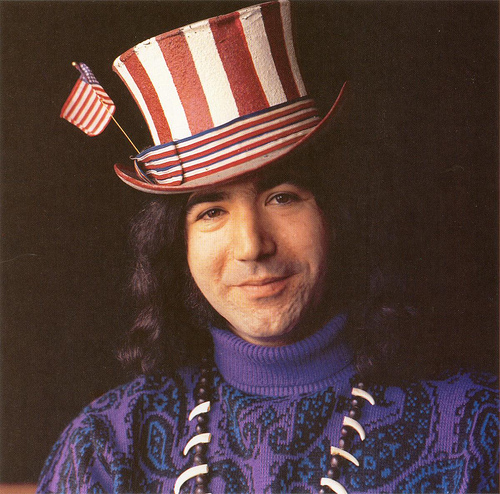
Jerry Garcia, 1966, by Zooomabooma, CC By-NC-SA 2.0

Jerry Garcia, 1966, by Zooomabooma, CC By-NC-SA 2.0

With all due respect to Don McLean, the music died on August 9, 1995, the day we lost Jerry Garcia, lead guitarist and most easily recognized member of the Grateful Dead.  Between 1965 and 1995, the Dead played an average of 77 shows a year.  Though volumes have been written about the experience, it is difficult to put into words.  Joseph Campbell was friends with several members of the band.  In a 1986 symposium with Garcia, drummer Micky Hart, and several Jungian analysts, Campbell said:

“The genius of these musicians- these three guitars and two wild drummers in the back… Listen, this is powerful stuff ! And what is it ? The first thing I thought of was the Dionysian festivals, of course…This is more than music. It turns something on in here (the heart?). And what it turns on is life energy. This is Dionysus talking through these kids. Now I’ ve seen similar manifestations, but nothing as innocent as what I saw with this bunch. This was sheer innocence…This is a wonderful fervent loss of self in the larger self of a homogeneous community. This is what it is all about!”

The Dead were always a touring band, and the shows were unique events that people loved or hated – I’ve never met anyone who was indifferent.  When they played Sacramento or Oakland on weekdays, half of the people in my department at work – and we’re talking electrical and software engineers – would arrive in the morning in tie-dye and take the afternoon off to attend.  The other half could not have cared less.

Campbell’s assessment reveals the “innocent joy” I felt after my first few shows, captured by the lyrics of “Scarlet Begonias:”

Strangers stopping strangers just to shake their hand,
Everybody’s playin in the Heart of Gold Band.

In reality, you don’t get that close to Dionysus without paying a price.  Thirty years on the road took its toll on Garcia.  In the summer of 1995, he checked himself into a rehab facility and died in his sleep of heart failure a week after his 53d birthday.

Jerry and the Dead left us a huge musical legacy, with at least one song, “Truckin,” designated as a National Treasure by the Library of Congress.  Surviving members of the band continue to release the best concert tapes, and everything has just been remastered for iTunes.  You can look at the collection here: Grateful Dead on iTunes.

In the end, maybe Joseph Campbell, with his eyes of innocence, saw it most clearly when he said, “It doesn’t matter what the name of the God is, or whether it’s a rock group or a clergy. It’s somehow hitting that chord of realization of the unity of God in you all, that’s a terrific thing and it just blows the rest away.”

Rest in peace, Jerry, and thanks for the ride!