Alternate views of the evil empire

Here is another take on the Amazon / Hachette controversy by Barry Eisler, a former CIA operative and best-selling author of thrillers. Eisler made headlines in 2011 when he turned his back on traditional publishing (which he calls “legacy publishing”) to publish his work independently on Amazon.

In this June 4 article in The Guardian, Eisler ticks off these pluses for Amazon: it “singlehandedly created a market for digital books, [is] now the greatest source of the legacy publishing industry’s profitability (though of course legacy publishers are sharing little of that newfound wealth with their authors)…built the world’s first viable mass-market self-publishing platform, a platform that has enabled thousands of new authors to make a living from their writing for the first time in their lives. And [it] pays self-published authors something like five times as much in digital royalties as legacy publishers do.”

Eisler makes some interesting arguments while waving a red flag (Amazon-hating authors are the literary “one-percent”). I recommend the article to anyone interested in this current publishing brouhaha. My biggest takeaway was Eisler’s simple observation, in an otherwise complex debate, that individual attitudes are probably based more on personal interest than selfless concern for the future of literature. To blame Jeff Bezos for the loss of bookstores, he says, is like buggy makers blaming Henry Ford for the development of internal combustion. Though some of his analogies may be questionable, they point toward two facts that are not: (1) new technologies never go back into the box, and (2) their ramifications are never known at the outset.

I was halfway through the paragraphs above when the postman brought the June 16 issue of Time, with an essay on the back page by Joel Stein, Hachette author of Man Made: A Stupid Quest for Masculinity.

Stein ventured, “with trepidation,” to Amazon “to see what barbarism it had committed on my book’s page – changing my author photo go one of my high school mullet shots, perhaps, or allowing yet more people to start their one-star reviews with ‘No, I haven’t read this book.'”

When he found nothing amiss, Stein sadly reflected that Amazon, with its cutting edge algorithms, had to know how much it would hurt his ego and confidence to be left out of the feud. “I have no idea who will publish my next book,” he says, “though I do know they’ll be sorry they did.”

Diversity and variety are central to the richness of life. I’m old enough to remember and miss various mom and pop stores of all kinds, not just bookstores. A local nursery used to employ master gardeners, who could look at a sick leaf and tell you exactly what to do. Through no fault of their own, the people who work in the Lowe’s garden section can only tell you, “Fertilizers are down aisle one.” As a kid, I learned to make flying airplanes out of balsa wood and tissue paper at a local hobby shop; it was a far more interesting place than any Toys ‘R Us.

Right now, perhaps all we can do in the publishing battle is watch and wait, and opt for diversity and richness in whatever way we can.

To the barricades! No, the other barricades.

Printing, ca. 1568.  Public domain.

Printing, ca. 1568. Public domain.

“Right now, bookstores, libraries, authors, and books themselves are caught in the cross fire of an economic war. If this is the new American way, then maybe it has to be changed — by law, if necessary — immediately, if not sooner.” – James Patterson

I haven’t blogged about ebooks and independent publishing lately. Over the last few years, it’s become clear they are here to stay. Success breeds acceptance, and the “vanity press” stigma is gone. In olden days (ca. 2011), I found a kind of “blows against the empire” satisfaction in promoting ebooks, writing reviews, and encouraging Indie authors. The evil empire was big publishing. This was the time of the little guy.

I still like Indie authors, though the “righteous cause” fantasy is gone. Now suddenly, at least to a casual observer like me, the situation appears reversed, with Amazon in the role of bully-boy, and those same publishers (perhaps) fighting for their existence, and with them (maybe) hangs the fate of a lot of remaining brick and mortar stores.

I first learned of the Amazon-Hachette duel from Michael Koryta, a favorite action-adventure writer I follow on Facebook. On May 19, Koryta reported serious problems pre-ordering his new book, due out June 3, from Amazon. He said the situation goes far beyond the interests of one author, and provided some of the links posted below.

On May 29, USA Today quoted James Patterson as saying “the future of our literature is in danger.” Patterson says that “Amazon wants to control book buying, book selling and even book publishing,” and laments that federal anti-trust laws no longer have teeth.

Here are several editorials on the situation:

Amazon vs. Hachette: When Does Discouragement Become Misrepresentation? From the NY Times Blog

Amazon said to play hardball in book contract talks with publishing house Hachette The Washington Post

AAR Calls Out Amazon in Hachette Dispute, From a statement sent by Association of Authors Representatives to Amazon.

And if I was only going to read one account of this dispute, I’d chose this one by Mark Coker, founder of Smashwords and early champion of ebooks, who believes in the vitality of a diverse writing and publishing world: Amazon’s Hachette Dispute Foreshadows What’s Next for Indie Authors

I’ve heard Coker speak on several occasions, and he’s a keen observer of a complicated landscape and future. His predictions on publishing tend to be right. In this post, he explains that the conflict centers on “agency pricing,” and who gets what profit margin for ebooks. Amazon is demanding a greater share. Here is what is at stake, says Coker:

“Books represent only one of hundreds of layers of icing on the cake of Amazon. Amazon can lose money on books while still operating a profitable business. Pure-play book retailers – Kobo and Barnes & Noble for example, must earn money from book sales. Unlike Amazon, they don’t have the financial resources to sell books at a loss forever…If Amazon can abolish agency pricing it will have the power to put its largest pure-play book retailing competitors out of business. This will make the publishers even more dependent upon Amazon, which further weakens their power.”

That’s the bad news. The really bad news, according to Coker, is that next they’ll come after Indie authors, just as they have in their audio book division, Audible. Gone are the 70% margins for authors that the agency model protects. Instead, exclusive Audible authors get 40% while the non-exclusive rate is 25%.

Coker winds up with with advice for independent authors, who, he says, are “the future of publishing.” It’s well worth reading the details in his article, but here are his main suggestions:

  1. Choose your partners carefully.
  2. Favor retail partners that support the agency model.
  3. Avoid exclusivity.
  4. Support a vibrant ecosystem of multiple competing retailers.

Remember the vibrant ecosystem of multiple competing book retailers? Though it is on the ropes, it’s not yet extinct. That’s worth thinking about and will be the subject of my next post.

A spring break medley

medley (med-lē) n., 1 a mixture of things not usually placed together; heterogeneous collection; hodgepodge.

A quiet week, with many ideas wandering through my mind without quite attaining blog post velocity. Sitting here, with a cup of coffee and the windows open to a fine spring morning, I decided to scoop up some of these notions, not necessarily in order of importance, and present them to you as a medley, or hodgepodge as the case may be.

On Mickey Rooney: I wish I had known that last Sunday, all day, Turner Classic Movies was  hosting a day of Mickey Rooney movies. I tuned in late, but did get to see Boy’s Town (1938) and The Human Comedy (1943), both notable for their idealistic and almost too sentimental presentation of American life. Boys Town tells the story of Father Edward Flanagan (Spencer Tracy), who founded a home for abused and delinquent boys in Nebraska. Rooney plays Henry Hull, the tough kid who tests Flanagan’s belief that there is “no such thing as a bad boy.”

Tracy and Rooney in "Boys Town," 1938

Tracy and Rooney in “Boys Town,” 1938

In addition to the real life humanity of Flanagan, whose Boys Town still exists in the Midwest, the film reflects 1930s progressive ideals, as well as an older, deeper, American romanticism, the belief that by nature, we are noble beings, corrupted only by cultural dysfunction. Watching Boys Town, I thought of the next great eruption of that ideal in the ’60s and remembered a line from Crosby, Stills & Nash that almost stands as an epitaph for that era: “It’s been a long time coming / it’s gonna be a long time gone.” The album came out in 1969, the year Charles Manson called optimism like Father Flanagan’s into serious question.   

Mother Nature on the run: Now that I’m thinking of Crosby, Stills & Nash, that phrase popped to mind as title for this subsection, though it’s really about animals on the run. An editorial in yesterday morning’s paper, The case for banning wildlife-killing contests by Camillia H. Fox, outlines the common practice of for profit, recreational predator hunting contests.

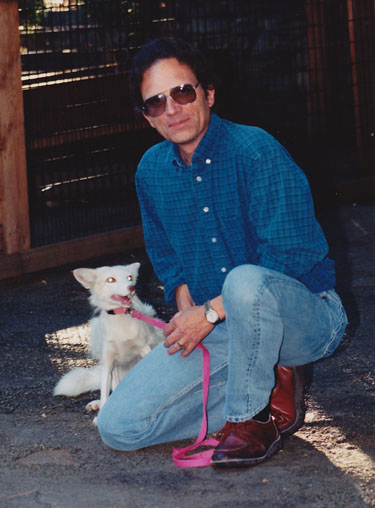
Exercising Vixen the fox while a volunteer at the Folsom City Zoo, ca. 1996. She was a sweetheart, though a bit of a drama queen. Is this the enemy?

Exercising Vixen the fox while a volunteer at the Folsom City Zoo, ca. 1996. She was a sweetheart, though a bit of a drama queen. Is this the enemy?

“The greatness of a nation and its moral progress can be judged by the way its animals are treated,” said Mahatma Gandhi. It is heartening to learn that pushback is growing, both from citizens and state Fish and Game Commissions. In California, commission president, Michael Sutton said:

“I’ve been concerned about these killing contests for some time. They seem inconsistent both with ethical standards of hunting and our current understanding of the important role predators play in ecosystems.”

The way we treat the animals seems increasingly to be like the way we treat each other. Witness the case cited in the article, of the organizer of one of these killing contests, who (allegedly) pushed a 73 year old man to the ground for trying to photograph the event. We have to say, “allegedly” because, although the older man’s spine was fractured, the perpetrator has yet to be charged. This is not what our founding fathers meant when they spoke of a “well ordered militia.”

Of Jungians and Tibetans: I’ve recently started, with keen interest, The Psychology of Buddhist Tantra (2012) by Rob Preece, an in depth practitioner of both Jungian psychology and Tibetan Buddhism. Tibetan iconography is striking and vivid, almost begging for Jungian analysis, but most western commentators, including Jung himself, have written about it as outsiders looking in.

Not Preece, who studied with Lama Thubten Yeshe, one of the greatest 20th century Tibetan teachers to come to America. Lama Yeshe understood Jung and understood that Buddhist practice has always undergone change when crossing geographic and cultural boundaries.

Preece writes of Col. Francis Younghusband, who visited Tibet in 1904. Seeing pictures of wrathful deities, Younghusband concluded that this was a culture that worshiped demons. Jungians may pounce on the concept of shadow, but that too, will often be wide of the mark. Although Tibetans and Jungians both understand such imagery as depicting internal qualities, in this case, it is wrathful energy in the service of compassion. It’s the energy of, “This shit’s gotta stop!” The energy that led Camilla Fox to start a foundation to stop the slaughter of animals.

Two large gatherings: Over the last two weekends, I took part in two separate events which drew hundreds of people. Both were immensely satisfying days of harmonious groups, drawn together by shared interest, working cooperatively and having a lot of fun doing so. It’s almost enough to make you believe in no such thing as a bad boy or girl, in Mickey Rooney’s America.

That fundamental goodness is precisely what the Tibetans and Buddhists in general believe, even with their finely honed awareness of both relative truth, here in the trenches, and ultimate truth. Our ultimate nature, they say, the ground of our being is pure, unstained by any event, the way the sky is unstained by pollution. The bad news is, it can take eons for us to figure this out; a weekend at Woodstock is clearly not enough.

Still, I always feel energized after such gatherings, even as that wrathful energy rises at the thought of all the artificial barriers that divide us in our day to day lives. That’s something everyone has to work out for themselves. Meanwhile, I felt like listening again to Crosby, Stills & Nash. I hope they’re right in this song: that it’s always darkest before the dawn.

Media musings

I find most alliterative titles, like “Media musings,” to be about 40% cute and 60% annoying, but in this case, it’s a good match for the headline that inspired this post: “Ellen’s Oscar ‘selfie’ a landmark media moment.”

“A what moment?” I mused.  “A landmark media what?”

Because the media is falling over itself to celebrate Ellen’s tweet, and because nature abhors a vacuum, it has fallen to me to be the curmudgeonly voice of this “event.”  One of the first things a curmudgeon does is reach for the dictionary.  A “landmark event” is “an event, discovery, etc. considered as a high point or turning point in the history or development of something.” 

At first I thought it must be the high point of product placement.  The picture in question was taken with a Samsung phone, Samsung was a big Oscar sponsor, and the Academy Awards are the biggest post-Super Bowl marketing event.  But that’s not really new news.  Reading on, I realized the article referred to a landmark social media event. Since tweeting about TV isn’t new, an expert, in this case an Oscar co-producer, had to explain it to the likes of me:

“What it’s all about right now is creating a conversation, and social media allows for the conversation as it’s happening.”

Oh thanks, now I understand.

The dogs don’t like me being a curmudgeon, so while I was writing this post, Kit grabbed my (non-Samsung) phone and snapped a selfie, hoping to create a new conversation.

Kit snaps a selfie

Kit snaps a selfie

“It’s all about what’s happening now,” she says, explaining why she wants to establish a social media presence.

So the price I pay for being a curmudgeon is having to ask all you loyal readers to give my dog a tweet (she accepts treats as well).  After all, she is cuter than Ellen’s crew, and she hasn’t been real annoying since puppy days when she chewed up my wife’s phone.  That really happened, but it’s a story for another day, and right now I need to let you log onto your twitter accounts.  Don’t forget – it’s all about right now.

Pope Francis on Economic Justice

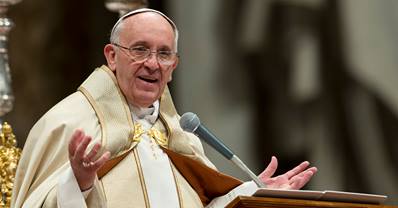
Pope Francis

“How can it be that it is not a news item when an elderly homeless person dies of exposure, but it is news when the stock market loses 2 points?” – Pope Francis (1)

On Tuesday, Pope Francis delivered a sharp rebuke of unfettered capitalism as “idolatry of money” that will lead to “a new tyranny.” (2)  His language was specifically directed at those in the United States who continue to defend “trickle-down economics,” which he said “has never been confirmed by the facts, [and] expresses a crude and naive trust in the goodness of those wielding economic power.”

“Meanwhile,” he said, “the excluded are still waiting.”

President Obama said he was “hugely impressed with the pope’s pronouncements.”  Nevertheless, on Wednesday, the US announced it will close its Vatican embassy as a “cost saving measure.” (3)  The seven embassy staffers will be retained, just moved beyond the borders of Vatican City, which is the world’s smallest sovereign nation.

Republican senators, many of whom still advocate the trickle-down policies the pope condemned, were quick to denounce the administration’s move as “a slap in the face to Catholic Americans around the country.”

Though I’m not a Catholic, I find myself deeply grateful on this day of thanks, for the current Vicar of Christ.  When politicians of all persuasions spend most of their time defending an increasingly dysfunctional status quo, it is refreshing and marvelous to find a world leader willing to speak the truth.


Delisting the Wolf – Your Help is Needed!

If wolves are removed from Endangered Species protection, the day may soon return when there are none in the lower 48. I’ve worked with these magnificent creatures as a volunteer at the Folsom City Zoo Sanctuary, and in my opinion, that would be a tragedy. Please read this article and make your comment on the Federal website.
Update: As of November 6 at 5:00pm, the website is up again and I was able to comment.

Mungai and the Goa Constrictor's avatarMungai and the Goa Constrictor

The U.S. Fish and Wildlife Service is in its comment period on their proposal to remove the wolf from the Endangered Species Act in the lower 48.  Hearings are being held throughout the country.  If you can go, please do.  If that’s not possible, please write or call.  They need to hear from people who want the wolf protected, not only from those who don’t.

AMENDMENT
Many thanks to my good friend, Carmen Mandel, for providing a DIRECT LINK to add your comments. Please add yours. There are almost 32,000 signatures, as I write this, but this figure falls a long way short of previous opportunities.
This is so important
Please add your comment now
Your Voice in Federal Decision-Making

ALTERNATIVE WAYS TO COMMENT
Please click here for details

Click here for more details:
The U.S. Fish and Wildlife Service

Related links:
Defenders of Wildlife
Grey Wolves Left Out…

View original post 59 more words

James Hillman on world change and political polarization

James Hillman, 1926-2011

James Hillman, 1926-2011

For decades, James Hillman brought us unique observations on modern life from the perspective of a depth psychology that embraced soul as its highest value.  Recently, I’ve wished I could hear his take on our current climate of political divisiveness, but Hillman, who died two years ago at the age of 85, wasn’t here to watch our most recent shenanigans.  Happily, I recently stumbled upon a pair of interviews in which Hillman discussed this very subject and set it in a context of massive cultural change.

Author and journalist Pythia Peay published the first interview on The Huffington Post in February, 2011 (Jungian Analyst Explains the Psychology of Political Polarization).  The occasion for their talk was the mass shooting in Tucson, which had happened a month earlier.  The most prominent victim was Representative Gabrielle Giffords.

Tragically, memory of that event, just two and a half years ago, has been lost in the wake of more recent carnage, including the Nevada school shooting earlier this week.  Though Hillman’s comments focused on the role of political divisiveness in the attempt to kill a congresswoman, his additional statements now seem eerily relevant to the 12 year old in Sparks who was so alienated that he ended his life with murder and suicide.

Hillman began with a general discussion of polarized thinking.  “Polarity,” he reminds us, is an electrical engineering term.  Batteries have poles; the psyche is far more nuanced than that, dwelling in shades of gray rather than black or white.  Ideological extremes subvert our ability to judge individual issues on their merit.

When asked if violently polarized politics caused the shootings, Hillman changed the focus to another kind of cultural rigidity and its effect on the Tucson shooter:

“I think that this kid was made a loner by an American educational system in which there is no room for the weird or the odd…We need to have an educational system that’s able to embrace all sorts of minds, and where a student doesn’t have to fit into a certain mold of learning. Our educational system has become so narrowed to a certain formula, that if you go through a weird phase, you’re dropped out — often at the age of schizophrenia, 19-23 — and that’s the danger.”

Arguments in the wake of gun violence bog down in specifics, like background checks and how many bullets a magazine should hold – we don’t ask why and how we’re producing more and more people prone to mass violence.  In the end, says Hillman, for a culture that pays so much lip service to “the individual,” we are terrified of real individuality, and attempt to stamp it out.

In the second interview, America and the Shift in Ages, Hillman suggests that much of that rigidity has to do with futile attempts to shore up outmoded systems and institutions during a period of massive change.  Not just one but “three or four” myths that are central to our culture are collapsing.

Everything we fear has already happened said Hillman:  “The fragility of capitalism, which we don’t want to admit; the loss of the empire of the United States; and American exceptionalism. In fact, American exceptionalism is that we are exceptionally backward in about fifteen different categories, from education to infrastructure. But we’re in a stage of denial.”  Other beliefs and structures are crumbling as well, he said.  White supremacy, male supremacy, the influence of monotheistic religions, and the belief that we are “the good people.”

If such institutions do not appear to be in decay, it’s because they are so staunchly defended, and that, Hillman says, is a sign of their lack of vitality — “If they were vital they wouldn’t need to be defended. And the fanaticism we’re witnessing goes along with the deterioration of the vitality of these myths.”

Many of our fundamental beliefs are under scrutiny and need to be.  Hillman mentions the meaning of “freedom.”  For many, freedom means, “I can do any goddamn thing I want on my property; that I am my own boss and don’t want government interference; that I don’t want anybody telling me what I can and can’t do.”  This, he says, is the freedom of an adolescent boy.  What of the different kinds of freedom, such as “freedom from the compulsions to have and to own and to be someone?”  What of the freedom Nelson Mandela found in prison?

Hillman cites economic assumptions that need to be questioned as well.  Falling demand needs to be stimulated, according to current assumptions, but from an ecological point of view, that’s exactly what the world needs at this time.  Sustainability models, which may be our hope for the future, terrify those in positions of power.

Many of our current fears, says Hillman – from fear of immigrants crossing our borders, to fear of failing education, to fear of cancer, to economic insecurity, terrorists, and of course fear of “the other” political party, results from the lack of a wider framework in which to understand the massive shifts that are already underway.

There is no going back, but as obsolete structures crumble, we can glimpse, if we look, new forms emerging.  Hillman gave the example of a “Bioneers” conference he attended where Paul Hawken showed a film that was simply the names of individuals and organizations involved in trying to innovate ways of building communities, economic systems, and ways of dealing with the natural world.  Hawken said there were thousands of names, and the film could roll for weeks.

Hillman said it’s important not to try to fit emerging structures into the patterns of the past.  For our peace of mind, a new kind of faith is required:   “I think it’s a matter of being free-wheeling, and trusting that the emerging cosmos will come out on its own, and shape itself as it comes. That means living in a certain open space — and that’s freedom.”

Dawn over Oostende, Belgium, 2007.  Photo by Hans Hillewaert, CC-BY-SA-3.0

Dawn over Oostende, Belgium, 2007. Photo by Hans Hillewaert, CC-BY-SA-3.0

Such words are a fitting conclusion to the lifework of a man who lived in defense of Anima Mundi, the World Soul and who taught that animals, trees, and rivers are intelligent and alive, and that at some deep level of the psyche, we can hear their voices.  In Hillman’s life work, observation of the modern psyche led to conclusions that mesh with the myths of the ancestors.

A thousand years from now, people will read of our times and shudder, as we do in contemplating the rigors of life in the middle ages.  A few visionaries stood out from the rest, those like Saint Francis, Dante, and Leonardo, who pointed toward a more benevolent and expansive future.

We cannot write our own history, but we can wonder how it will look to those in the future.  I am convinced that James Hillman will be remembered when most of what passes for news on TV is blessedly forgotten.
Full Faith and Credit: a personal story and parable.

My wife and I got married in Santa Fe in 1976.  We didn’t have a lot of money, but our mothers were gone and our families and friends were on the coasts, so there would only be eight in the wedding party.  We arranged to have the reception and put everyone up at the lodge in a nearby national monument.

I worked in a printshop that had been one of the finest in town.  We still did brochures for the Santa Fe Opera, but signs were clear that the glory days were over.  A husband and wife team had started the shop, but they divorced, and with only one of them running the business, glitches appeared in the billing system, the revenues, and the payroll.  About the time we booked the rooms and locked in arrangements, my paychecks started to bounce.

The pressmen and I started cashing our checks at grocery stores and the boss’s bank, since our own banks charged fees for deposits that bounced.  The day before the wedding, a teller said, “I’m sorry, I can’t cash this check.  Your employer’s account is $1000 in arrears.”

“Please,”  I said.  “We’re getting married tomorrow, and we have to pay the caterers.  If they’re $1000 in the hole, what does another $150 matter?”

She bit her lip and scrunched up her eyebrows, then smiled, and handed me the cash.  “Congratulations!” she said.  “Have wonderful wedding day.”

Crisis narrowly averted.  But

Do you think I ever put my faith in that employer again?

Do you think other nations will put their faith in United States credit again?

I’ll answer the first question.  We set about saving money to move back to California where economic prospects were better.

I don’t know the answer to question number two, but I do know that trust takes time to build and is easy to squander…