A change coming

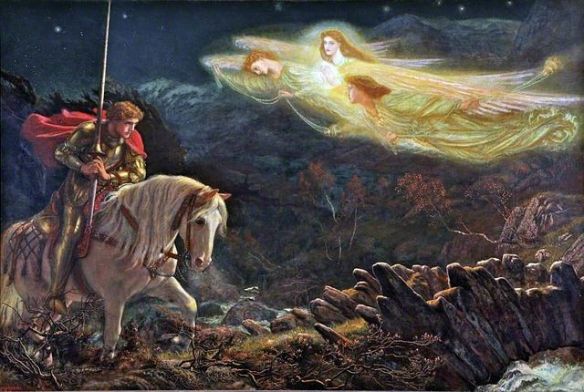
Sir Galahad, the Quest for the Holy Grail, by Arthur Hughes, 1870, public domain.

I’ve been enjoying the recording of a discussion at a conference with James Hillman and Michael Meade on literal, psychological, and mythological modes of understanding.

Hillman, a former director of the Jung Institute in Switzerland, has been the most prolific and influential of post-Jungian thinkers. He spent his life as champion of psyche, soul, and imagination in a world that has too few such champions. Hillman took particular aim at literalism, which he called “an idol that forgets it is an image and believes itself a God, taking itself metaphysically, seriously, damned to fulfill its task of coagulating the many into singleness of meaning which we call facts, data, problems, realities.” (Revisioning Psychology).

When I think of literalism, I recall the last lines of a poem a brilliant young poet I knew wrote about his high school principal:

His triple-breasted chin, arranged in folds upon his chest,
He blunts my life with a technicality.

Hillman also takes aim at much psychological thinking in books like The Soul’s Code. In this conference, he points to the 20th c. understanding that “The Gods now live in the psyche,” as a core statement of one of our greatest collective problems: the world and nature have lost their connection to the divine, and as such, are ripe for exploitation by greedy men who have traded their souls for profit. If you’ve seen one redwood, you’ve seen them all,” Ronald Reagan famously said when he was California’s governor.

Michael Meade noted that one of the hallmarks of myth is a sense of abundance. The current miasma of scarcity thinking – that there isn’t enough to go around, so you better get yours while you can – is a clear indication, if we need it, that we have no myth, no shared stories of who we are as a people. Continue reading
The White Snake – An Enigmatic Tale from the Brothers Grimm

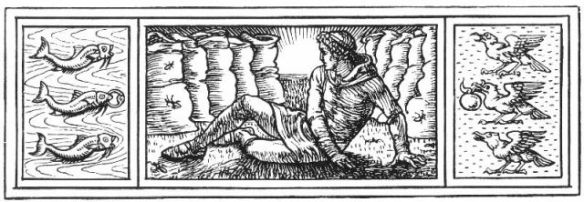
Illustration for “The White Snake” by Walter Crane, ca. 1886, Public Domain

I once had a professor who made an extensive study of world folklore and said the greatest predictor of success for a fairytale hero is winning the help of an animal guide. Most often, the helpful animals are mammals, like Puss-in-Boots or talking horses.

“The White Snake,” a story from the Brothers Grimm, alters this pattern in startling ways. The helpful creatures are far more primitive, and the hero actually kills his horse – yet things come out right. The story has stayed with me since I first encountered it, as a wisdom tale centered on the theme of knowing the right thing to do at the right time, even when it violates norms and expectations.

Commentary on myth and folktales is a recent tradition that arose after the old ways of absorbing these stories, around hearth and campfire, disappeared. We can imagine earlier listeners holding the stories in imagination, letting the magic sink in over time, as we do with favorite novels and movies. This is a great way to experience a story, and we’re fortunate to have a good eight minute recording of The White Snake, accompanied by the text from the Brothers Grimm.

I suggest you read and listen to the story if you don’t know it, for the rest of this post will simply be my reflections on a few of the key questions The White Snake raises. Continue reading

A Fake World

“All that we see or seem is but a dream within a dream.” – Edgar Allen Poe

The world’s spiritual traditions tend to agree with these words Poe wrote in 1849, the year of his death. To Hindus, this world is “maya,” meaning “a magic show, an illusion where things appear to be present but are not what they seem.” (1)

Buddhists call it “samsara,” a Sanskrit word for “wandering through, flowing on, aimless and directionless wandering,” signifying the involuntary cycle of death and rebirth that continues until we grasp the true nature of appearances (2).

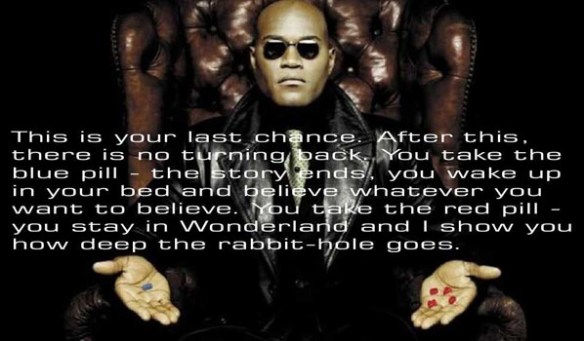
Jesus warned his followers that this is not the place to store up riches. In 1999, the Matrix reframed the appearance/reality question for the twenty-first century.

Being spiritual, doesn’t give anyone a pass on consensus reality. As Ram Dass put it, “We have to remember our Buddha nature and our social security number.” 

Navigating samsara has never been easy. Truth is hard enough to discover when we are sincere, let alone when we are not. That’s one reason why Buddha placed a special emphasis on truth as a core value. Not lying was one of his Five Precepts. He said, “When anyone feels no shame in telling a deliberate lie, there is no evil, I tell you, they will not do” (3). Continue reading

What would James Hillman say about all this?

James Hillman (1926-2011)

James Hillman, a genius in the field of psychology, is largely unknown to the general public. Only one of his many books, The Soul’s Code (1997), is widely known, and only because Oprah featured it. Hillman’s long time friend and editor, Thomas Moore, wrote a tribute and summary of his life after his death in October, 2011. Moore said, “Jame’s books and essays, in my view, represent the best and most original thought of our times. I expect that it will take many decades before he is truly discovered and appreciated.”

Hillman, who was, for a time, director of the Jung Institute in Zurich, founded “Archetypal Psychology,” an extension of Jung’s thought, centered on the poetic, imaginal basis of psyche or soul: “Every notion in our minds, each perception of the world and sensation in ourselves must go through a psychic organization in order to ‘happen’ at all. Every single feeling or observation occurs as a psychic event by first forming a fantasy-image.”

He criticized most 20th century psychologies as materialistic and literal, giving no space to soul. With journalist, Michael Ventura, he co-authored We’ve Had a Hundred Years of Psychotherapy and the World Is Getting Worse (1992). He was vehement in his condemnation of the exclusive “inward” bent of most psychotherapies, which deprive the world of our outrage and our energy. He gave the example of a man who works eight or ten hours a day at a meaningless job, at an ugly, uncomfortable desk, under flickering florescent lights. When he goes to a therapist for relief from depression, he’s likely to be asked how he got along with his mother… Continue reading

You Will Get Through This

I spotted this wonderful painted stone in the bushes near the entrance of our local library, on an early morning dog walk this week. How many smiles did this artist generate? How many people’s days were brightened?

The message is simple but intriguing. Get through what? This day? This period of crisis in the life of our nation? This life? Samsara? Whatever other personal burdens each one of us carries?

Such an attitude is a choice, and most of us have to practice long and hard to cultivate such a view, for negativity is easy, especially in times of rapid change like these.

Maybe the question this stone really asks is how do we want to live? The joyful colors of both the paint and the surrounding plants give us a hint of the most skillful answer.

Notes on Truth, June edition

The Washington Post reports that Special Counsel, Robert Mueller, has assembled a team with expertise in fields ranging from constitutional law to money laundering. This suggests that the just-announced criminal probe of the president for obstruction of justice may be only the beginning.

This is clearly bad news for the president, a congenital liar, and the GOP, which has risen to power by enabling him. Too bad their mothers never told them what mine did – that lies eventually get found out. My mother was not into philosophical subtleties with the truth. When she asked if I’d pulled the head off my sisters doll, I couldn’t duck the question by citing “alternate facts.”

It’s still a tossup whether our Liar in Chief and his minions will manage their corporatist takeover of the government, or whether our constitutional protections will bring them down first.

This effort means much more than simply removing a malignant leader from the helm of our once-great nation. It will be even harder to restore a respect for Truth in the public sphere. Politicians have always lied and voters have always know it it, but in a culture which values truth more than greed, liars are punished when discovered.

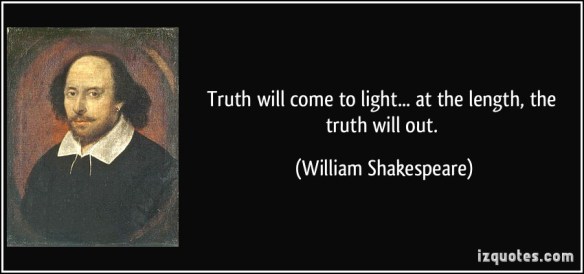
The natural world doesn’t care about our opinions. “Truth will out,” as Shakespeare said. Melting glaciers, rising seas, extreme storms, fires, and droughts don’t listen to climate change deniers.

This idea – that natural law wins in the end – brought to mind songs and stories from many traditions that echo that theme. I have only a vague recollection of most of them, but I am motivated to go on a search for two key reasons:

First, the old stories and songs reflect our collective experience, shaped by the wisdom of generations. They are comforting, like stones worn smooth, and it’s good to remind ourselves of what our ancestors knew for generations – lying doesn’t work in the end.

My second reason for digging into these stories is that it is likely a healthier pastime than checking social media morning and night to see what fresh outrage the Republican party has done.

I already have in mind a first example, one of my favorite old ballads that Garrison Keeler once called, one of the gloomiest songs ever written. That makes it just right for one of the darkest times our nation has ever endured.

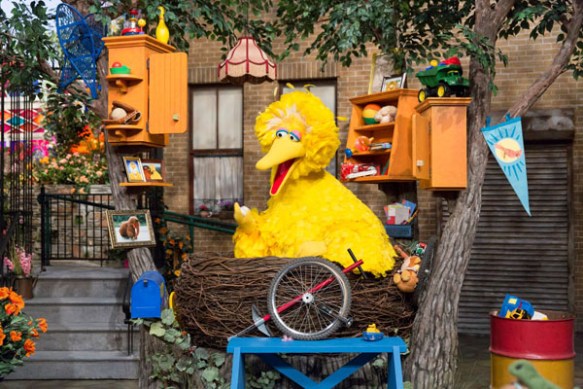
Notes from 2017 – Time to save Big Bird again!

46-bb-nest

Last week, the New York Times reported on administration plans to cut popular domestic programs, including funding for the Corporation for Public Broadcasting. The move would save $500 million a year, about 0.016% of the federal budget.

Said Heritage Foundation economist and presidential advisor, Stephen Moore, “I think it’s an important endeavor to try to get rid of things that are unnecessary.” 

Here are some of the things Mr. Moore considers unnecessary:

Sesame Street
Downton Abbey
Ken Burns “Civil War”
Ken Burns “Jazz”
Sherlock Holmes (several versions)
Poirot
Cadfael
The Midsomer Murders
Ken Burns “Baseball”
Shakespeare plays (many)
Victoria
The PBS Newshour
Nova
Masterpiece Theater
The Antiques Roadshow

These are just a few of my favorite programs, past and present. Add yours to the list

Politicos periodically try to defund PBS. Remember the rumor that one of the Teletubbies was gay?  But I think the real reason is apparent in this dialog from The Power of Myth series, one of the most popular television programs of all time. The conversations between mythologist, Joseph Campbell and Bill Moyer’s, which first aired in 1988, are as relevant as ever today:

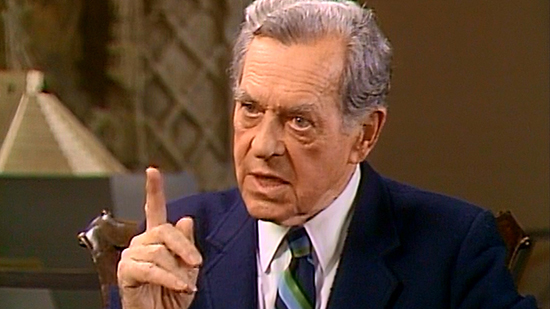
Joseph Campbell on "The Power of Myth" series

Joseph Campbell on “The Power of Myth” series

BILL MOYERS: Would the hero with a thousand faces help us to answer that question, about how to change the system so that we are not serving it?

JOSEPH CAMPBELL: I don’t think it would help you to change the system, but it would help you to live in the system as a human being.

BILL MOYERS: By doing what?

JOSEPH CAMPBELL: Well, like Luke Skywalker, not going over, but resisting its impersonal claims.

BILL MOYERS: But I can hear someone out there in the audience saying, “Well, that’s all well and good for the imagination of a George Lucas or for the scholarship of a Joseph Campbell, but that isn’t what happens in my life.”

JOSEPH CAMPBELL: You bet it does. If the person doesn’t listen to the demands of his own spiritual and heart life, and insists on a certain program, you’re going to have a schizophrenic crack-up. The person has put himself off-center; he has aligned himself with a programmatic life, and it’s not the one the body’s interested in at all. And the world’s full of people who have stopped listening to themselves. In my own life, I’ve had many opportunities to commit myself to a system and to go with it, and to obey its requirements. My life has been that of a maverick; I would not submit.

BILL MOYERS: You really believe that the creative spirit ranges on its own out there, beyond the boundaries?

JOSEPH CAMPBELL: Yes, I do.

By now it should be obvious – this year’s crop of would-be overlords, like all of their kind, want “a world…full of people who have stopped listening to themselves.” It’s up to ALL of us to deny them the pleasure!

We know the drill by now…when this budget item comes up, call and write elected representatives. Make #SaveBigBird go viral on twitter. It worked last time an administration tried to evict Big Bird, and it will work again!

Ken Burns, Downton Abbey, Sesame Street, and Joseph Campbell cut across party lines. They invite all of us to listen deeply to ourselves. They remind us not to let others drown out the still small voice of our souls.

Happy 100th Anniversary to the Schwarzschild Radius

Imagined image of black hole - public domain

Imagined image of black hole – public domain

There aren’t many things to celebrate about 1916, which set a new record as the bloodiest year in the history of human warfare, but an exception to that rule was discussed on a fascinating segment on Science Friday today, Tracing Light to Map the Cosmic Darkness.

German astronomer, Karl Schwarzschild, who was serving in the trenches, used his free time to solve the gravitational field equations of Einstein’s general theory of relativity. He communicated his findings to Einstein on a postcard. The great scientist didn’t like his solution, but recognizing its validity, he presented it to the Prussian Academy of Sciences in 1916. Ever since then, the Schwarzschild radius has defined a black hole.

Karl Schwertschild, 1873-1916, Wikimedia Commons.

Karl Schwertschild, 1873-1916, Wikimedia Commons.

And why is this important to anyone other than diehard Trekies?  Given that dark matter comprises 96% of the total matter in our universe – the stars, our earth, ourselves make up only 4% – it’s a rather interesting topic. Something to contemplate next time you’re under a sky full of stars.

One of Ira Plato’s guests, Sheperd Doeleman, Director of the Event Horizon Telescope project, hopes to soon have photographs of these objects that can’t be photographed. His other guest, Priyamvada Natarajan, Professor of Astrophysics at Yale and author of Mapping the Heavens, creates maps of dark matter, this mysterious background in which we and our universe dance.

This is a fascinating segment, so grab a cup of coffee, put you communicators on vibrate, and tune in for a wonderful glimpse at all we don’t know about our world.