Finding Your Civil War Ancestors

For a number of reasons, which I will discuss here later, my thoughts at this time of year turn toward the battle Gettysburg, an event in our history that has long haunted and fascinated me, especially since I toured the battlefield one June many years ago.

The campaign began at this time of year, on June 15, 1863.  Bolstered by six months of stunning victories against superior numbers, Robert E. Lee led 70,000 men of the Army of Northern Virginia across the Potomac to invade Pennsylvania.  He planned to strike as far north as the capitol in Harrisburg, or even Philadelphia.  Anti-war sentiment in the north was so strong he believed that one more victory on northern soil would force Abraham Lincoln to negotiate for peace.  He was probably right.

On the battlefield’s web site, I found a fascinating page for locating civil war ancestors:  http://www.nps.gov/gett/historyculture/ancestor-search.htm,  If you click the top button on the right, called the “Civil War Soldiers and Sailors System,” you can plug in names and states to search the National Archives data base.

I started by trying my name, because it’s unusual, and discovered eight soldiers named Mussell, seven who fought for the Union, and one Confederate from Georgia.  I doubt that any were direct ancestors, since my paternal great-grandfather didn’t arrive on these shores until 1870.

I searched on my mother’s maiden name, which is more common, but that carried its own difficulty:  she was born in Virginia, her father came from Michigan, her grandfather from New Jersey, and all three states had soldiers with her name.  Out in a trunk in the garage I have an old hand-drawn genealogy, and such tools are likely to be necessary.

The soldiers’s names are matched with regiments, and if you click those, you can see where they were formed, where they fought, and where they were disbanded.  Tragically, in every regiment I checked, the number who died of disease was greater than the number who killed in battle, a statistic that holds for both armies as a whole.

It’s pretty amazing to have this kind of information at our fingertips, and one thing we can be sure of:  everyone who lived in this country 150 years ago was affected.  There were almost a million casualties at a time when the population was only 31 million.  If you are lucky enough to have some letters, a family Bible, an aging relative, or family legends, who knows what you can find with this database.

Books for Brainiacs (literally)

I was browsing the NPR list of recommended Sci-Fi titles today, and could barely manage a ho-hum.  I’ve slipped into one of my periodic non-fiction moods, and I’ve learned to follow such whims to see where they take me.  I fear that my book queue may get even more unmanageable after stumbling upon these NPR recommendations:  Insane Science:  Five New Books that Explain the Brain.  http://www.npr.org/2011/06/08/136896426/insane-science-5-new-books-that-explain-the-brain  Here is a quick summary of the article:

The Compass Of Pleasure: How Our Brains Make Fatty Foods, Orgasm, Exercise, Marijuana, Generosity, Vodka, Learning, And Gambling Feel So Good  by David J. Linden.  Everyone probably guessed Fatty Foods, Orgasm, Vodka, and perhaps Generosity, but the author claims that Paying your taxes belongs in that category too.

The Believing Brain: From Ghosts To Gods To Politics And Conspiracies — How We Construct Beliefs And Reinforce Them As Truths by Michael Shermer.  Shermer, a former Evangelical Christian who became an agnostic in college claims that belief precedes the explanations we invent for them.  However, Shermer acknowledges that, “we could be wrong.”

The Psychopath Test: A Journey Through The Madness Industry by Jon Ronson.  The bad news:  an estimated 1% of the population is psychopathic.  The good news:  if you wonder if you are, you almost certainly are not.

The Optimism Bias: A Tour Of The Irrationally Positive Brain by Tali Sharot.  Even if you are a cynic, your brain is probably hardwired for optimism.  “Most people are programmed to predict happy endings in all facets of our lives.”  As you might have guessed, there is measurable survival value in thes.

A Billion Wicked Thoughts: What The Worlds Largest Experiment Reveals About Human Desire by Ogi Ogas and Sai Gaddam.  If you want to know what people really think about sex, look online, claim the authors, and that is what they did.  Their conclusion, after sifting through “reams” of data?  Men’s sexual brains “are more like Elmer Fudd,” and women’s, “like Miss Marple.”  That hook I think, is enough to get me to download this one.  Not that I would be crass enough to ever make a joke about Elmer Fudd and Congressman Wiener – nope, no way.

Happy reading, everyone, and I categorically deny all rumors that I have too much time on my hands!

Dreaming Up Ideas

I have been busy working on several blog posts, but they are for later this summer.  Meanwhile, I found myself less than excited by any of my other topic ideas, so I drifted over to a blog filled with a wealth of advice and inspiration, “Writing On The Wall” (you can find it in my blogroll).  Out of all the tags, I chose a section called, “Getting Ideas.”  http://writingonthewallblog.blogspot.com/search/label/getting%20ideas

Most of the posts were by a contributor named Annette Lyon, who shares a number strategies for jump-starting the creative process in fiction, as well as some interesting facts, like Orson Scott Card’s moment of inspiration for Ender’s Game, and this great quote from Tom Clancy:  “The difference between fiction and reality?  Fiction has to make sense.”

I especially liked Ms. Lyon’s account of wrestling with the infamous cliche that she heard from a college creative writing teacher – the famously stupid advice to “Write what you know.”  I suspect that most fantasy authors have never believing that nugget.  Write what you can imagine is more accurate for writers and poets from Homer to H.G. Wells, to J.K. Rowling, but Lyon’s misguided professor actually forced his students to compile a list of 100 things they knew, and were thus qualified to write about.

Lyon, who had wanted to be an author since the second-grade, was initially paralyzed by the realization that she didn’t know anything on her list well enough to write about it.  Fortunately for her and for us, she round-filed the list as soon as she could and rephrased the motto as, Write what you are willing to learn about.  

Any writer who has ever researched anything will agree with her, and reading her post, I realized that learning new things is one of my greatest pleasures in blogging.  And speaking of learning, check out “Writing on the Wall.”  Scroll through the tags and you’re bound to learn something new and find this sort of inspiration.

High School Confidential

The day after our local graduation made me pause and consider high school for the first time in a long while, an interesting article arrived in the June 20 issue of Time.  In “Life After High School,” Annie Murphy Paul says, “We’re obsessed with those four years.  But new research shows we’re not defined by them.”

“Obsessed” will seem an appropriate word if you follow and enjoy popular media as I do.  Think of Rebel Without a Cause, Grease, Fast Times at Ridgemont High, The Breakfast Club, and any number of recent TV shows, some of which I really enjoyed, like Buffy and Joan of Arcadia.  Think of all the new authors piling into young adult fiction.  Think of Springsteen’s “Glory Days,” or “Married With Children’s” Al Bundy, whose life has been downhill since the day when he caught three touchdown passes (or was it four?).

At the core of Annie Paul’s article are a number of studies, now yielding results, on high school experience as a predictor of futures.  The longest running study, sponsored by the National Institute of Aging, followed 10,000 members of the class of 1957 in Wisconsin for 50 years.  There seem to be correlations, but they are not all that clear cut.  “Coveted as they are in high school, brains and popularity get you only so far in the real world,” says Paul.

Author Alexandra Robbins coined the term, “quirk theory,” to explain the fact that, “Many of the differences that cause a student to be excluded in school are the identical traits or real-world skills that others will value, love and respect…in adulthood and outside the school setting.”   In her recent book, The Geeks Shall Inherit the Earth, Robbins says, “I’m still a dork,” but believes that helps her connect with those she was interviewing and her readers.

Nothing is fixed, the various researchers seem to be saying, except the ideas we may hold of ourselves.  Such considerations may have motivated a University of Virginia psychologies to say, “Our work shows that popularity isn’t all that important.  The key is finding a group of people with whom you can feel at ease being yourself.”

In that respect, nothing much has changed.

A Change of Seasons

It may finally be summer.  Or spring.  Or whatever we’re calling it this year.  A week ago it was hailing, and today it’s in the mid-80’s.  By itself I would probably not notice since it’s gone back and forth from hot to cold so many times, but this week there were other changes as well

We cut down a huge liquid amber tree that was big when we moved in 25 years ago, and had grown huge over the last quarter century.  None of the neighbors could agree on how tall it was, but most guesses came in at 70′ – 80′.  The shade in the summer was enough of a bonus to make up for having to trim the limbs every few years, but this winter, which went on forever, it got to be too much.  The sap and the birds in the bare branches did a number on my car every night for weeks and weeks and weeks, and weeks and weeks.  Did I say it went on for weeks and weeks?  That plus the need to replace our roof this summer made up our mind, for we always eyed this behemoth tree warily during storm season.  Especially the last few years.

Now two small maple trees about 10′ high stand in the front yard, all staked and watered and fertilized.  They seem hopeful and sad at the same time.  Hopeful in the golden light of morning and evening, for they carry a promise for the future.  Sad in the flat light of noon which seems to emphasize the bare dirt where the stumps and roots of the old tree stood.  No amount of wisdom ever entirely gets your gut ready for change.

That’s nothing compared to what the guts of the graduates from the local high school are doing right now.  The school is just around the corner.  This morning, just after 7:00am they started to drift up the street with parents and grandparents and friends.  By 11:00 it was over and all the cars were gone from the curbs.  I found myself remembering my own graduation and the biker who led us into the ceremony with a psalm.

As we stood in our caps and gowns in alphabetical order, one of the “A’s” at the front of the line raised his voice and said, “Bretheren and Sisteren, I have a few words to share with you!”  Now this was a large biker guy who seldom spoke; he usually just sat around and glowered.   But just as they struck up Pomp and Circumstance, this guy pulled out a bible and read the 23d psalm.  When all the other memories of high school have faded, that may be the one I remember.  Well, maybe not, but it will be right up there.

This morning I found myself watching people returning from the ceremony.  A few were laughing and joking, but in general, no one seemed especially upbeat or inspired.  School officials mean well, but how can a bit of speechifying while you sit on folding chairs really commemorate what happened, or represent any useful guidance for what comes next?

Too bad the graduates cannot experience the vision quests the plains indians held for their young people.  Coming of age should be a time for discerning the themes of one’s life, and the nature of one’s guiding spirits, but that is very seldom what happens these days.  Or rather, we all still go on a vision quest, it just is not so well organized or safe.  If we are lucky, after a few decades, we begin to get a clue.  I found myself wishing the new graduates well, and wishing them a fruitful voyage into the wilderness.

The Emerald Atlas by John Stephens: A Book Review

I have said before, I often read middle grade fantasy for the sheer fun of it, and I recently picked up The Emerald Atlas, published in April by John Stephens.   Stephens comes from the world of television production where he wrote for “The Gilmore Girls” and “The O.C..”  He also produced and sometimes directed and wrote for, “Gossip Girls.”  Most interestingly, he says what he really wanted to do all along was write novels, but when he finished grad school, “I was pretty bad at it.  I really kinda stunk.”  Stephens learned his craft in Hollywood:

“Writing for Hollywood turns out to be a great training ground. You learn how to work on a schedule, tell a satisfying story, build character, construct scenes, you develop a feel for dramatic momentum…and you get to tool around the Warner Bros lot on a golf cart, which is kind of awesome.” 

He says working for television was so much fun he forgot about writing until he read Phillip Pullman’s, The Golden Compass and realized that “all” he wanted to do was write fantasy novels for children.  (thought he still misses the golf carts).

The Emerald Atlas is the story of three very special children whose parents mysteriously vanish when they are young.  One night when she is four, Kate’s mother slips into her room and insists that she promise to care for her younger siblings, Michael, two, and Emma, one. The three children are hustled to a waiting car driven by an elderly man who barely eludes magical pursuers in a chase reminiscent of Harry Potter.  After ten year of ever more awful orphanages where they never seem to fit in, the children are sent to an apparent “last stop,” facility in Cambridge Falls, New York, run by the mysterious Dr. Pym.

Dr. Pym, it turns out, is the wizard who had taken the children for safekeeping ten years earlier, to keep them from the grasp of the beautiful but evil witch who calls herself, the Countess.  The forces of both good and evil are interested in Kate, Michael, and Emma for they each have a magical bond with one of the three Books of Beginning, where the great wizards of old in Alexandria encoded their lore when the worlds of magic and humans began to seperate.

Kate’s affinity lies with the first book, The Emerald Atlas, which enables one to travel in time and space.  When they stumble upon the volume in Dr. Pym’s basement, Kate, Michael, and Emma are whisked into the past before they understand the powers they have awakened.  They become separated and fall under the power of the Countess and her minions.

There’s a lot to like in The Emerald Atlas.  The characters are nicely fleshed out.  Fourteen-year-old Emma, clever, brave, with intuitive understanding of magic, suffers under the burden of keeping her brother and sister safe, as well as the other children of Cambridge Falls.  Twelve-year-old Michael, who sometimes drives his sisters nuts with his camera, notebook, and bent for scientific experiment, has the thrill of his life when he meets real dwarves, the people he admires more than any other.  Eleven-year-old Emma is the feisty one – part of the reason they’ve been shuffled from orphanage t0 orphanage is Emma’s habit of mouthing off to prospective adoptive parents.  The three are desperate to locate their real parents and and learn who they really are.  The value of loyalty and family runs like a constant thread through the book, even through Michael’s betrayal and forgiveness, which is reminiscent of Edmund in The Lion, the Witch and the Wardrobe.

Something else I liked in the story was the complexity of the time-travel plot.  Traveling into the past creates alternative pasts and futures and things can get very complicated, but there is no simplification or condescension for young readers.  Humor that will appeal to all ages pervades the story as well:  “How was [Emma] supposed to know how to defuse a mine?  No one had ever taught her that in school.  Her classes had always been about useless things, like math or geography.”

This is the sort of book, like the Narnia tales or Harry Potter, that will appeal to readers of all ages.  With the cinematic sense of its author, I won’t be the least bit surprised to see it made into a movie.  Stephens said, in his Amazon interview, that none of the studios have contacted him yet, but I suspect it is only a matter of time.  I will certainly buy a ticket, just as I expect to read and enjoy the next two books of the trilogy.

State Parks That Are Going Away

Don’t it always seem to go, that you don’t know what you got till it’s gone – Joni Mitchell

An article in Sunday’s Sacramento Bee, “A State Park Bucket List,” gave pictures and descriptions of 15 favorites among the 70 parks and historical sites we may only have another 13 months to see. http://www.sacbee.com/2011/06/05/3673215/a-state-park-bucket-list.html

Casualties of the California budget crisis, all these sites are scheduled to close in July, 2012.  Without ongoing maintenance, many of these parks, and especially those with old or historic structures, may never open again.

This includes the Jack London State Historical Park, which I wrote about on this blog last fall. https://thefirstgates.com/2010/10/23/of-words-and-wolves-thoughts-on-jack-london/

It includes the Bidwell Mansion in Chico, home of Gen. John and Anne Bidwell, founders of the town, who donated a magnificent 3600 acre park where the Sherwood Forest scenes for the 1938 Robin Hood withErrol Flynn were filmed.  Sherwood is a pleasant walk or bycycle ride from the center of town.

Those who can might want to check the newspaper link and plan a trip to see some of these gems while they still are open.

PS – One of my facebook friends just gave me this website which is open for donations to help save these parks, under the auspices of the California Institute of Man in Nature:   http://www.johnolmsted.net/   Donation buckets with the John Olmstead logo are also going to be available at California parks this summer.  FWIW, I just made a small donation through paypal.

A Retreat with Anam Thubten Rinpoche

I recently heard the results of a poll that I found surprising: 50% of Americans report having had a “spiritual experience,” but of that group, 80% say they never want to have another. That was exactly the opposite of the 70 or 80 people who gathered on Saturday for a daylong retreat with Anam Thubten Rinpoche, sponsored by the Sacramento Buddhist Meditation Group.

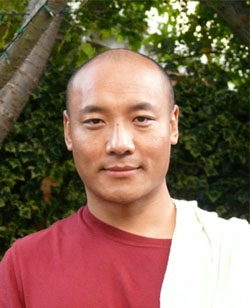
Anam Thubten Rinpoche

Rinpoche is a Tibetan word meaning, “precious one,” and is usually only applied to those recognized as reincarnations of spiritual leaders or teachers of the past, most famously, the current 14th Dalai Lama.

I first attended a retreat with Anam Thubten in December, 2005 and have been fortunate enough to get to a half-dozen more since then, for his home and teaching center, the  Dharmata Foundation in Point Richmond, CA, is not far away.  In the years since I first heard him, the clarity, resonance, and joy contained in his teachings have brought him greater renown:  his book, No Self, No Problem, originally published by the Dharmata Foundation, has been picked up by Snow Lion Press (a self-publishing success story!), and he was chosen to kick off the ongoing series of online retreats at Tricycle.com

In my own efforts to write of the concept of no-self last December, I quoted Anam Thubten for his simple, experiential way of presenting the concept:  “this ‘I’ is a fictitious entity that is always ready to whither away the moment we stop sustaining it.  We don’t have to go to a holy place to experience this.  All we have to do is simply sit and pay attention to our breath, allowing ourselves to let go of all our fantasies and mental images”

It should be clear that any culture like Tibet, that believes in Rinpoches, is not using the concept of “no-self” to tell us we don’t exist or that life does not continue after death.  In Anam Thubten’s vision, “no-self” means an end to the painful illusion of seperation, an end to isolation, an end to living in a friend-or-foe, fight-or-flight world.

Yet although he mentioned this concept, which first drew me to his teachings, on Saturday he had a different focus, “Primordial Mind,” the unconditioned and indefinable base of what we are, prior to concepts, prior to ego, prior to all delusions.  The experience of this spacious mind is surprisingly near if we are willing to let go of fixed concepts, and practice a simple meditation technique, and if we are motivated by devotion, by longing for union with the absolute the way a thirsty man longs for water.

Anam Thubten’s book elaborates the concepts we need to let go  of as well as his favorite meditation practice – the simple but difficult art of learning to relax and let go of effort, even the effort to meditate “well.”  This longing – for God or the guru or Buddha; for oneness, or emptiness or, selflessness, or enlightenment – however we conceive of the ultimate good, is finally a longing for love, he said, and this is what remains when our fixed ideas break down.  In Anam Thubten’s teaching, God is love, or Buddha Nature is love, as it is in the words of many other spiritual masters.

My description is close to being new-agey, which is why Anam Thubten is the teacher and I am not.  He didn’t gloss over the difficulty and struggles involved in a serious spiritual search, and in his quiet and understated way he noted that if one is not receptive, “this talk will be very strange.”

In the end, it is the person of the teacher himself that does the convincing.  Is this person really what he seems – genuinely centered, full of peace and compassion?  I believe Anam Thubten really is a man of peace and joy and I trust his message that what he has found is accessible to anyone willing to look and make the effort.   More information and his teaching schedule can be found at the Dharmata Foundation website,  http://www.dharmatafoundation.com/

Dharmata is a word that means, “the way things truly are.”